Discover fun and engaging Fraction Comparison Worksheets for kids aged 4-7 at Kids Academy. These printable worksheets make mastering fractions an interactive adventure. Designed specifically for young learners, our activities help children understand and compare fractions using colorful illustrations and easy-to-follow instructions. Boost math skills early on by incorporating these effective and enjoyable exercises into your child’s learning routine. Whether at home or in the classroom, our worksheets provide a solid foundation for future math success. Visit Kids Academy to download your free fraction comparison worksheets and turn math learning into playful fun!
Check out this FREE "Fraction comparison" Trial Lesson for age 4-7!

Divide Words into Syllables

Favorites
With answer key
Interactive
  • 4-7
  • Fraction comparison
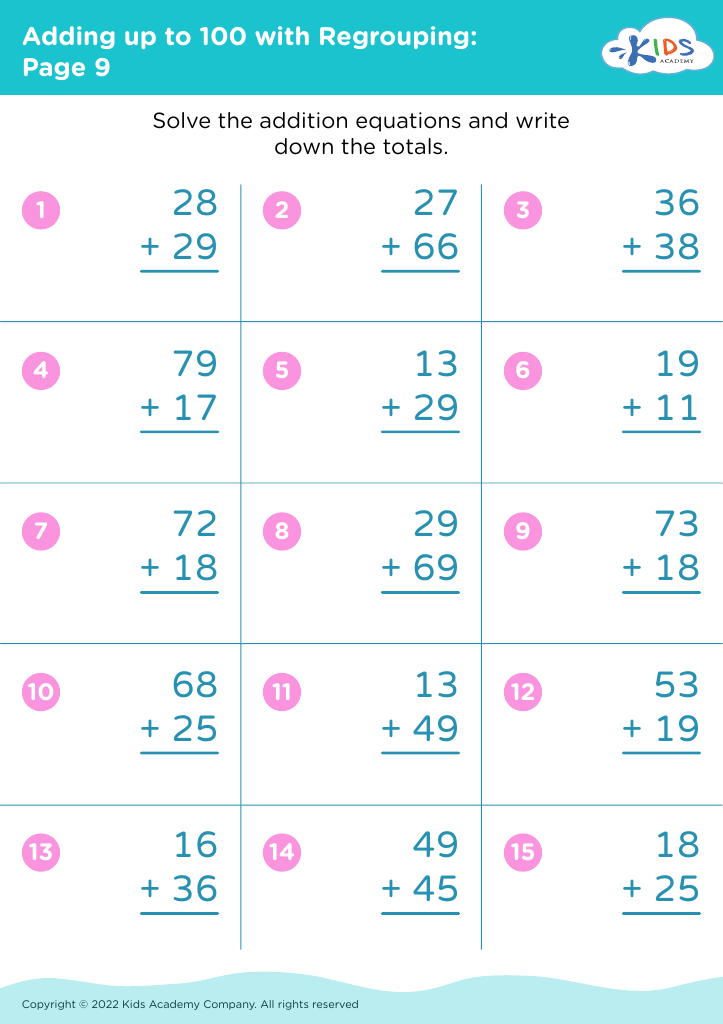
Adding up to 100 with Regrouping: Page 9
Worksheet
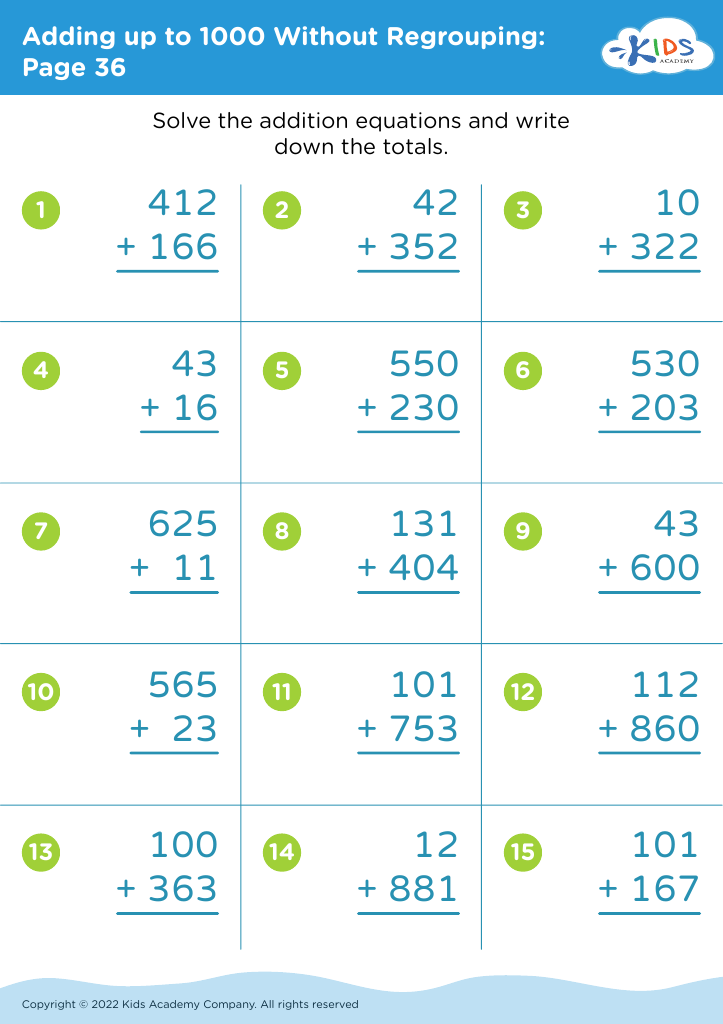
Adding up to 1000 Without Regrouping: Page 36
Worksheet
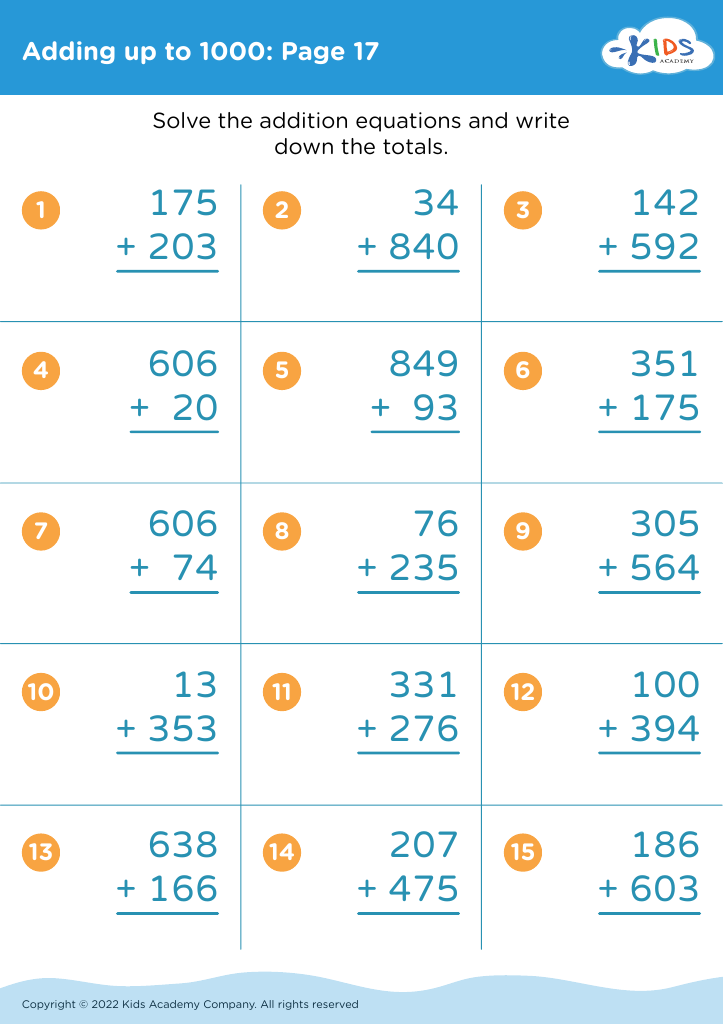
Adding up to 1000: Page 17

Adding up to 1000: Page 17

Adding up to 1000: Page 17
Worksheet
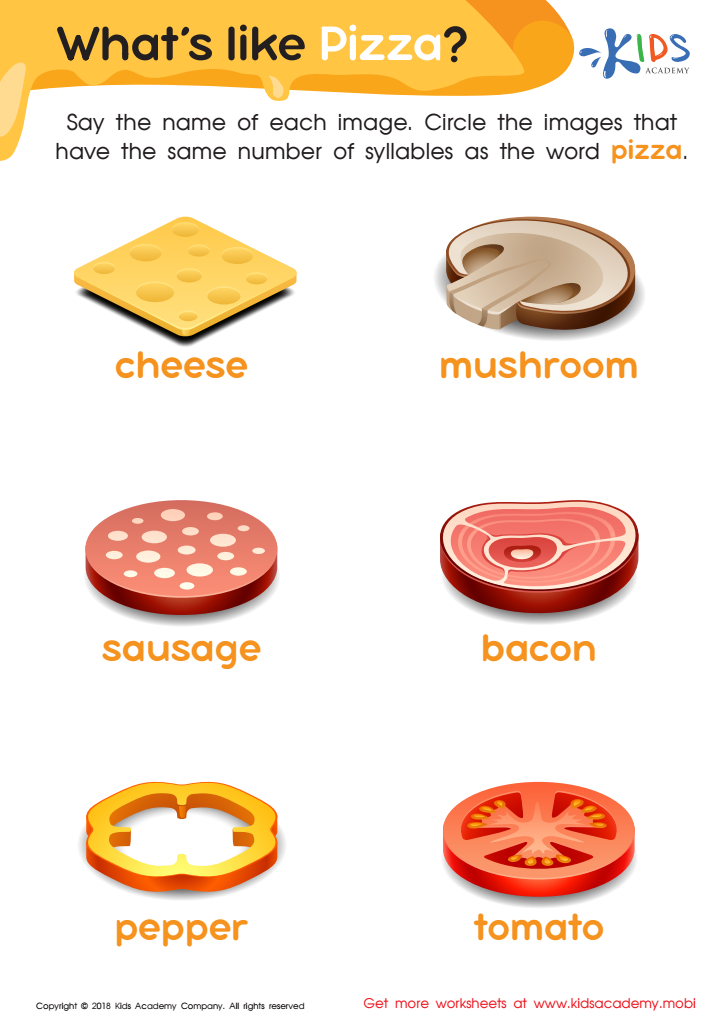
What's Like Pizza? Worksheet

What's Like Pizza? Worksheet

Encourage your kids to exercise their minds with this pizza worksheet! Ask them to name the ingredients they like on their favourite pizzas. Then, help them circle the images that have the same number of syllables as 'pizza'. They'll have fun while learning too!
What's Like Pizza? Worksheet
Worksheet
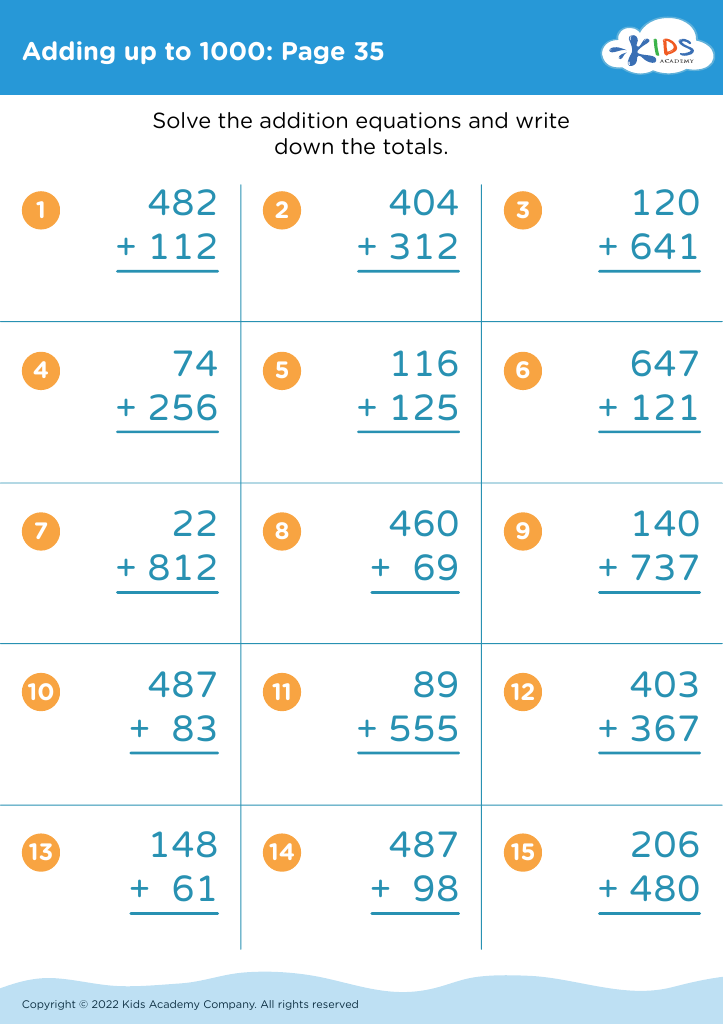
Adding up to 1000: Page 35

Adding up to 1000: Page 35

Adding up to 1000: Page 35
Worksheet
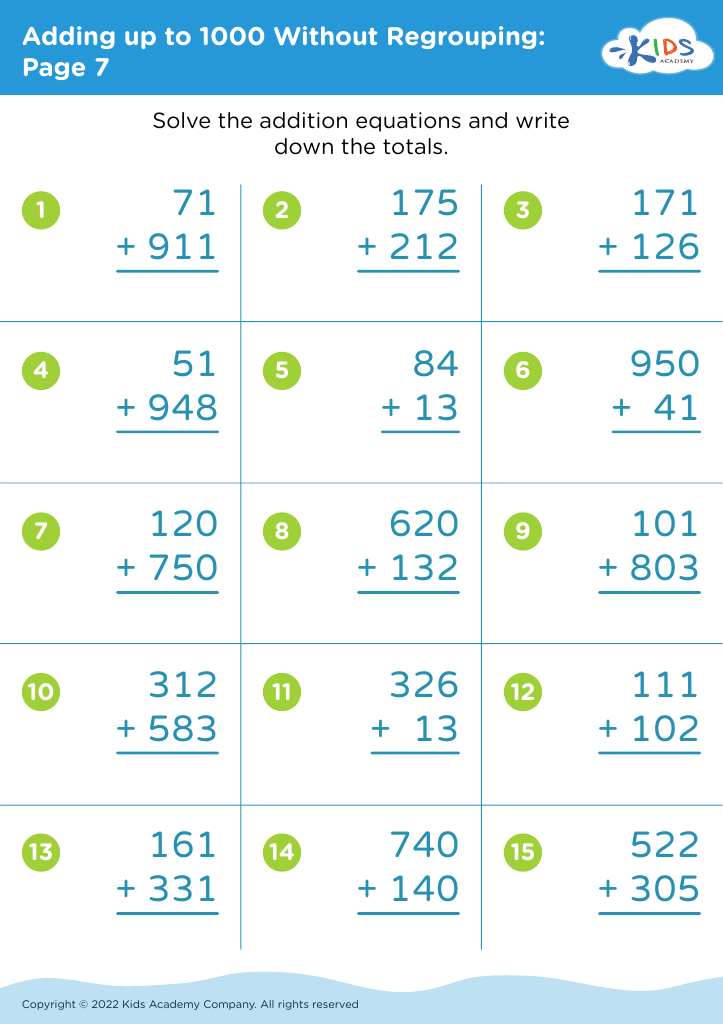
Adding up to 1000 Without Regrouping: Page 7
Worksheet
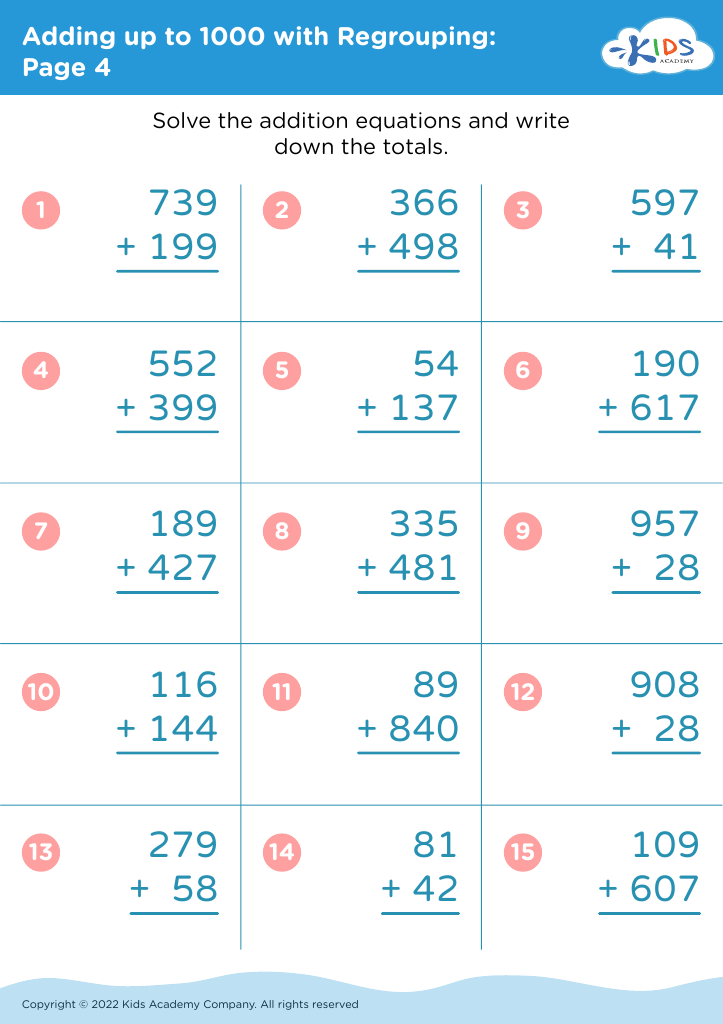
Adding up to 1000 with Regrouping: Page 4
Worksheet
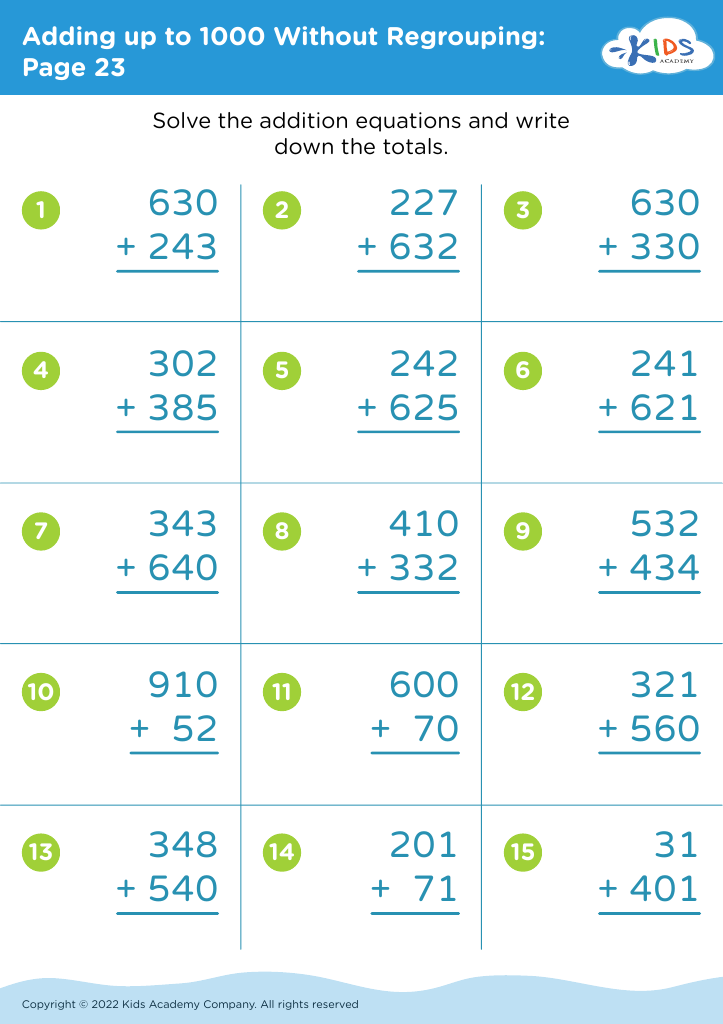
Adding up to 1000 Without Regrouping: Page 23
Worksheet
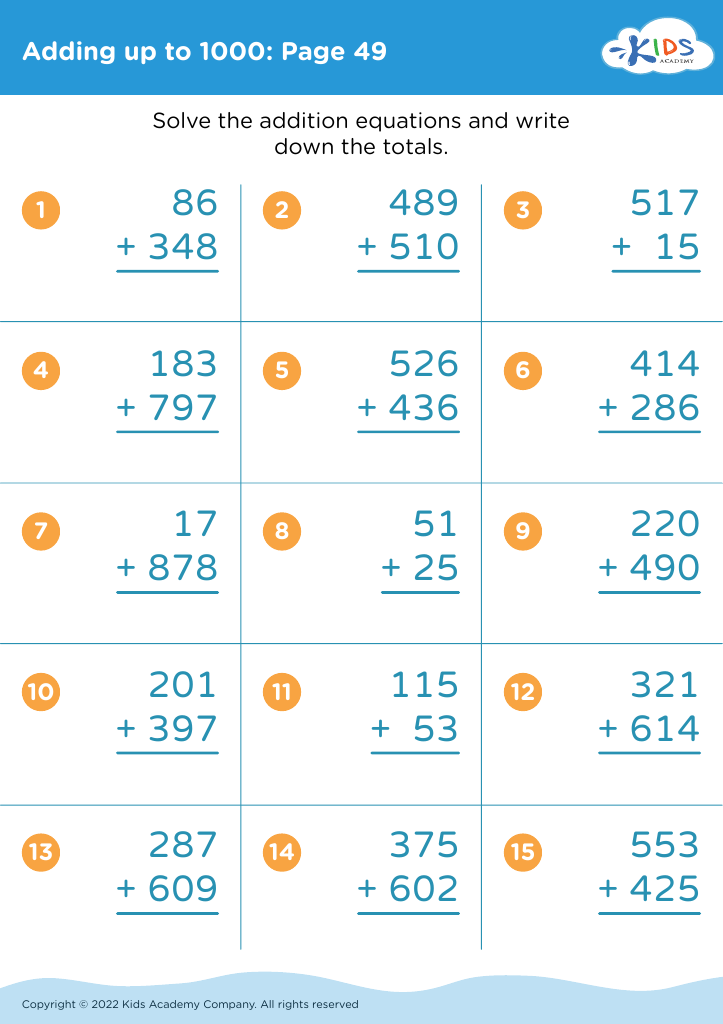
Adding up to 1000: Page 49

Adding up to 1000: Page 49

Adding up to 1000: Page 49
Worksheet
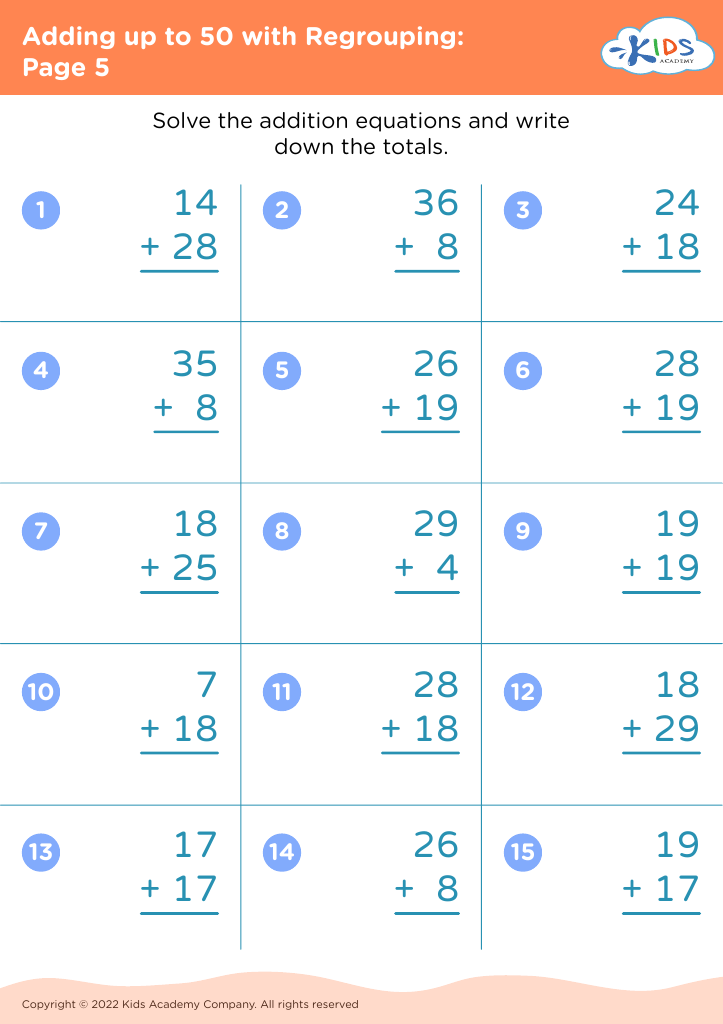
Adding up to 50 with Regrouping: Page 5
Worksheet
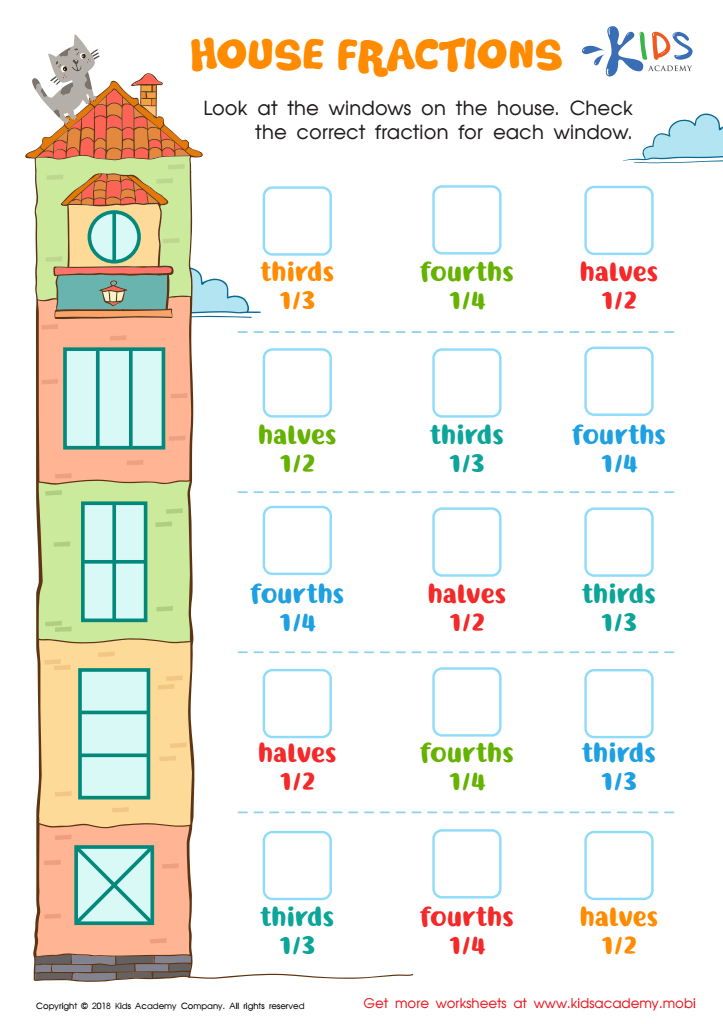
House Fractions Worksheet

House Fractions Worksheet

Test your child's knowledge of fractions with this worksheet! Have them examine the windows of a house and select the correct fraction from the options given. This is a great way to see how much they understand about wholes, fractions, halves, one thirds, and one fourths.
House Fractions Worksheet
Worksheet
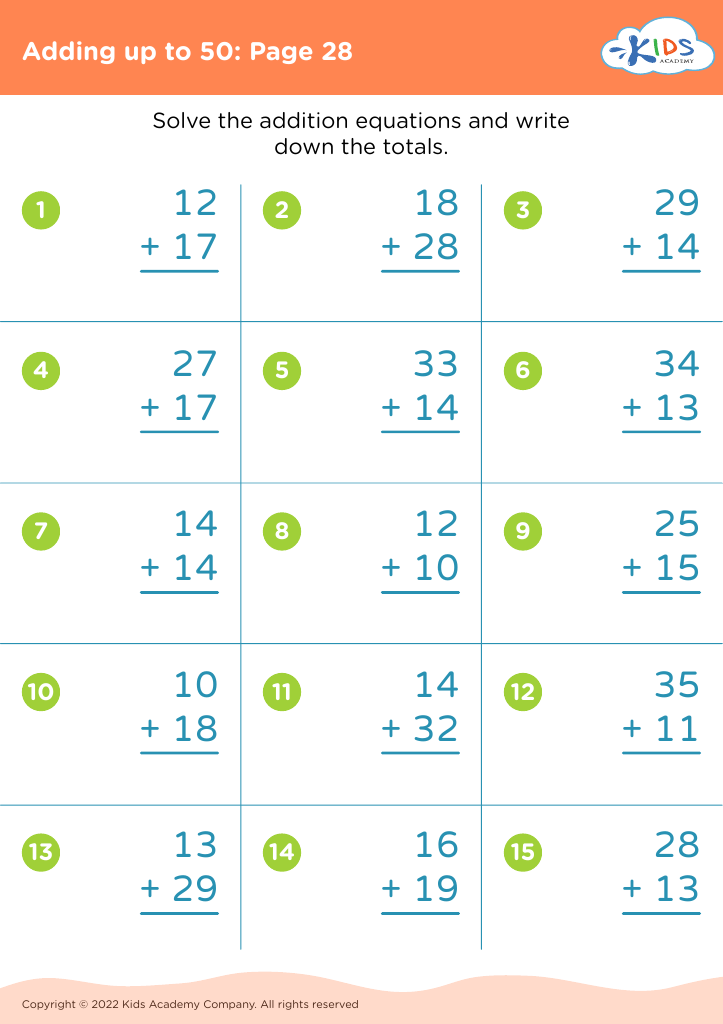
Adding up to 50: Page 28

Adding up to 50: Page 28

Adding up to 50: Page 28
Worksheet
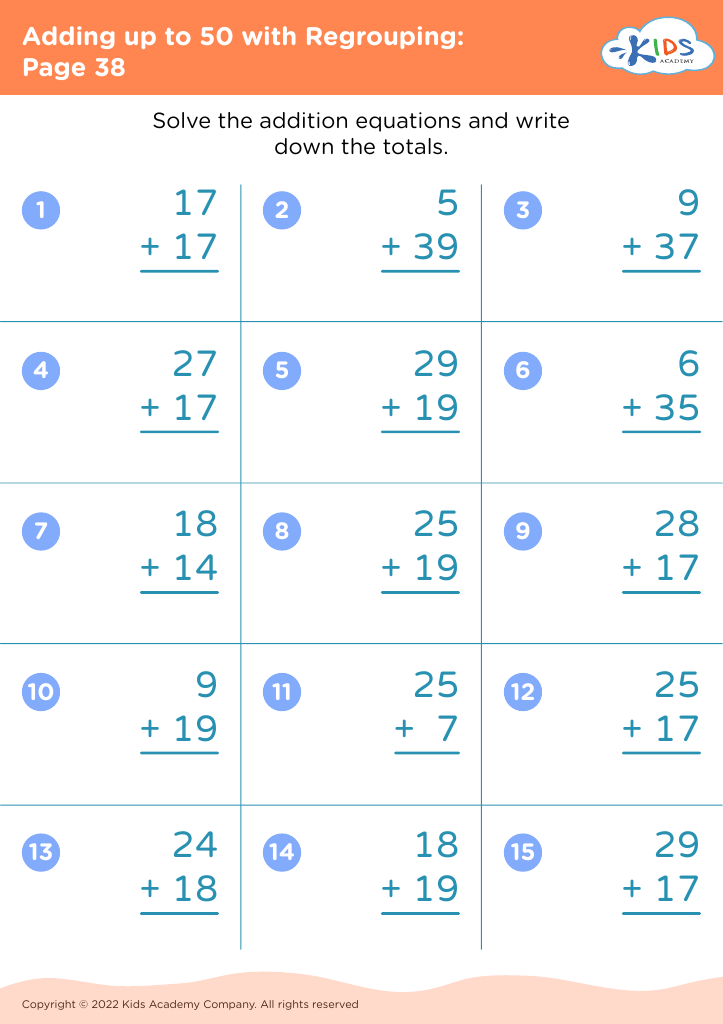
Adding up to 50 with Regrouping: Page 38
Worksheet
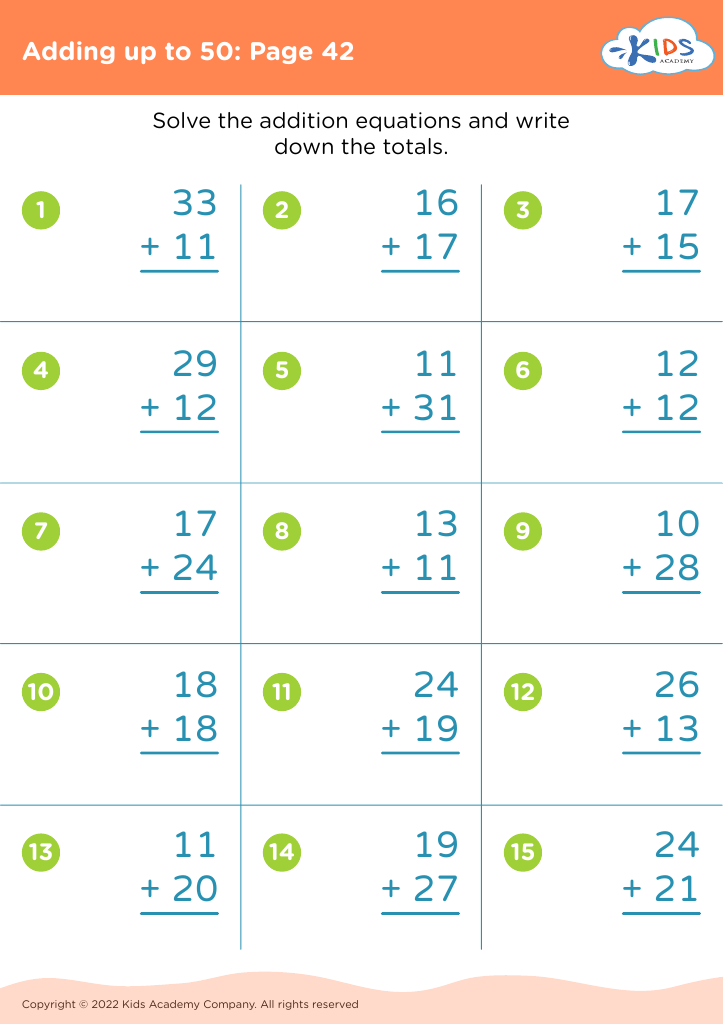
Adding up to 50: Page 42

Adding up to 50: Page 42

Adding up to 50: Page 42
Worksheet
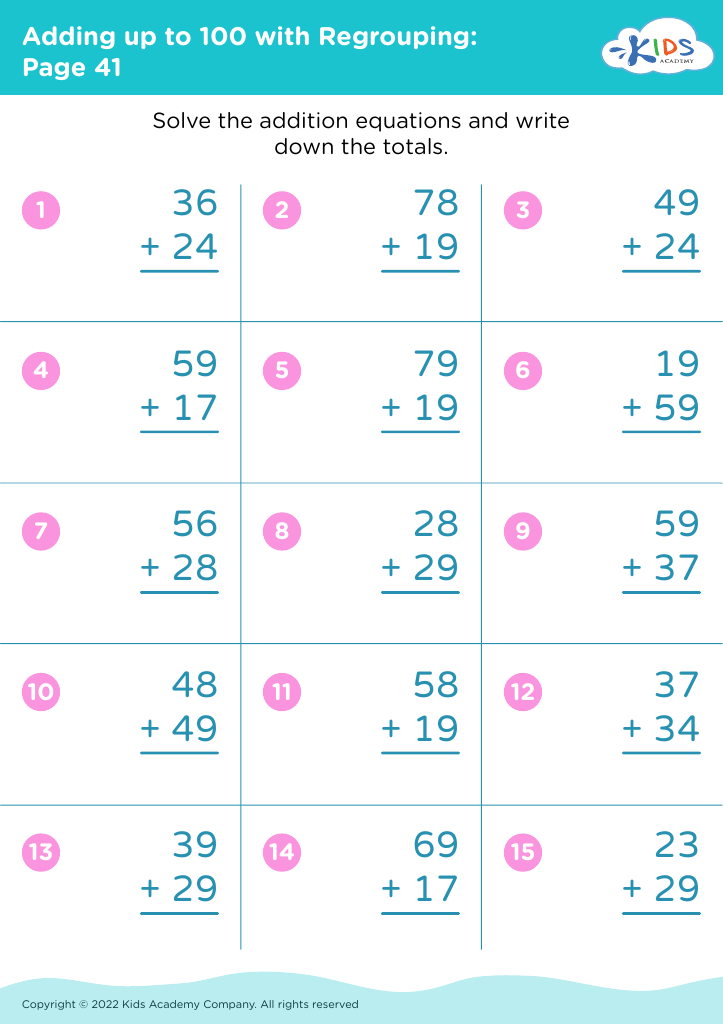
Adding up to 100 with Regrouping: Page 41
Worksheet
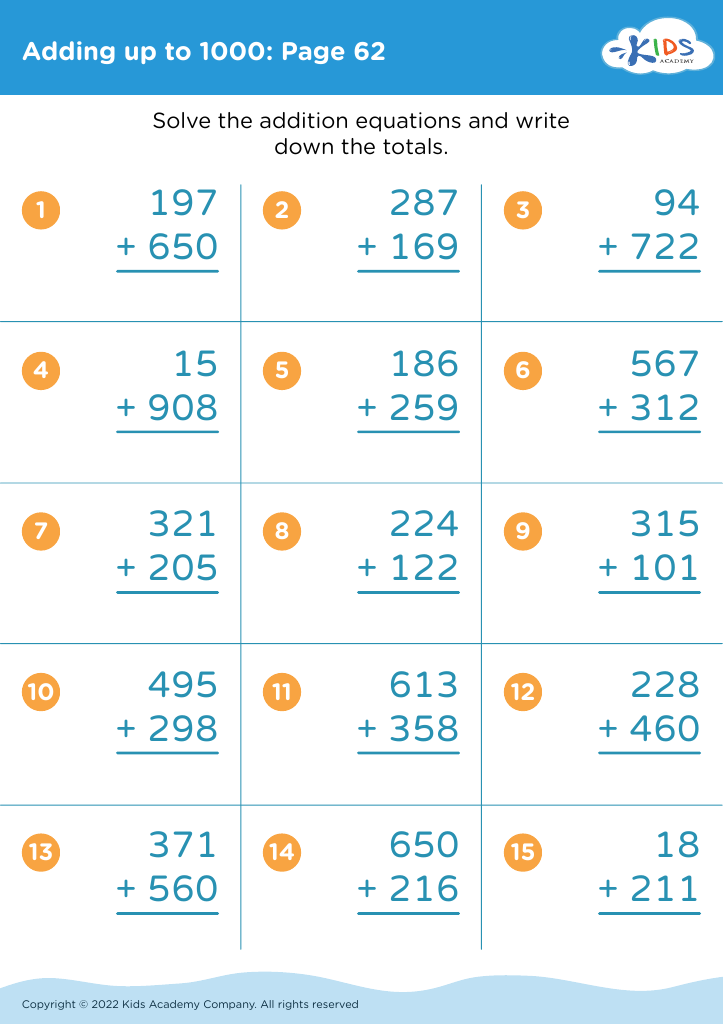
Adding up to 1000: Page 62

Adding up to 1000: Page 62

Adding up to 1000: Page 62
Worksheet
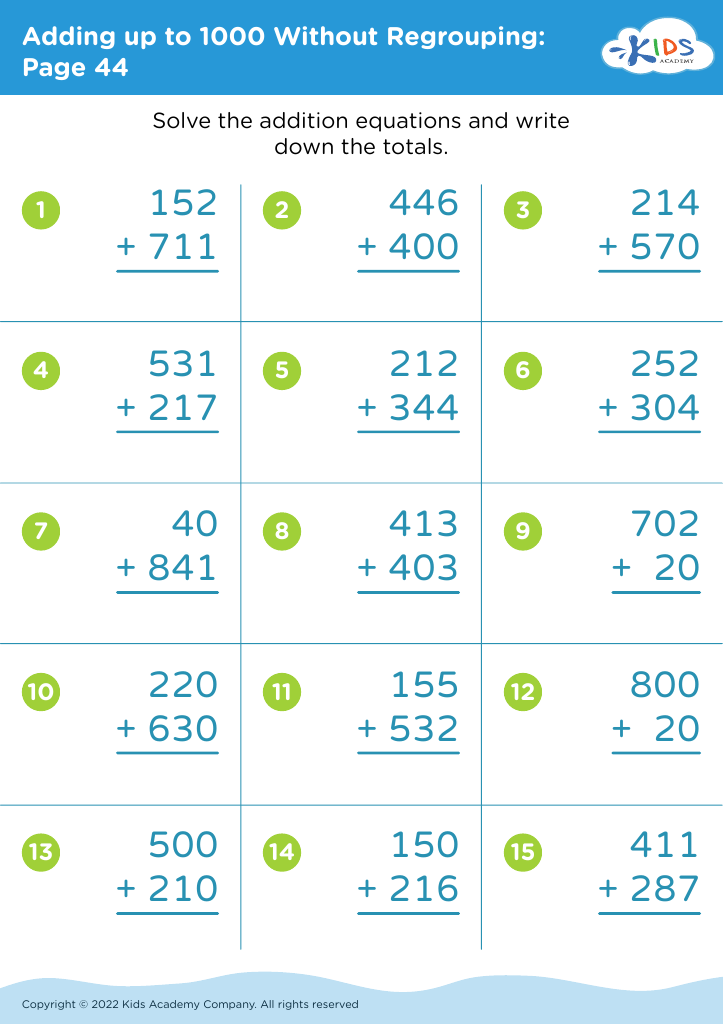
Adding up to 1000 Without Regrouping: Page 44
Worksheet
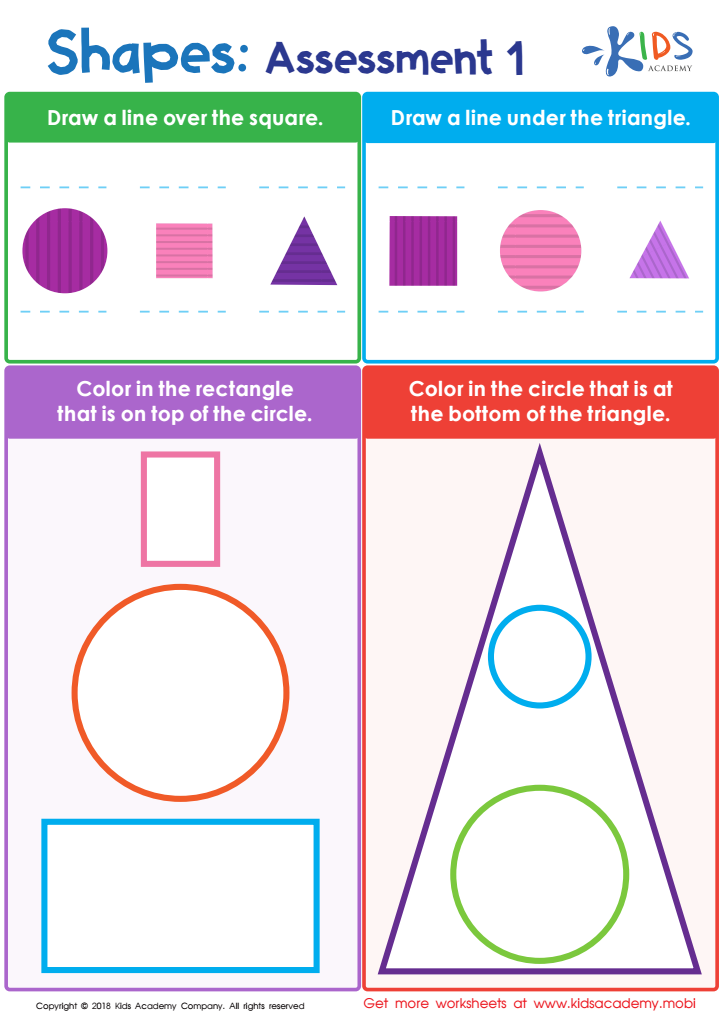
Shapes: Assessment 1 Worksheet
Shapes: Assessment 1 Worksheet
Test your students' understanding of the four basic shapes - circle, square, triangle and rectangle - with this assessment worksheet. Get them to draw a line over or under the shape indicated in the directions to show they can identify it correctly.
Shapes: Assessment 1 Worksheet
Worksheet
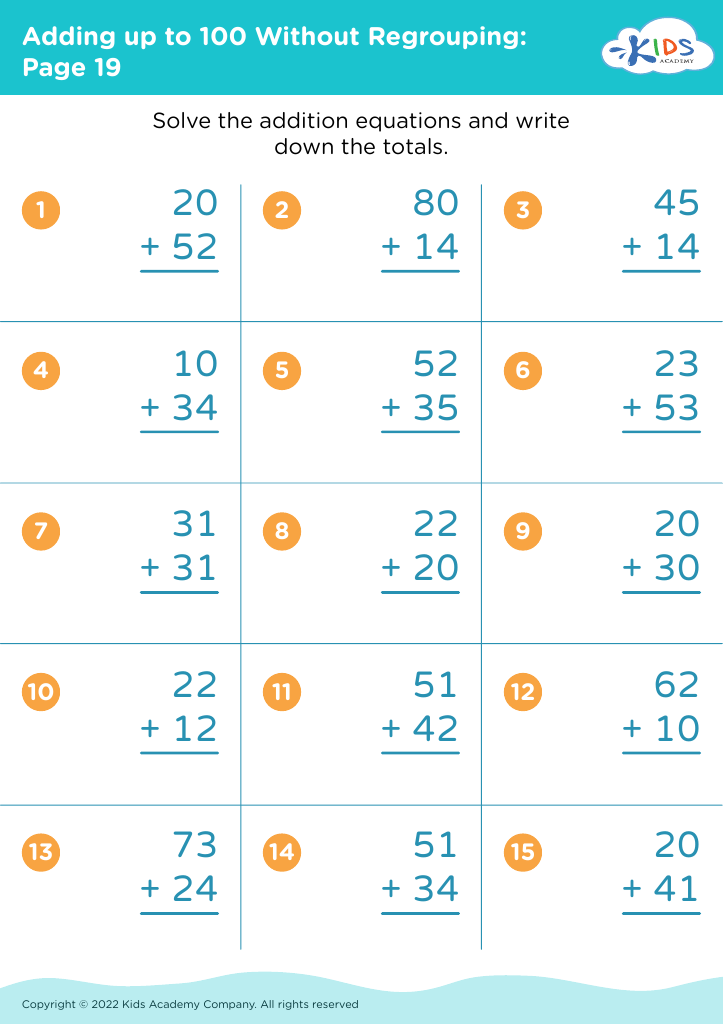
Adding up to 100 Without Regrouping: Page 19
Worksheet
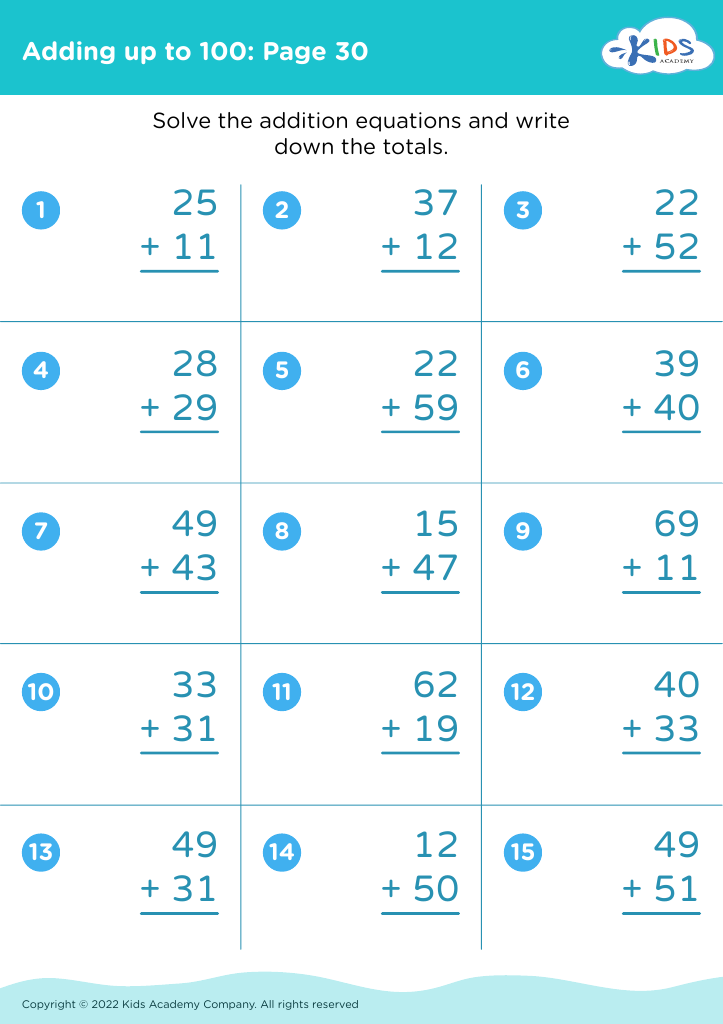
Adding up to 100: Page 30

Adding up to 100: Page 30

Adding up to 100: Page 30
Worksheet
Slice in Thirds Fourths Worksheet
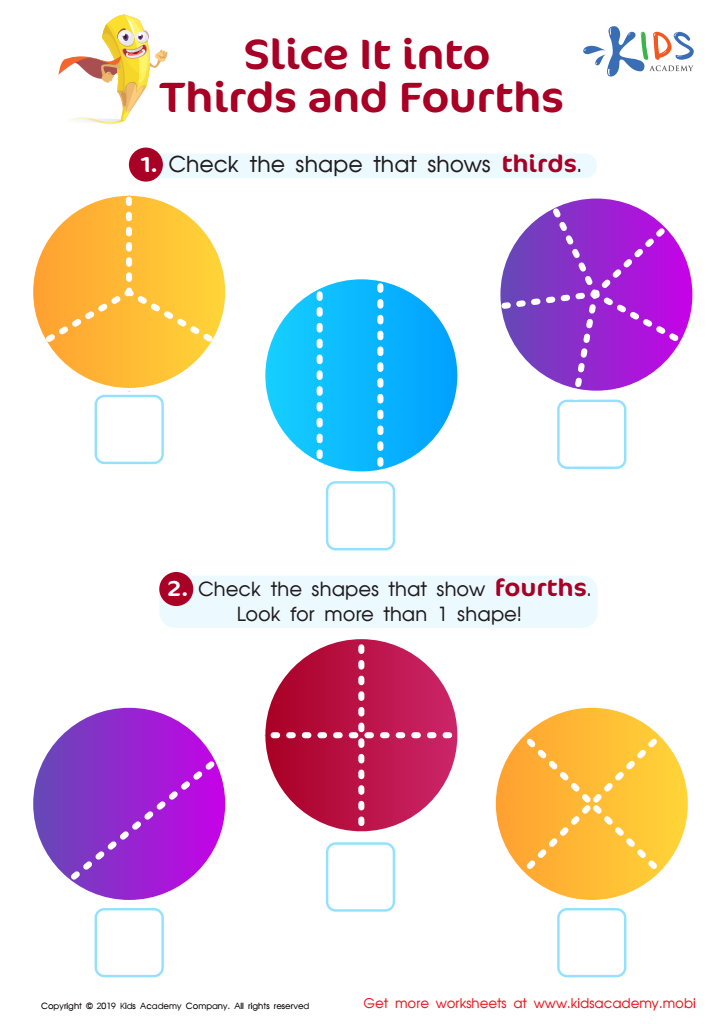
Slice in Thirds Fourths Worksheet
This worksheet helps kids learn fractions visually by dividing circles into thirds and fourths. They will learn that fractions must be equal parts, not just sets, by choosing the right colorful circles. It's an easy way to master fractions and have fun doing it!
Slice in Thirds Fourths Worksheet

Worksheet
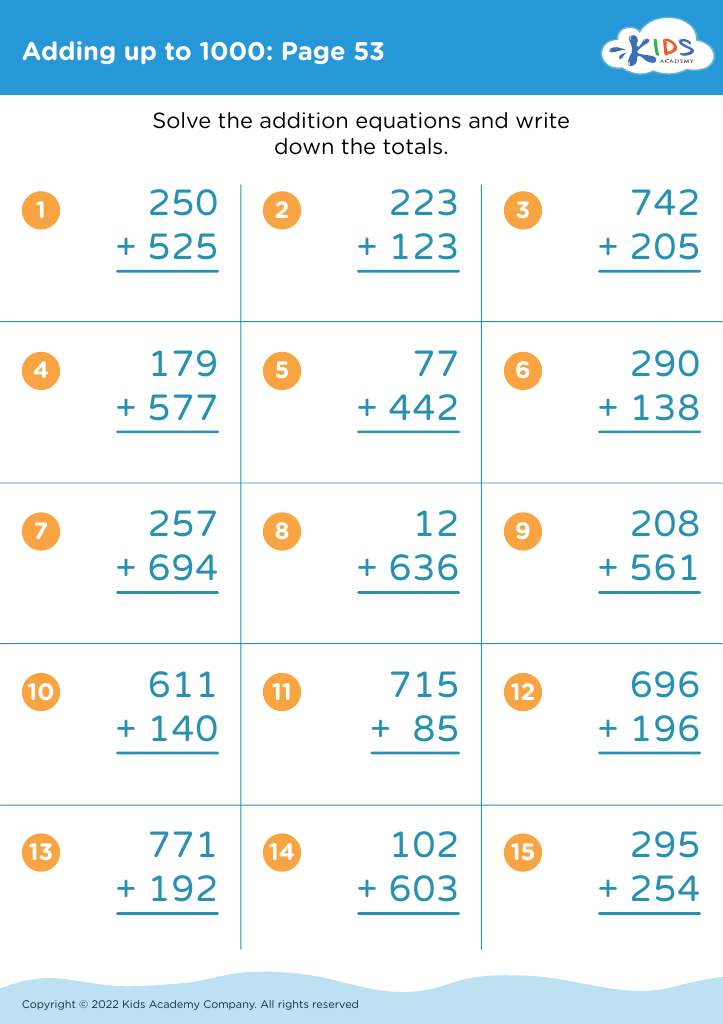
Adding up to 1000: Page 53

Adding up to 1000: Page 53

Adding up to 1000: Page 53
Worksheet
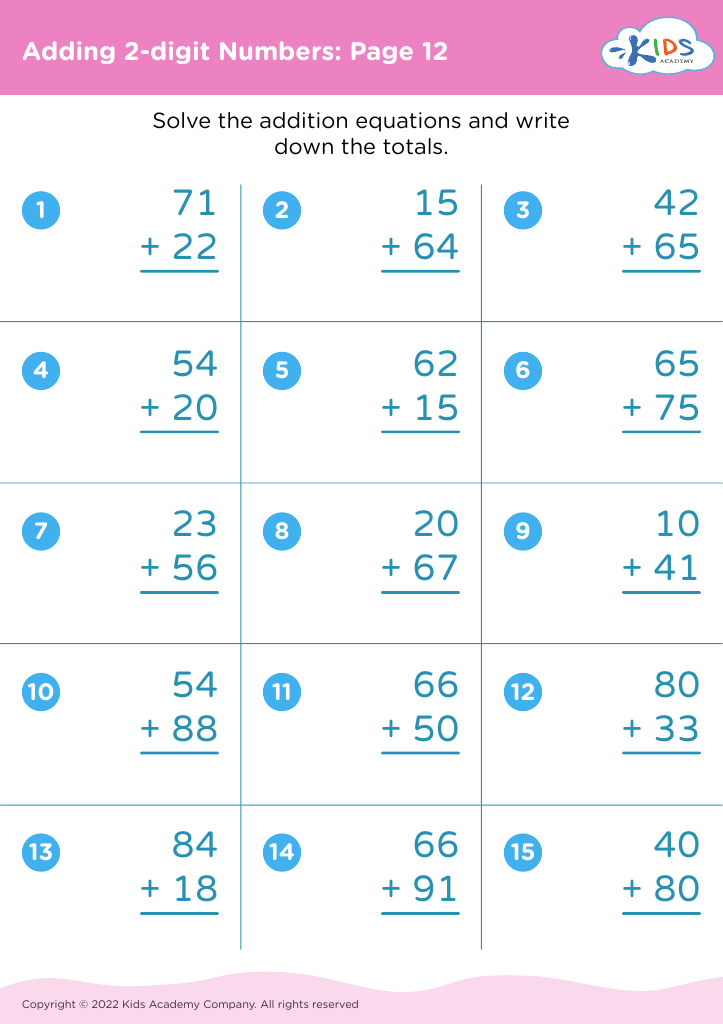
Adding 2-digit Numbers: Page 12

Adding 2-digit Numbers: Page 12

Adding 2-digit Numbers: Page 12
Worksheet
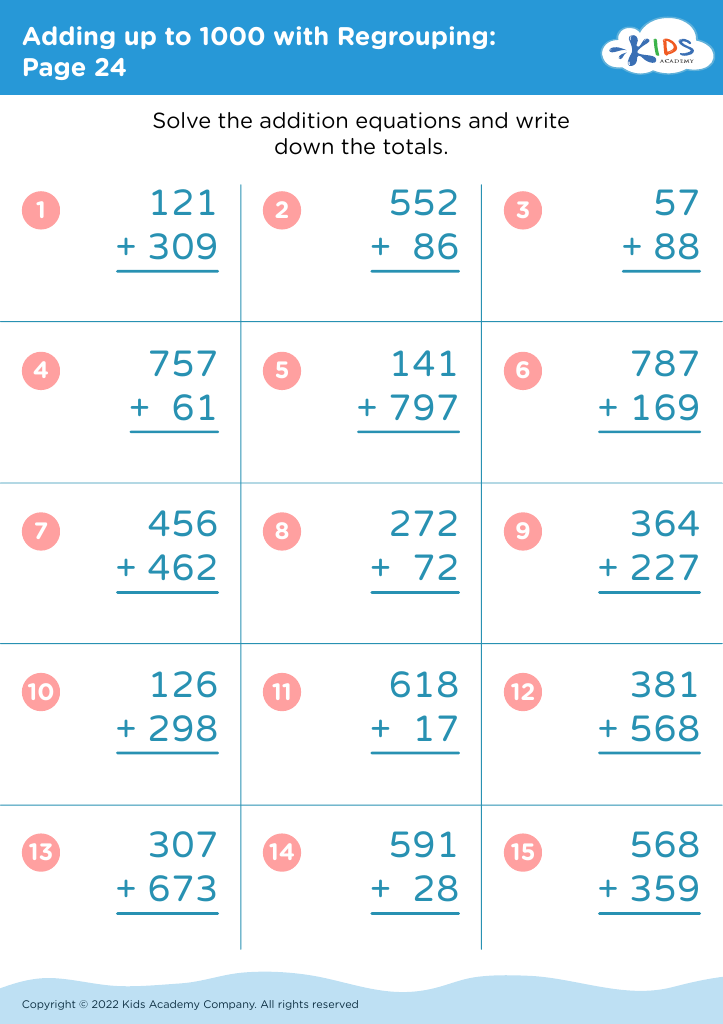
Adding up to 1000 with Regrouping: Page 24
Worksheet


Helping young children understand fraction comparison is crucial for their mathematical development. Even in early grades, grasping the basic concepts of fractions lays a foundation for more complex math skills they will encounter later. Fraction comparison is essential because it enhances a child's number sense, which involves recognizing and working with different quantities and numerical relationships.

When parents and teachers engage children ages 4-7 in comparing simple fractions, they cultivate critical thinking and problem-solving abilities. For instance, figuring out that 1/2 is larger than 1/4 because two parts of something are larger than one part of the same thing, teaches children to think logically and make reasoned judgments.

Additionally, nurturing an early understanding of fractions can help dispel any future anxiety or aversion toward math. Many students struggle with math as they progress to higher grades, but hands-on activities and concrete visual aids in early education can make fractions less intimidating.

Finally, fractions often appear in everyday life, such as dividing a pizza, sharing toys, or understanding parts of a whole. Early exposure helps children grasp these real-world applications naturally, making them not just better students in the classroom but more competent in routine activities.akh steps.

Hence, by focusing on fraction comparison at an early age, parents and teachers set the stage for lifelong mathematical confidence and competency.