Adding up to 50 Without Regrouping Worksheets for Ages 4-7
73 filtered results
-
From - To
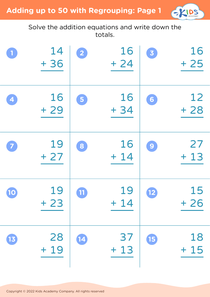
Discover our exciting collection of "Adding up to 50 Without Regrouping Worksheets" designed for children ages 4-7! These engaging worksheets at Kids Academy help young learners build essential math skills in a fun and interactive way. Perfect for beginners, these printables focus on simple addition without the complexities of regrouping. Each worksheet is crafted to boost confidence and develop a solid foundation in basic arithmetic. Get ready to support your child's journey to math mastery with our expertly designed resources. Visit Kids Academy for more educational tools and make learning math a delightful experience!
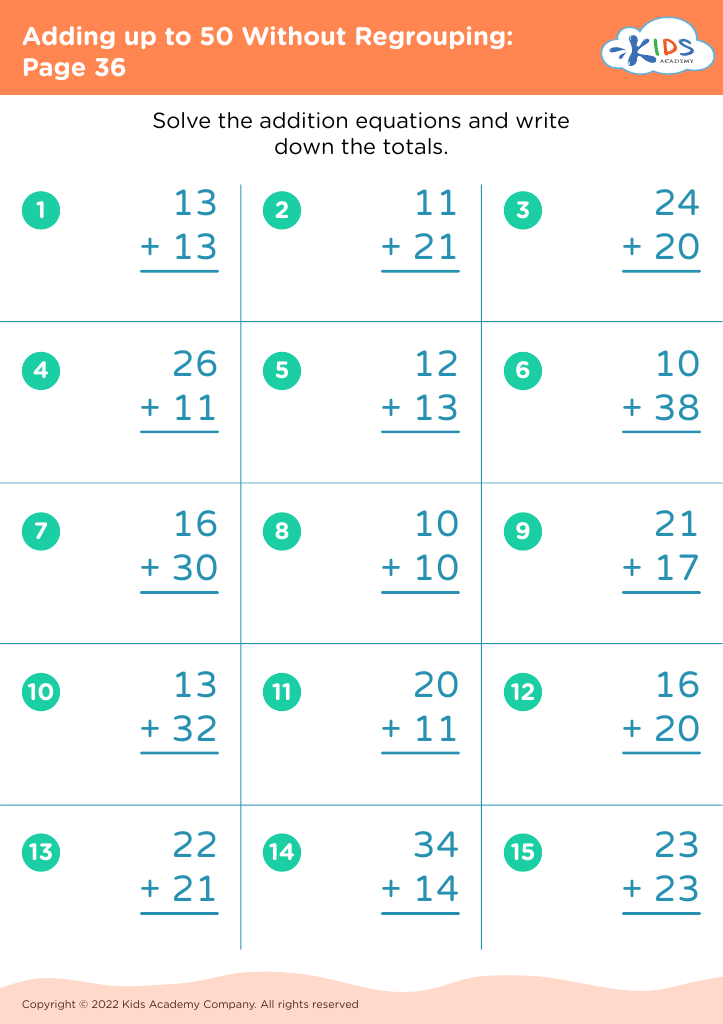
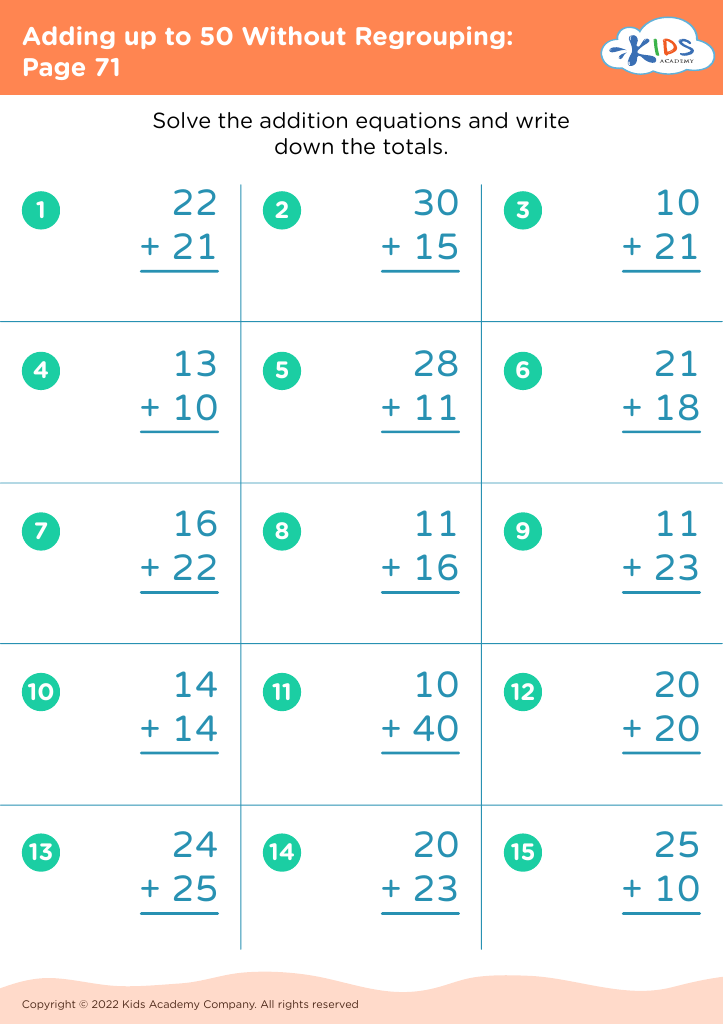
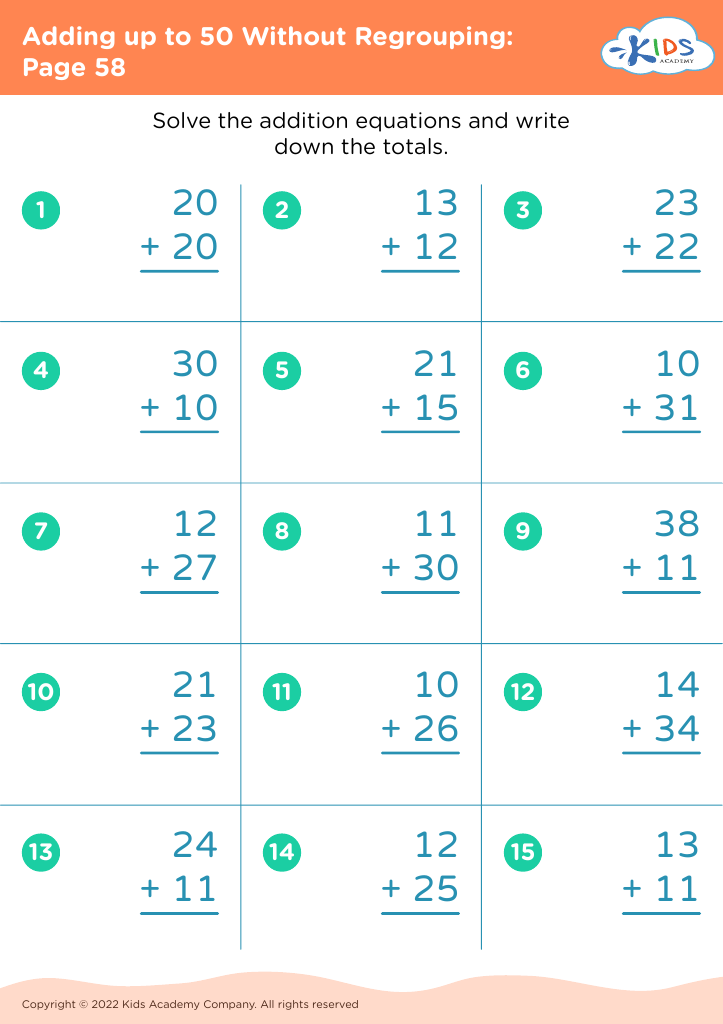
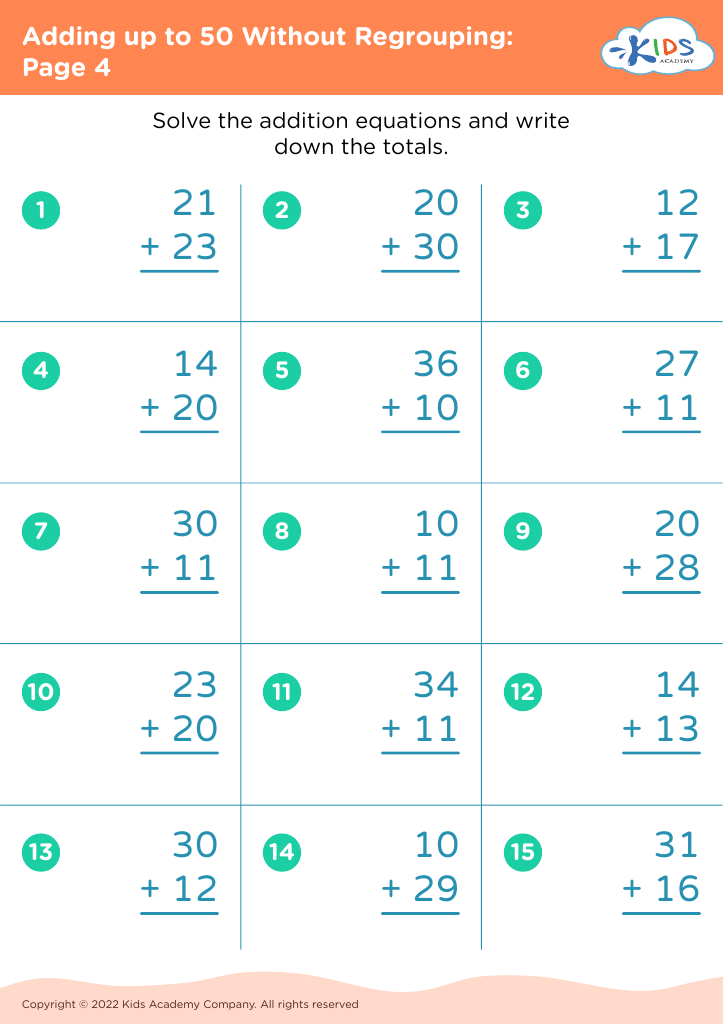
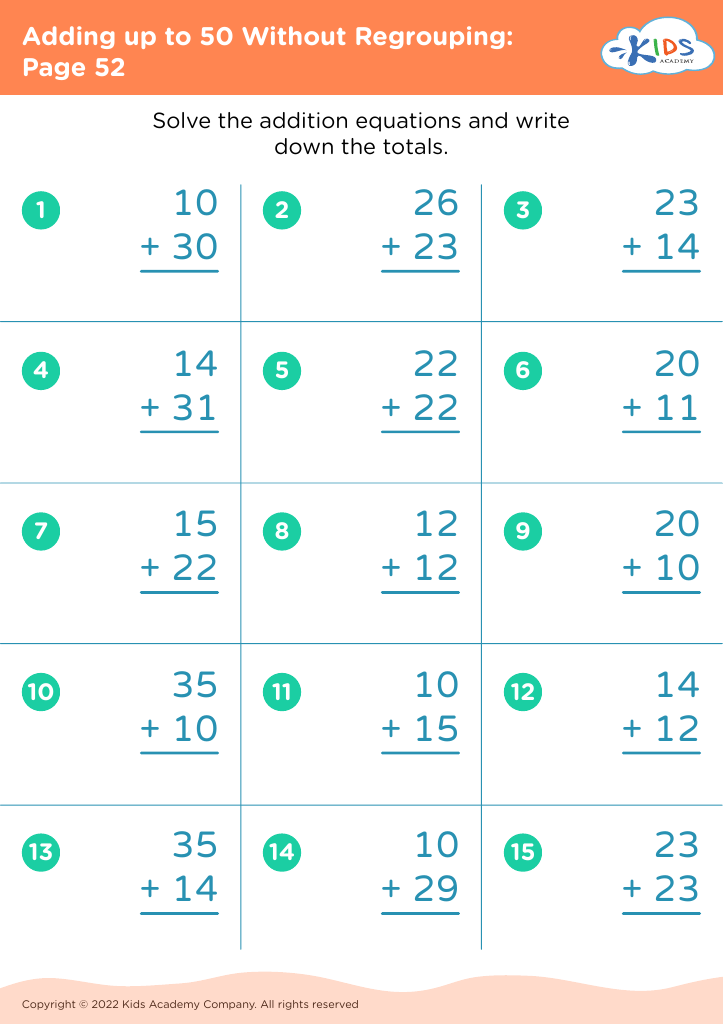
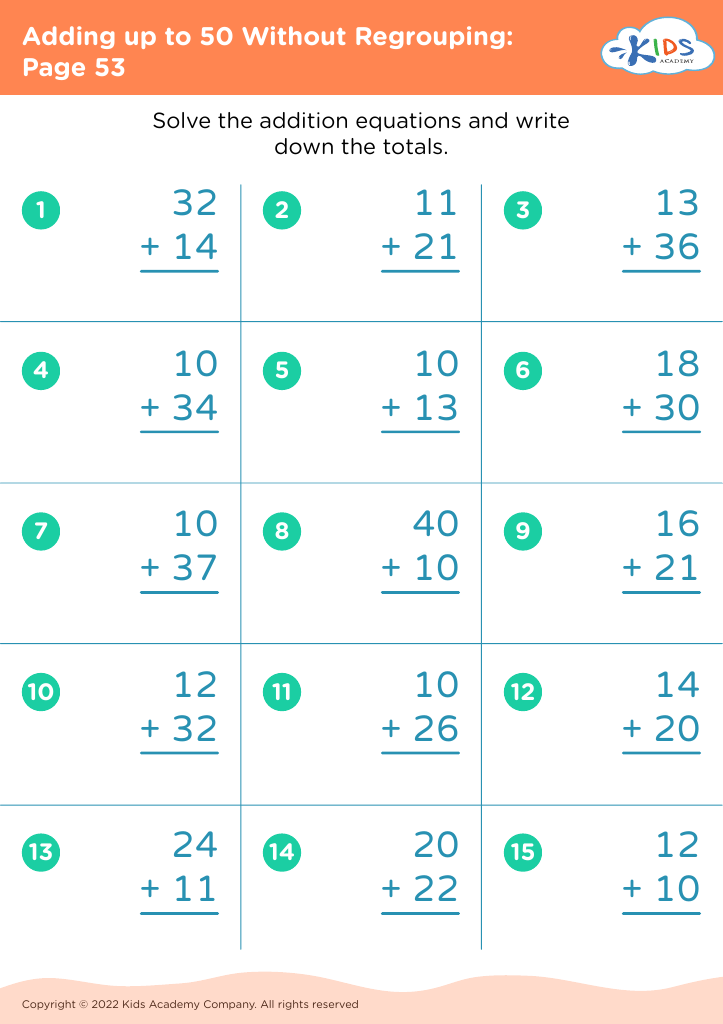
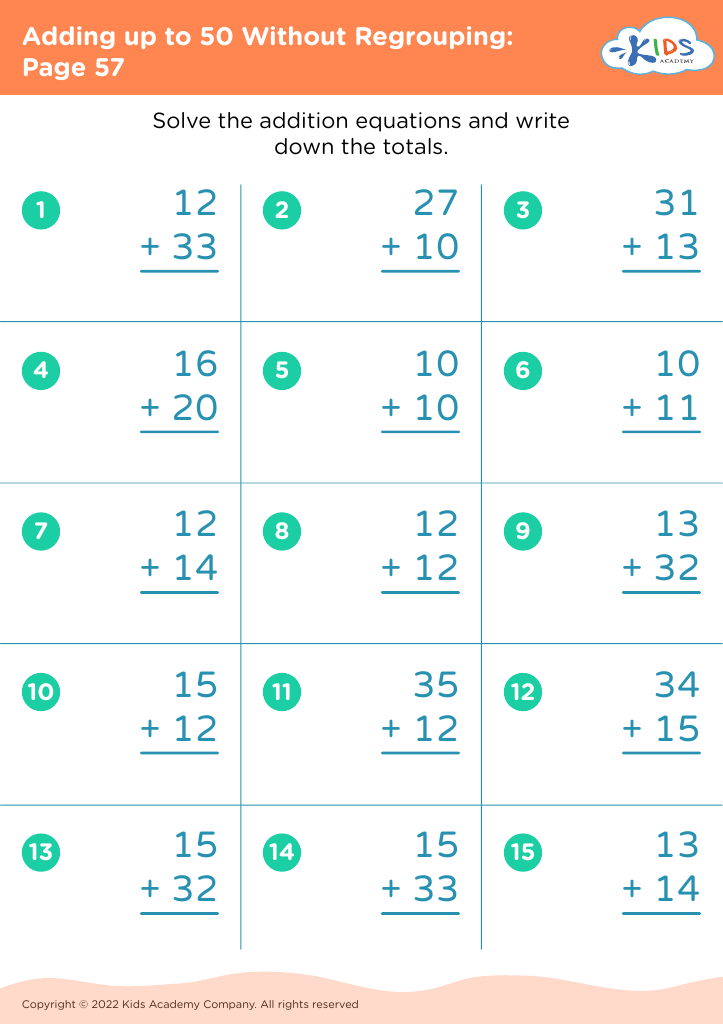
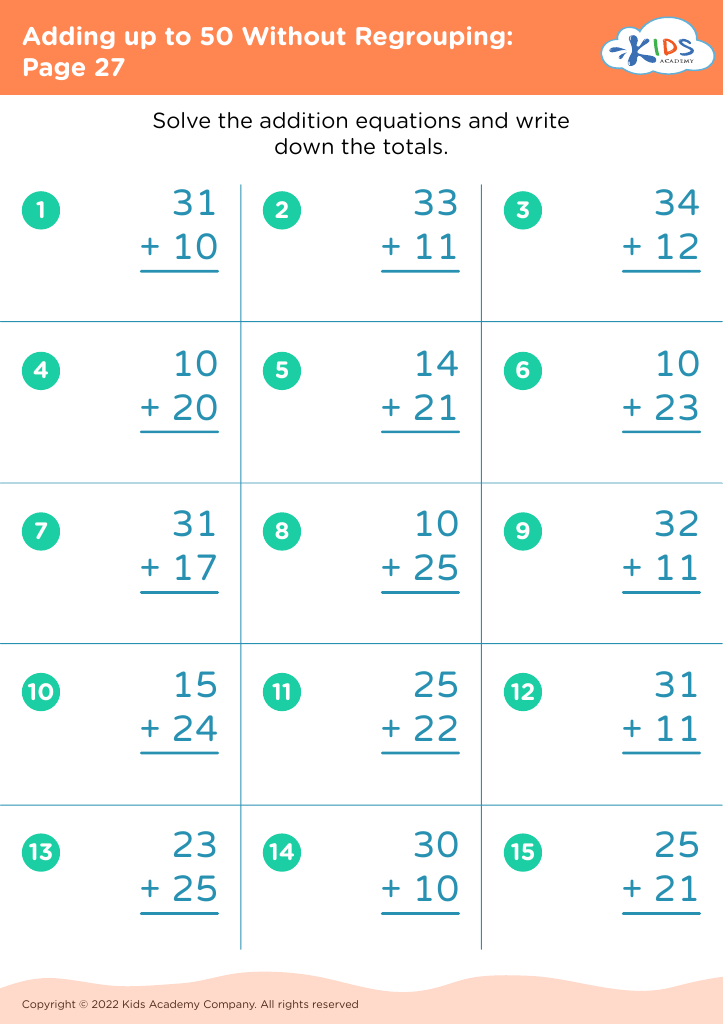
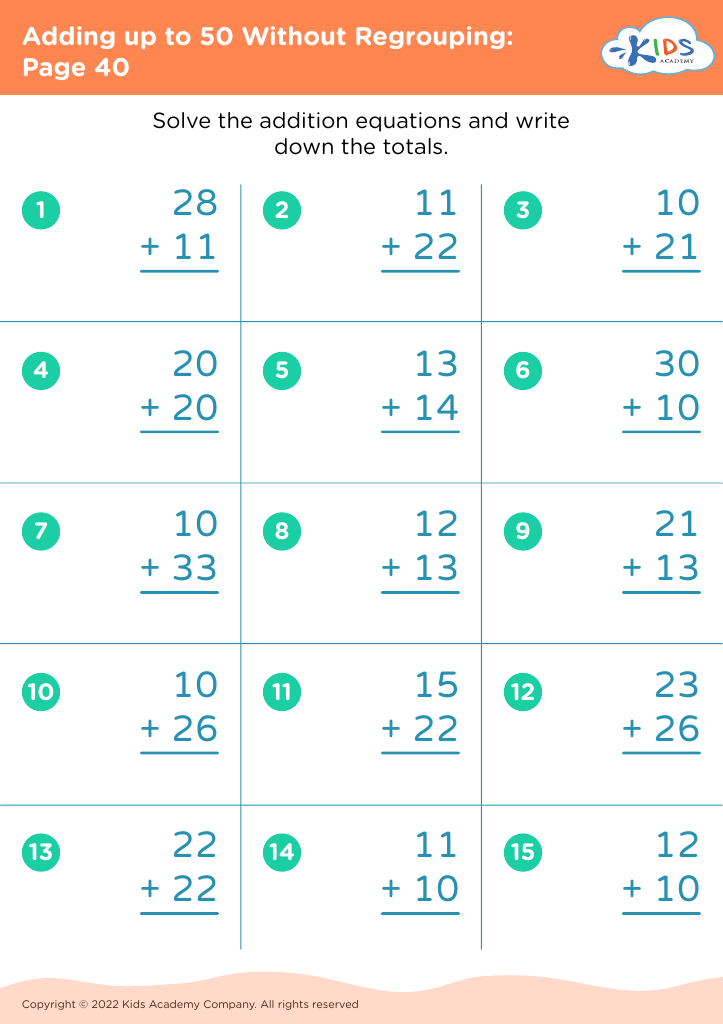
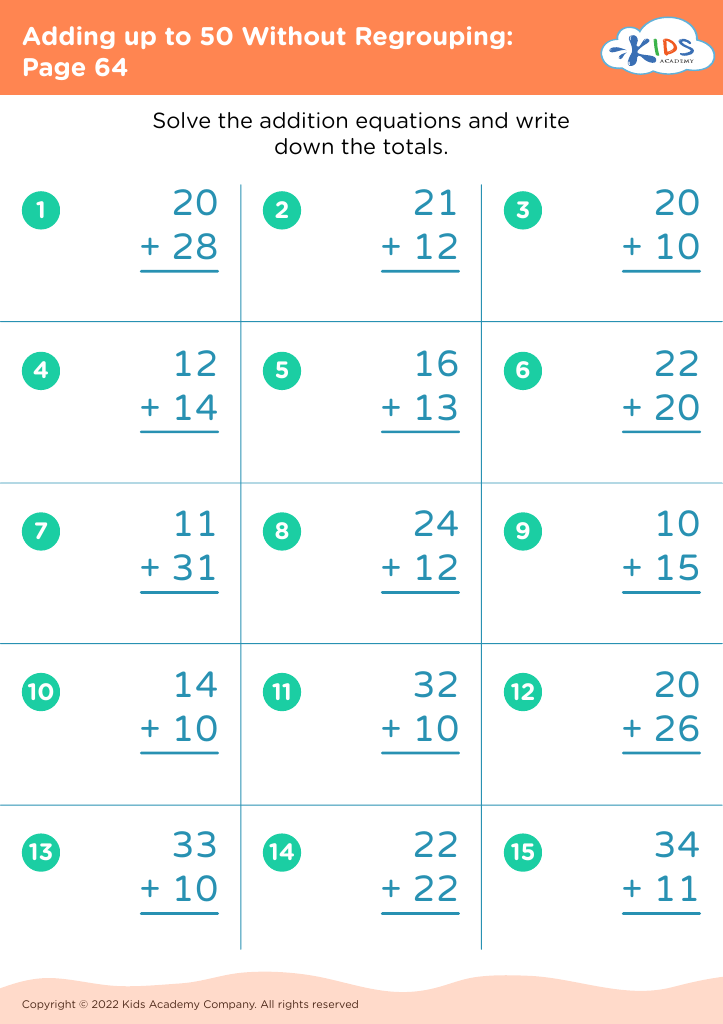
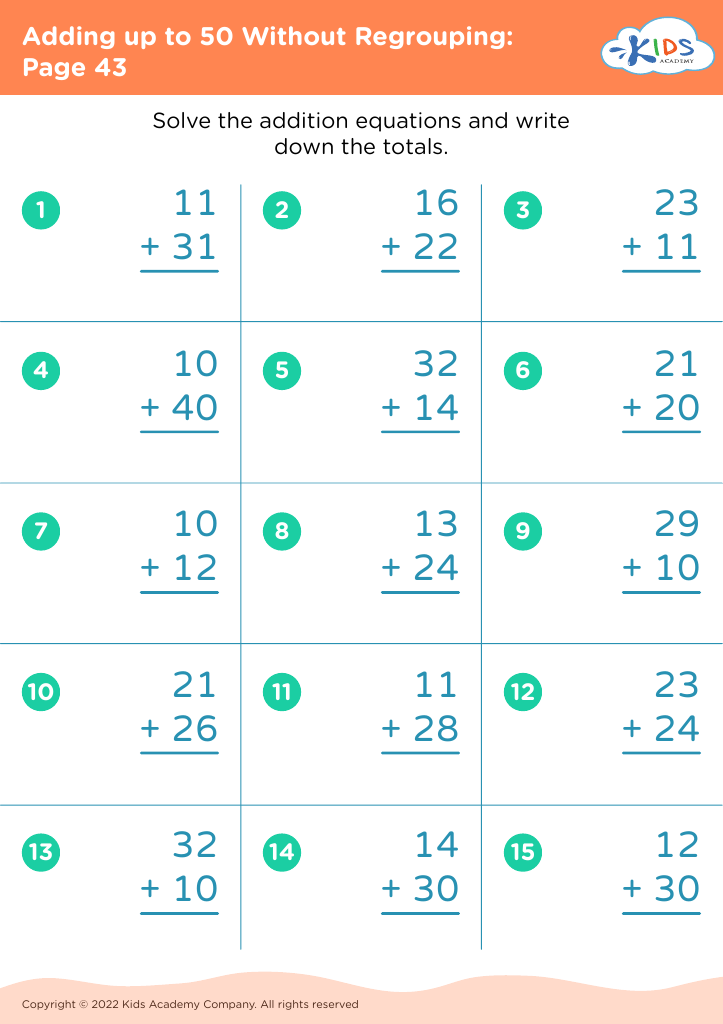
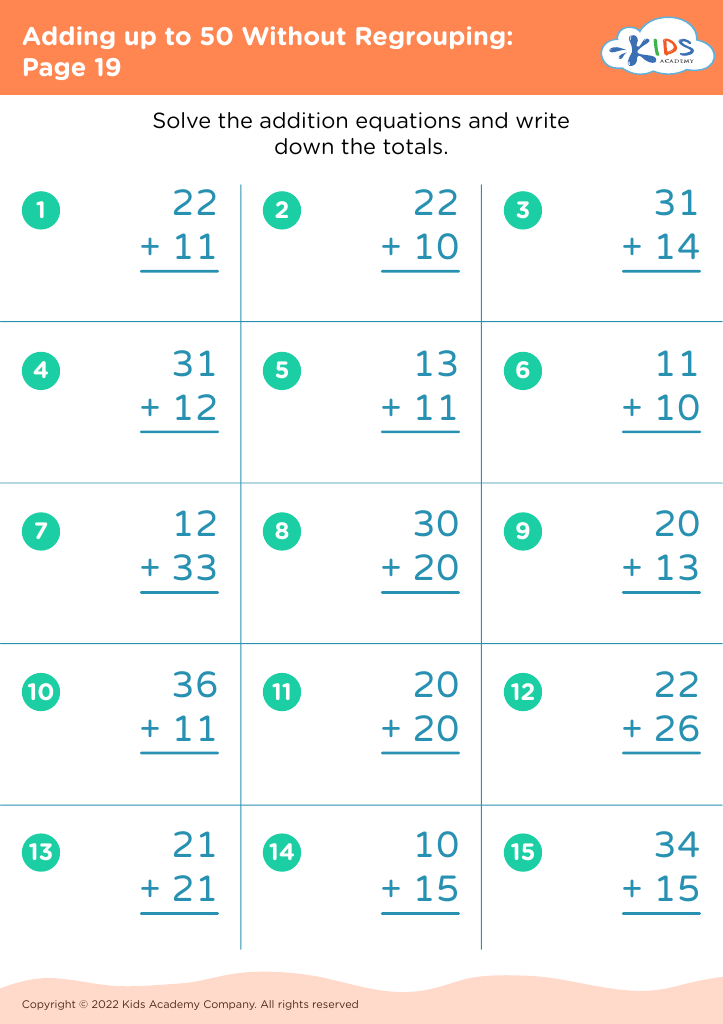
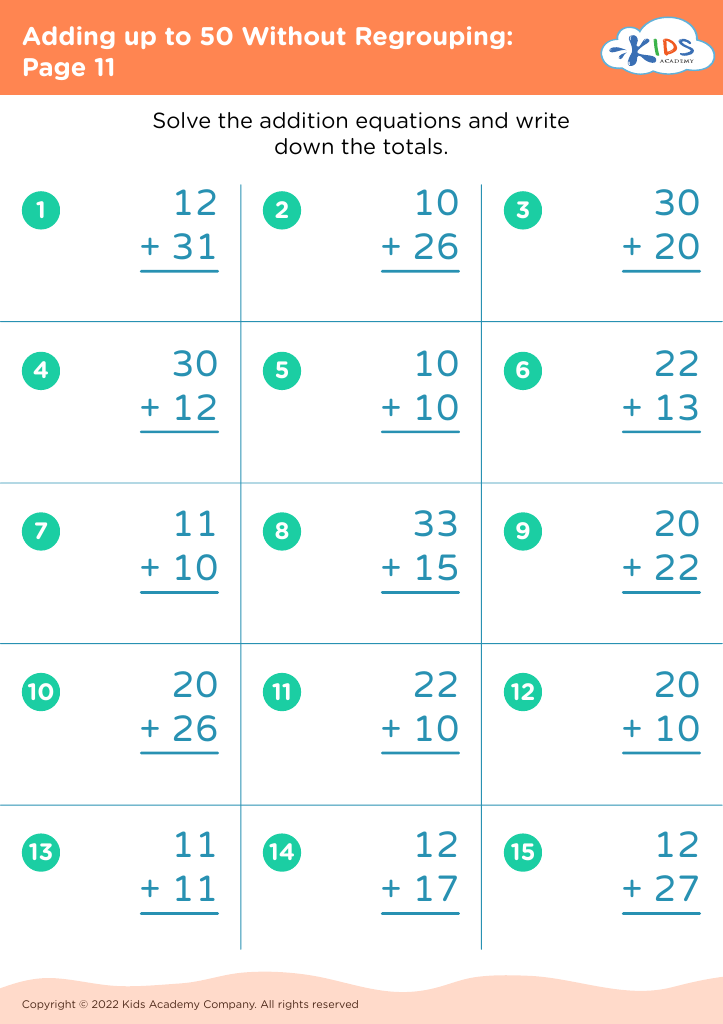
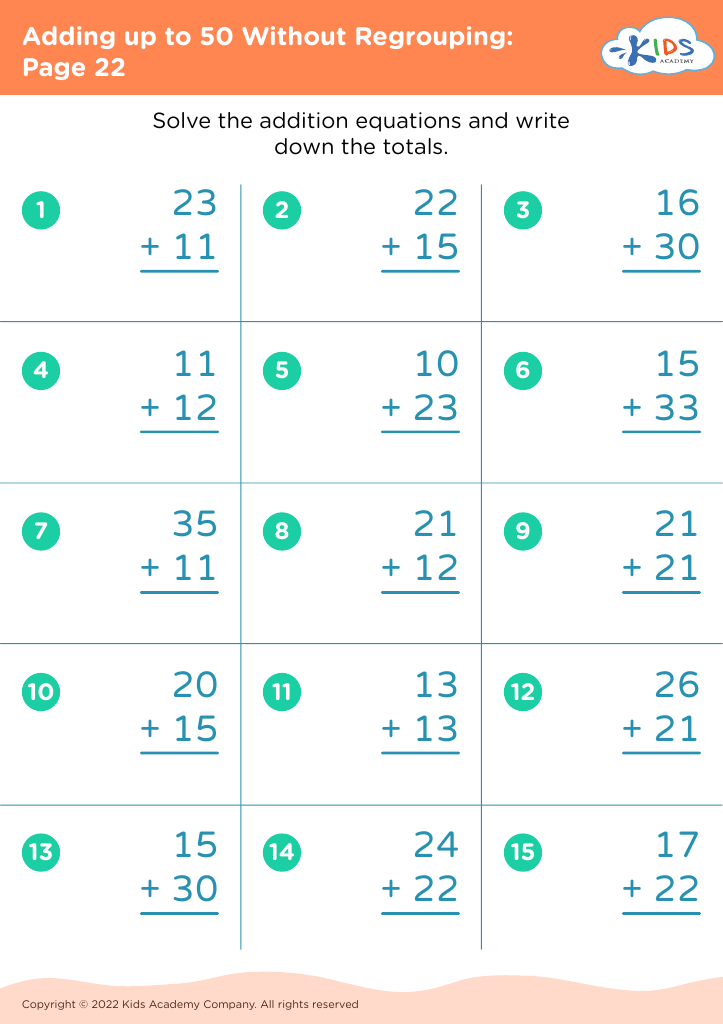
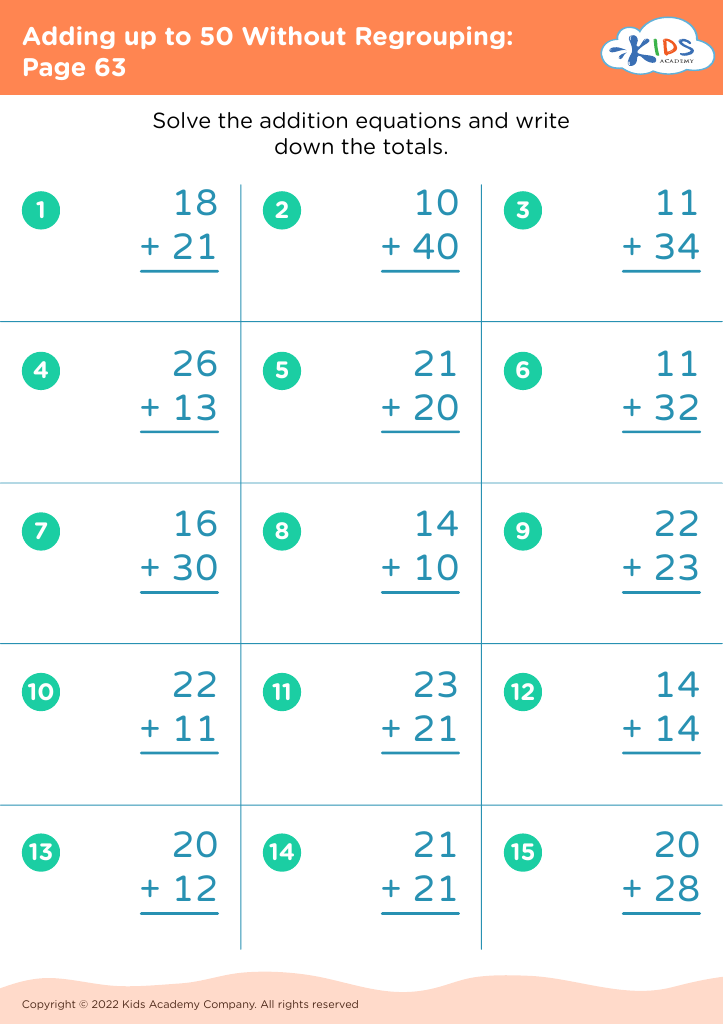
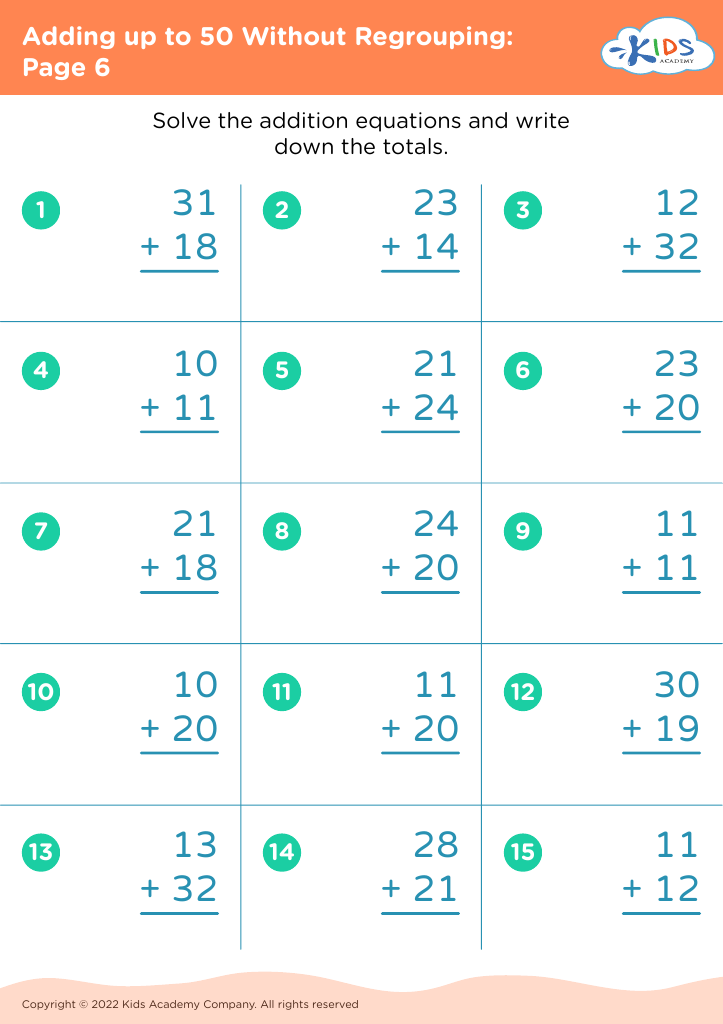
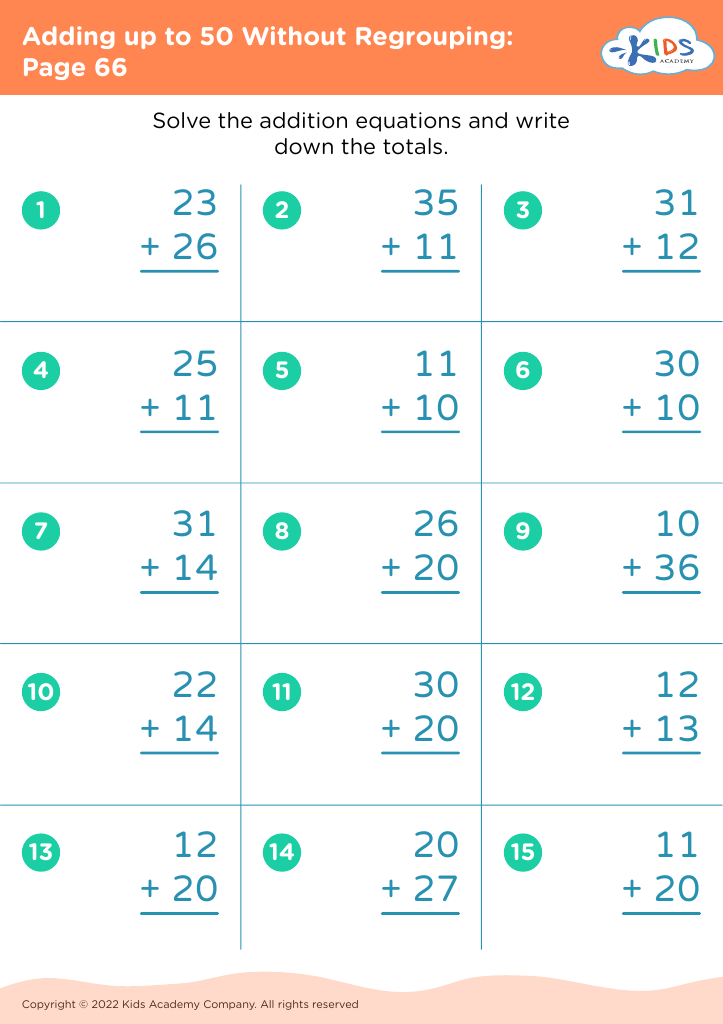
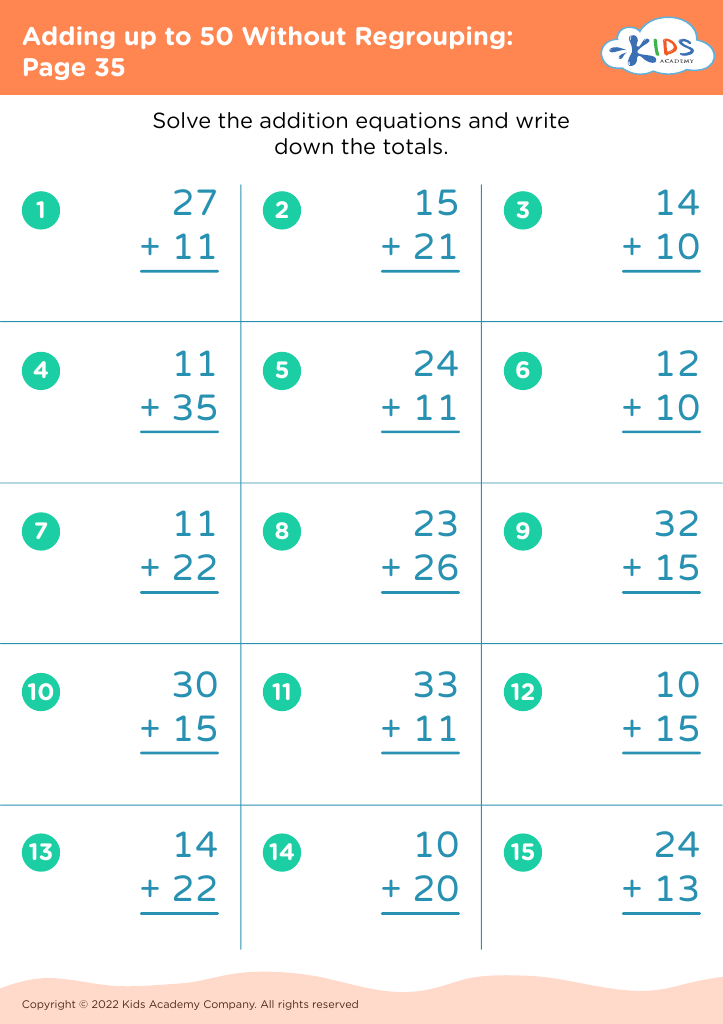
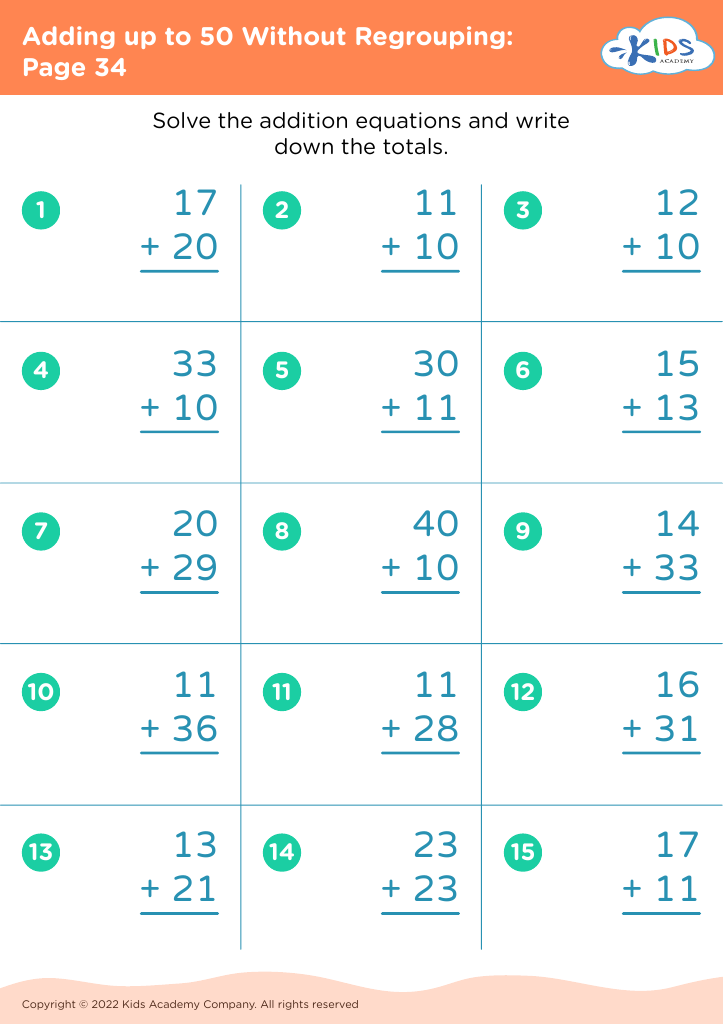
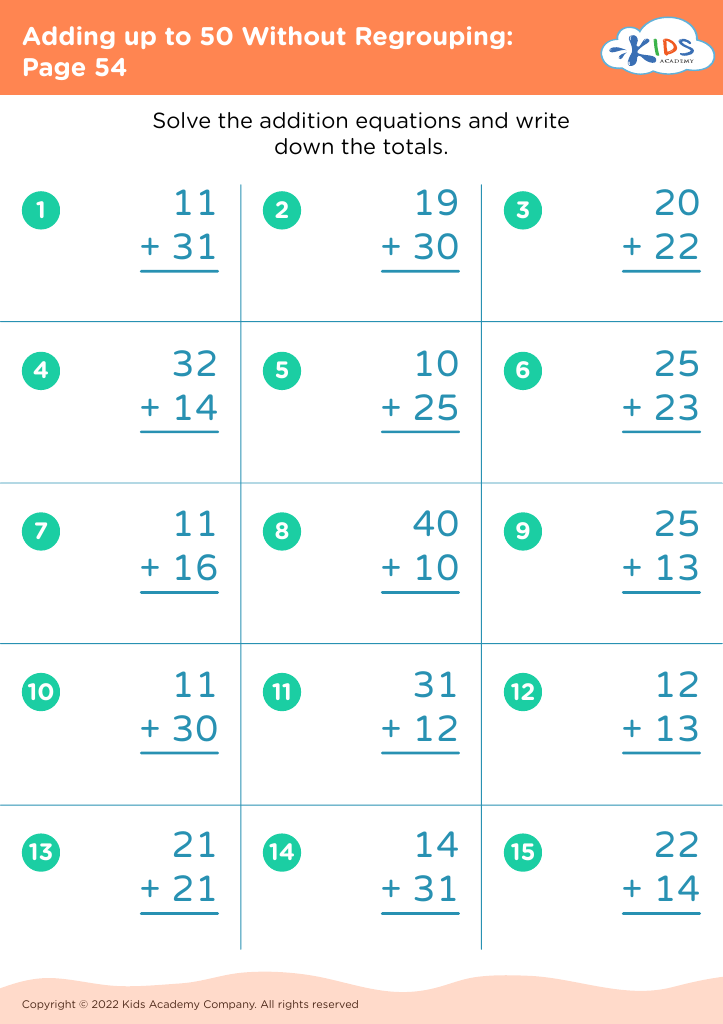
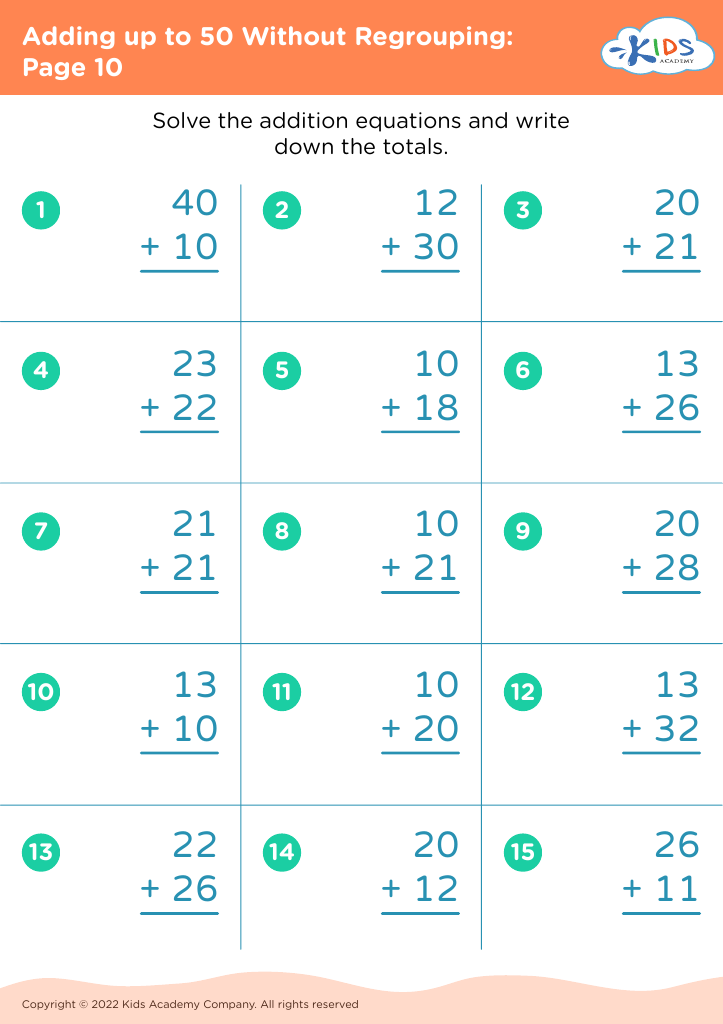
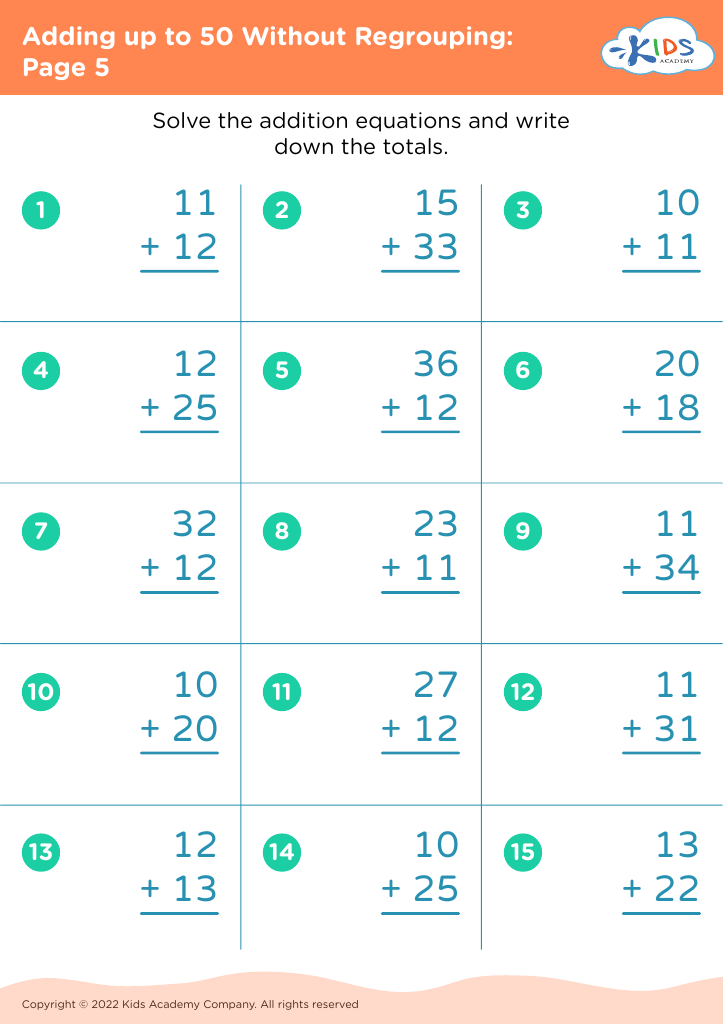
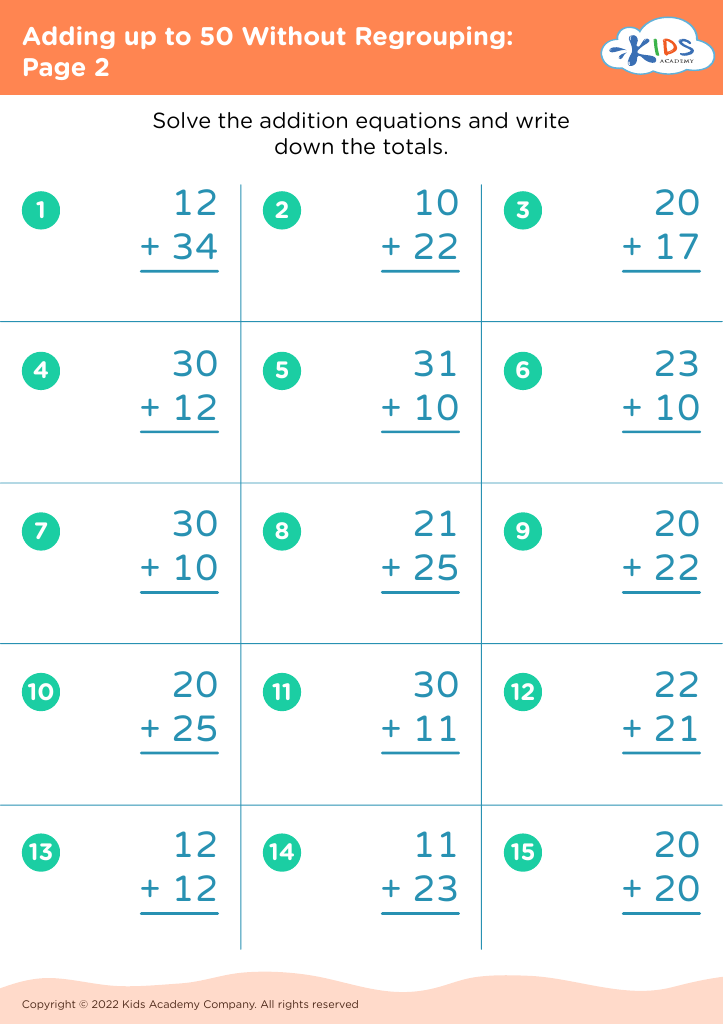
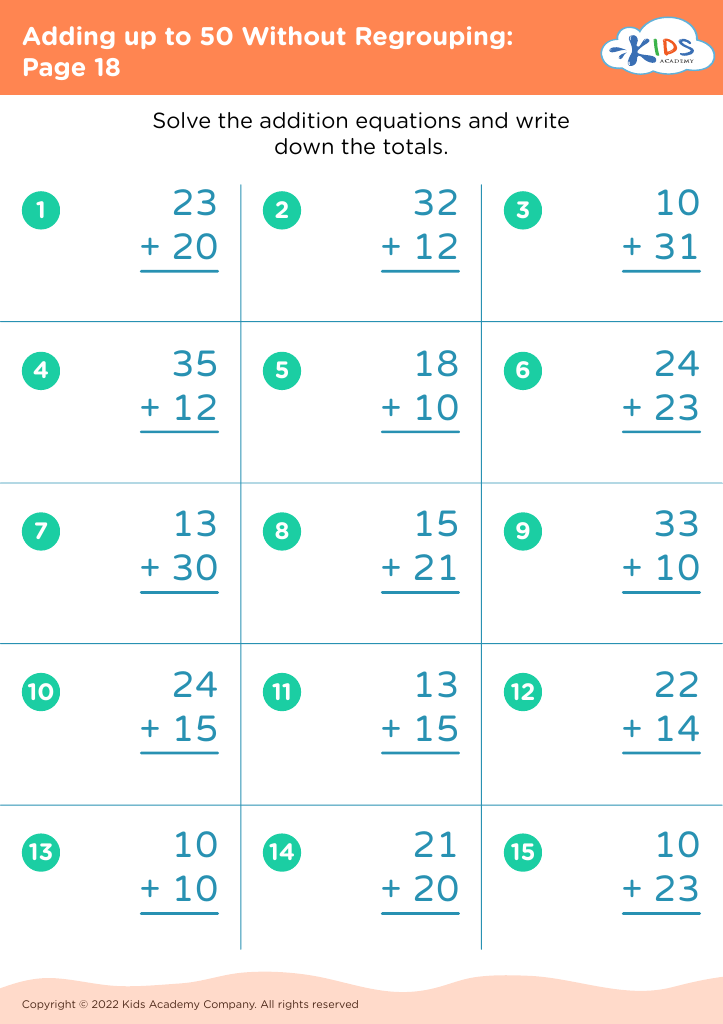


Parents and teachers are fundamental in shaping the cognitive and emotional development of young children, making it vital to prioritize foundational mathematical skills like adding up to 50 without regrouping for ages 4-7. At this stage, children are building the bedrock for all future mathematical learning. By focusing on addition without regrouping, children can develop a clear, intuitive understanding of basic arithmetic, promoting confidence in their math abilities. This foundational knowledge is essential because mathematical confidence formed at an early age often translates into better performance and reduced math anxiety in later years.
Additionally, understanding simple addition nurtures problem-solving skills. Young children exposed to these concepts learn to approach problems methodically, fostering logical thinking. This is not only valuable for mathematics but also enhances their critical thinking skills across various subjects.
Moreover, early mastery of addition ensures that children can keep pace with their curriculum, reducing frustration and making school a more enjoyable experience. It lays a foundation upon which more complex operations like regrouping or subtraction are built, aiding in a smoother progression through their academic journey.
In conclusion, focusing on adding up to 50 without regrouping is a strategic step in nurturing a child’s overall intellectual growth, instilling both competence and confidence in mathematical reasoning that extends far beyond the classroom.