Filters

251 filtered results

Clear all filters
Favorites
With answer key
Interactive

251 filtered results

Difficulty Level

Grade


Check out this FREE Trial Lesson on Addition & Subtraction for age 4-7!

Match Objects that Fit Together

Favorites
With answer key
Interactive
  • 4-7
  • Counting skills
  • Addition & Subtraction
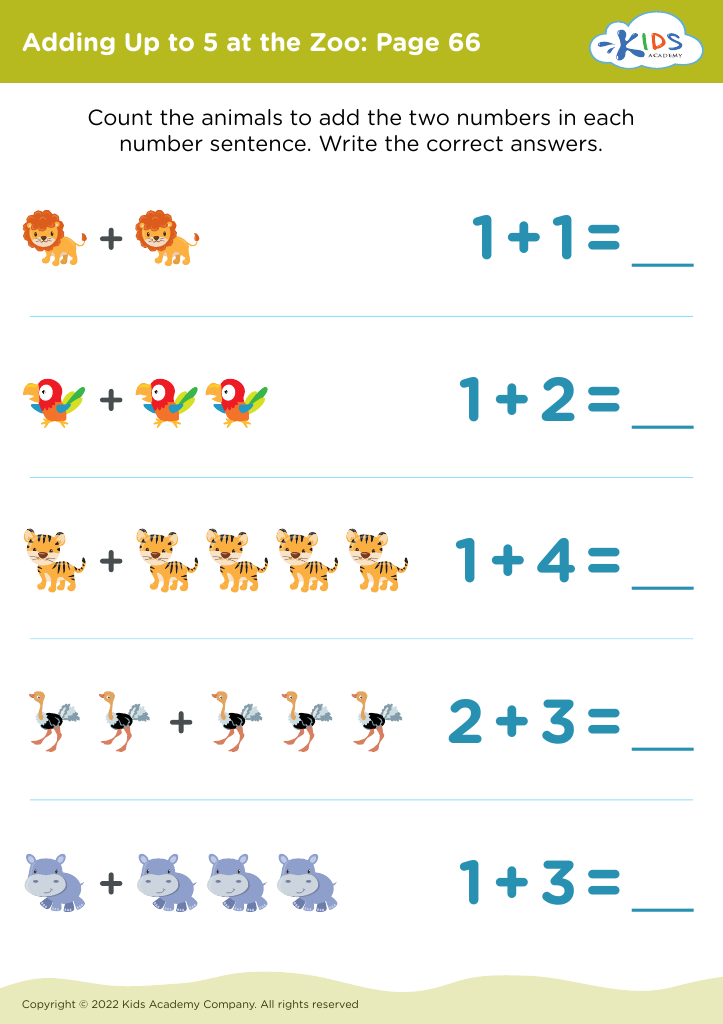
Adding Up to 5 at the Zoo: Page 66
Worksheet
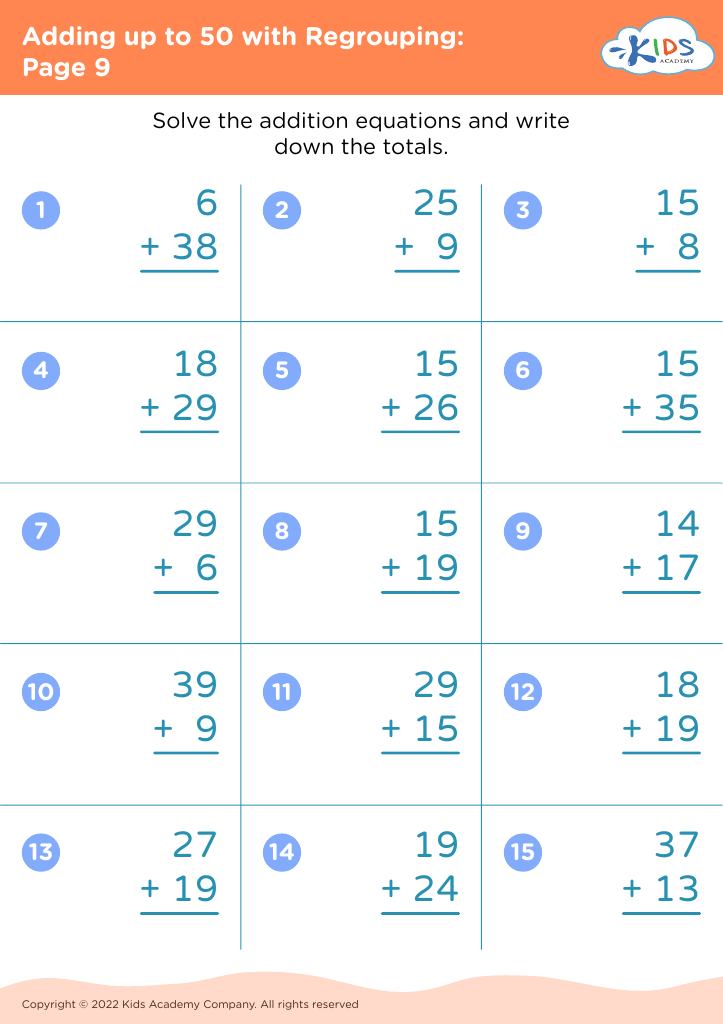
Adding up to 50 with Regrouping: Page 9
Worksheet
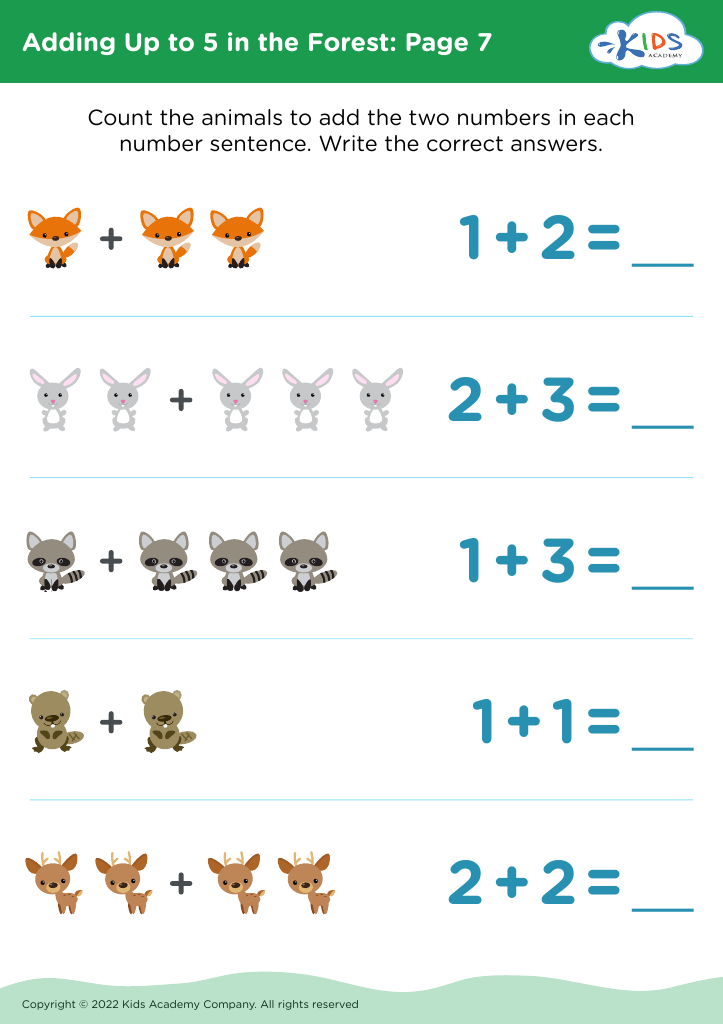
Adding Up to 5 in the Forest: Page 7
Worksheet
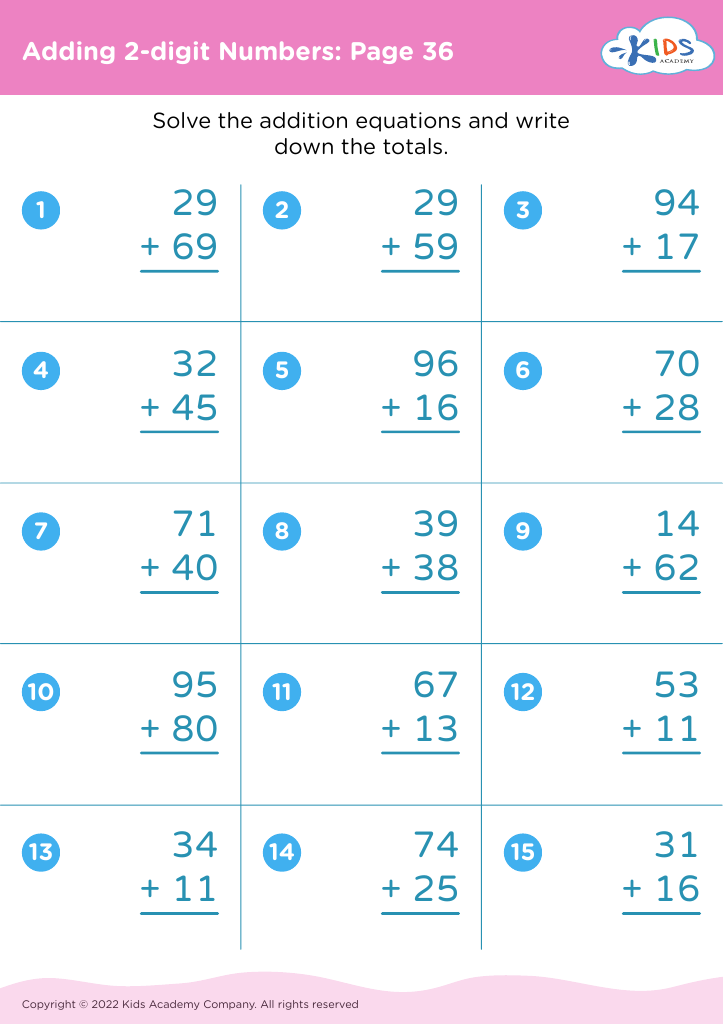
Adding 2-digit Numbers: Page 36

Adding 2-digit Numbers: Page 36

Adding 2-digit Numbers: Page 36
Worksheet
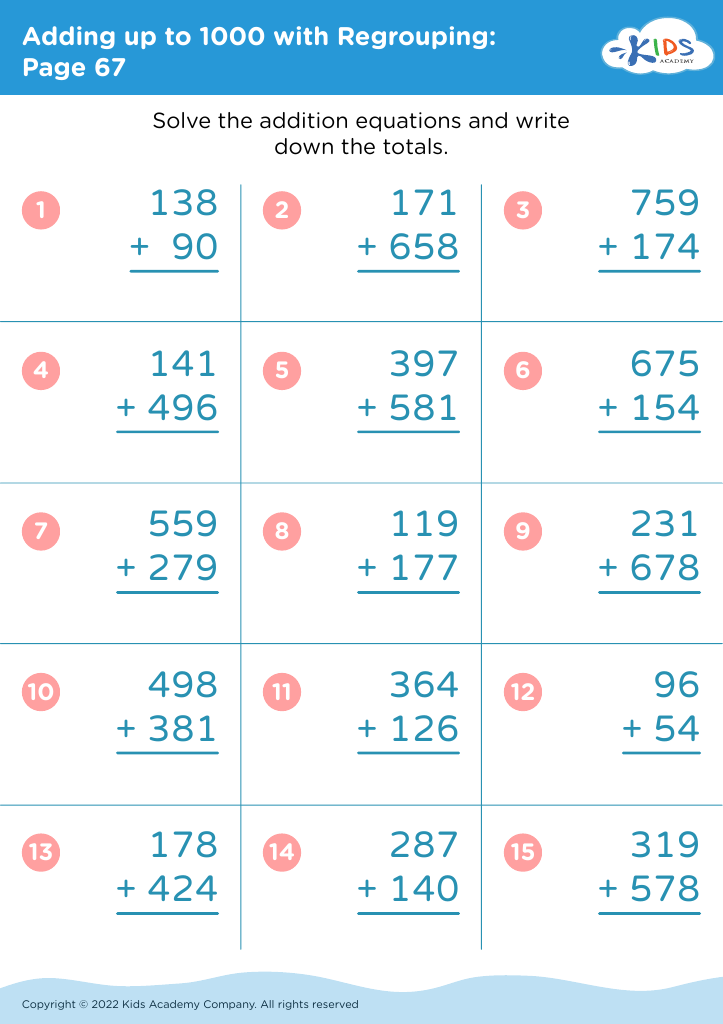
Adding up to 1000 with Regrouping: Page 67
Worksheet
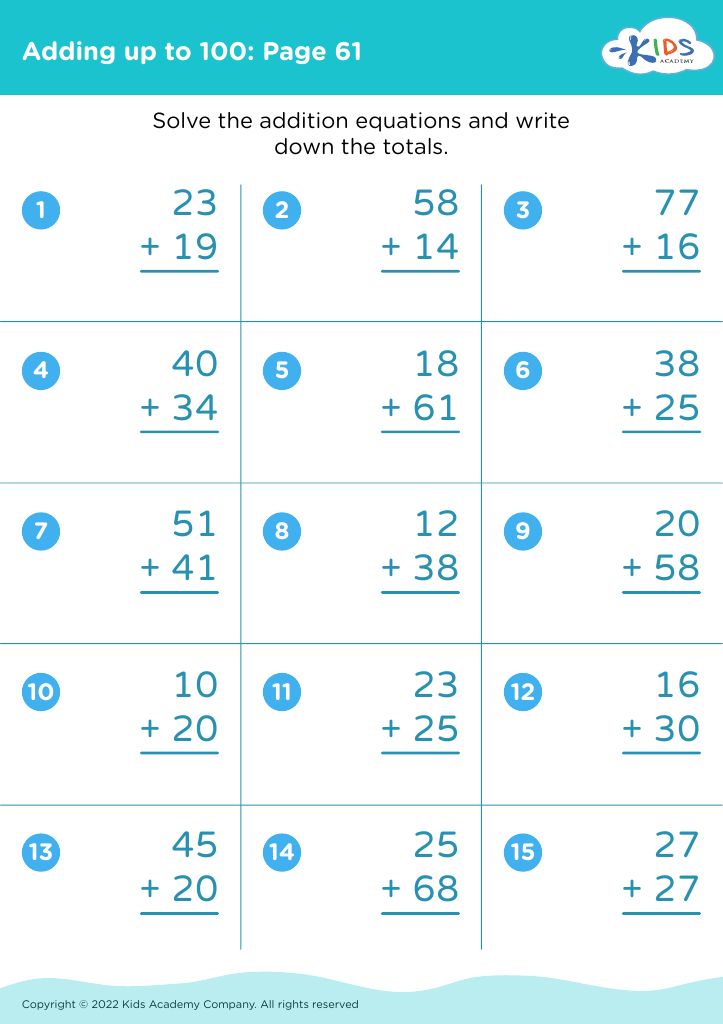
Adding up to 100: Page 61

Adding up to 100: Page 61

Adding up to 100: Page 61
Worksheet
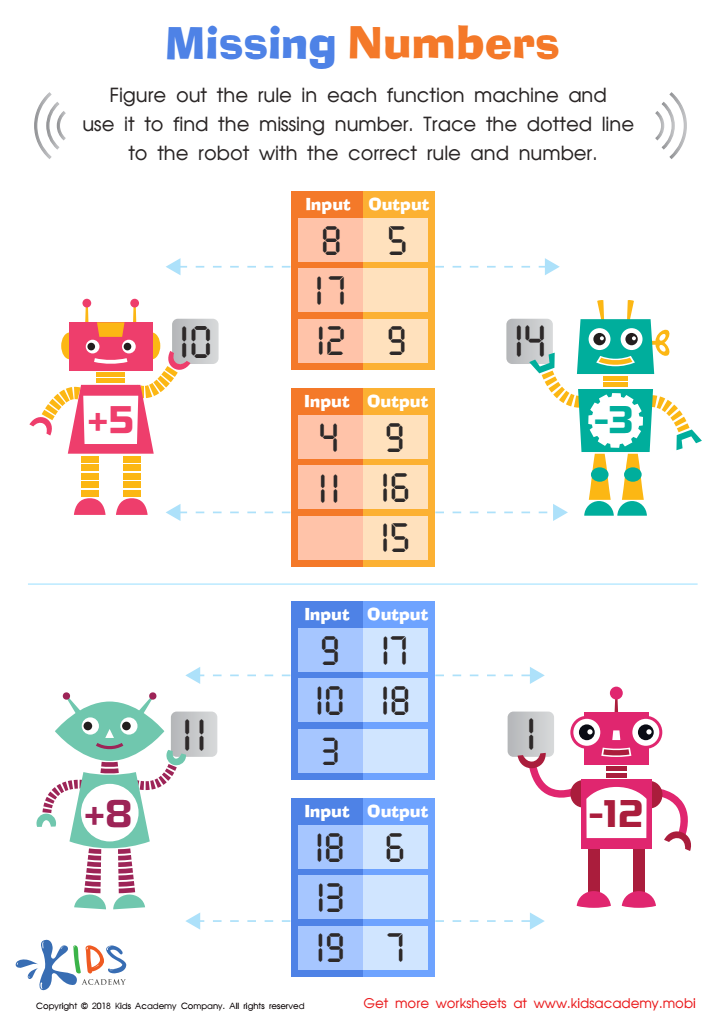
Missing Numbers Worksheet

Missing Numbers Worksheet

Elementary students can learn the important pre-algebra skill of solving for missing numbers! Our robots guide them along with number-filled bellies and missing answers in their hands. Kids can examine the other numbers in each graph, use the rule to solve the missing number, and check their work with the missing number to ensure correctness.
Missing Numbers Worksheet
Worksheet
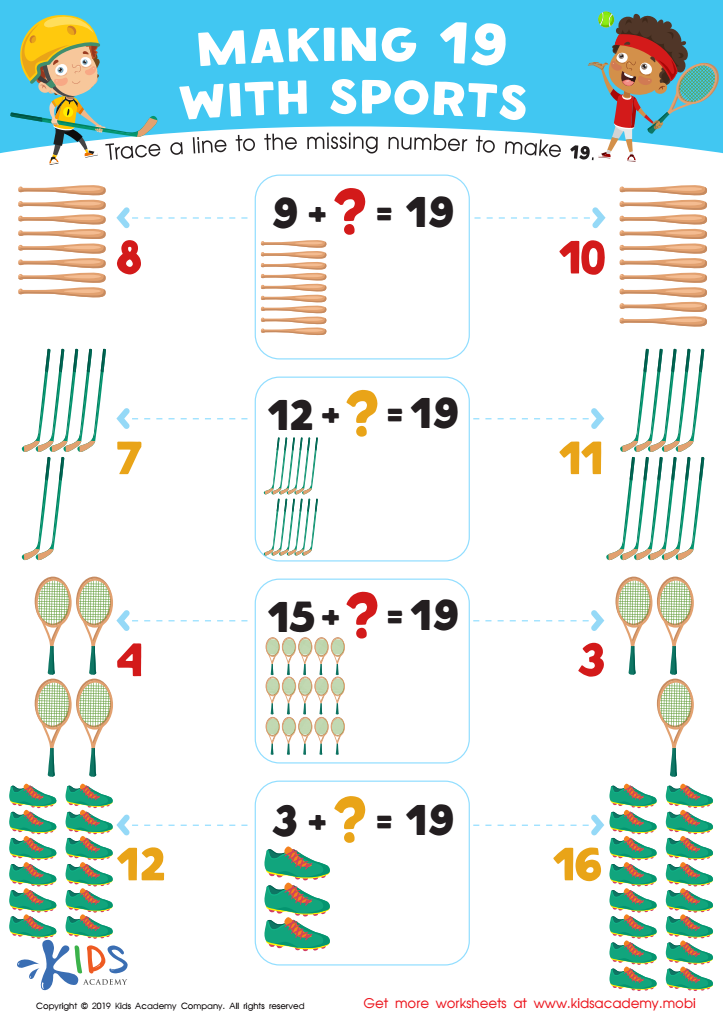
Making 19 with Sports Worksheet

Making 19 with Sports Worksheet

As kids grow, so does their learning. Help them master simple addition with four equations in the worksheet. By finding the missing numbers to make 19, and tracing a line to the answer, your kids will improve their math skills.
Making 19 with Sports Worksheet
Worksheet
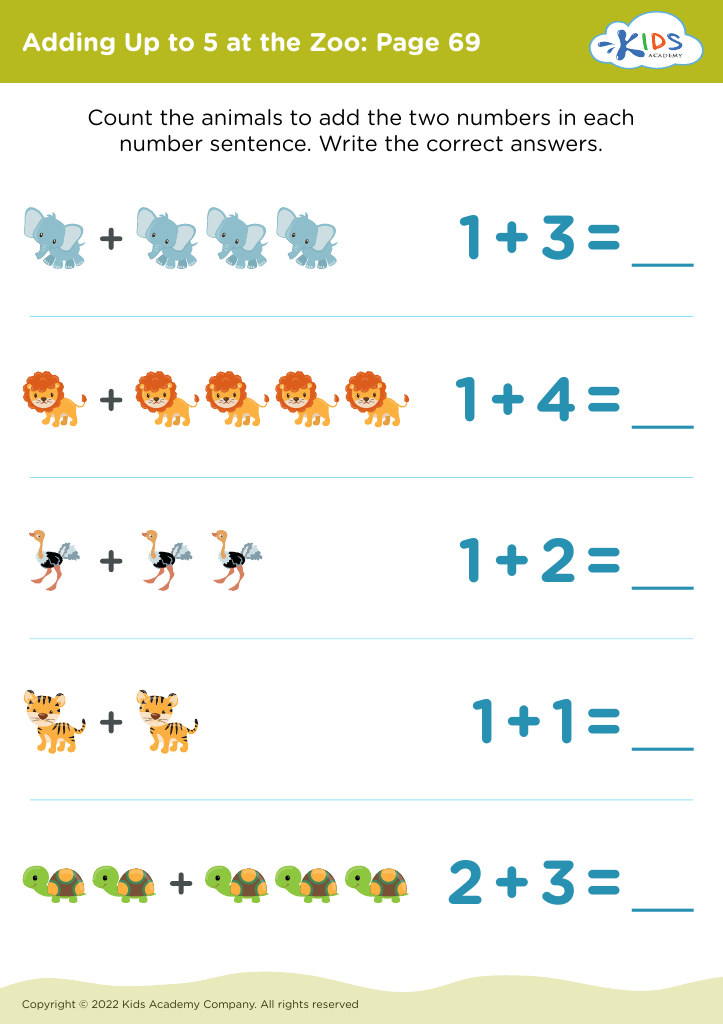
Adding Up to 5 at the Zoo: Page 69
Worksheet
How Many More to Add Worksheet
How Many More to Add Worksheet
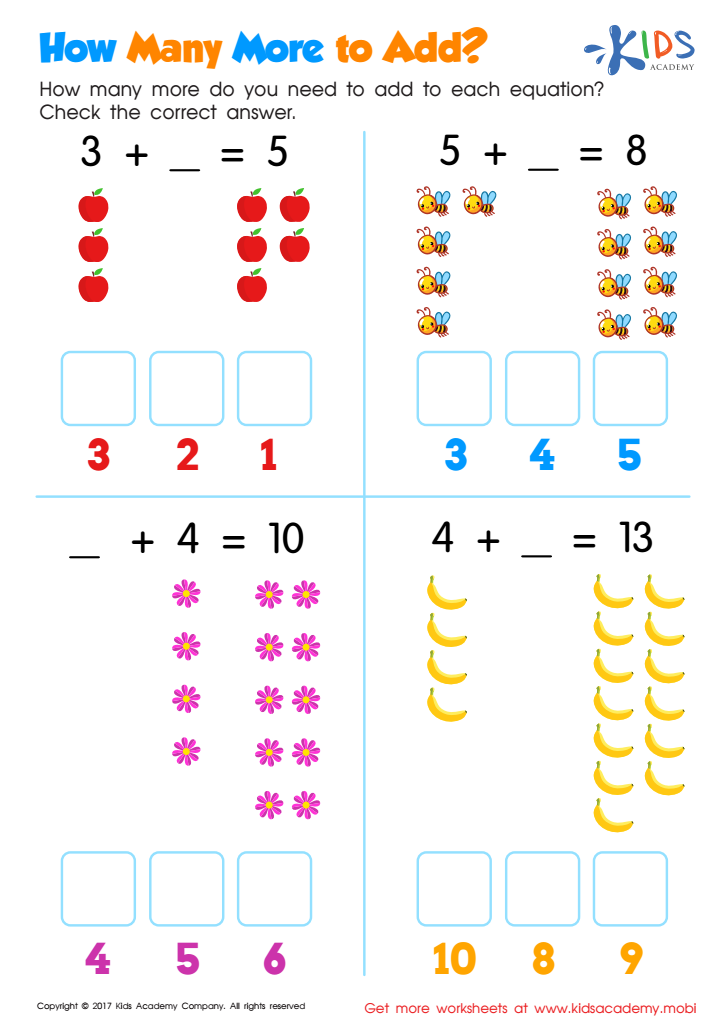
Sharpen your child's math skills with this pdf worksheet. Help them figure out how many apples, bees, flowers and bananas are needed to reach the answer given. The possible answers are provided at the bottom of the boxes. Have some fun doing some addition and subtraction magic together and get those math skills sharpened!
How Many More to Add Worksheet
Worksheet
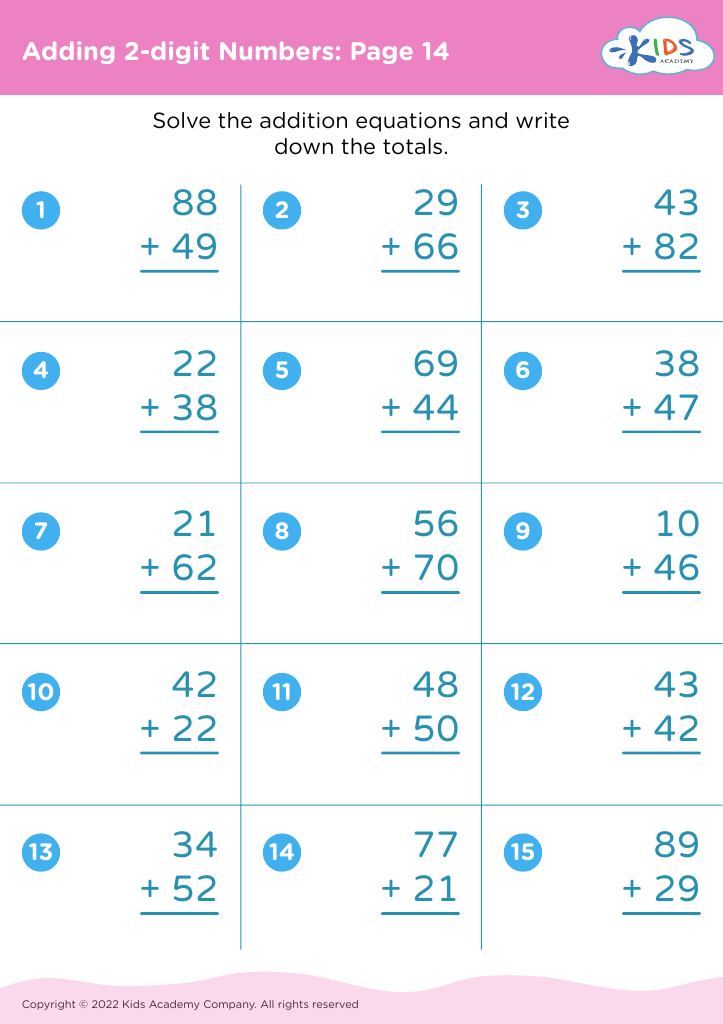
Adding 2-digit Numbers: Page 14

Adding 2-digit Numbers: Page 14

Adding 2-digit Numbers: Page 14
Worksheet
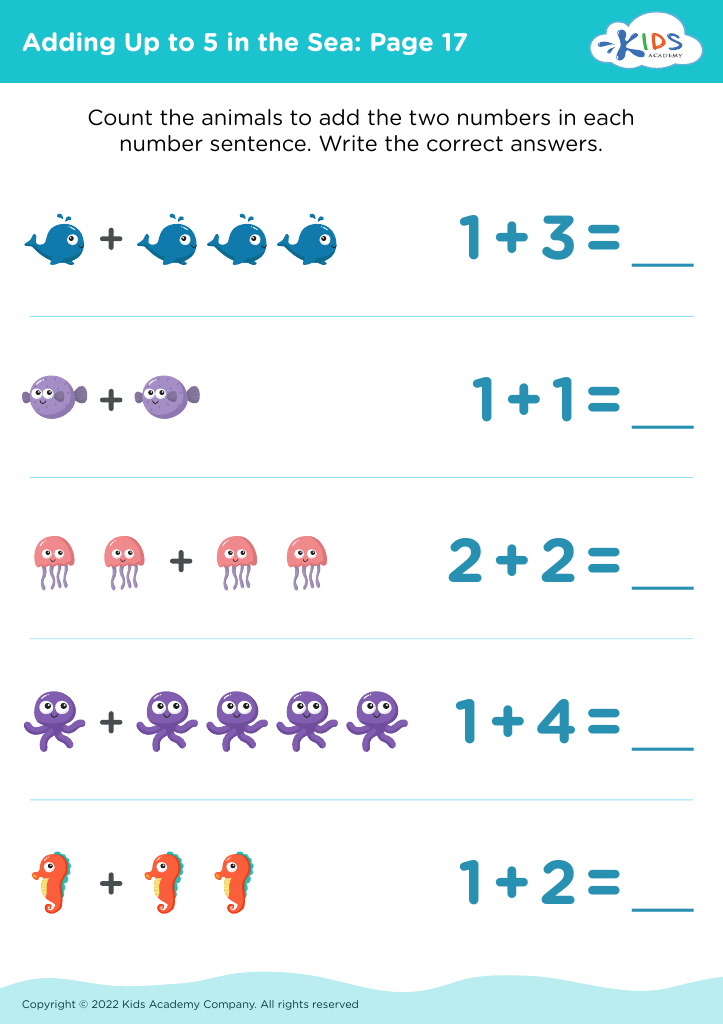
Adding Up to 5 in the Sea: Page 17
Worksheet
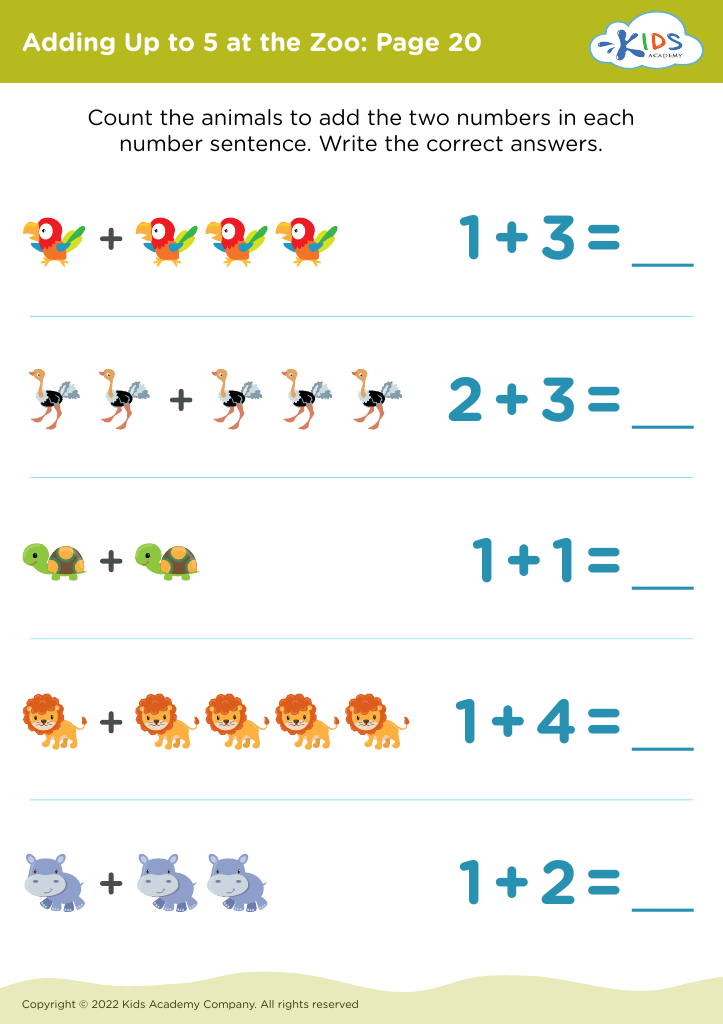
Adding Up to 5 at the Zoo: Page 20
Worksheet
Find Two at the Zoo Worksheet
Find Two at the Zoo Worksheet
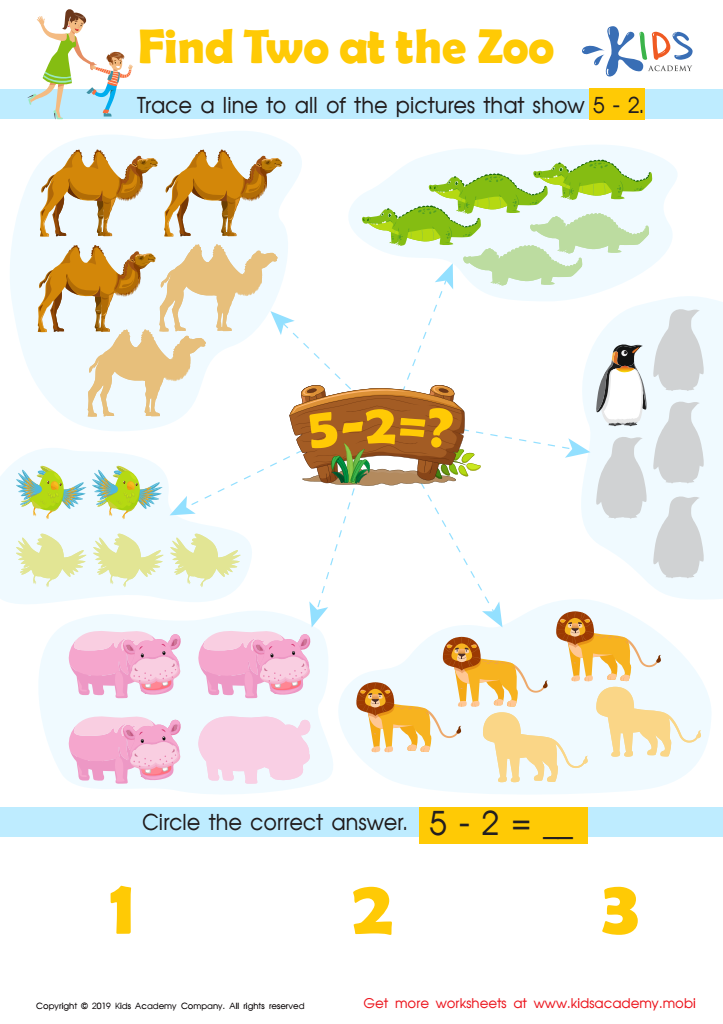
Help your kids overcome math fears and practice subtracting numbers with this traceable PDF. Ask them to identify the 6 groups of animals in the picture and count the animals in each group. Then, help them trace a line to all of the pictures that illustrate the equation 5-2.
Find Two at the Zoo Worksheet
Worksheet
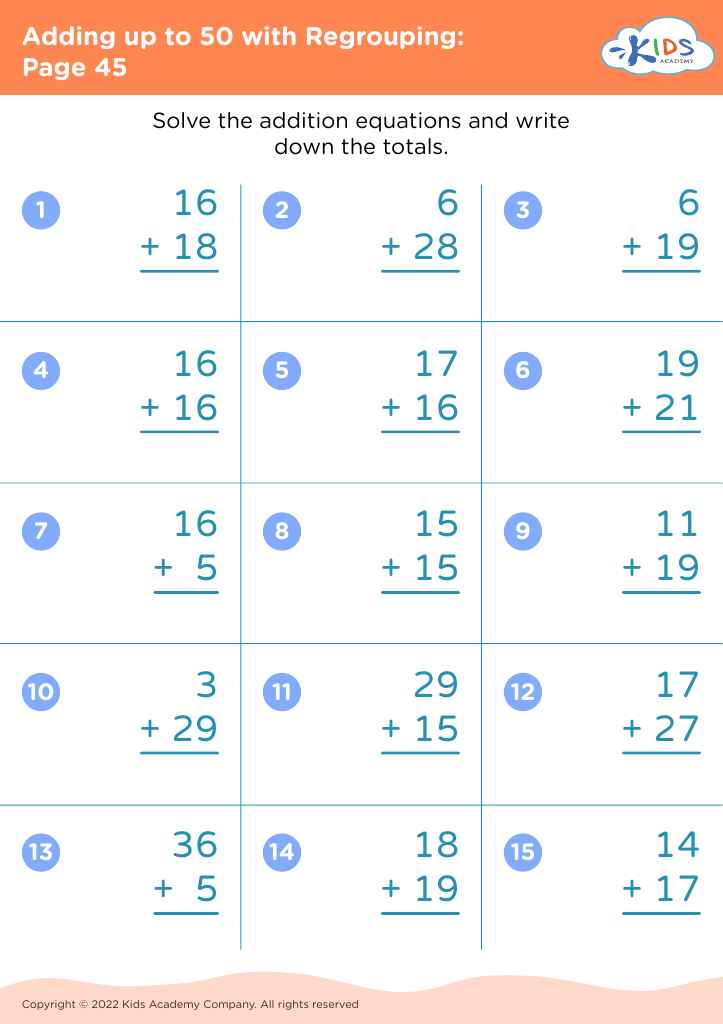
Adding up to 50 with Regrouping: Page 45
Worksheet
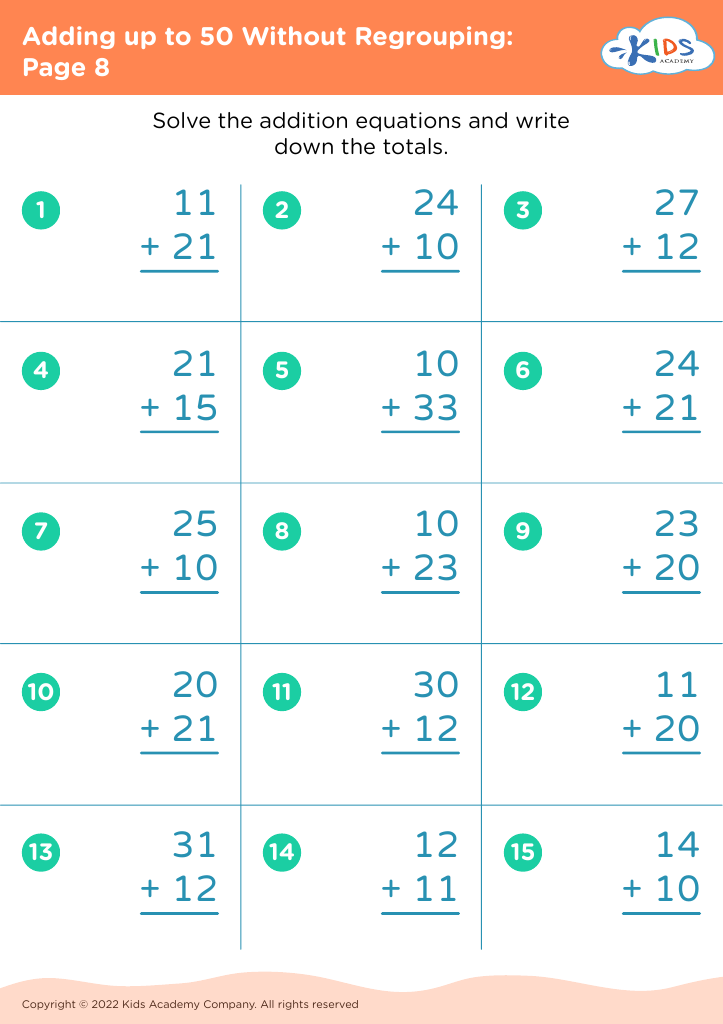
Adding up to 50 Without Regrouping: Page 8
Worksheet
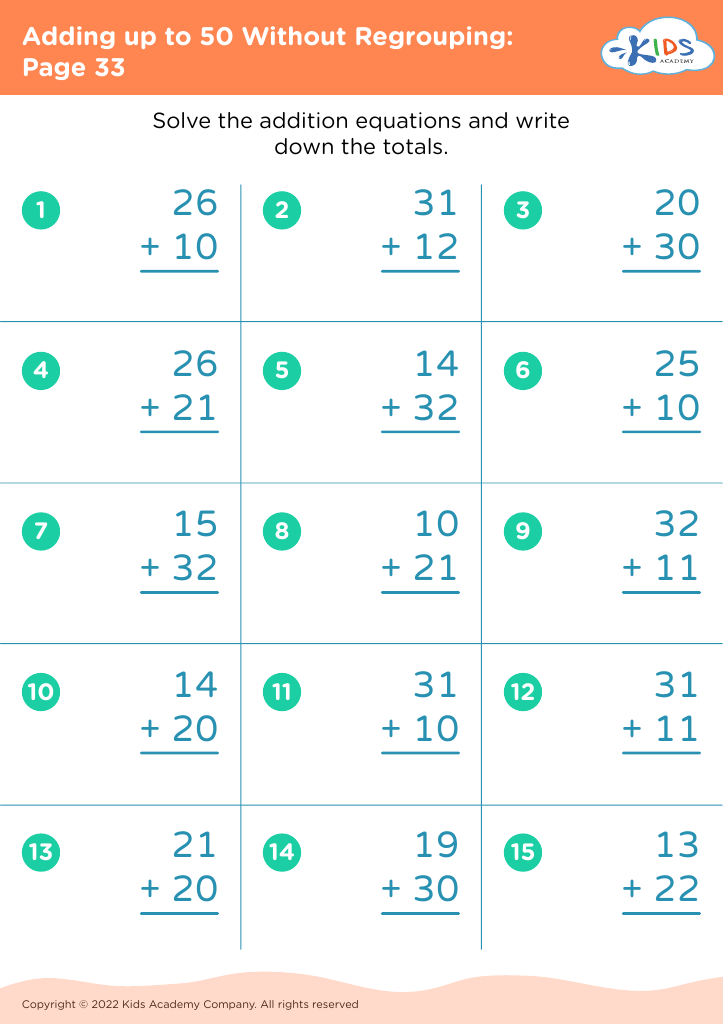
Adding up to 50 Without Regrouping: Page 33
Worksheet
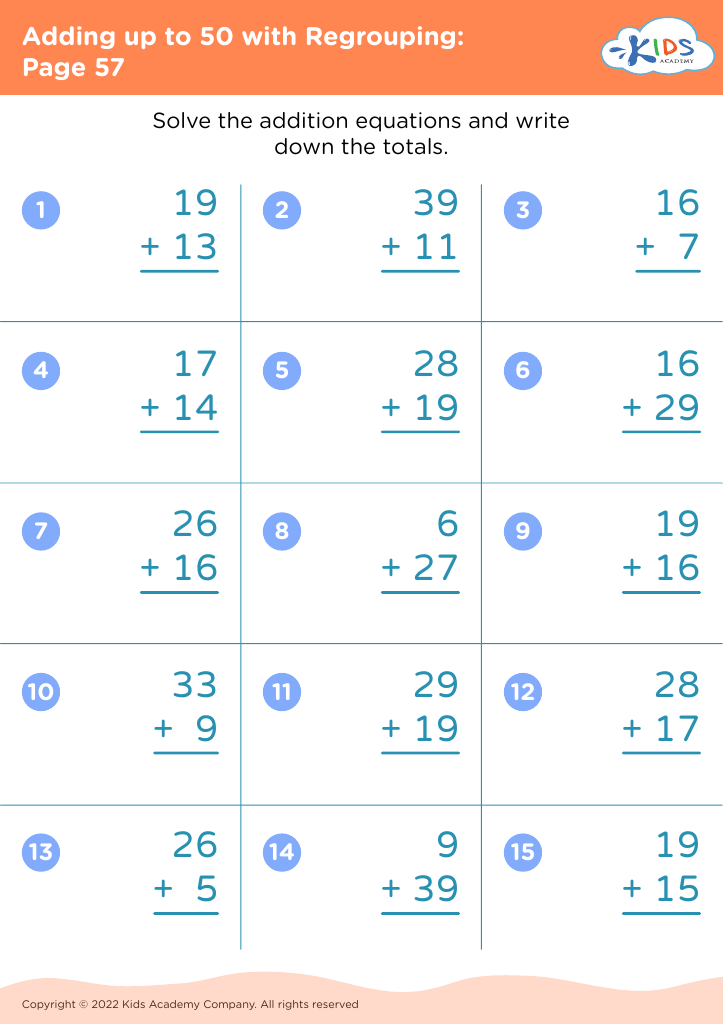
Adding up to 50 with Regrouping: Page 57
Worksheet
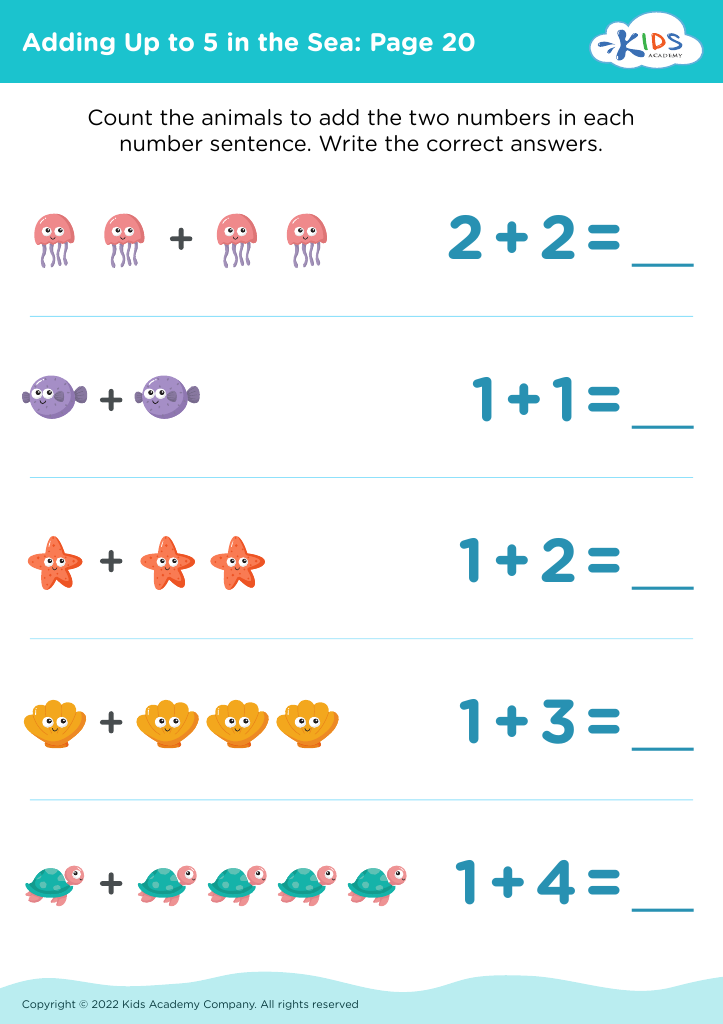
Adding Up to 5 in the Sea: Page 20
Worksheet
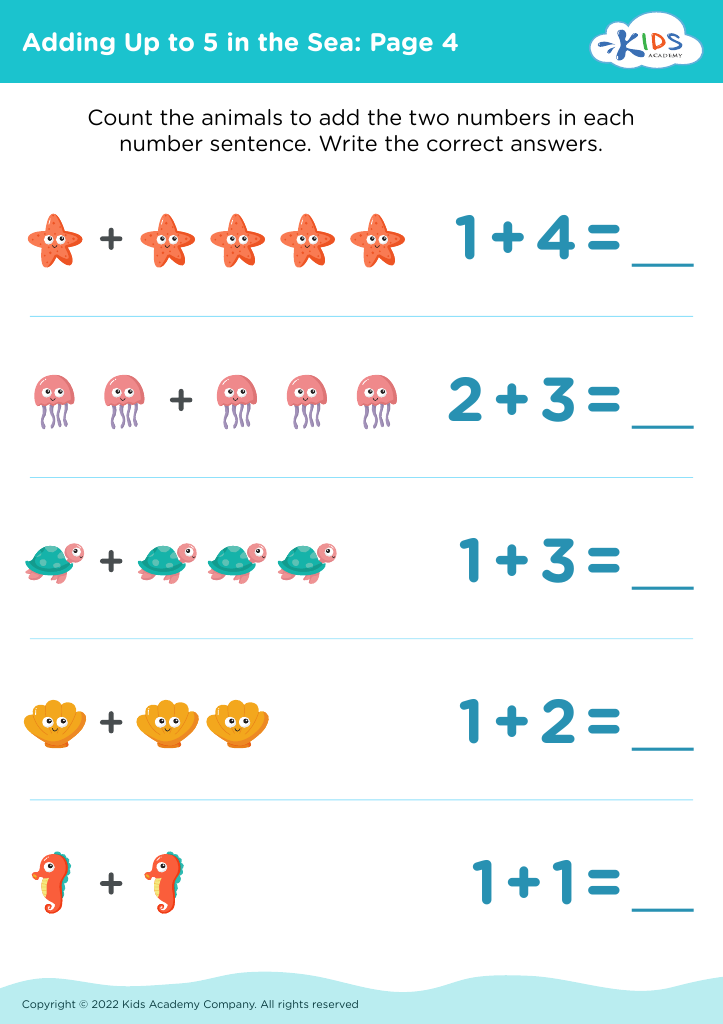
Adding Up to 5 in the Sea: Page 4

Adding Up to 5 in the Sea: Page 4

Adding Up to 5 in the Sea: Page 4
Worksheet
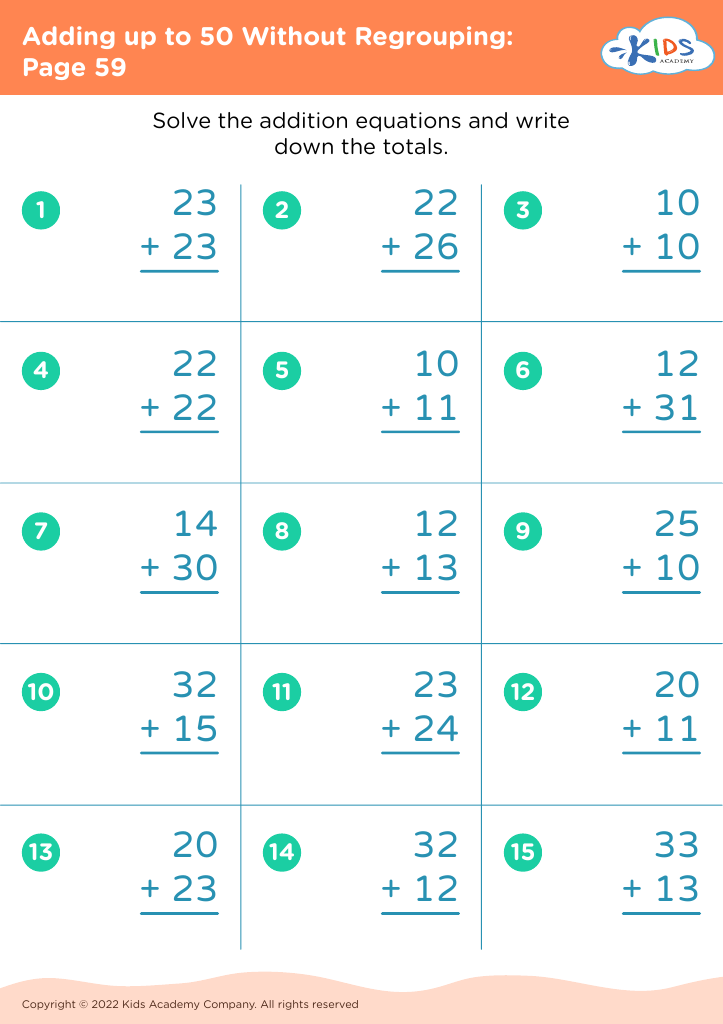
Adding up to 50 Without Regrouping: Page 59
Worksheet
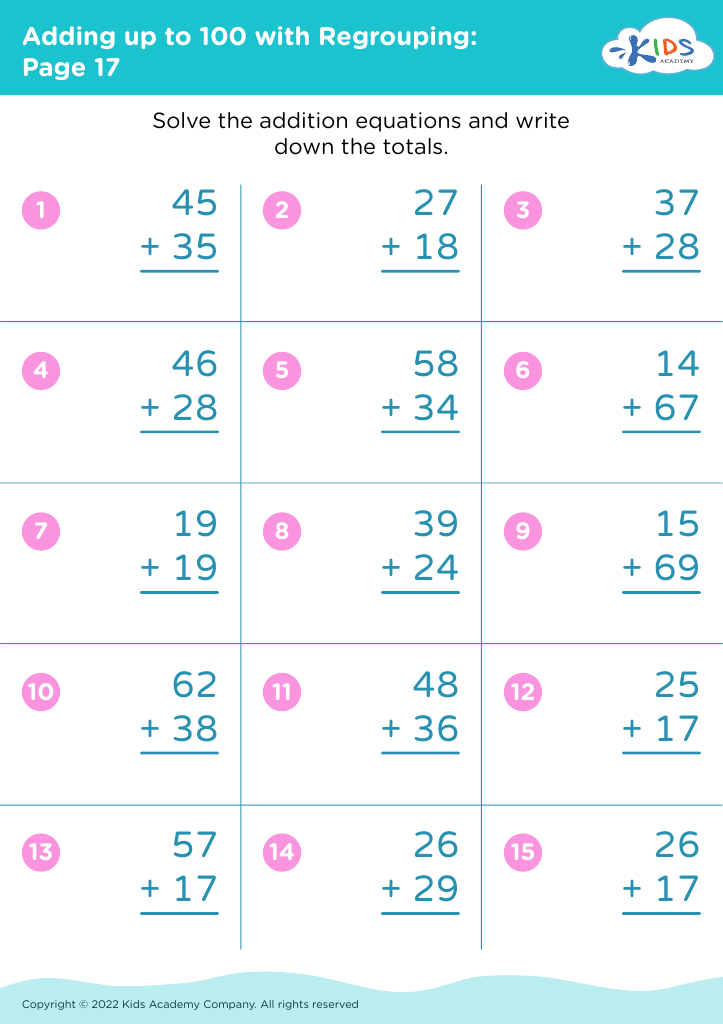
Adding up to 100 with Regrouping: Page 17
Worksheet
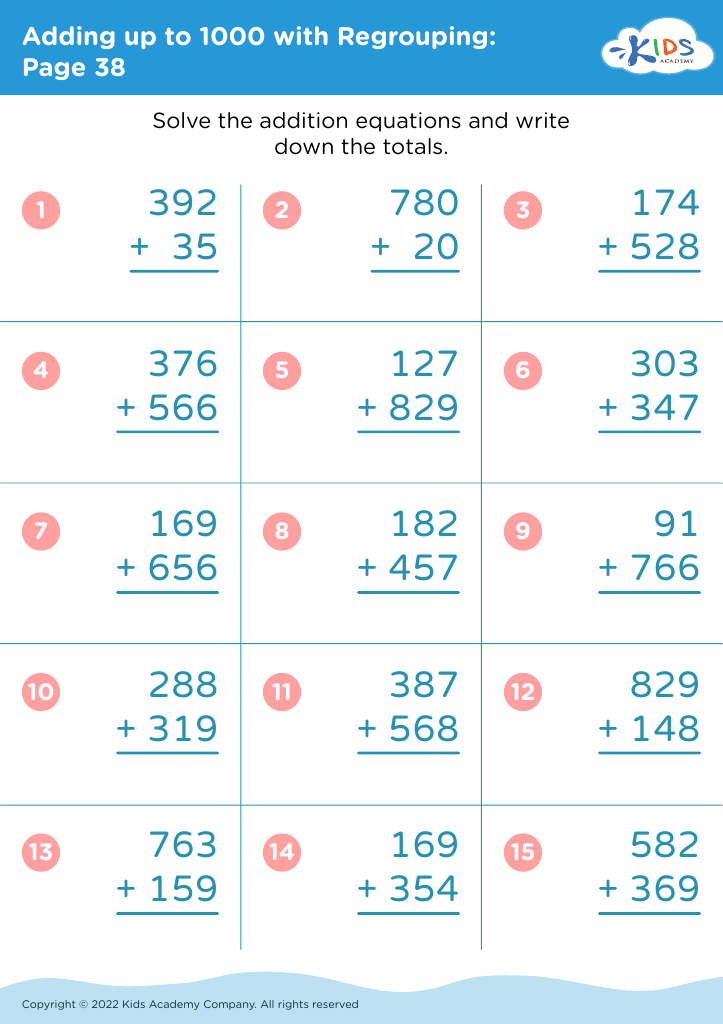
Adding up to 1000 with Regrouping: Page 38
Worksheet
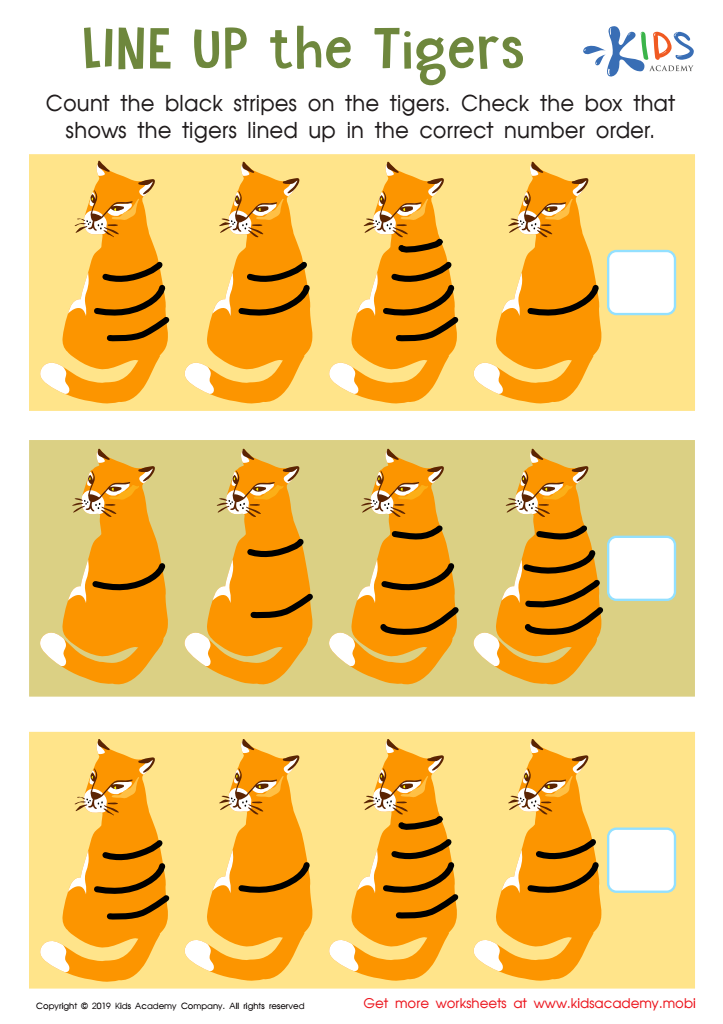
Line up the Tigers Worksheet


Line up the Tigers Worksheet

Give your preschoolers the right tools to succeed in math. Show them pictures of animals, then have them count the stripes and check the box that shows the tigers lined up in the right order. This will help them understand and make their journey easier.
Line up the Tigers Worksheet

Worksheet


Counting skills, along with addition and subtraction, form the foundational pillars of early mathematics for children aged 4-7. Parents and teachers should care about these skills because they are critical for cognitive development and prepare children for more complex mathematical concepts in later years.

At this age, children develop number sense, which helps them understand quantities, patterns, and relationships. Mastering counting lays the groundwork for performing addition and subtraction, enabling kids to solve problems in everyday situations, such as sharing candy or grouping toys. Additionally, building these skills enhances logical thinking and promotes problem-solving abilities.

Moreover, early proficiency in these skills boosts children’s confidence and motivation in learning mathematics. A strong foundation reduces anxiety around math as they progress in school, leading to greater academic achievement.

Engaging children in counting, adding, and subtracting can also be a fun, interactive experience, encouraging collaboration between parents and teachers. Incorporating games, visual aids, and hands-on activities makes learning enjoyable, reinforcing the importance of math in a practical context.

Ultimately, fostering counting and arithmetic skills during these formative years can set children on a pathway to success, instilling a lifelong appreciation and competence in mathematics.