Filters

111 filtered results

Clear all filters
Favorites
With answer key
Interactive

111 filtered results

Difficulty Level

Grade


Check out this FREE Trial Lesson on Math for age 4-7!

2 Step Addition Word Problems Using Drawings to Write Equations

Favorites
With answer key
Interactive
  • 4-7
  • Animal recognition
  • Math
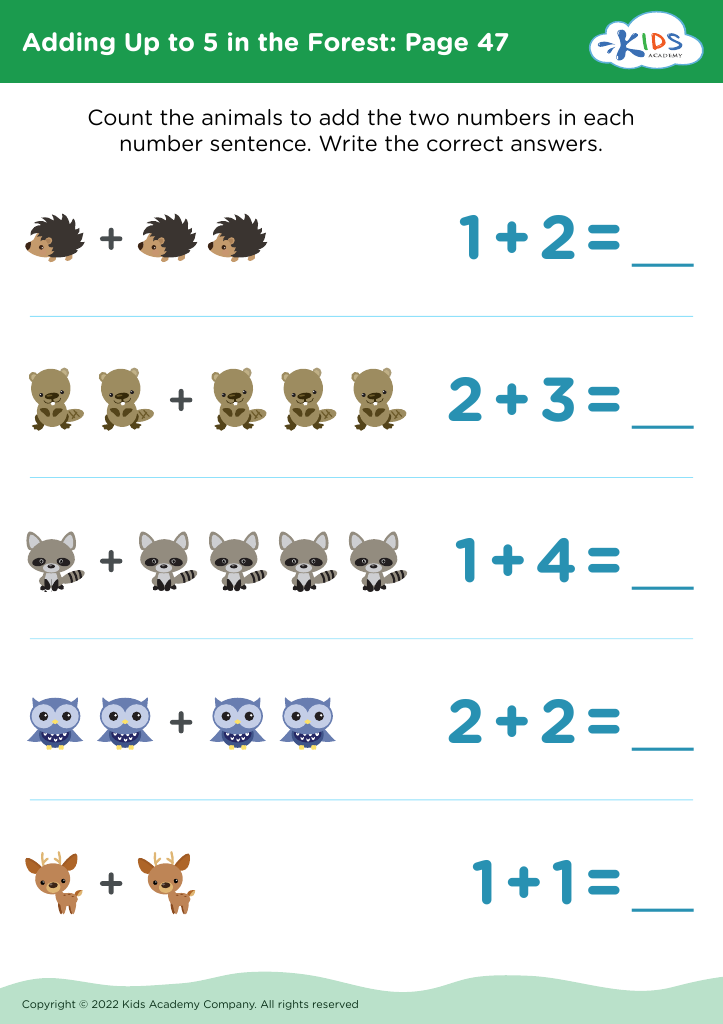
Adding Up to 5 in the Forest: Page 47
Worksheet
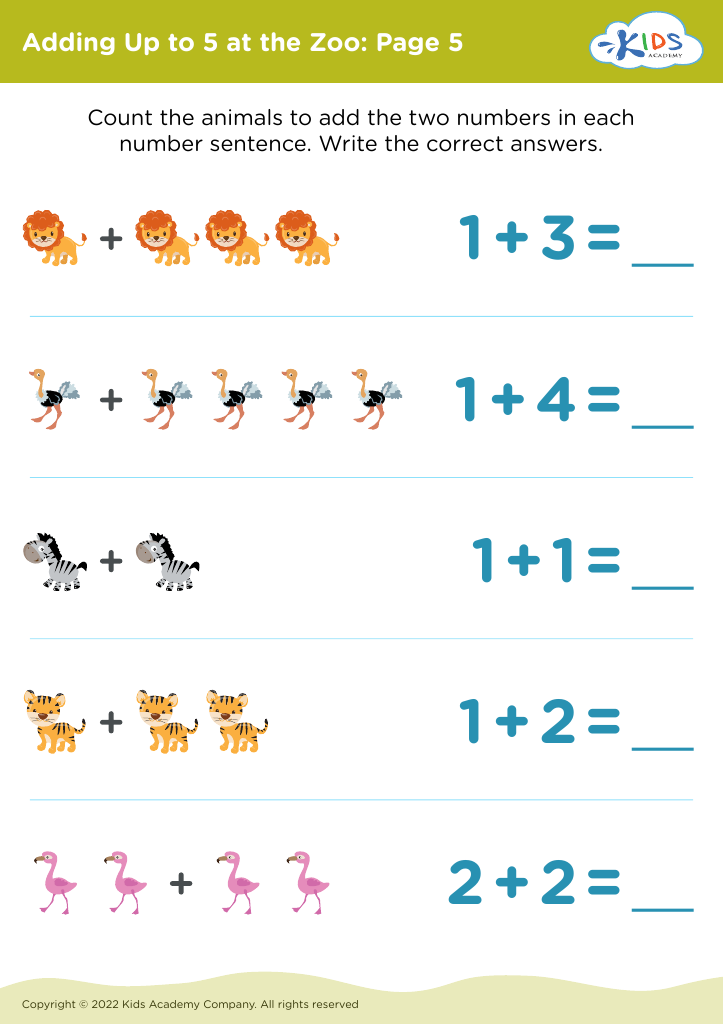
Adding Up to 5 at the Zoo: Page 5

Adding Up to 5 at the Zoo: Page 5

Adding Up to 5 at the Zoo: Page 5
Worksheet
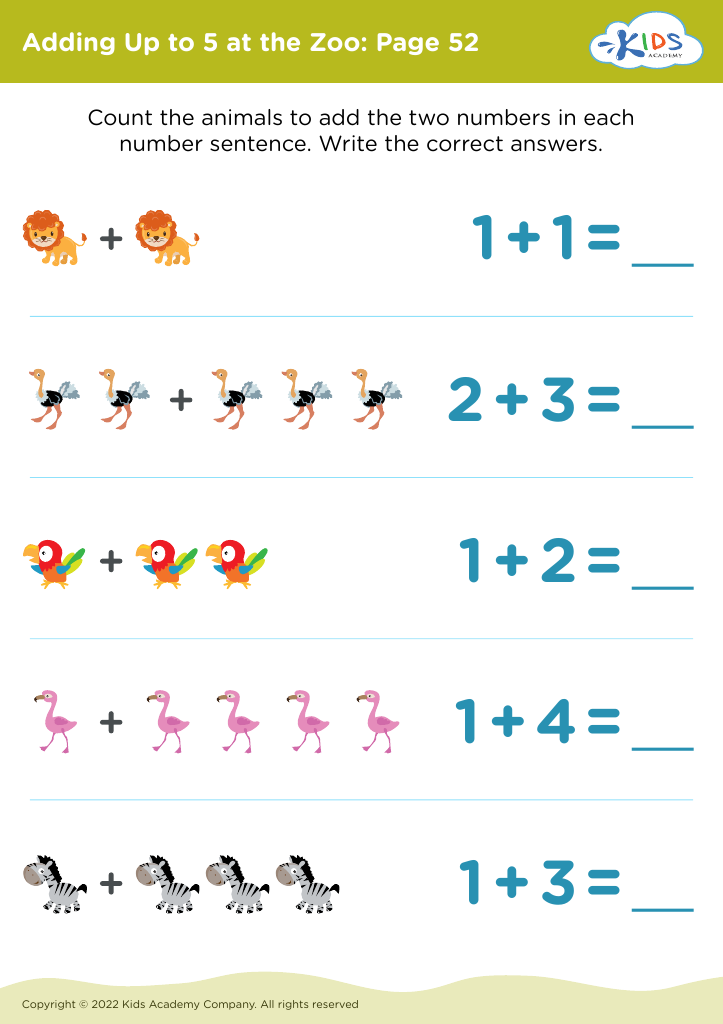
Adding Up to 5 at the Zoo: Page 52
Worksheet
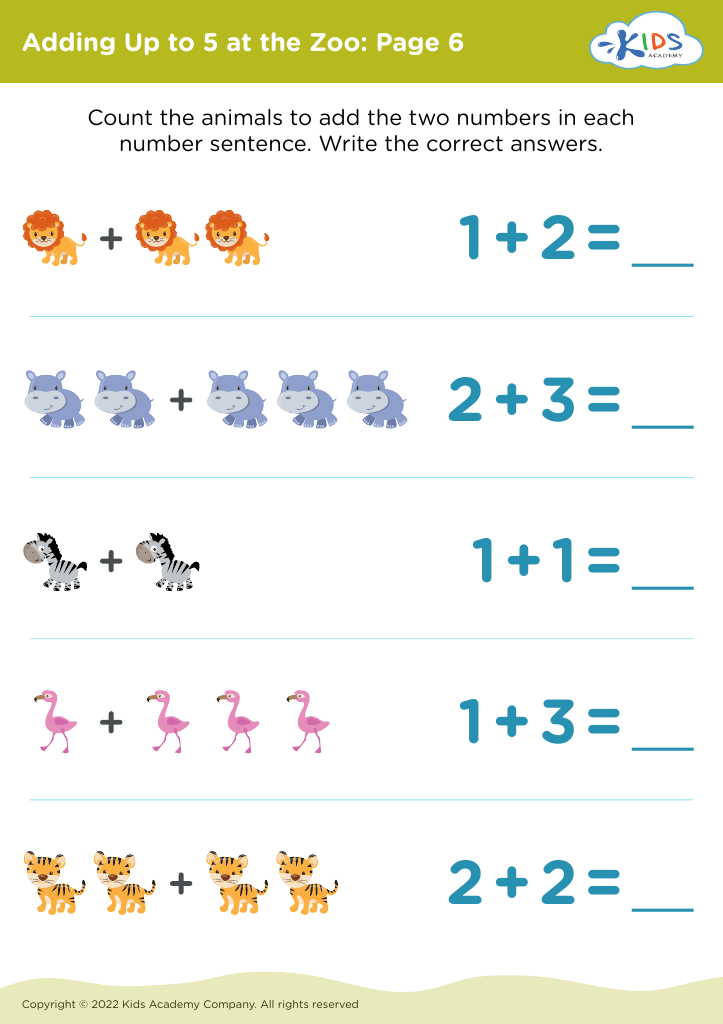
Adding Up to 5 at the Zoo: Page 6

Adding Up to 5 at the Zoo: Page 6

Adding Up to 5 at the Zoo: Page 6
Worksheet
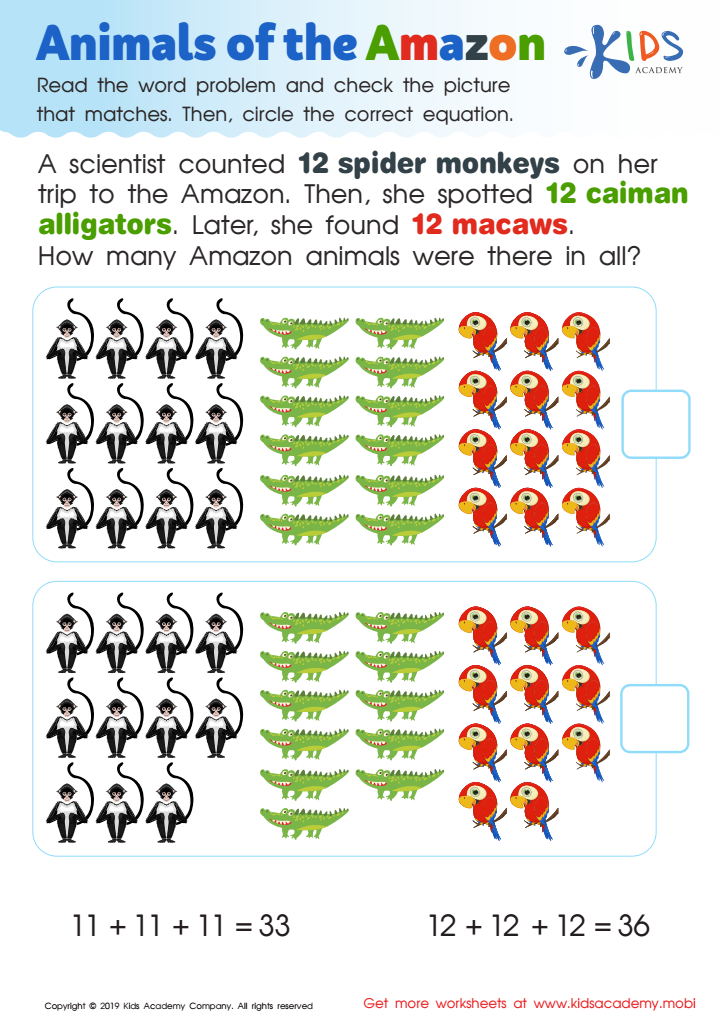
Animals of Amazon Worksheet

Animals of Amazon Worksheet

Kids will love exploring the Amazon while solving addition problems on this colorful PDF worksheet. They need to pay attention to the bolded info in each word problem to figure out the equation picture that matches. It's an exciting way to learn about the Amazon and practice adding multiple numbers!
Animals of Amazon Worksheet
Worksheet
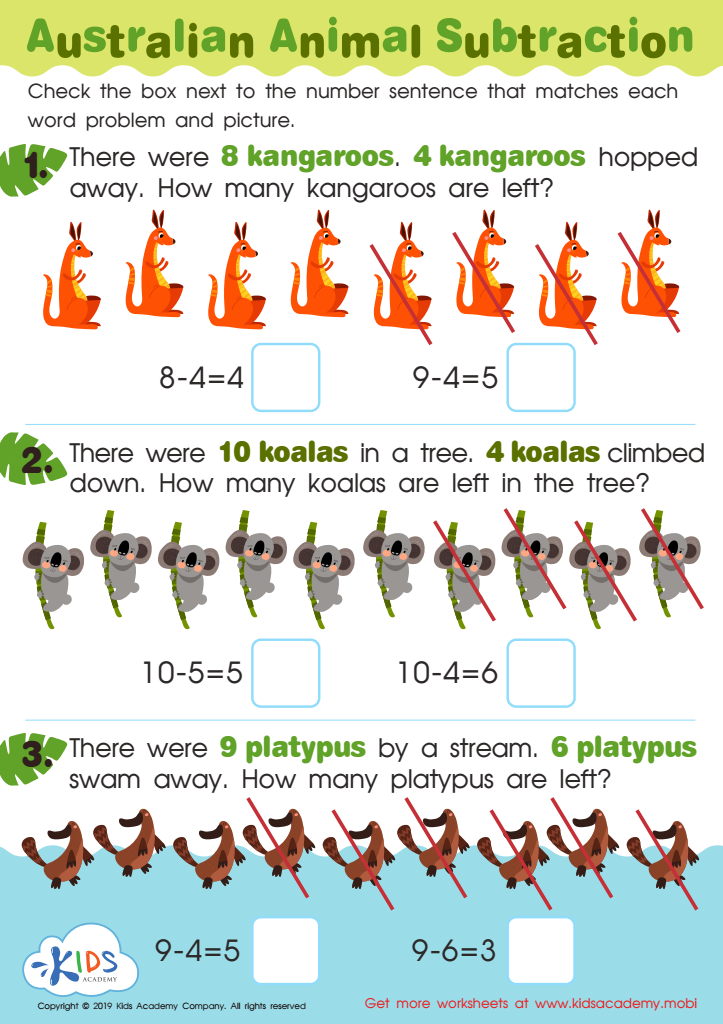
Australian Animal Subtraction Worksheet
Australian Animal Subtraction Worksheet
Test your child's wildlife knowledge. Ask them to name animals indigenous to Australia or other countries. Show them the animals in this worksheet and have them match each word problem and picture with the correct number sentence.
Australian Animal Subtraction Worksheet
Worksheet
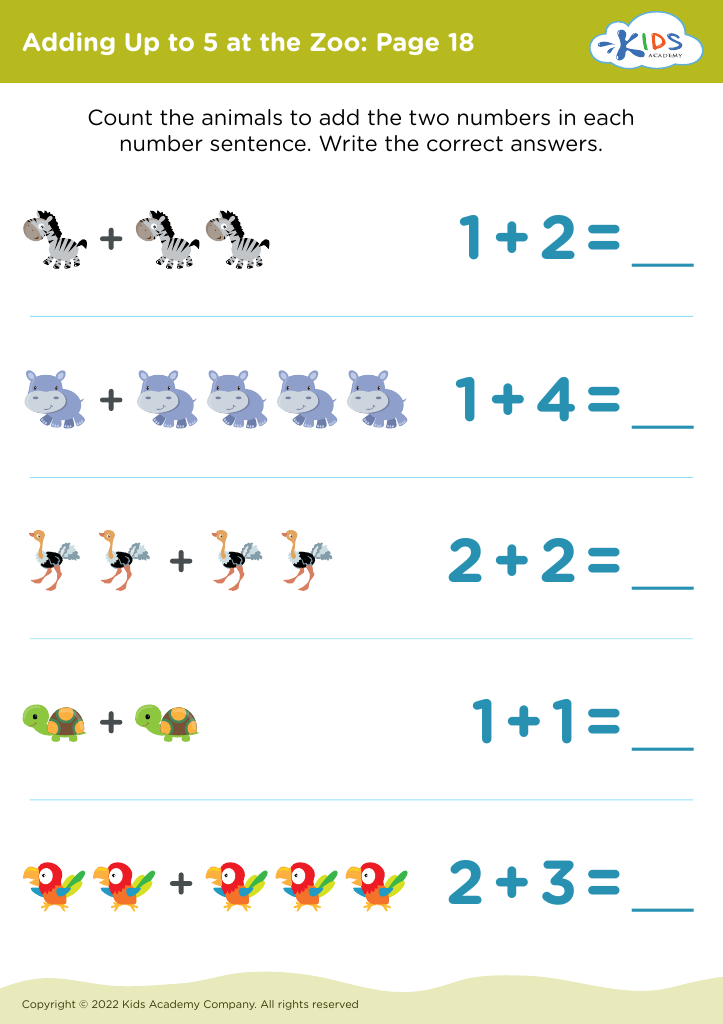
Adding Up to 5 at the Zoo: Page 18
Worksheet
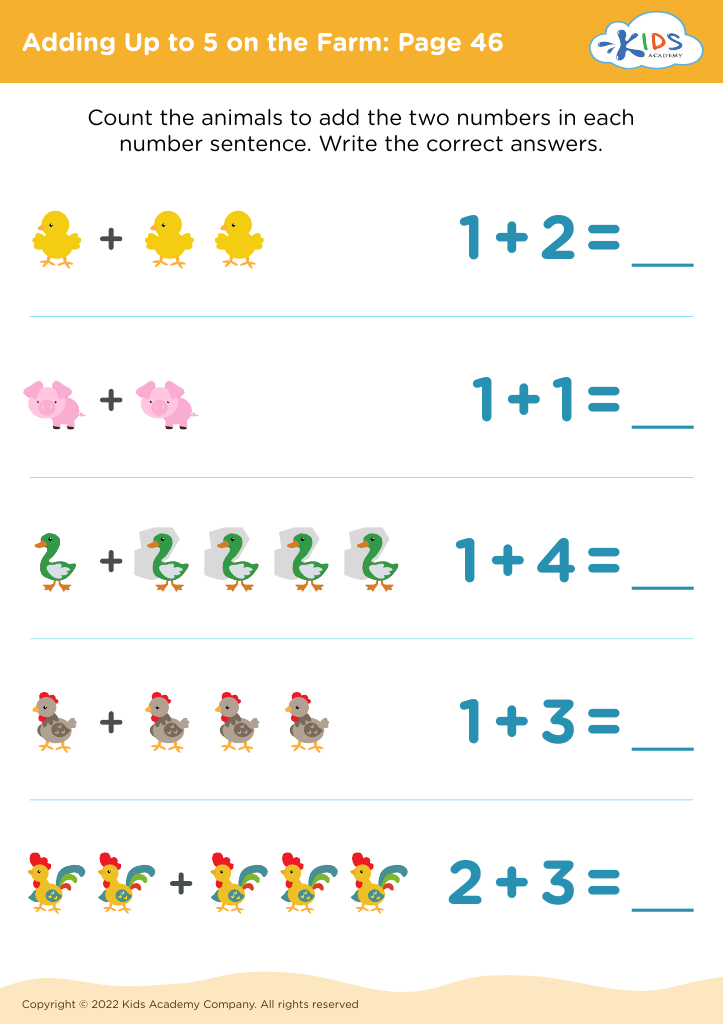
Adding Up to 5 on the Farm: Page 46
Worksheet
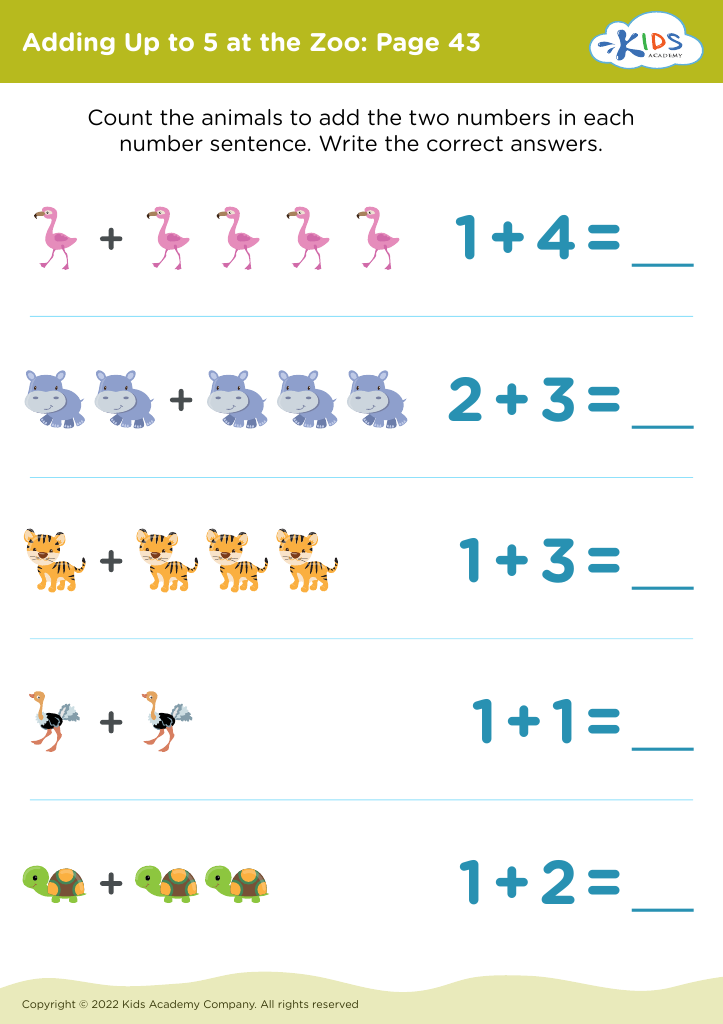
Adding Up to 5 at the Zoo: Page 43
Worksheet
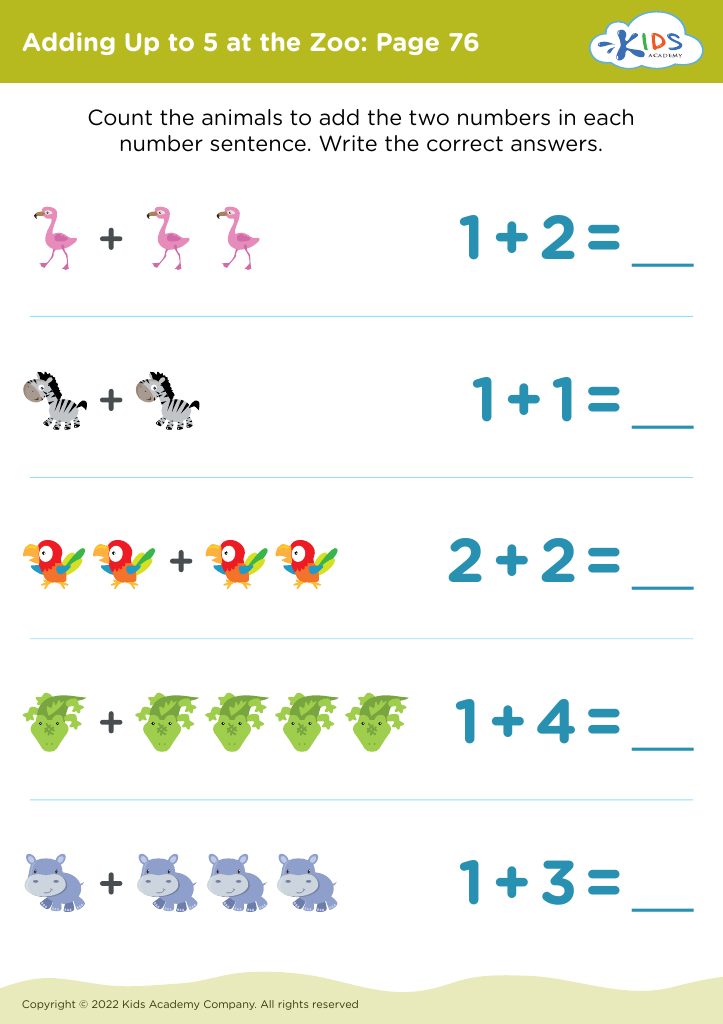
Adding Up to 5 at the Zoo: Page 76
Worksheet
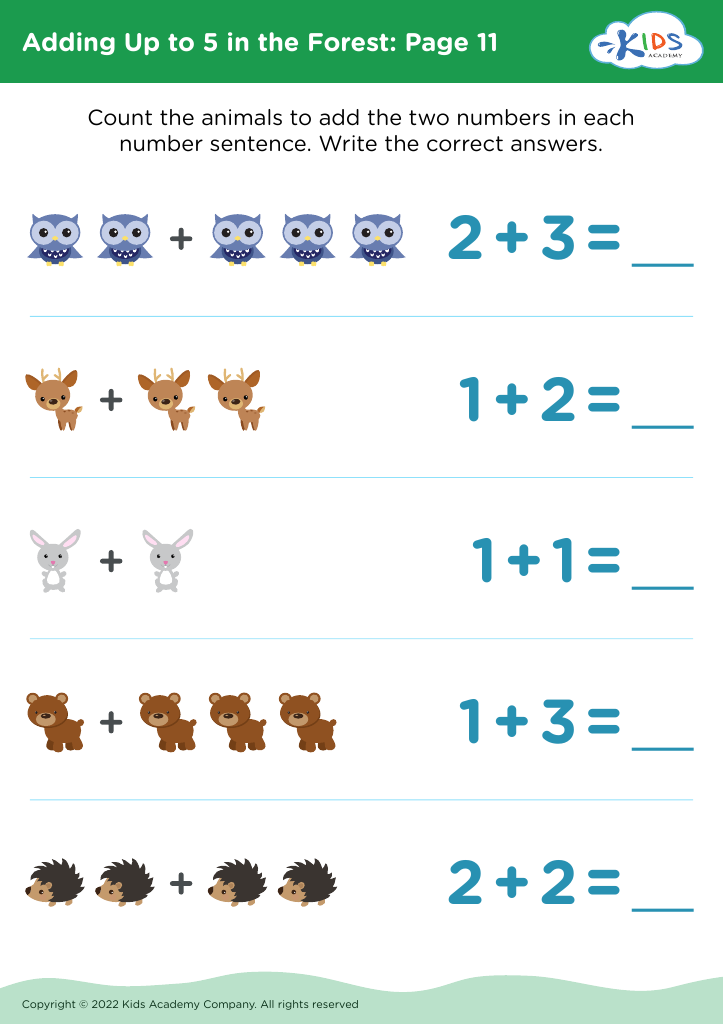
Adding Up to 5 in the Forest: Page 11
Worksheet
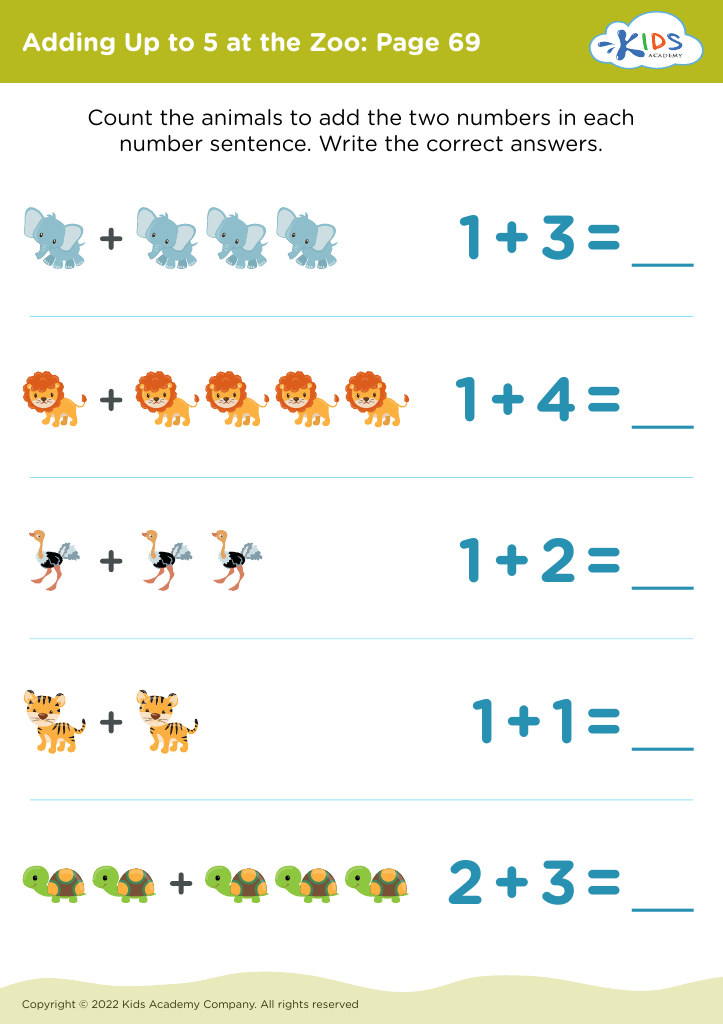
Adding Up to 5 at the Zoo: Page 69
Worksheet
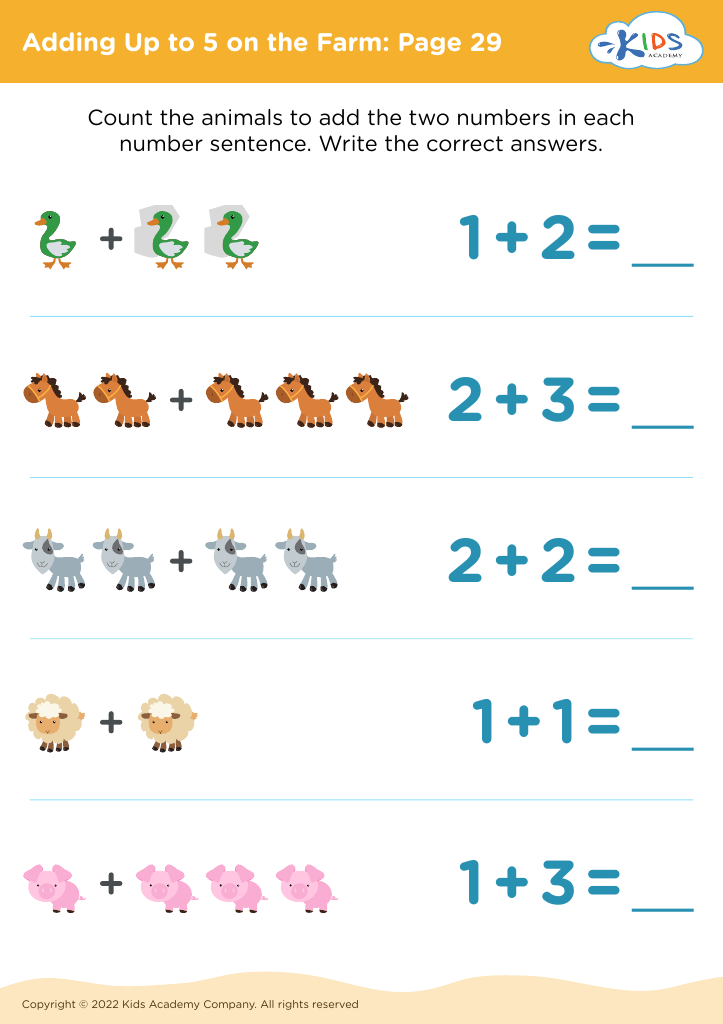
Adding Up to 5 on the Farm: Page 29
Worksheet
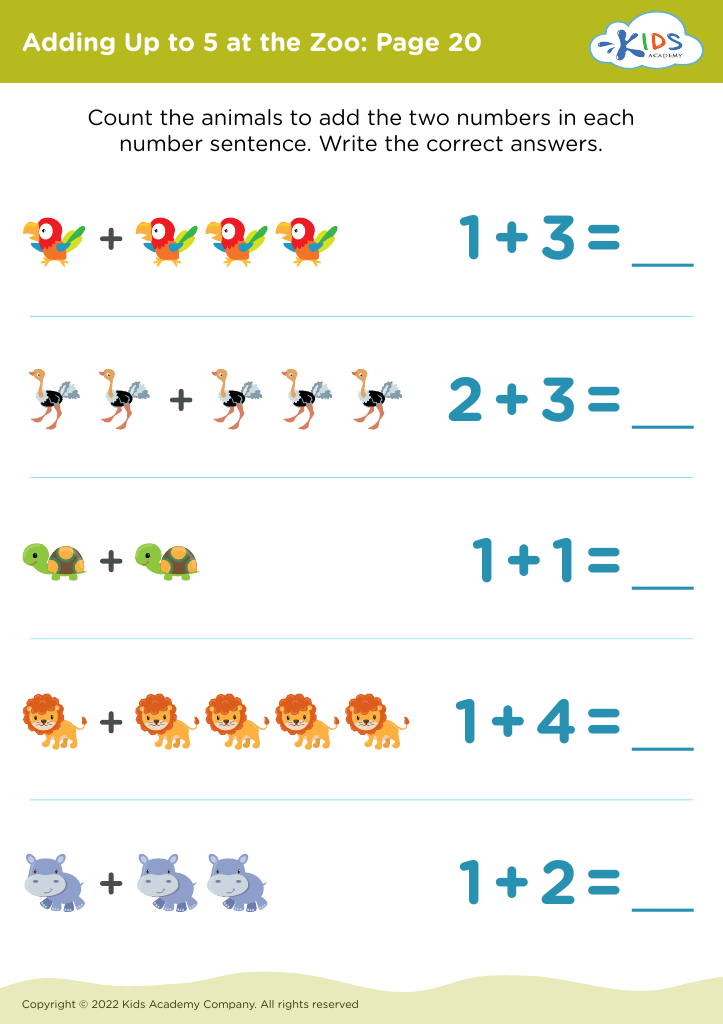
Adding Up to 5 at the Zoo: Page 20
Worksheet
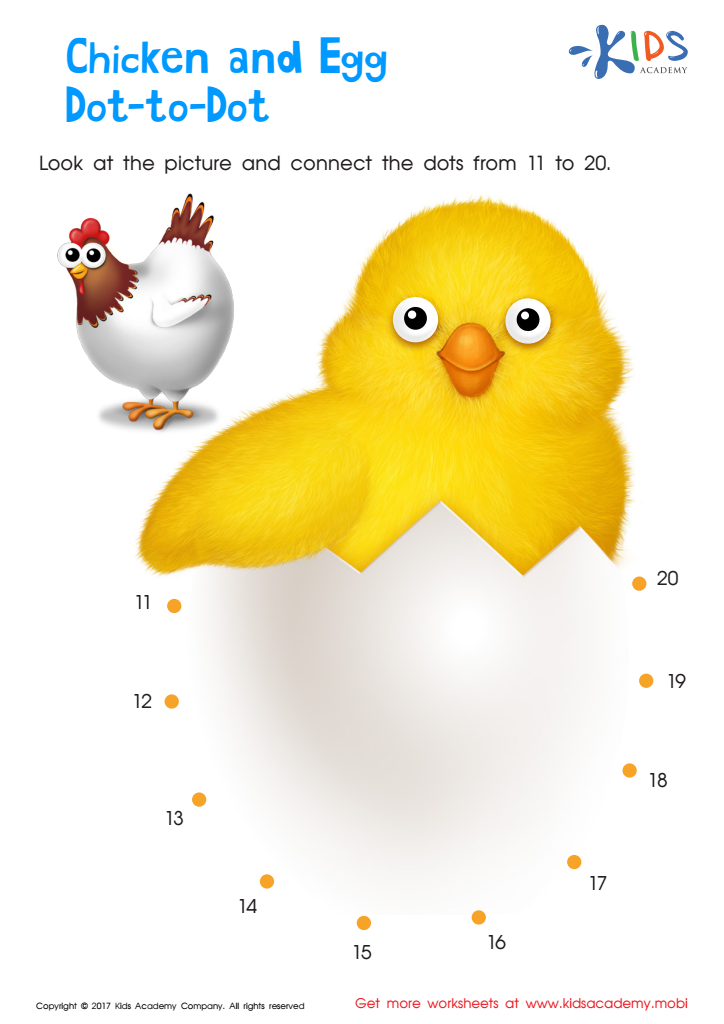
Dot to Dot Numbers 11-20

Ordering 11–20: Chicken & Egg Dot–to–dot Worksheet
Help your child hatch the chick and practice their counting skills with this dot to dot worksheet – the chicken came first! Connect the dots 11-20 to have fun and learn at the same time. Experience meaningful practice and gain confidence while drawing great pictures.
Ordering 11–20: Chicken & Egg Dot–to–dot Worksheet
Worksheet
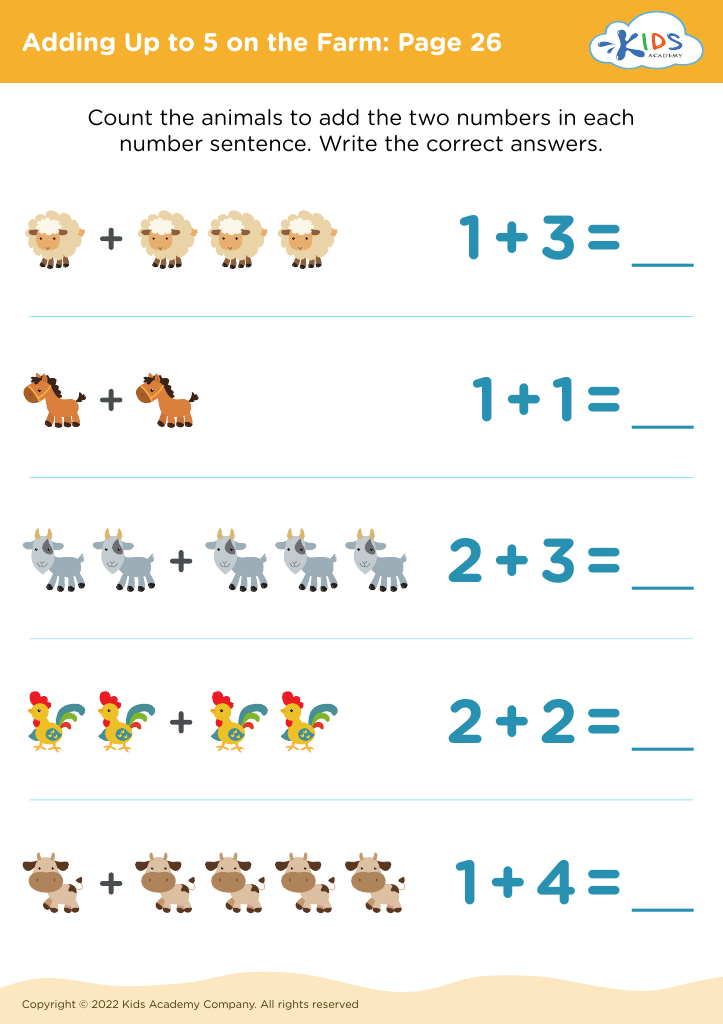
Adding Up to 5 on the Farm: Page 26
Worksheet
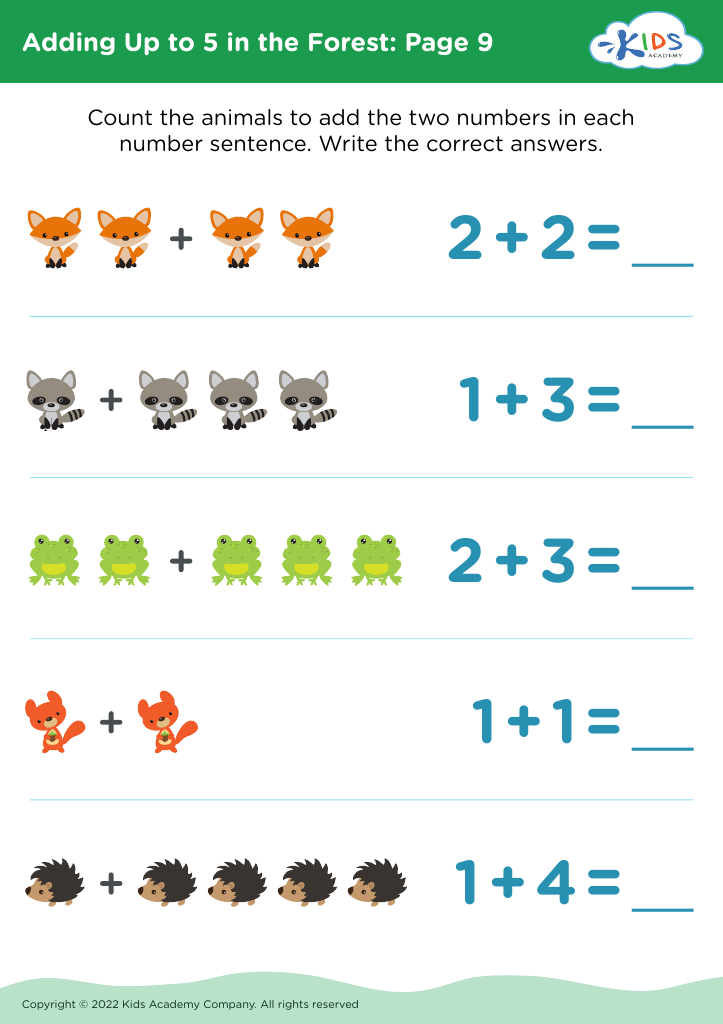
Adding Up to 5 in the Forest: Page 9
Worksheet
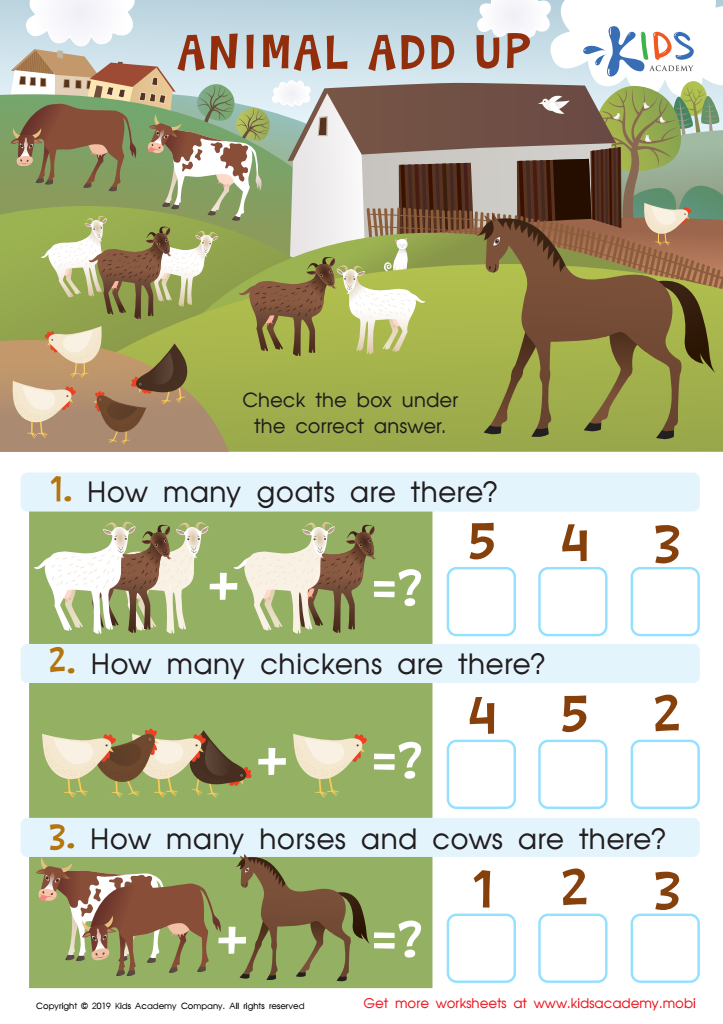
Animal Add Up Worksheet

Animal Add Up Worksheet

Animals are fun to observe and interact with. They can be seen at the zoo, parks, farms and in homes with pets. This worksheet helps kids identify animals, and build addition skills. Look at the picture with them and help name each animal. After that, add the animals up and check the box for the correct answer. 80 words.
Animal Add Up Worksheet
Worksheet
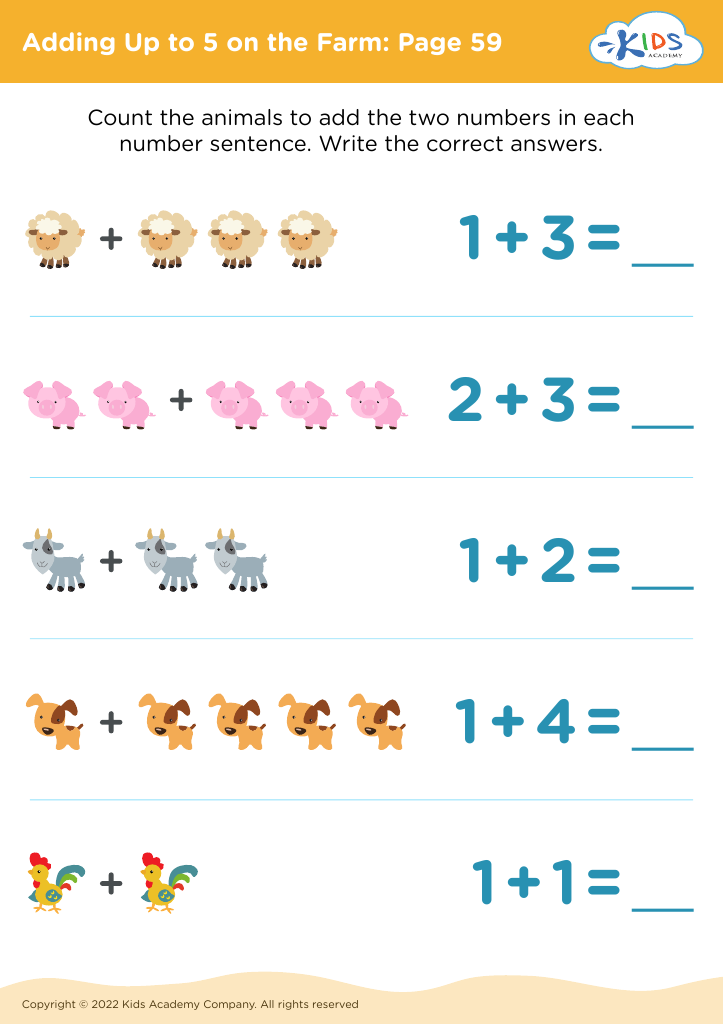
Adding Up to 5 on the Farm: Page 59
Worksheet
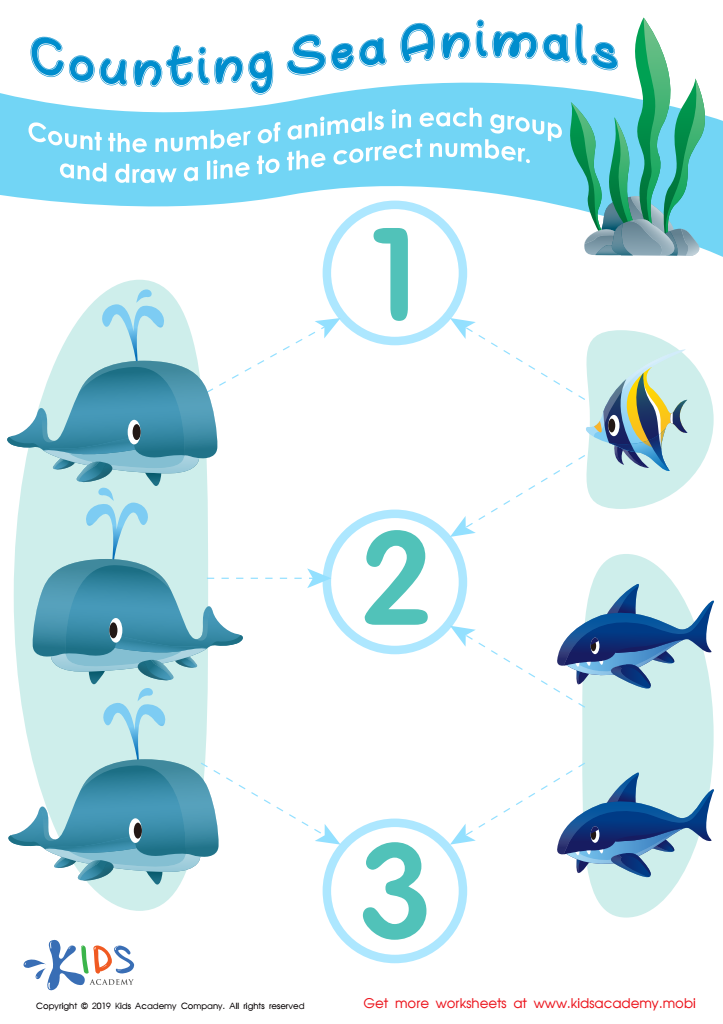
Counting Sea Animals Worksheet

Counting Sea Animals Worksheet

Kids adore sea creatures for their captivating, unknown nature. Let them use this free worksheet to practice counting, where they match numbers to groups of animals. Through traceable lines, they'll easily connect numbers to sea creatures and learn math with vibrant, underwater fun!
Counting Sea Animals Worksheet
Worksheet
Name It! Worksheet

Name It! Worksheet
Name It! Worksheet

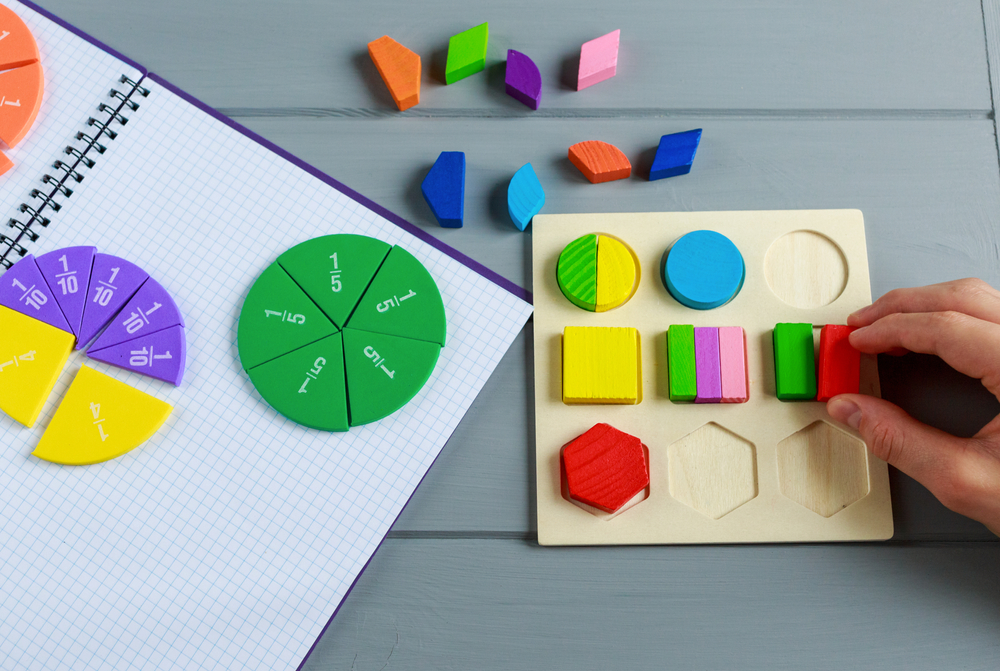
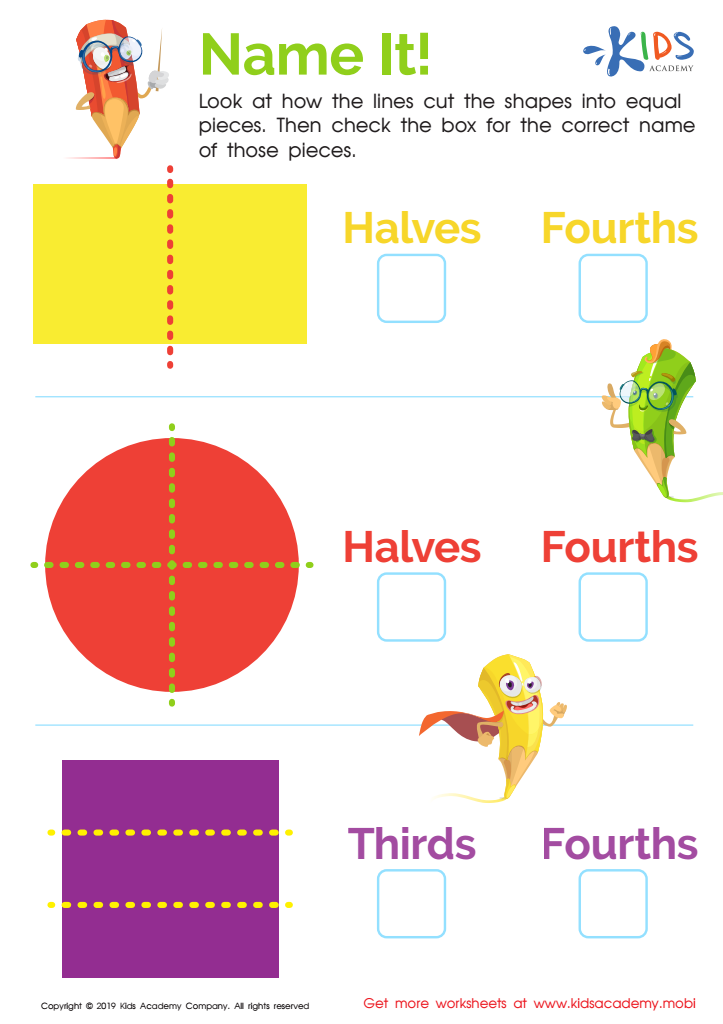
When teaching fractions, help children understand that they are groups divided into equal pieces. Introduce denominators and numerators with pictures to illustrate. Use this free fraction worksheet with colourful shapes divided into halves, thirds, and fourths to help them identify the fractions.
Name It! Worksheet
Worksheet
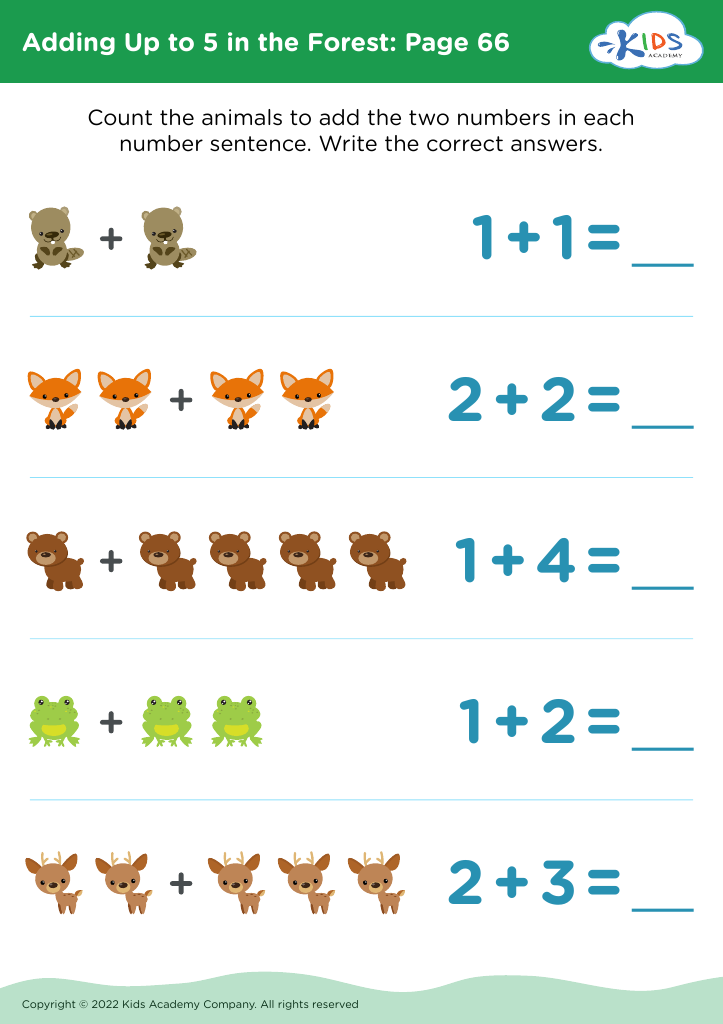
Adding Up to 5 in the Forest: Page 66
Worksheet
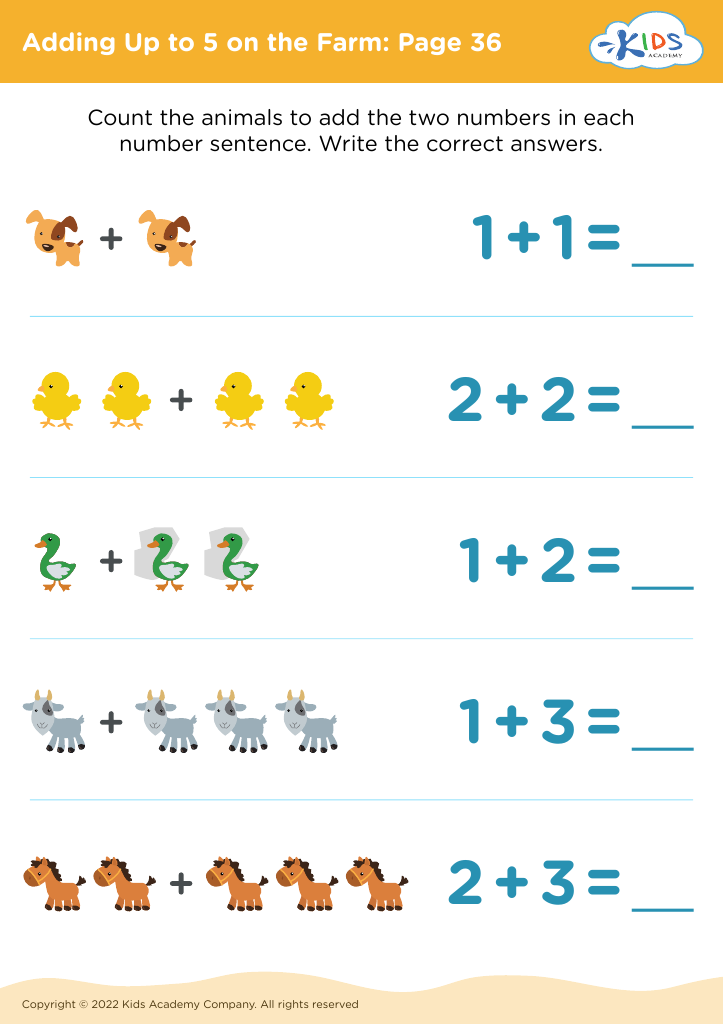
Adding Up to 5 on the Farm: Page 36
Worksheet
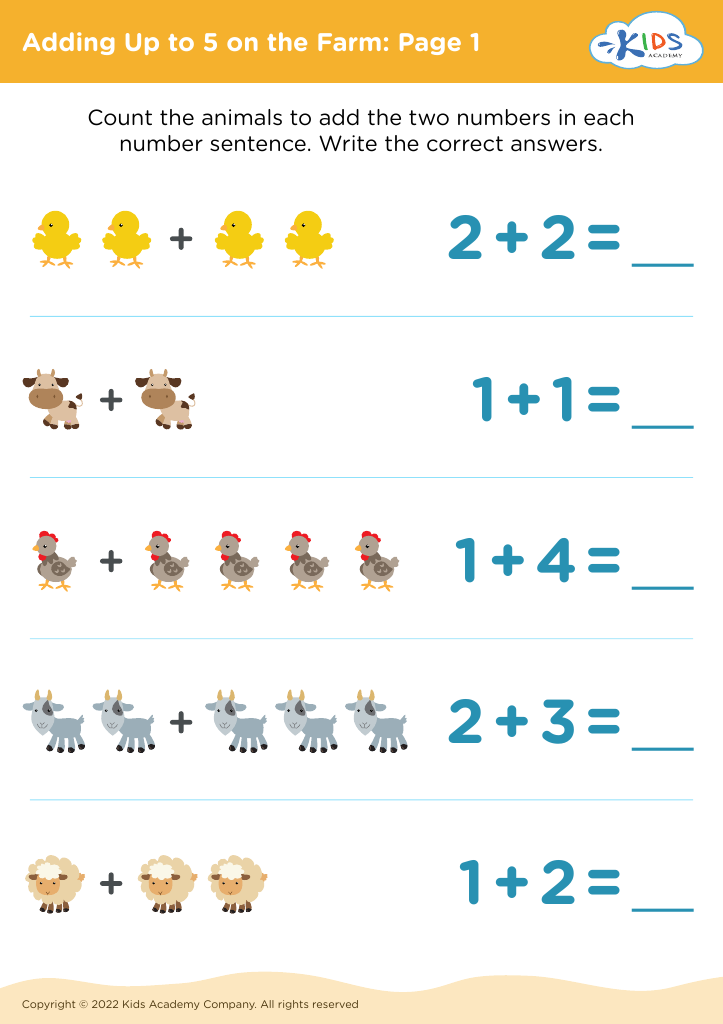
Adding Up to 5 on the Farm: Page 1
Worksheet


Animal recognition math for children ages 4-7 is vital for both parents and teachers, as it intertwines essential cognitive skills with engaging content. At this developmental stage, children are naturally curious about animals. By integrating animal recognition into math lessons, we can harness that curiosity to improve overall learning motivation.

Understanding animal names and characteristics provides children with rich visual stimuli and context for math concepts, such as counting, sorting, and pattern recognition. For example, using animal groups to teach addition and subtraction makes the concept tangible and relatable.

Furthermore, exploring animals fosters critical thinking and decision-making skills; children can determine which animals belong to specific groups based on characteristics (like habitat or size), enhancing their analytical skills.

This approach also promotes creativity and imagination, as children can visualize and even role-play animals during math activities. Lastly, this method cultivates an appreciation for biodiversity and can lead to early environmental education, encouraging a sense of responsibility towards animal conservation. In essence, animal recognition math is a multidimensional learning approach that not only develops mathematical skills but also supports social, emotional, and cognitive growth in early learners.