Filters

275 filtered results

Clear all filters
Favorites
With answer key
Interactive

275 filtered results

Difficulty Level

Grade


Check out this FREE Trial Lesson on Math for age 4-7!

Addition and Subtraction Word Problems

Favorites
With answer key
Interactive
  • 4-7
  • Problem-Solving Skills
  • Math
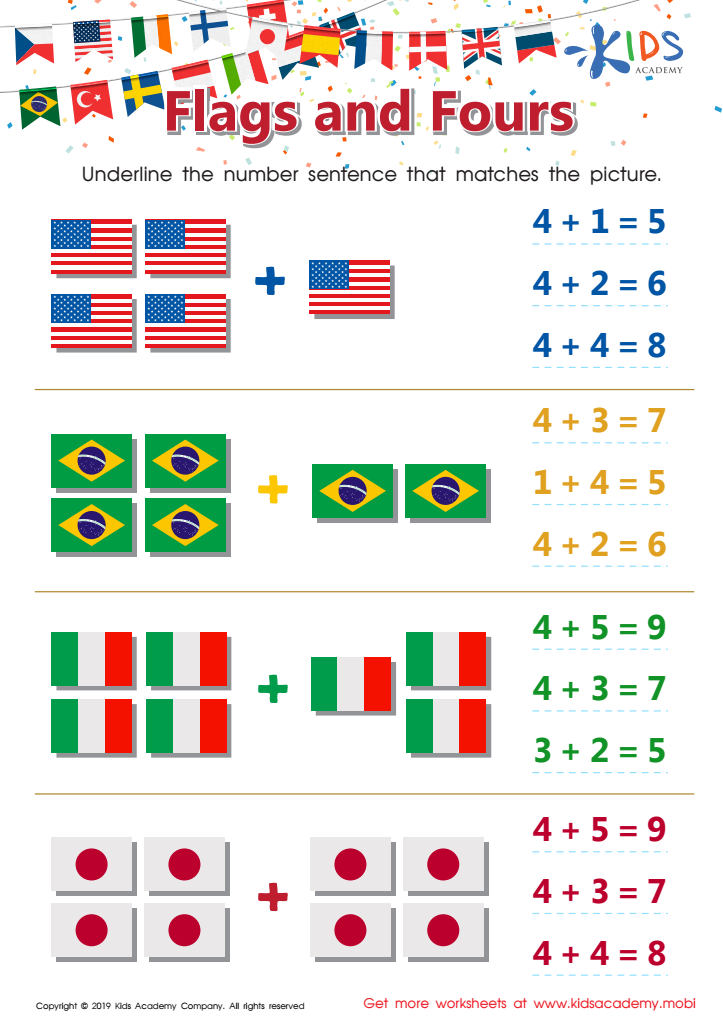
Flags and Fours Worksheet

Flags and Fours Worksheet

Have your kids identify country flags from this colorful printout. Then, ask them to underline the number sentence that goes with each flag. Combining math with national flag recognition strengthens kids' knowledge of both, promoting an understanding of identity and numbers.
Flags and Fours Worksheet
Worksheet
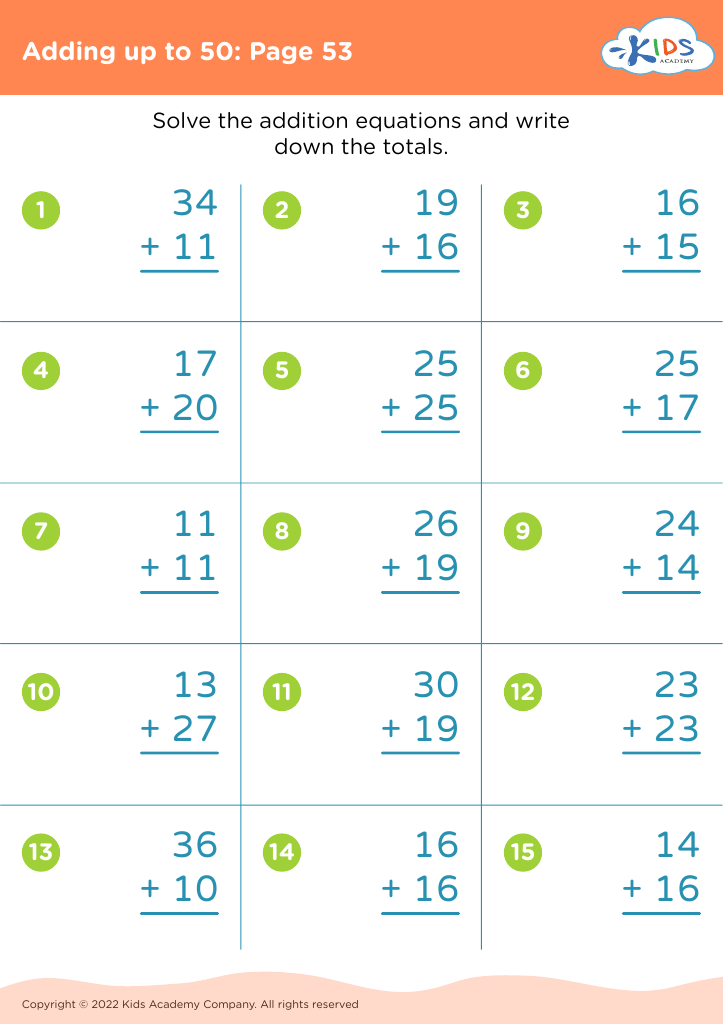
Adding up to 50: Page 53

Adding up to 50: Page 53

Adding up to 50: Page 53
Worksheet
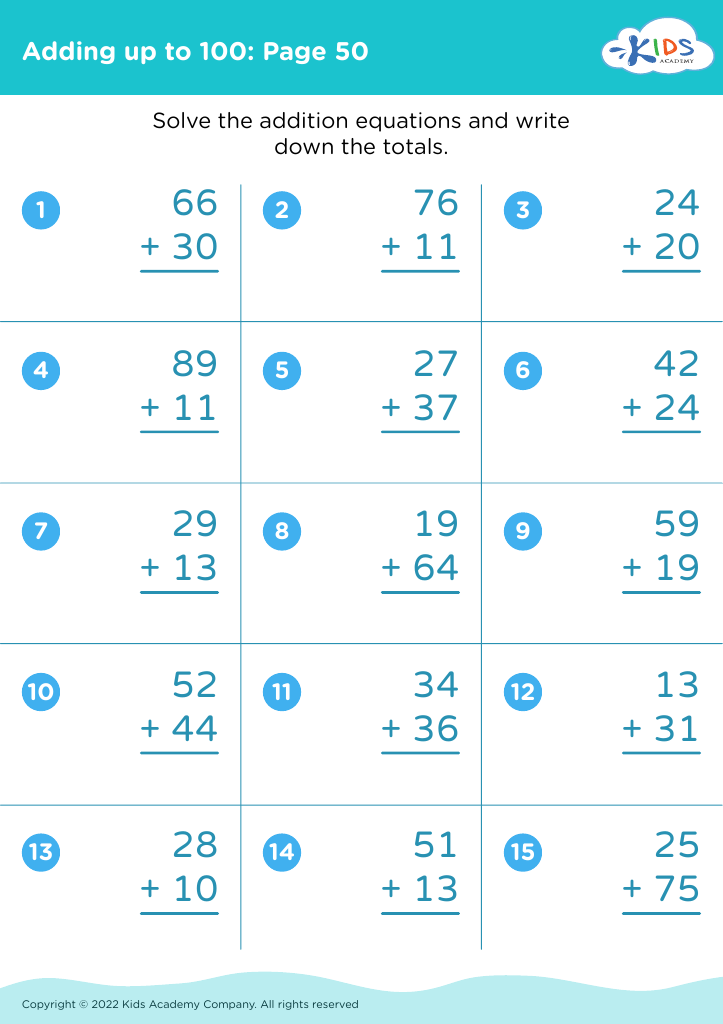
Adding up to 100: Page 50

Adding up to 100: Page 50

Adding up to 100: Page 50
Worksheet
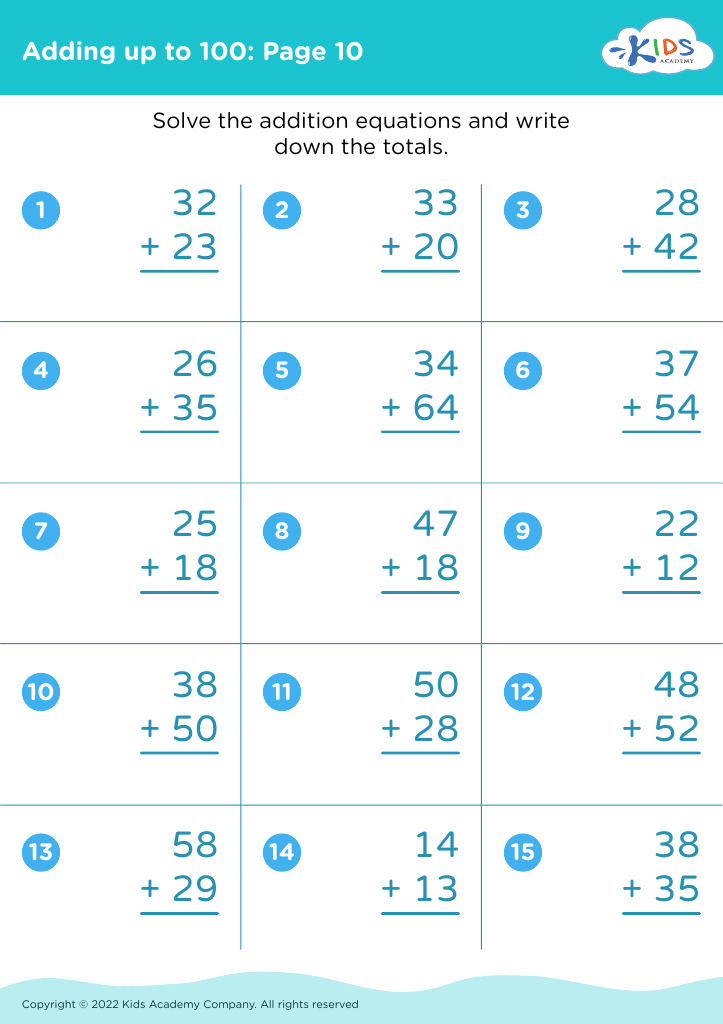
Adding up to 100: Page 10

Adding up to 100: Page 10

Adding up to 100: Page 10
Worksheet
Worksheet: subtraction word problems

Jungle Subtraction Word Problems Substraction Worksheet

Kids will love this jungle-themed worksheet: subtraction word problems! Help the monkey work out how many bananas he has, using the number line. Encourage your child to use colorful parrots to subtract with ease and make calculations fun!
Jungle Subtraction Word Problems Substraction Worksheet
Worksheet
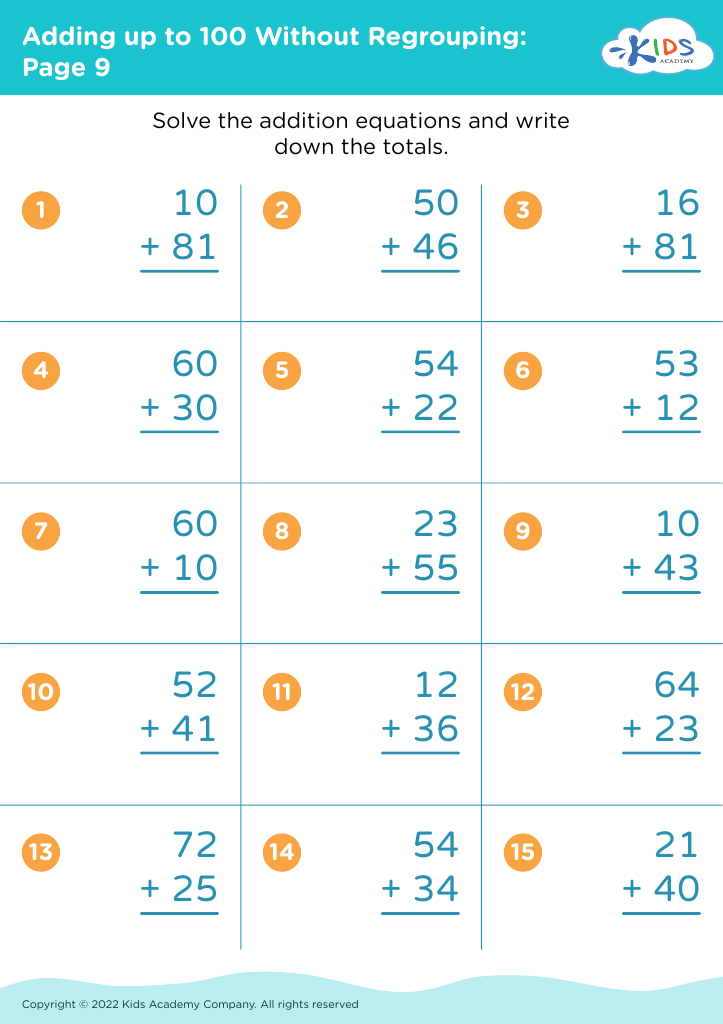
Adding up to 100 Without Regrouping: Page 9
Worksheet
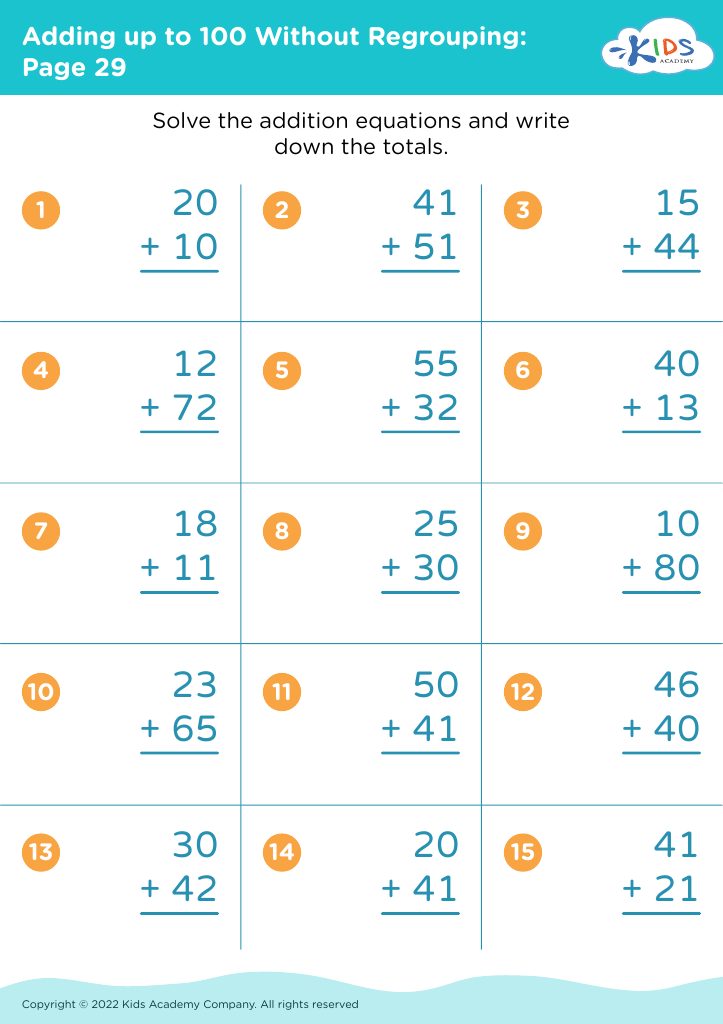
Adding up to 100 Without Regrouping: Page 29
Worksheet
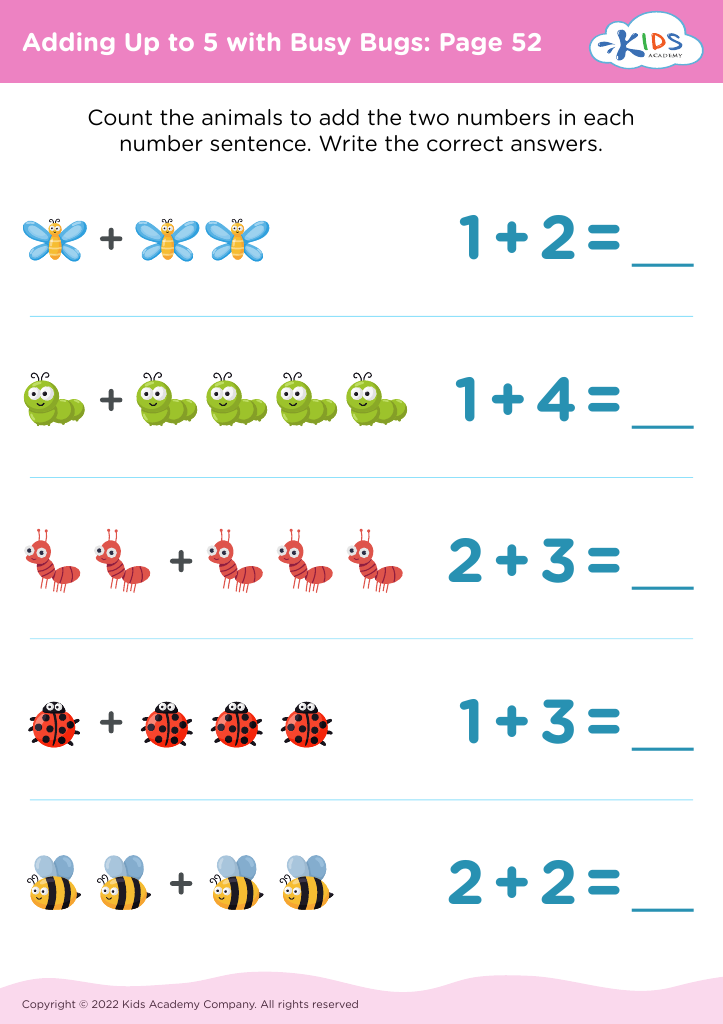
Adding Up to 5 with Busy Bugs: Page 52
Worksheet
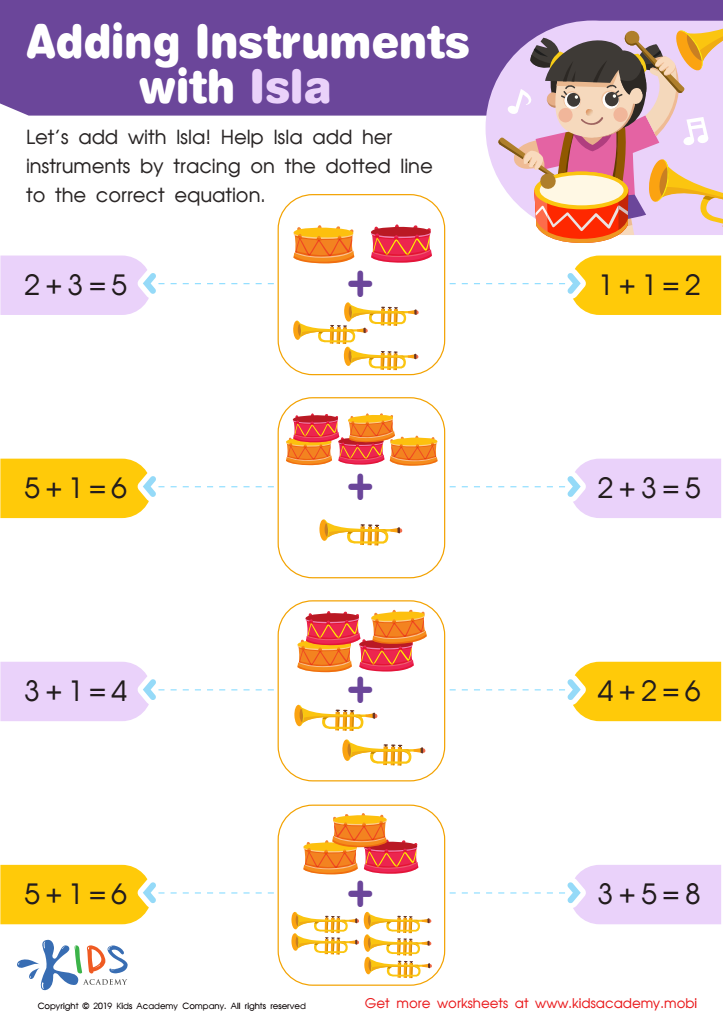
Adding Instruments with Isla Worksheet
Adding Instruments with Isla Worksheet

Your kids can have fun helping Isla add her musical instruments. With colorful pics and one-to-one representation, they can pick the correct addition sentence. They can connect each pic with traceable lines and get to the right sum up to 10.
Adding Instruments with Isla Worksheet
Worksheet
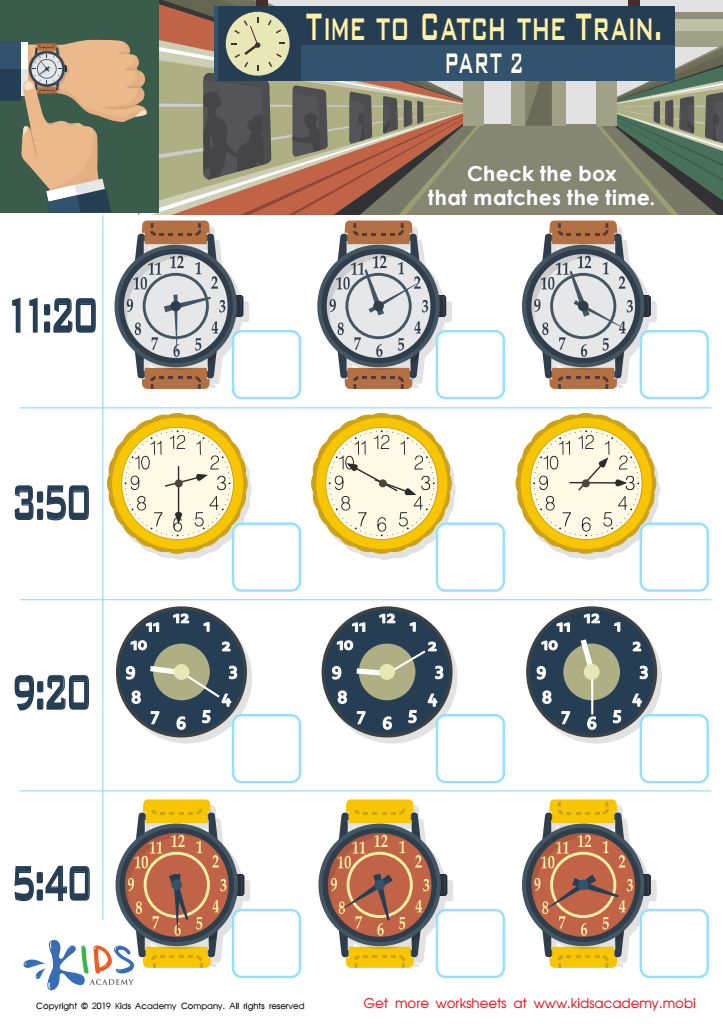
Time to Catch the Train Part 2 Worksheet

Time to Catch the Train Part 2 Worksheet

Teach your kids the importance of telling time and how to do it. Explain that there are multiple ways to show the time, such as written on the left side or watches in the picture. Guide them to check the box that matches the time. Knowing the time is essential to get things done and create order. Ensure your kids understand this and they will reap the benefits.
Time to Catch the Train Part 2 Worksheet

Worksheet
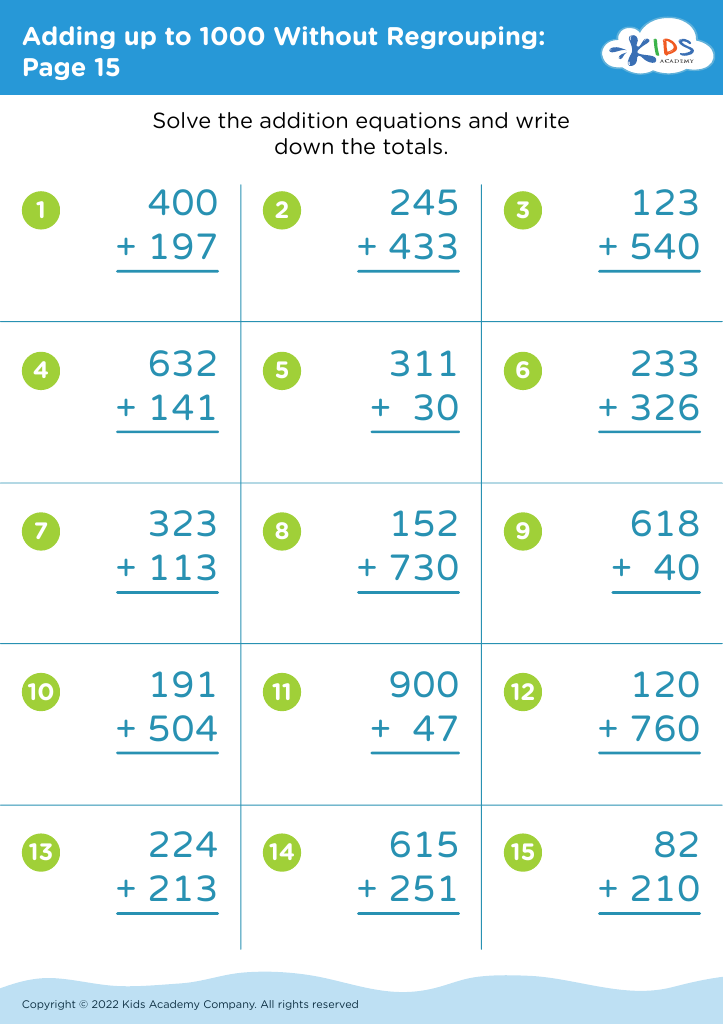
Adding up to 1000 Without Regrouping: Page 15
Worksheet


... 11 12

Parents and teachers should prioritize problem-solving skills in math for children aged 4-7 because it lays a strong foundation for future academic success and everyday life. At this formative stage, young minds are highly flexible and alert. Developing problem-solving skills fosters critical thinking, logical reasoning, and the ability to approach challenges with confidence. These abilities do not just apply to arithmetic; they teach children how to think methodically and persist through difficulties, key attributes for lifelong learning and adaptation.

Moreover, early exposure to problem-solving tasks in math encourages curiosity and a positive attitude towards learning. By working through puzzles and real-life scenarios, children experience a sense of accomplishment, boosting their self-esteem and motivation to tackle more complex tasks. These activities enhance a child's ability to articulate thoughts, collaborate with peers, and communicate solutions effectively.

For teachers, integrating problem-solving in math lessons makes subjects more engaging and interactive, promoting active learning. For parents, monitoring and supporting these activities can help identify a child's strengths and areas needing improvement early on. Thus, investing in developing problem-solving skills in math during early childhood can pay significant dividends throughout a child's education and beyond, aiding their overall cognitive and emotional development.