Counting skills Subtraction Worksheets for Ages 4-7
11 filtered results
-
From - To
Boost your child's early math skills with our Counting Skills Subtraction Worksheets for ages 4-7! Designed to make learning fun and engaging, these printable worksheets help kids master the fundamentals of subtraction through counting activities. Each worksheet offers colorful illustrations and interactive exercises that encourage critical thinking and problem-solving. From counting objects to creating simple equations, your child will gain confidence in their math abilities. Perfect for at-home practice or classroom use, these resources align with educational standards for young learners. Watch as your child develops essential subtraction skills while enjoying the process of learning!
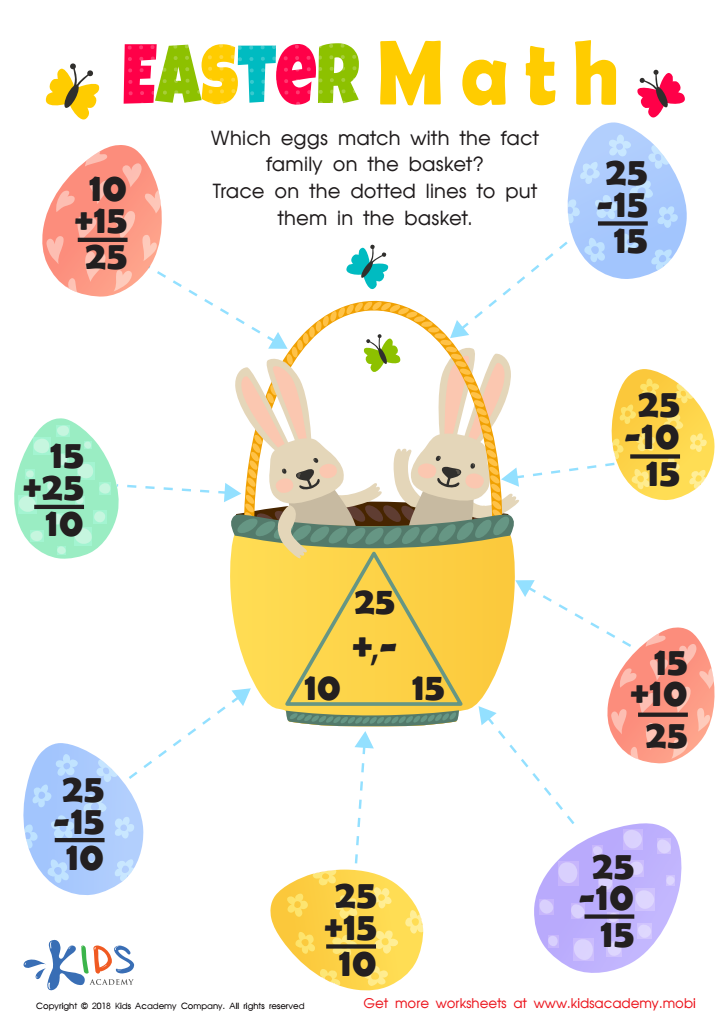
Fact Families: Easter Math Worksheet
 Assign to My Students
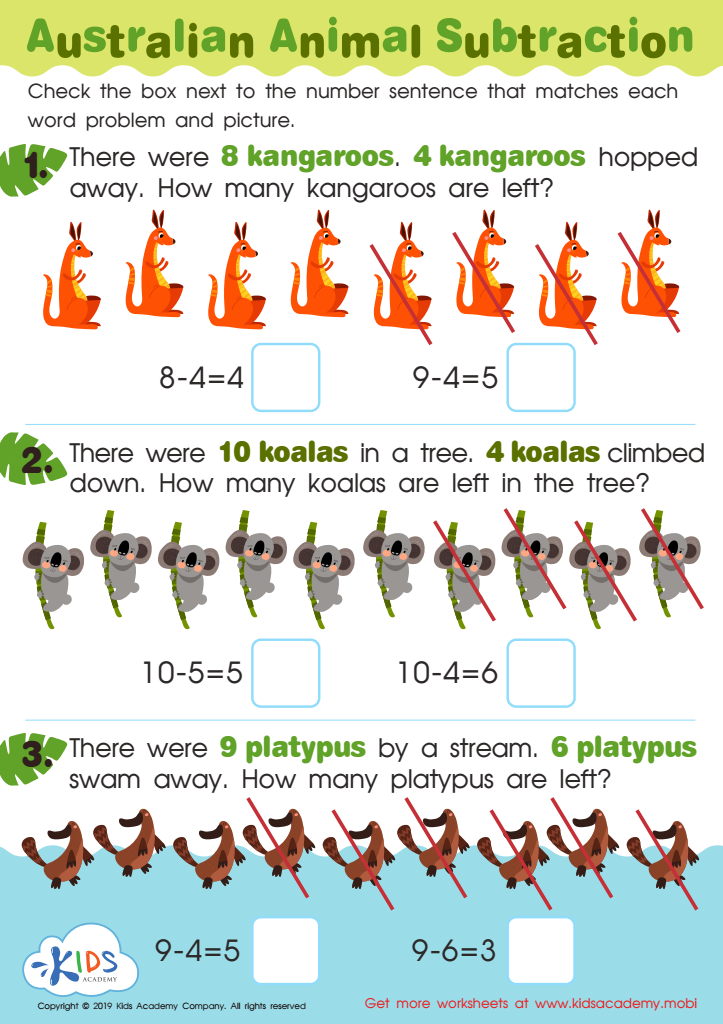
Australian Animal Subtraction Worksheet
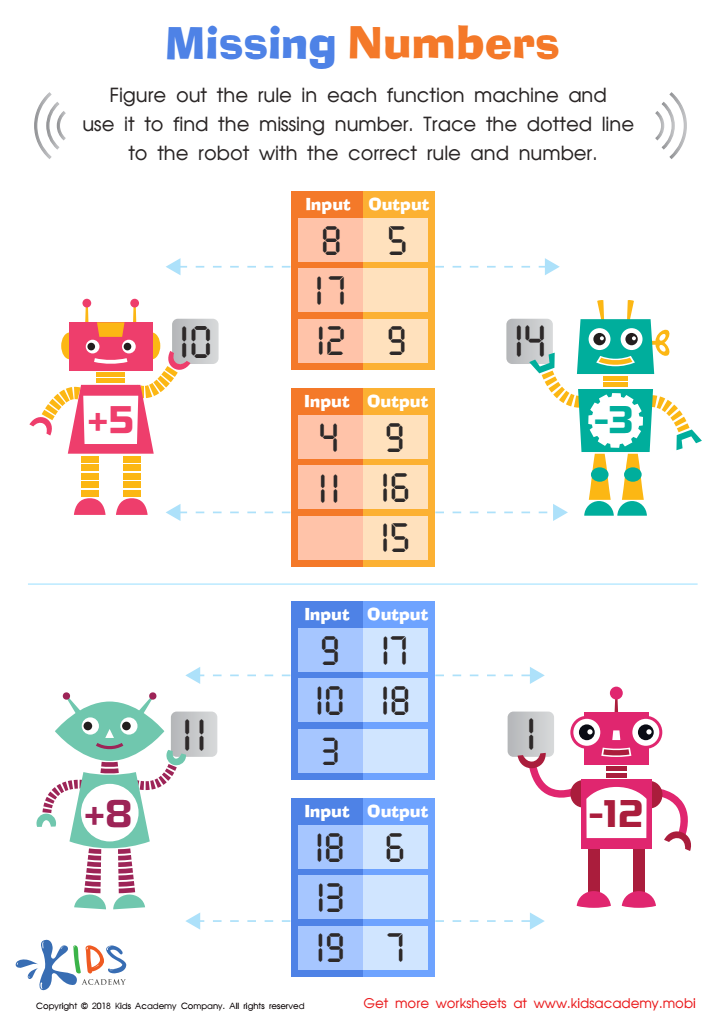
Missing Numbers Worksheet
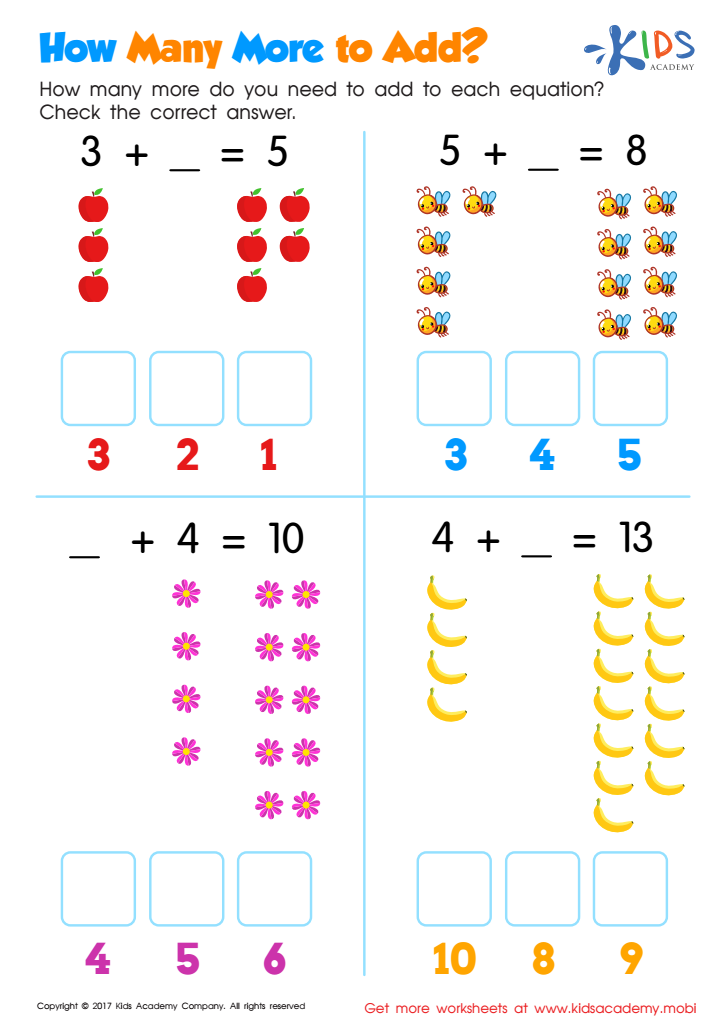
How Many More to Add Worksheet
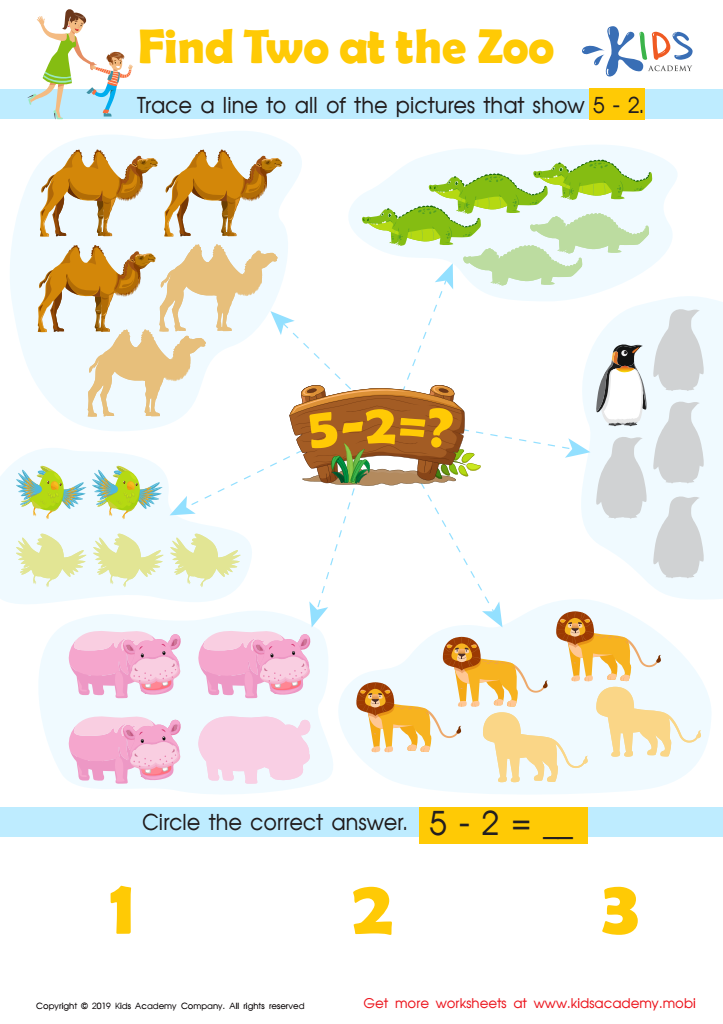
Find Two at the Zoo Worksheet
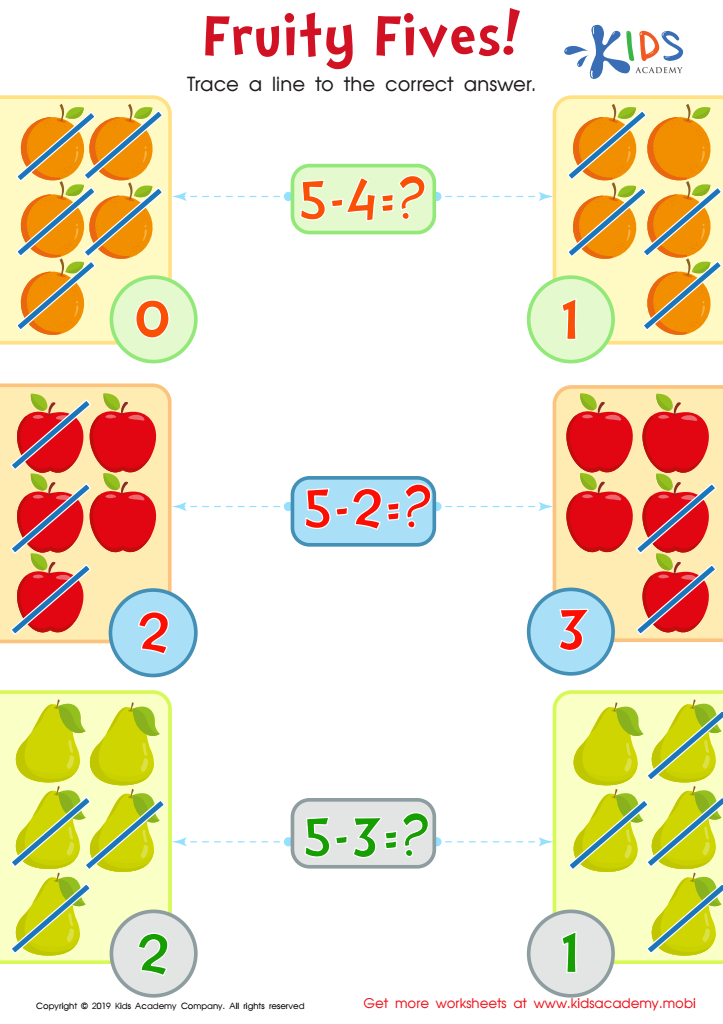
Fruity Fives! Worksheet
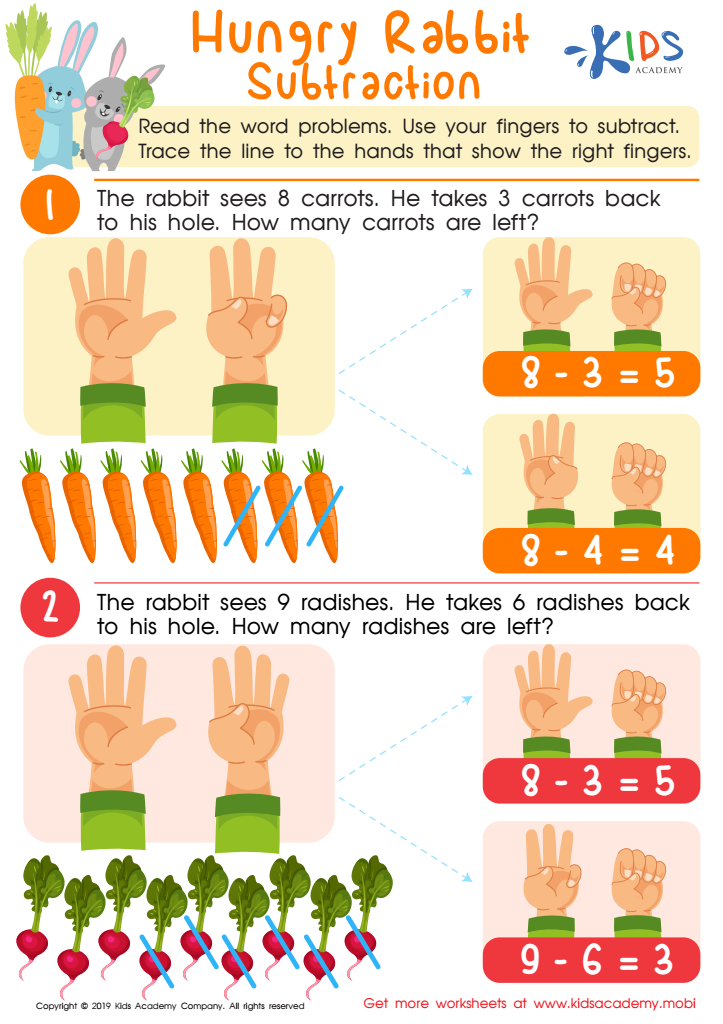
Hungry Rabbit Subtraction Worksheet
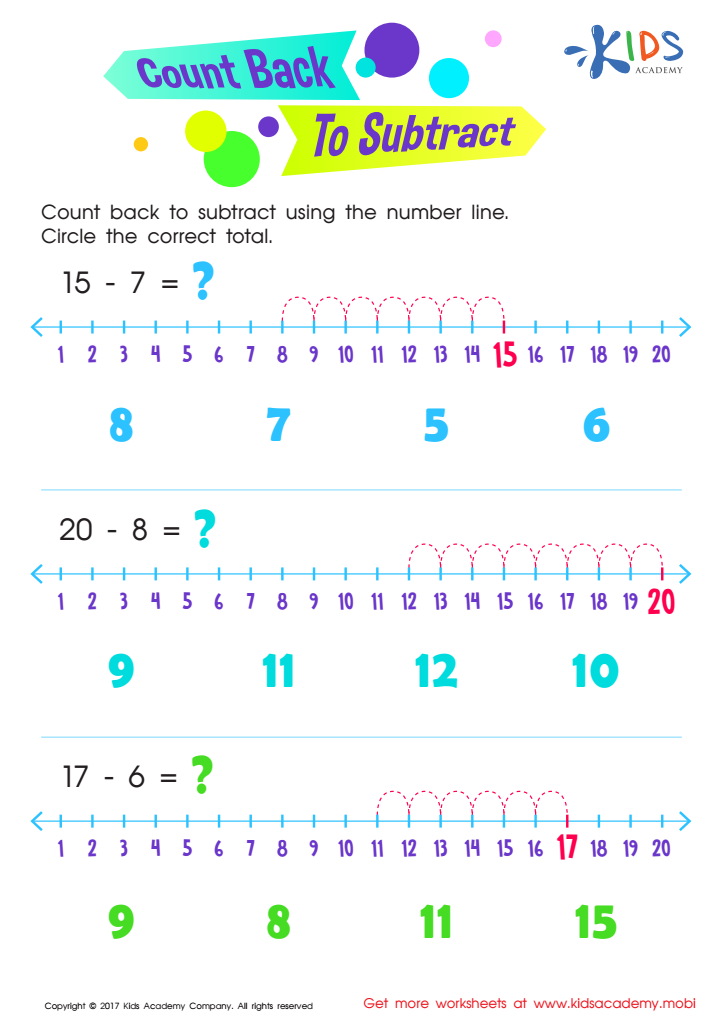
Count Back to Subtract Substraction Worksheet
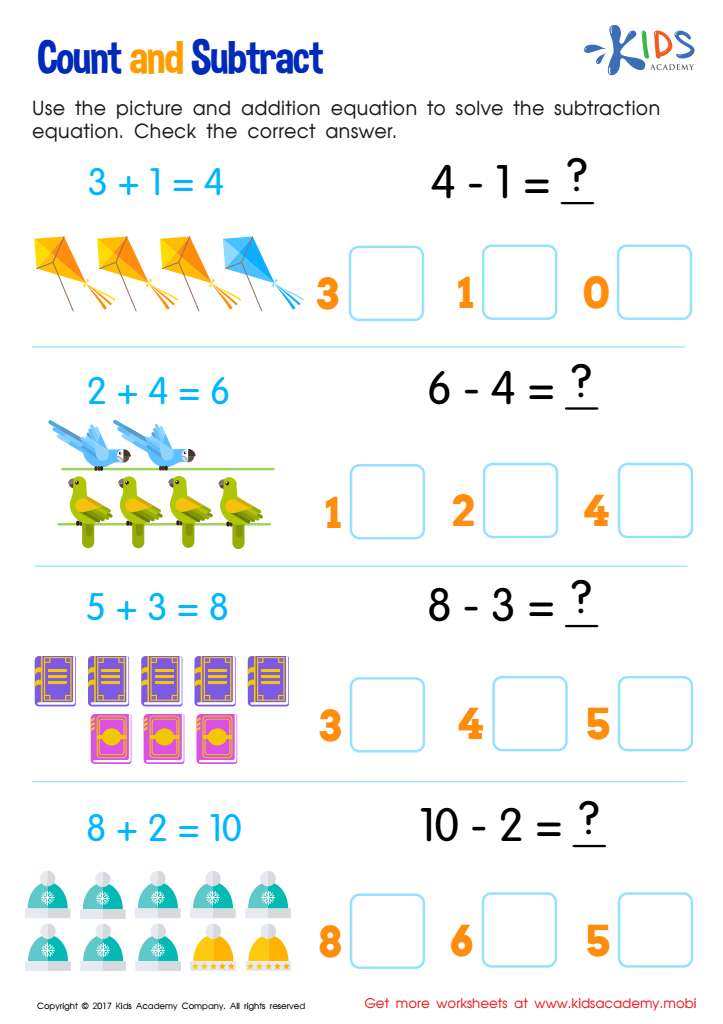
Count and Subtract Worksheet
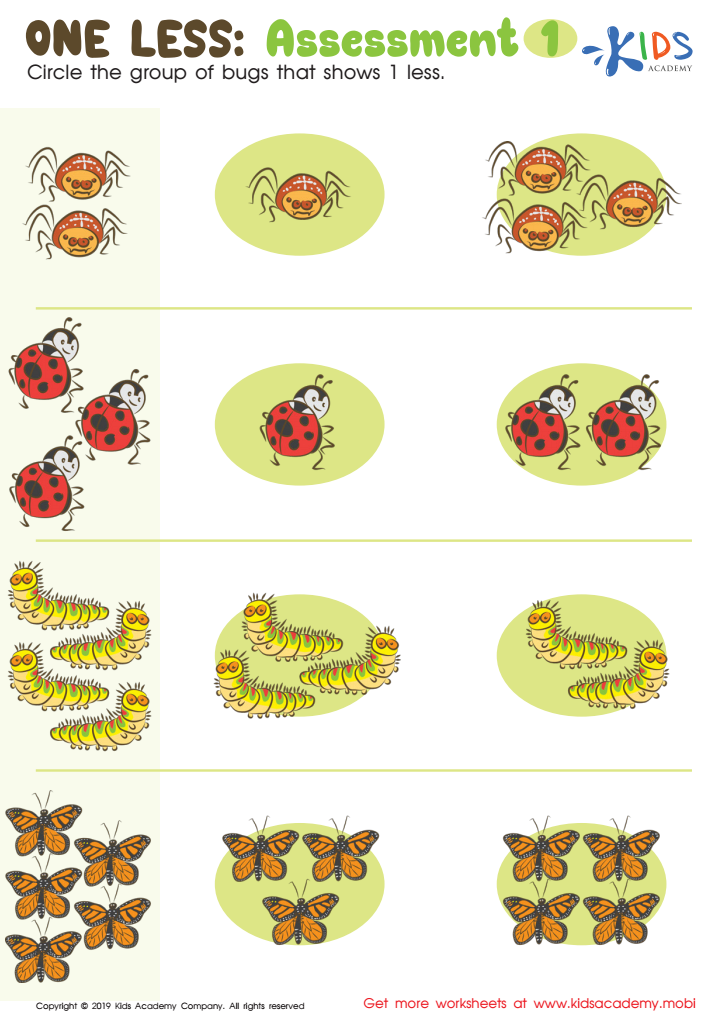
One Less: Assessment 1 Worksheet
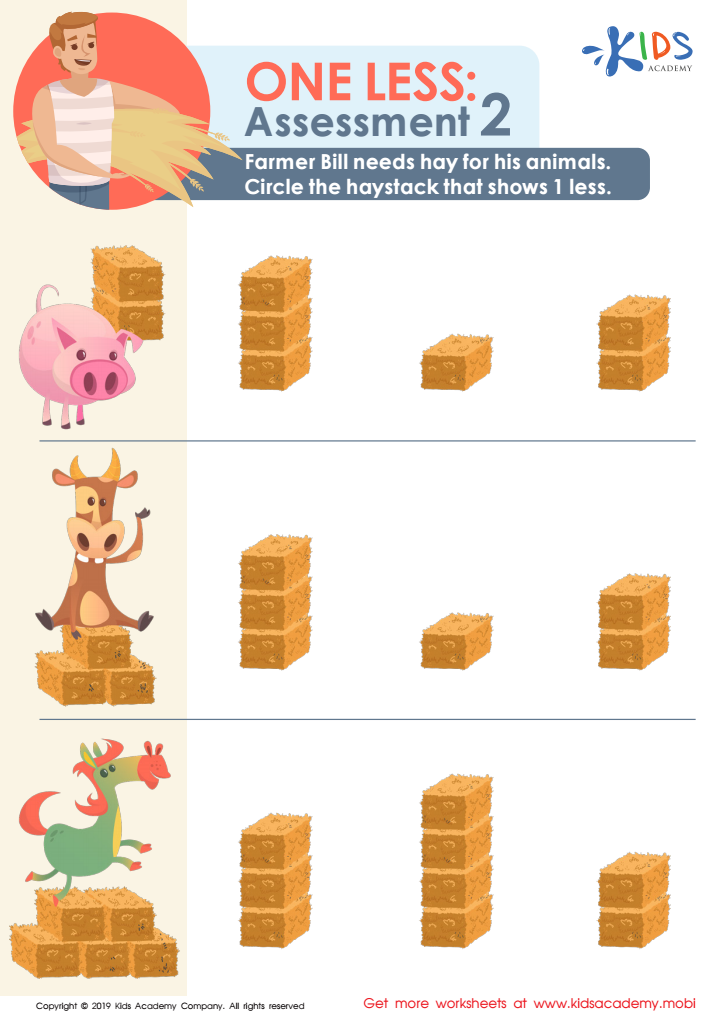
One Less: Assessment 2 Worksheet








Counting skills and subtraction are foundational components of early mathematics education for children aged 4-7, and both parents and teachers play a vital role in nurturing these skills. Understanding counting establishes a strong base for numerical literacy, helping children grasp how numbers work, which is essential for subtraction. Mastering these skills early on not only enhances cognitive development but also fosters problem-solving abilities and critical thinking.
Subtraction, as a concept, encourages children to explore relationships between numbers and develop a sense of part-whole relationships. This exploration promotes logical reasoning and equips children with the tools to approach more complex problems later in their education. When parents and teachers actively engage with children in counting and subtraction activities, they enhance the child’s confidence and interest in math.
Moreover, developing these skills lays the groundwork for later academic success. Careers in many fields rely heavily on math proficiency, and instilling a solid understanding early on can spark a lifelong appreciation for mathematics. Creating meaningful and engaging counting and subtraction experiences allows children to see the relevance of math in everyday life, setting them on a positive path toward learning and personal development. Thus, supporting these skills is crucial for both current and future educational outcomes.








