
Classification skills Science Worksheets for Ages 4-7
4 filtered results
Difficulty Level
Grade
Age
-
From - To
Subject
Activity
Standards
Enhance your child's learning journey with our "Classification Skills Science Worksheets for Ages 4-7." These engaging worksheets are designed to help young learners develop fundamental science skills through fun and interactive activities. Tailored for kids, each worksheet focuses on sorting and categorizing objects based on different characteristics, encouraging critical thinking and logical reasoning. Ideal for classroom use or at-home practice, these printable resources support foundational science education. Perfect for nurturing curiosity and boosting confidence in young minds, our worksheets make science discovery enjoyable and educational. Explore now to inspire a love for learning in your little scientist!
Favorites
With answer key
Interactive
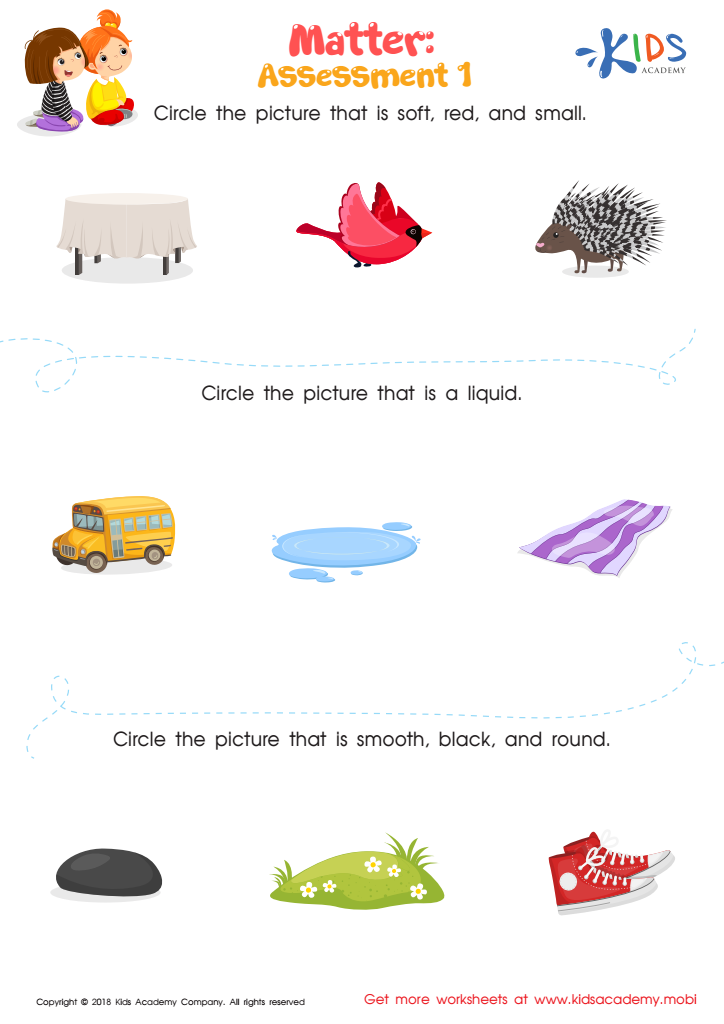
Matter: Assessment 1 Worksheet
Have your children learn that anything that has weight and takes up space is matter. Examples include buses, tables, people, animals, and more. Use this worksheet to help them identify the objects and circle the soft, red, and small one; the liquid; and the smooth, black, and round one.
 Assign to My Students
Matter: Assessment 1 Worksheet
Worksheet
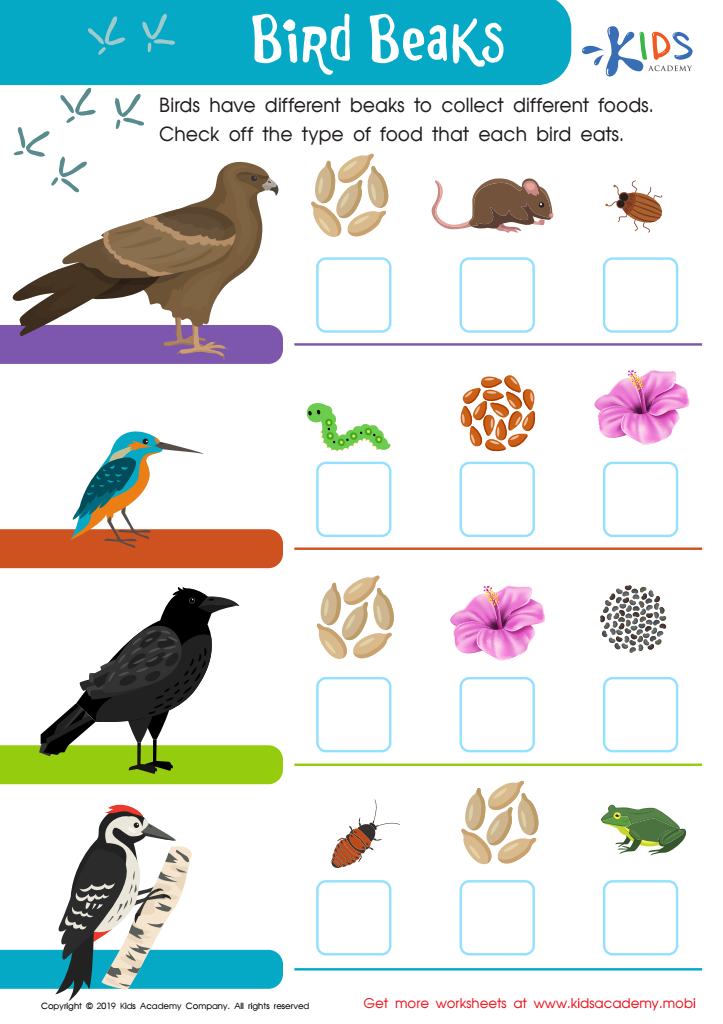
Bird Beaks Worksheet
Birds have beaks to eat different types of food. Let your little nature lover explore why with this free worksheet! They'll learn about different beak shapes and match them to the food that's best for them. Be an adorable bird watcher together!
Bird Beaks Worksheet
Worksheet
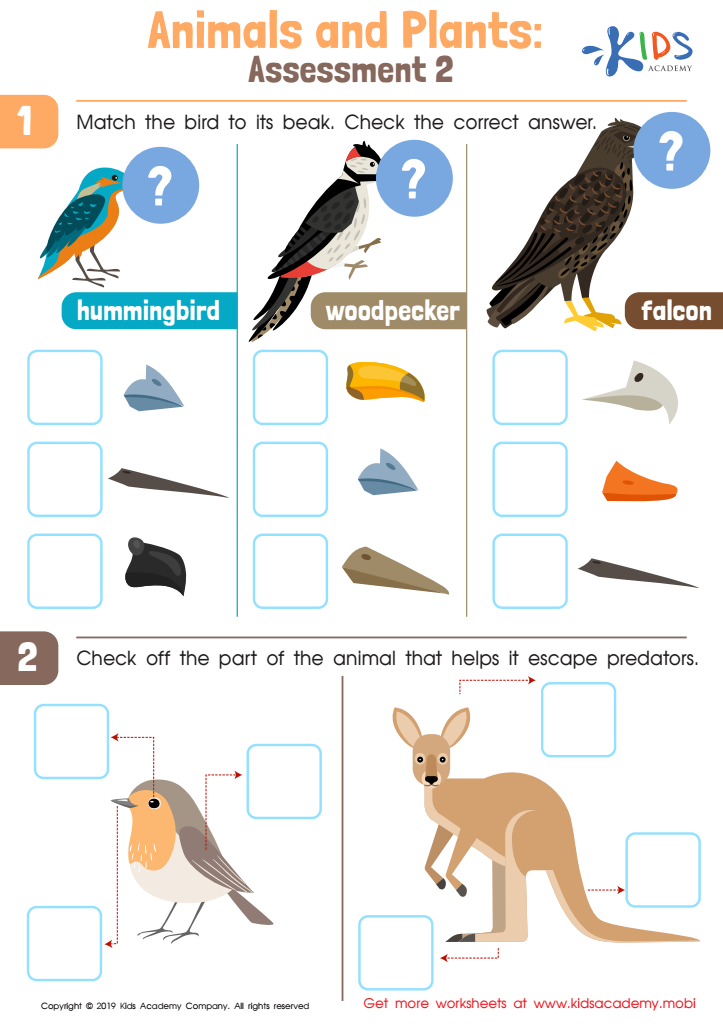
Animals and Plants: Assessment 2 Worksheet
This free PDF is ideal to quickly test your child's knowledge of animal adaptations. They'll select the right beak patterns for hummingbird, woodpecker and falcon, and identify which parts of animals help them escape predators. It's easy to assess your kid's understanding.
Animals and Plants: Assessment 2 Worksheet
Worksheet
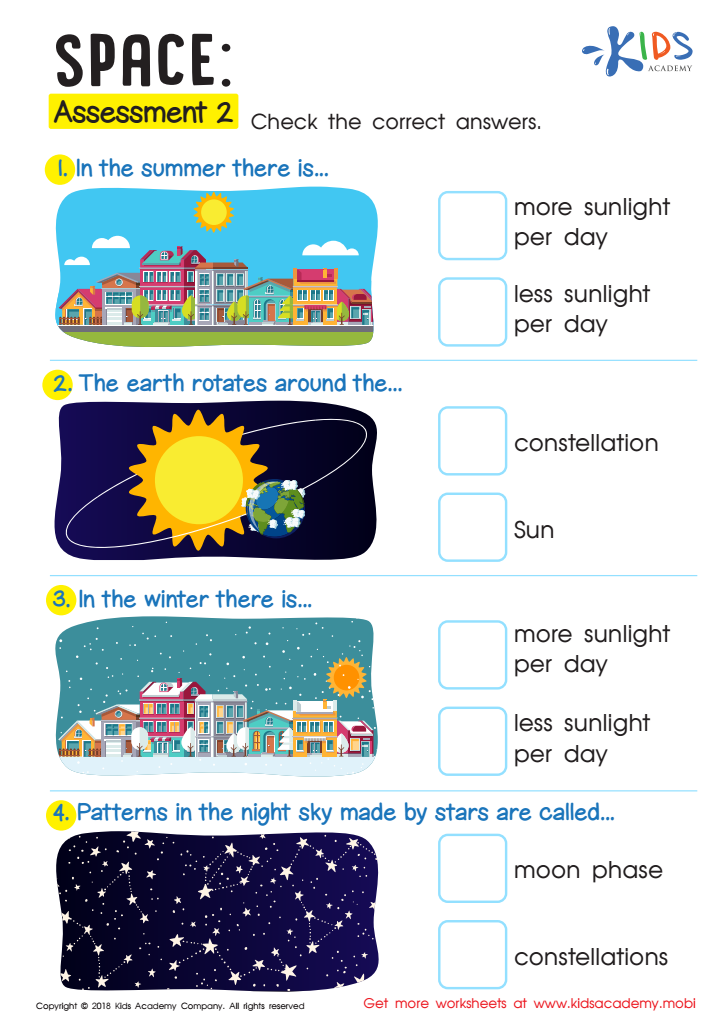
Space: Assessment 2 Worksheet
Test your kids' knowledge of the weather, constellations and Earth with this worksheet. Show them the 4 images and ask what's happening; then read the questions and options and help them pick the right answers. This printout is a helpful and fun way to learn!
Space: Assessment 2 Worksheet
Worksheet
Join Kids Academy for Free
Who is primarily going to use this learning content?






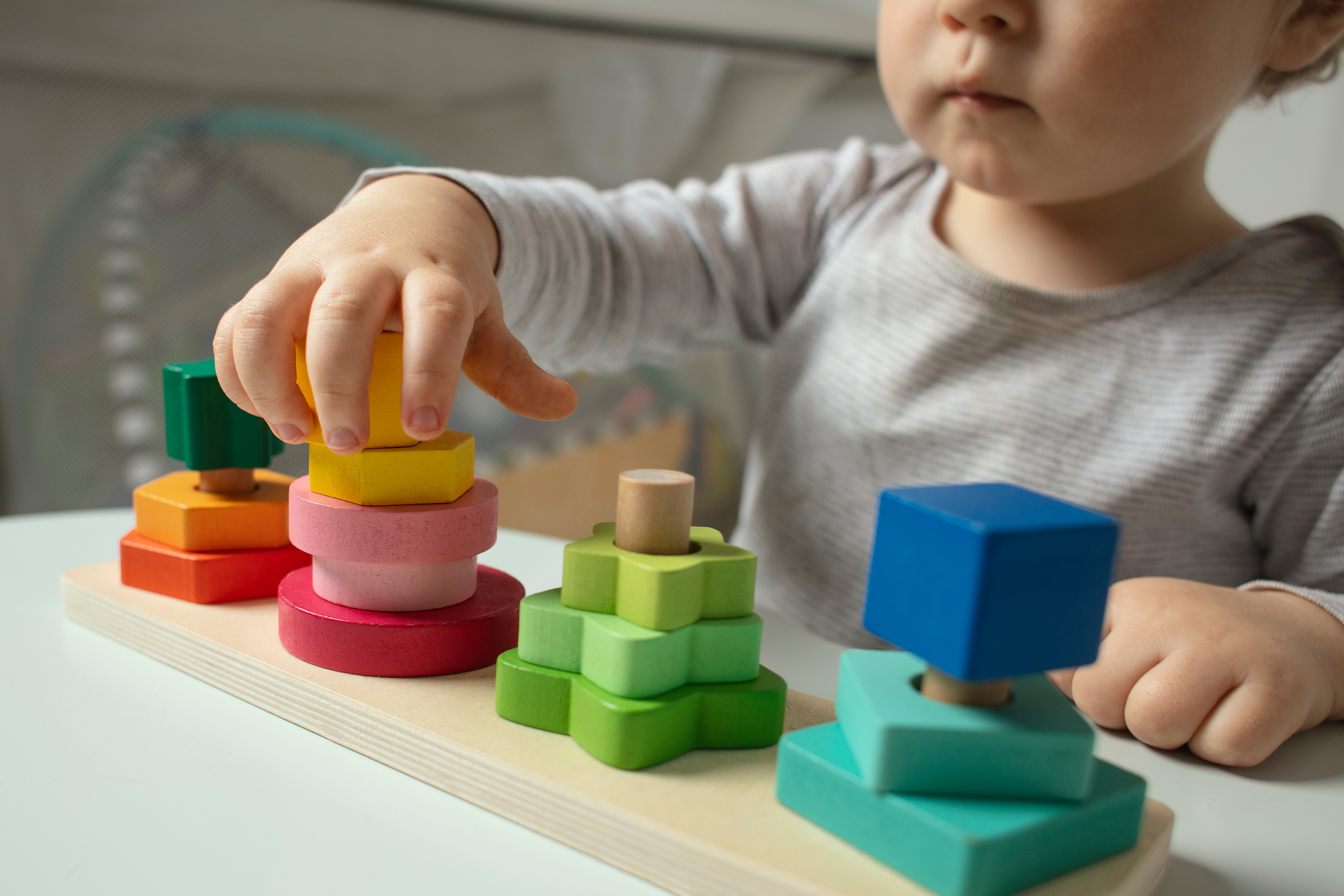
Parents and teachers should care about classification skills in science for ages 4-7 because these foundational abilities are crucial for young children’s cognitive and logical development. At this formative stage, classification involves sorting objects, ideas, or information into categories based on shared characteristics, which enhances critical thinking and organizational skills.
Engaging in classification helps children better understand their environment and make sense of the world around them. For instance, when kids group animals by habitat, they learn to observe similarities and differences, which fosters scientific thinking and a systematic approach to problem-solving. This kind of skill is not only relevant in science but also in everyday decision-making and in numerous future academic subjects.
Additionally, classification exercises help develop language skills. Children learn new vocabulary and concepts as they talk about the attributes they notice. This process strengthens their ability to communicate effectively and understand complex ideas. Encouraging children to explain their reasoning behind why they grouped certain objects together hones their analytical skills and builds confidence in their decision-making abilities.
Moreover, integrating classification activities about everyday objects such as toys, foods, or items in nature can make learning incredibly engaging and fun. Ultimately, fostering classification skills is foundational in promoting a lifelong love of learning, curiosity, and the capacity to think critically.







