
Critical thinking skills Science Worksheets for Ages 4-7
9 filtered results
Difficulty Level
Grade
Age
-
From - To
Subject
Activity
Standards
Unlock your child's potential with our engaging Critical Thinking Skills Science Worksheets designed specifically for ages 4-7. These worksheets foster essential cognitive abilities as young learners explore the fascinating world of science. Through fun activities and interactive challenges, children will develop problem-solving skills, enhance their ability to ask questions, and build analytical thinking. Each worksheet encourages curiosity and creativity, making science exciting and enjoyable! Perfect for teachers and parents alike, our resources offer a strong foundation for young minds, ensuring they make connections and think critically about the world around them. Discover the joy of learning with our expertly crafted worksheets today!
Favorites
With answer key
Interactive
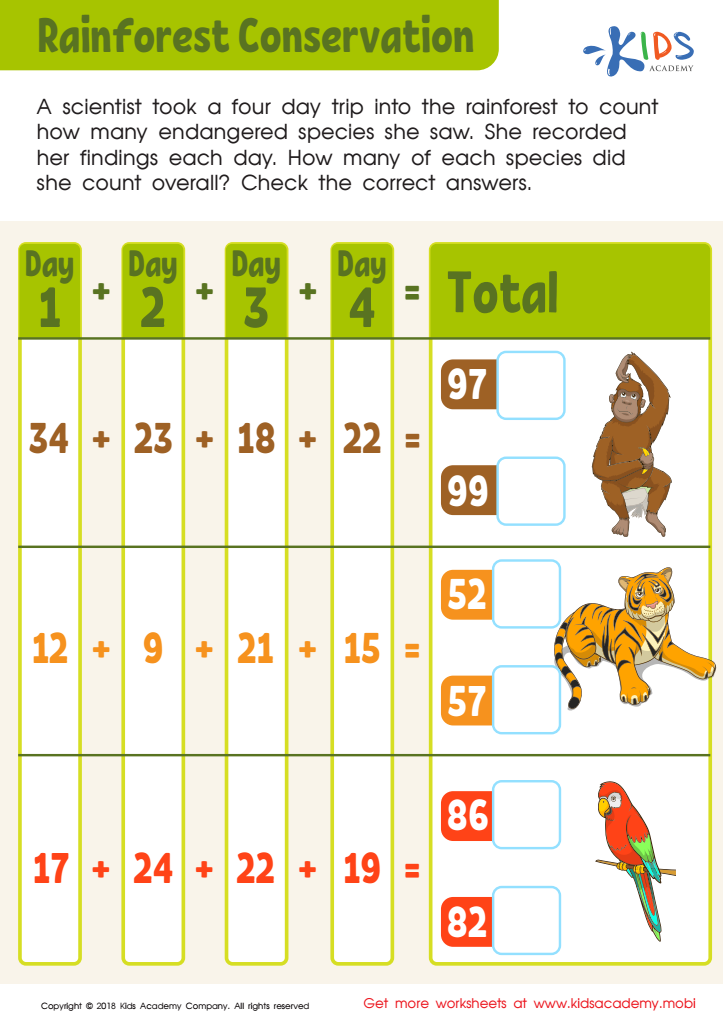
Rainforest Conservation Worksheet
Explain to your child what a rainforest is and why it's important. A scientist took a four-day trip to count endangered species. Let your child count how many of each species were seen in total. Check the answers and help them understand.
 Assign to My Students
Rainforest Conservation Worksheet
Worksheet
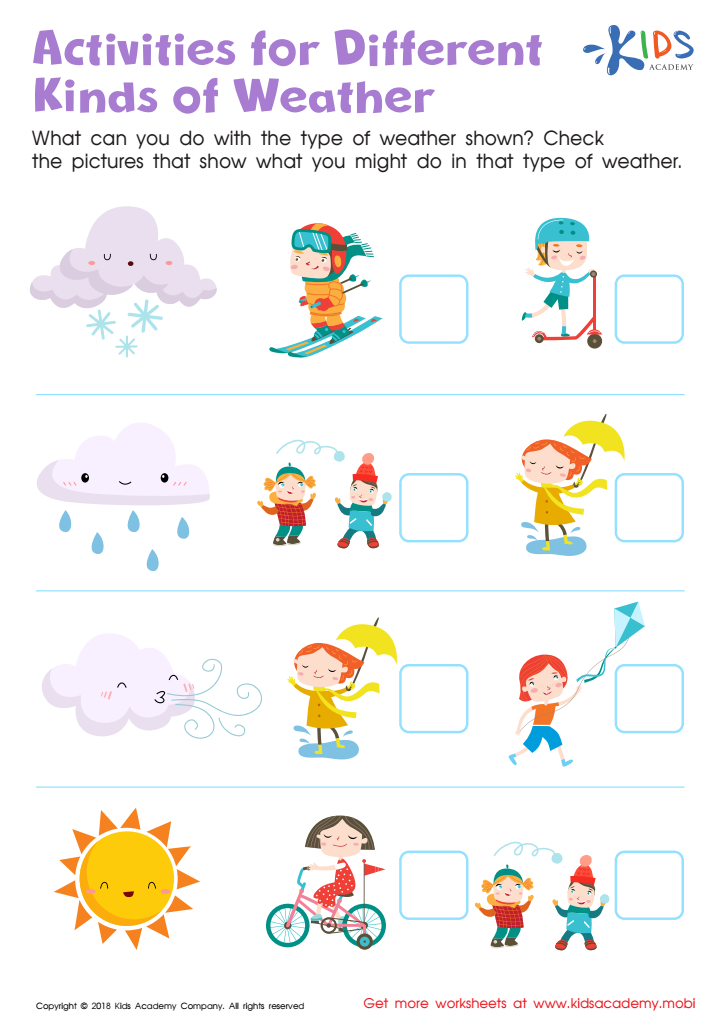
Activities for Different Kinds of Weather Worksheet
Help your child explore the changing seasons with this interactive worksheet. Ask them to name the different seasons and activities associated with each type of weather. Show the pictures and explain what they can do in that kind of weather. Have them check off the activities to help them learn and enjoy the changing seasons.
Activities for Different Kinds of Weather Worksheet
Worksheet
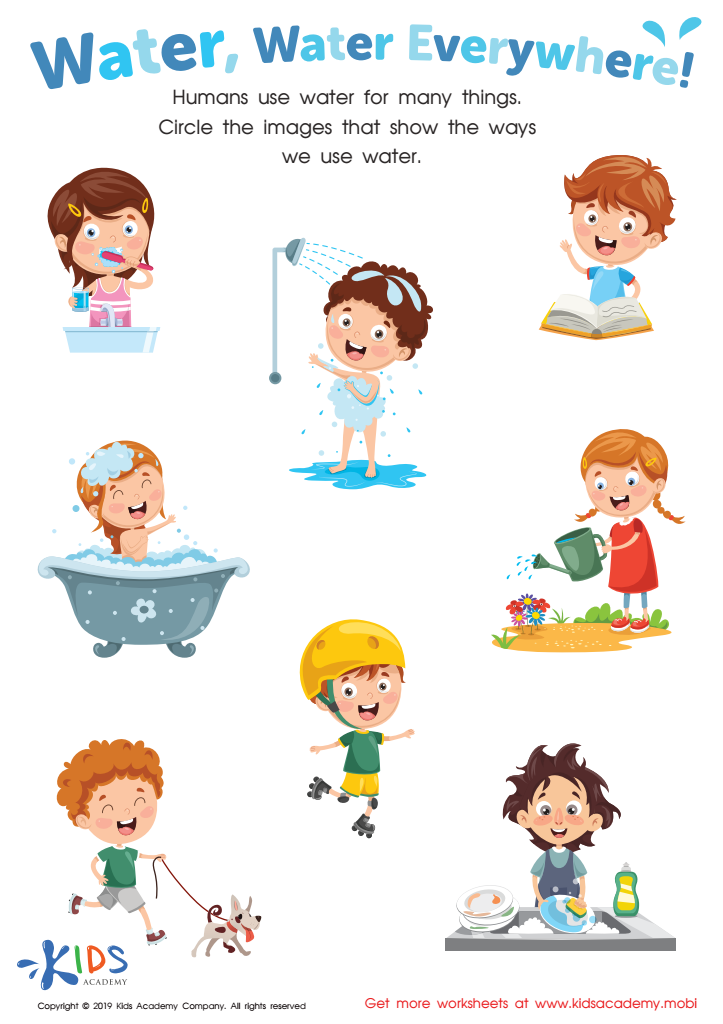
Water, Water Everywhere! Worksheet
Ask your kids how we use water daily. Point out how vital it is to the environment, as many living things couldn't exist without it. Show them this worksheet with kids doing different things that involve water. Ask them to identify what each one is doing, then help them circle the images which show the ways we use the water.
Water, Water Everywhere! Worksheet
Worksheet
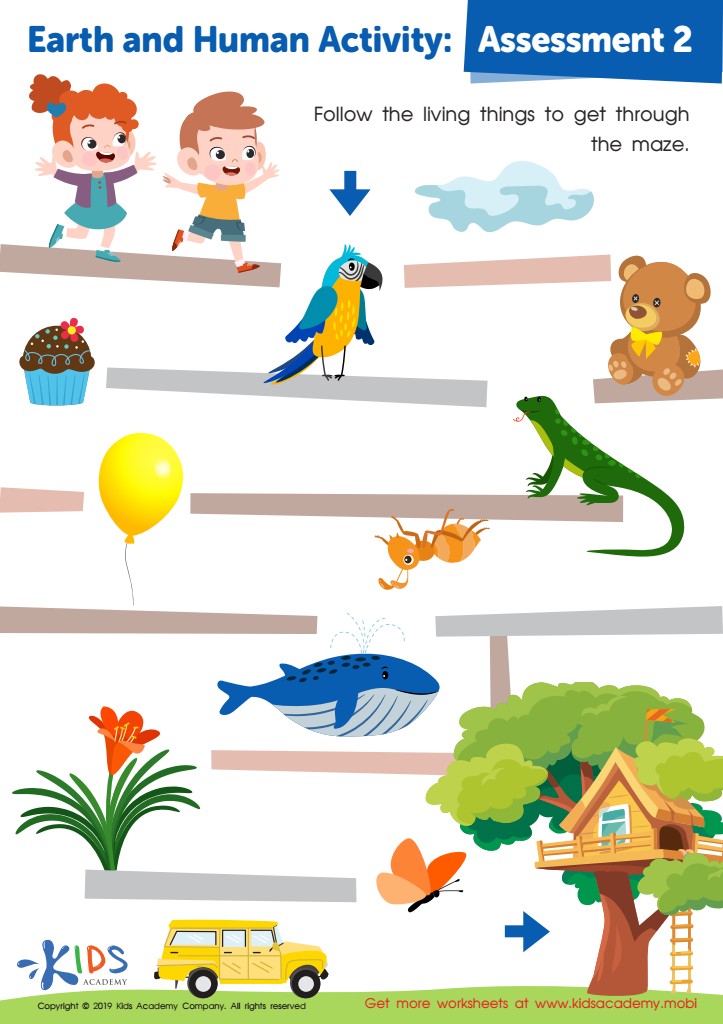
Earth and Human Activity: Assessment 2 Worksheet
Earth is alive with birds, trees, insects, and animals. Explain to your kids that the environment on Earth supports life. Ask for examples, then use the worksheet pictures to help them identify living things and complete the maze.
Earth and Human Activity: Assessment 2 Worksheet
Worksheet
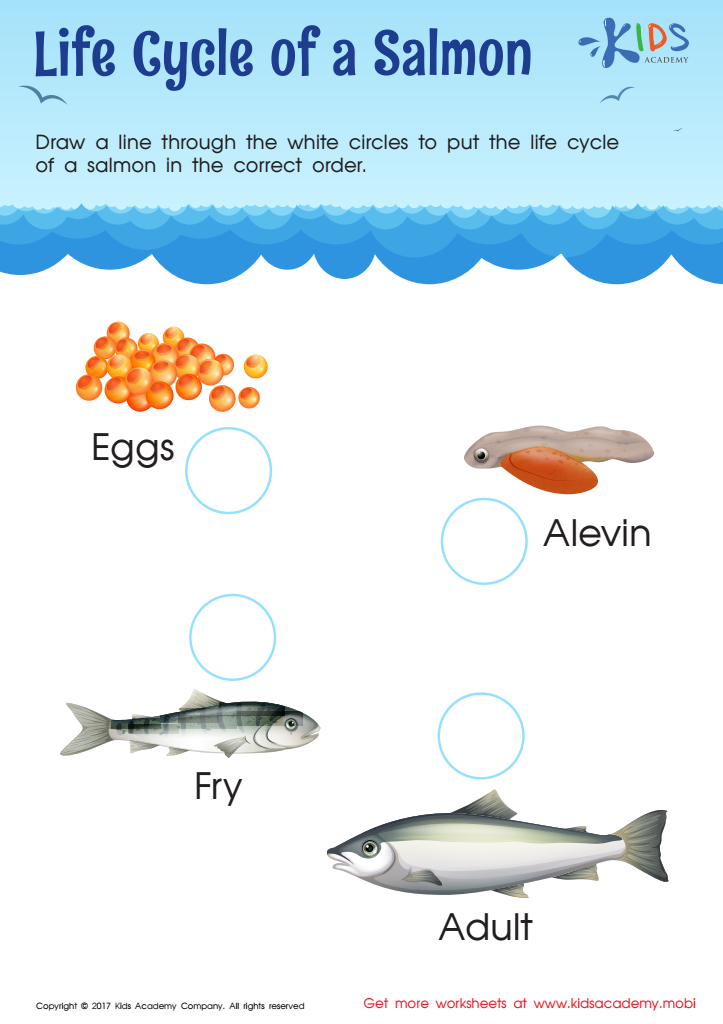
Cycle Of Salmon Worksheet
Explore the life cycle of a salmon with this grade 2 worksheet! Kids will learn by arranging the stages of the salmon's lifecycle in order. Science activities in this set cover a wide range of lifecycles in nature.
Cycle Of Salmon Worksheet
Worksheet
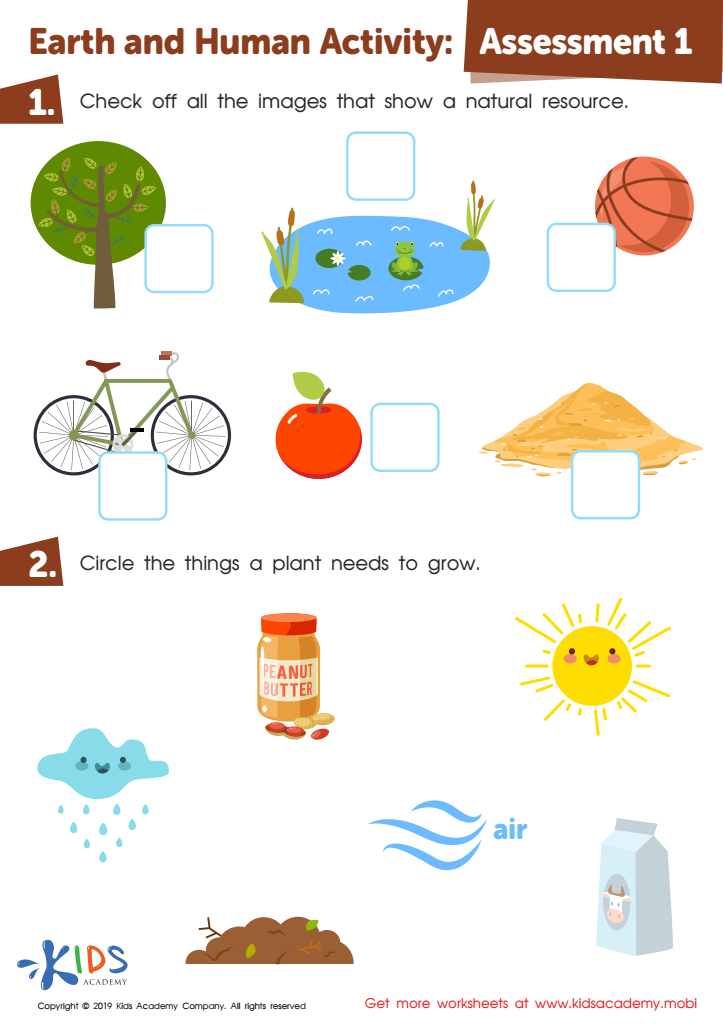
Earth and Human Activity: Assessment 1 Worksheet
Natural resources are gifts from Mother Nature that exist without man-made intervention. We use them to make essential items we use daily. Ask your kids for examples and have them check off images of natural resources on this worksheet.
Earth and Human Activity: Assessment 1 Worksheet
Worksheet
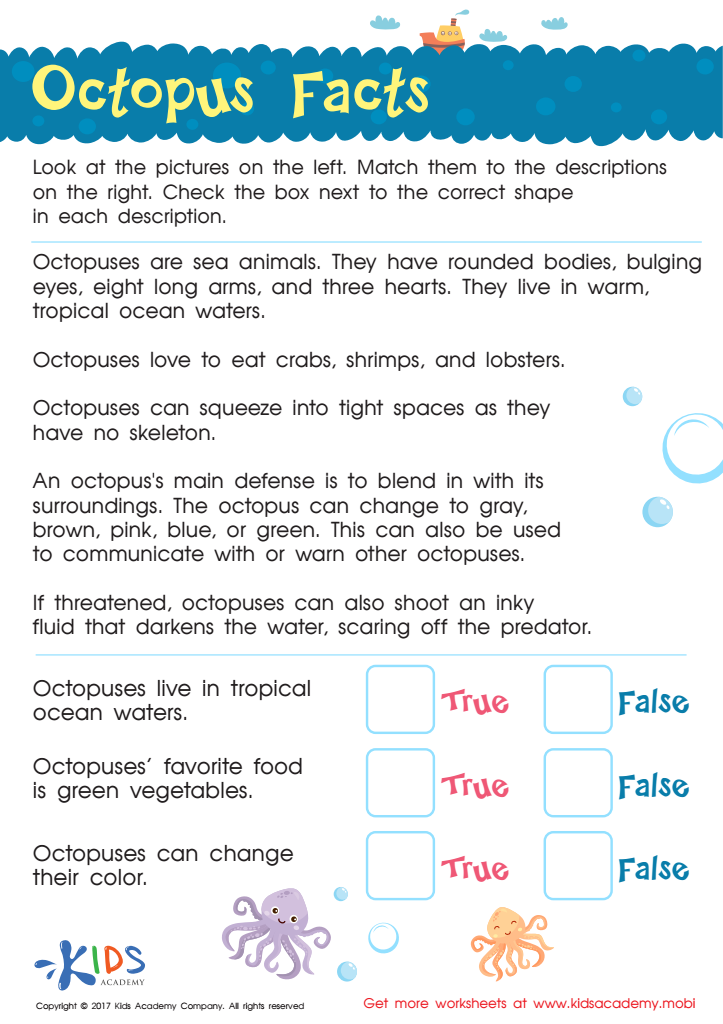
Octopus Facts Worksheet For Kids
Let your child dive into the world of octopuses with this fun worksheet. It offers invaluable practice in reading non-fiction texts, while they learn interesting facts about these strange sea creatures. It's a great way to help them hone their skills in reading comprehension.
Octopus Facts Worksheet For Kids
Worksheet
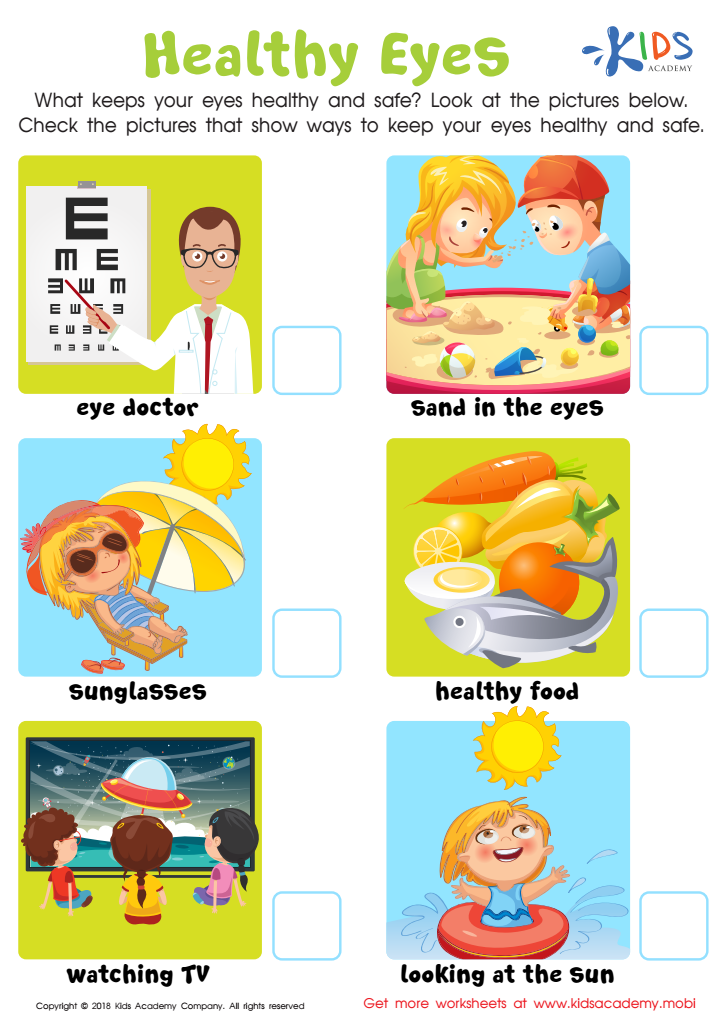
Healthy Eyes Worksheet
Does your child know how to care for their eyes? Help them understand with this worksheet. Look through the pictures together and discuss the different ways to keep the eyes healthy and safe. These include visits to the doctor, wearing sunglasses, and eating healthy food.
Healthy Eyes Worksheet
Worksheet
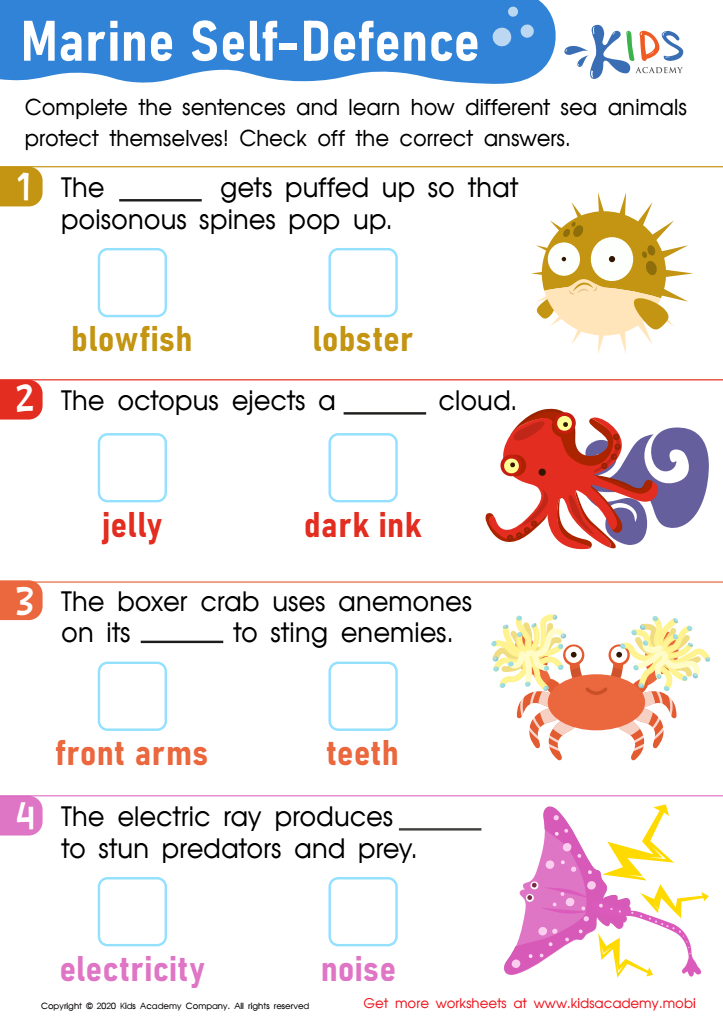
Marine Self-Defence Worksheet
Kids will love discovering the ingenious ways sea creatures protect themselves from predators such as sharks and whales! Let them explore the strategies with this fun science worksheet, which features vibrant illustrations. Have them fill in the blanks with each creature's defense strategy, such as shells, spikes, ink, or even electricity!
Marine Self-Defence Worksheet
Worksheet
Join Kids Academy for Free
Who is primarily going to use this learning content?




%20(1).jpg)

Critical thinking skills are essential for children ages 4-7 as they form the foundation for future learning, problem-solving, and decision-making. At this early age, children are highly receptive and curious, making it an ideal time to cultivate these skills. Science, as a discipline, offers a rich platform for fostering critical thinking through hands-on experiments and inquiry-based learning.
Parents and teachers should prioritize critical thinking in science because it encourages children to ask questions, make observations, and think creatively. Engaging kids in scientific exploration helps them process information logically and develop a sense of curiosity about the world around them. It invites them to explore "how" and "why," empowering them with analytical skills that are transferable to other subjects and daily life.
Moreover, critical thinking skills nurture resilience; children learn to approach challenges with a solution-focused mindset. This is vital in a rapidly changing world, where adaptability and innovation are key. As they navigate science concepts, children also develop teamwork and communication skills through collaborative activities, further enhancing their social abilities.
In summary, fostering critical thinking skills through science empowers young learners, equipping them with the tools necessary for lifelong understanding and growth.







