
Enhancing vocabulary Our Planet and Environment Worksheets for Ages 4-7
3 filtered results
Difficulty Level
Grade
Age
-
From - To
Subject
Activity
Standards
Nurture your child's curiosity about the world with our "Enhancing Vocabulary: Our Planet and Environment" worksheets designed for ages 4-7. These engaging activities introduce young learners to essential environmental concepts and vocabulary, fostering a love for science and nature. Perfectly crafted to align with early learning standards, our worksheets help children understand key topics such as weather, plants, animals, and natural resources. With diverse exercises that include coloring, matching, and simple reading tasks, kids will enhance their vocabulary while developing critical thinking skills. Start your child's educational journey with fun and meaningful worksheets that make learning about our planet engaging and enriching!
Favorites
With answer key
Interactive
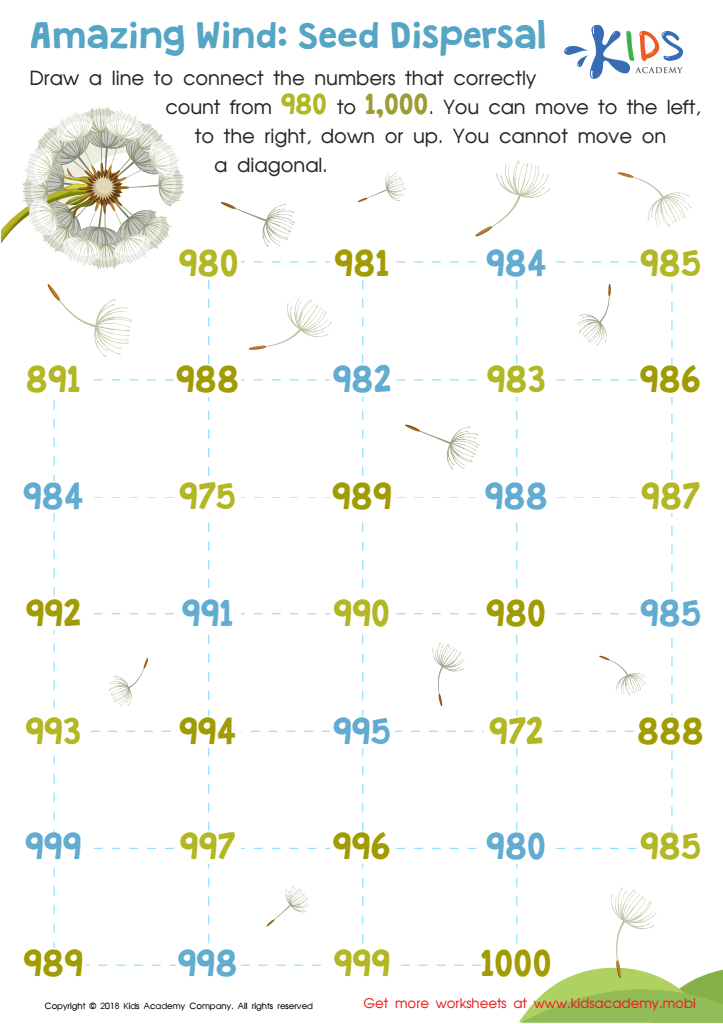
Amazing Wind: Seed Dispersal Worksheet
Let your child have fun and practice math skills with this worksheet! They'll use traceable lines to disperse a dandelion's seeds, building number sense, sequencing, fine motor, and hand-eye coordination. Discern between similar numbers and strengthen reasoning skills as they enjoy the familiar activity of blowing the seeds away.
 Assign to My Students
Amazing Wind: Seed Dispersal Worksheet
Worksheet
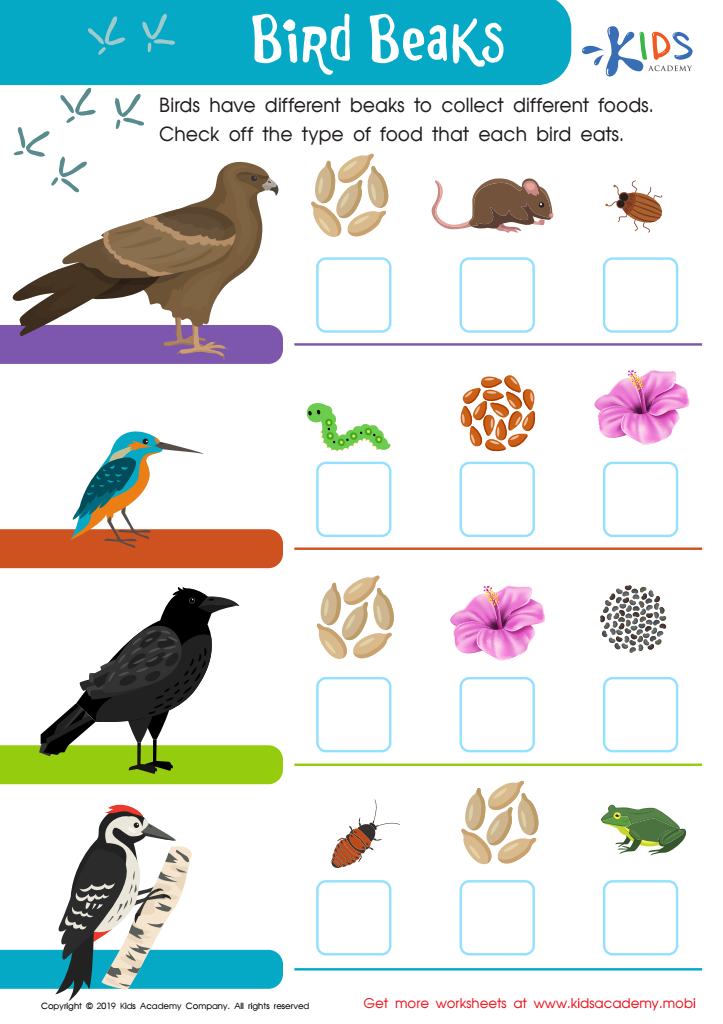
Bird Beaks Worksheet
Birds have beaks to eat different types of food. Let your little nature lover explore why with this free worksheet! They'll learn about different beak shapes and match them to the food that's best for them. Be an adorable bird watcher together!
Bird Beaks Worksheet
Worksheet
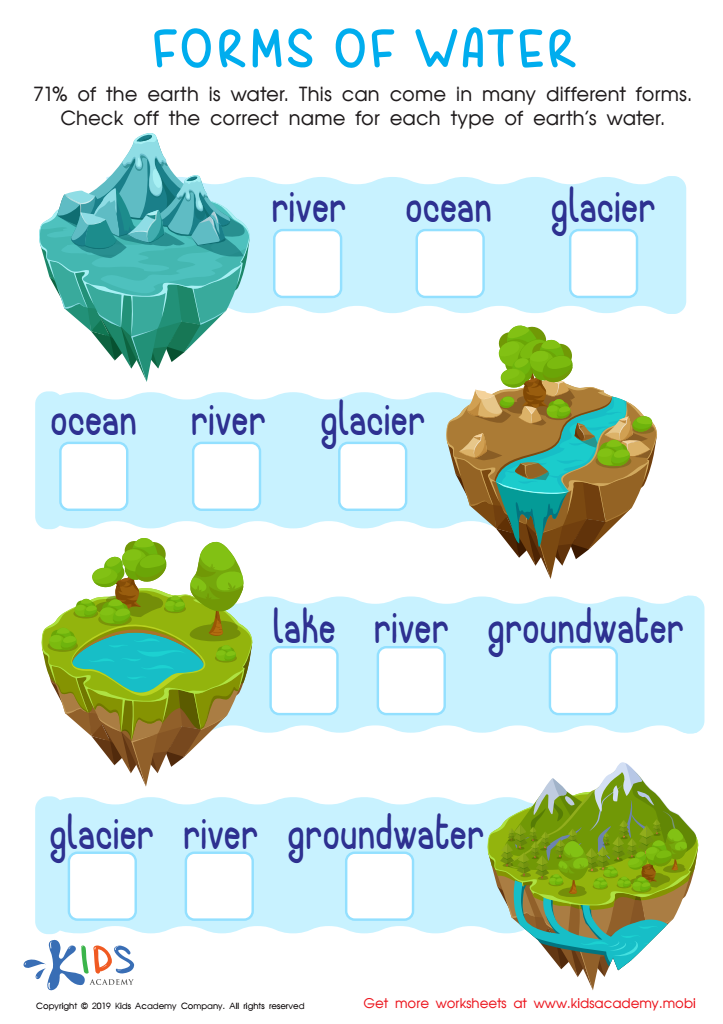
Forms of Water Worksheet
Life on Earth needs water to survive. Luckily, water makes up 75% of the Earth's surface and comes in various forms such as rivers, oceans and lakes. Ask your kids to name other forms and use this worksheet to help them identify each type.
Forms of Water Worksheet
Worksheet
Join Kids Academy for Free
Who is primarily going to use this learning content?






Early childhood (ages 4-7) is a critical period for language acquisition and cognitive development, and enhancing vocabulary related to "Our Planet and Environment" plays a vital role in shaping young minds. Firstly, introducing environmental vocabulary helps children develop a deeper understanding and appreciation of the natural world. When children can name and describe elements of their environment—like trees, rivers, animals, and weather conditions—they are better equipped to relate to and respect these elements as they grow older.
Moreover, early environmental education cultivates awareness and curiosity. Children who learn words like "recycle," "pollution," and "conservation" early on are more likely to internalize these concepts and adopt eco-friendly habits. This awareness contributes to raising a generation of environmentally conscious individuals who are equipped to tackle global challenges like climate change and biodiversity loss.
Teachers and parents play an indispensable role here. By integrating environmental vocabulary into daily conversations, reading materials, and educational activities, they lay the groundwork for lifelong learning and advocacy. This foundational knowledge not only enriches children's language skills but also empowers them to make informed decisions and become proactive stewards of the Earth. In sum, nurturing a child's environmental vocabulary fosters both their intellectual growth and a sustainable future for our planet.







