Animal Classification Worksheets for Ages 4-8
10 filtered results
-
From - To
Explore our engaging Animal Classification Worksheets designed specifically for children aged 4-8! These interactive resources introduce young learners to the fascinating world of animals, helping them understand different categories such as mammals, reptiles, birds, and more. With colorful illustrations and fun activities, these worksheets promote critical thinking and enhance observational skills as kids sort and classify various animals. Perfect for home or classroom use, our worksheets are a great way to spark curiosity and support early learning. Download now and empower your child’s understanding of animal diversity through enjoyable, hands-on experiences! Ideal for budding explorers and future scientists alike!
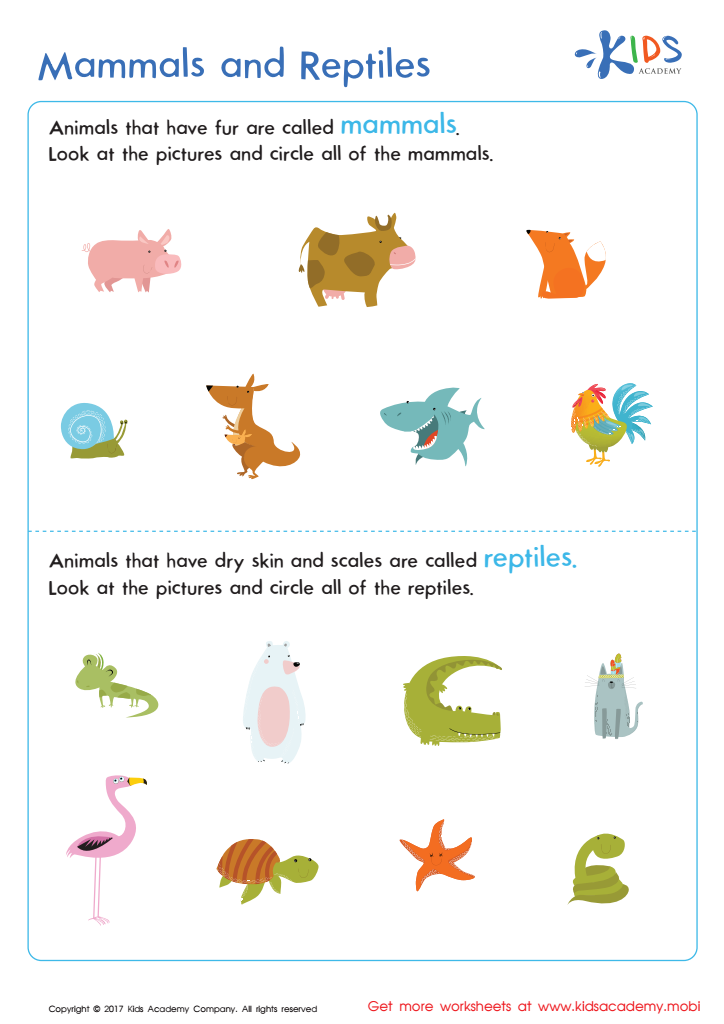
Mammals and Reptiles Worksheet
 Assign to My Students
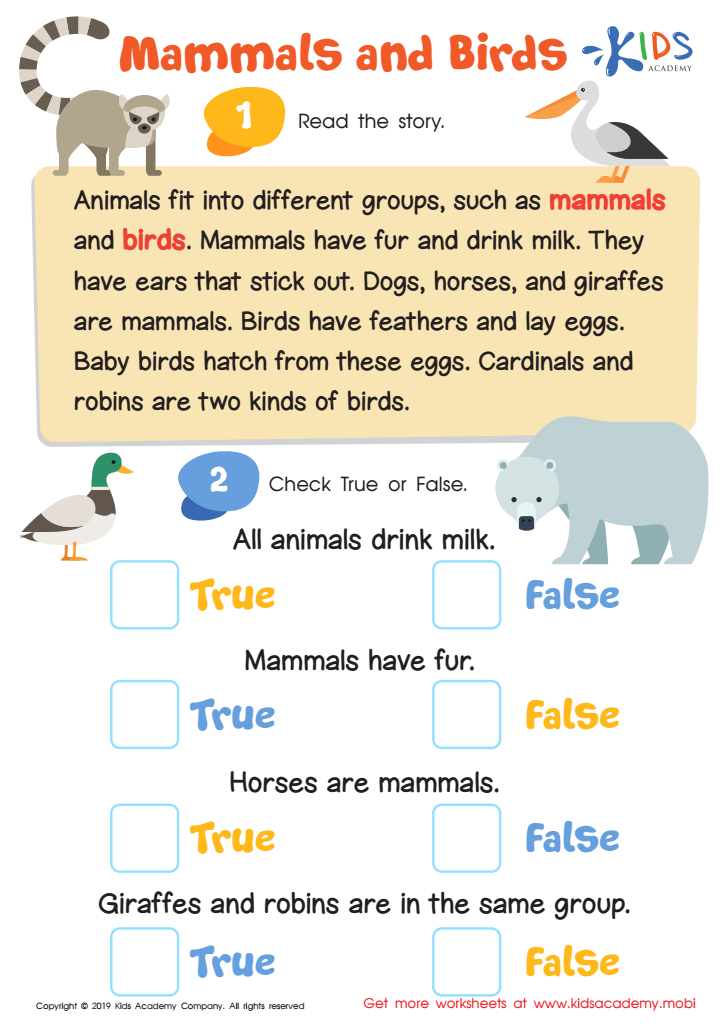
Mammals and Birds Worksheet
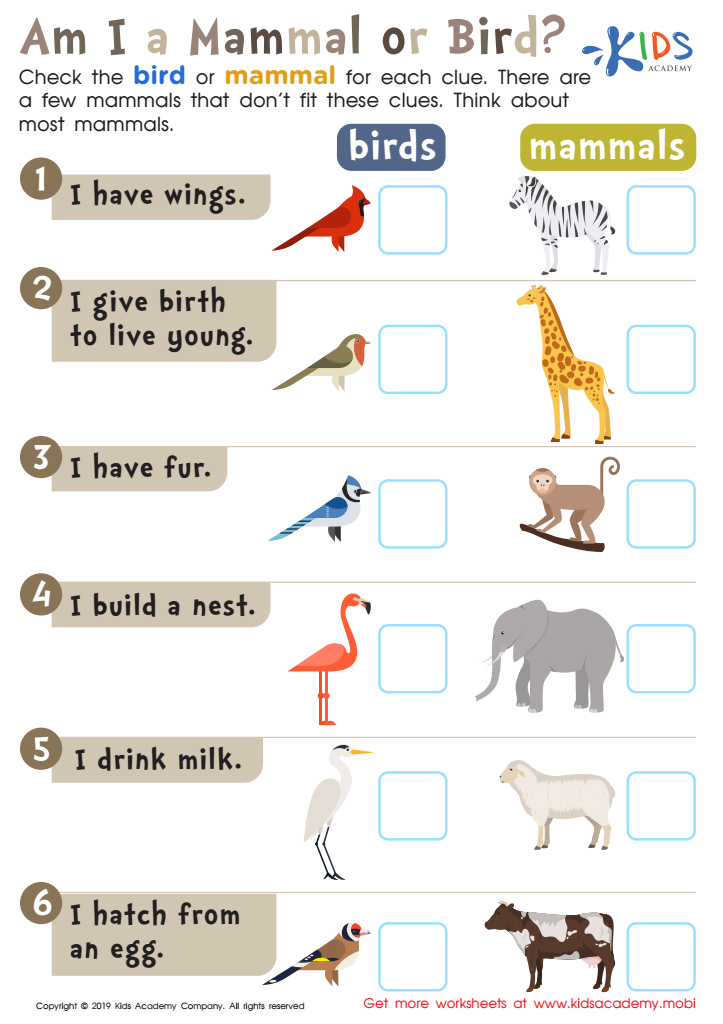
Am I a Mammal or Bird? Worksheet
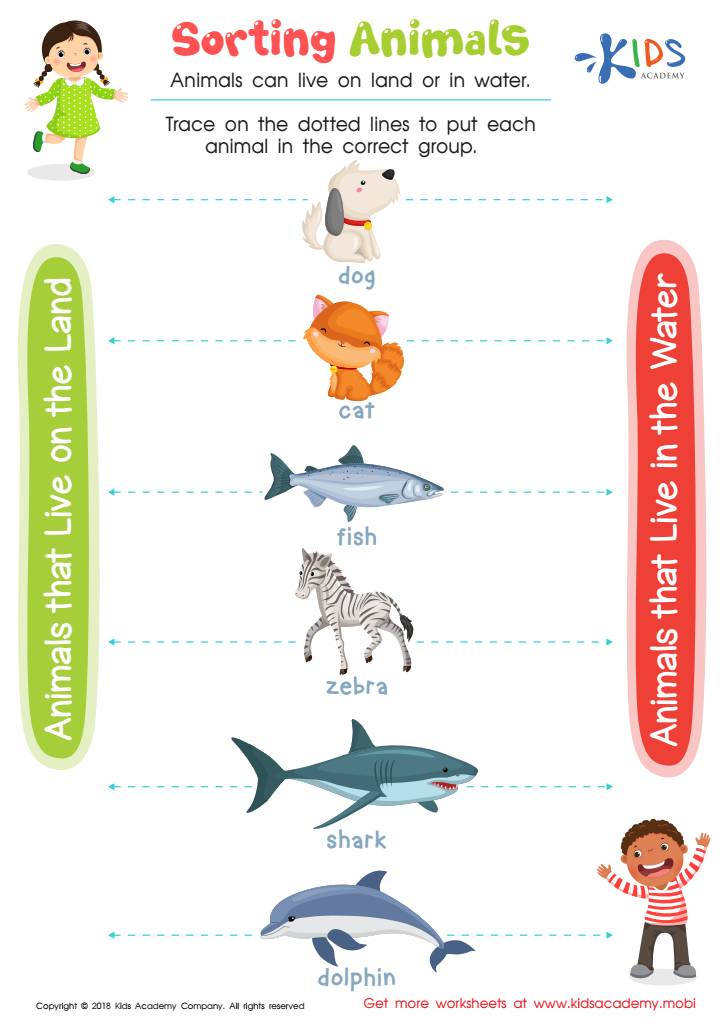
Sorting Animals Worksheet
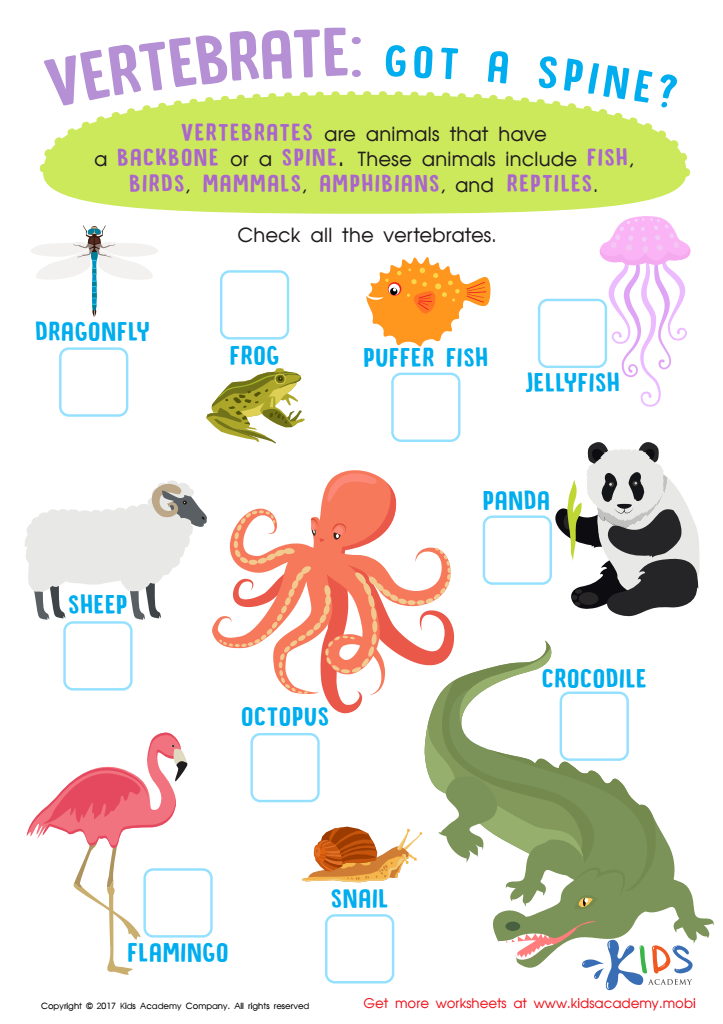
Vertebrates Animals Worksheet for 3rd Grade
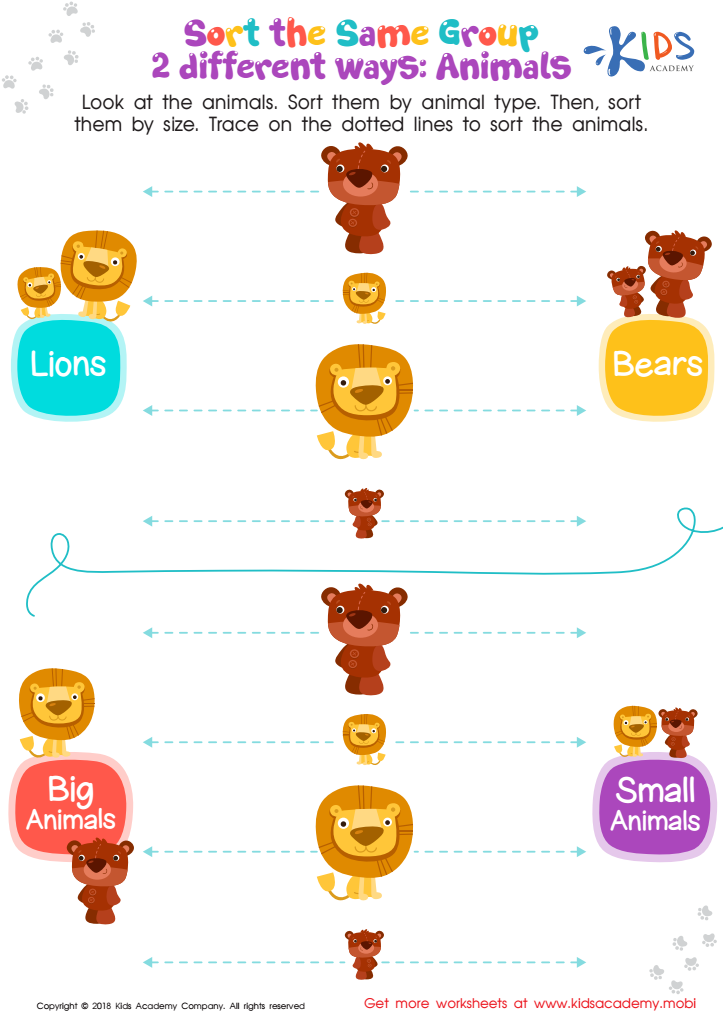
Sort the Same Group 2 Different Ways: Animals Worksheet
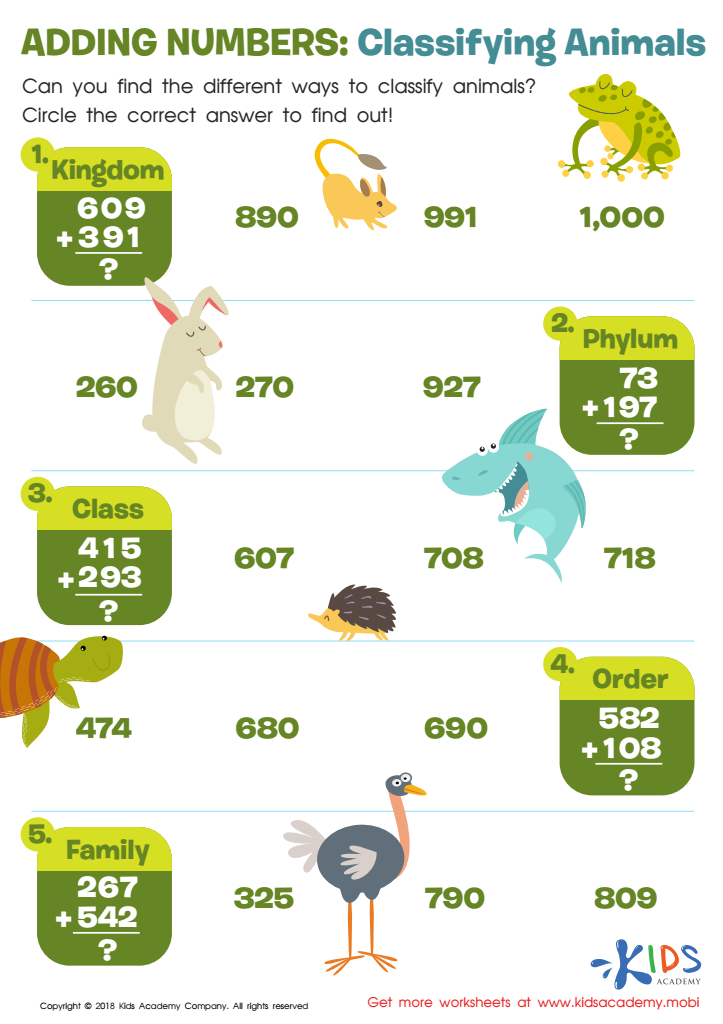
Adding Numbers: Classifying Animals Worksheet
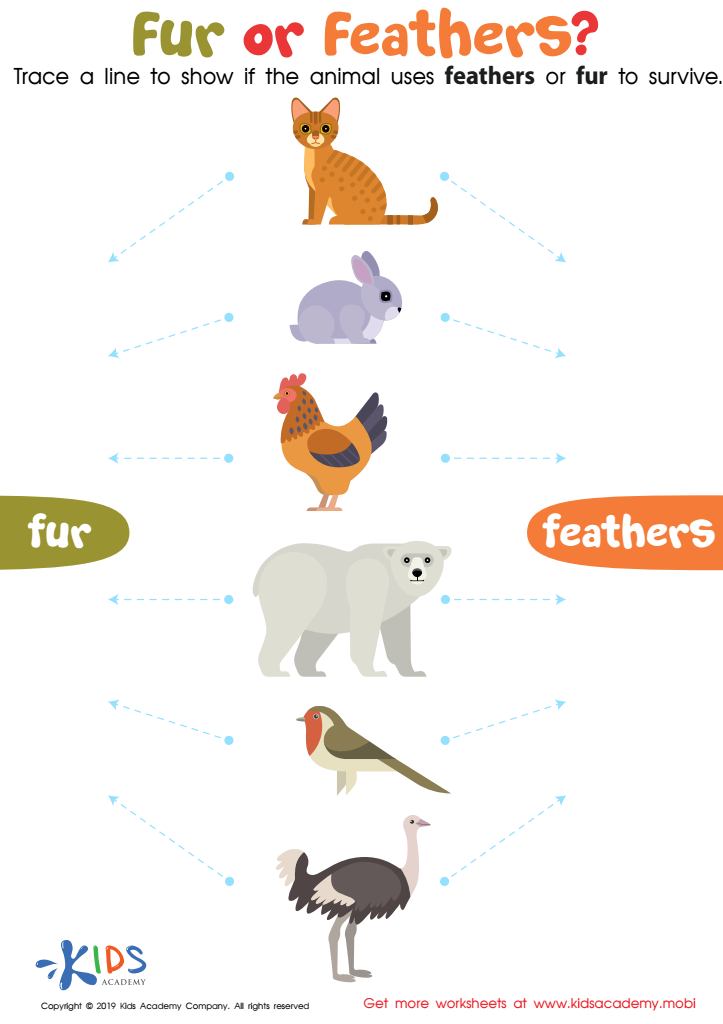
Fur or Feathers? Worksheet
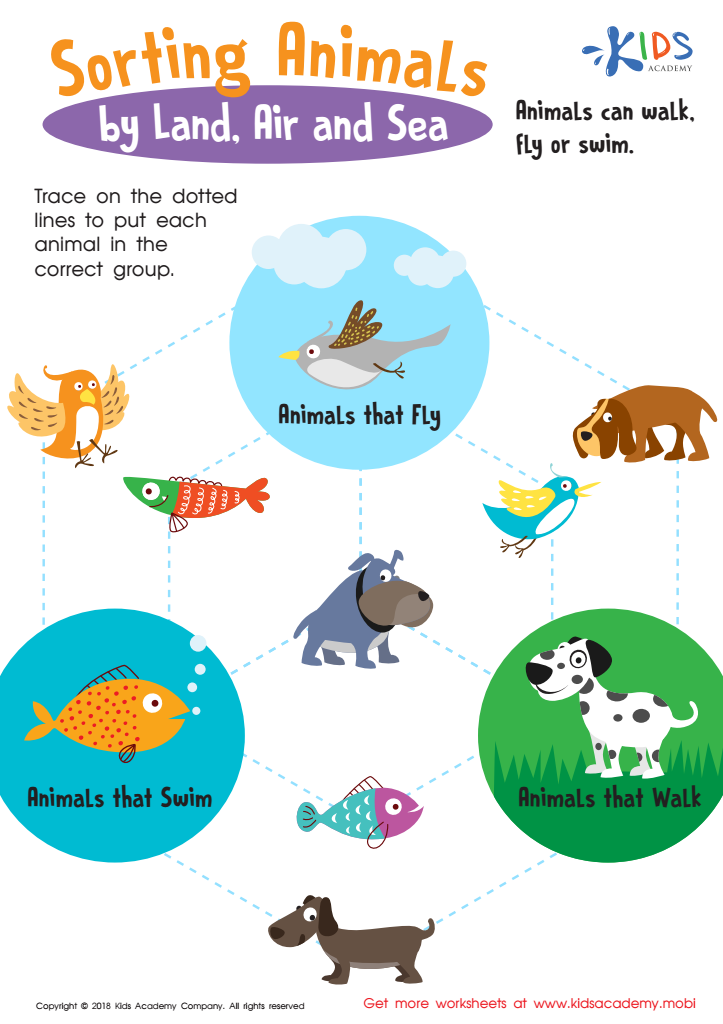
Sorting Animals by Land, Air and Sea Worksheet
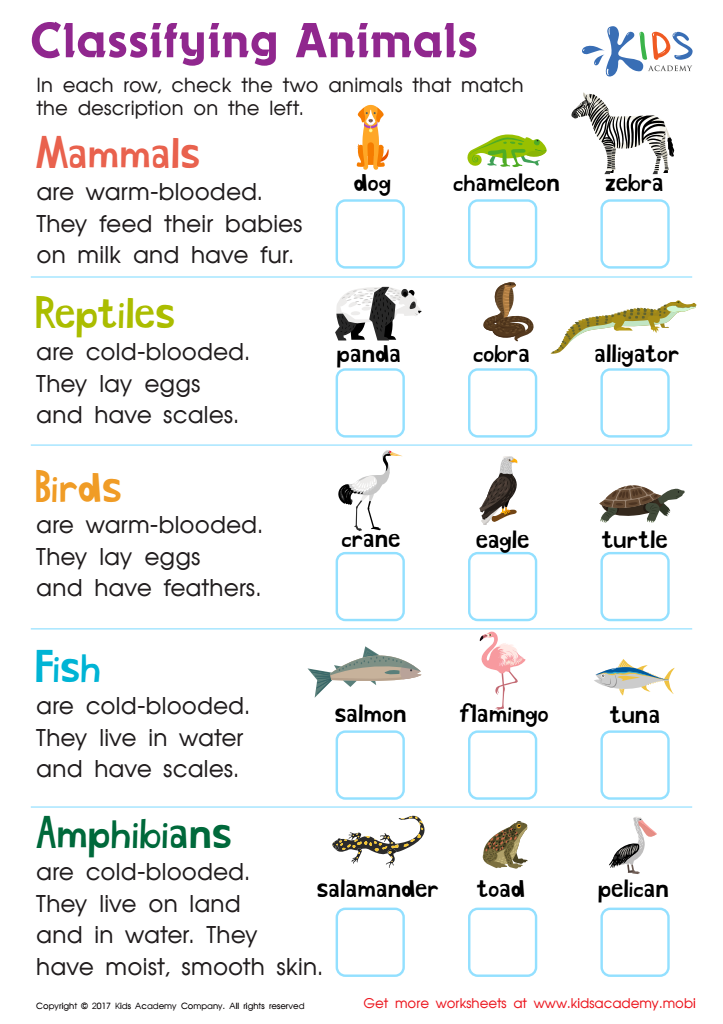
Classifying Animals Worksheet








Animal classification is a vital aspect of early education that helps children aged 4-8 understand the natural world around them. By categorizing animals into groups like mammals, birds, reptiles, and amphibians, we introduce young learners to foundational concepts in science, dialogue, and logical reasoning. This early exposure sparks curiosity and encourages a sense of exploration, allowing children to connect with their environment more meaningfully.
Additionally, learning about animal classification enhances language skills. Young children develop vocabulary as they learn names and characteristics of various animal groups, enhancing their communication capabilities. It also fosters observational skills, as students learn to recognize traits and behaviors specific to different classifications.
Furthermore, understanding animals' roles in ecosystems teaches children about interdependence and environmental responsibility. This awareness nurtures a sense of empathy towards living beings and encourages them to be mindful of conservation.
Parents and teachers play a crucial role in fostering this knowledge. By engaging in activities like sorting games, nature walks, or storytelling, they create opportunities for meaningful conversations. This ultimately nurtures a balanced appreciation for science and nature while nurturing critical thinking and emotional intelligence in young learners.








