
Develop critical thinking Worksheets for Ages 4-8
22 filtered results
Difficulty Level
Grade
Age
-
From - To
Subject
Activity
Standards
Discover our collection of critical thinking worksheets designed specifically for children aged 4-8! These engaging resources promote essential skills such as problem-solving, decision-making, and analytical thinking through fun, age-appropriate activities. Our worksheets incorporate colorful visuals and relatable scenarios that captivate young learners, encouraging them to think creatively and logically. Whether at home or in the classroom, these worksheets are perfect for enhancing cognitive development while keeping children entertained. Help your little ones master critical thinking today with our thoughtfully crafted resources, available for easy download and printing. Empower your child's learning journey—start exploring our worksheets now!
Favorites
With answer key
Interactive
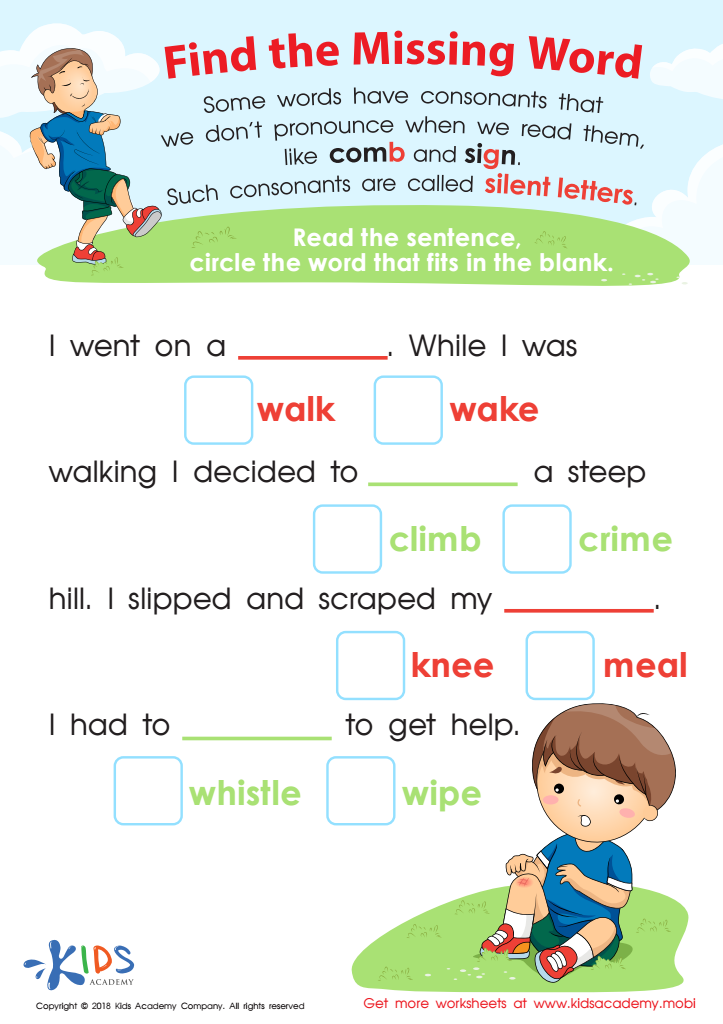
Find The Missing Word Worksheet
Master silent letters like "b" and "k" with this illustrated worksheet! Read the sentences and fill in the blanks with the correct word, checking the box. Read all the way to the bottom and review words containing silent letters. A great way to help your little learner tackle a tough topic!
 Assign to My Students
Find The Missing Word Worksheet
Worksheet
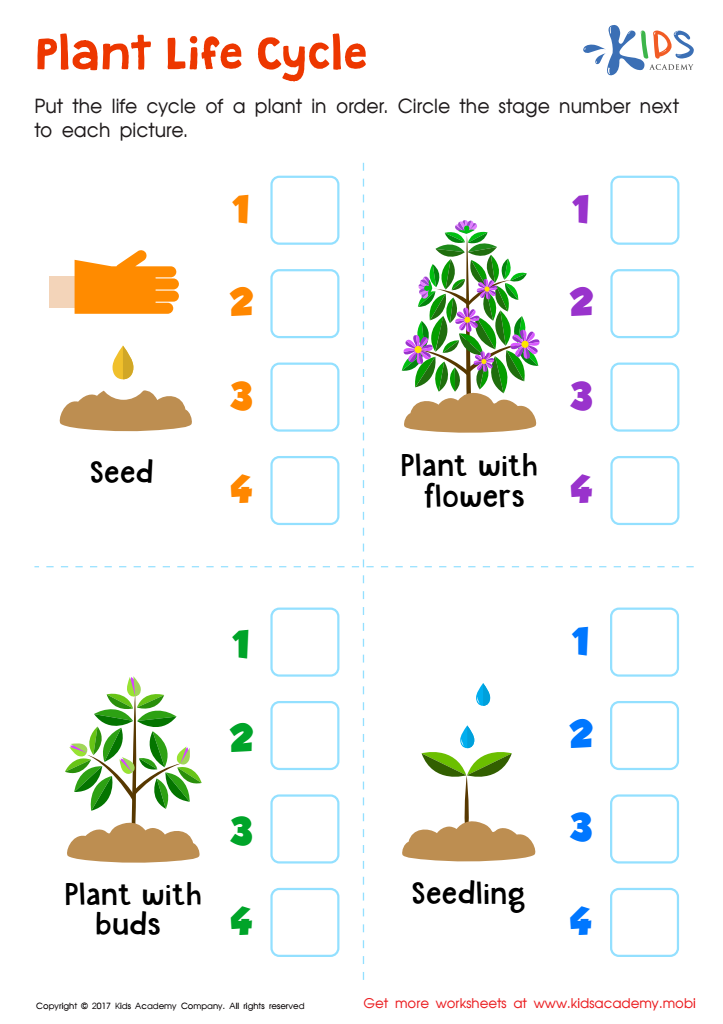
Plant Life Cycle Printable
Let kids explore plants' growth stages with this fun plant life cycle worksheet! They'll strengthen their sequencing skills by ordering the cycle from seed to flower. Make the learning experience even more memorable by growing a flower afterward.
Plant Life Cycle Printable
Worksheet
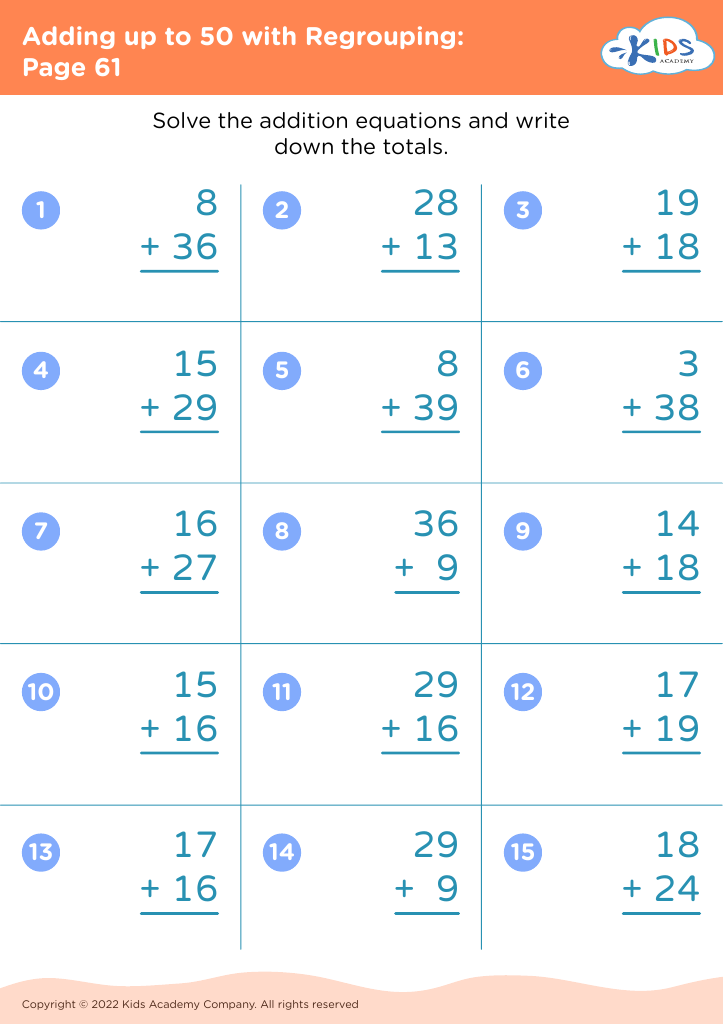
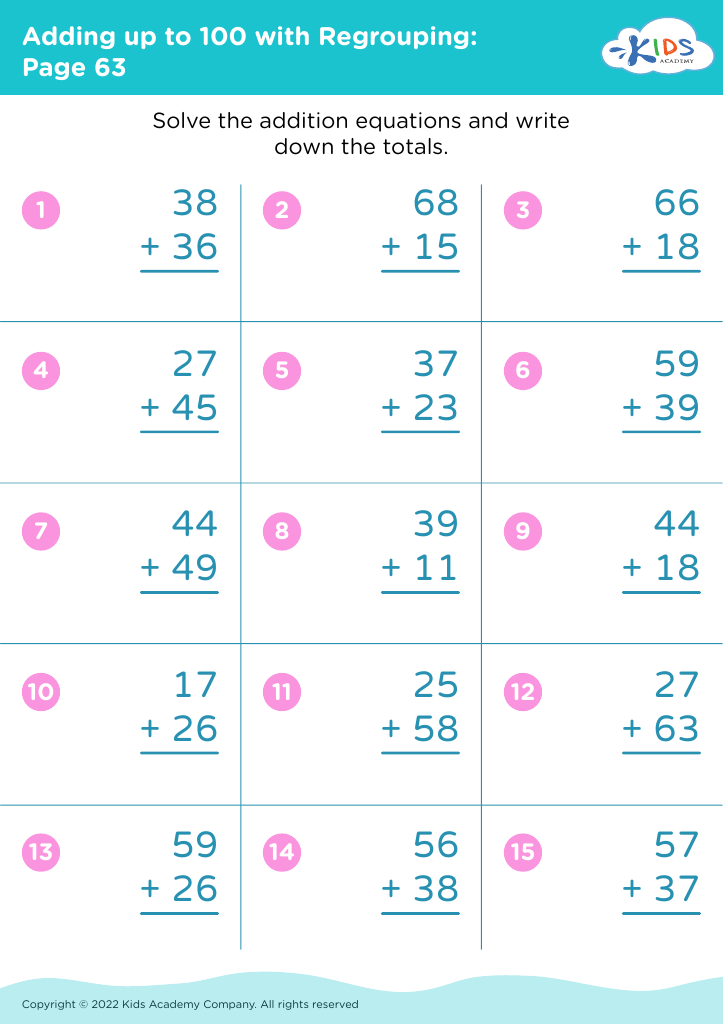
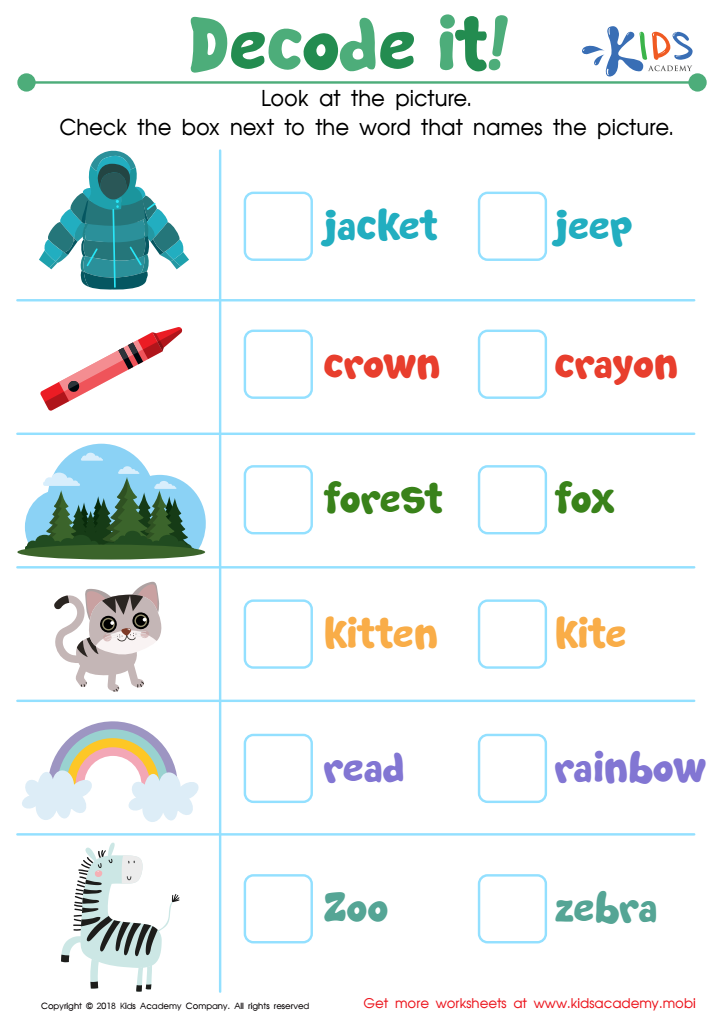
Reading: Decode It Worksheet
Look at the picture and circle the word that names it. This exercise helps kids practice picture cues and decoding words, with the same beginning sound. It builds their fluency and comprehension, giving them the skills to read unfamiliar words.
Reading: Decode It Worksheet
Worksheet
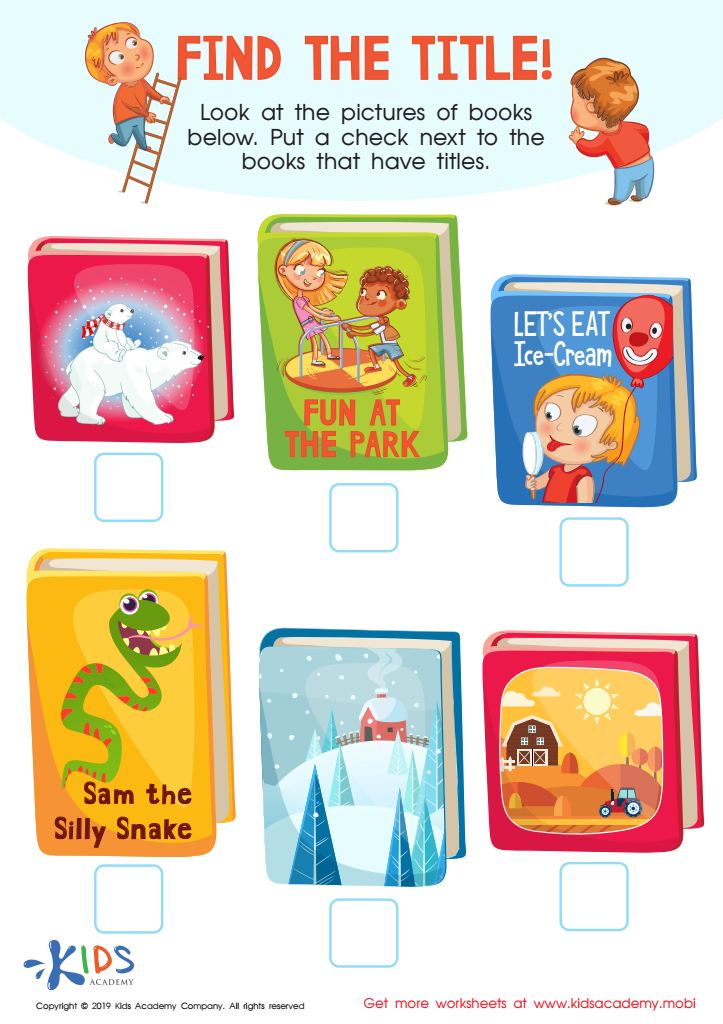
Find the Title Worksheet
Help your kids to identify the colors of the books on this worksheet. Ask them to spot the differences between the six books, such as which ones have titles printed on their covers. Ask them to put a check next to the books with titles. This activity will promote your kids' thinking skills.
Find the Title Worksheet
Worksheet
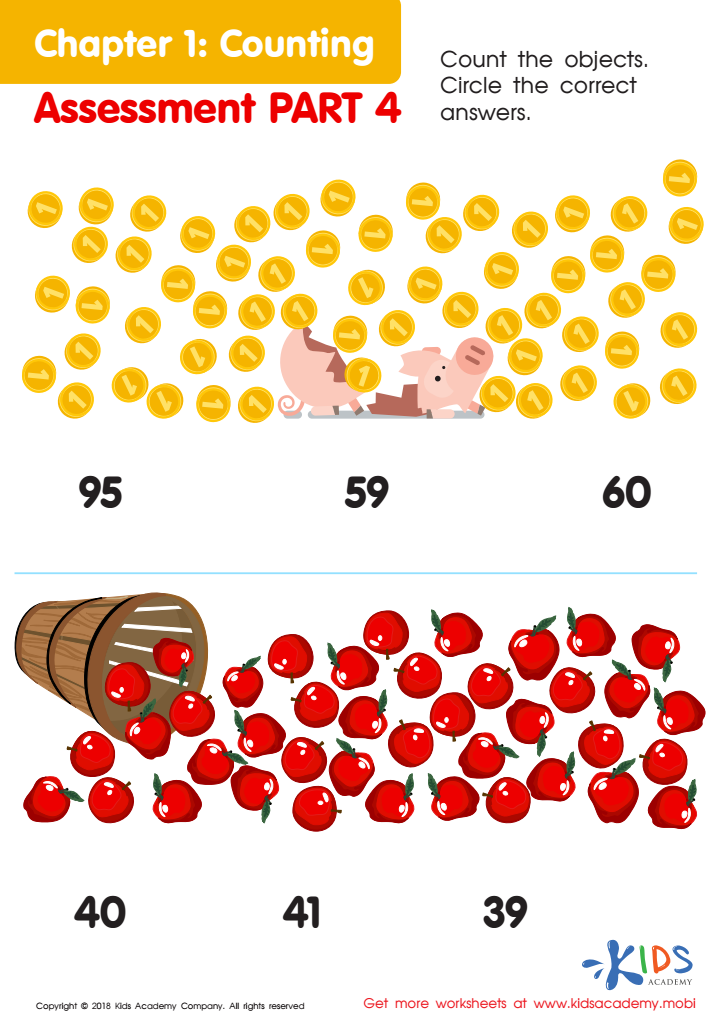
Counting: Assessment 4 Worksheet
Encourage your students to count objects in this colorful worksheet. Ask them to circle the correct answers from the options given. See how much their counting skills have improved with your guidance. Have fun!
Counting: Assessment 4 Worksheet
Worksheet
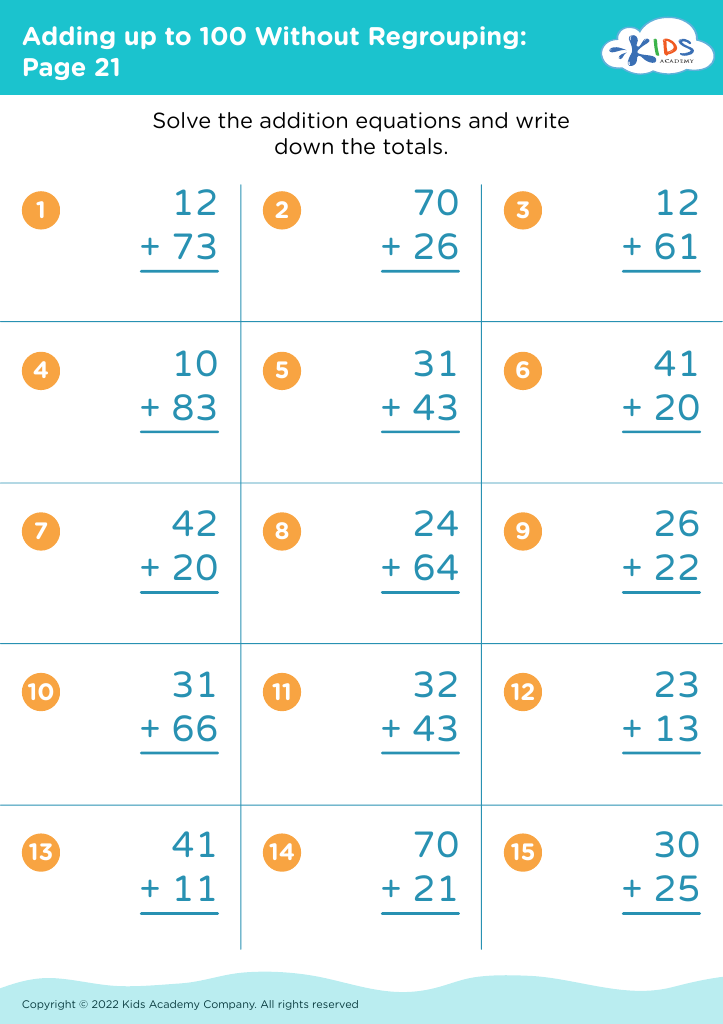
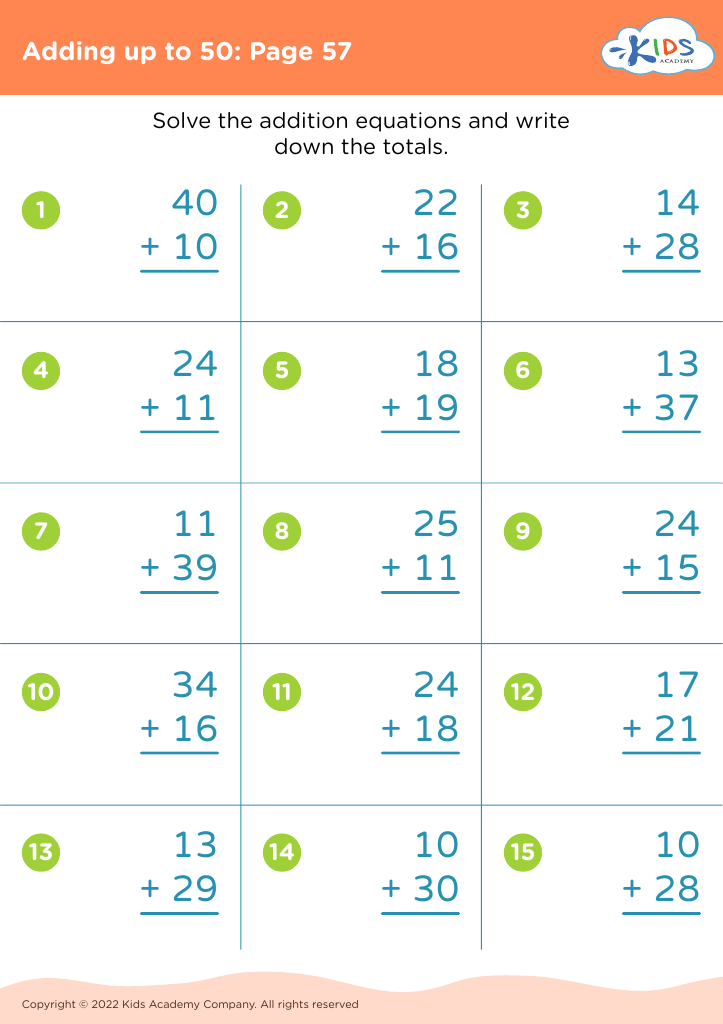
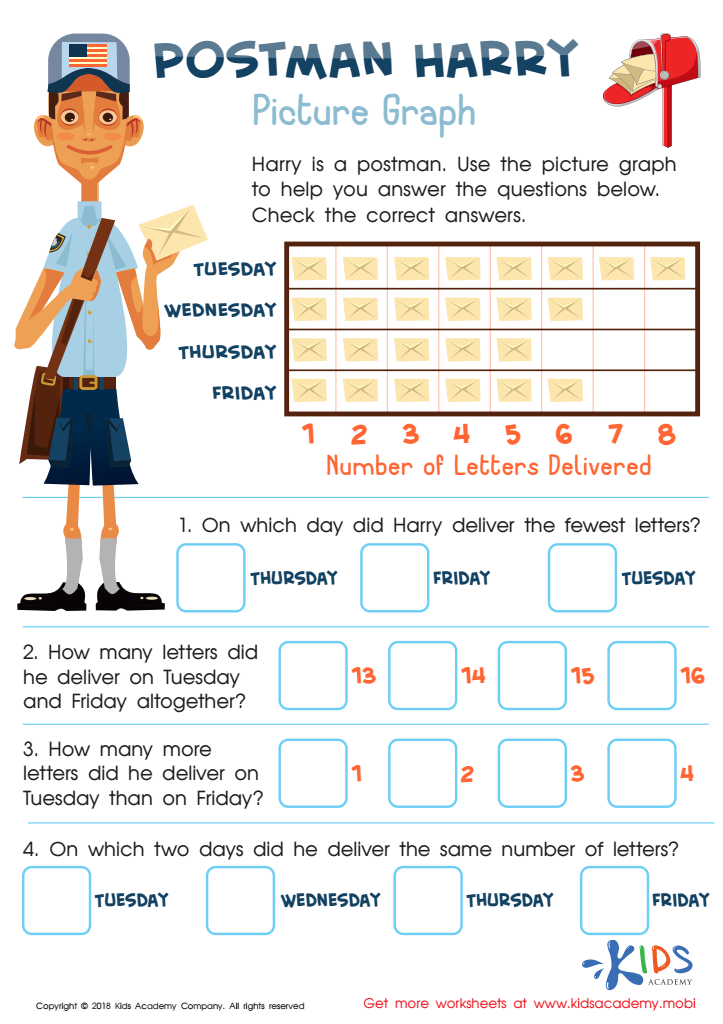
Postman Harry: Picture Graph Worksheet
Show your kids a picture of Harry the Postman and ask if they can identify his profession. Then, with this simple picture graph worksheet, help Harry out by having your kids answer the questions below the picture graph. It shows the number of letters he delivered, and on what day. Get your kids to use the picture graph to solve it.
Postman Harry: Picture Graph Worksheet
Worksheet
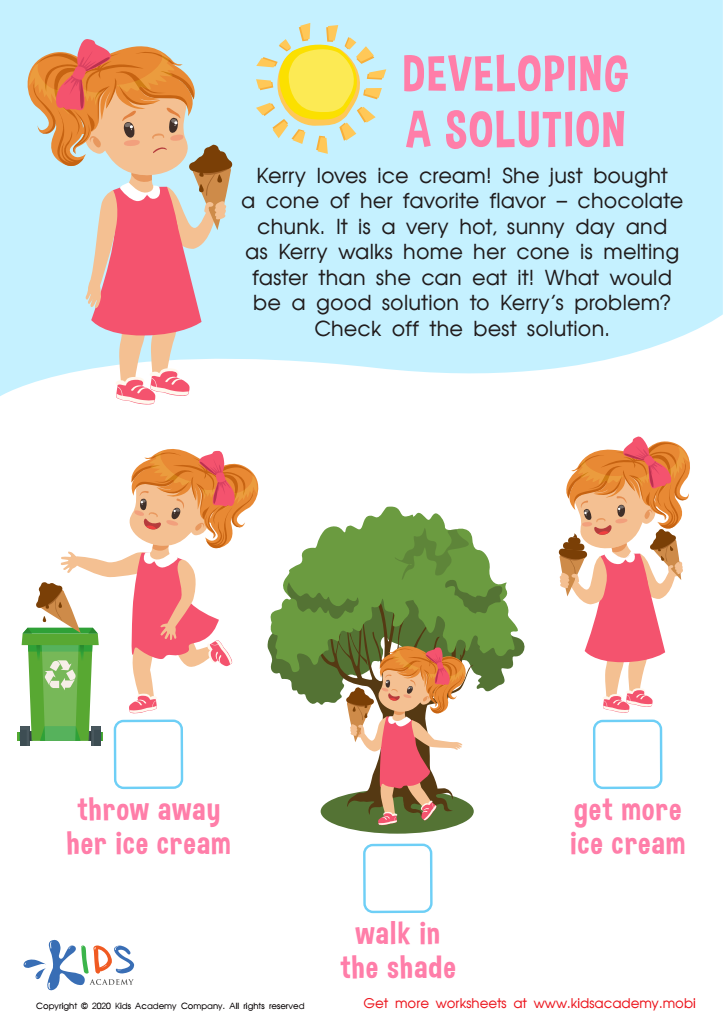
Developing Solution Worksheet
Facing a challenge? Boost your child's problem-solving skills with this science worksheet from Kids Academy! Kerry is eating an ice cream cone and it's melting too fast. Read through the suggested solutions and help your child pick the best one! With this activity, your child will understand the cause of the problem and learn to act accordingly.
Developing Solution Worksheet
Worksheet

Fox Rhyming Words Worksheet
Can your child rhyme a fox? Listen carefully and see if it's sun, beans, or ox! Help your child recognize rhymes with a pencil or crayon maze. Travel from the dog to the picture that rhymes. This worksheet builds pre-reading skills - a great way to learn!
Fox Rhyming Words Worksheet
Worksheet
Join Kids Academy for Free
Who is primarily going to use this learning content?








Developing critical thinking skills in children aged 4-8 is crucial for their overall cognitive development and future success. During these formative years, children are naturally curious, and fostering critical thinking encourages them to ask questions, explore concepts, and solve problems independently. This skill set not only enhances their academic performance but also equips them with the ability to navigate everyday challenges effectively.
Parents and teachers should care about critical thinking because it lays the foundation for creativity and innovation. As children learn to analyze situations, they become adept at making decisions and developing logical reasoning abilities. This can lead to improved communication skills as they articulate their thoughts and understand different perspectives.
Moreover, nurturing critical thinking instills a love for learning. When children can engage in discussions and investigate their ideas, they develop confidence in their ability to think independently. In an increasingly complex world, these skills are vital not just for academic success but also for personal and social interactions.
Supporting children's critical thinking leads to more adaptive, thoughtful individuals who are prepared to contribute positively to society. Therefore, investing time in fostering these skills should be a priority for both parents and teachers.








