Visual learning reinforcement Worksheets for Ages 4-8
12 filtered results
-
From - To
Boost your child’s educational journey with our Visual Learning Reinforcement Worksheets, designed specifically for ages 4-8. These engaging worksheets from Kids Academy enhance critical learning skills through vibrant illustrations and interactive activities. Crafted to solidify concepts in math, reading, science, and more, our resources cater to young learners’ unique needs. The blend of visual stimulation and practical exercises ensures that children not only understand new information but also retain it effectively. Perfect for both classroom use and at-home practice, these worksheets support children in building a strong foundation for future academic success. Elevate learning with our fun, colorful, and educational worksheets!
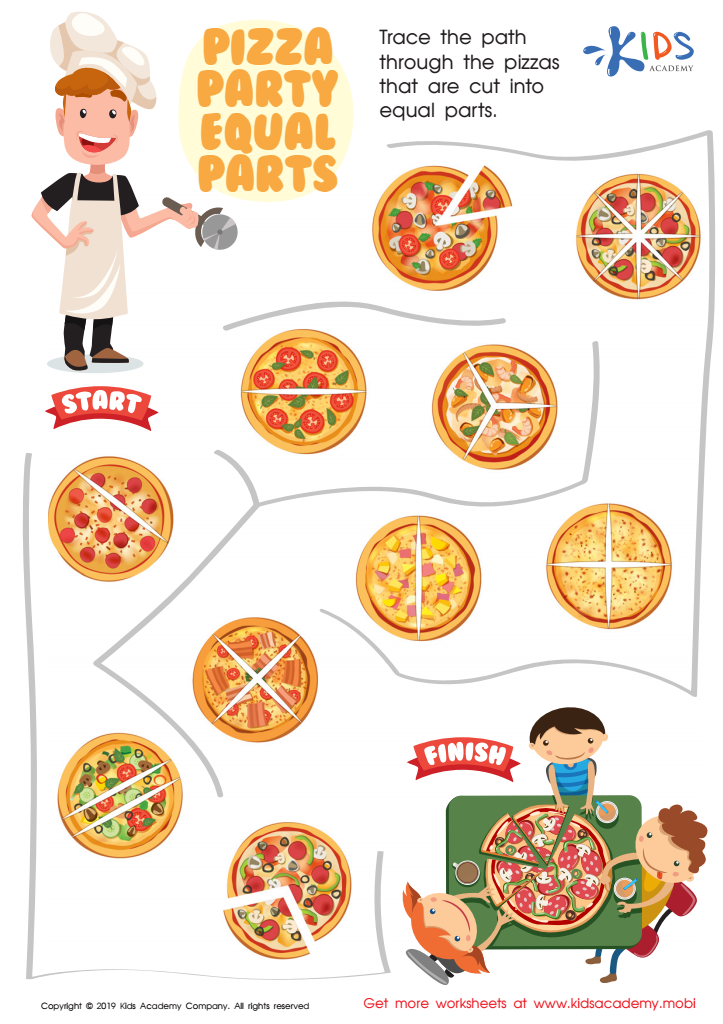
Pizza Party Equal Parts Worksheet
 Assign to My Students
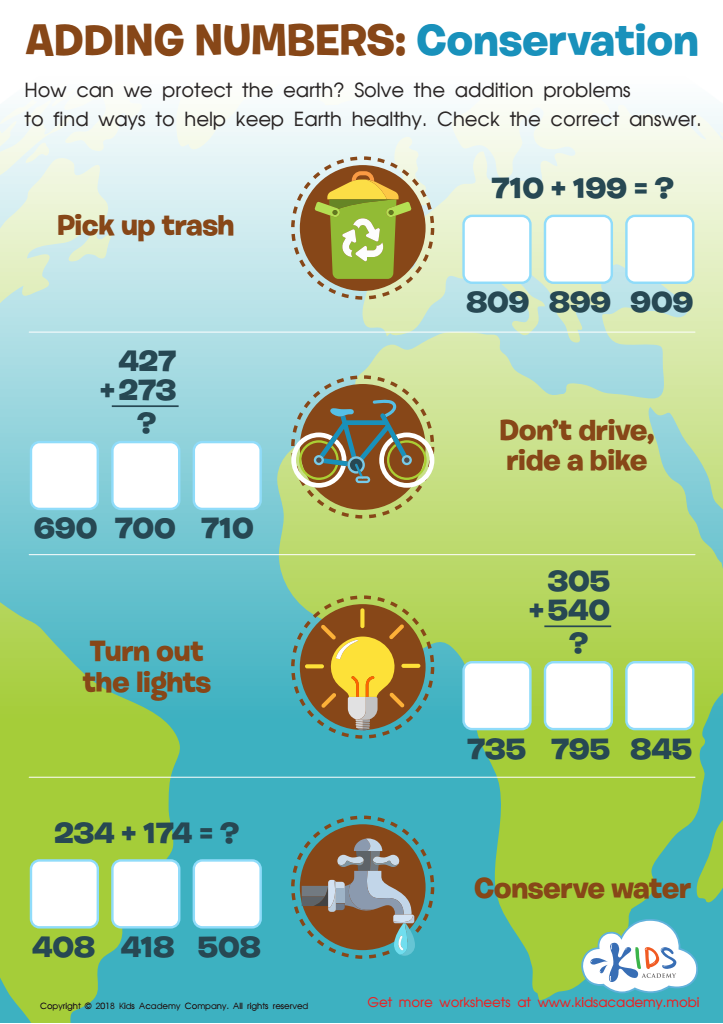
Adding Numbers: Conservation Worksheet
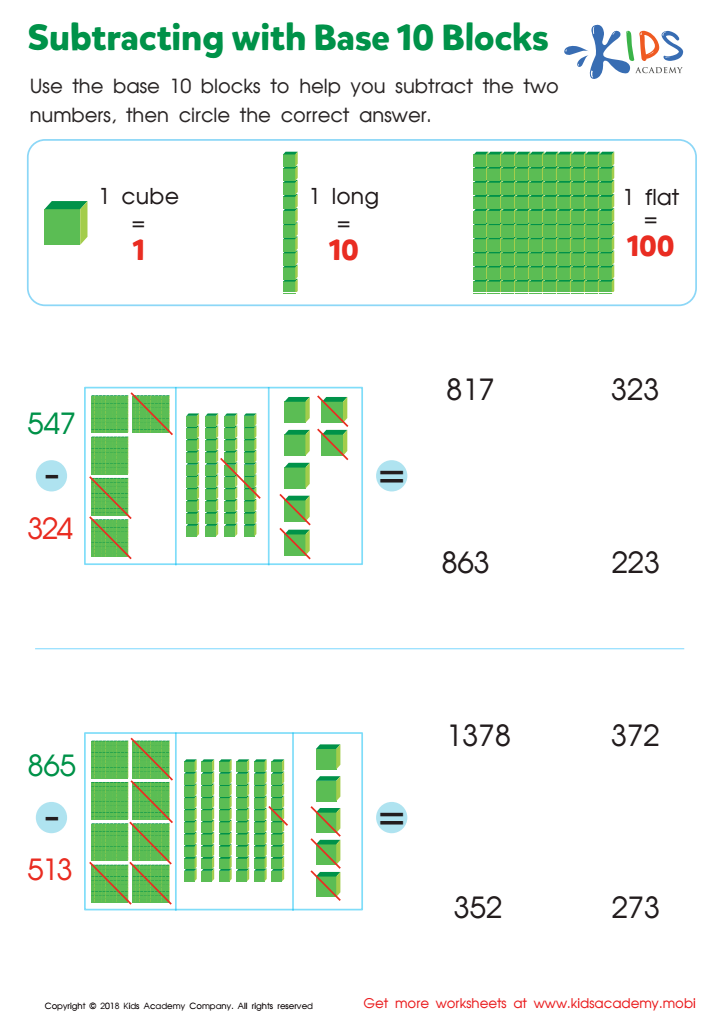
Subtracting with Base 10 Blocks Worksheet
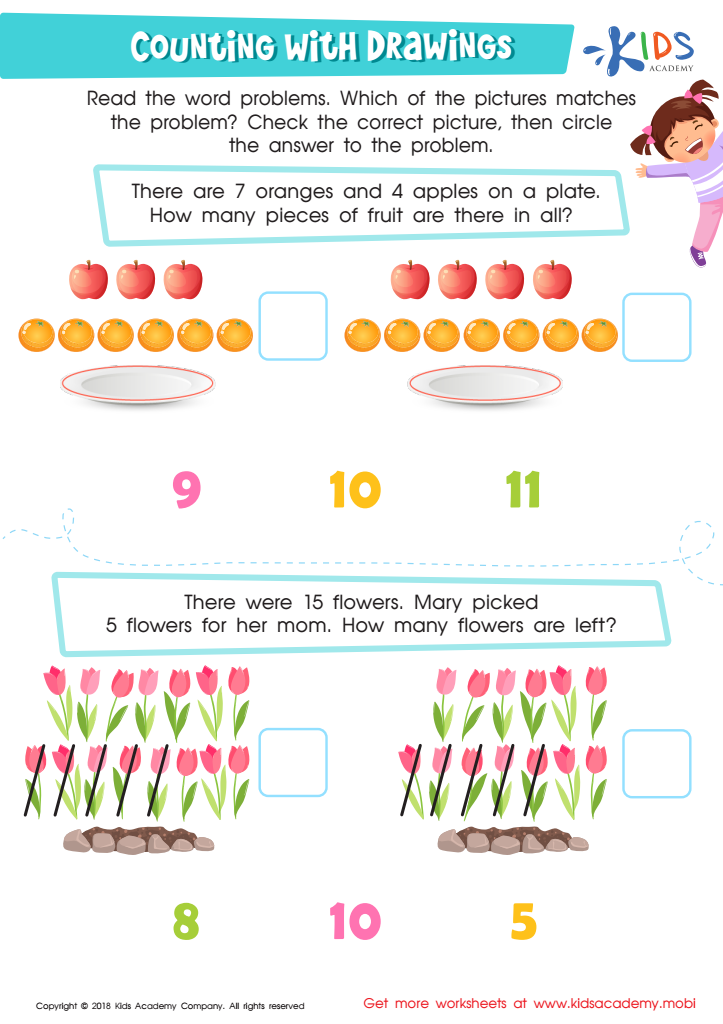
Counting with Drawings: Fruits & Chocolates Worksheet
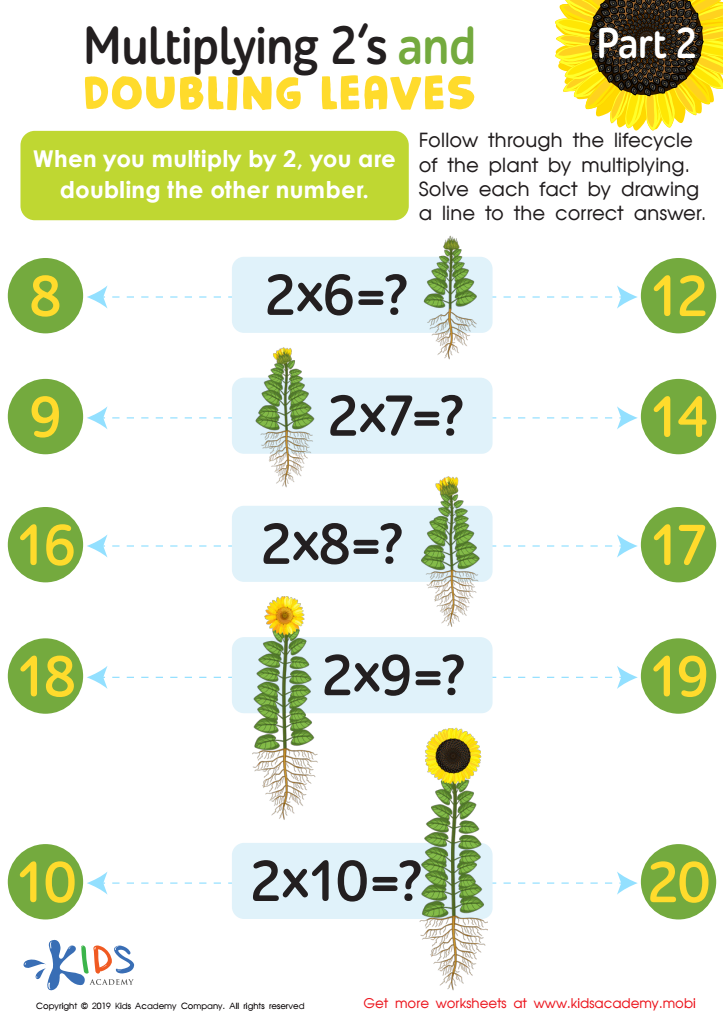
Multiplying 2’s and Doubling Leaves Part 2 Worksheet
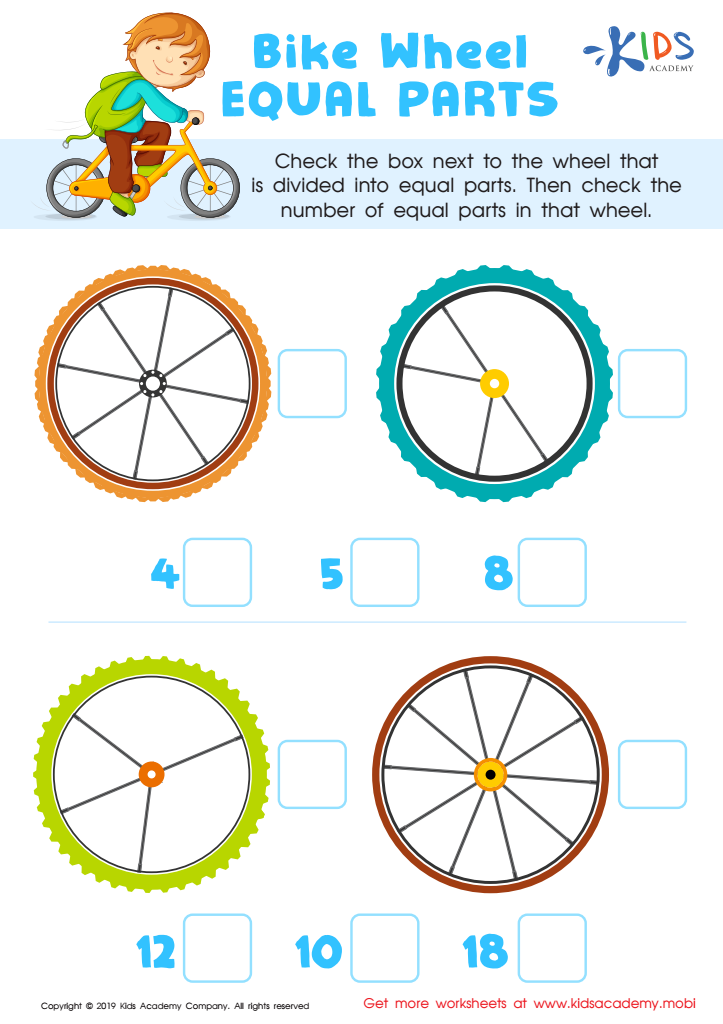
Bike Wheel Equal Parts Worksheet
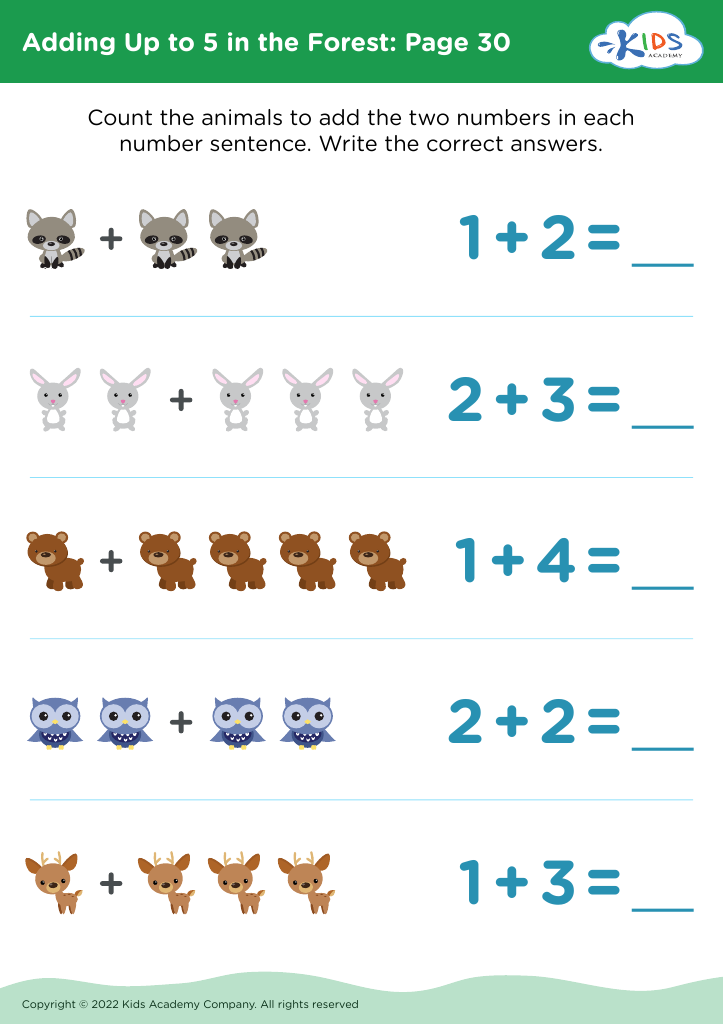
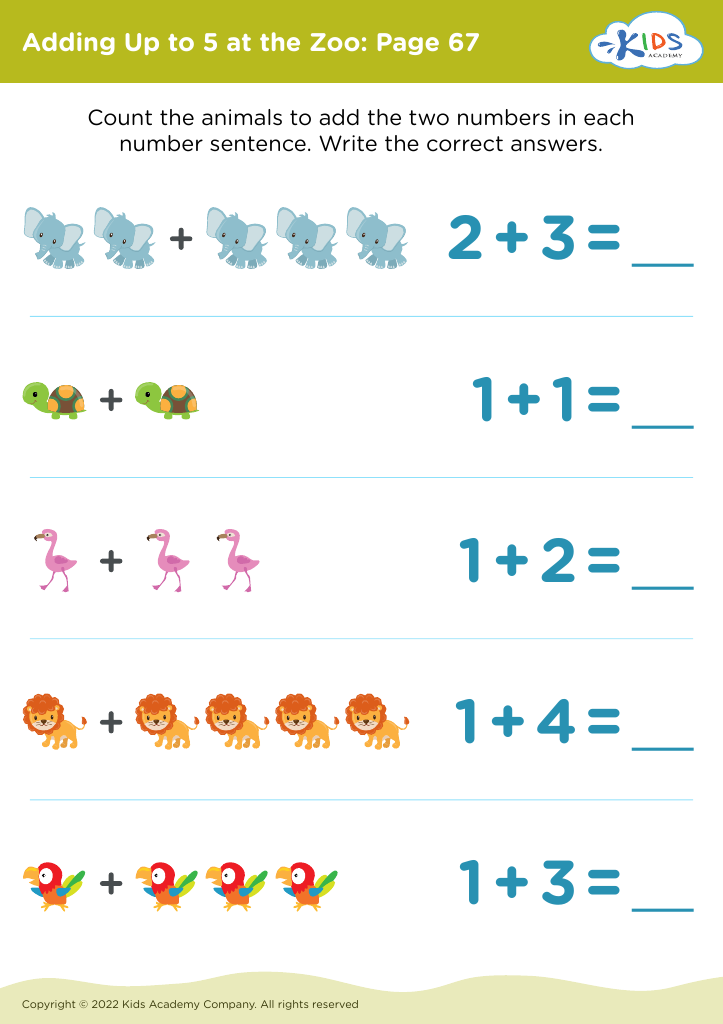
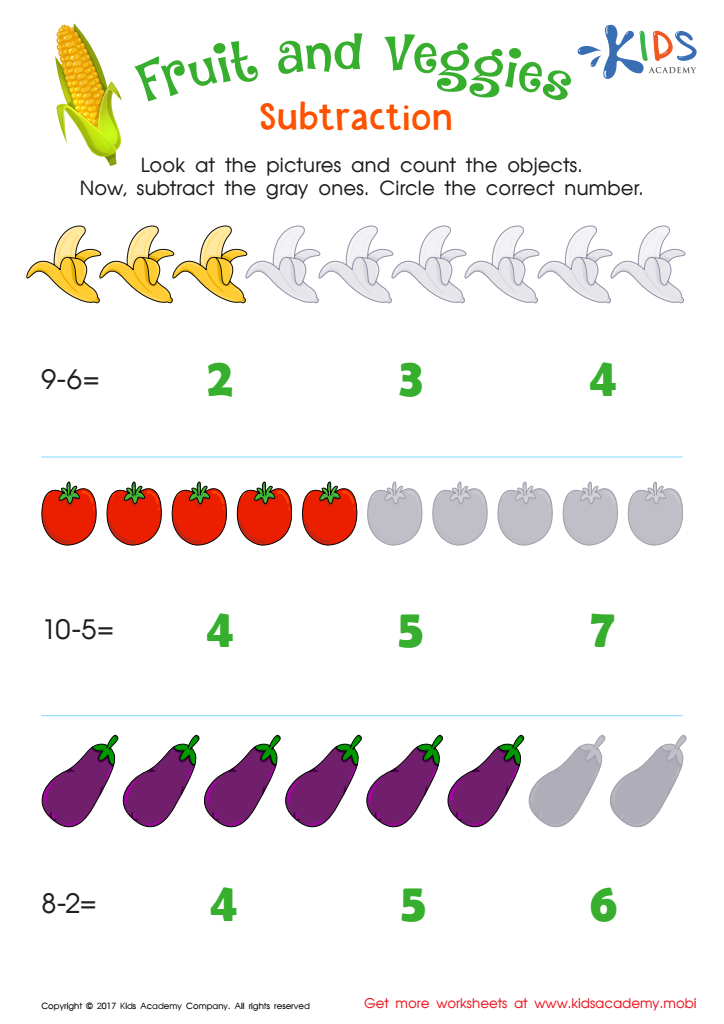
Fruit and Veggies Subtraction Worksheet








Parents and teachers should place great importance on visual learning reinforcement for children aged 4-8 because it aligns with the cognitive and developmental stages of young learners. At such a formative age, children are highly visual and concrete thinkers, making them more responsive and engaged with visual stimuli. Using visual aids such as images, charts, videos, and colorful displays aids in better comprehension and retention of information, as these tools cater directly to their learning style.
Visual learning tools also bridge the gap between abstract concepts and a child's tangible experiences. For instance, picture books, storyboards, and educational apps can simplify complex ideas like math problems or scientific concepts into more understandable and relatable formats. This not only enhances their understanding but also makes learning more enjoyable and less intimidating.
Moreover, incorporating visual resources accommodates various learning paces and styles within a diverse classroom, ensuring no child is left behind. Visual learning encourages independent exploration as children often feel motivated to engage with materials actively, fostering a sense of curiosity and self-directed learning.
Ultimately, integrating visual learning reinforcement helps establish a strong foundation for literacy, numeracy, and critical thinking, crucial for lifelong learning and academic success. By prioritizing visual learning, parents and teachers can nurture a more inclusive, effective, and engaging educational environment.








