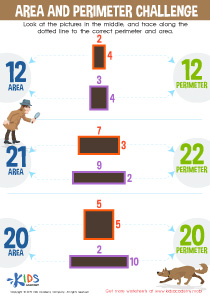
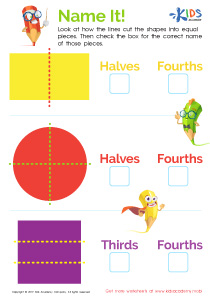
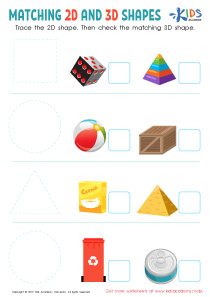
Critical Thinking 2D Shapes Worksheets for Ages 4-8
5 filtered results
-
From - To
Unlock your child’s potential with our "Critical Thinking 2D Shapes Worksheets for Ages 4-8." Designed to enhance mathematical and analytical skills, these engaging worksheets encourage kids to identify, compare, and analyze various 2D shapes. Through fun, interactive activities, children develop spatial awareness, problem-solving abilities, and critical thinking. Perfect for learning at home or in the classroom, these worksheets cater to different learning styles and keep young minds captivated. Give your kids a head start in math and creativity, turning learning into an adventure they’ll love! Download now and watch their confidence and knowledge grow.
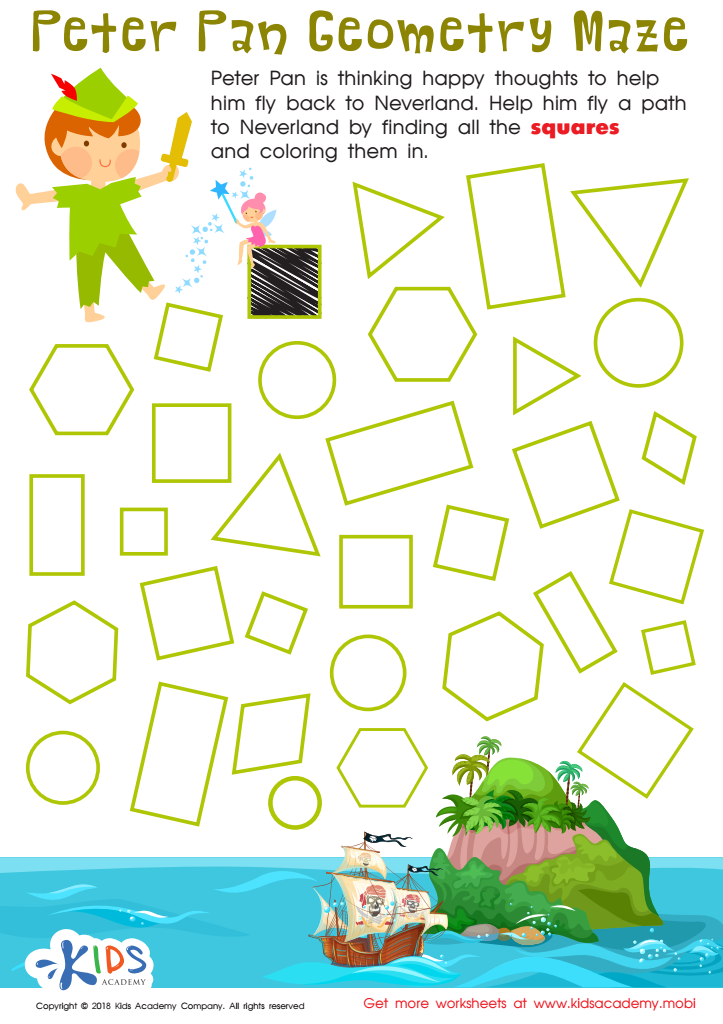
Peter Pan Worksheet
 Assign to My Students











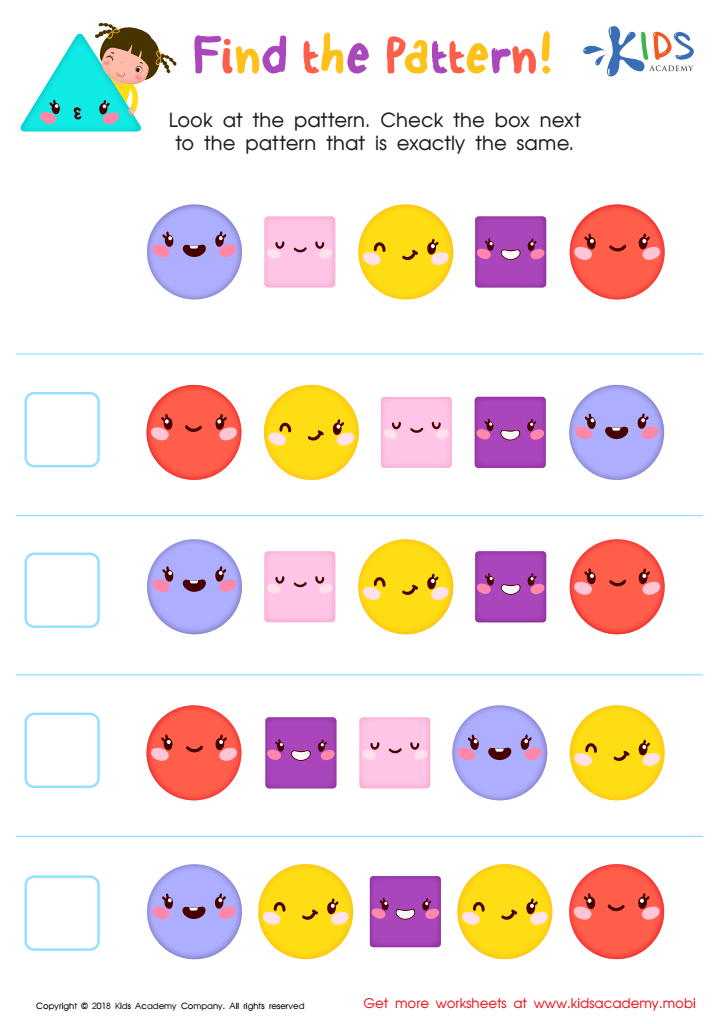
Find the Pattern Worksheet
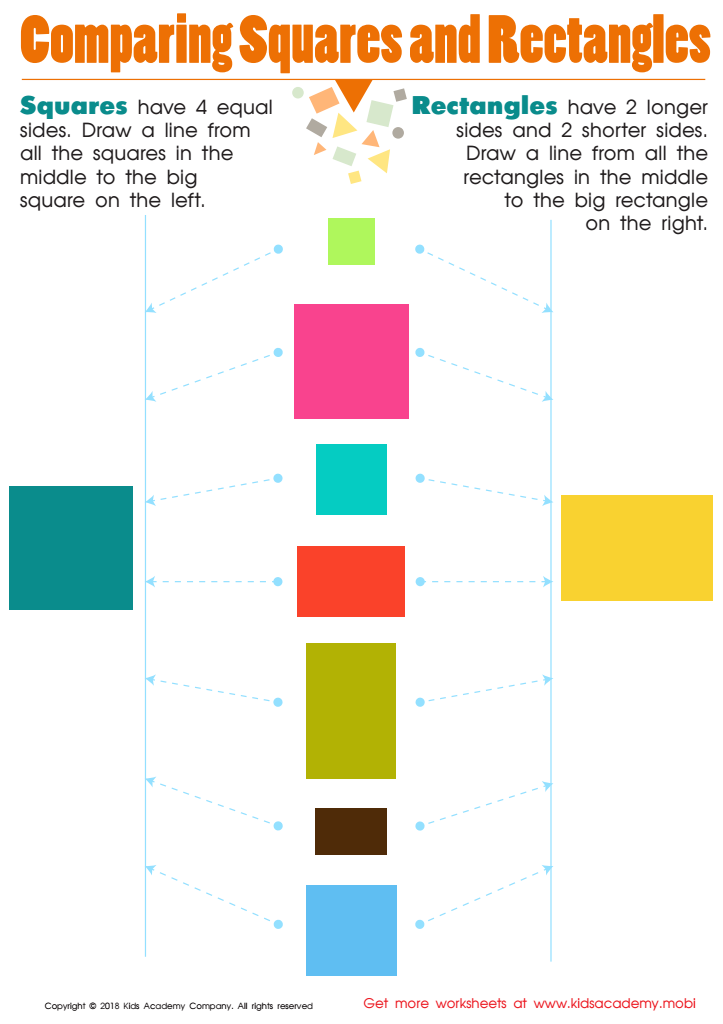
Comparing Squares Rectangles Worksheet
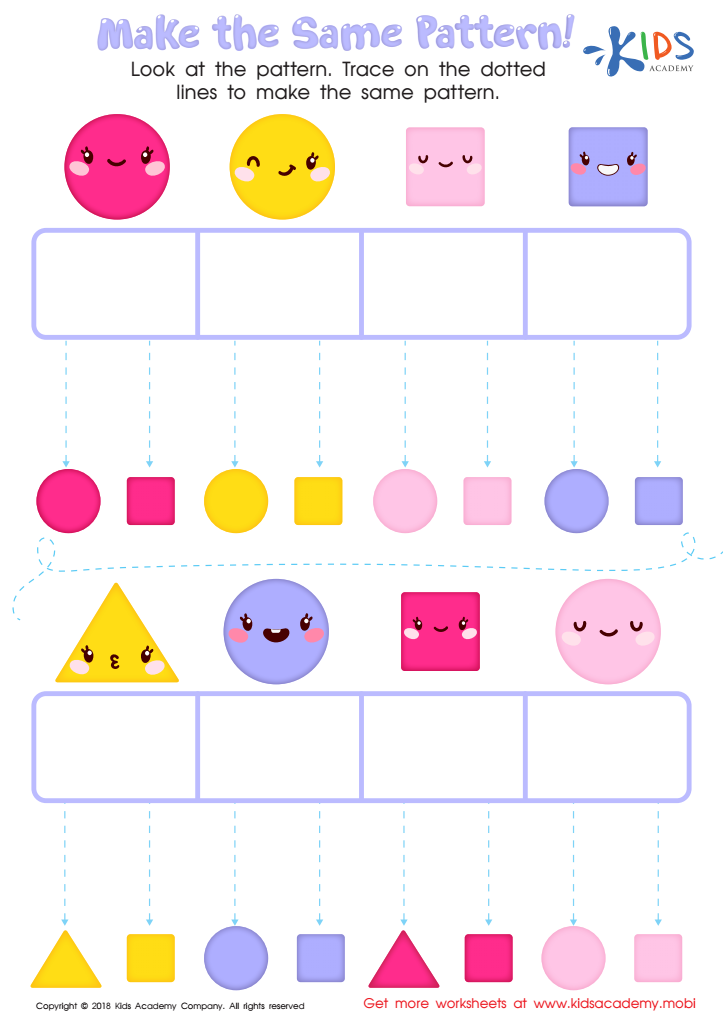
Make the Same Pattern Worksheet
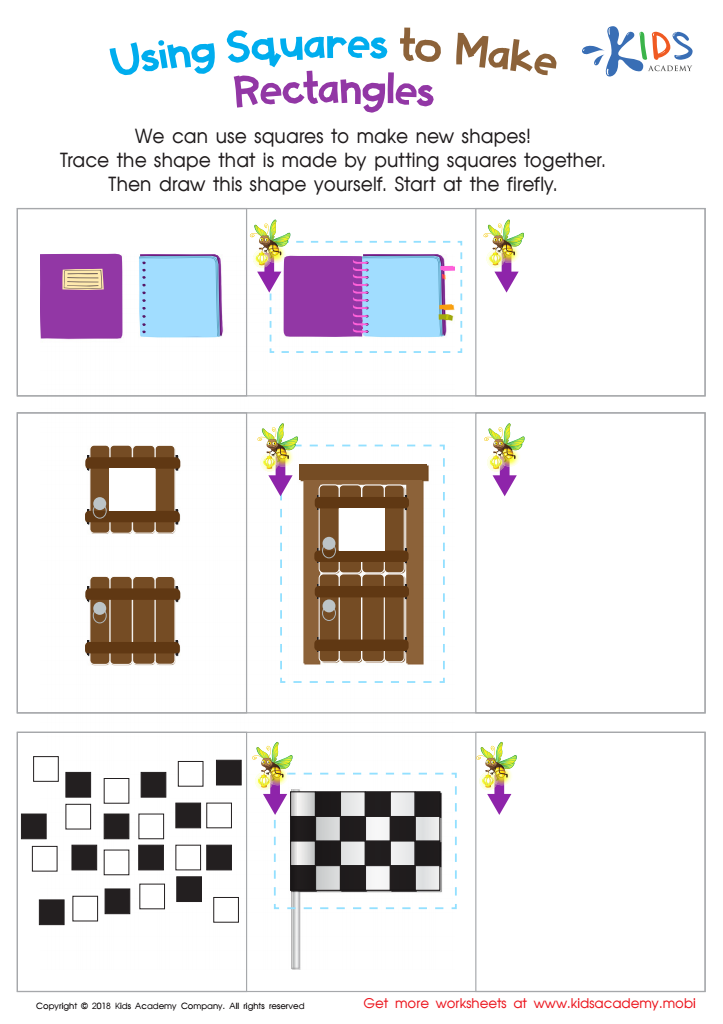
Using Squares to Make Rectangles Worksheet








Exposure to critical thinking using 2D shapes for children ages 4-8 should be a key concern for both parents and teachers because these early experiences lay the foundation for essential cognitive and academic skills. Learning about shapes isn’t just about geometry; it nurtures fundamental thinking processes. When children engage with 2D shapes, they enhance their ability to observe, analyze, and compare different attributes such as size, sides, and angles. Critical thinking exercises involving 2D shapes help children categorize and classify information, improving their problem-solving skills and logical reasoning.
In addition, understanding shapes contributes to early maths literacy. Recognizing and manipulating shapes are precursors to more complex mathematical concepts such as symmetry, fractions, and area. But the benefits extend beyond math. Critical thinking with 2D shapes fosters spatial awareness, crucial for everyday tasks and future learning in science, engineering, and technology (STEM).
For parents and teachers, nurturing these skills aids in developing a child's independence and confidence in learning. Children equipped with strong critical thinking abilities from an early age are more likely to excel academically and are better prepared for other curricular challenges. Thus, focusing on this foundational learning ensures a well-rounded, more competent, engaged, and inquisitive young mind.