Problem-Solving Skills 2D Shapes Worksheets for Ages 4-8
9 filtered results
-
From - To
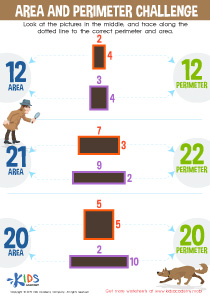
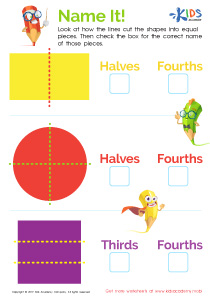
Unlock your child's potential with our engaging Problem-Solving Skills worksheets focused on 2D shapes for ages 4-8. These thoughtfully designed activities cultivate critical thinking by challenging young learners to identify, compare, and manipulate various 2D shapes. Our worksheets not only make learning fun but also reinforce essential concepts like symmetry, patterns, and spatial awareness. Perfect for home or classroom use, they come with clear instructions and vibrant illustrations to inspire creativity and enthusiasm. Through hands-on practice, children will enhance their problem-solving abilities while building a strong foundation in math. Explore our collection today and watch your child's skills grow!
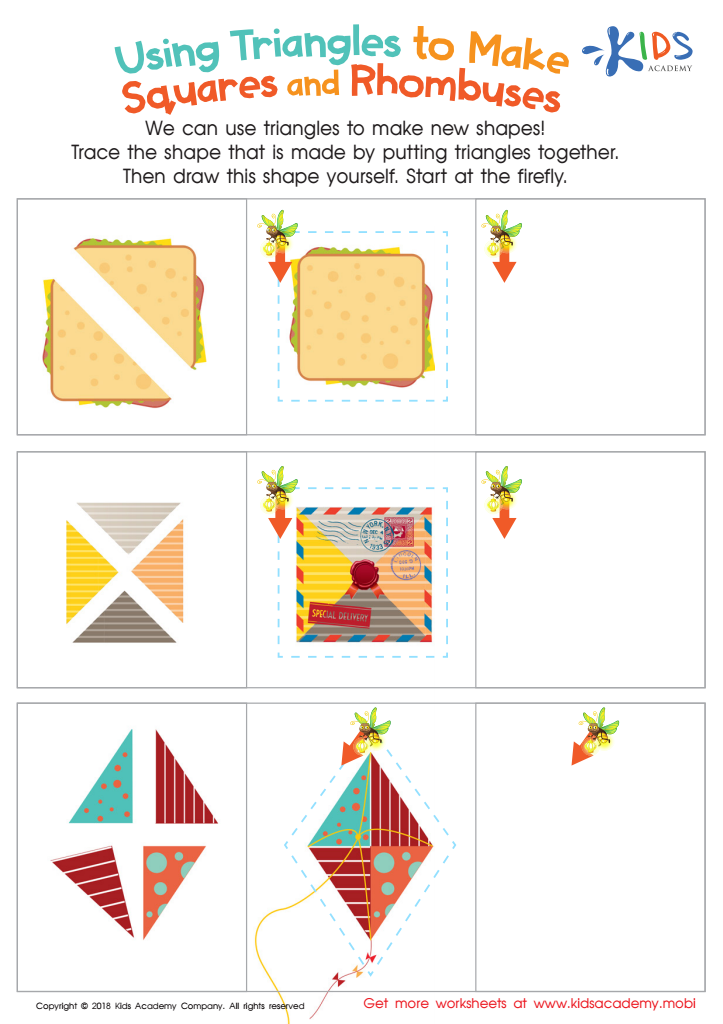
Using Triangles to Make Squares and Rhombuses Worksheet
 Assign to My Students











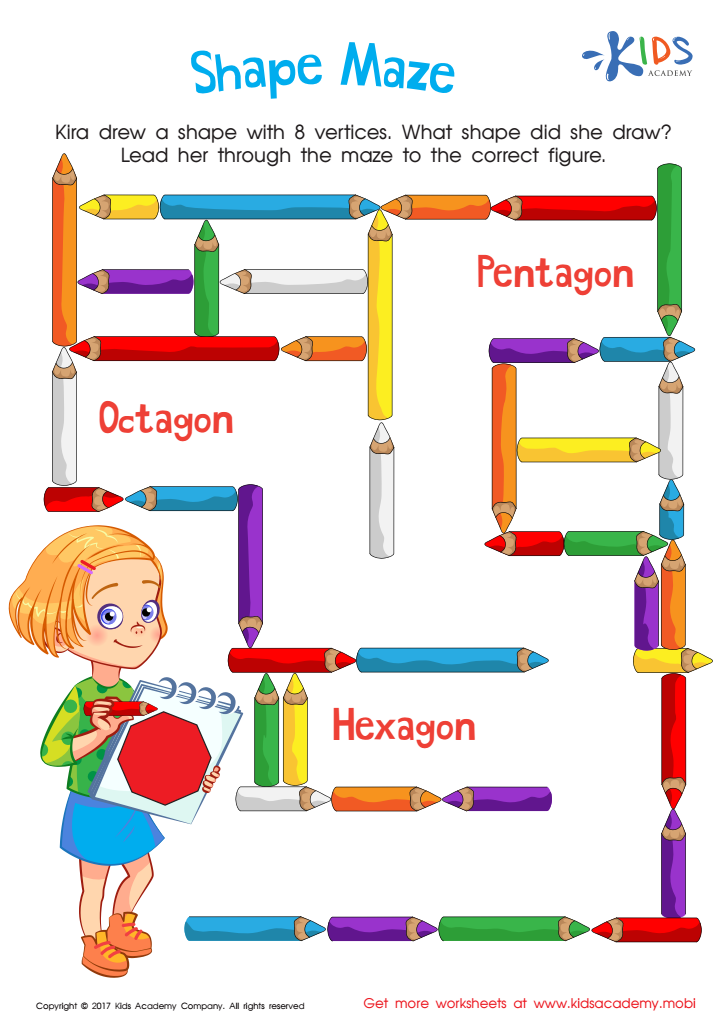
Shape Maze Worksheet
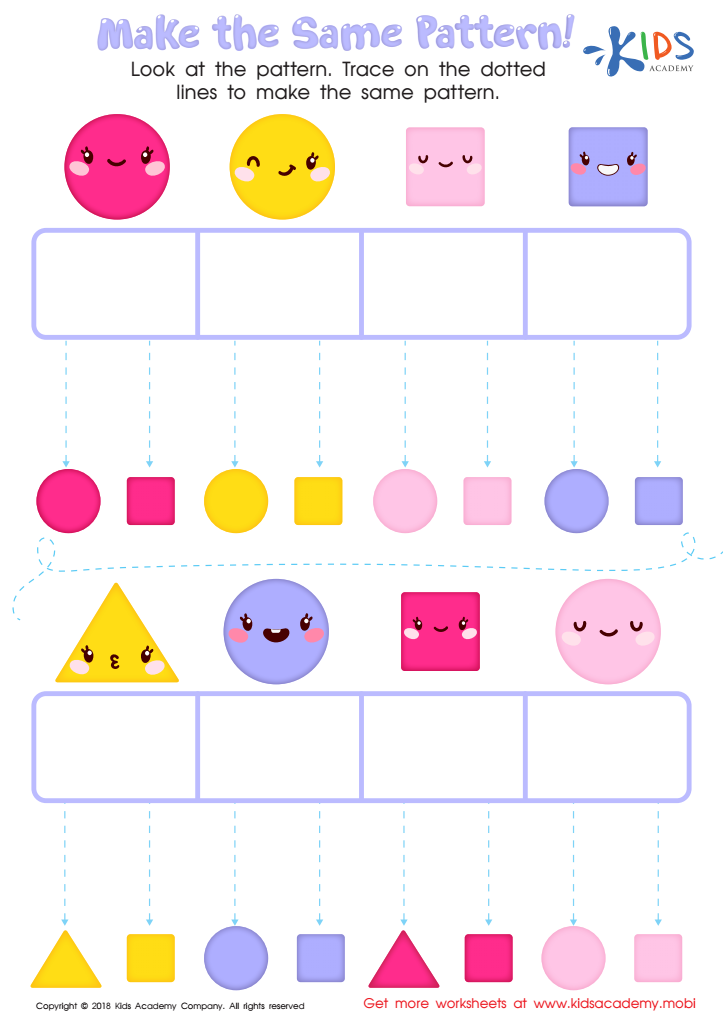
Make the Same Pattern Worksheet
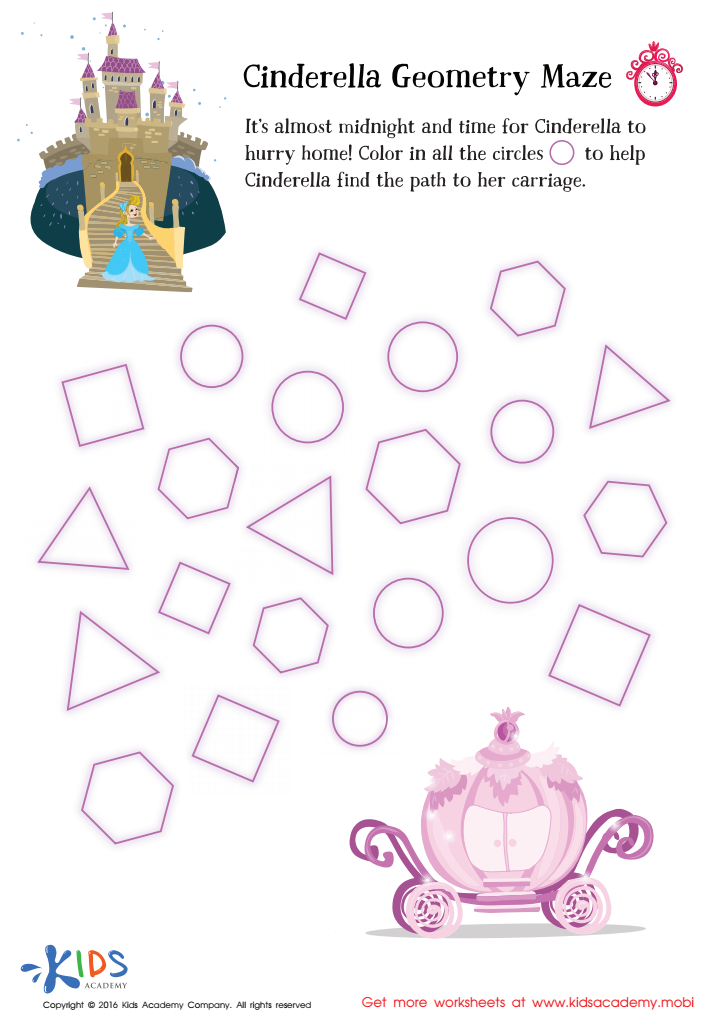
Cinderella Geometry Maze Worksheet
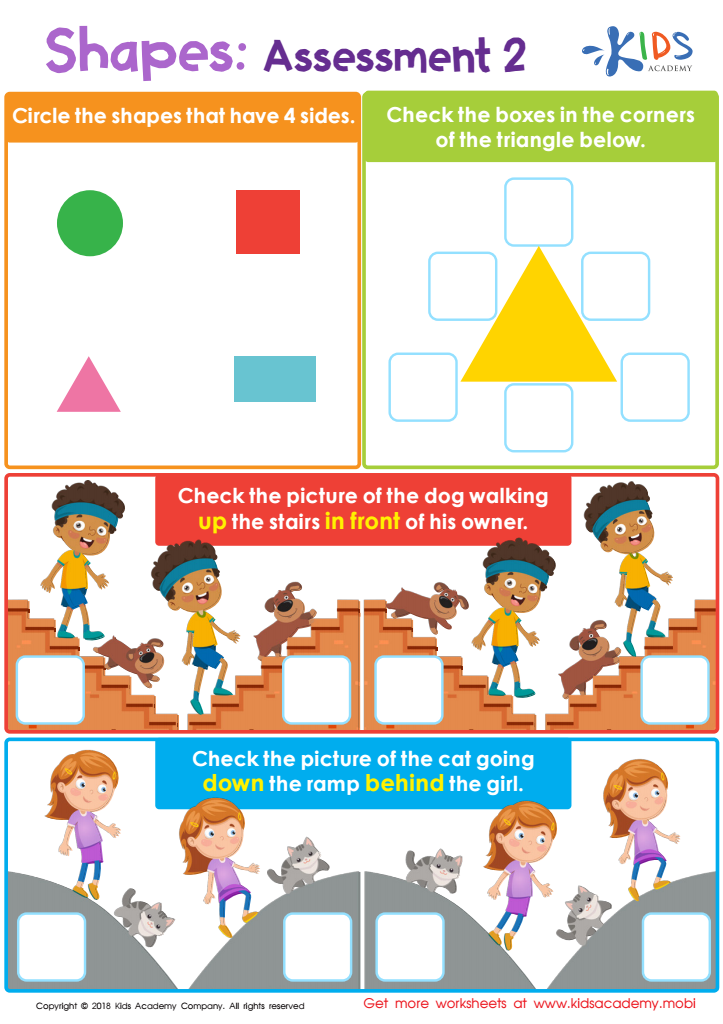
Shapes: Assessment 2 Worksheet
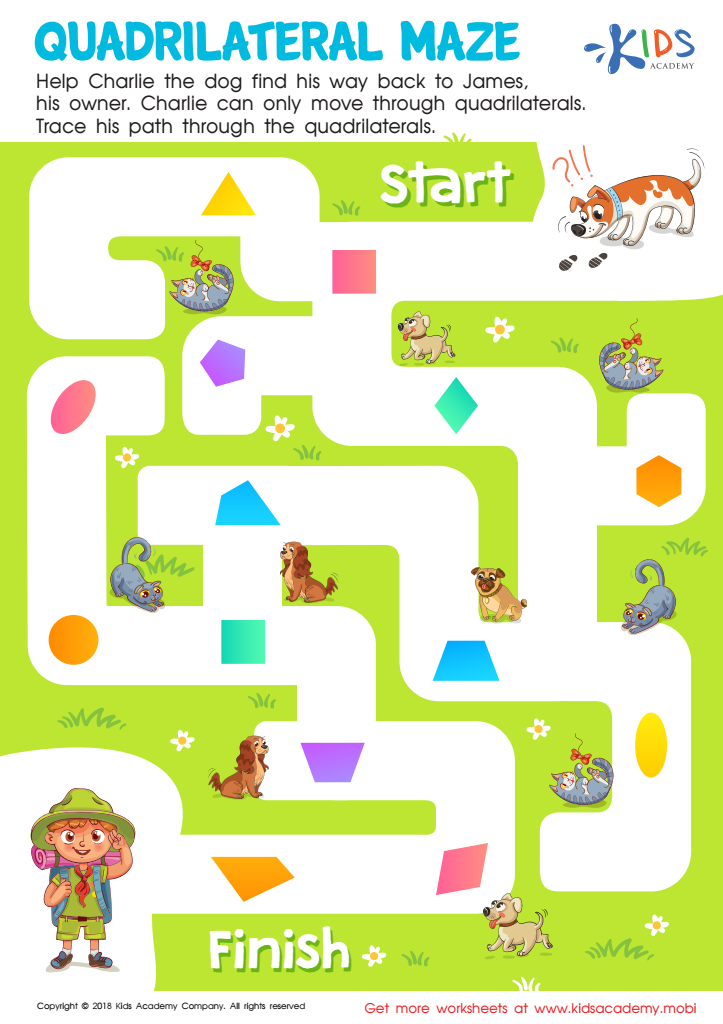
Quadrilateral Maze Worksheet
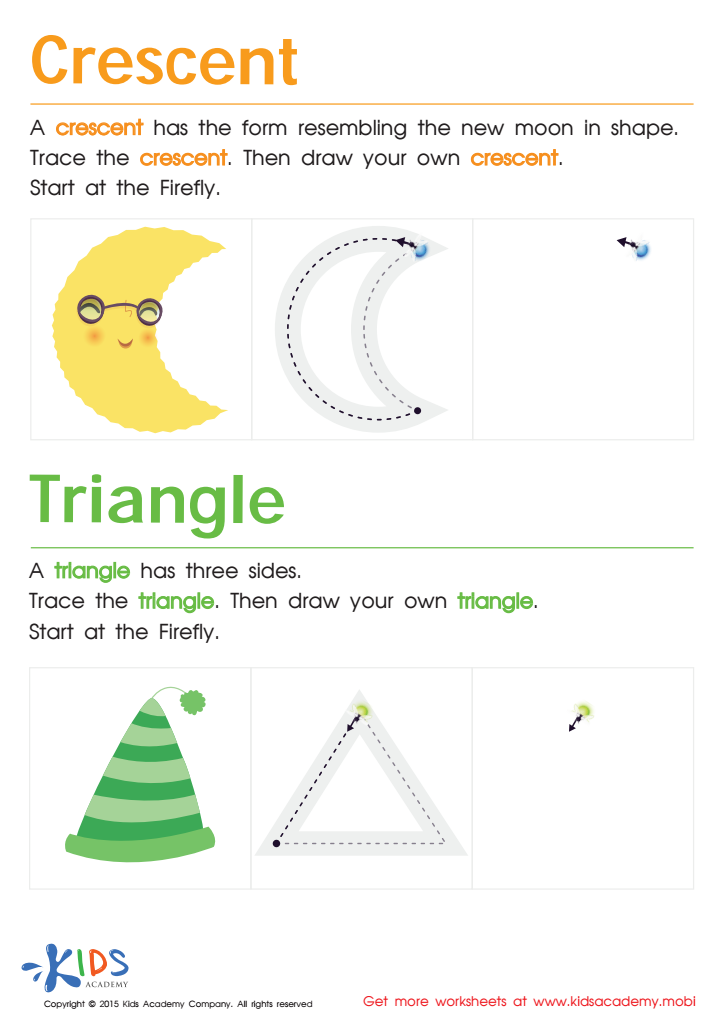
Learning to Draw Crescents And Triangles Worksheet
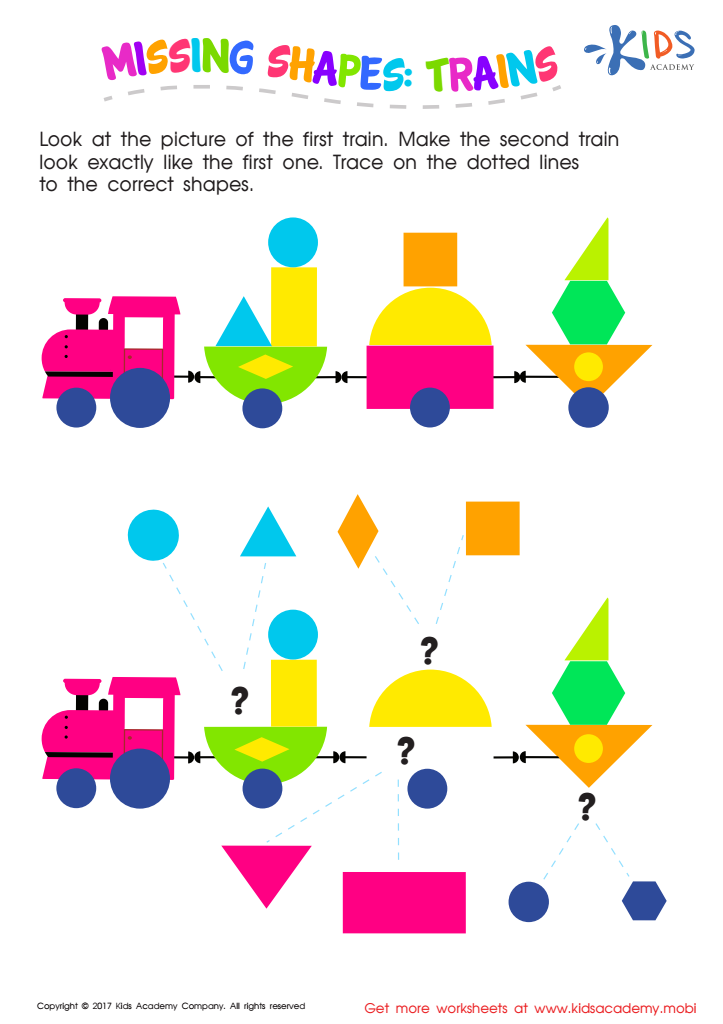
Missing Shapes: Trains Worksheet
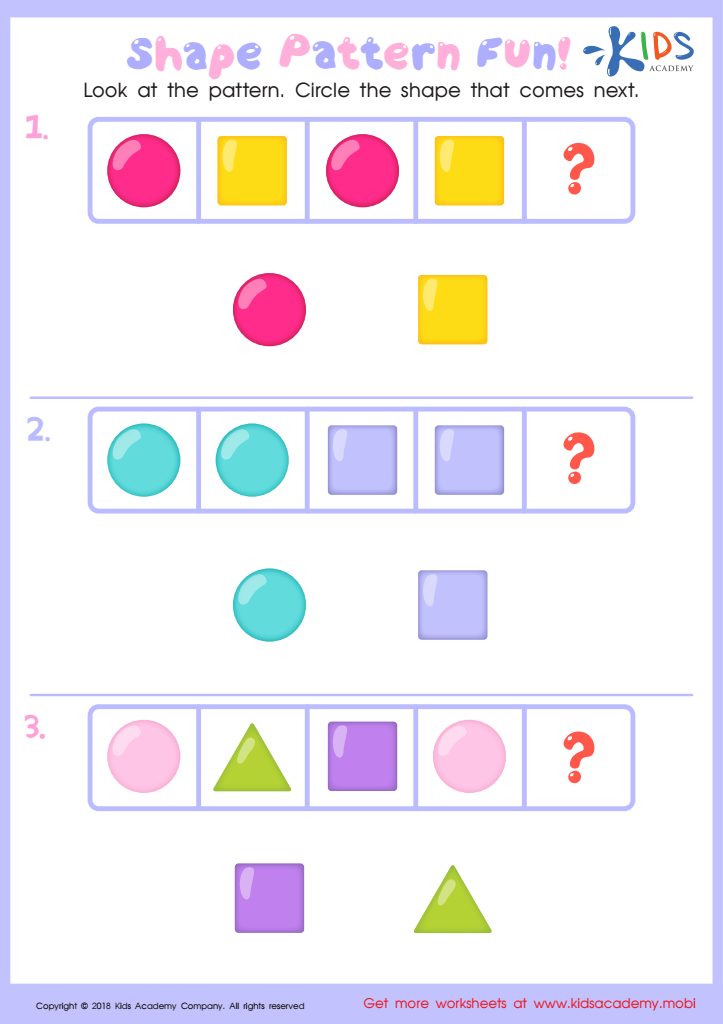
Shape Pattern Fun Worksheet








Problem-solving skills involving 2D shapes are crucial for children aged 4-8 because they serve as foundational elements for their cognitive development, spatial reasoning, and mathematical understanding. At this age, children are naturally curious and eager to explore, making it the perfect time to introduce concepts related to shapes. Engaging with 2D shapes helps children grasp essential geometrical concepts, which are vital as they progress in math.
Parents and teachers should prioritize problem-solving skills with 2D shapes because they nurture critical thinking. By experimenting with sorting, comparing, and manipulating shapes, children learn to identify patterns, draw conclusions, and develop logical reasoning. These skills extend beyond math, promoting analytical capabilities essential in everyday life.
Moreover, incorporating fun activities involving 2D shapes can make learning enjoyable, fostering a love for learning. As children practice problem-solving, they build persistence and resilience, which are crucial qualities for future challenges. Ultimately, a strong grasp of basic shapes lays the groundwork for more advanced mathematical concepts and enriches overall cognitive abilities, equipping children with the tools they need for future academic success and everyday problem-solving. Hence, parents and teachers alike play an integral role in cultivating these skills during this critical developmental stage.