Filters

82 filtered results

Clear all filters
Favorites
With answer key
Interactive

82 filtered results

Difficulty Level

Grade


Subject

    Check out this FREE Trial Lesson on Addition & Subtraction for age 4-8!

    Adding with Objects from Stories

    Favorites
    With answer key
    Interactive
    • 4-8
    • Fine Motor Skills
    • Addition & Subtraction
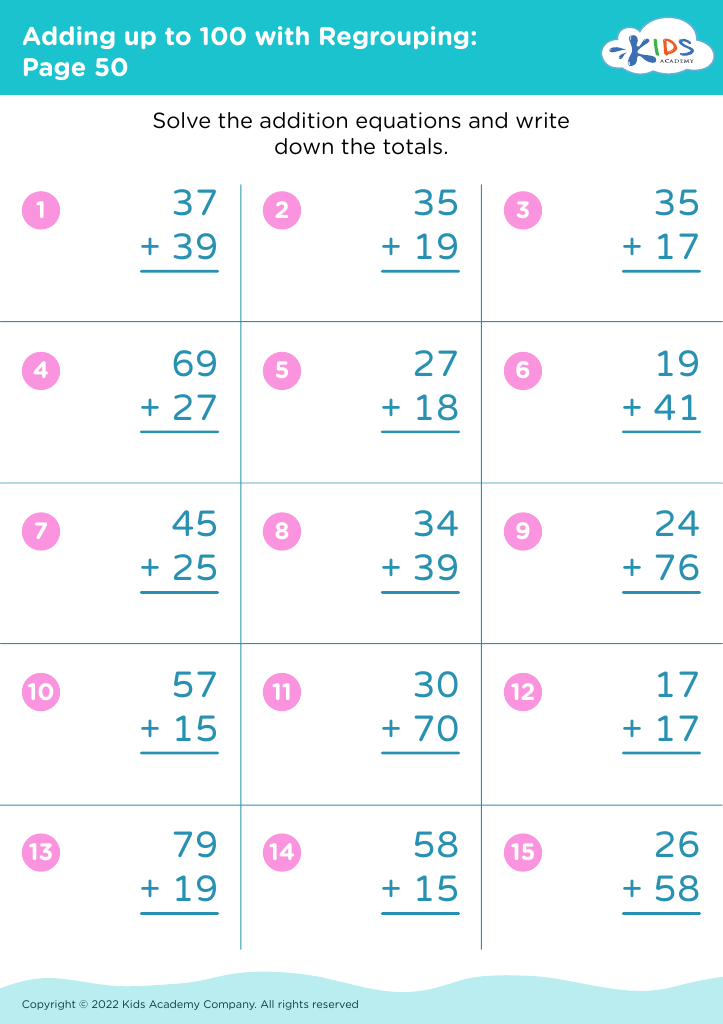
    Adding up to 100 with Regrouping: Page 50
    Adding up to 100 with Regrouping: Page 50
    Adding up to 100 with Regrouping: Page 50
    Worksheet
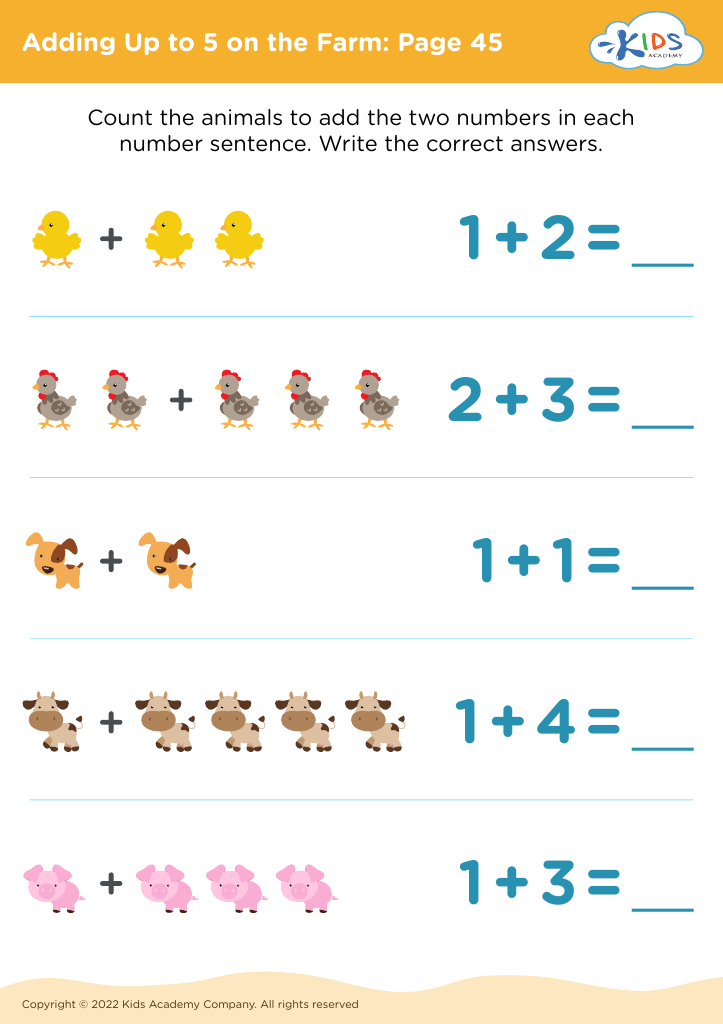
    Adding Up to 5 on the Farm: Page 45
    Adding Up to 5 on the Farm: Page 45
    Adding Up to 5 on the Farm: Page 45
    Worksheet
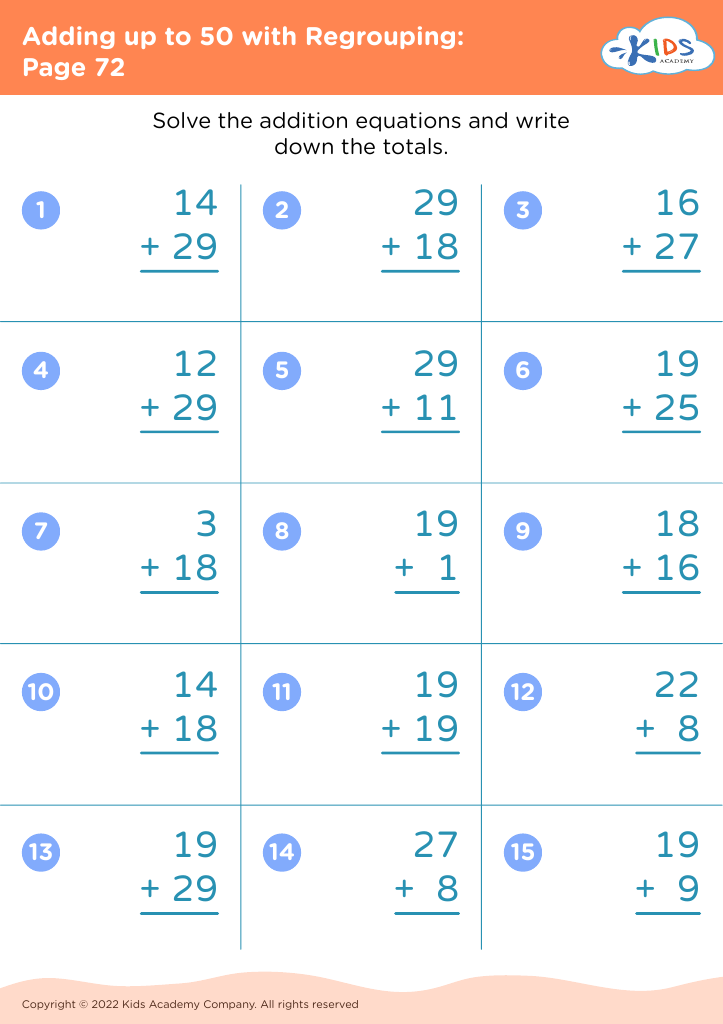
    Adding up to 50 with Regrouping: Page 72
    Adding up to 50 with Regrouping: Page 72
    Adding up to 50 with Regrouping: Page 72
    Worksheet
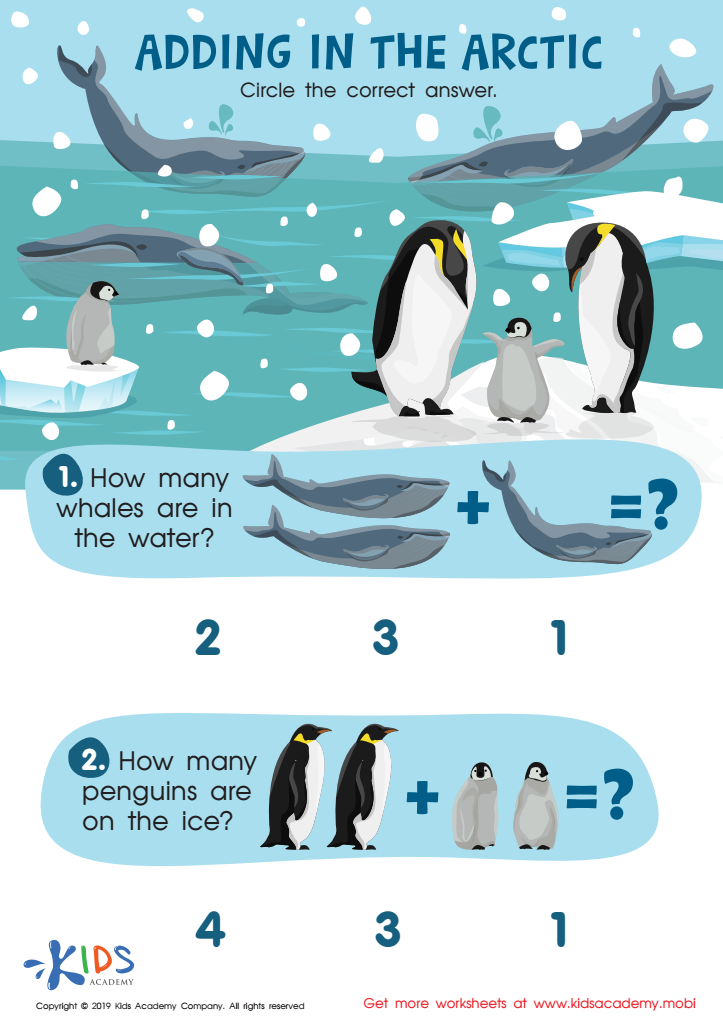
    Adding in the Arctic Worksheet
    Adding in the Arctic Worksheet

    Adding in the Arctic Worksheet

    Introduce your kids to the Arctic with this worksheet. Let them look at the pictures, teach them the name of the animals, and help them add up the correct number. Ask your kids to tell you some of the animals found there and what the weather is like. It's a fun and educational way to learn more about the Arctic.
    Adding in the Arctic Worksheet
    Worksheet
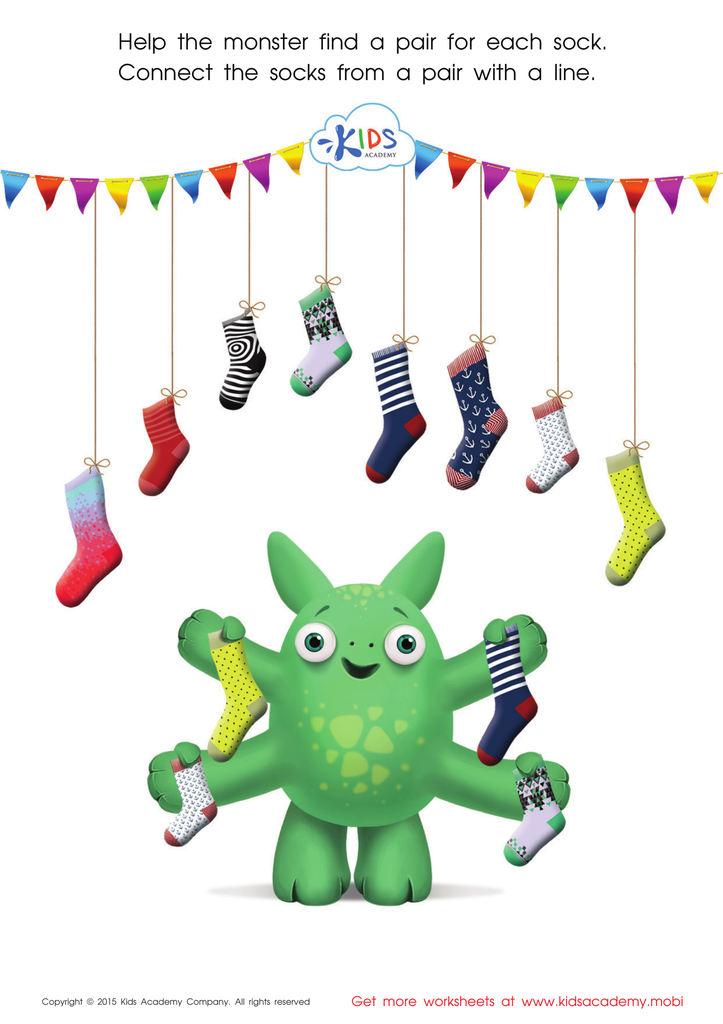
    Math Matching Pairs Game: Monster’s Socks
    Math Matching Pairs Game: Monster’s Socks

    Math Matching Pairs Game: Monsterв's Socks Worksheet
    Let your child learn, concentrate and practice sorting skills with this fun kindergarten worksheet. Matching polka dots, anchors, geo shapes and stripes on Monster's socks will help improve fine motor skills. Download and print this free worksheet and several others on different topics.
    Math Matching Pairs Game: Monsterв's Socks Worksheet
    Worksheet
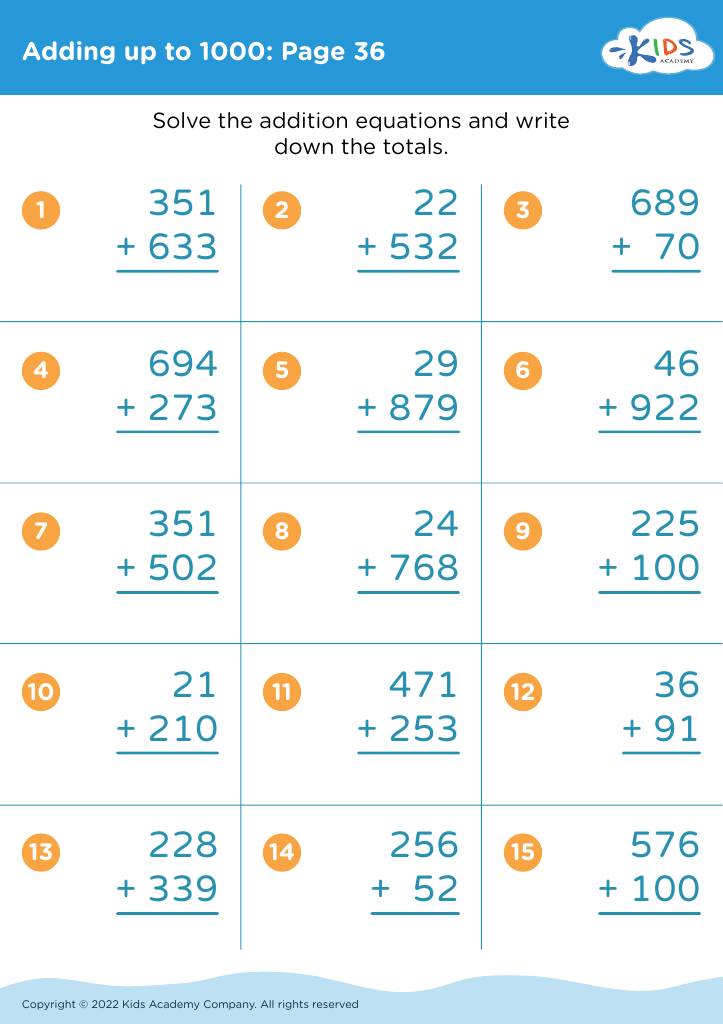
    Adding up to 1000: Page 36
    Adding up to 1000: Page 36

    Adding up to 1000: Page 36

    Adding up to 1000: Page 36
    Worksheet
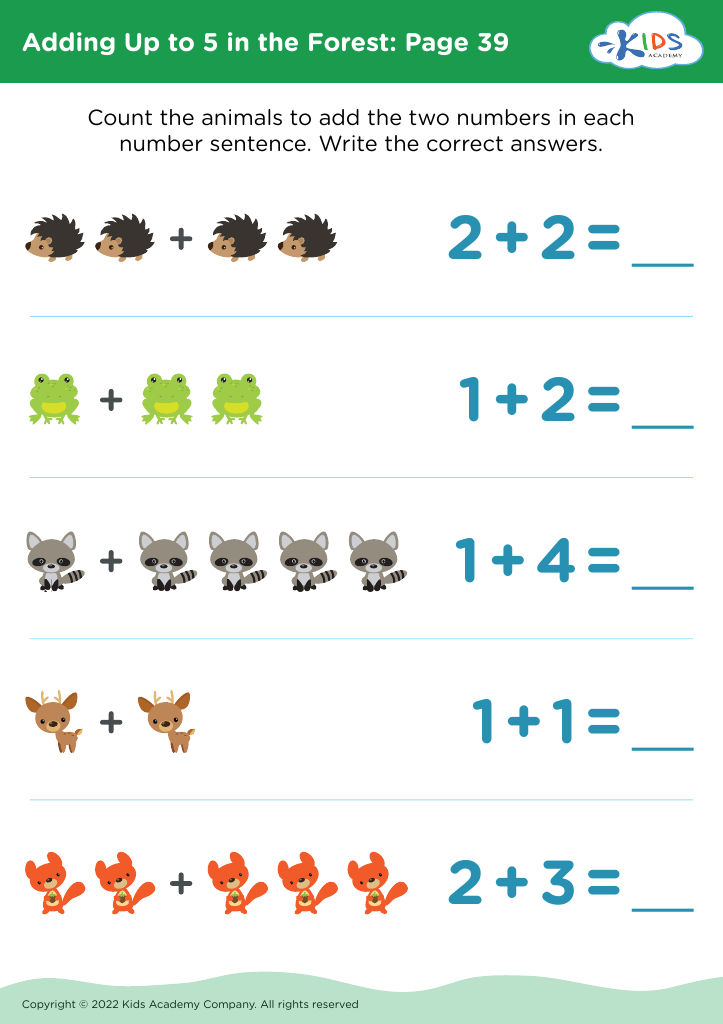
    Adding Up to 5 in the Forest: Page 39
    Adding Up to 5 in the Forest: Page 39
    Adding Up to 5 in the Forest: Page 39
    Worksheet
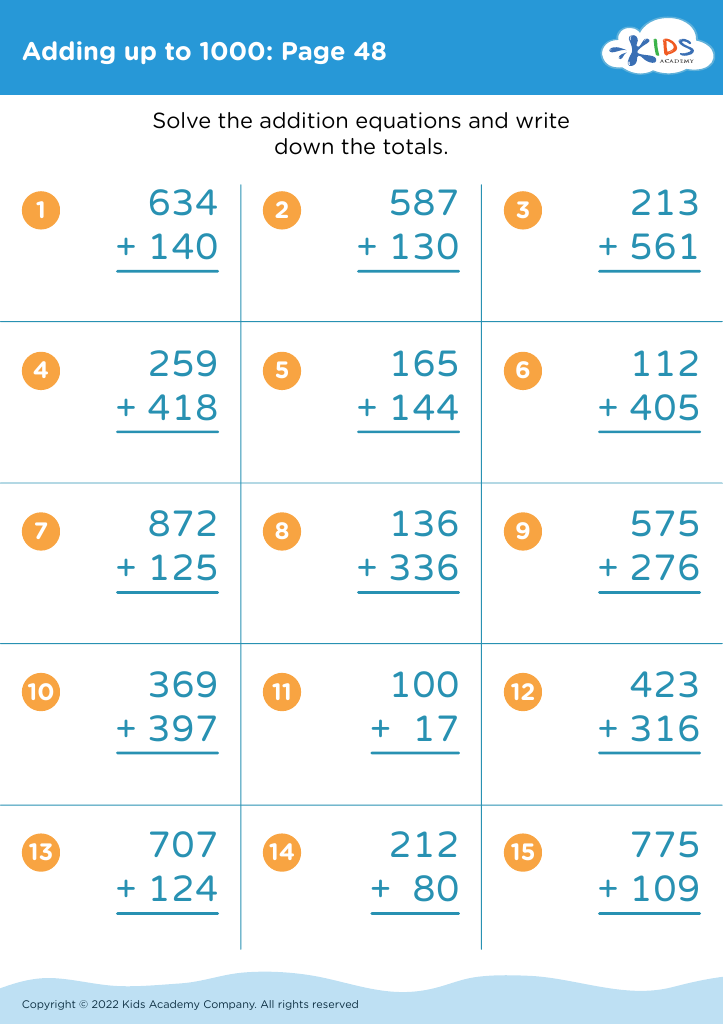
    Adding up to 1000: Page 48
    Adding up to 1000: Page 48

    Adding up to 1000: Page 48

    Adding up to 1000: Page 48
    Worksheet
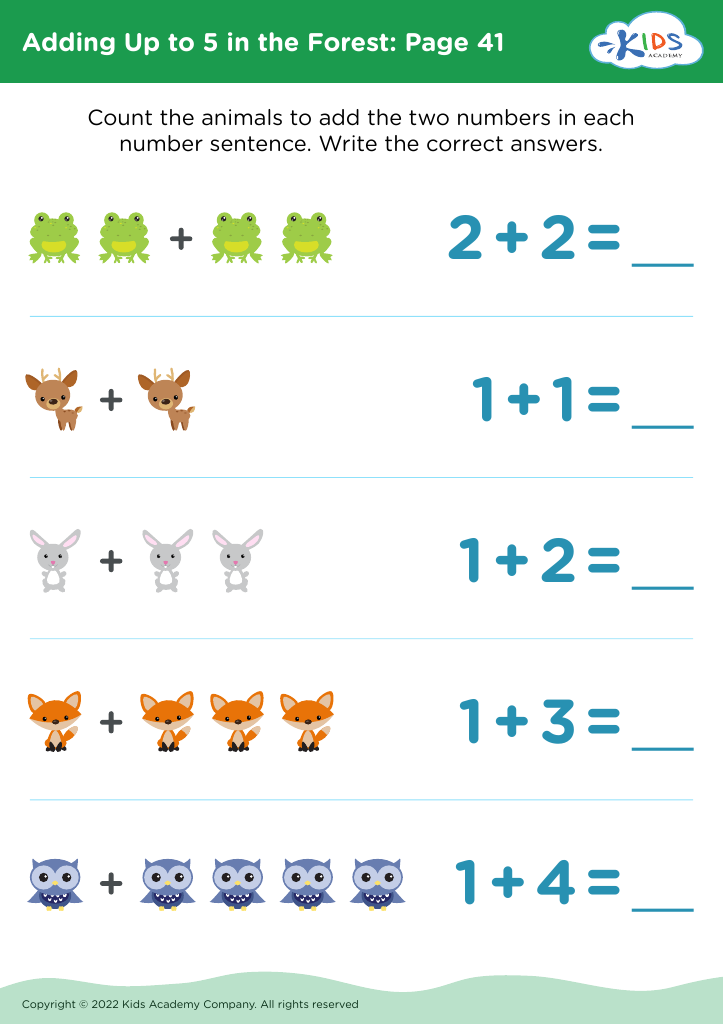
    Adding Up to 5 in the Forest: Page 41
    Adding Up to 5 in the Forest: Page 41
    Adding Up to 5 in the Forest: Page 41
    Worksheet
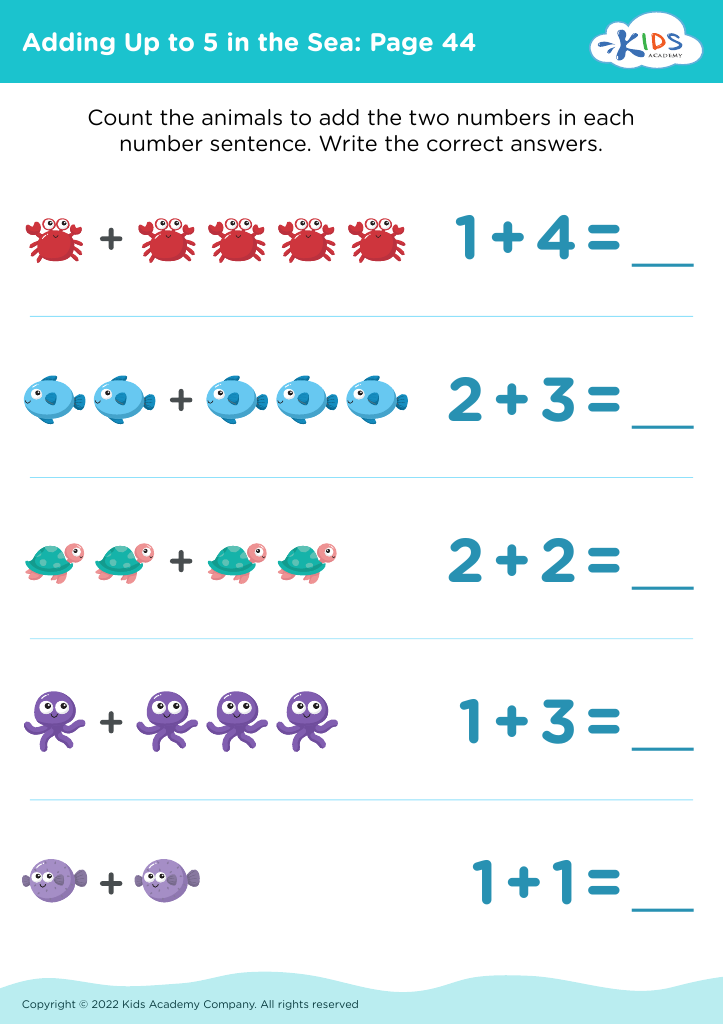
    Adding Up to 5 in the Sea: Page 44
    Adding Up to 5 in the Sea: Page 44
    Adding Up to 5 in the Sea: Page 44
    Worksheet


    ... 3 4

    Parents and teachers should care deeply about fine motor skills for addition and subtraction for ages 4-8, because the development of these skills lays a crucial foundation for children's overall education and daily functioning. Fine motor skills involve the coordination of small muscles in movements—usually the synchronization of hands and fingers with the eyes. Mastering these skills is essential for children as they learn to write numbers, manipulate small objects like counters or beads, and use educational tools such as pencils and scissors.

    When children practice addition and subtraction activities, they often draw small objects, write numbers, and sort items—tasks that build fine motor dexterity. For example, using objects like buttons or blocks to solve math problems requires grasping, moving, and properly placing items, which enhances muscle strength and coordination in their hands and fingers.

    Developing fine motor skills also improves hand-eye coordination, which is essential not only for mathematics but for other subjects and activities like art and physical education. When children perform tasks smoothly and confidently, they are more likely to develop a positive attitude toward learning. Moreover, these skills are linked to self-care activities such as buttoning shirts, tying shoelaces, and even feeding themselves. By supporting fine motor skill development, parents and teachers are essentially setting children up for greater academic success and daily independence, providing them with tools that they will use for the rest of their lives.