Filters

82 filtered results

Clear all filters
Favorites
With answer key
Interactive

82 filtered results

Difficulty Level

Grade


Subject

    Check out this FREE Trial Lesson on Addition & Subtraction for age 4-8!

    H

    Favorites
    With answer key
    Interactive
    • 4-8
    • Fine Motor Skills
    • Addition & Subtraction
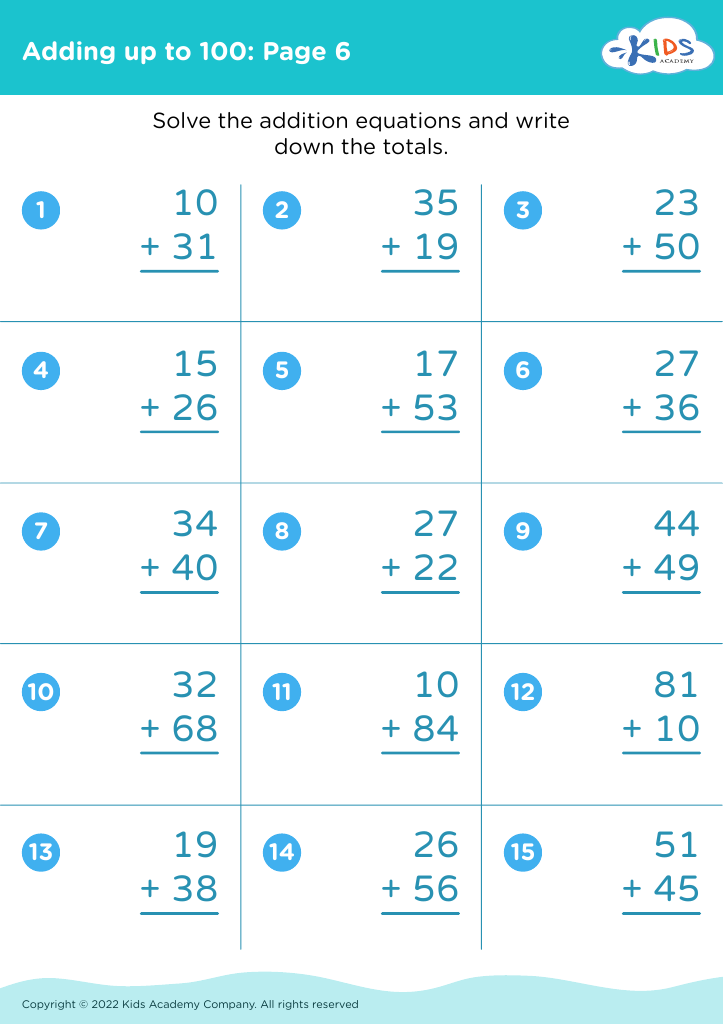
    Adding up to 100: Page 6
    Adding up to 100: Page 6

    Adding up to 100: Page 6

    Adding up to 100: Page 6
    Worksheet
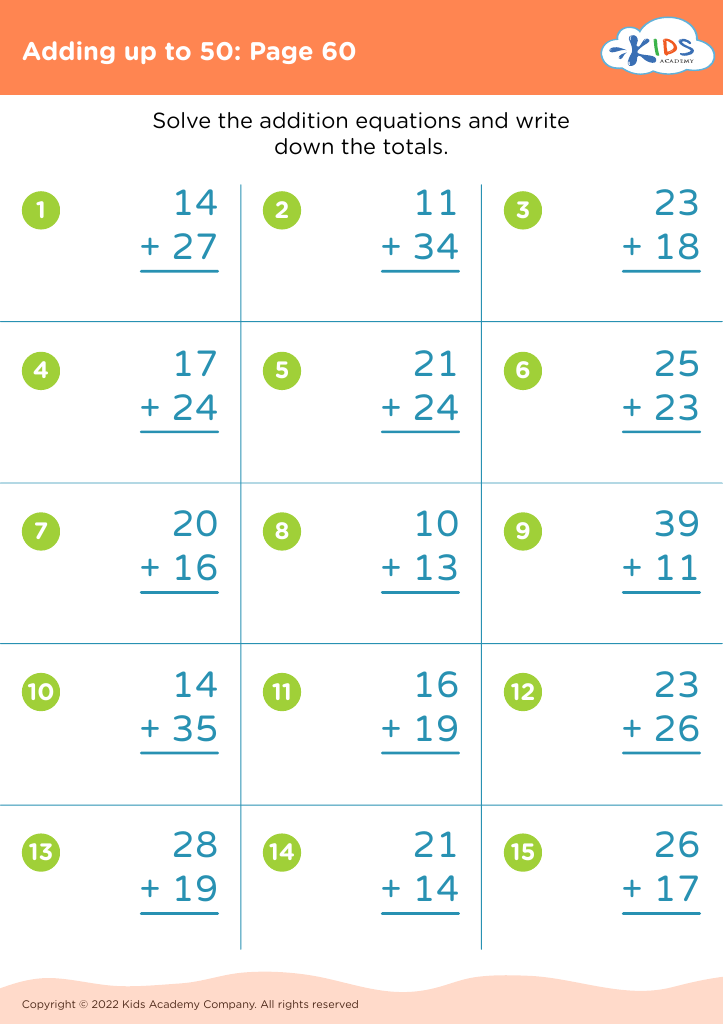
    Adding up to 50: Page 60
    Adding up to 50: Page 60

    Adding up to 50: Page 60

    Adding up to 50: Page 60
    Worksheet
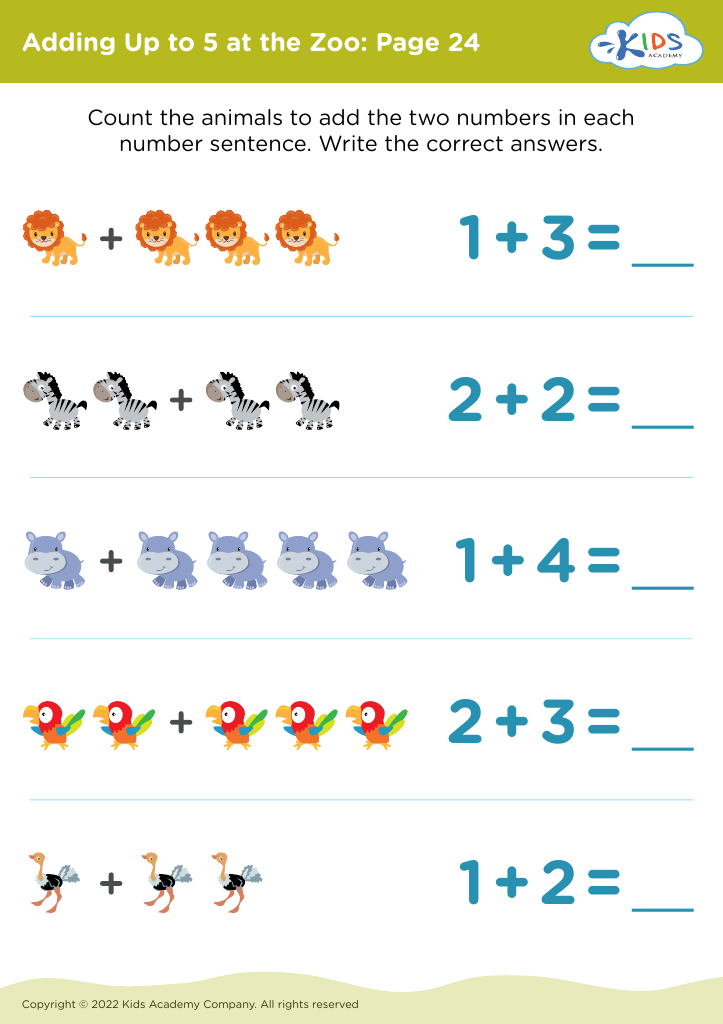
    Adding Up to 5 at the Zoo: Page 24
    Adding Up to 5 at the Zoo: Page 24
    Adding Up to 5 at the Zoo: Page 24
    Worksheet
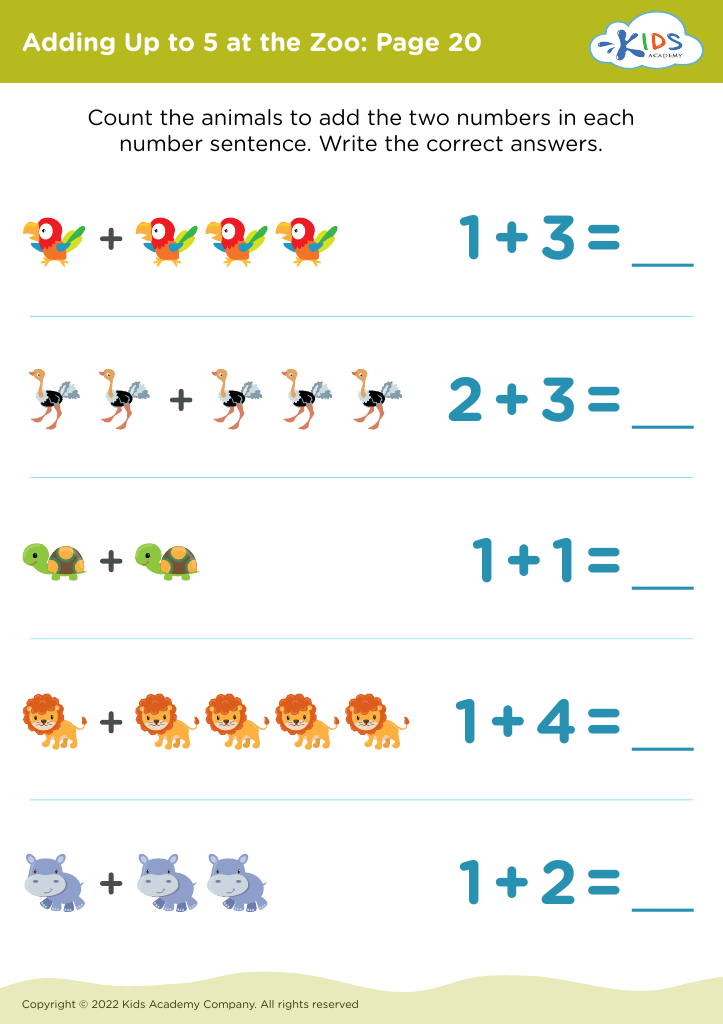
    Adding Up to 5 at the Zoo: Page 20
    Adding Up to 5 at the Zoo: Page 20
    Adding Up to 5 at the Zoo: Page 20
    Worksheet
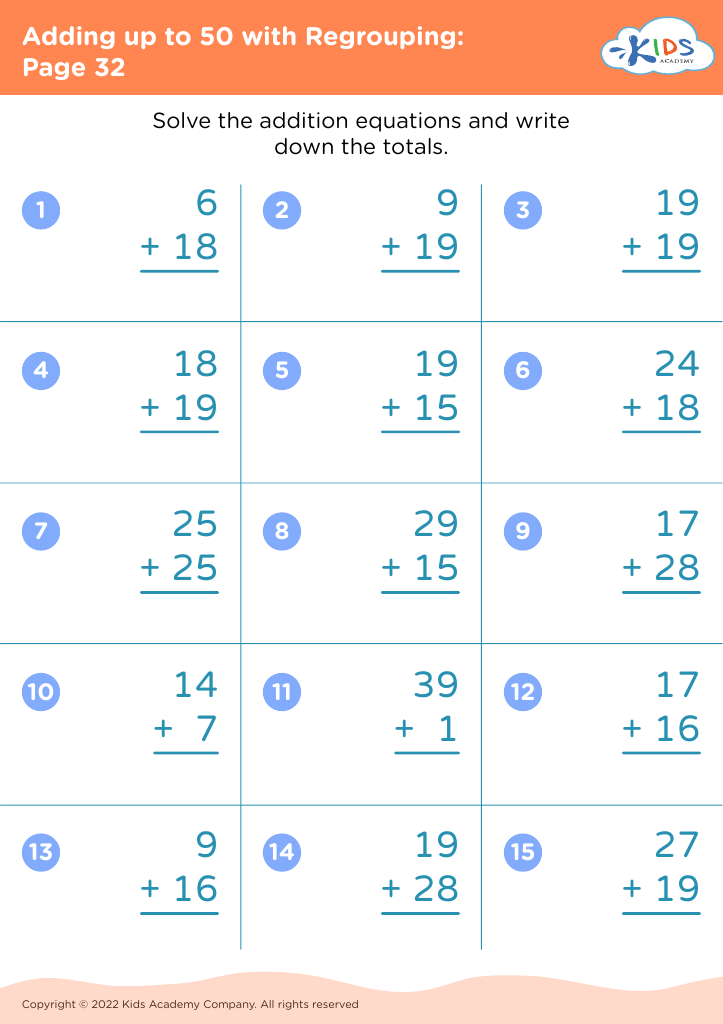
    Adding up to 50 with Regrouping: Page 32
    Adding up to 50 with Regrouping: Page 32
    Adding up to 50 with Regrouping: Page 32
    Worksheet
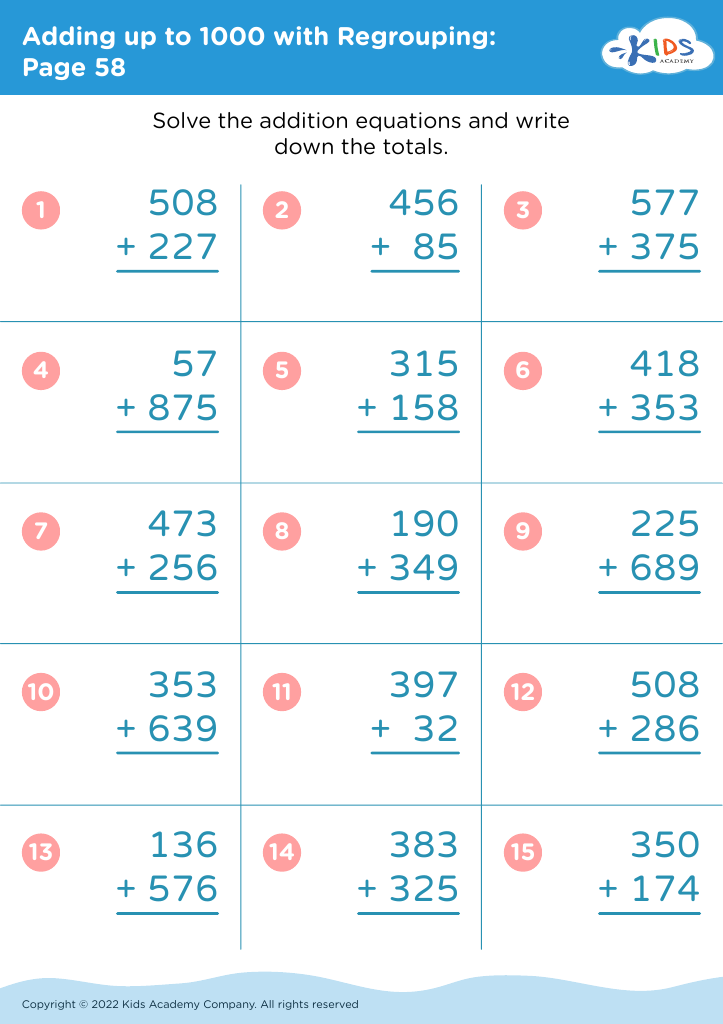
    Adding up to 1000 with Regrouping: Page 58
    Adding up to 1000 with Regrouping: Page 58
    Adding up to 1000 with Regrouping: Page 58
    Worksheet
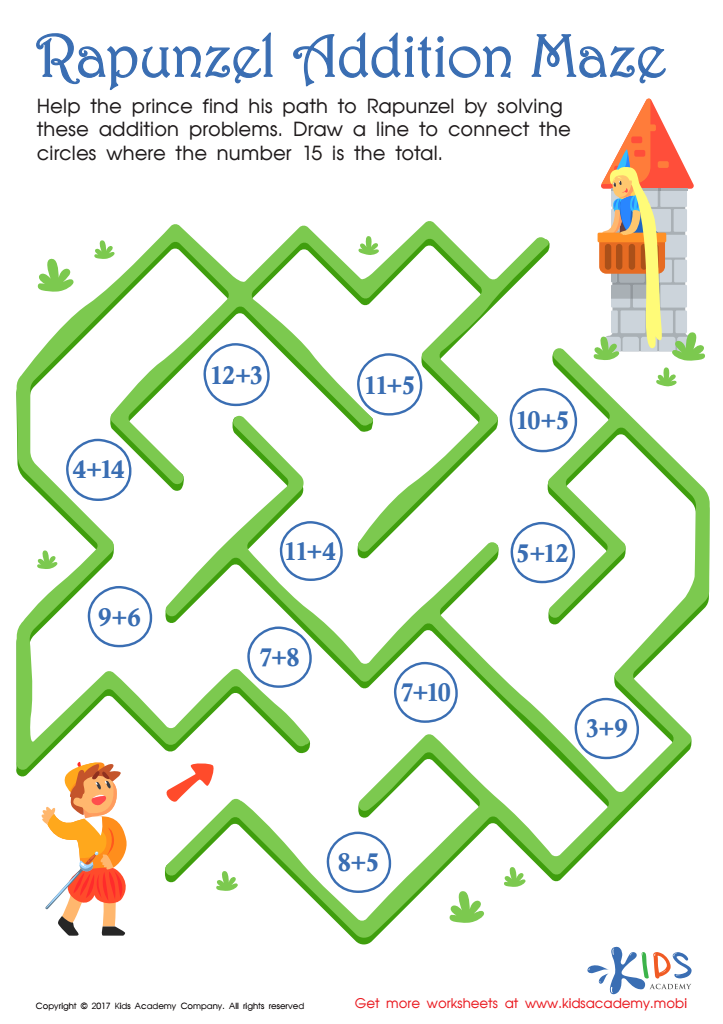
    Rapunzel Addition Maze
    Rapunzel Addition Maze

    Rapunzel Addition Maze Worksheet

    Motivate your child to practice math with a fun and meaningful Rapunzel addition maze! They'll learn single and double digit addition, problem solving, and gain confidence as they complete the maze and help the prince reach Rapunzel. They'll feel proud of their accomplishment when they finish!
    Rapunzel Addition Maze Worksheet
    Worksheet
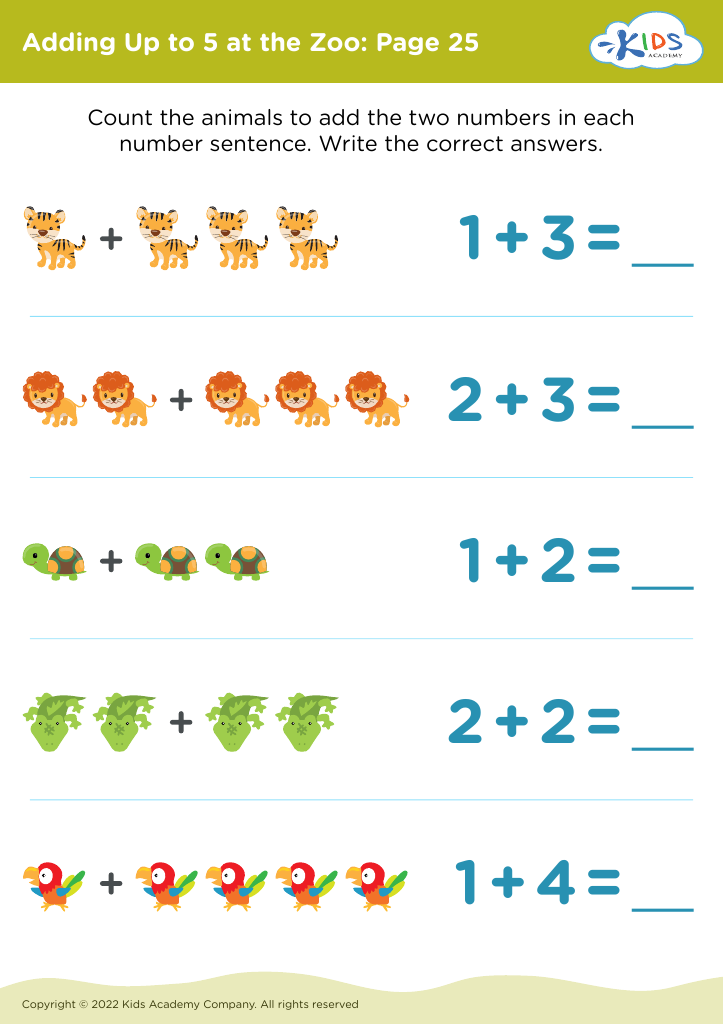
    Adding Up to 5 at the Zoo: Page 25
    Adding Up to 5 at the Zoo: Page 25
    Adding Up to 5 at the Zoo: Page 25
    Worksheet
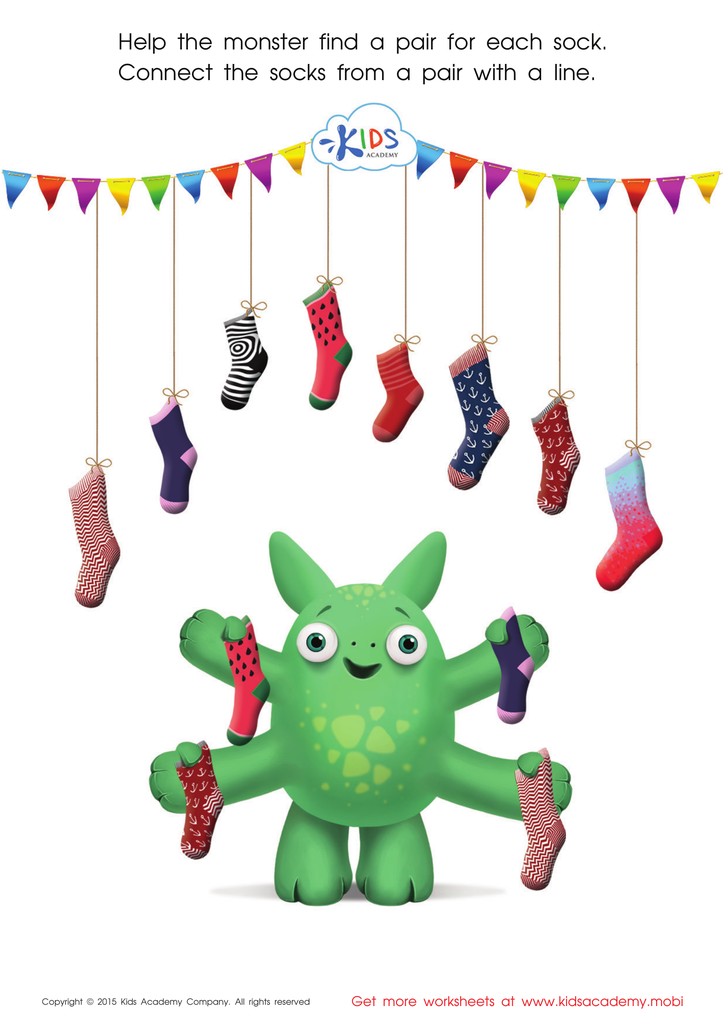
    Math Matching Game: Monster’s Socks
    Math Matching Game: Monster’s Socks

    Math Matching Game: Monsterв's Socks Worksheet
    Help the Monster put pairs of socks back together after a big storm! Kids draw lines to match the socks and develop cognitive and fine motor skills. Download and print the worksheet from Kids Academy. More preschool and kindergarten activities available.
    Math Matching Game: Monsterв's Socks Worksheet
    Worksheet
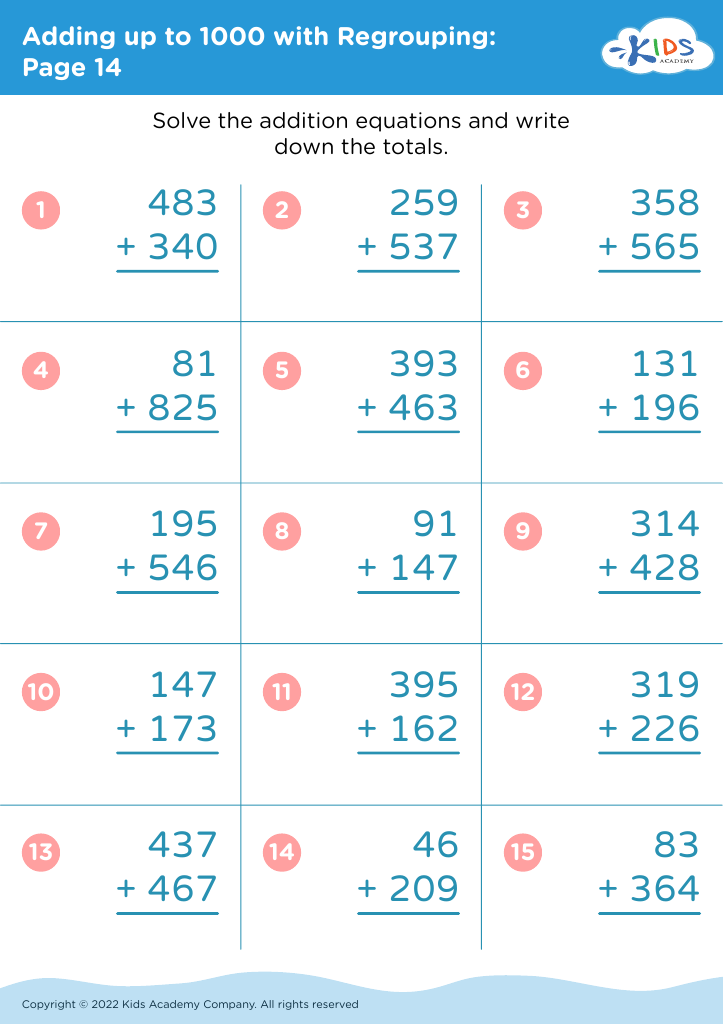
    Adding up to 1000 with Regrouping: Page 14
    Adding up to 1000 with Regrouping: Page 14
    Adding up to 1000 with Regrouping: Page 14
    Worksheet
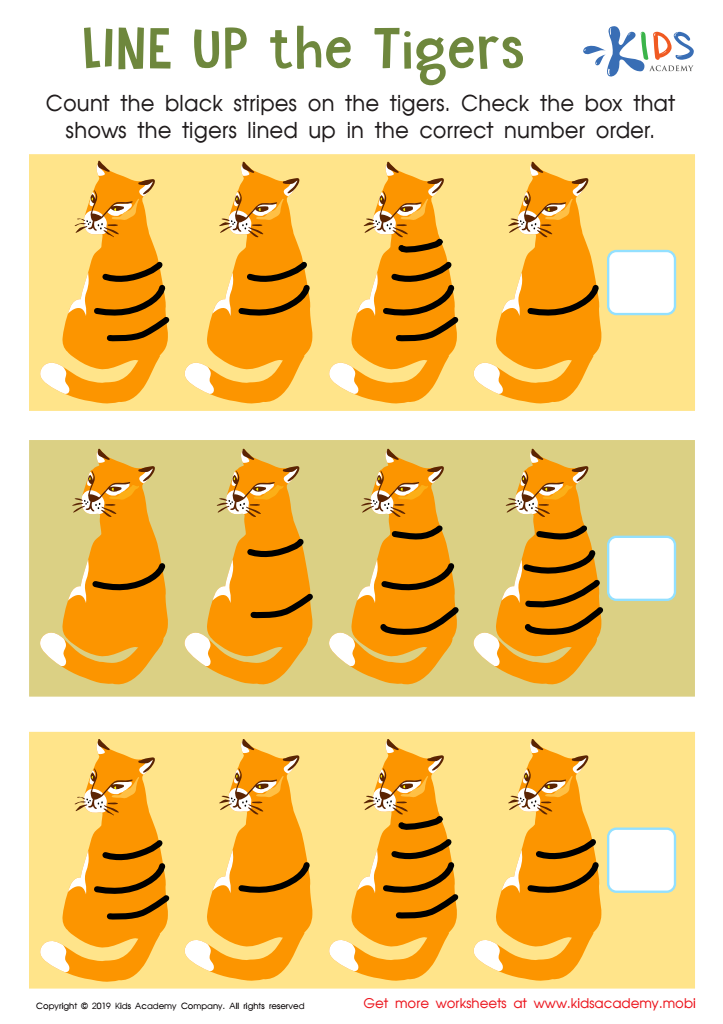
    Line up the Tigers Worksheet
    Line up the Tigers Worksheet
    Line up the Tigers Worksheet
    Give your preschoolers the right tools to succeed in math. Show them pictures of animals, then have them count the stripes and check the box that shows the tigers lined up in the right order. This will help them understand and make their journey easier.
    Line up the Tigers Worksheet
    Worksheet
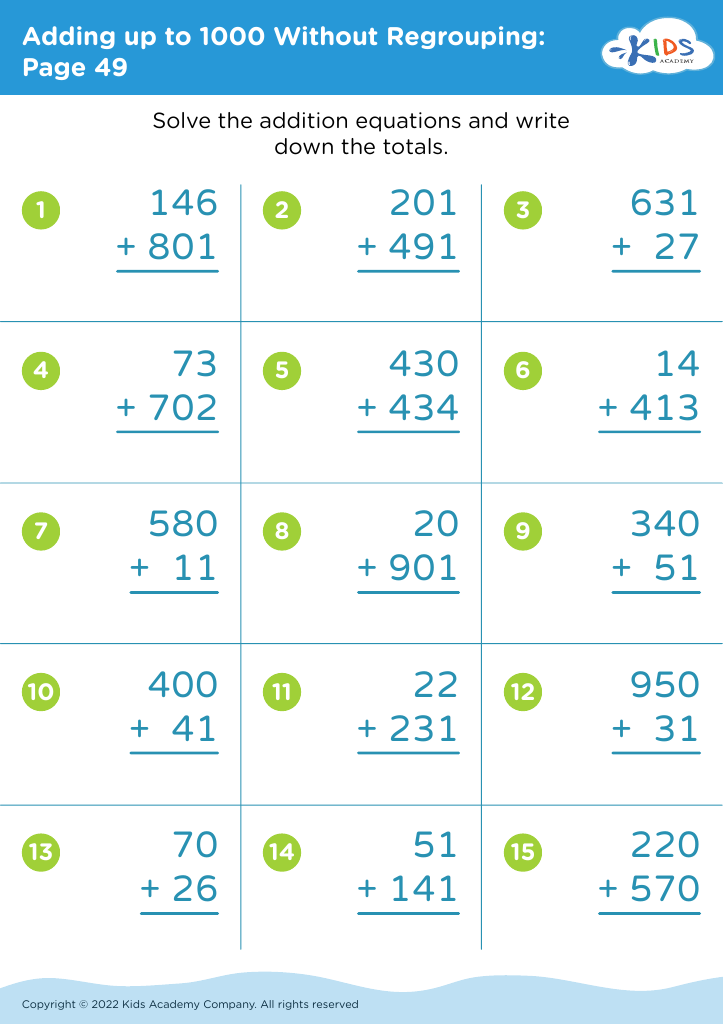
    Adding up to 1000 Without Regrouping: Page 49
    Adding up to 1000 Without Regrouping: Page 49
    Adding up to 1000 Without Regrouping: Page 49
    Worksheet
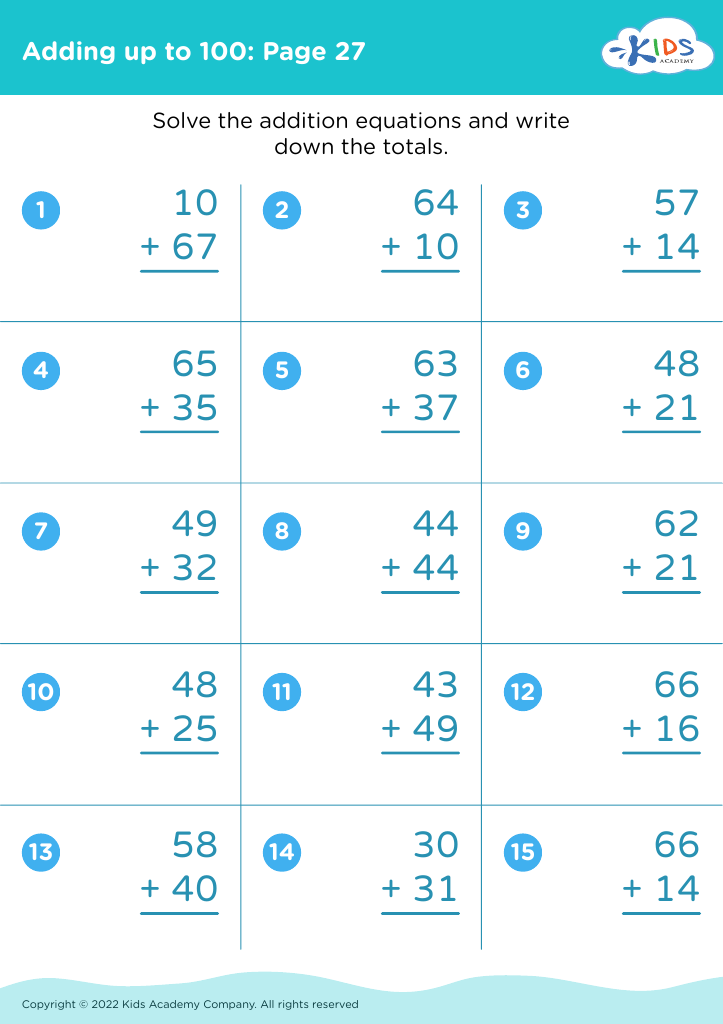
    Adding up to 100: Page 27
    Adding up to 100: Page 27

    Adding up to 100: Page 27

    Adding up to 100: Page 27
    Worksheet
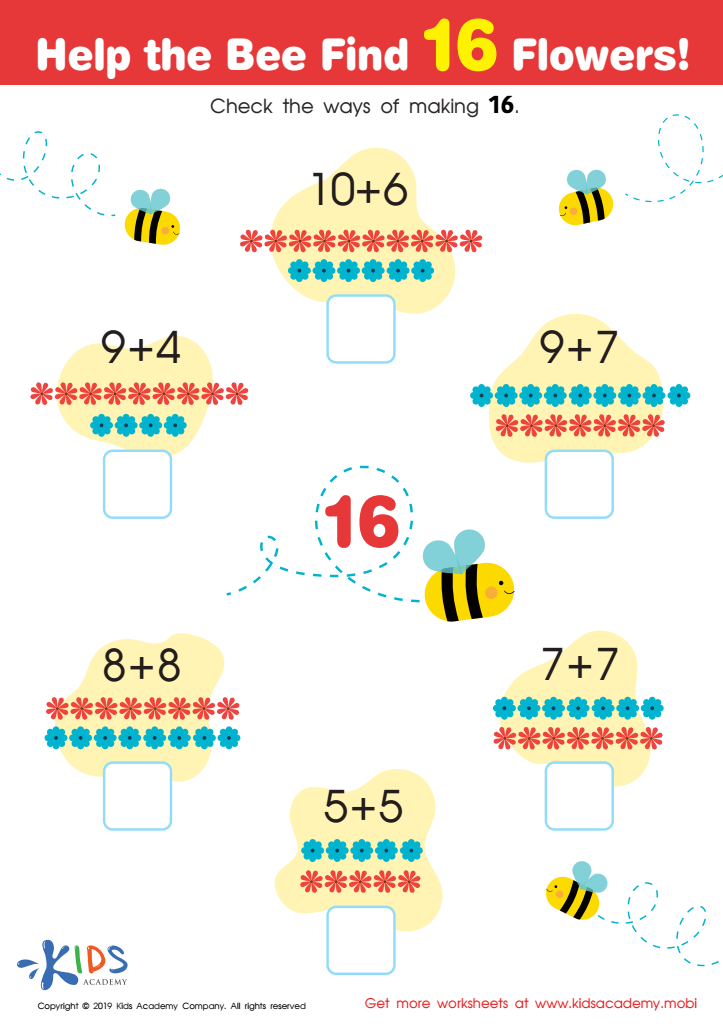
    Help the Bee Find 16 Flowers Worksheet
    Help the Bee Find 16 Flowers Worksheet
    Help the Bee Find 16 Flowers Worksheet
    Ask your students to count as high as they can. Show them that different numbers can equal the same figure with examples like 2+2=4 and 3+1=4. Ask for more examples, then help the bees find 16 flowers by checking the ways of making 16.
    Help the Bee Find 16 Flowers Worksheet
    Worksheet
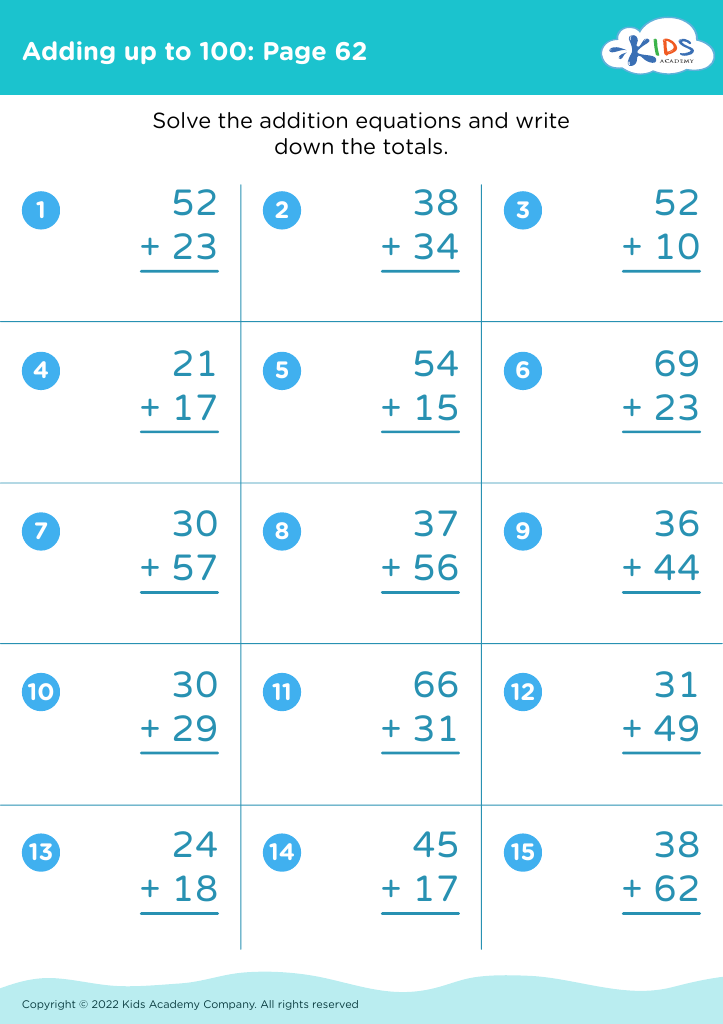
    Adding up to 100: Page 62
    Adding up to 100: Page 62

    Adding up to 100: Page 62

    Adding up to 100: Page 62
    Worksheet
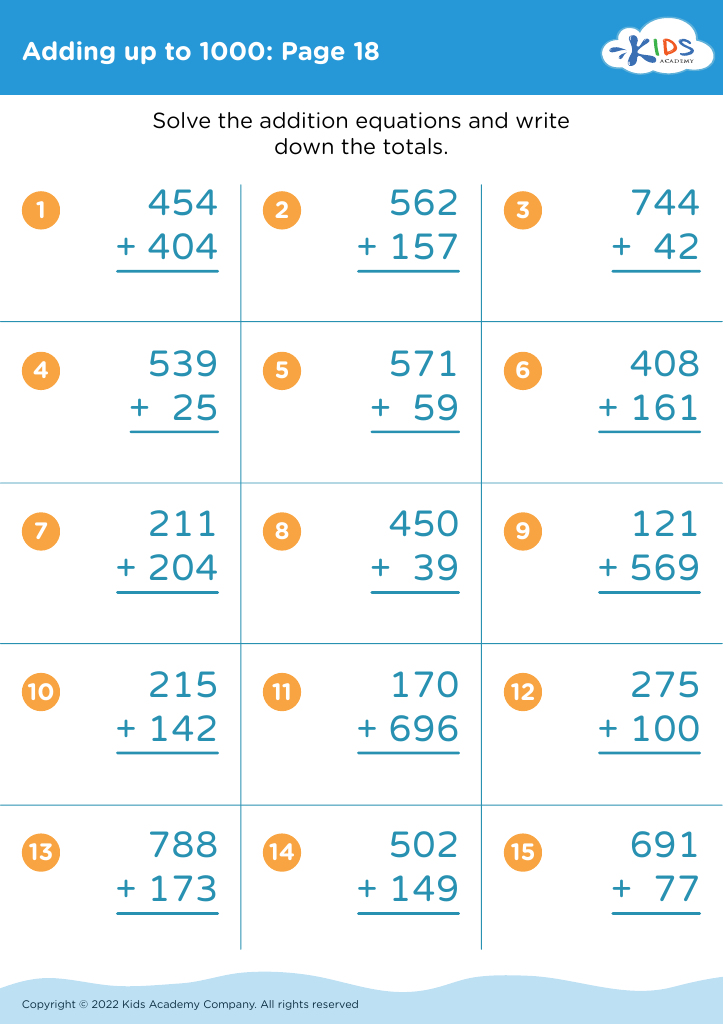
    Adding up to 1000: Page 18
    Adding up to 1000: Page 18

    Adding up to 1000: Page 18

    Adding up to 1000: Page 18
    Worksheet
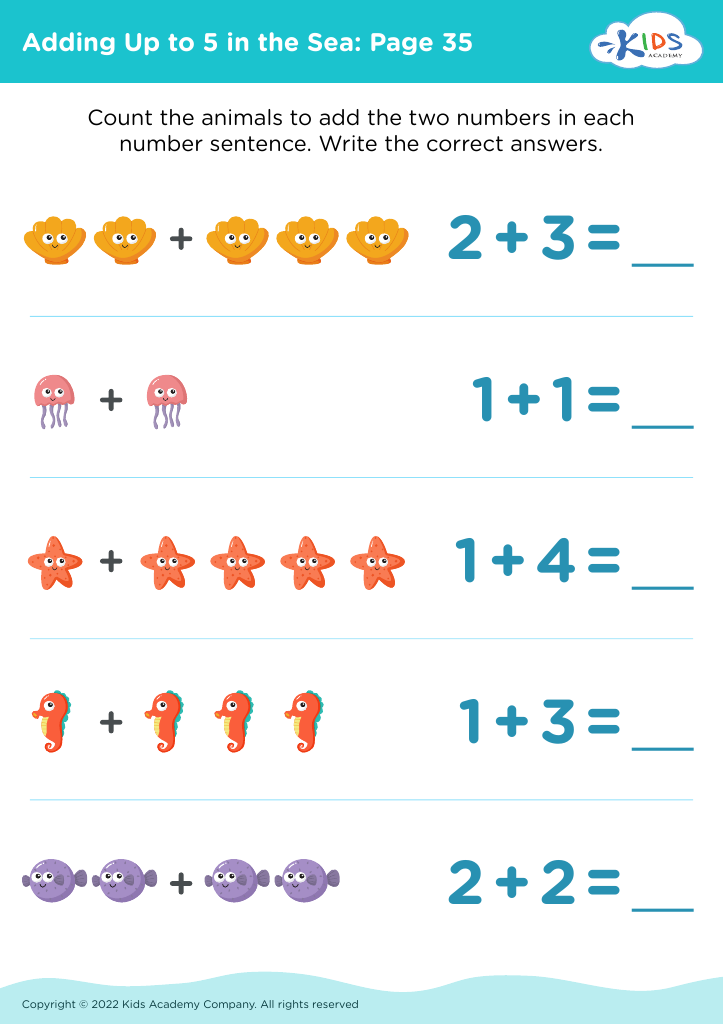
    Adding Up to 5 in the Sea: Page 35
    Adding Up to 5 in the Sea: Page 35
    Adding Up to 5 in the Sea: Page 35
    Worksheet
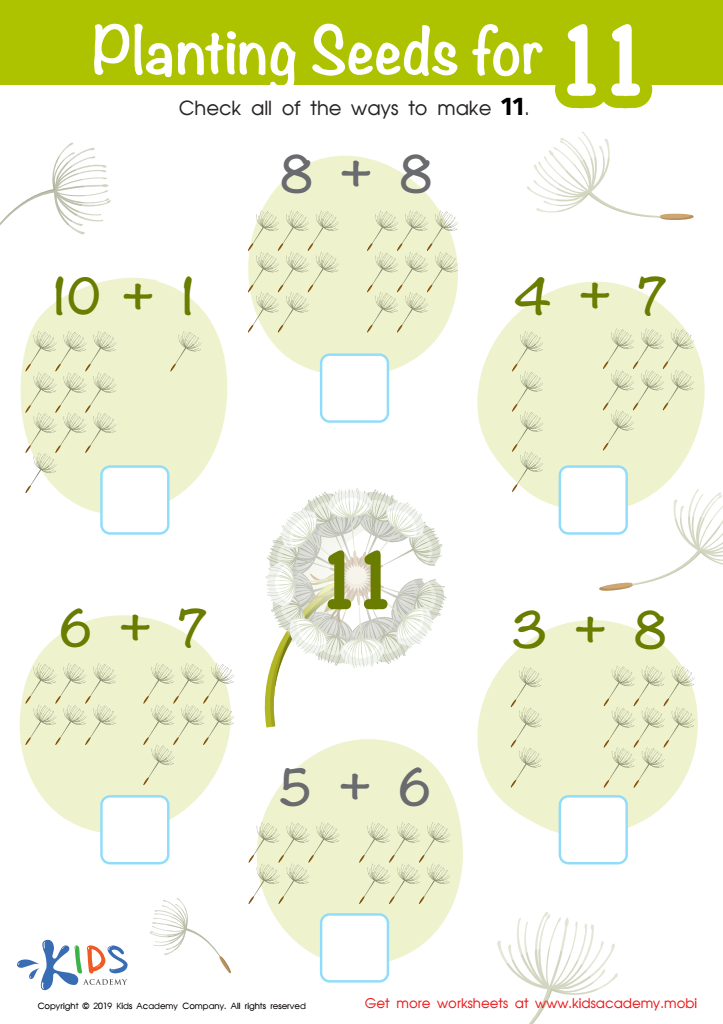
    Planting Seeds for 11 Worksheet
    Planting Seeds for 11 Worksheet

    Planting Seeds for 11 Worksheet

    Before starting, ask your students to count as high as they can. Explain that different numbers can add up to the same total. Give examples like 2+2 =4 and 3+1 =4. Ask if they can think of other examples. Then have them work through the equations in the printout and circle all that add up to 11.
    Planting Seeds for 11 Worksheet
    Worksheet
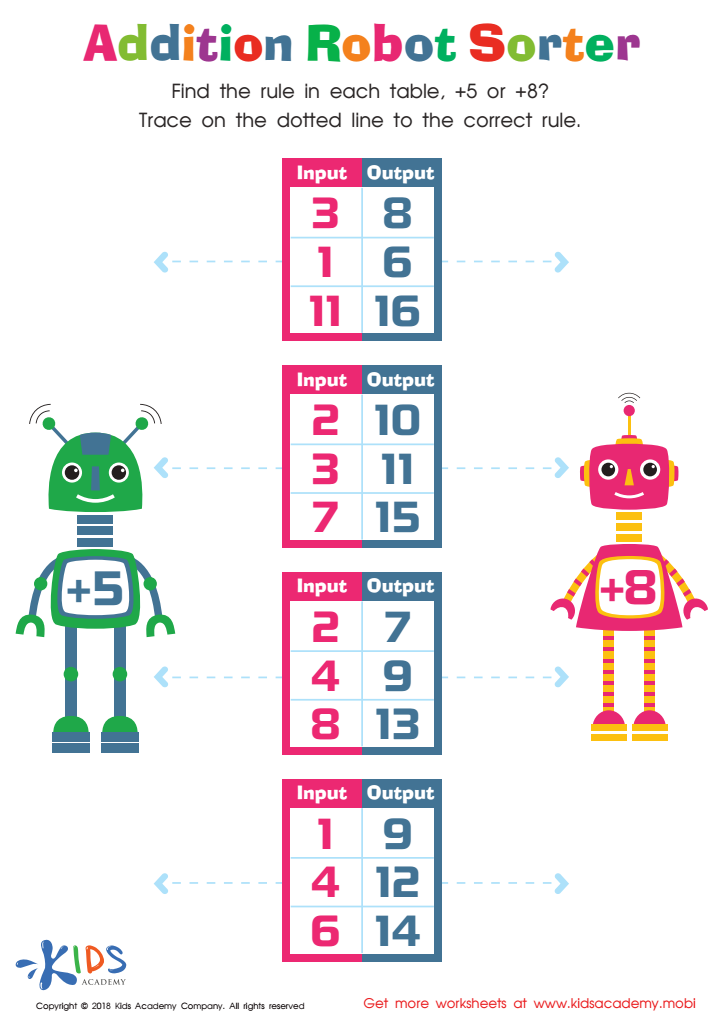
    Addition Robot Sorter Worksheet
    Addition Robot Sorter Worksheet
    Addition Robot Sorter Worksheet
    This worksheet helps your child understand addition. Have them trace the dotted lines to the correct equations: +8 and +5. It's a great way to aid their mathematical comprehension and get them comfortable with adding equations.
    Addition Robot Sorter Worksheet

    Worksheet
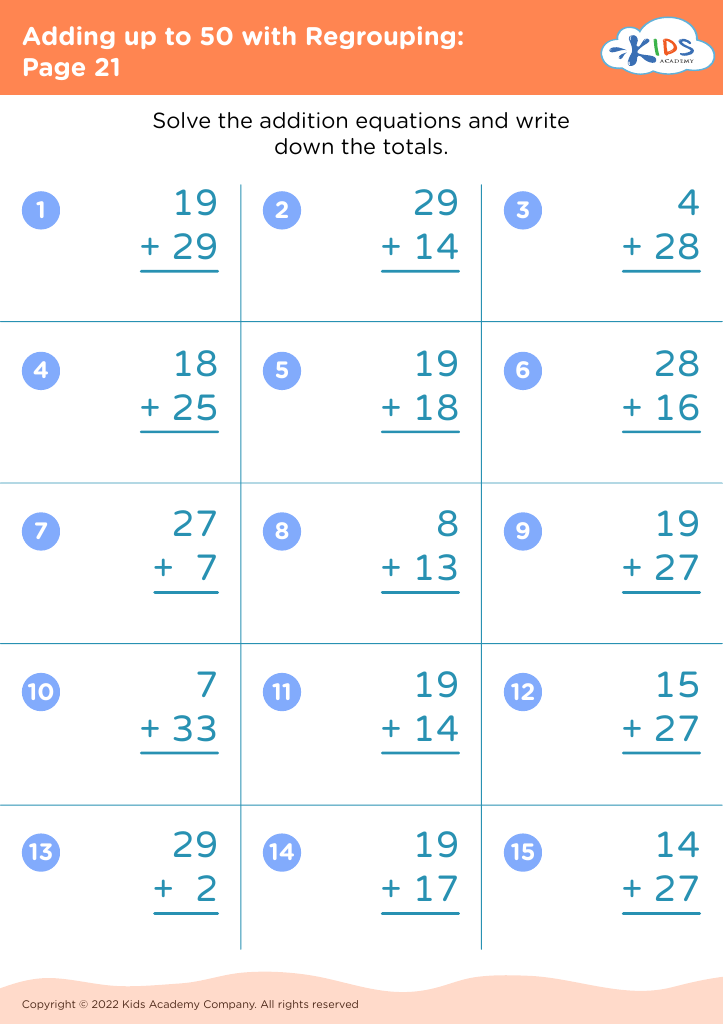
    Adding up to 50 with Regrouping: Page 21
    Adding up to 50 with Regrouping: Page 21
    Adding up to 50 with Regrouping: Page 21
    Worksheet
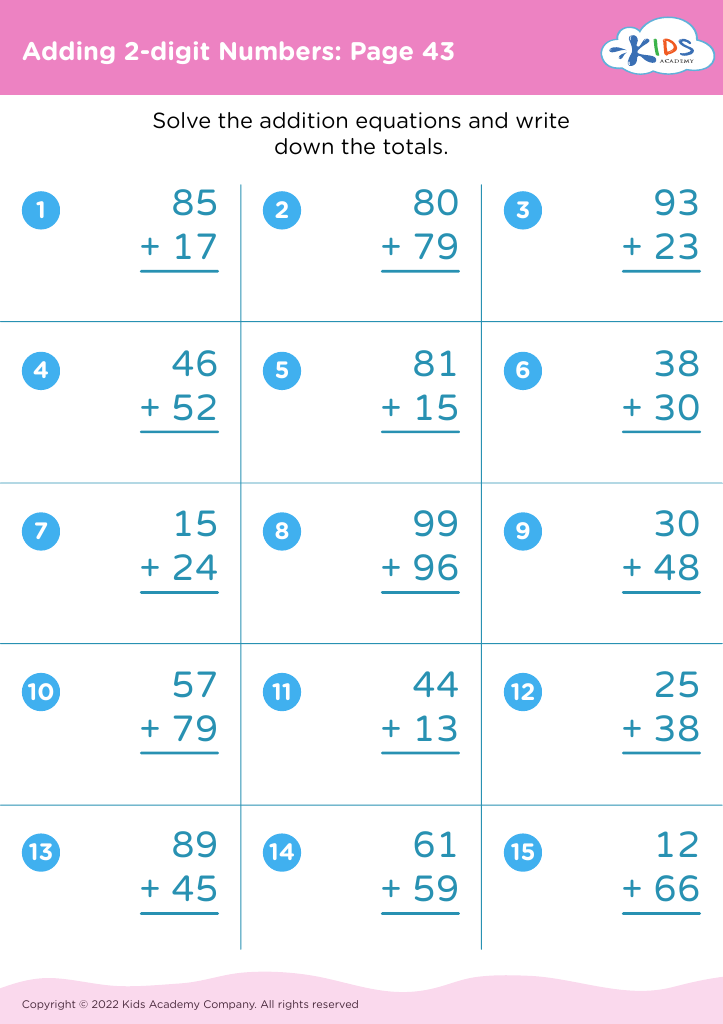
    Adding 2-digit Numbers: Page 43
    Adding 2-digit Numbers: Page 43

    Adding 2-digit Numbers: Page 43

    Adding 2-digit Numbers: Page 43
    Worksheet
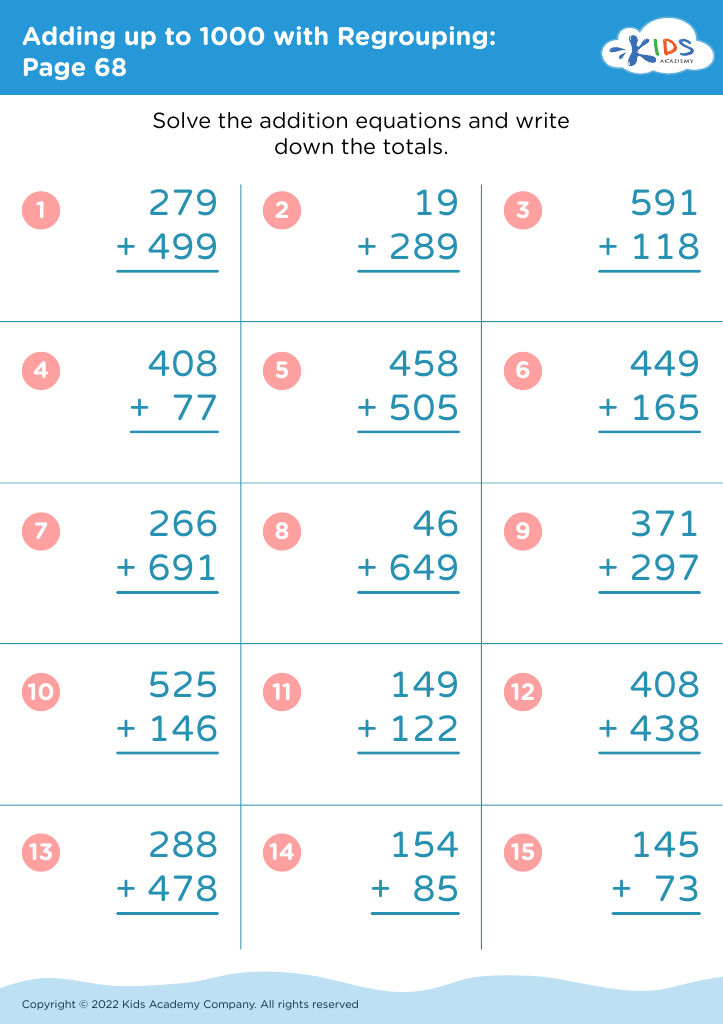
    Adding up to 1000 with Regrouping: Page 68
    Adding up to 1000 with Regrouping: Page 68
    Adding up to 1000 with Regrouping: Page 68
    Worksheet
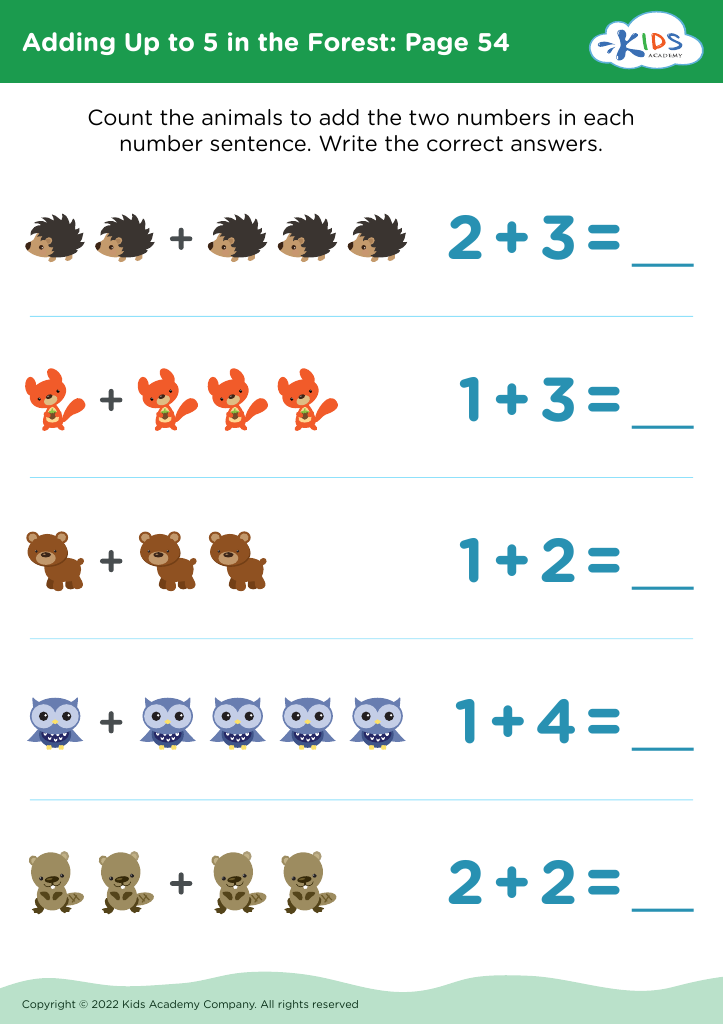
    Adding Up to 5 in the Forest: Page 54
    Adding Up to 5 in the Forest: Page 54
    Adding Up to 5 in the Forest: Page 54
    Worksheet
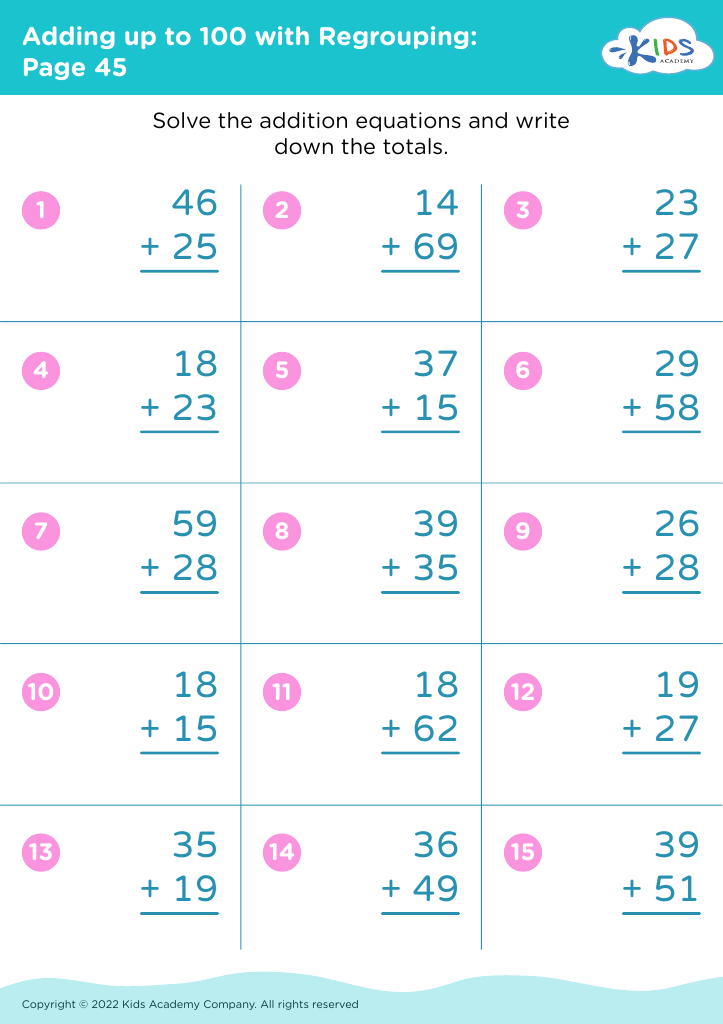
    Adding up to 100 with Regrouping: Page 45
    Adding up to 100 with Regrouping: Page 45
    Adding up to 100 with Regrouping: Page 45
    Worksheet


    Parents and teachers should care deeply about fine motor skills for addition and subtraction for ages 4-8, because the development of these skills lays a crucial foundation for children's overall education and daily functioning. Fine motor skills involve the coordination of small muscles in movements—usually the synchronization of hands and fingers with the eyes. Mastering these skills is essential for children as they learn to write numbers, manipulate small objects like counters or beads, and use educational tools such as pencils and scissors.

    When children practice addition and subtraction activities, they often draw small objects, write numbers, and sort items—tasks that build fine motor dexterity. For example, using objects like buttons or blocks to solve math problems requires grasping, moving, and properly placing items, which enhances muscle strength and coordination in their hands and fingers.

    Developing fine motor skills also improves hand-eye coordination, which is essential not only for mathematics but for other subjects and activities like art and physical education. When children perform tasks smoothly and confidently, they are more likely to develop a positive attitude toward learning. Moreover, these skills are linked to self-care activities such as buttoning shirts, tying shoelaces, and even feeding themselves. By supporting fine motor skill development, parents and teachers are essentially setting children up for greater academic success and daily independence, providing them with tools that they will use for the rest of their lives.