
Counting proficiency Addition Worksheets for Ages 4-8
11 filtered results
Difficulty Level
Grade
Age
-
From - To
Subject
Activity
Standards
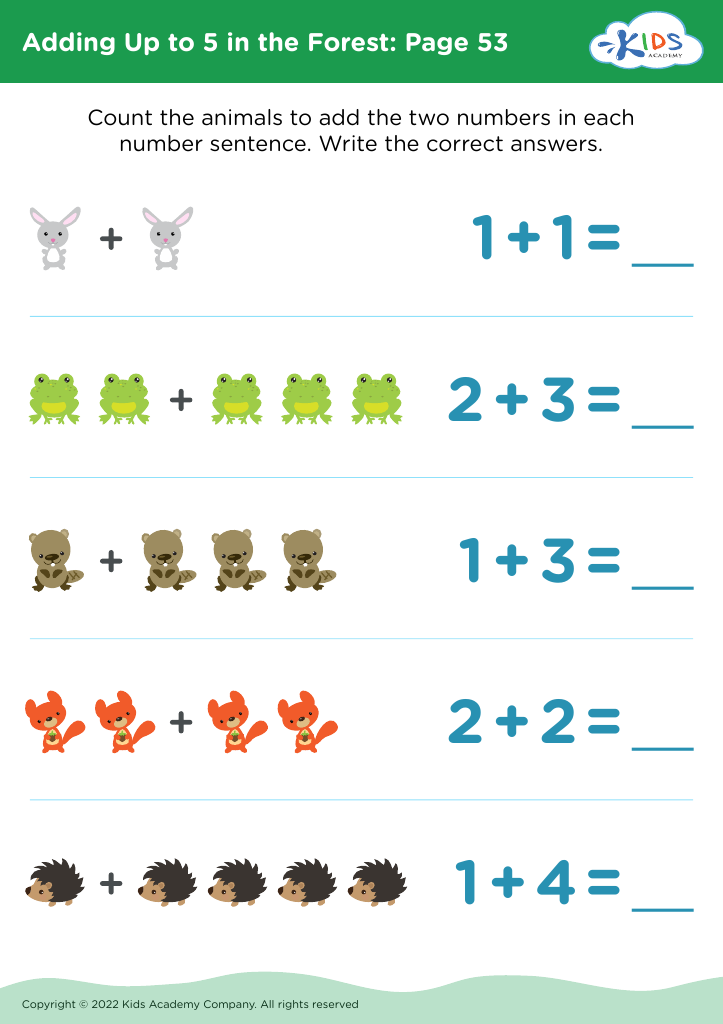
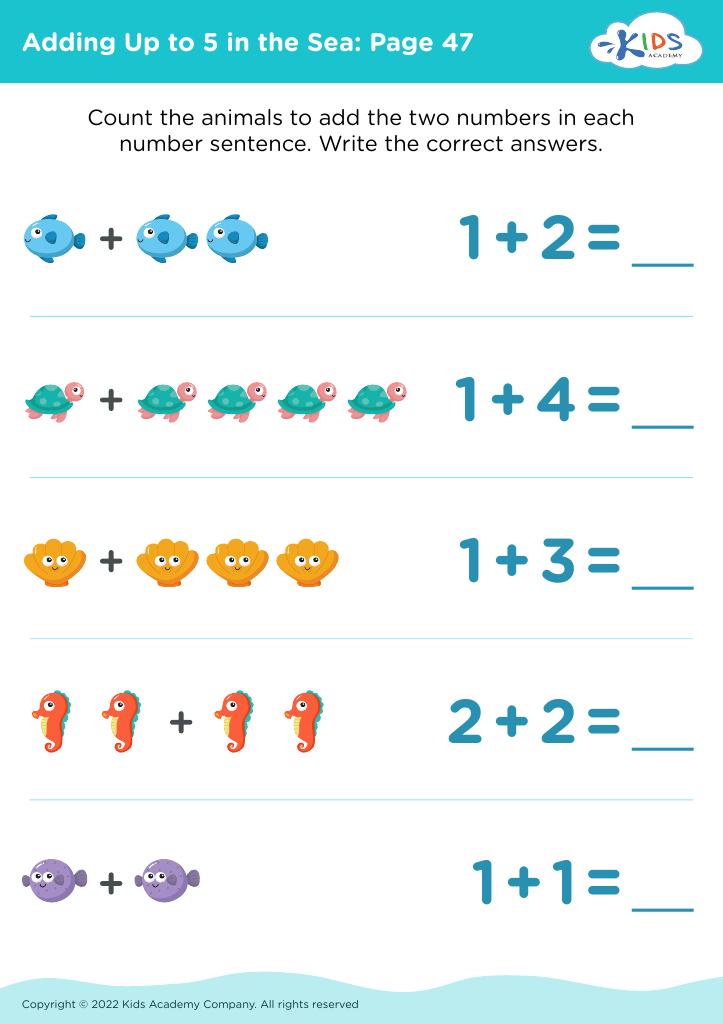
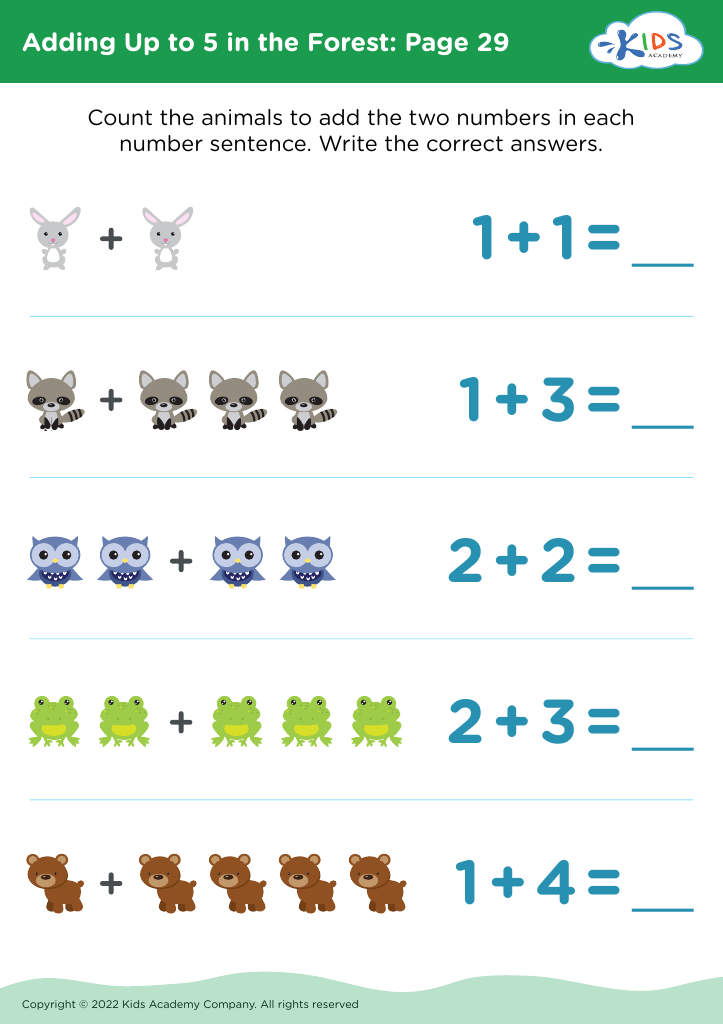
Boost your child’s math skills with our "Counting Proficiency Addition Worksheets for Ages 4-8"! Designed to build a strong foundation in addition, these engaging worksheets integrate fun themes and colorful graphics to captivate young learners. They foster counting proficiency by guiding children through simple addition exercises, gradually increasing in complexity. Perfect for home or classroom use, these printable sheets support various learning styles and pace, helping children develop confidence and expertise in basic math. Tailored specifically for ages 4-8, our resources make learning addition enjoyable and rewarding. Encourage your child’s numerical journey today with our expertly crafted worksheets!
Favorites
With answer key
Interactive
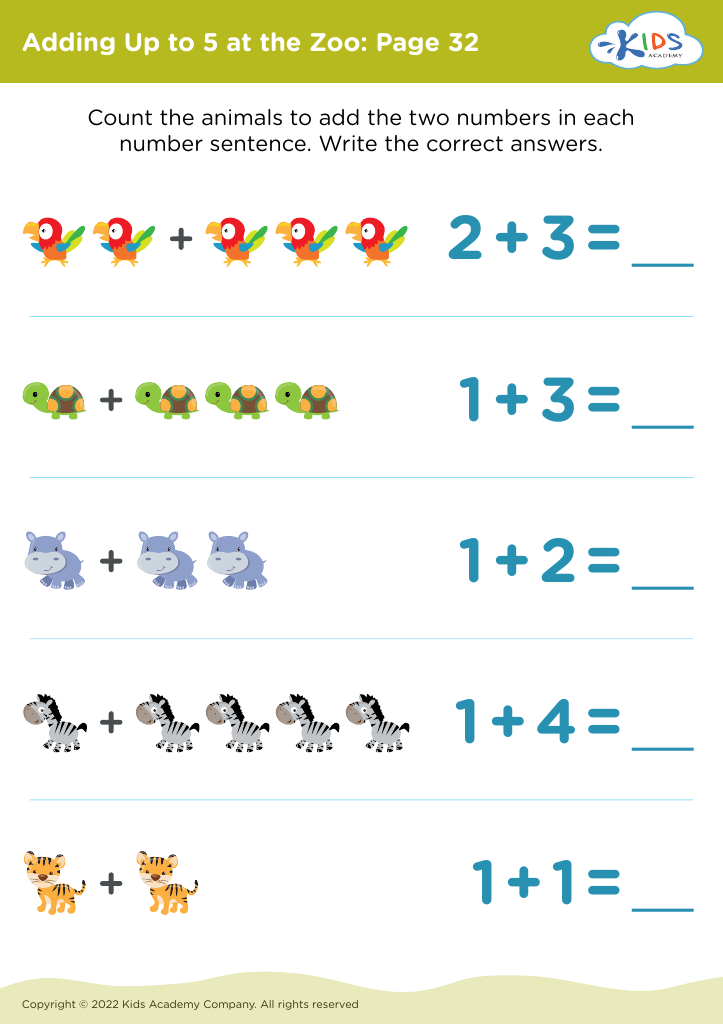
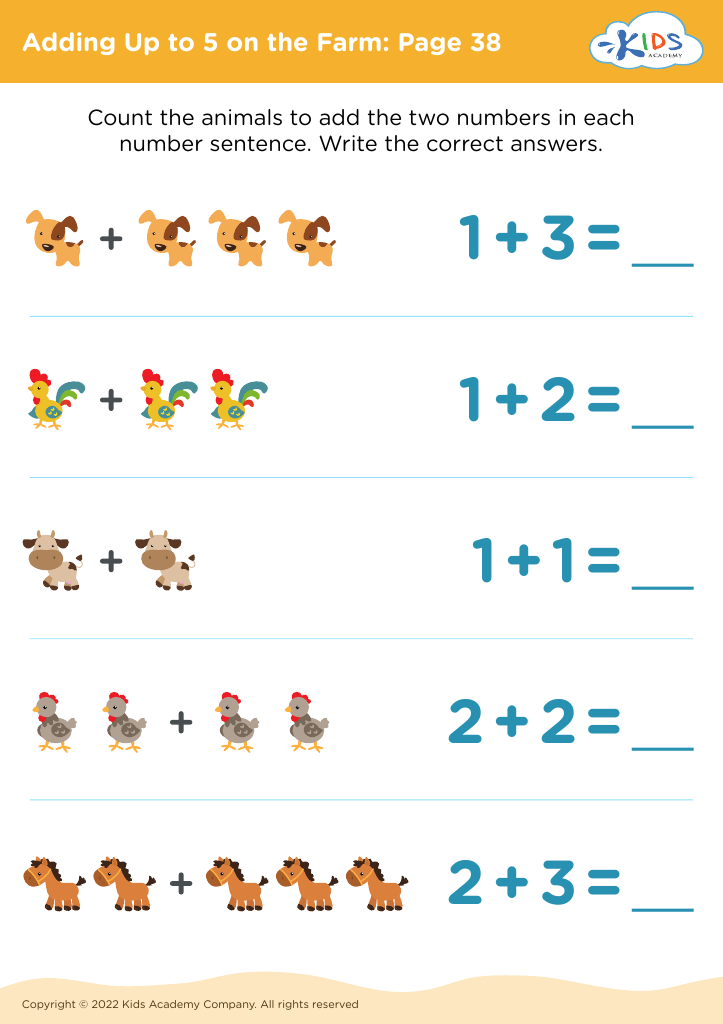
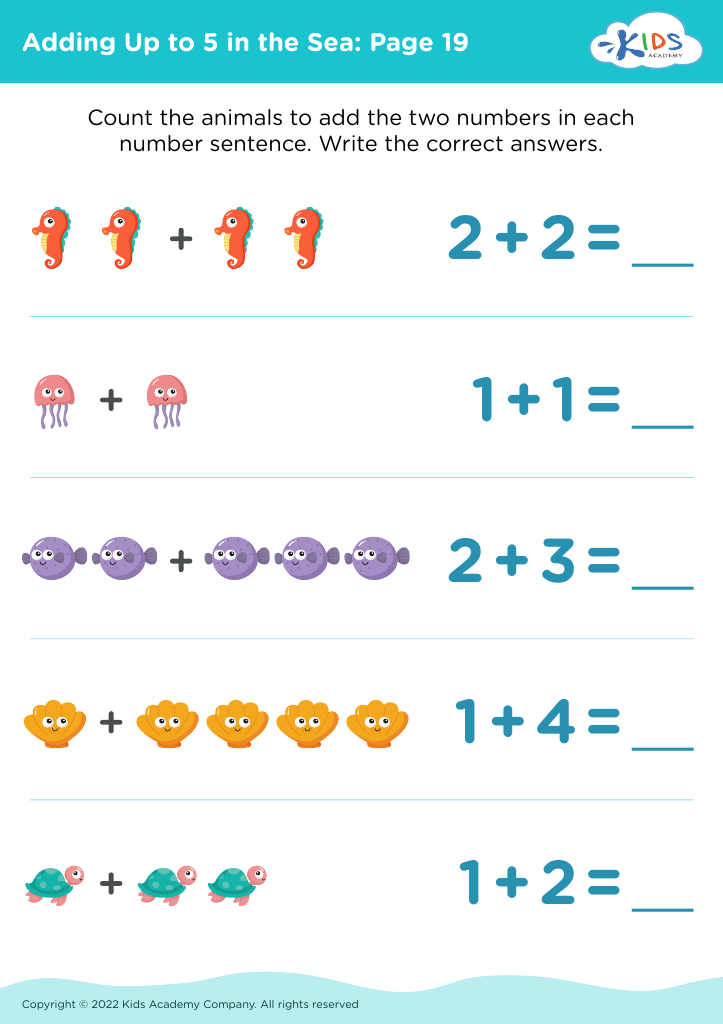
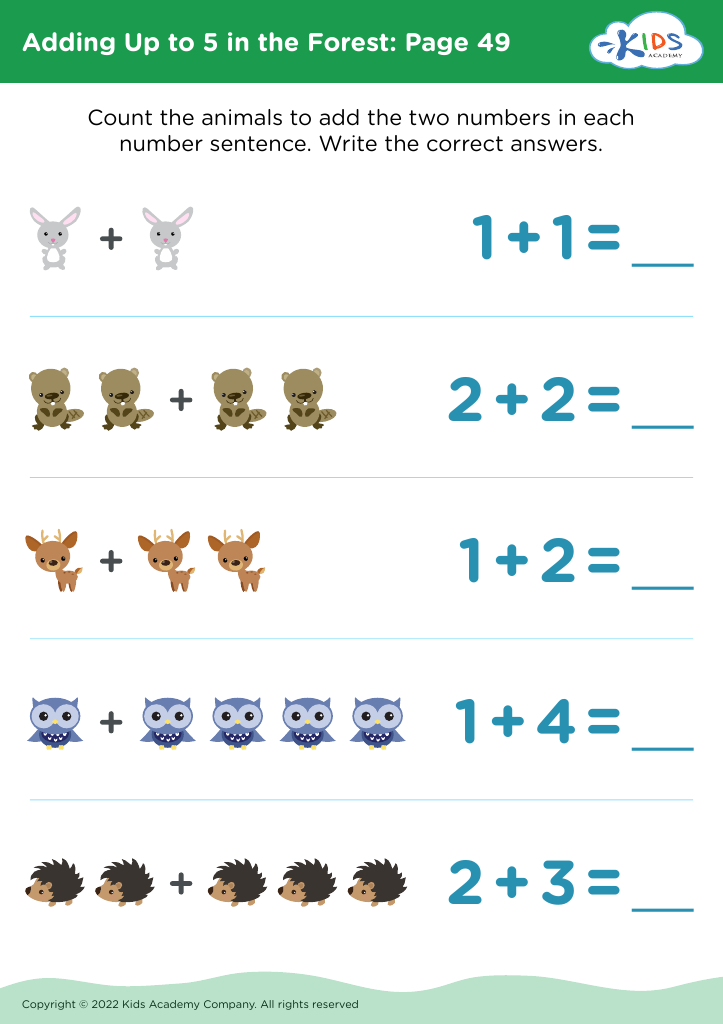
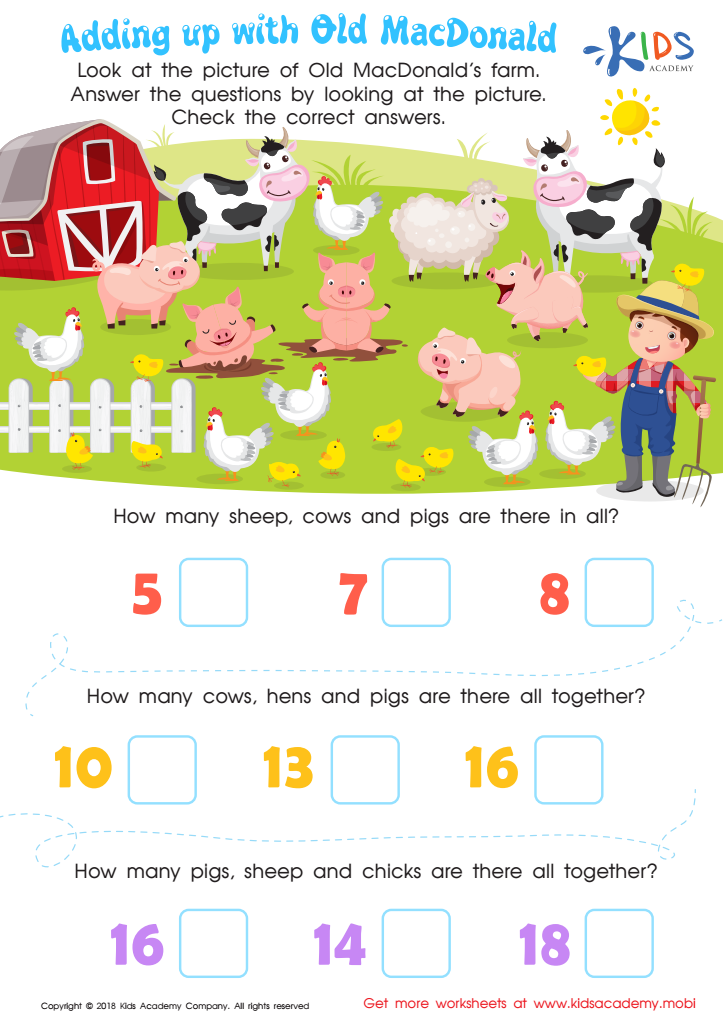
Adding Up with Old MacDonald Worksheet
Old MacDonald needs help counting his animals! Give your little math whiz a fun challenge with a free PDF worksheet. They'll love counting the animals and doing basic addition with two or three addends. Who knew math could be so much fun on the farm?
 Assign to My Students
Adding Up with Old MacDonald Worksheet
Worksheet
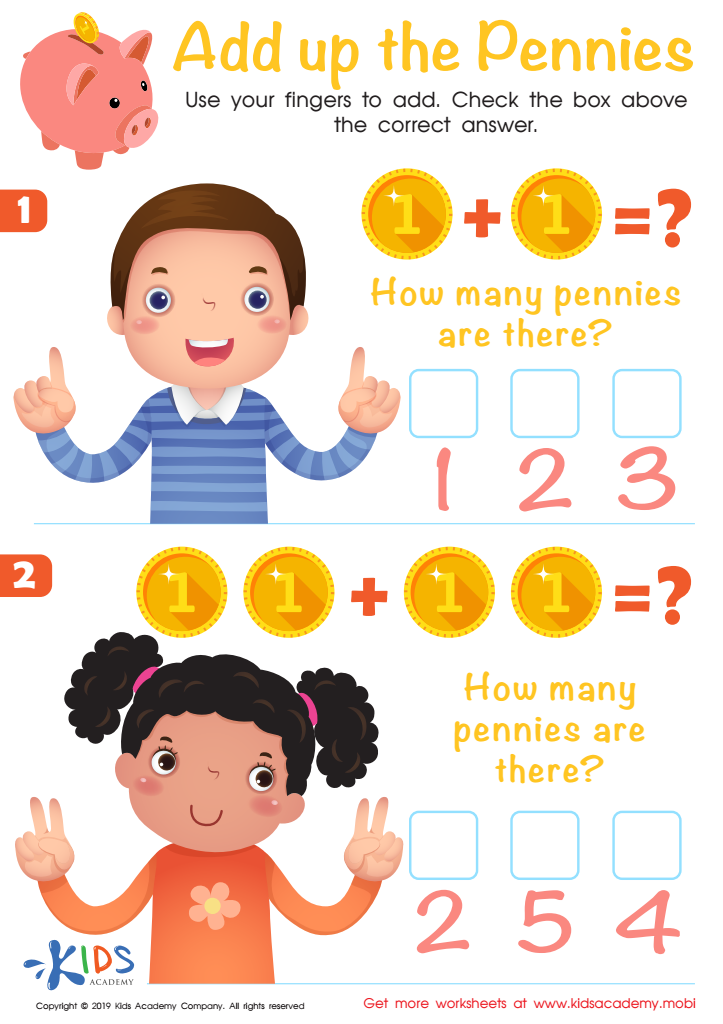
Add up the Pennies Worksheet
Help your kids ace their math skills with this simple worksheet! You can guide them to use their fingers to add numbers and then check the box above the correct answer. With practice and your support, they can become faster and better at adding numbers. No sweating required!
Add up the Pennies Worksheet
Worksheet
Join Kids Academy for Free
Who is primarily going to use this learning content?








Counting proficiency and basic addition skills form the foundation for future mathematical success, making it crucial for parents and teachers to focus on these areas for children aged 4-8. During these formative years, children’s brains are highly receptive to learning new concepts. Proficiency in counting helps children understand number sequences, recognize patterns, and grasp the concept of quantity. These skills are essential for everyday tasks and establish the groundwork for more complex mathematical operations they will encounter in later grades.
Moreover, developing addition skills early cultivates problem-solving abilities and logical thinking. Simple addition forms the backbone of arithmetic, and competency in this area boosts a child’s confidence and willingness to engage with math-centric activities. When children succeed in basic math, they often develop a positive attitude towards the subject, fostering an enduring interest and openness to learning more advanced concepts.
Additionally, early exposure to counting and addition enhances critical cognitive skills such as memory, attention, and spatial awareness. It lays the groundwork for academic achievement not just in math but across various subjects. Teachers and parents play a pivotal role in engaging children with fun, interactive activities that stimulate a love for learning, thereby propelling their academic and developmental growth.








