Shape Recognition Comparison Worksheets for Ages 4-8
3 filtered results
-
From - To
Discover our engaging Shape Recognition Comparison Worksheets designed for children ages 4-8! These worksheets offer a fun and interactive way for young learners to identify and compare shapes, enhancing their geometric understanding. Through colorful illustrations and diverse activities, kids will develop critical thinking skills as they match, sort, and differentiate between various shapes. Ideal for both classroom and home learning, these resources promote foundational math skills in a playful manner. Watch your child expand their shape vocabulary and boost their confidence in math with our easy-to-use, printable worksheets. Start your shape recognition adventure today!
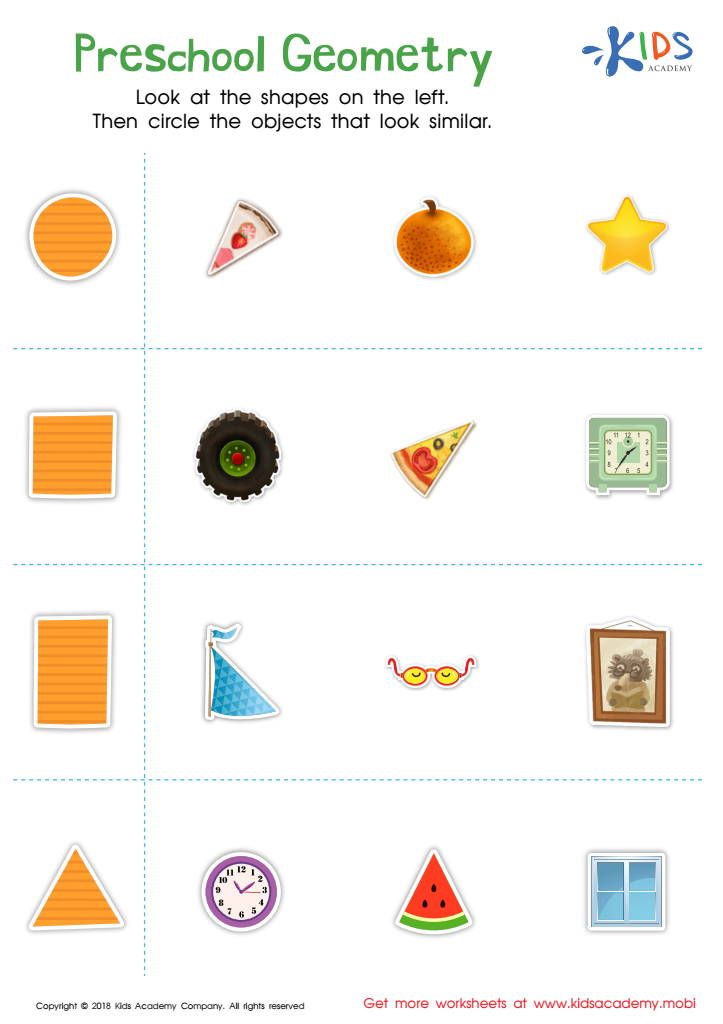
Preschool Geometry Worksheet
 Assign to My Students
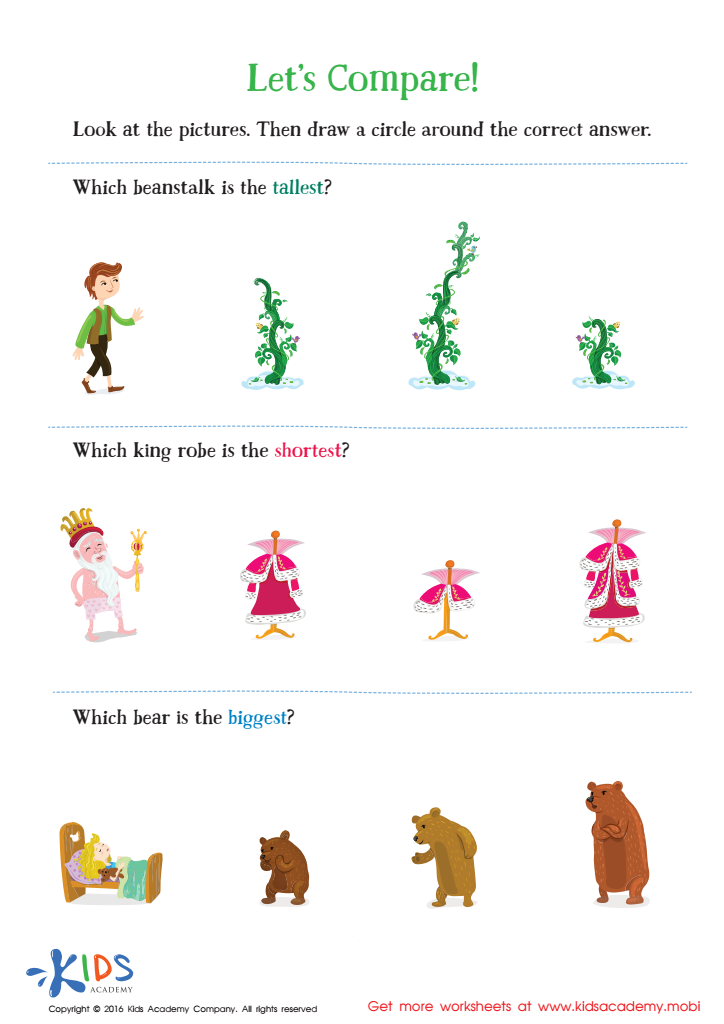
Fairy Tale Worksheet: Let's Compare
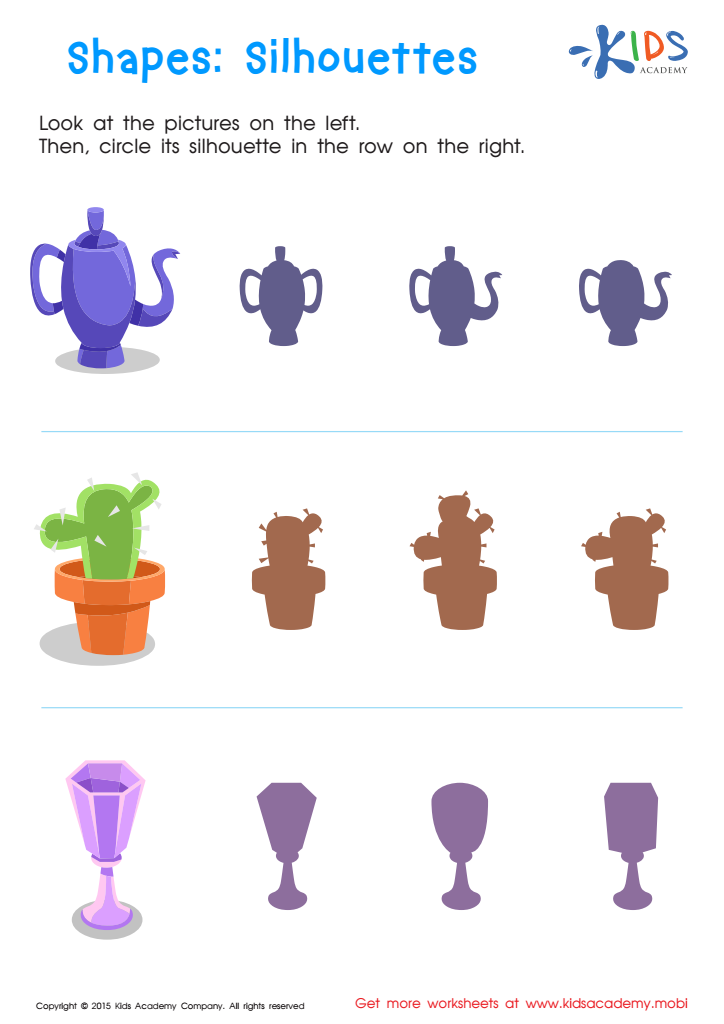
Silhouettes – Shapes Worksheet


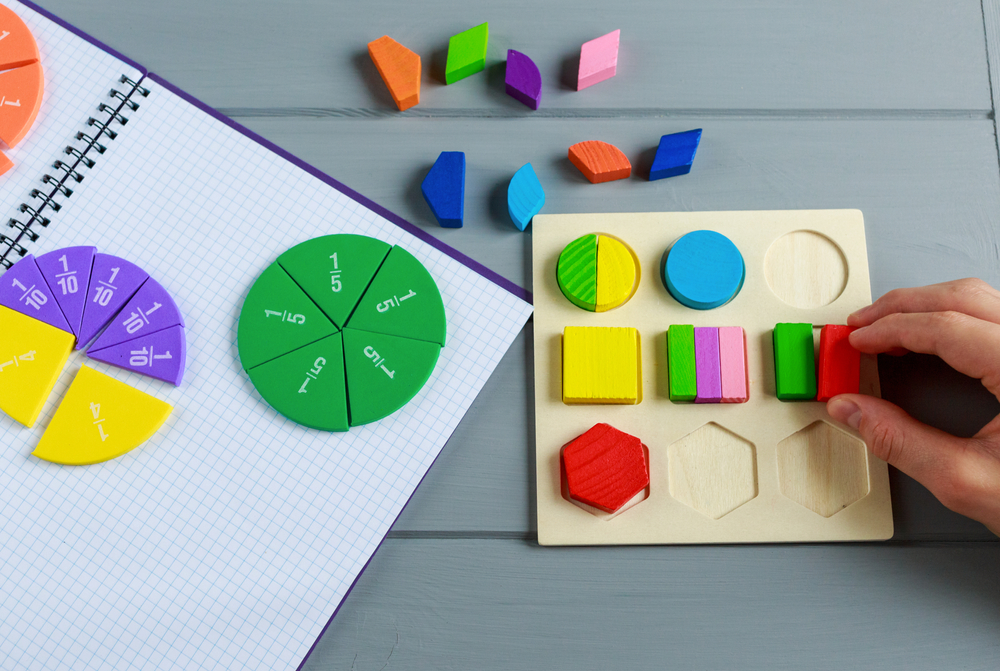




Shape recognition is a fundamental skill that plays a crucial role in early childhood cognitive development. For children aged 4-8, understanding shapes aids in enhancing visual-spatial skills, which are critical in everyday tasks and later academic subjects, particularly math and science. When parents and teachers focus on shape recognition and comparison, they help children develop an ability to categorize and differentiate objects, thus promoting logical reasoning.
Moreover, this foundational skill is linked to problem-solving abilities and critical thinking. The engagement in shape comparison stimulates children's exploratory and analytical skills, making it a key aspect of hands-on learning. For instance, when children compare shapes like squares and circles, they begin to recognize characteristics that define these shapes, enhancing their understanding of geometry.
Additionally, activities centered around shape recognition encourage creativity and fine motor skills, as children often manipulate shapes in games, arts, and crafts. These experiences foster teamwork and communication when conducted in group settings, further benefiting social skills.
Overall, prioritizing shape recognition not only supports mathematical learning but also nurtures essential cognitive and social abilities, ensuring a well-rounded foundation for children's continuous growth and development. Therefore, parents and teachers should actively integrate shape recognition and comparison activities into their educational approach.








