Fraction visualization Geometry Worksheets for Ages 4-8
6 filtered results
-
From - To
Explore our engaging Fraction Visualization Geometry Worksheets designed specifically for children aged 4-8. These worksheets serve as a fun and interactive way to introduce young learners to essential fraction concepts through vibrant visuals and hands-on activities. Kids can develop their understanding of fractions by identifying, comparing, and manipulating shapes while enhancing their spatial reasoning skills. Our resources are crafted to cater to various learning levels, promoting both independent and guided learning experiences. Perfect for classroom use or at-home practice, these worksheets lay a strong foundation for mathematical success in a visually stimulating environment. Unlock your child's mathematical potential today!
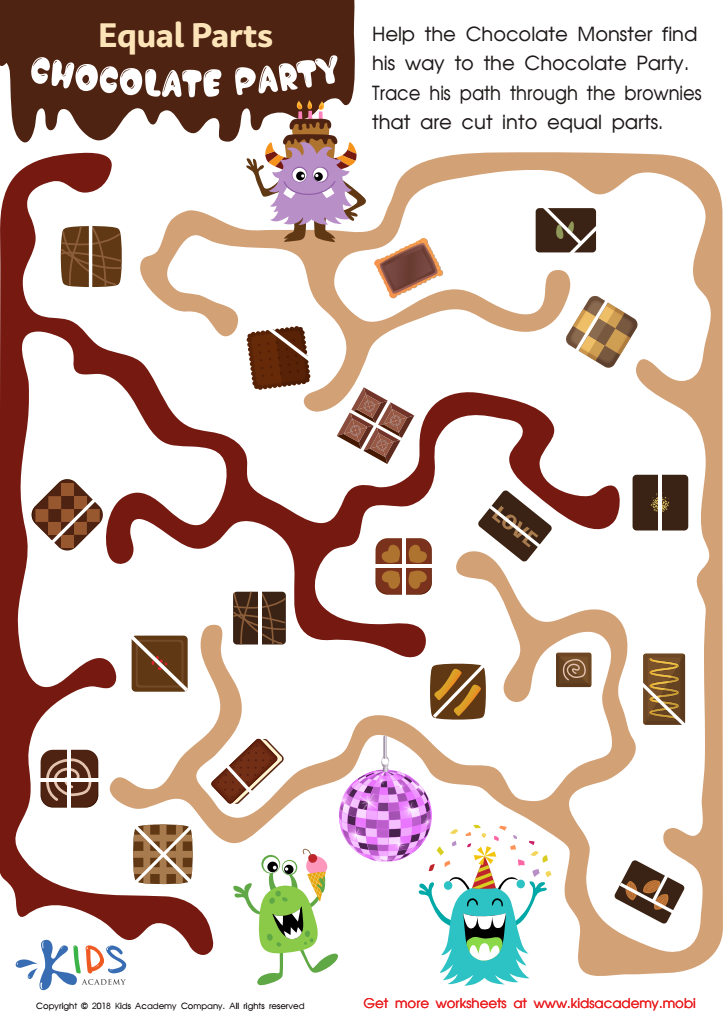
Equal Parts: Chocolate Party Worksheet
 Assign to My Students











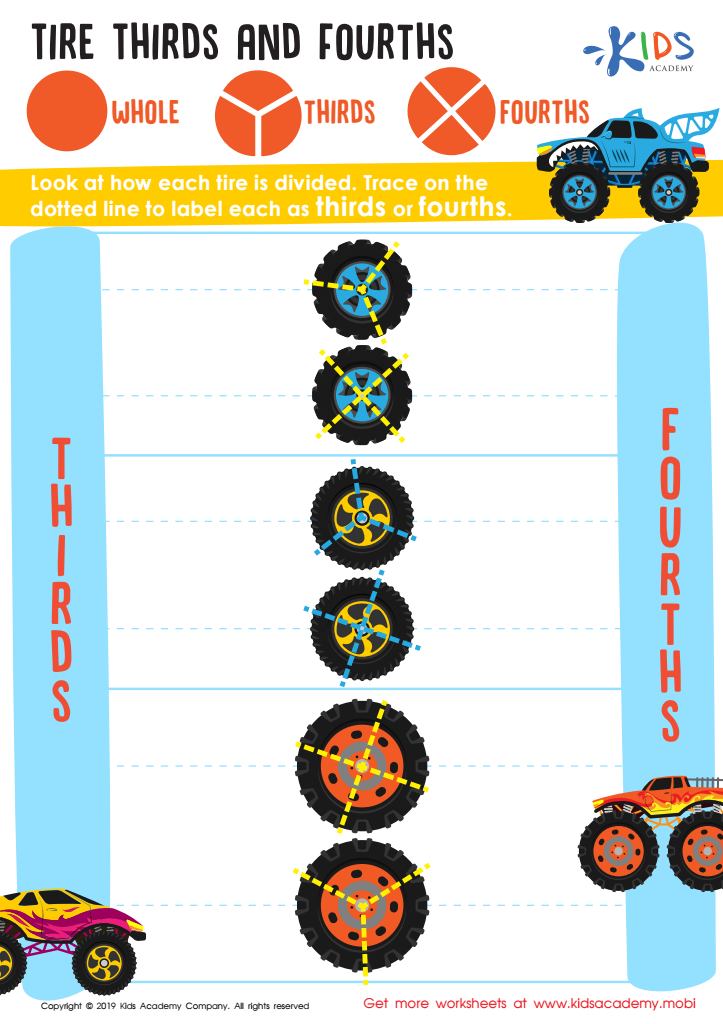
Tire Thirds and Fourths Worksheet
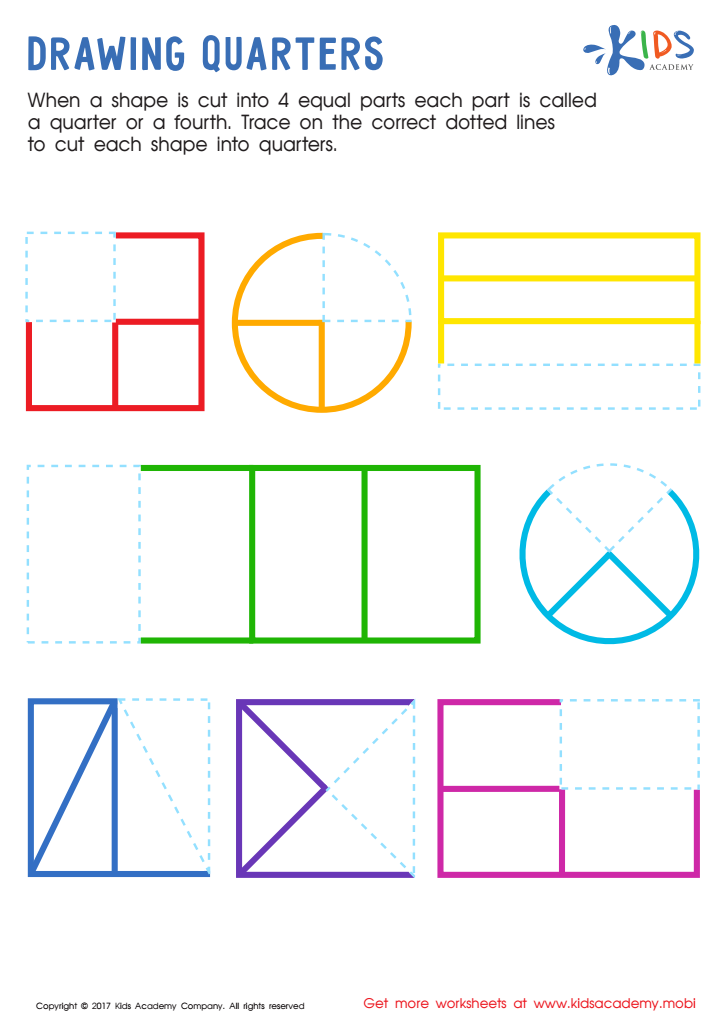
Drawing Quarters Worksheet
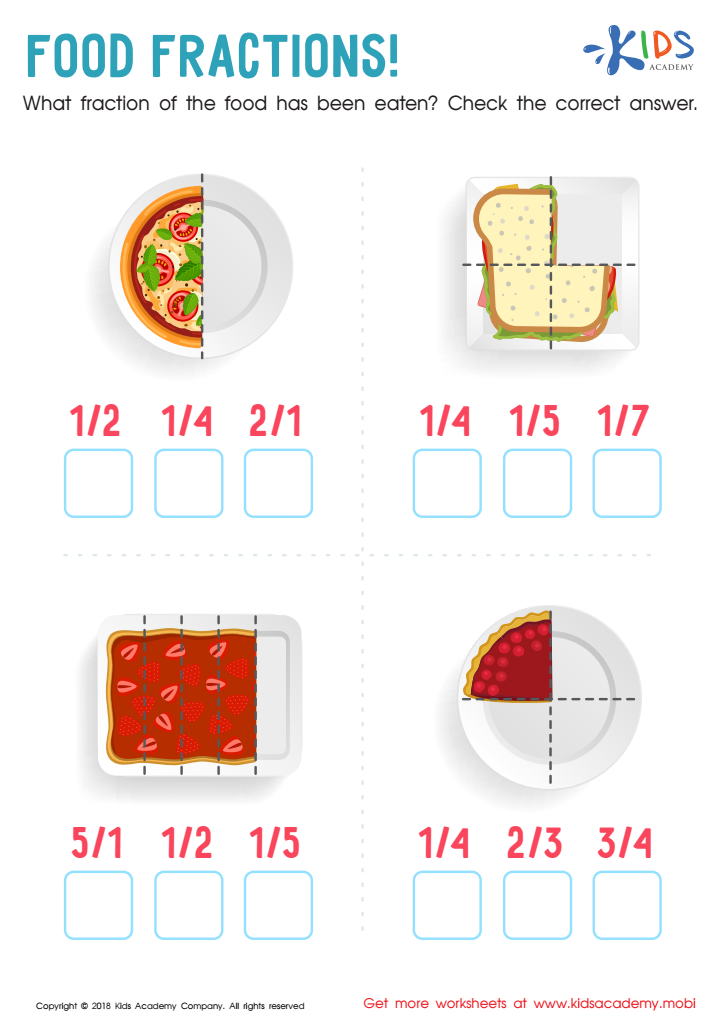
Food Fractions Worksheet
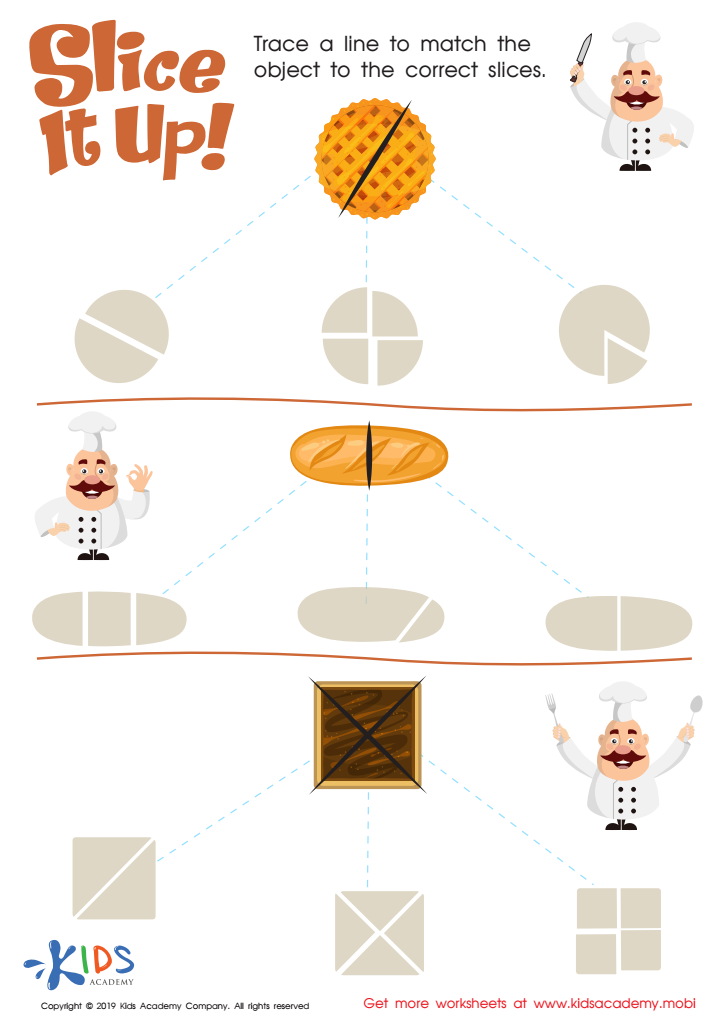
Slice It Up Worksheet
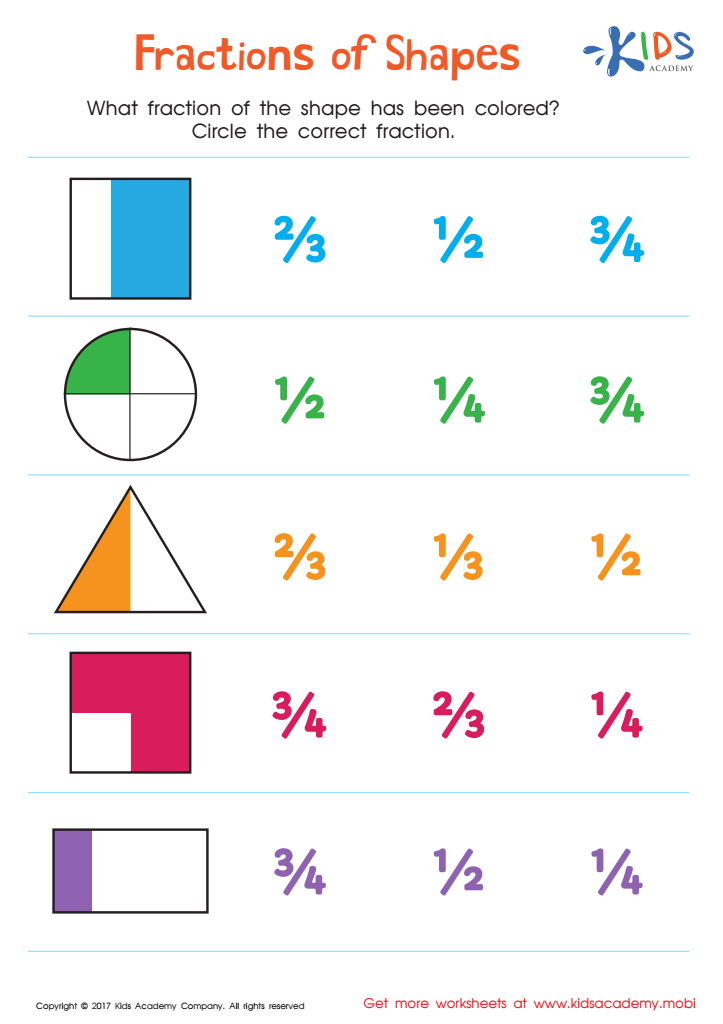
Fractions of Shapes: Math Concept Worksheet








Fraction visualization geometry is a crucial aspect of early mathematics education for children aged 4-8. Engaging with fractions through visual means helps young learners develop a solid grounding in number sense and spatial reasoning. Understanding fractions in a visual context enables children to grasp abstract concepts more readily—as they can see relationships and proportions in tangible ways through shapes, models, and manipulatives.
Parents and teachers should care about this because foundational mathematical skills are essential for future academic success. Visualizing fractions helps kids recognize parts of whole units, aids in problem-solving, and fosters critical thinking skills. This approach allows for diverse learning styles to be accommodated, ensuring all students can engage with and understand the material.
Moreover, using geometry to explore fractions cultivates creativity and curiosity, making learning fun. It provides opportunities for cross-disciplinary learning, incorporating art and spatial awareness into math lessons. Early exposure to these concepts sets the stage for more complex mathematical ideas later on, such as ratios, percentages, and algebra.
In summary, enhancing kids' understanding of fractions through visualization in geometry not only supports mathematical development but also nurtures a lifelong love for learning.








