Filters

7 filtered results

Clear all filters
Favorites
With answer key
Interactive

7 filtered results

Difficulty Level

Grade


Enhance your child's hand-eye coordination skills with our engaging Geometry Worksheets designed for ages 4-8! Our interactive resources seamlessly blend geometry concepts with fun activities, allowing children to develop vital motor skills while learning shapes, patterns, and spatial awareness. Each worksheet is designed to stimulate young minds through a variety of hands-on exercises that promote creativity and critical thinking. Parents and educators will love the flexibility of these worksheets, perfect for home practice or classroom use. Foster a love for learning and equip your child with essential skills through our thoughtfully crafted preschool geometry worksheets today!

Check out this FREE Trial Lesson on Geometry for age 4-8!

Find 2 Objects that Share a Trait

Favorites
With answer key
Interactive
  • 4-8
  • Hand-eye Coordination
  • Geometry
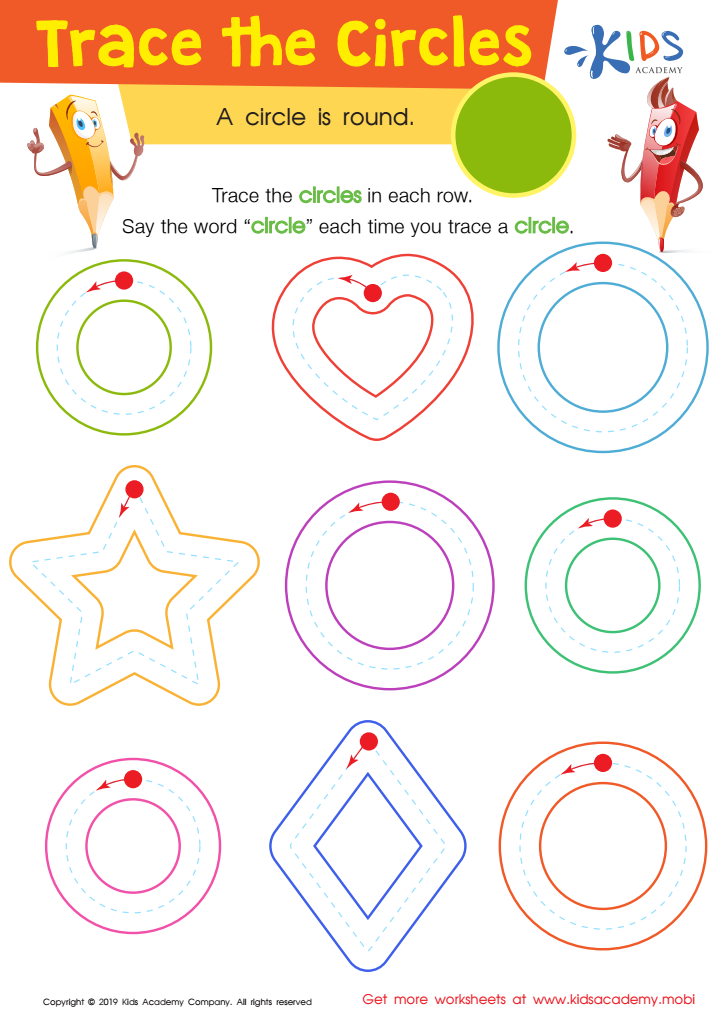
Trace The Circles Worksheet

Trace The Circles Worksheet

Preschoolers and kindergarteners love learning shapes! This worksheet provides practice in naming and tracing circles. Students say "circle" each time they trace one. It's a fun way to help kids learn math vocabulary and develop fine motor skills. Enjoy this printable and get ready to master circles!
Trace The Circles Worksheet
Worksheet
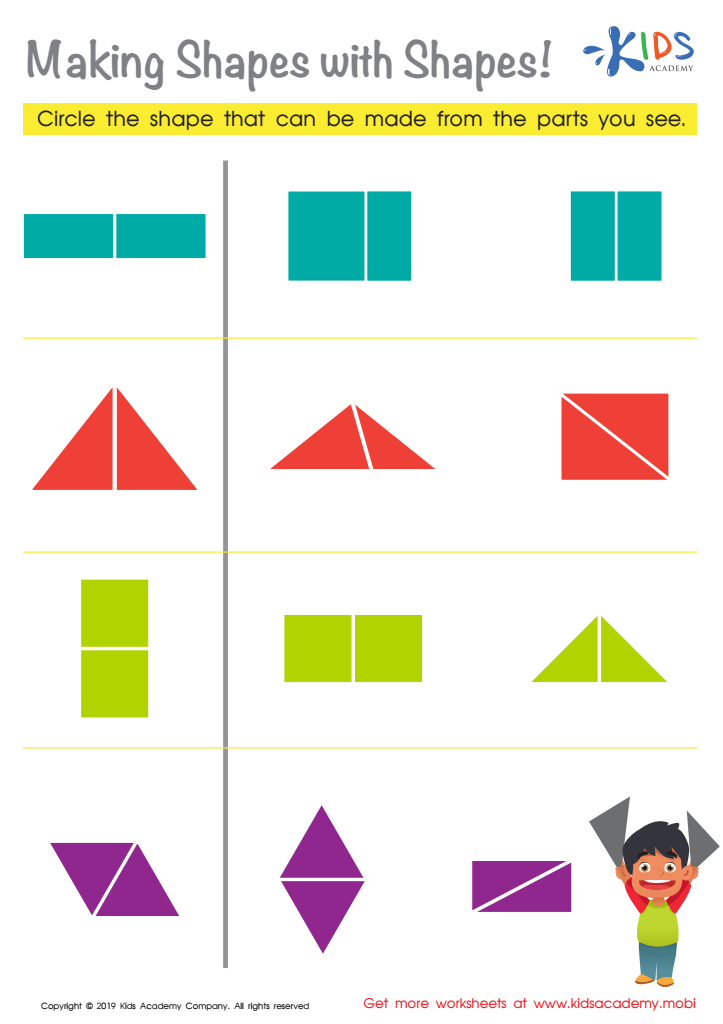
Making Shapes with Shapes Worksheet

Making Shapes with Shapes Worksheet

Help your kindergartners identify shapes with this simple worksheet. Examine the shapes on the left and have them circle the one they can make from the parts in the picture. Shapes can be tricky, but this exercise will help clear up any confusion.
Making Shapes with Shapes Worksheet
Worksheet
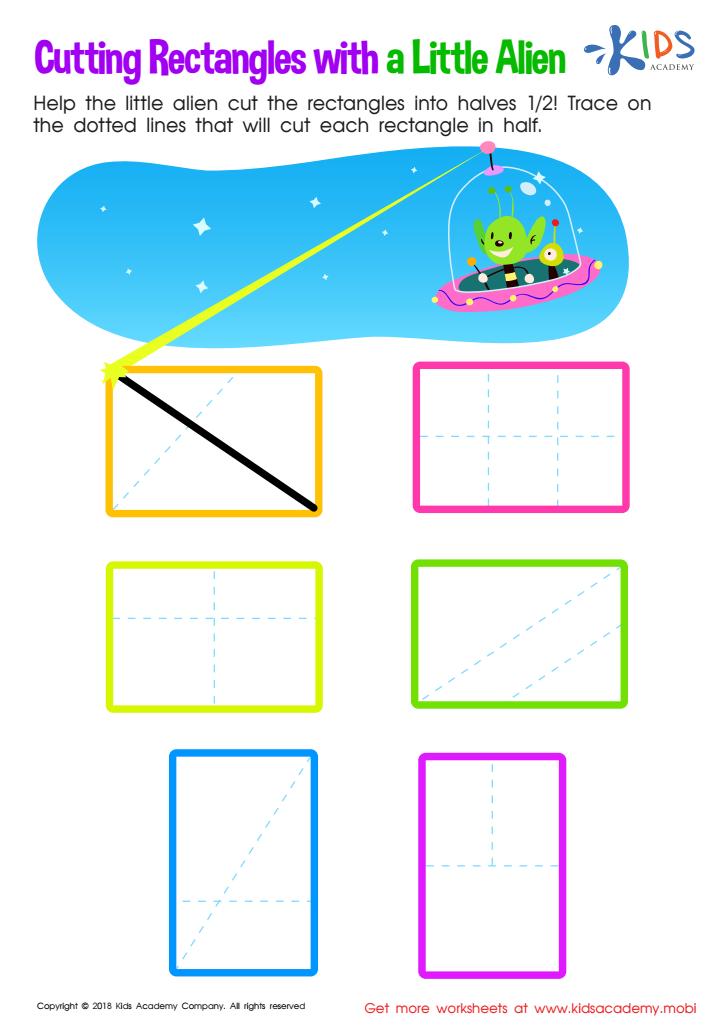
Cutting Rectangles with Alien Worksheet
Cutting Rectangles with Alien Worksheet

If your students are interested in aliens and otherworldly events, they'll love this exercise! It requires them to help a small alien cut rectangles into halves (½). They must trace the dotted lines to accurately cut each rectangle.
Cutting Rectangles with Alien Worksheet
Worksheet
Sorting Shapes Worksheets

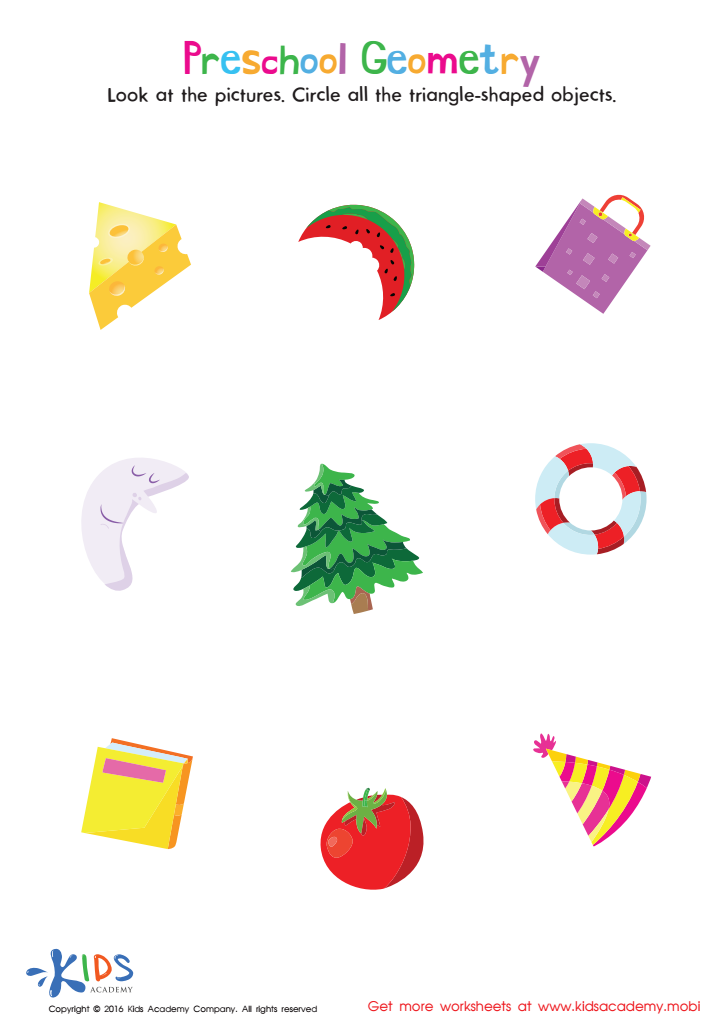
Preschool Geometry Sorting Worksheet

Preschool Geometry Sorting Worksheet
Worksheet
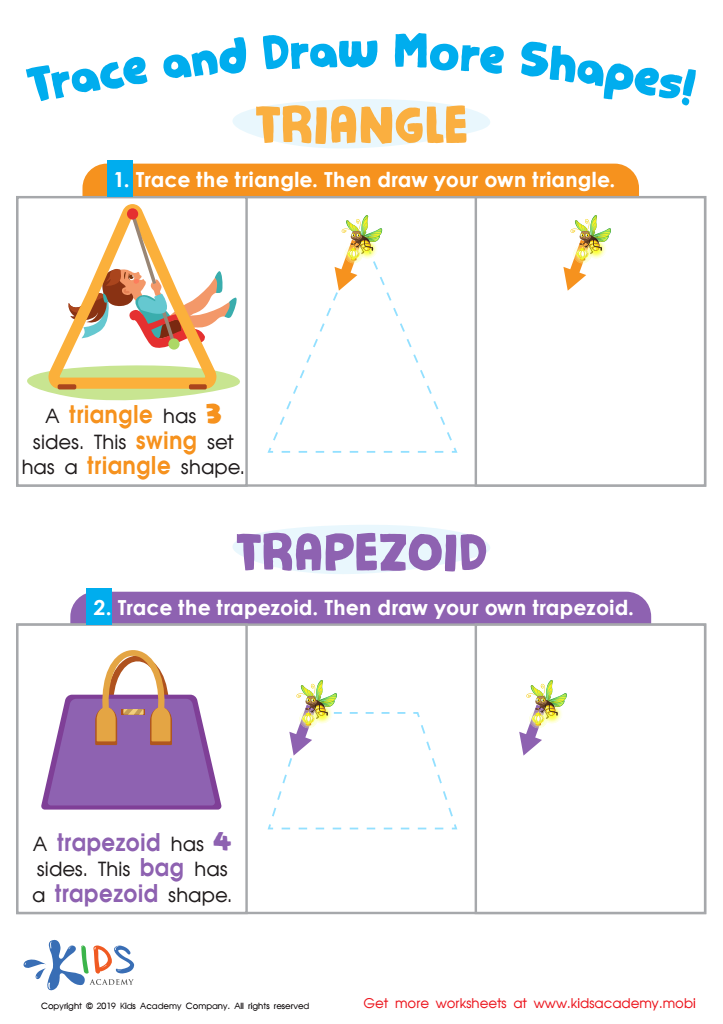
Trace and Draw More Shapes Worksheet

Trace and Draw More Shapes Worksheet

Help your kids with more learning! Look at images in the worksheet, read facts about the shapes, then help your kids trace and draw. This reinforces that learning is never done; use this simple worksheet to help your kids with school homework and more!
Trace and Draw More Shapes Worksheet
Worksheet
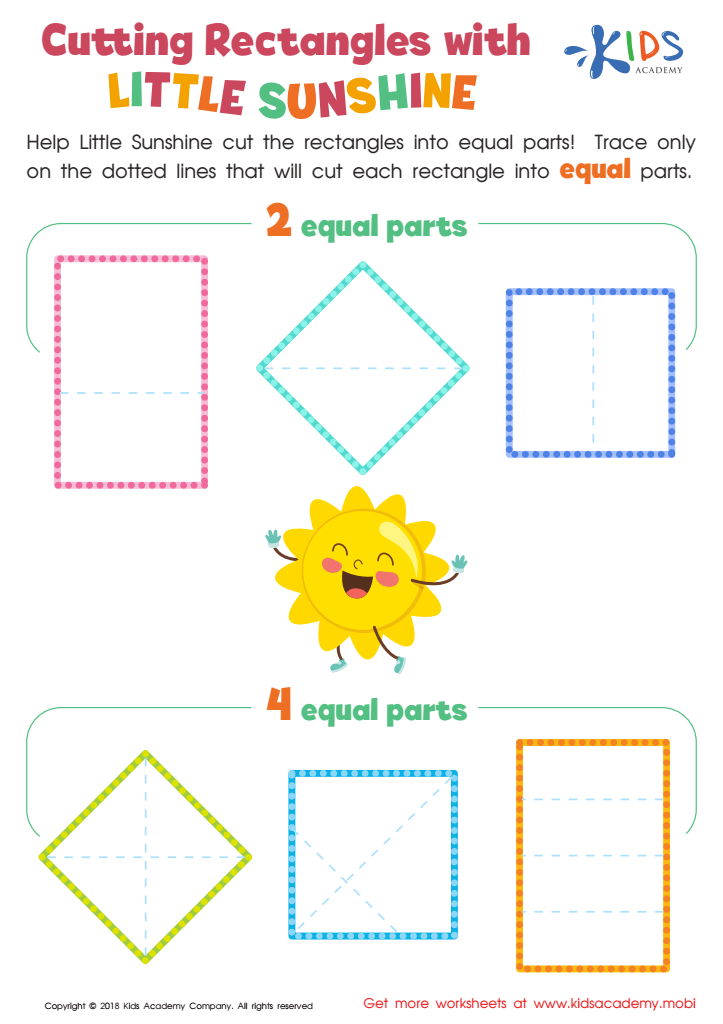
Cutting Rectangles with Little Sunshine Worksheet

Cutting Rectangles with Little Sunshine Worksheet

Introduce Little Sunshine to your students. Help them to cut rectangles into two or four equal parts by tracing the dotted lines. It's easy - the lines divide them evenly. Encourage your students to help Little Sunshine complete the task!
Cutting Rectangles with Little Sunshine Worksheet
Worksheet
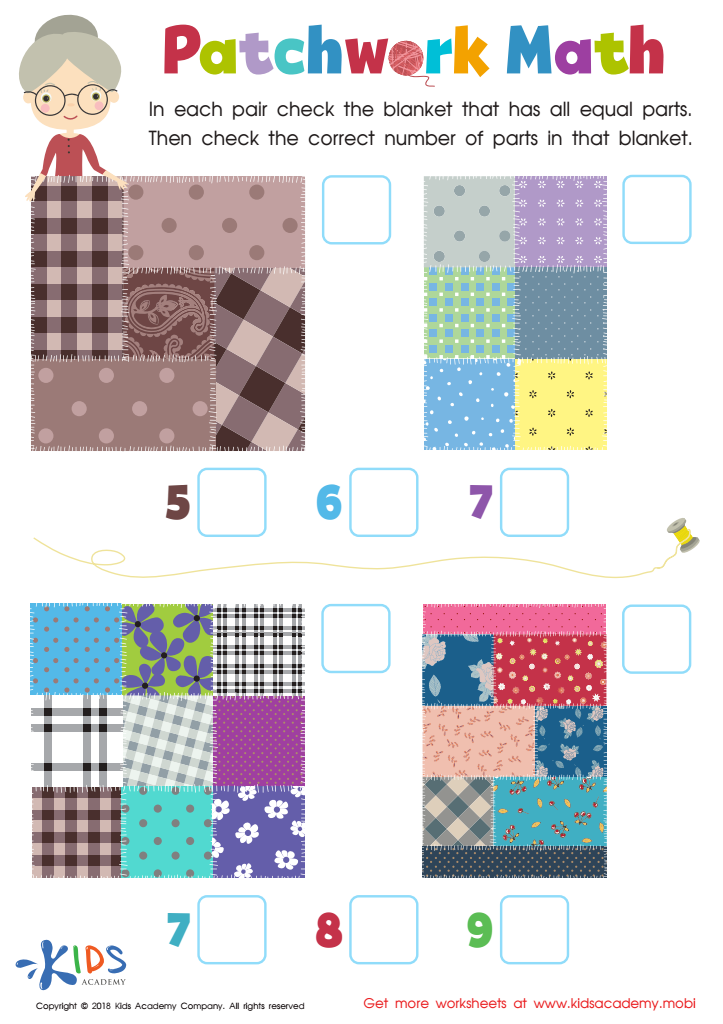
Patchwork Math Worksheet


Patchwork Math Worksheet

Test your children's knowledge with this colorful worksheet. They'll need to identify which of the blanket pairs have been cut in equal parts and count the number of parts. Check the provided options to ensure the correct answer.
Patchwork Math Worksheet
Worksheet


Hand-eye coordination is a crucial developmental skill that plays a significant role in children's physical and cognitive growth, particularly for ages 4-8. During this stage, children are beginning to navigate the world through play and exploration, and understanding geometric shapes is integral to that learning process. It connects physical movements with visual perception, allowing kids to accurately reach for, manipulate, and engage with objects.

Geometry, in this context, deals with shapes, sizes, and spatial relationships—all essential elements in developing critical thinking and problem-solving skills. When children participate in activities that enhance both hand-eye coordination and geometry, such as tracing shapes, building with blocks, and creating art, they strengthen neural connections in the brain that facilitate advanced skills later in life.

Parents and teachers should be attentive to these interconnected areas because enhancing hand-eye coordination can lead to improved motor skills, confidence, and academic success. As children learn to identify and manipulate shapes, they also cultivate creativity and spatial awareness—skills that transcend beyond the classroom. Investing time in these activities lays a robust foundation for future learning in mathematics, science, art, and physical education, thus fostering well-rounded development.