Improving counting skills Geometry Worksheets for Ages 4-8
3 filtered results
-
From - To
Boost your child's counting skills with our engaging Geometry Worksheets, specially designed for ages 4 to 8! These interactive resources combine essential geometric concepts with counting exercises to create a fun learning experience. Each worksheet encourages young learners to identify shapes and count objects, helping them develop both numerical proficiency and spatial awareness. Perfect for home or classroom use, our worksheets are colorful, easy to follow, and aligned with early educational standards. Spark curiosity and confidence in your child's math abilities while building a strong foundation for future learning! Start exploring and watch your child thrive in the world of geometry and counting today!
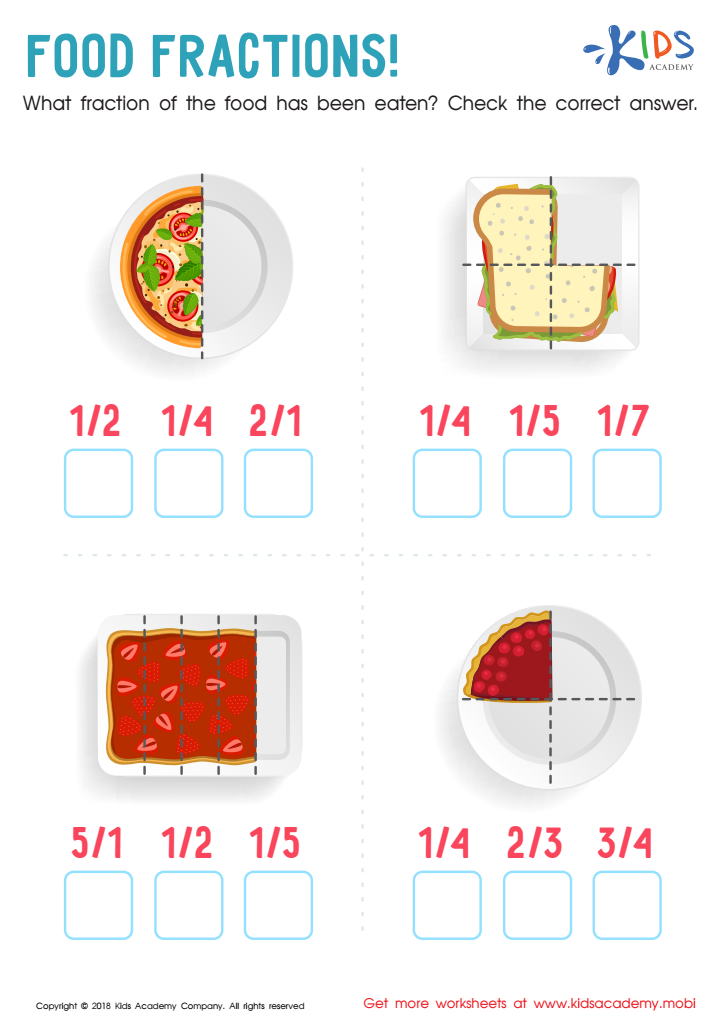
Food Fractions Worksheet
 Assign to My Students











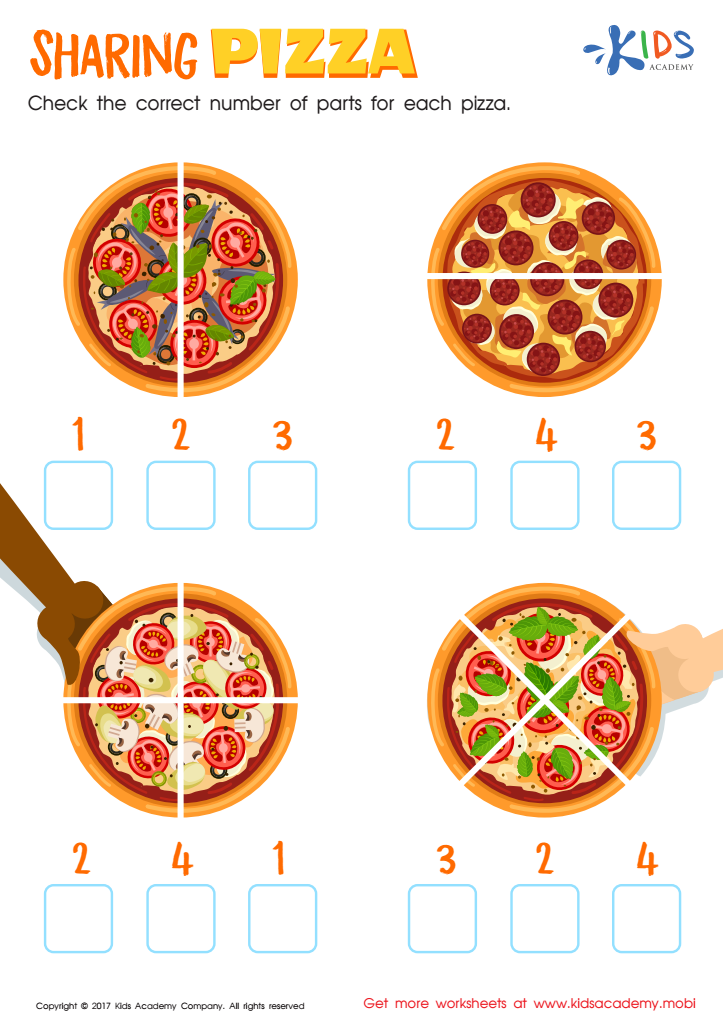
Sharing Pizza Worksheet
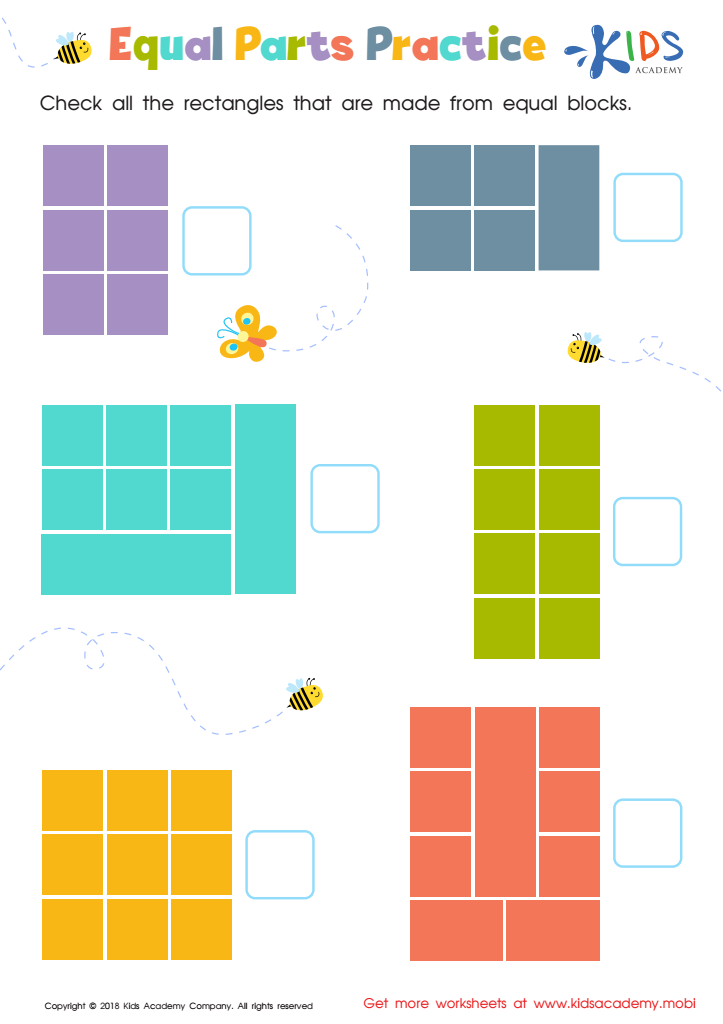
Equal Parts Practice Worksheet








Parents and teachers should prioritize improving counting and geometry skills for children aged 4-8 as these foundational skills are crucial for cognitive development and academic success. Counting is not just about numbers; it enhances a child’s understanding of quantity, sequences, and patterns, which are critical in early mathematics. Mastering counting empowers children to solve mathematical problems, develop logical reasoning, and enhance their critical thinking skills.
Geometry, on the other hand, introduces children to shapes, spatial awareness, and measurement concepts. Proficiency in geometric terms and relationships fosters creativity and problem-solving abilities through activities such as drawing, building, and categorizing. Encouraging exploration and understanding of various shapes supports recognition skills that are essential for reading and constructing logical arguments in later grades.
Furthermore, these skills are interconnected; for example, counting helps children grasp the concept of vertices while learning about shapes. Equipping children with strong counting and geometric skills helps lay a robust framework for future learning in mathematics and beyond. Ultimately, parents and educators play a vital role in fostering these abilities, ensuring children build confidence in their skills, allowing success in both academic and everyday tasks. Investing in early math skills not only benefits the individual child but also enhances society as a whole.








