Pattern recognition Geometry Worksheets for Ages 4-8
3 filtered results
-
From - To
Explore our "Pattern Recognition Geometry Worksheets for Ages 4-8" to help young learners develop critical thinking skills through engaging, fun activities. These worksheets introduce foundational concepts in geometry, encouraging children to recognize, predict, and create patterns. Perfectly tailored for students ages 4 to 8, our printable exercises enhance spatial awareness and boost problem-solving abilities. With a vibrant and interactive approach, these worksheets support cognitive development, setting the stage for future success in math. Ideal for both classroom and at-home learning, they make mastering patterns an enjoyable and rewarding experience. Unlock your child's potential with our expertly designed resources!
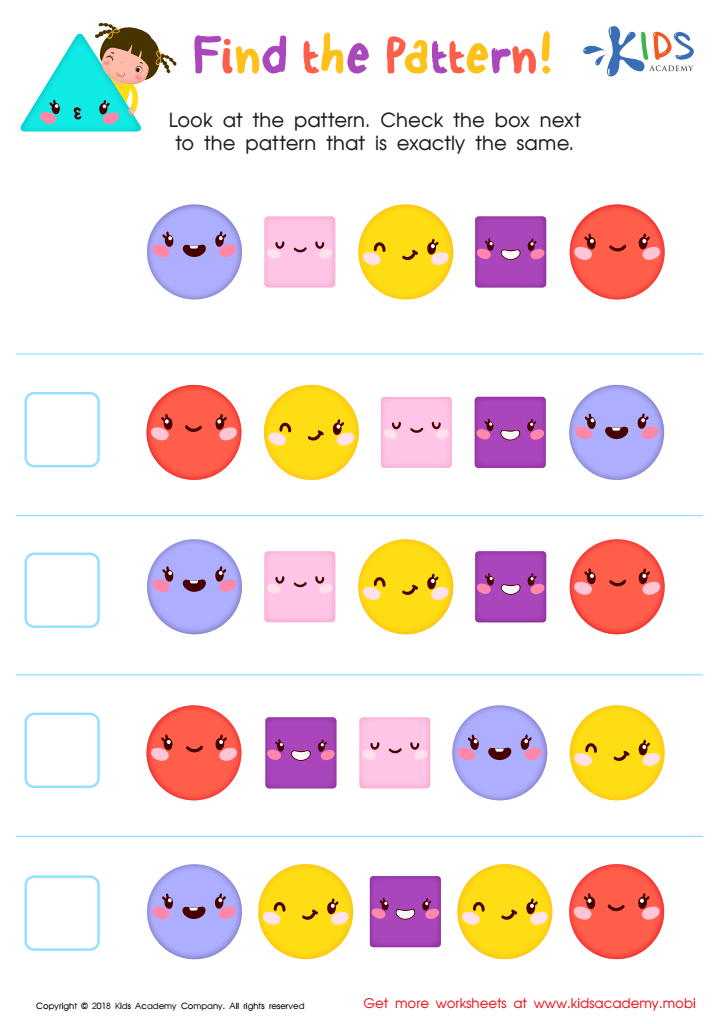
Find the Pattern Worksheet
 Assign to My Students











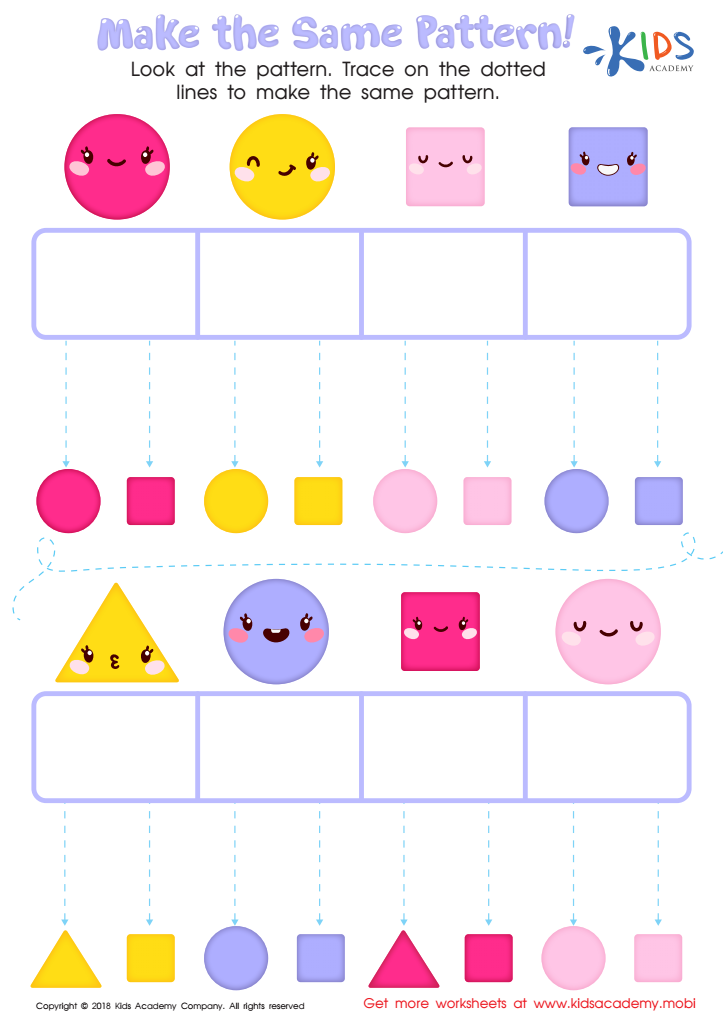
Make the Same Pattern Worksheet
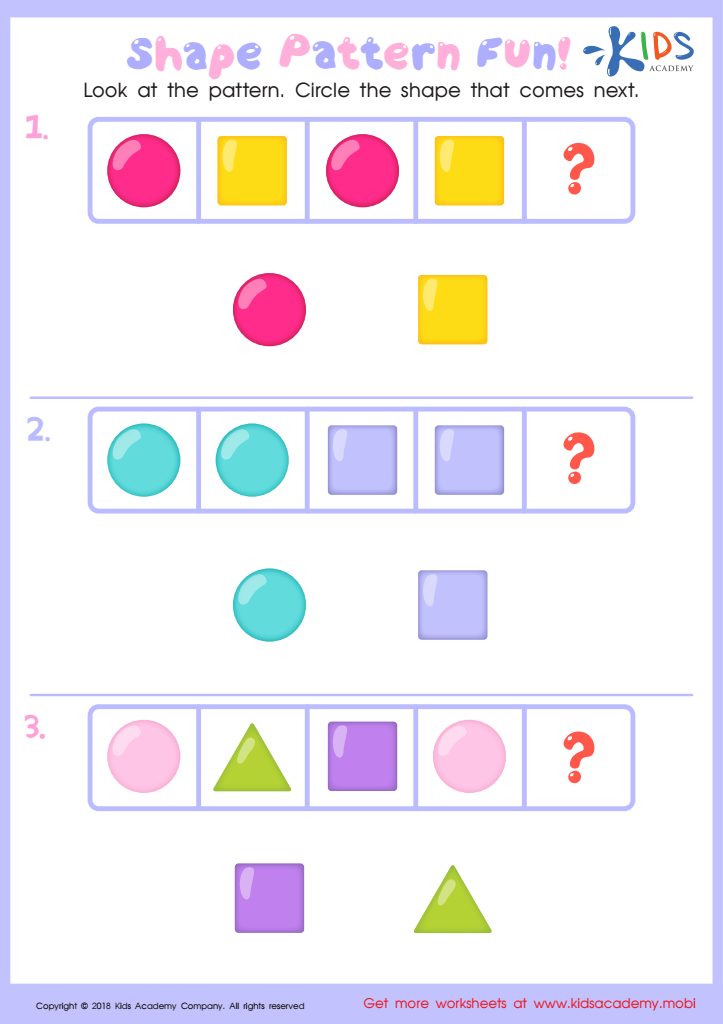
Shape Pattern Fun Worksheet








Pattern recognition and geometry are foundational skills for young children, playing a crucial role in their cognitive and overall academic development. For children aged 4-8, engaging with these skills helps in stimulating early mathematical thinking and problem-solving capabilities. Here's why parents and teachers should pay attention to this:
First, pattern recognition nurtures a child's ability to observe, identify, and predict sequences and relationships. This foundational skill is crucial not only in mathematics but also in reading and comprehension, as it helps children recognize letter patterns and logical sequences.
Furthermore, geometry introduces them to shapes, space, and forms, which are vital for spatial awareness. Understanding geometric concepts helps children grasp directions, spatial relationships, and proportional reasoning. This understanding shapes their abilities in more complex mathematics and influences real-life skills like navigating environments and assembling structures.
In addition, these activities stimulate brain development by encouraging critical thinking, logic, and reasoning. Engaging in pattern recognition and geometry exercises enhances memory, attention to detail, and the ability to categorize information.
Incorporating pattern recognition and geometry into early learning experiences sets a solid foundation for advanced learning in STEM (Science, Technology, Engineering, and Mathematics). It prepares young minds not just for academic success but also for everyday problem-solving, thus making these skills fundamental for holistic development.








