Data interpretation Numbers Worksheets for Ages 4-8
5 filtered results
-
From - To
Discover engaging Data Interpretation Numbers Worksheets designed for children aged 4-8, available at Kids Academy! These worksheets provide a fun and interactive way for young learners to develop essential skills in understanding and interpreting data. Through colorful visuals and interesting activities, kids will learn to recognize numbers, analyze simple charts, and interpret basic information. Our resources are perfect for reinforcing math concepts in an enjoyable way while fostering analytical thinking. Ideal for both classroom settings and home learning, these worksheets cater to different learning styles and help build a strong mathematical foundation. Start exploring today and spark a love for numbers!
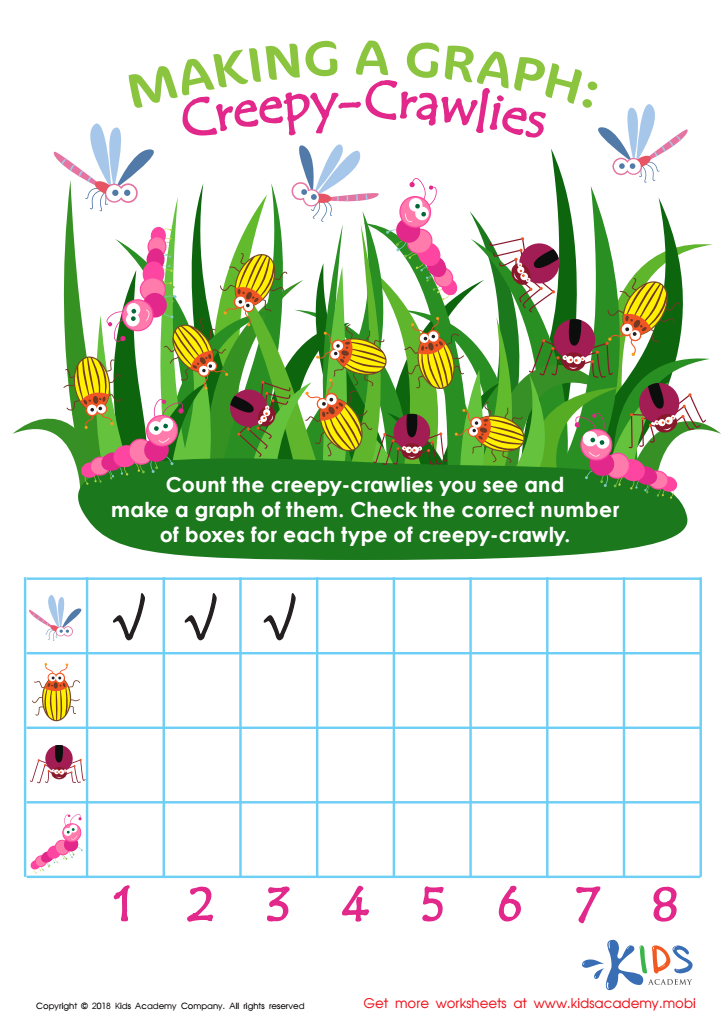
Making a Graph: Creepy Crawlies Worksheet
 Assign to My Students
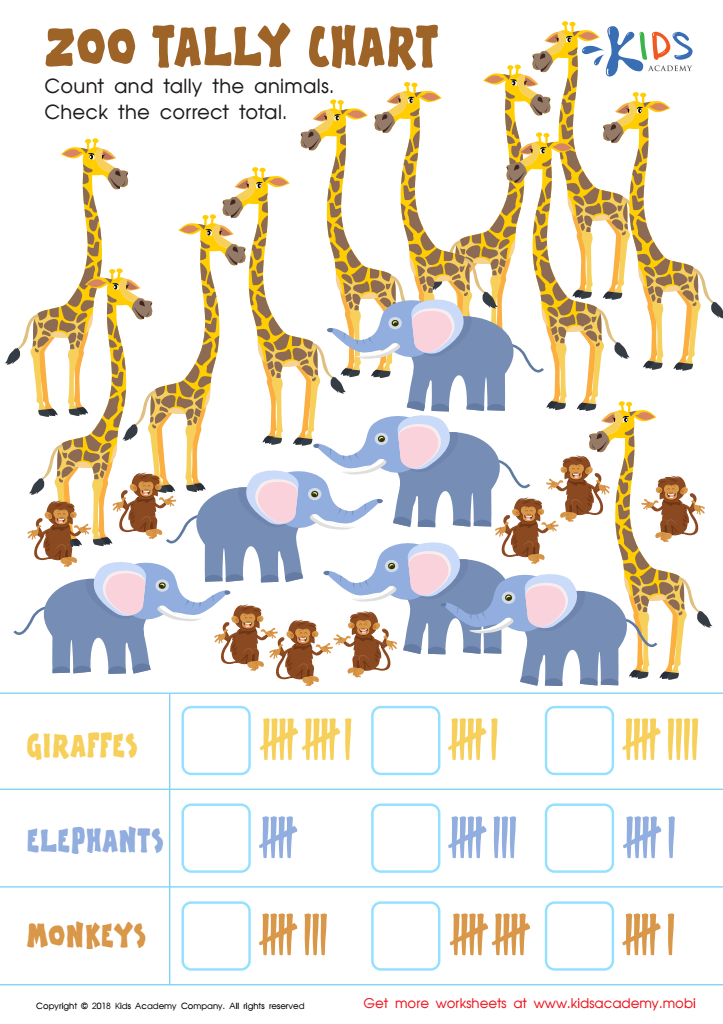
Zoo Tally Chart Worksheet
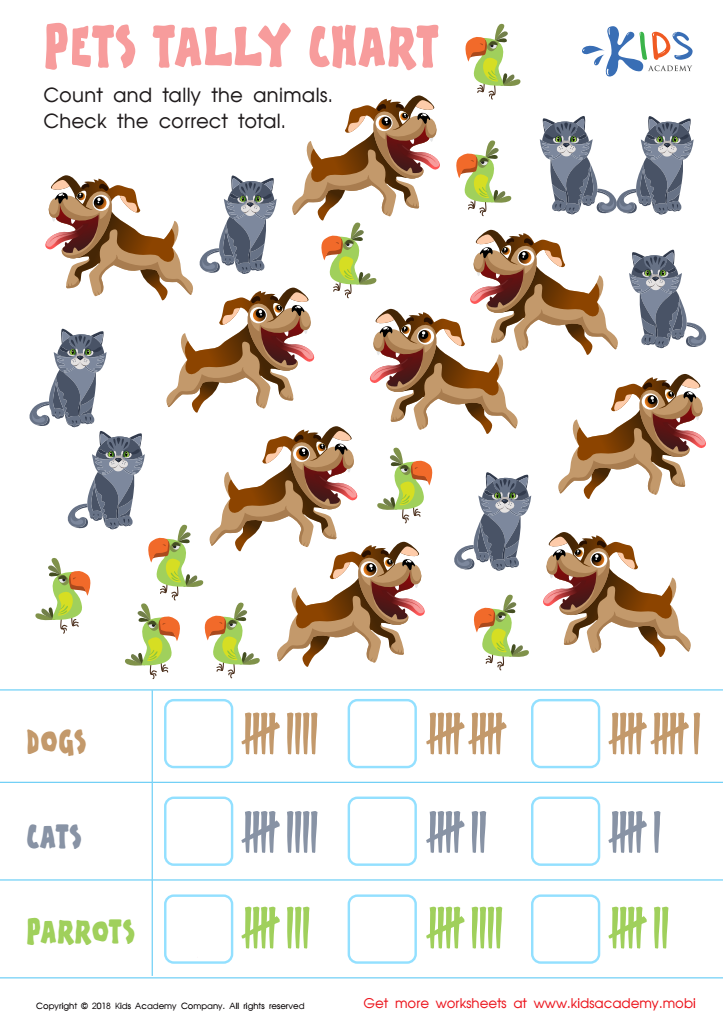
Pets Tally Chart Worksheet
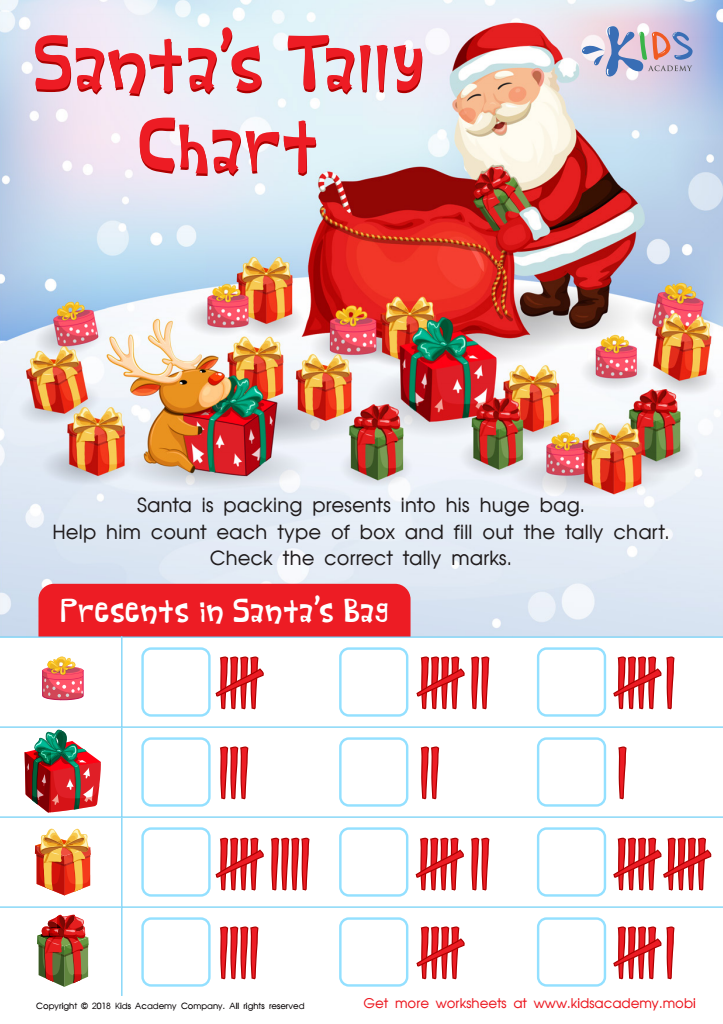
Santa Tally Chart Worksheet
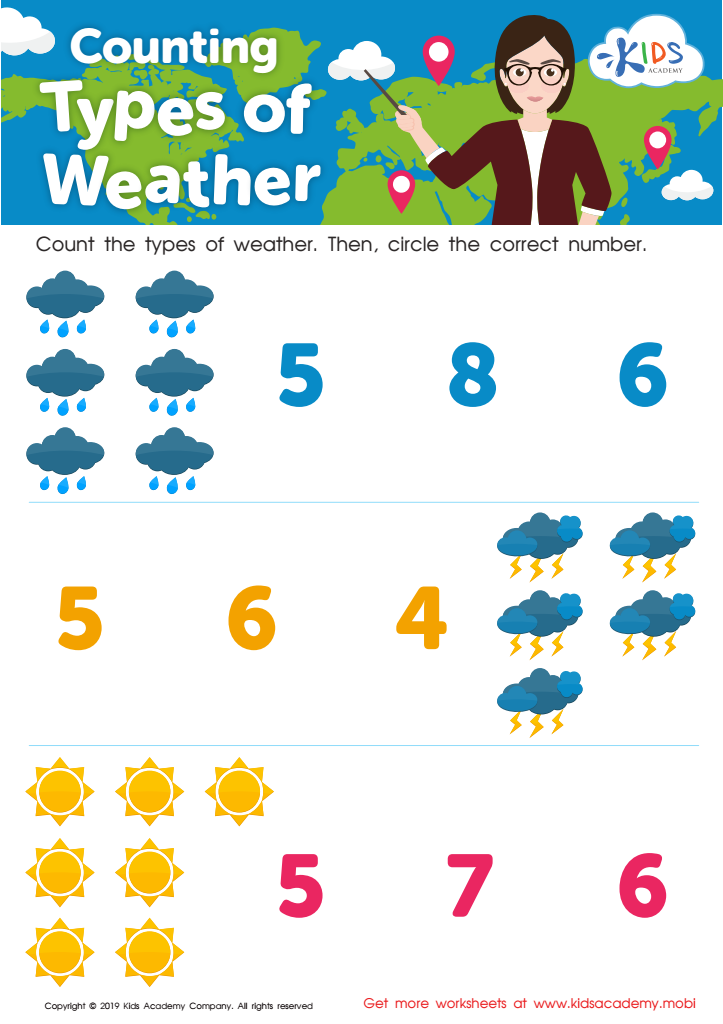
Counting Types of Weather Worksheet








Data interpretation and numbers are fundamental skills for children aged 4-8, forming the basis for their logical reasoning and critical thinking development. For parents and teachers, fostering these skills is crucial, as they empower children to make sense of their world through meaningful context. By learning to interpret numerical data, children can grasp concepts such as counting, measuring, and comparing, which promote numeracy and mathematical fluency.
At this age, children encounter numbers in various everyday situations—whether counting fruits, measuring ingredients for a recipe, or discussing their favorite colors in a class survey. Understanding how to read, analyze, and represent data helps them develop problem-solving abilities and prepares them for future academic challenges.
Moreover, teaching data interpretation encourages collaboration. Group activities like collecting and analyzing survey results promote social skills and teamwork.
Parents and teachers play a vital role in introducing engaging, hands-on activities that make learning fun and relevant. Early exposure to data interpretation creates a solid foundation for lifelong learning, supporting not only academic achievement but also essential life skills. Investing time in these foundational skills ultimately builds a confident, capable learner who can navigate the complexities of a data-driven world.








