Logical thinking Numbers Worksheets for Ages 4-8
5 filtered results
-
From - To
Enhance your child's cognitive development with our engaging Logical Thinking Numbers Worksheets designed for ages 4 to 8. These interactive resources help young learners master essential math concepts while fostering critical thinking skills. Featuring fun activities that challenge kids to recognize patterns, make predictions, and solve problems, our worksheets provide the perfect blend of education and entertainment. As children navigate through various exercises, they'll build confidence in their numerical abilities and strengthen their logical reasoning. Ideal for at-home practice or classroom use, these worksheets will ignite your child's passion for learning and equip them with valuable skills for the future.
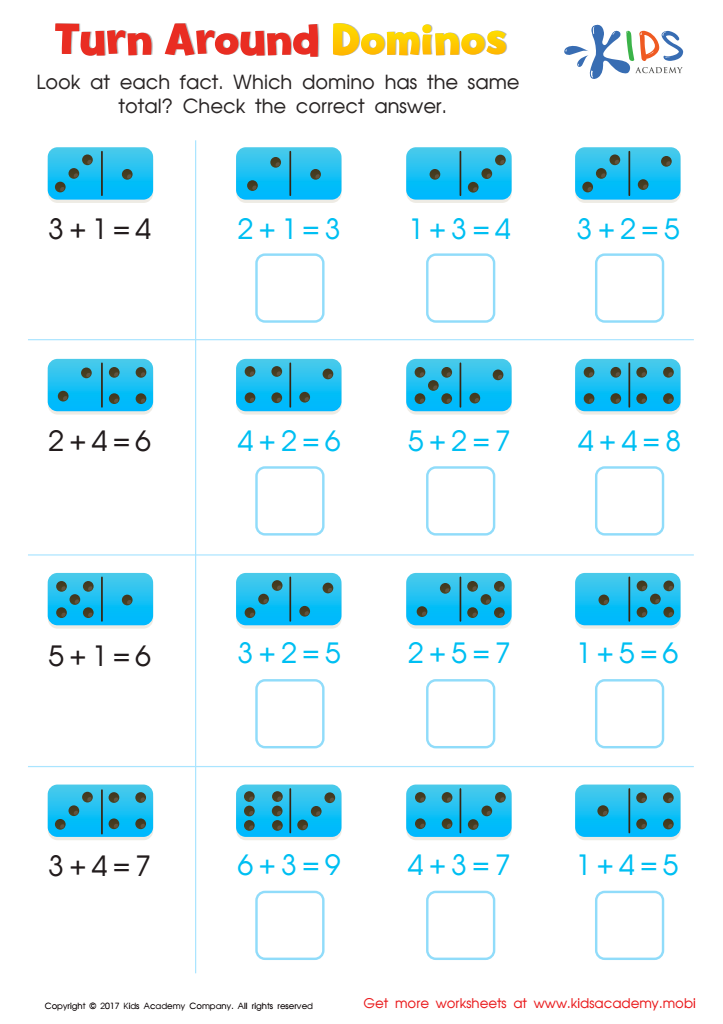
Turn Around Dominos Worksheet
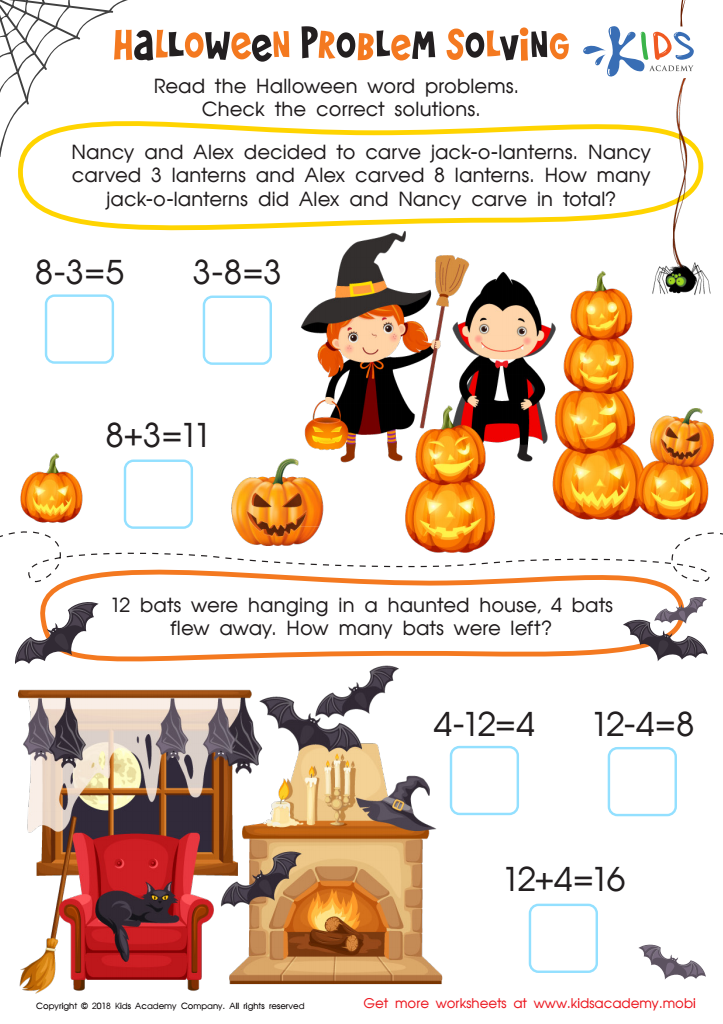
Halloween Problem Solving Worksheet
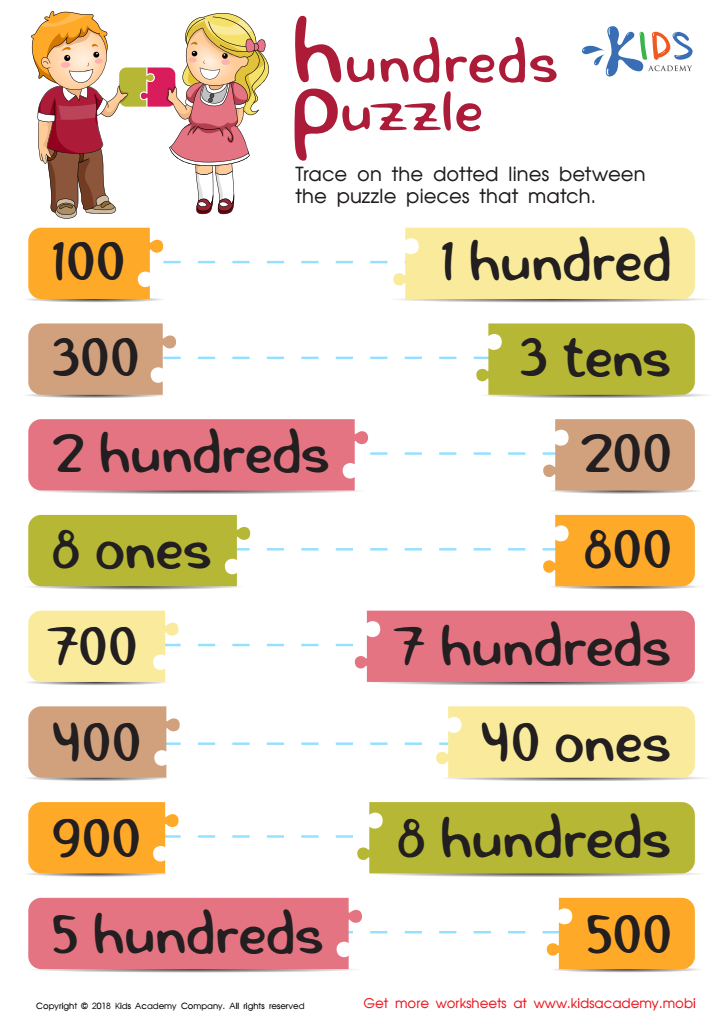
Hundreds Puzzle Worksheet
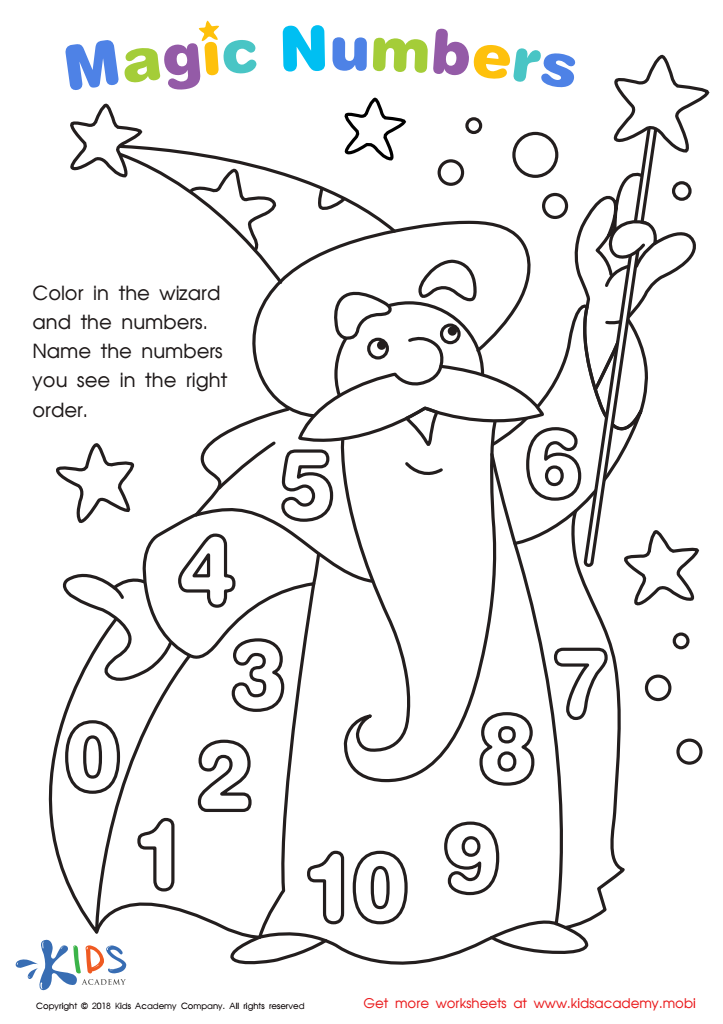
Magic Numbers Worksheet
 Assign to My Students
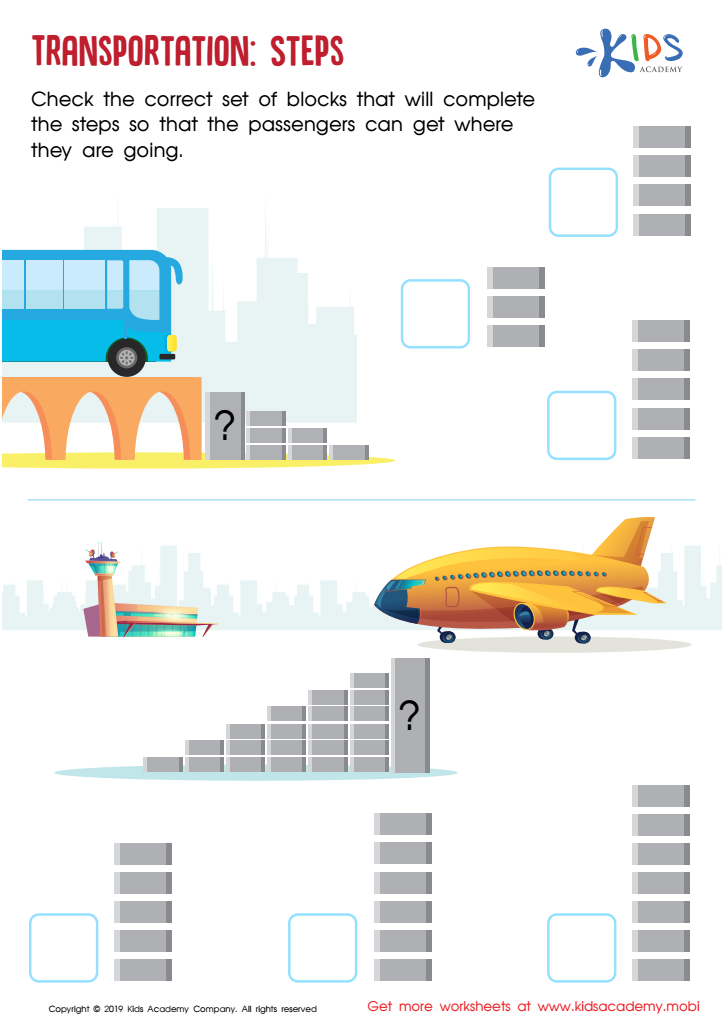
Transportation: Steps Worksheet








Logical thinking and number skills are crucial for children aged 4-8, as they lay the foundation for future learning and problem-solving abilities. At this developmental stage, children are naturally curious and eager to explore patterns, relationships, and basic mathematical concepts. Engaging them in activities that promote logical thinking helps improve their cognitive skills, enabling them to analyze situations, draw conclusions, and make informed decisions.
Parents and teachers play a vital role in fostering an environment where these skills can thrive. Introducing activities such as puzzles, games, and age-appropriate math challenges nurtures their ability to think critically. This not only enhances their interest in mathematics but also empowers them to tackle complex problems with confidence.
Furthermore, strong logical thinking and number skills correlate with academic success in later years. Being advance at understanding concepts like counting, addition, and pattern recognition gives children an academic edge. Beyond education, these skills are essential life tools, aiding decision-making, reasoning, and organization in daily situations.
In an ever-evolving world that demands innovative thinking, equipping young learners with logical and numerical reasoning will prepare them for the challenges ahead, making it essential for both parents and educators to prioritize these critical skills.








