Simplifying Fractions Numbers Worksheets for Ages 4-8
3 filtered results
-
From - To
Welcome to our Simplifying Fractions Numbers Worksheets for Ages 4-8! These engaging and interactive worksheets are designed to introduce young learners to the concept of fractions in a fun and accessible way. Tailored for early grades, our resources use colorful visuals and relatable examples to help children understand how to simplify fractions easily. Each worksheet promotes critical thinking, enhances math skills, and fosters a love for learning. Whether at home or in the classroom, these worksheets provide excellent support for children as they build a strong foundation in math. Let’s make learning fractions enjoyable and straightforward together!
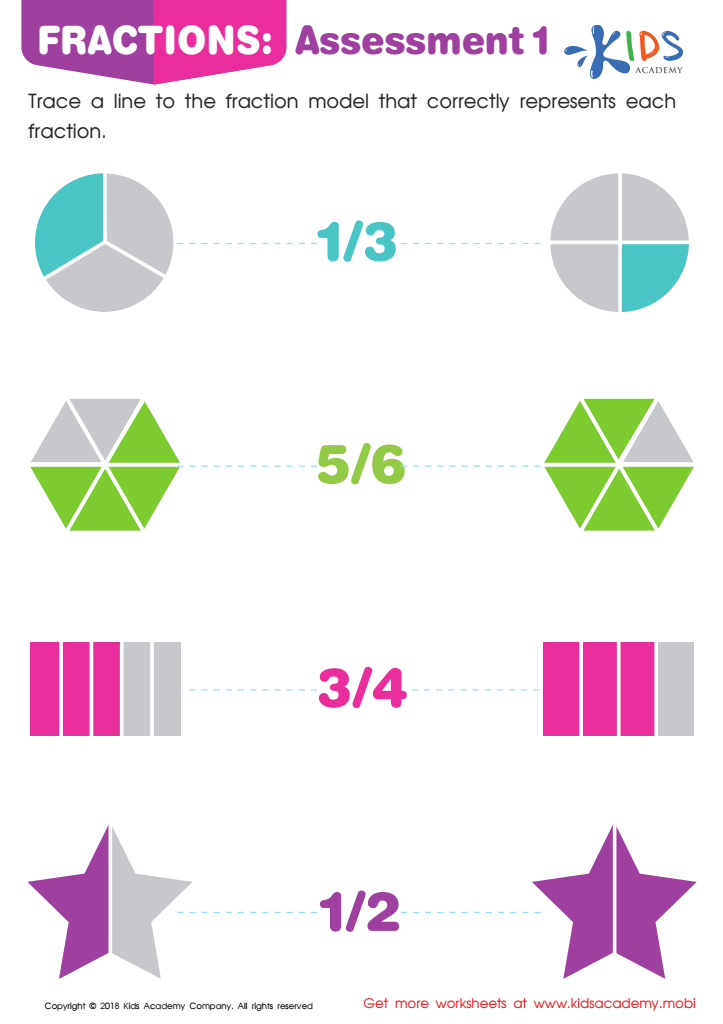
Fractions: Assessment 1 Worksheet
 Assign to My Students
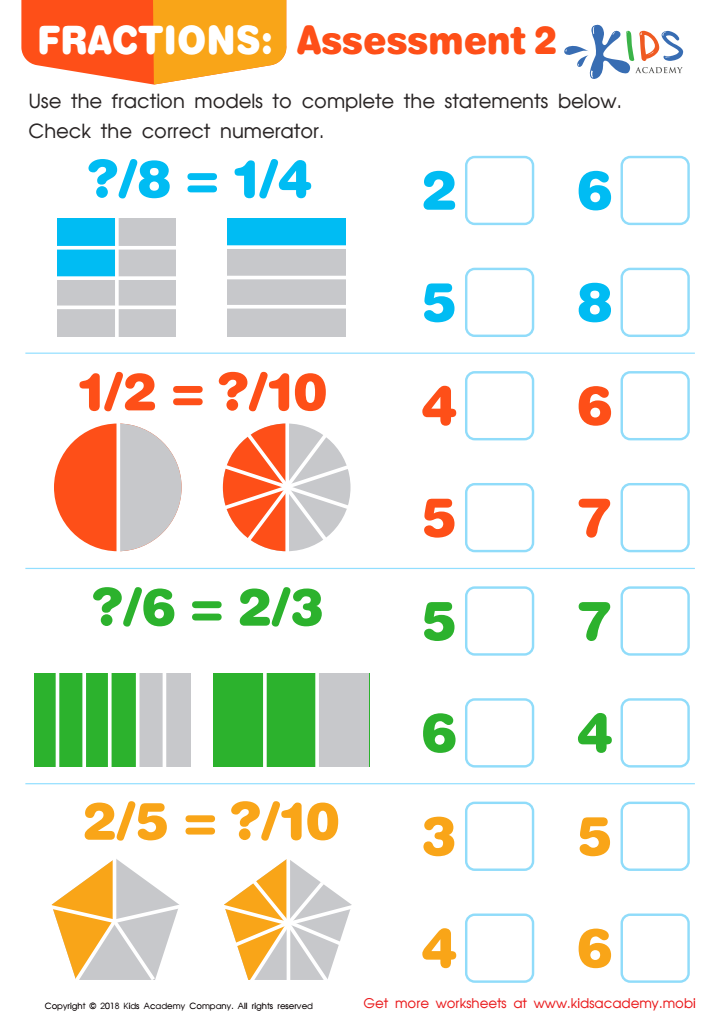
Fractions: Assessment 2 Worksheet
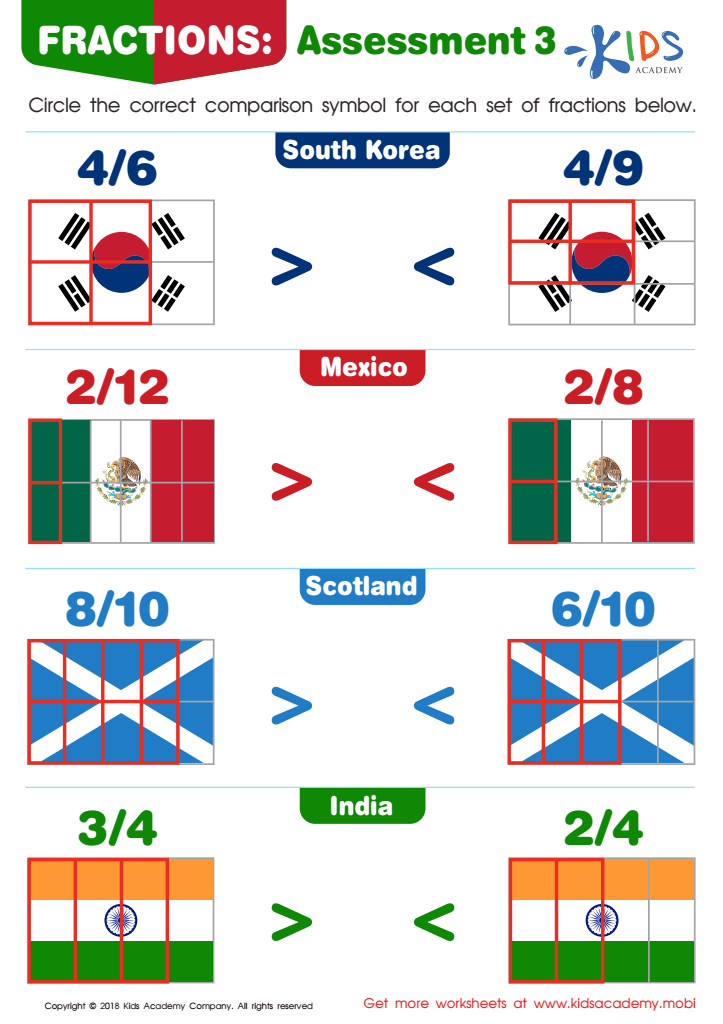
Fractions: Assessment 3 Worksheet








Simplifying fractions is a foundational math skill that can greatly impact a child's understanding of numbers and overall mathematical ability. For children aged 4-8, mastering this concept can lay the groundwork for more advanced math operations in later years.
At this early stage, children are naturally curious and eager to explore patterns. Simplifying fractions introduces them to important mathematical concepts like equivalence and division, helping them develop critical thinking skills. It fosters their ability to recognize and manipulate numbers, which are essential in everyday situations, like cooking or sharing items.
Furthermore, engaging children with simplified fractions delivers valuable lessons in patience and problem-solving, essential traits not just in education, but in life. It also encourages collaboration when teachers involve students in group activities to represent and simplify fractions, nurturing essential social skills.
Parents’ involvement in discussing and practicing fractions at home reinforces learning and can cultivate a positive attitude towards math, steering children away from math anxiety. Ultimately, simplifying fractions equips young learners with vital tools necessary for future math success and empowers them with the confidence to tackle more complex topics as they progress in their education.








