Comparing lengths Math Worksheets for Ages 4-8
17 filtered results
-
From - To
Discover engaging and educational Comparing Lengths Math Worksheets for ages 4-8 at Kids Academy! Designed to develop essential early math skills, these worksheets make learning fun with colorful illustrations and interactive exercises. Young learners will explore comparing, measuring, and identifying lengths, enhancing their problem-solving and critical thinking abilities. Perfect for both classroom and home use, our worksheets cater to various learning styles, ensuring that every child can succeed. Boost your child's confidence and prepare them for future math challenges with our expertly crafted resources. Visit Kids Academy today and embark on an exciting mathematical journey!
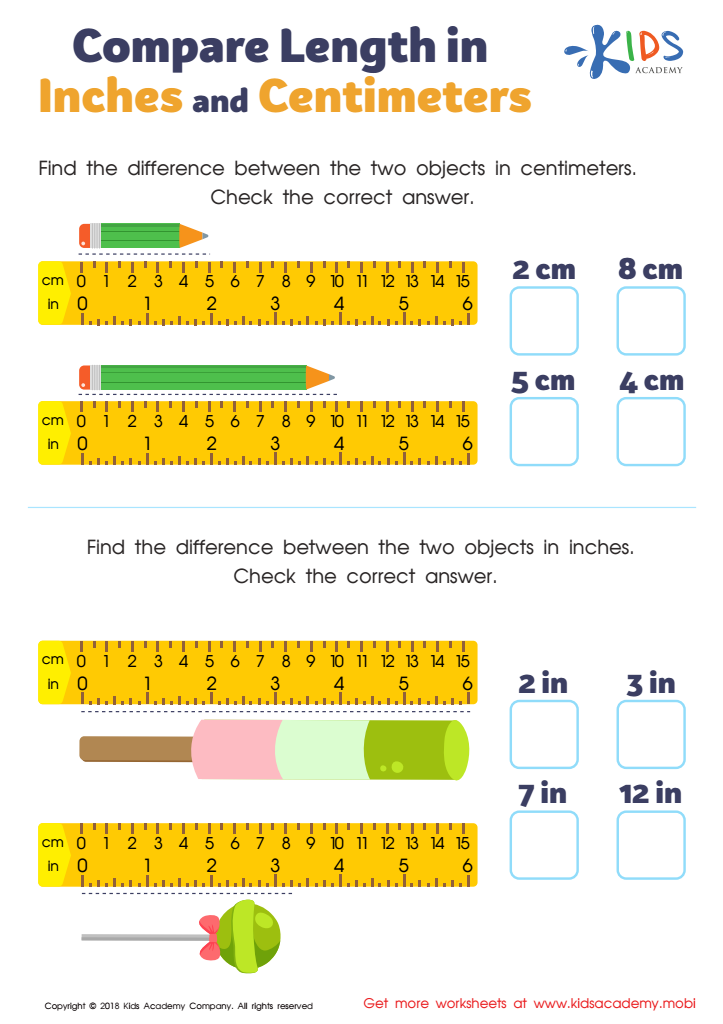
Compare Length in Inches and Centimeters Worksheet
 Assign to My Students
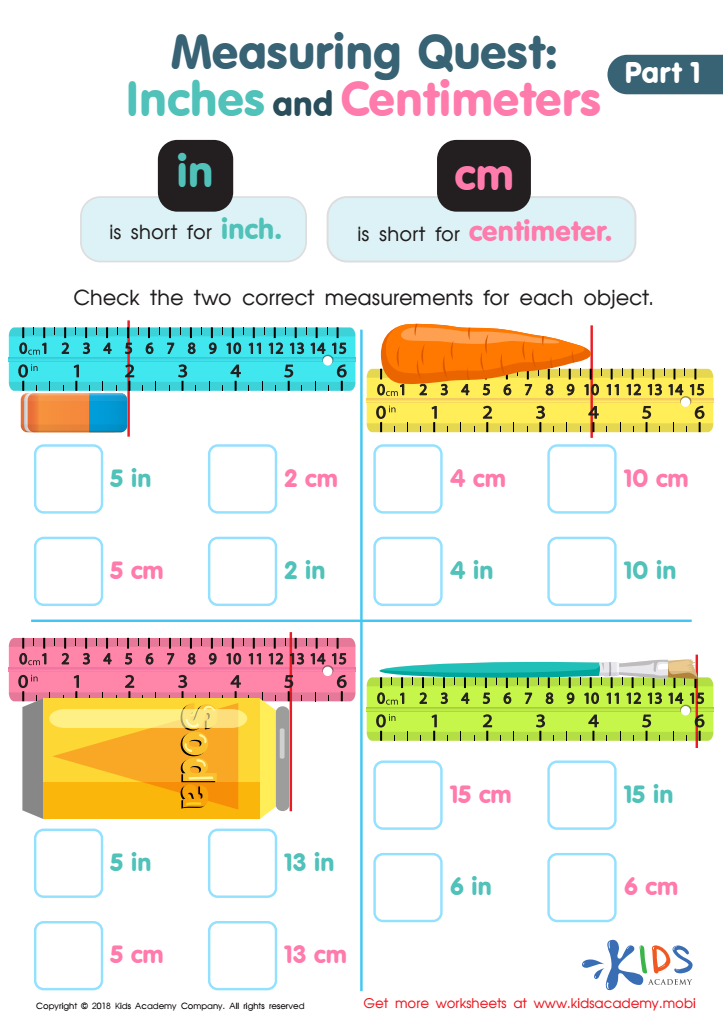
Measuring Quest: Inches and Centimeters Worksheet
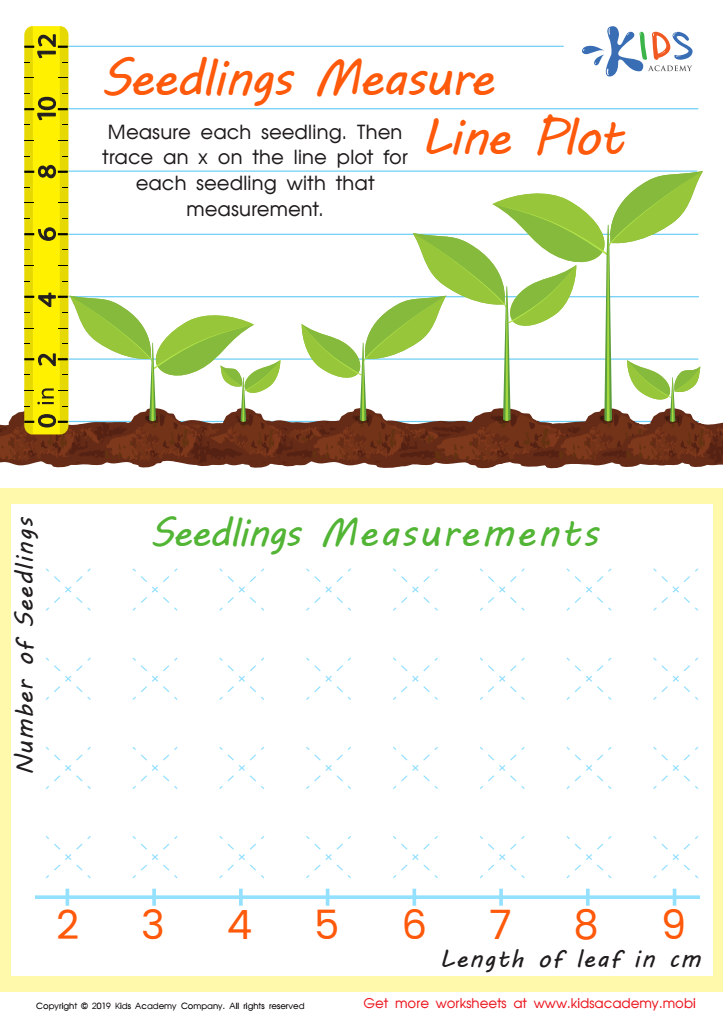
Seedling Measure Line Plot Worksheet
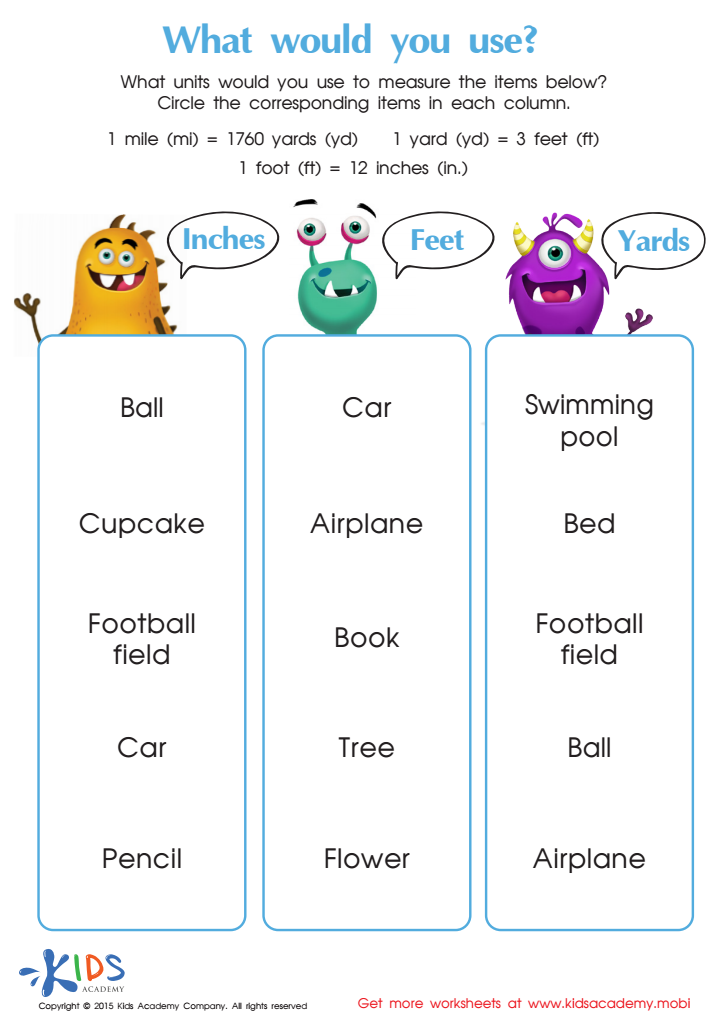
Learning about measuring objects in inches, feet and yards Worksheet
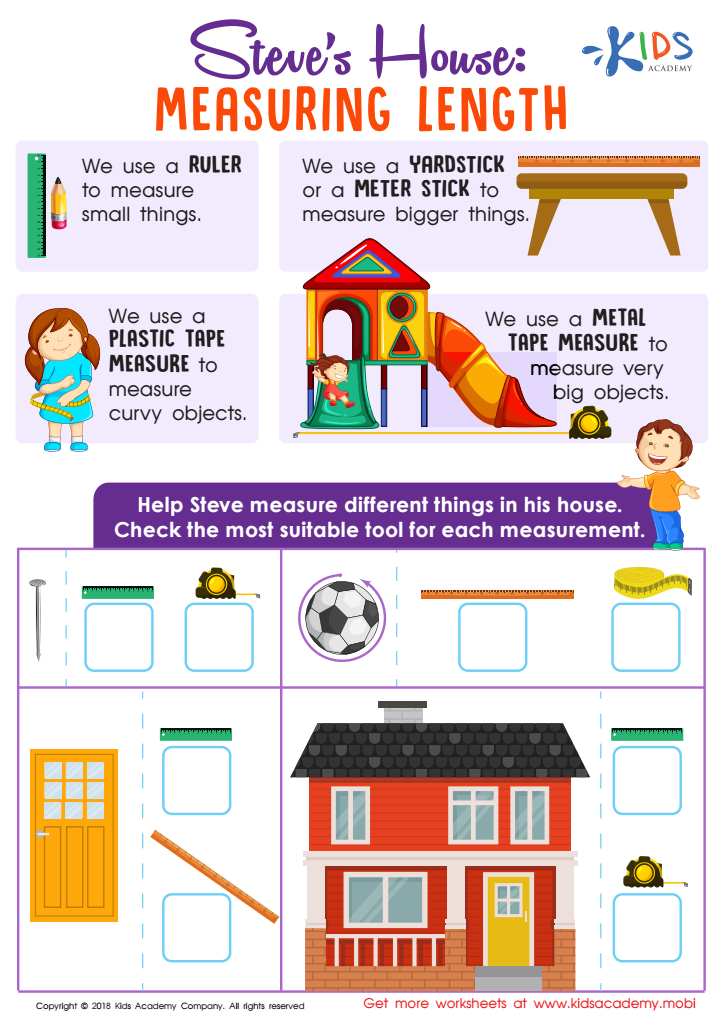
Steve's House: Measuring Length Worksheet
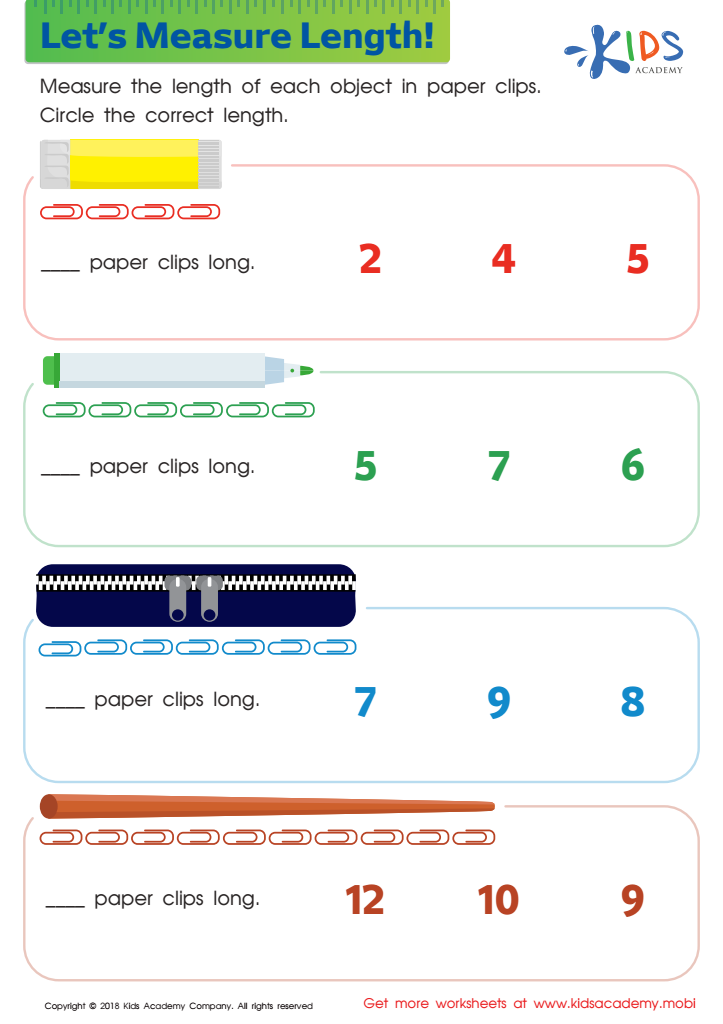
Lets Measure Length Worksheet
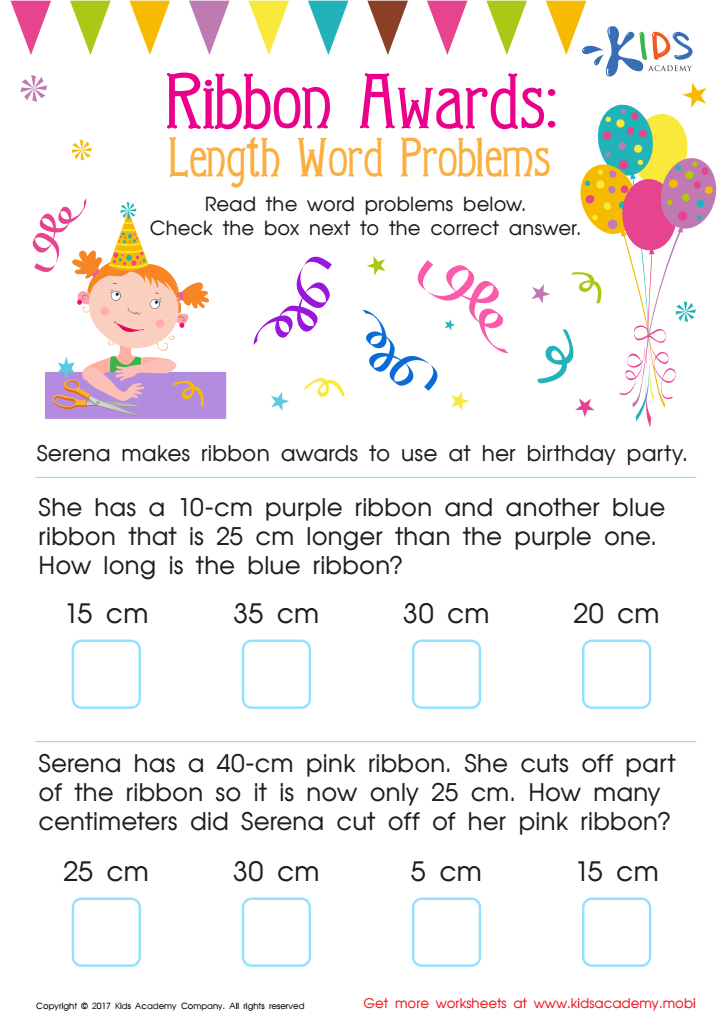
Length Word Problems Worksheet
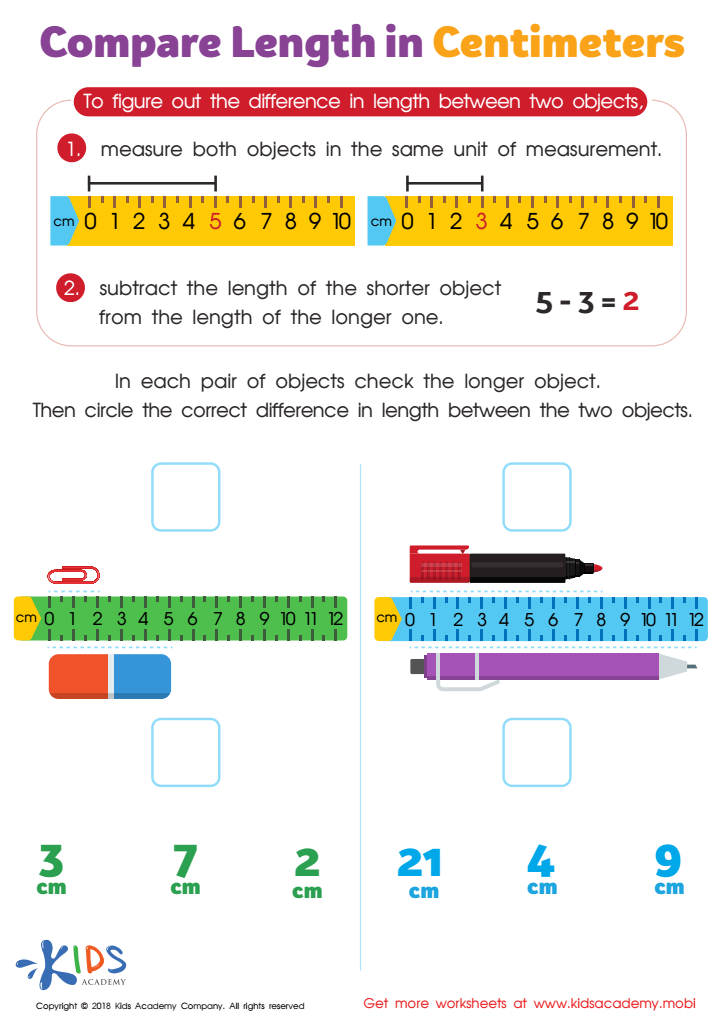
Compare Length in Centimeters Worksheet
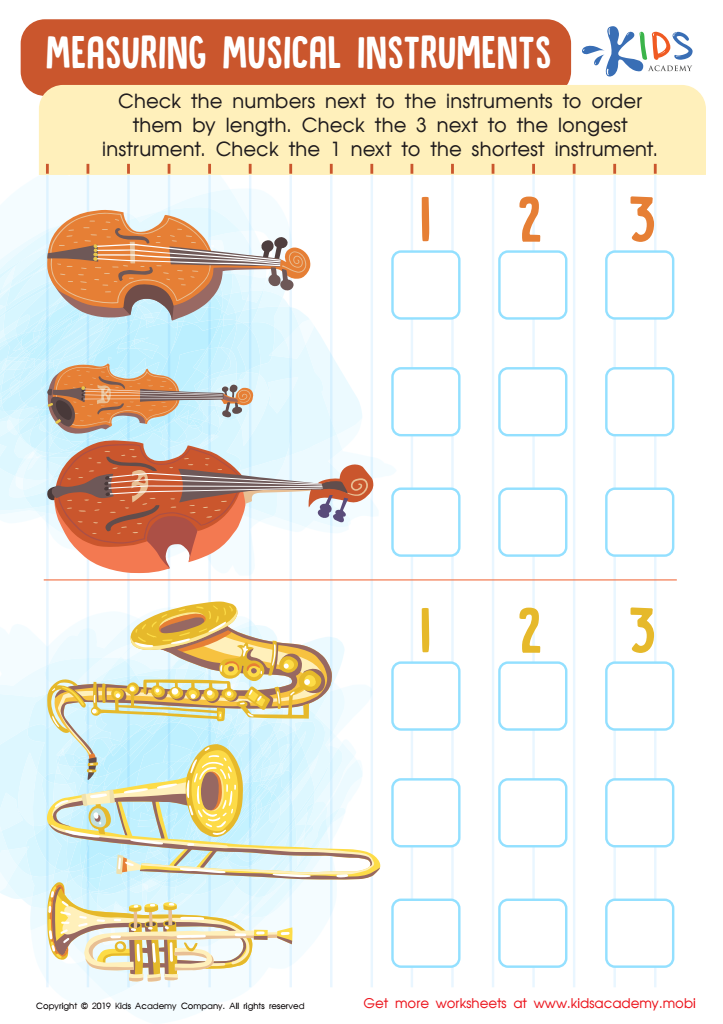
Measuring Musical Instruments Worksheet
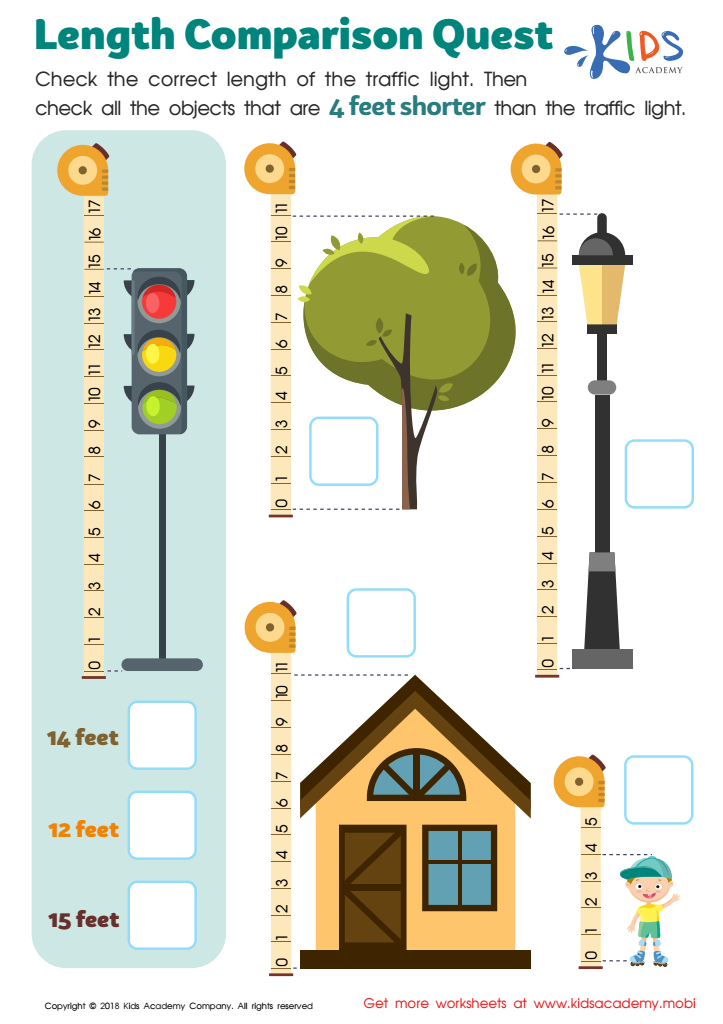
Length Comparison Quest Worksheet
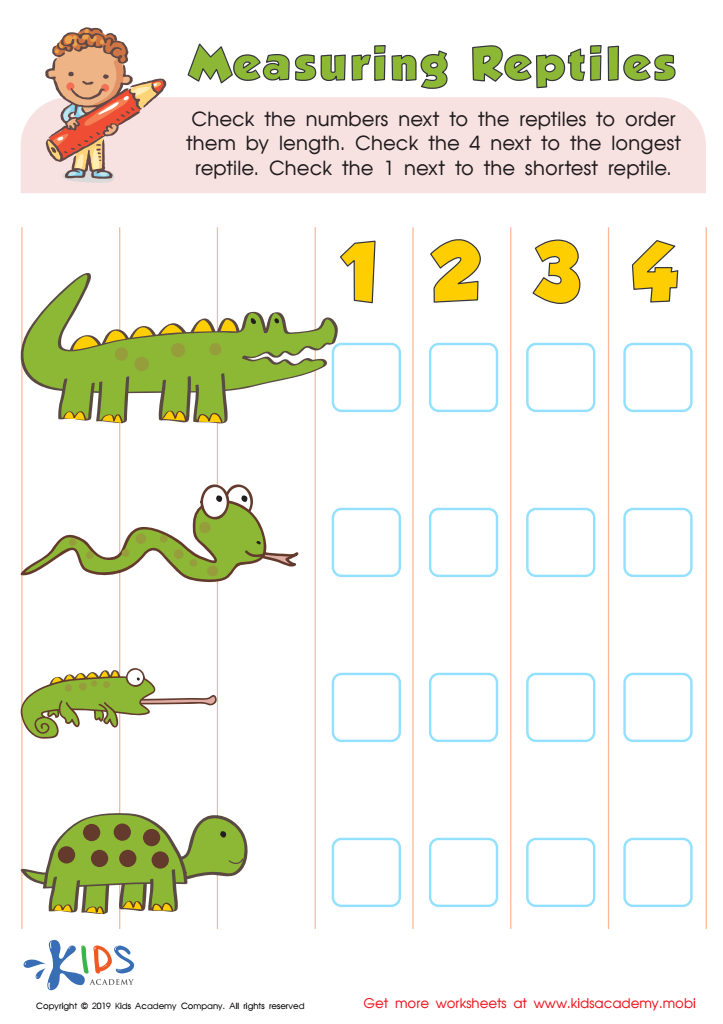
Measuring Reptiles Worksheet
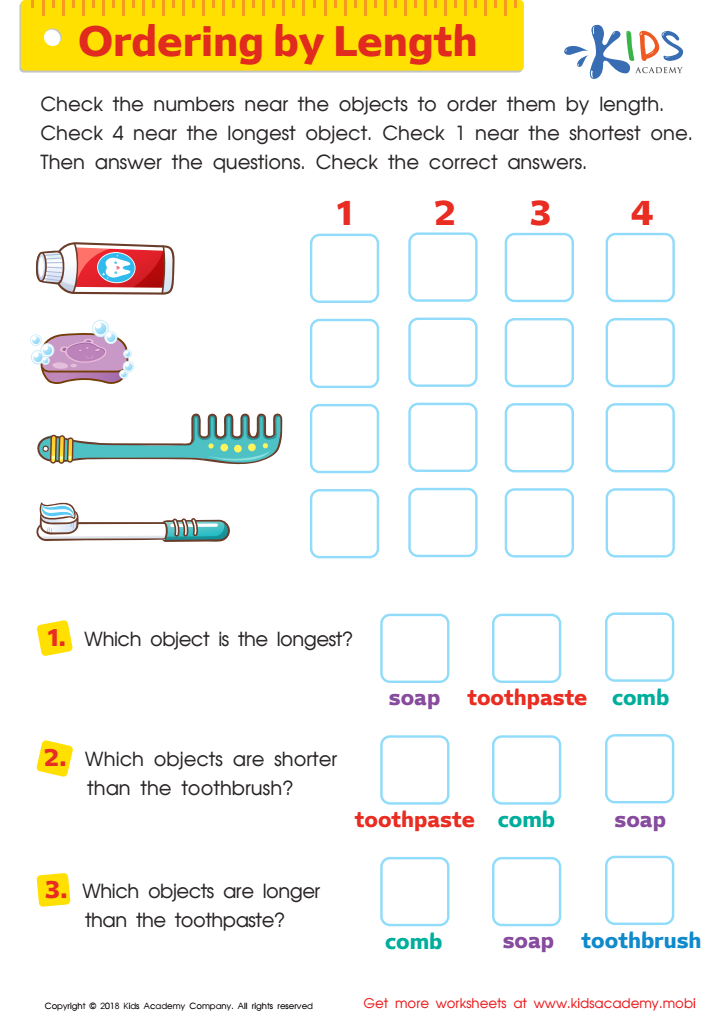
Ordering by Length Worksheet
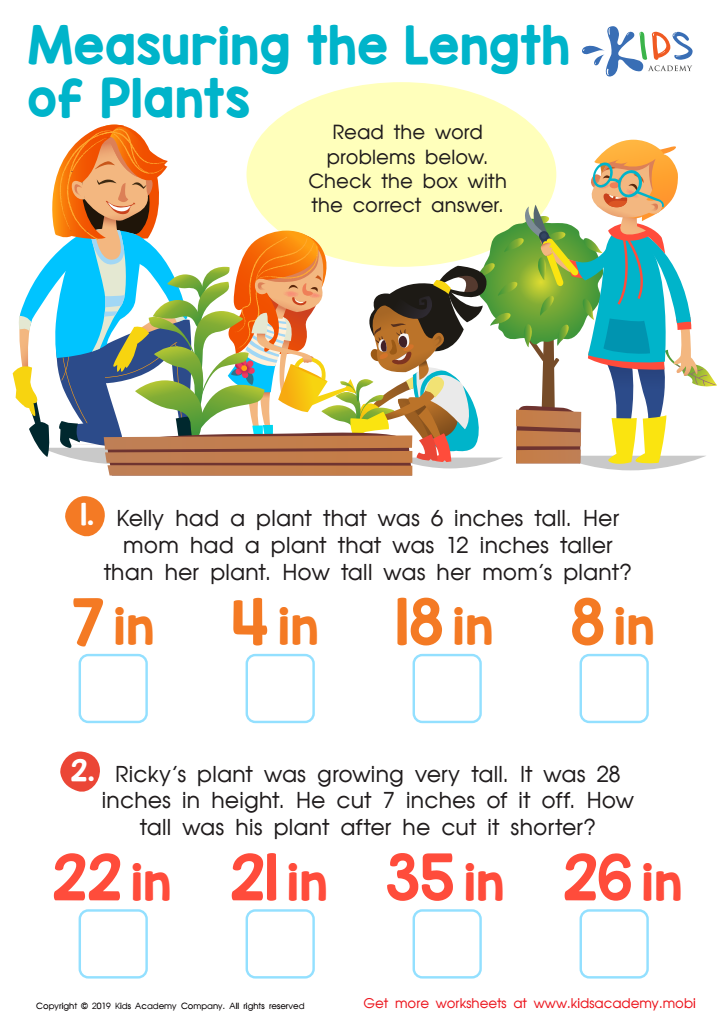
Measuring the Length of Plants Worksheet
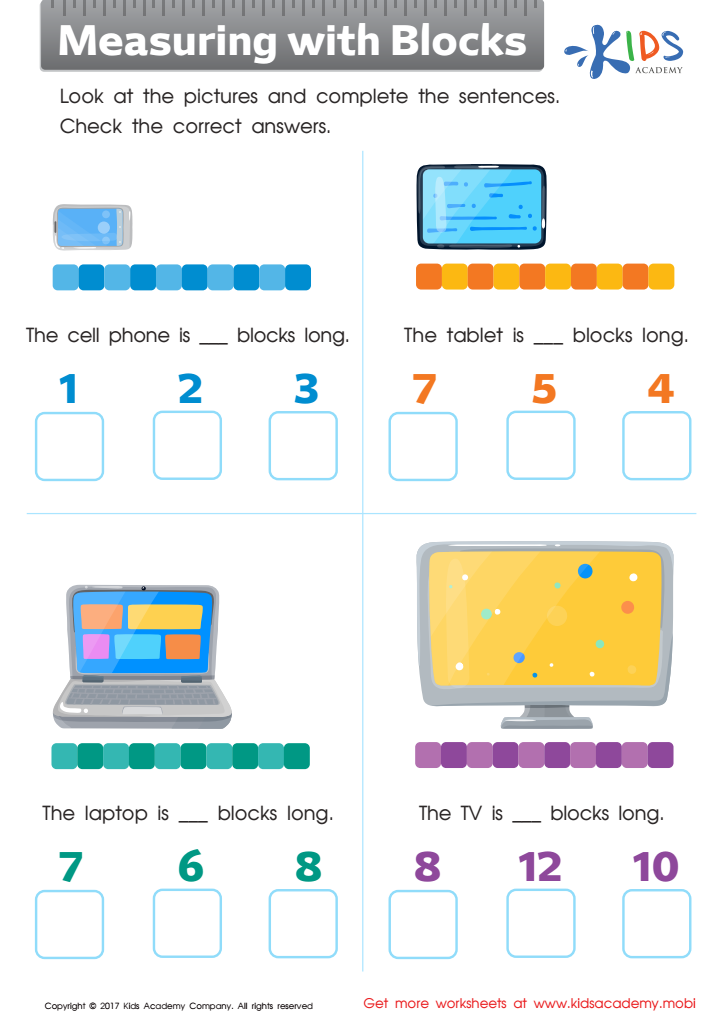
Measuring with Blocks Worksheet
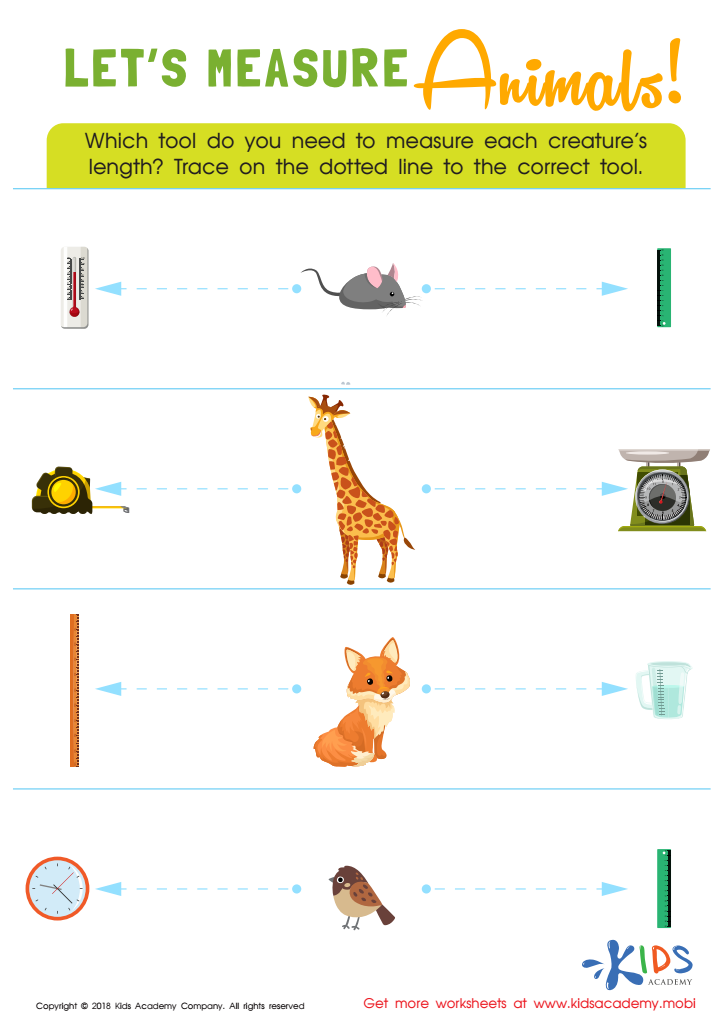
Let's Measure Animals! Worksheet
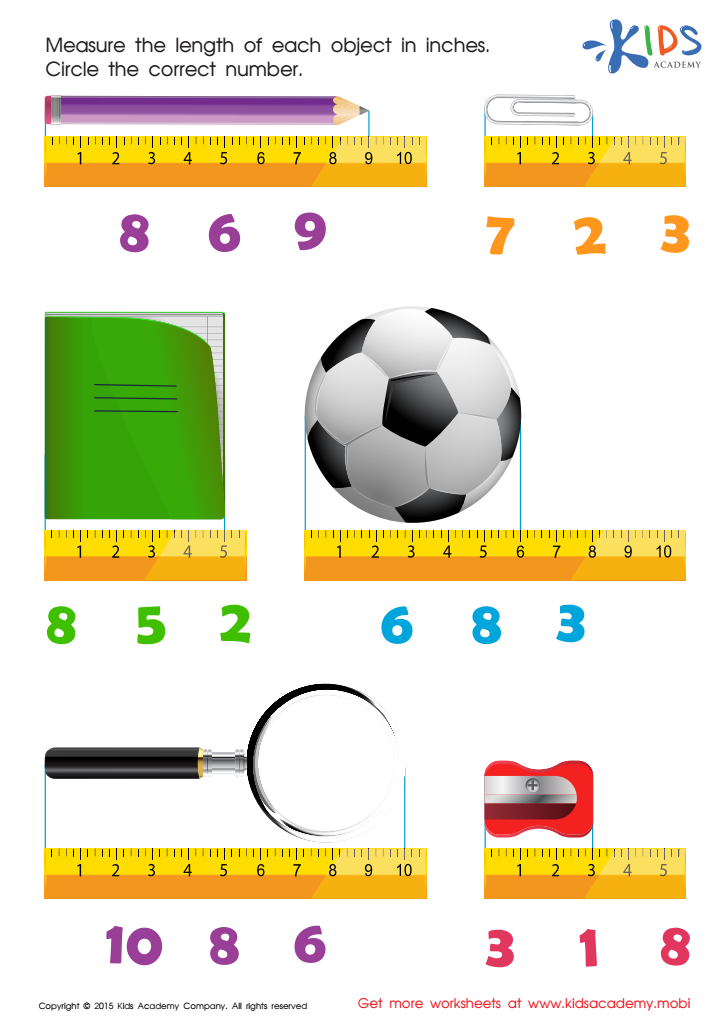
Learning measuring objects in inches Worksheet







Parents and teachers should care about teaching children ages 4-8 to compare lengths because it's a foundational skill that promotes critical thinking, mathematical understanding, and everyday problem-solving abilities. Early exposure helps children grasp basic concepts of measurement, an essential aspect of mathematics. By learning to compare lengths, children develop spatial awareness and begin to recognize attributes of objects in their environment, which is crucial for both academic and life skills.
This activity builds reasoning skills as children learn to analyze, compare, and classify objects based on length. For example, when a child understands that one block is longer than another, they're engaging in thinking processes that are fundamental to more complex math concepts they'll encounter later, such as addition, subtraction, and geometry.
Parents and teachers act as guides, providing engaging, hands-on activities like using crayons, toys, or pieces of string to reinforce these concepts and make learning enjoyable. Progress in these areas often correlates with cognitive and language development, as children must verbalize their thought processes and reasoning.
Understanding and comparing lengths makes math meaningful and relevant to a child's world, helping them achieve academic success and develop practical skills they will use for a lifetime. Economically, it benefits a society that increasingly relies on individuals proficient in STEM (Science, Technology, Engineering, Mathematics) fields.








