Fraction representation Math Worksheets for Ages 4-8
5 filtered results
-
From - To
Discover our engaging Fraction Representation Math Worksheets designed for children ages 4-8. These worksheets make learning fractions fun and interactive, helping young learners grasp the concept of part-to-whole relationships through colorful illustrations and hands-on activities. Perfect for early math education, our resources encourage children to visualize and understand fractions in everyday contexts, from sharing food to dividing objects. With various exercises tailored to different skill levels, students can build their confidence and math skills at their own pace. Foster a love for math and prepare your child for future success with our comprehensive fraction worksheets today!
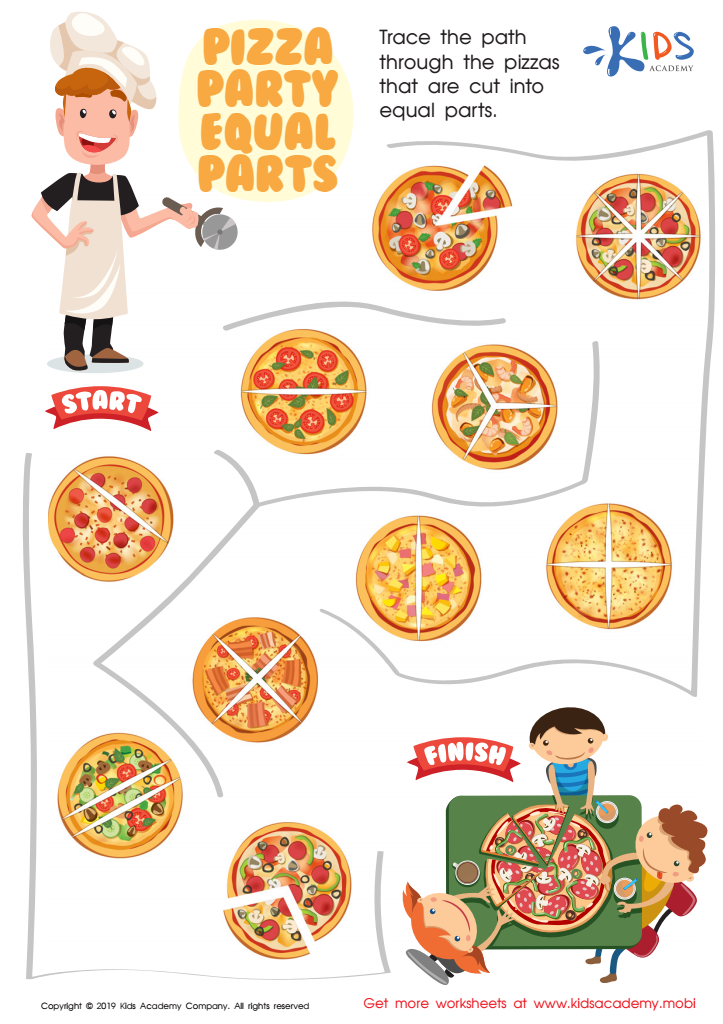
Pizza Party Equal Parts Worksheet
 Assign to My Students
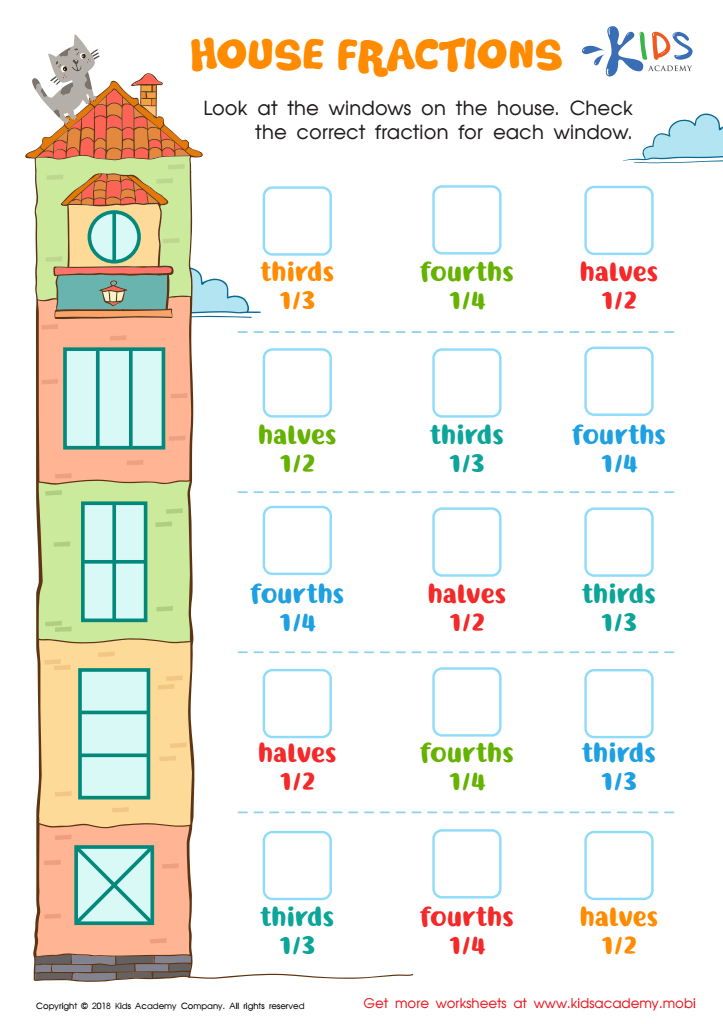
House Fractions Worksheet
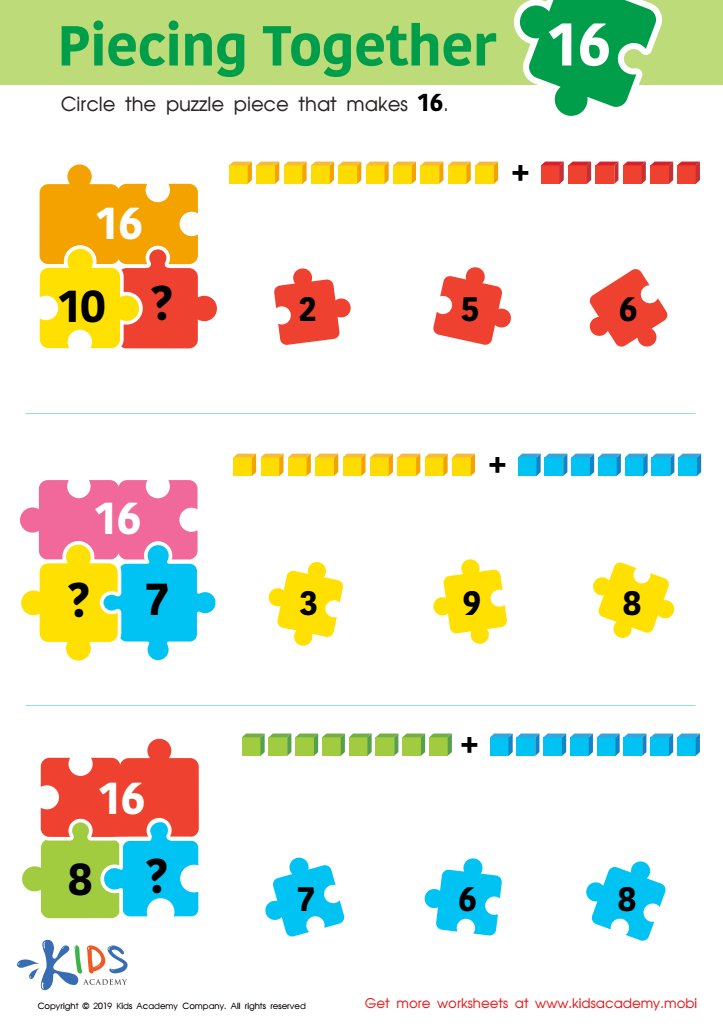
Piecing Together 16 Worksheet
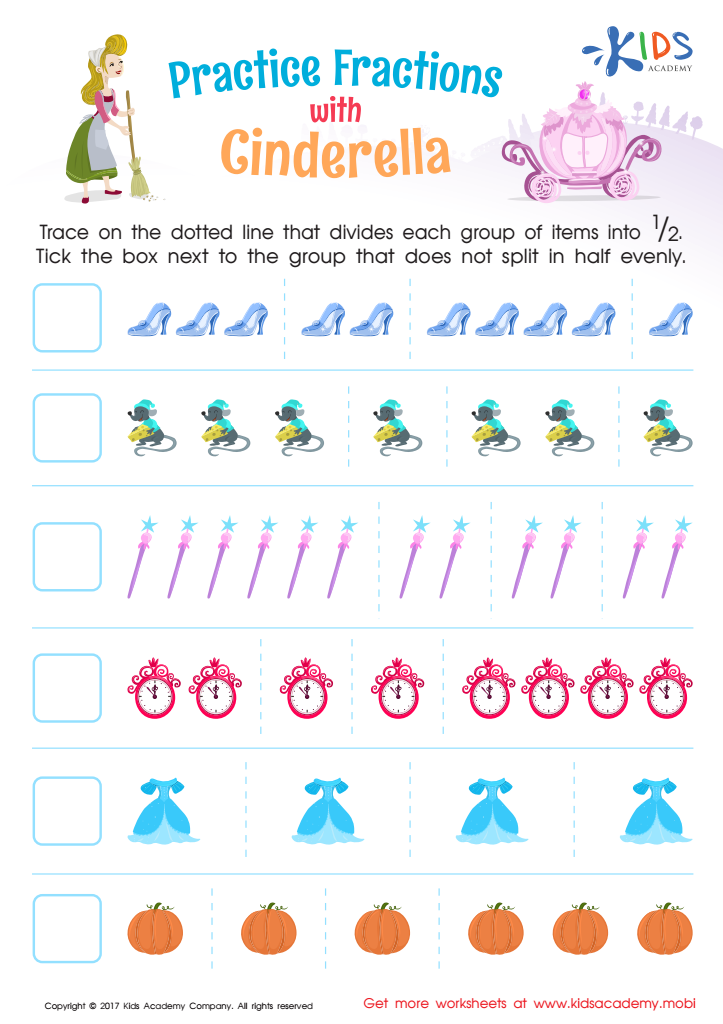
Fractions: Cinderella Printable





Understanding fraction representation is crucial for children ages 4-8, as it lays the foundation for their mathematical development. At this stage, children begin to form their numerical understanding, and introducing fractions in a visually and contextually relatable manner can significantly enhance their comprehension.
Seeing fractions represented through everyday objects, like slices of pizza or pieces of fruit, allows children to grasp the concept of parts of a whole. This concrete representation makes abstract concepts more accessible and engaging. As they manipulate physical objects, they develop critical thinking skills and learn to make connections between fractions and whole numbers.
Moreover, mastering fraction concepts early on fosters mathematical fluency necessary for later concepts like division, ratios, and ratios. This foundation boosts confidence in mathematical abilities, as understanding fractions helps children approach more complex problems with ease.
Additionally, incorporating fractions encourages collaborative learning; children can discuss and explore their understanding with peers, promoting social interaction and communication skills. Parents and teachers who actively support this fundamental mathematical concept can cultivate a positive attitude towards mathematics, paving the way for lifelong learning.








