Learn addition Math Worksheets for Ages 4-8
3 filtered results
-
From - To
Discover a fun and engaging way for children ages 4-8 to master addition with our comprehensive Math Worksheets! Designed to enhance early math skills, these printable resources guide young learners as they explore numbers through colorful visuals and interactive exercises. Our addition worksheets introduce foundational concepts with a variety of activities, including simple puzzles, connecting the dots, and engaging games. Perfect for homeschooling or classroom use, these materials promote a love for learning while building confidence in math skills. Watch your child achieve success in addition and develop critical thinking in a playful environment. Start their mathematical journey today!
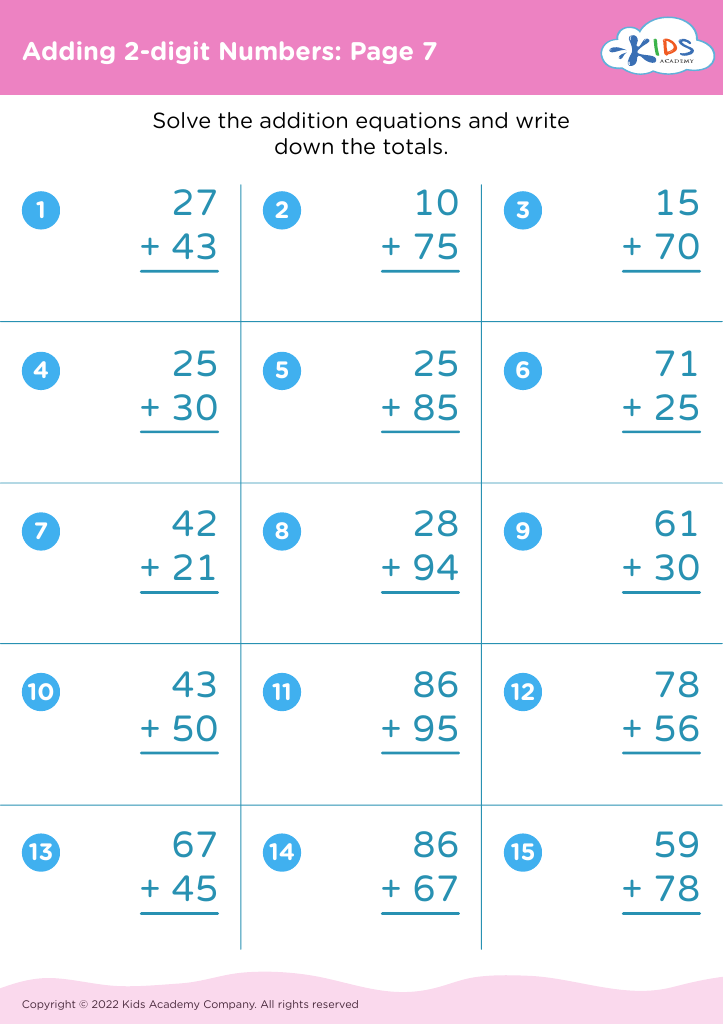
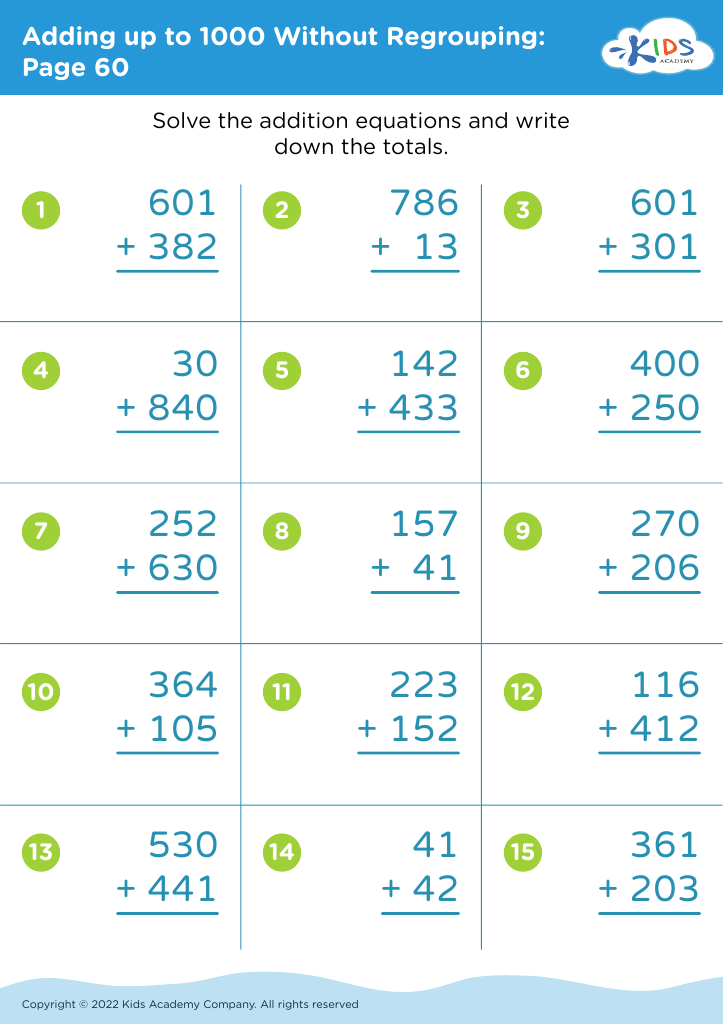
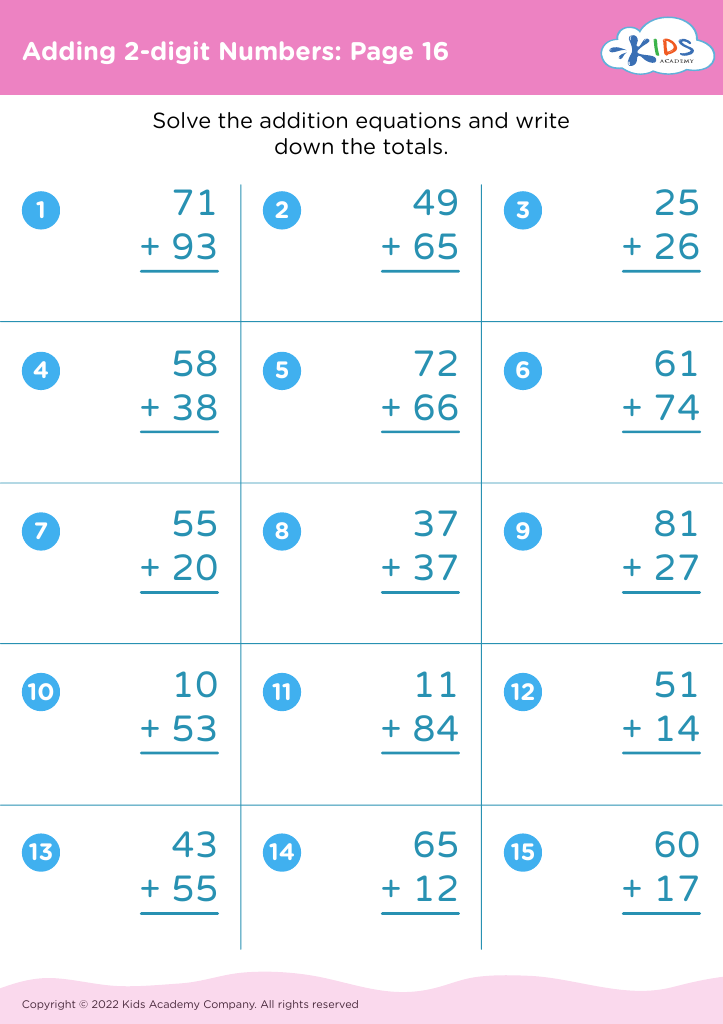








Learning addition during ages 4 to 8 is crucial for children's cognitive and emotional development. This foundational skill introduces young learners to the world of mathematics, necessary for everyday problem-solving tasks. Mastery of addition helps children grasp concepts of quantity, enhances critical thinking, and nurtures their ability to handle more complex mathematical operations in the future.
Moreover, early mastery of addition boosts a child's confidence in their academic abilities. Children who excel in these early math skills are more likely to experience ongoing success in school, reducing stress as academic expectations increase. Engaging in addition activities cultivates a positive attitude towards math, transforming it from a daunting subject into an enjoyable challenge.
For teachers and parents, promoting addition through games, interactive exercises, and relatable examples promotes a collaborative learning environment. This not only strengthens the child’s connection to math but also fosters stronger bonds between the child and adults.
Ultimately, an early focus on addition sets the stage for lifelong learning, enhances essential life skills, and contributes significantly to a child’s academic journey. Therefore, parents and teachers have a vested interest in prioritizing this fundamental area of learning.








