
Mathematical operations Math Worksheets for Ages 4-8
6 filtered results
Difficulty Level
Grade
Age
-
From - To
Subject
Activity
Standards
Introduce your child to the world of math with our specially designed math worksheets for ages 4-8. These engaging resources focus on foundational mathematical operations such as addition, subtraction, multiplication, and division. Each worksheet offers colorful, fun, and interactive activities that ignite curiosity and foster a love for learning. With clear instructions and age-appropriate challenges, our worksheets help children grasp key concepts and build confidence in their math skills. Ideal for both classroom use and home practice, these tools are perfect for reinforcing learning and ensuring your child’s early math success. Explore today and watch your young mathematician thrive!
Favorites
With answer key
Interactive
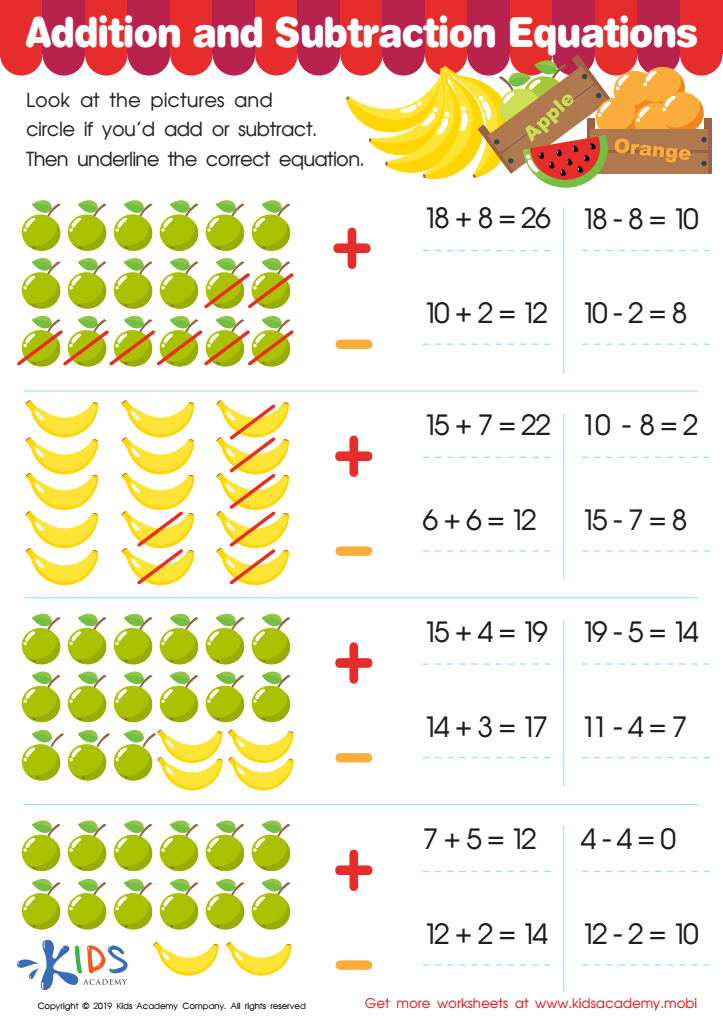
Addition and Subtraction: Equations Worksheet
This worksheet sharpens your child's visual processing, math equation solving and order of operations skills. It features colorful pictures to help them add and subtract, and traceable lines to identify the correct equation. A great way to practice these skills! (80 words)
 Assign to My Students
Addition and Subtraction: Equations Worksheet
Worksheet
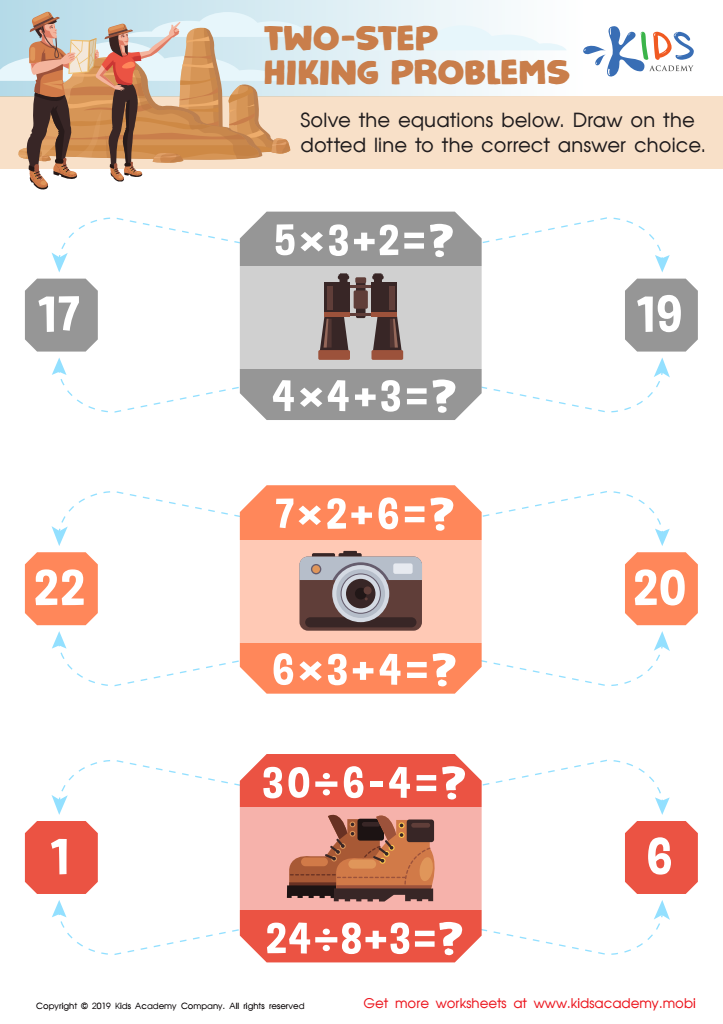
Two-Step Hiking Problems Worksheet
Help your kids ease into math with this worksheet. Solve the three basic equations, then draw on the dotted line to the correct answer. You can help your kids make their journey smoother by guiding them through it.
Two-Step Hiking Problems Worksheet
Worksheet
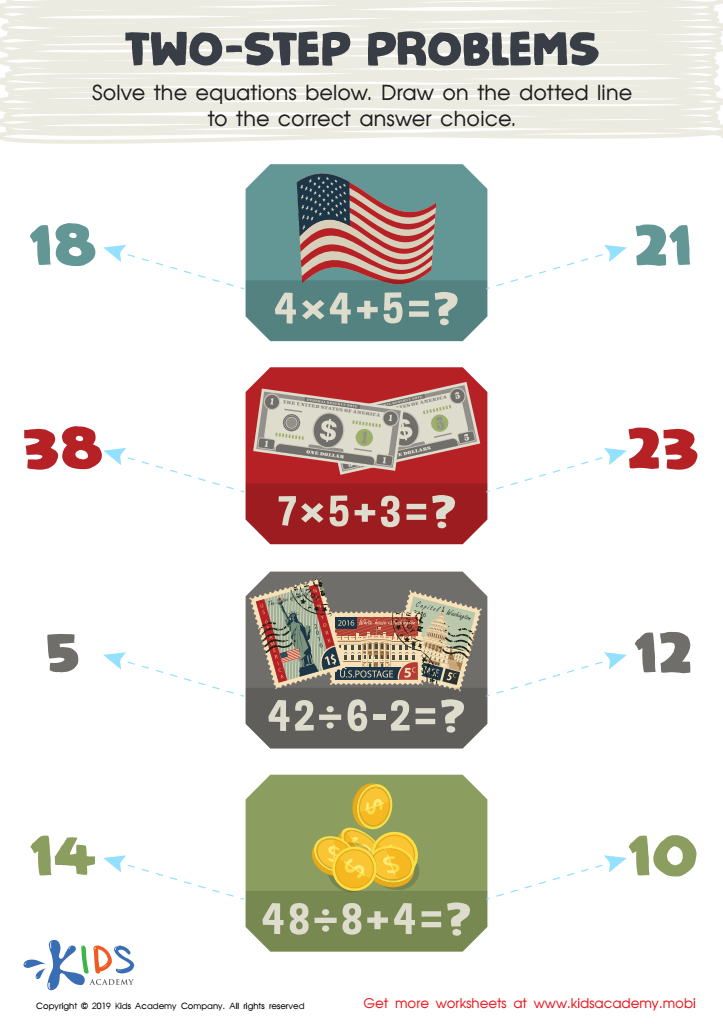
Two-Step Problems Worksheet
Help your child practice their math problem-solving skills with this worksheet. It covers the basics of subtractions, additions, multiplications, and divisions. With four simple equations, your kids can solve them and draw the correct answer on the dotted line. Reduce their strain and give them the help they need.
Two-Step Problems Worksheet
Worksheet
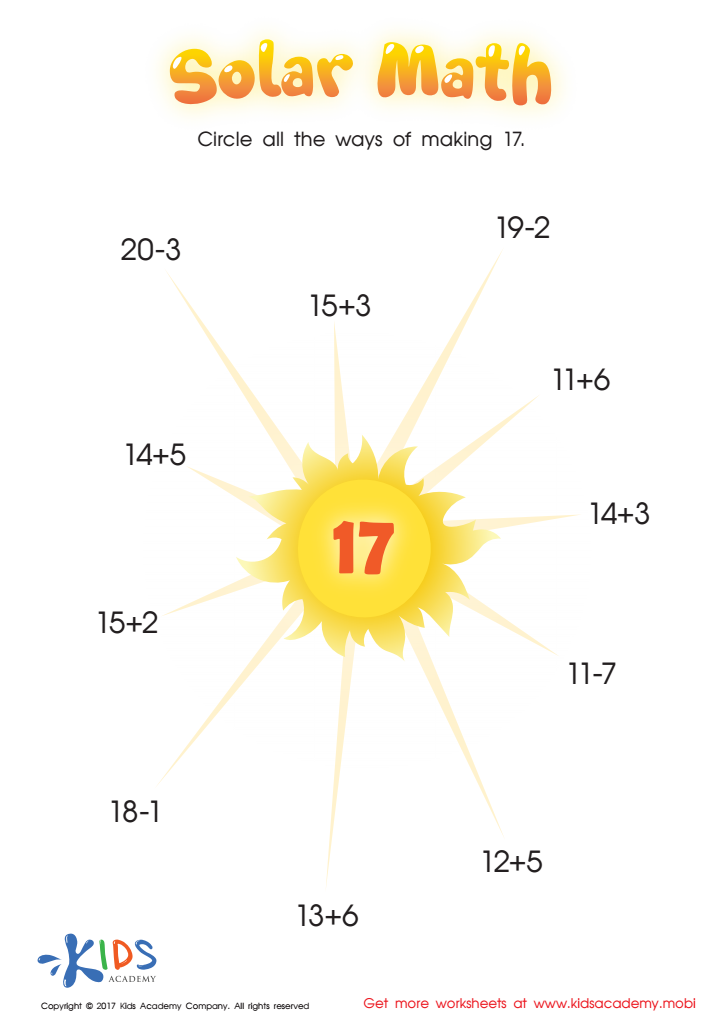
Solar Math Substraction Worksheet
Solar Math worksheet offers an awesome way to practice addition and subtraction. Challenge your child to find the number in the center of the sun by solving the problems that equal 17. It's a fun way to develop math skills.
Solar Math Substraction Worksheet
Worksheet
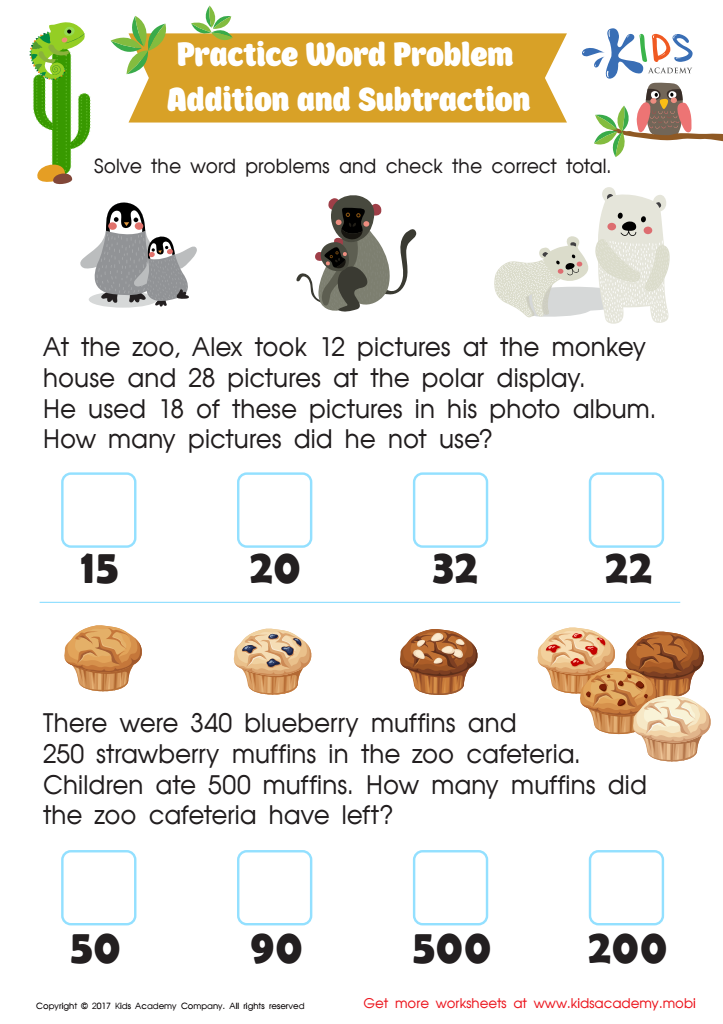
Addition and Subtraction: Word Problems Worksheet
Word problems can be difficult, but they offer another way to understand math. Our 3rd grade worksheet takes your child to the zoo; two intriguing word problems will test their thinking skills and help them find the total.
Addition and Subtraction: Word Problems Worksheet
Worksheet
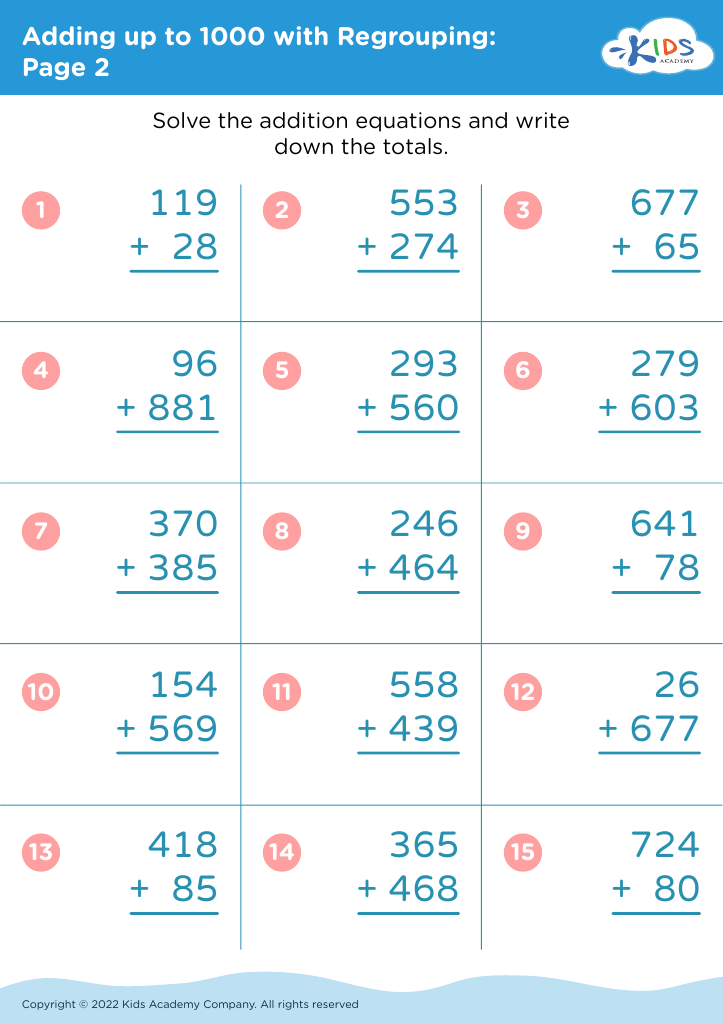
Join Kids Academy for Free
Who is primarily going to use this learning content?







Parents and teachers should deeply care about imparting knowledge of mathematical operations to children aged 4-8 because these foundational years are critical for cognitive development and establishing key learning habits. Simple mathematical operations, such as addition, subtraction, multiplication, and division, are more than just academic requirements; they build essential real-life skills. Mastery of these concepts enhances problem-solving abilities, critical thinking, and logical reasoning, competencies necessary for lifelong learning and decision making.
Early exposure to math also fosters a positive attitude towards the subject, reducing anxiety and building confidence. Skills learned through basic math operations facilitate later complex mathematical learning and pave the way for success in STEM (Science, Technology, Engineering, Mathematics) fields. Additionally, understanding numbers and calculations is crucial for everyday tasks, such as telling time, handling money, and measuring quantities in cooking or crafts.
For teachers, using engaging activities and intuitive explanations bridges the gap between abstract concepts and tangible understanding. For parents, reinforcing these lessons through interactive play and practical applications at home provides continual reinforcement. Ensuring children grasp these basic mathematical operations equates to equipping them with tools for academic success and everyday life proficiency.








