
Understanding line plots Math Worksheets for Ages 4-8
10 filtered results
Difficulty Level
Grade
Age
-
From - To
Subject
Activity
Standards
Help your child master the basics of data representation with our "Understanding Line Plots Math Worksheets" designed for ages 4-8. These engaging and interactive worksheets make learning fun, aiding young learners in understanding how to collect, organize, and interpret data using line plots. Each printable worksheet offers a variety of exercises that build critical math skills, including counting, addition, and pattern recognition. Through playful activities and colorful visuals, kids gradually learn to plot simple data points while improving their analytical skills. Perfect for at-home practice or classroom use, these worksheets turn math practice into an enjoyable experience.
Favorites
With answer key
Interactive
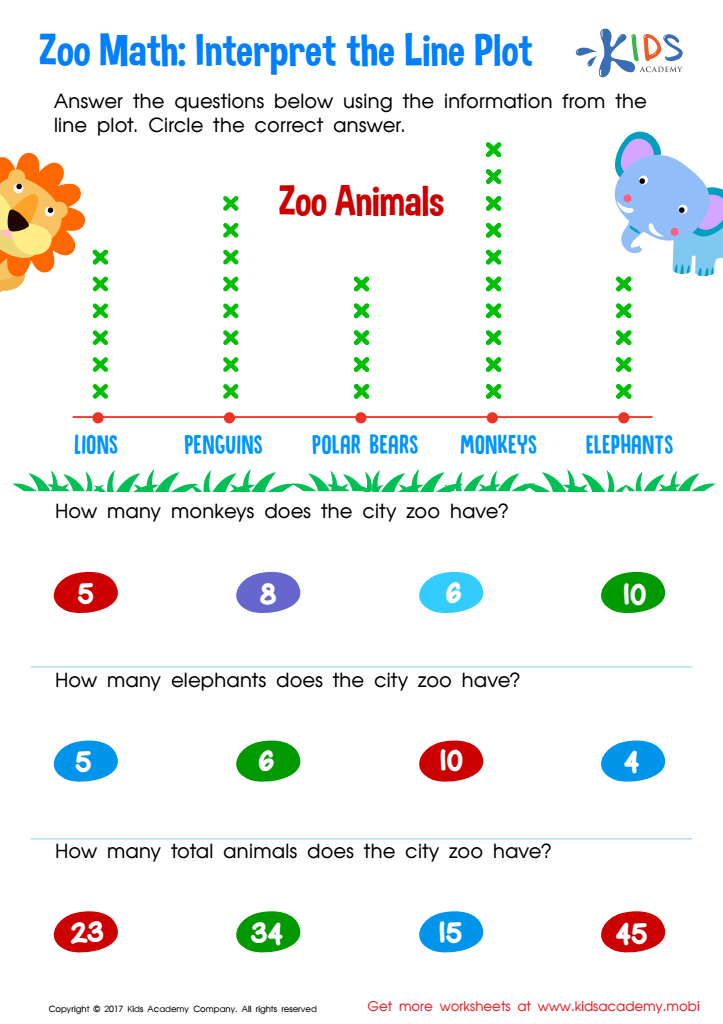
Interpret Line Plot Worksheet
Kids can learn to read graphs and analyze data easily with line plots. A fun zoo animal worksheet motivates kids to answer questions by reading the line plot and finding out how many animals a local zoo has.
 Assign to My Students
Interpret Line Plot Worksheet
Worksheet
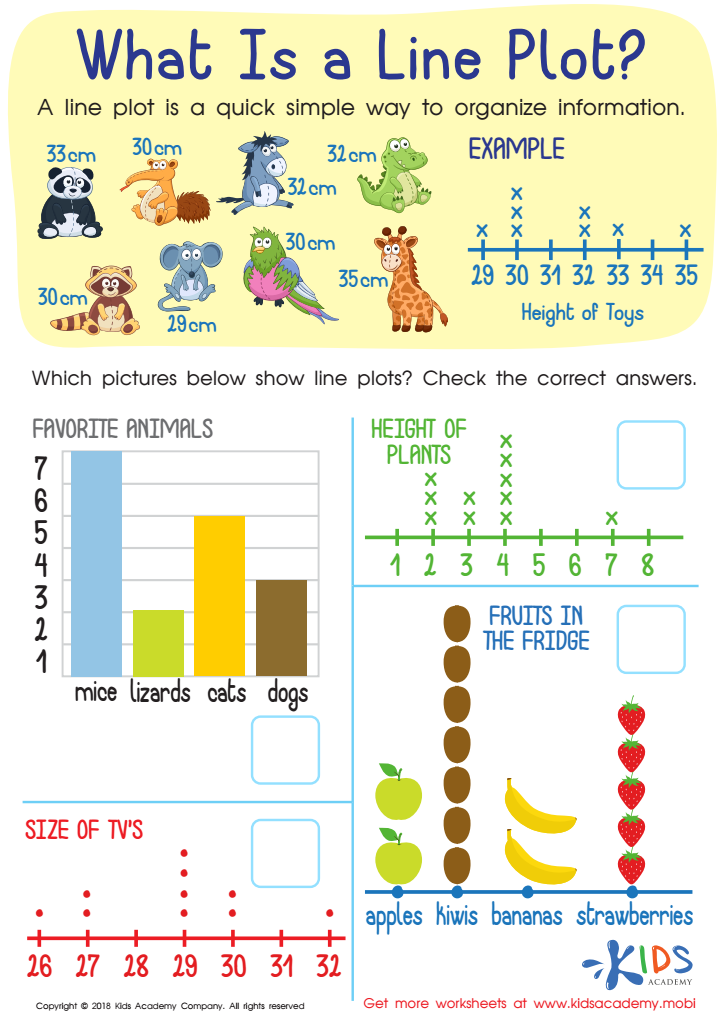
What Is a Line Plot? Worksheet
A line plot is an ideal method to organize data. For example, if your child needs to arrange objects for easy recognition, draw a line plot. This worksheet can help teach the skill. Kids must identify correct pictures that display line plots.
What Is a Line Plot? Worksheet
Worksheet
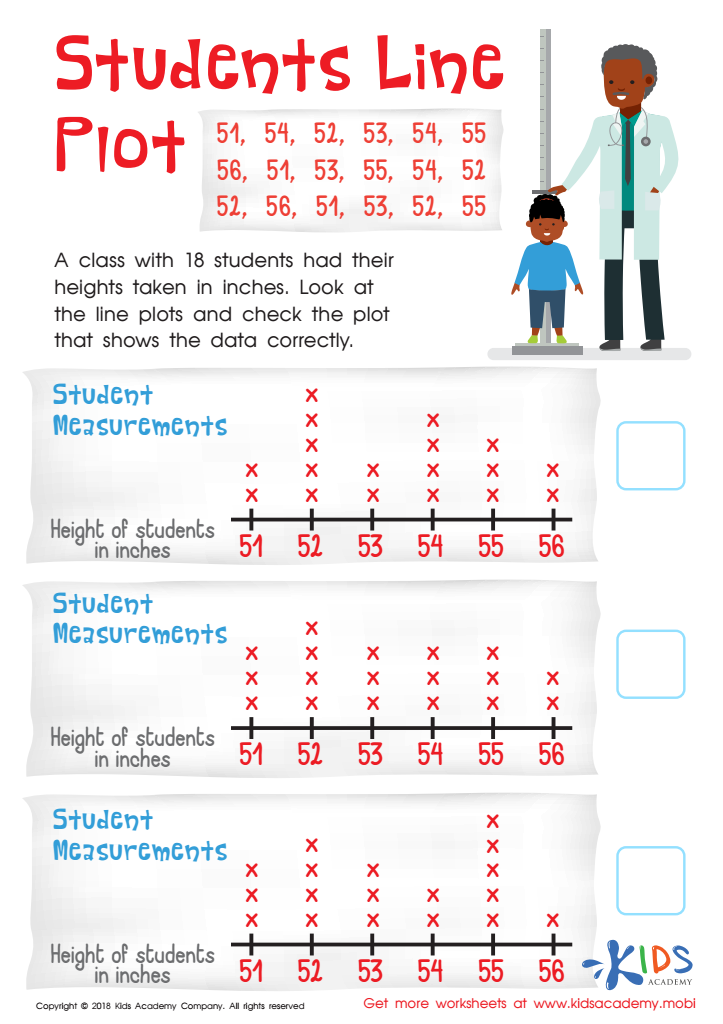
Students Line Plot Worksheet
Help your students learn to draw a line plot correctly by giving real examples. In this exercise, they must check the data of a class of 18 students' heights (in inches). Have them compare two line plots and figure out which one is correct.
Students Line Plot Worksheet
Worksheet
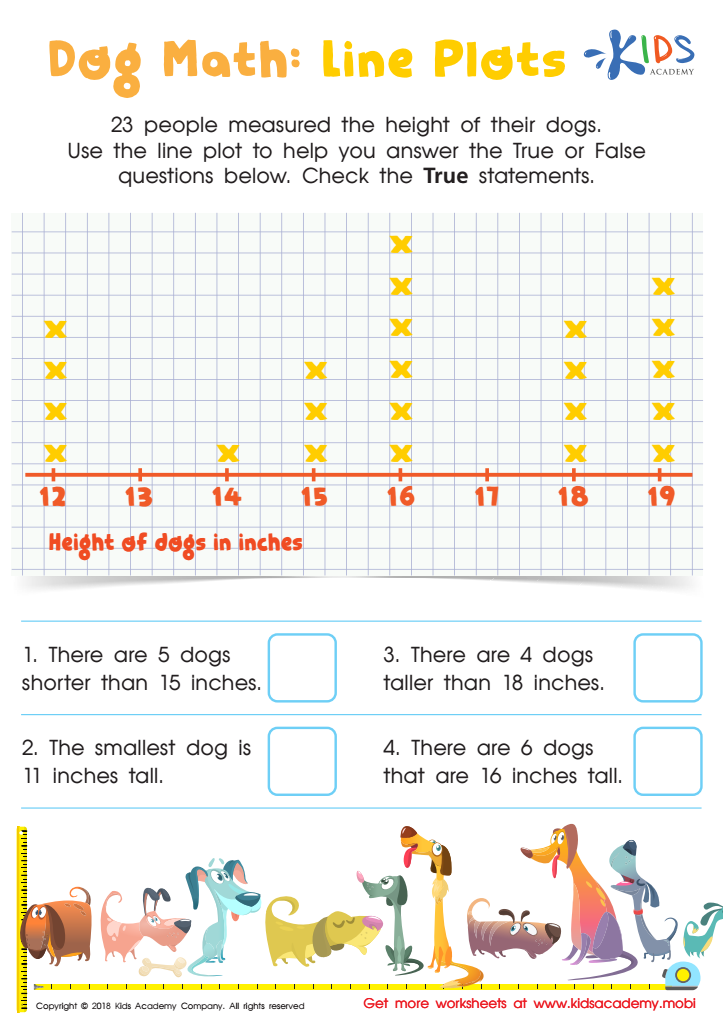
Dog Math: Line Plots Worksheet
Do your kids love dogs? If you have family pets, your kids may be excited to do this worksheet. It involves a line plot and True/False questions about 23 people measuring their dogs' heights. Assist your kids in verifying the statements that are True.
Dog Math: Line Plots Worksheet
Worksheet
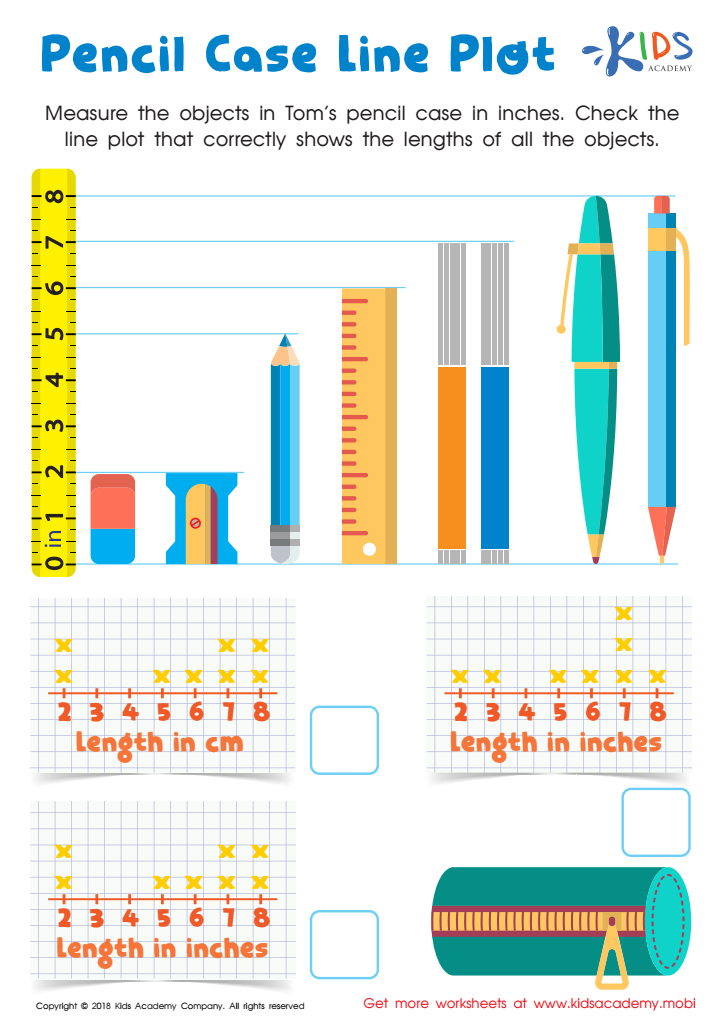
Pencil Case Line Plot Worksheet
Explain to your child that a line plot is a way to organize information. For example, if they need to arrange objects, they should draw a line plot. Now, have them help Tom measure the objects in his pencil case in inches. Then, have them check the line plot that accurately shows the length.
Pencil Case Line Plot Worksheet
Worksheet
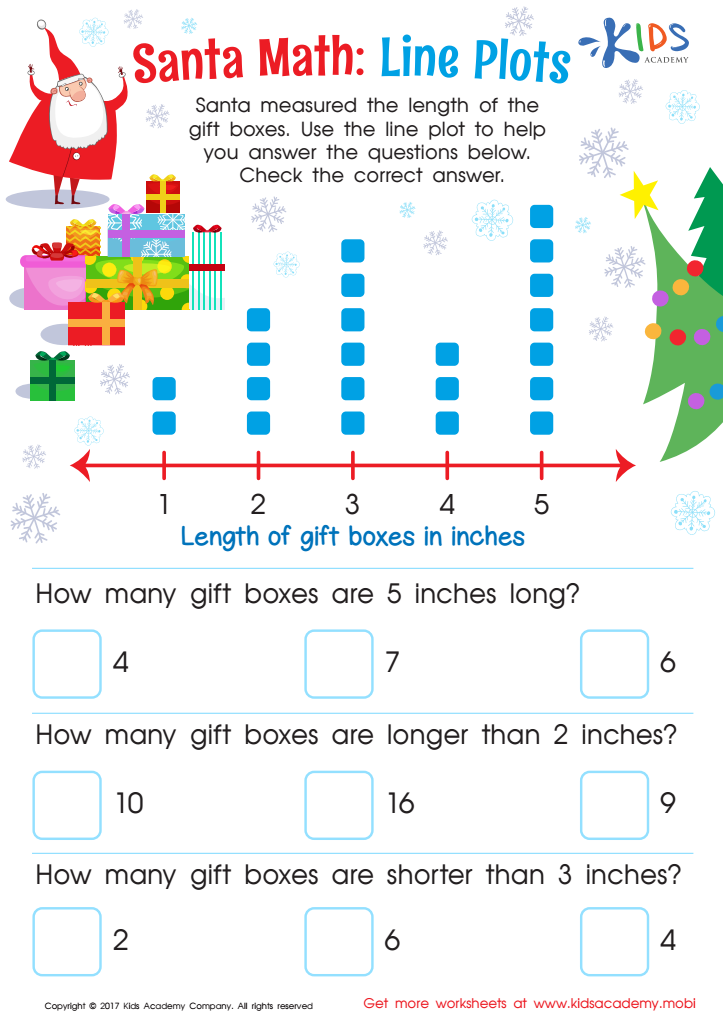
Line Plot Worksheet
Help your child measure presents with Santa using this 2nd grade line plot worksheet! It's a fun way to boost math skills and analyze data. Plus, it's sure to delight your child!
Line Plot Worksheet
Worksheet
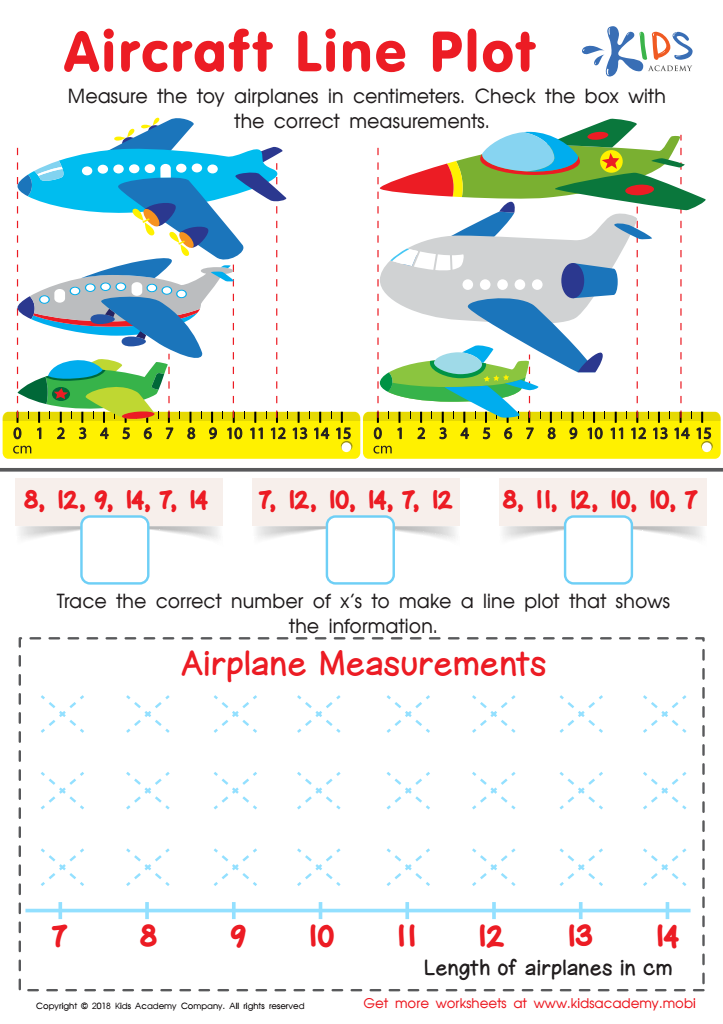
Aircraft Line Plot Worksheet
If your kids are aviation enthusiasts, they'll love this worksheet! Look at the picture with them, then ask them to measure the toy planes in cm. Check the box with the right measurements and then trace the x's to make a line plot with the data.
Aircraft Line Plot Worksheet
Worksheet
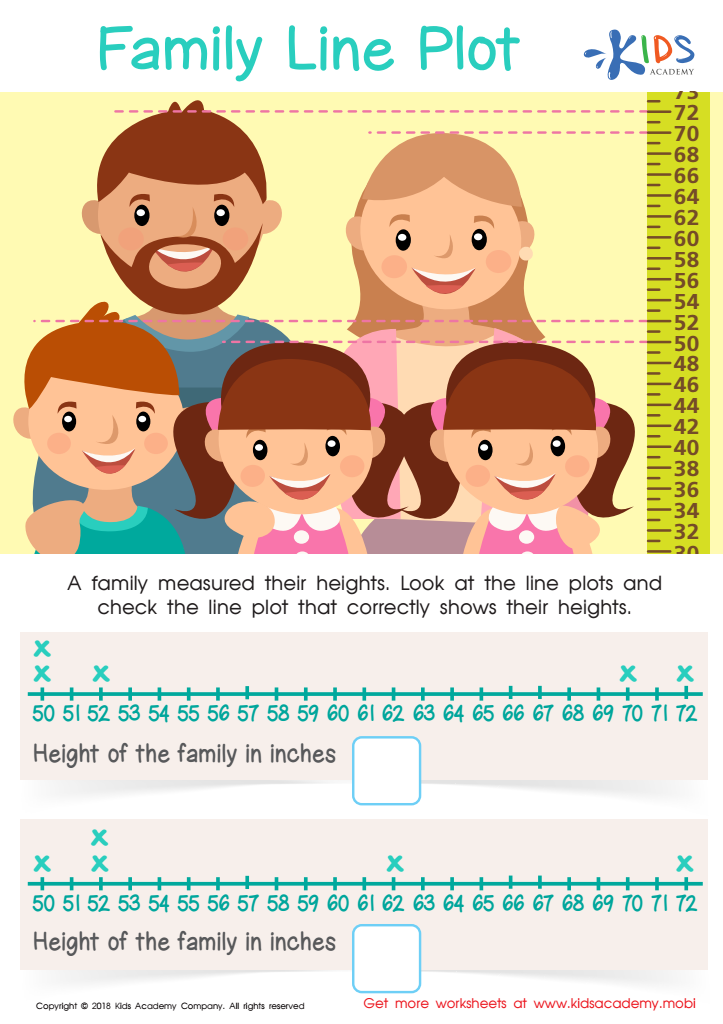
Family Line Plot Worksheet
Have you and your kids ever done a family height measurement? How did it go? If they're familiar with it, this worksheet may be simpler. The picture shows a family with their heights recorded. Get your kid to look at the line plots and choose the one that shows the family's heights accurately.
Family Line Plot Worksheet
Worksheet
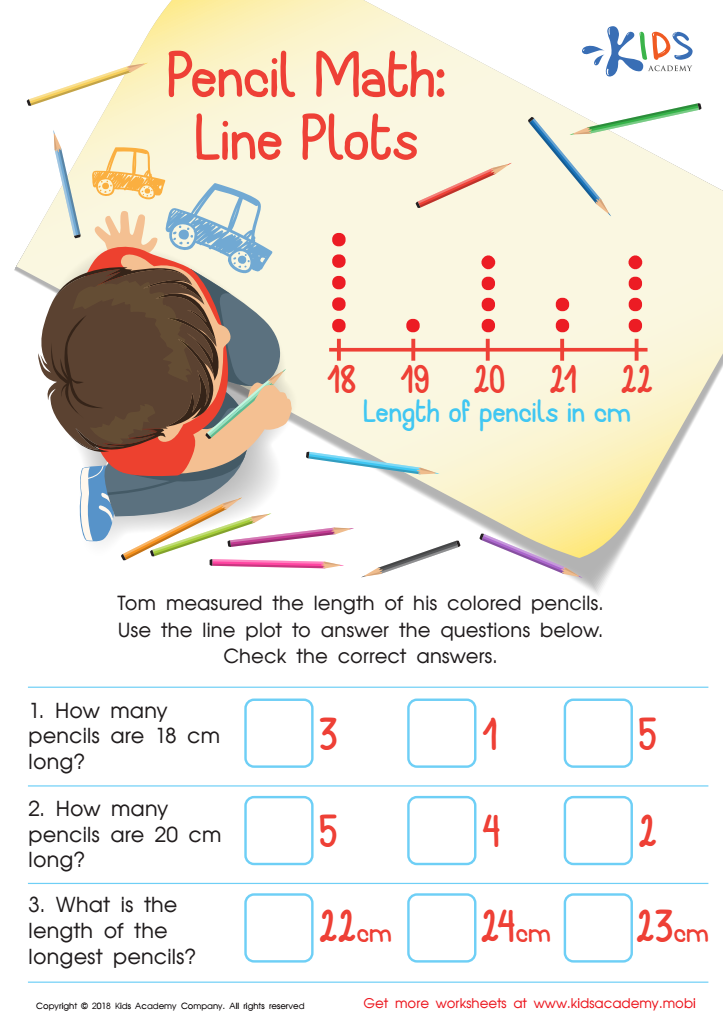
Pencil Math: Line Plots Worksheet
Your child will meet Tom in this worksheet, helping him find the length of his colored pencils. Tom has written the lengths in cm, and the line plot will help your kids answer the questions. Check the correct answers for each, including how many pencils are of a certain length. The line plot makes it easy to find the answers.
Pencil Math: Line Plots Worksheet
Worksheet
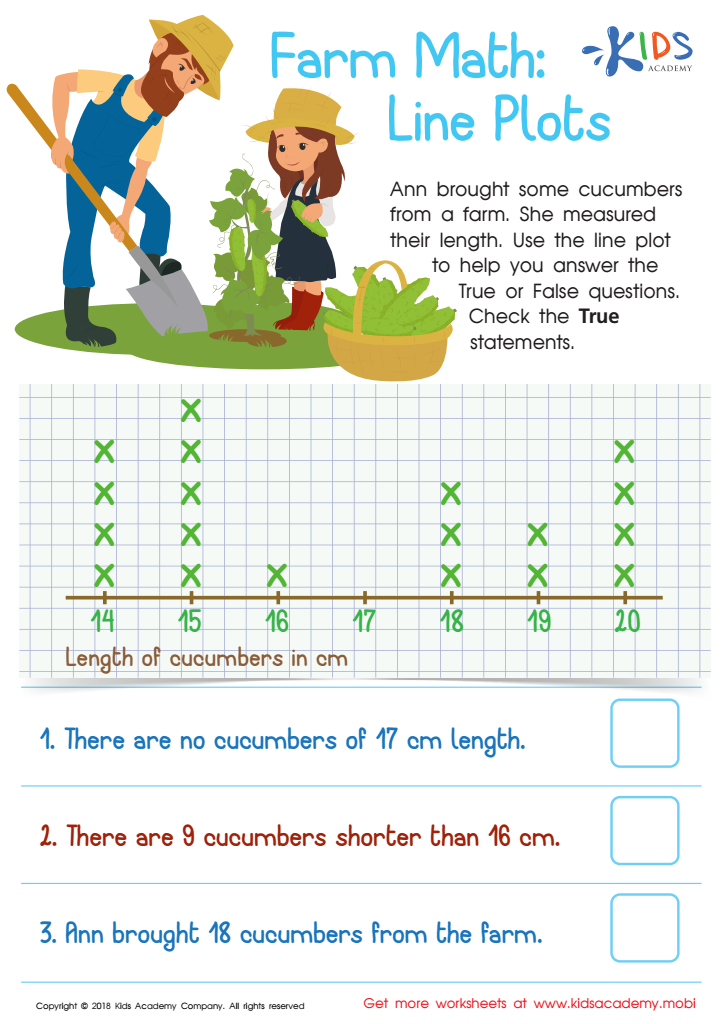
Farm Math: Line Plots Worksheet
Ann brought cucumbers from a farm and measured their length. She drew a line plot for your students to use to answer True/False questions about the number and length of the cucumbers. Ask your students to check only the True statements. (80 words)
Farm Math: Line Plots Worksheet
Worksheet
Join Kids Academy for Free
Who is primarily going to use this learning content?







%20(1).jpg)
Understanding line plots is crucial for young children as it lays the groundwork for essential math and analytical skills. For ages 4-8, grasping these concepts early can ignite a love for mathematics and make complex ideas more accessible later on. Line plots are simple yet powerful tools that help kids visualize data and understand the relationship between numbers, quantities, and patterns.
First, they offer a hands-on way to practice counting and basic addition, since children often need to tally the data before plotting. This can strengthen their numeracy skills in an enjoyable, engaging manner. Second, line plots necessitate the ability to organize information logically, enhancing problem-solving abilities and critical thinking. They teach students how to interpret data, an essential skill in both academic and everyday contexts.
Finally, understanding line plots can boost children's confidence and willingness to tackle more challenging math problems, setting a solid foundation for future learning. Teachers and parents who invest time in teaching line plots provide their kids with a head start in math proficiency, which subsequently supports their overall academic success. Ultimately, these early experiences shape a child's attitude towards learning and help prepare them for a world increasingly driven by data and quantitative reasoning.








