Understanding sizes Math Worksheets for Ages 4-8
4 filtered results
-
From - To
Discover an engaging collection of "Understanding Sizes" math worksheets designed for children ages 4-8! These worksheets focus on helping young learners grasp concepts of size, comparison, and measurement through fun activities. From identifying big and small objects to sequencing them by size, our resources promote critical thinking and cognitive development. Each worksheet combines colorful illustrations and age-appropriate challenges to maintain student interest while reinforcing foundational math skills. Perfect for homeschooling, classroom use, or additional practice at home, these worksheets make learning about sizes enjoyable and effective. Start your child's mathematical journey today with our interactive and stimulating materials!
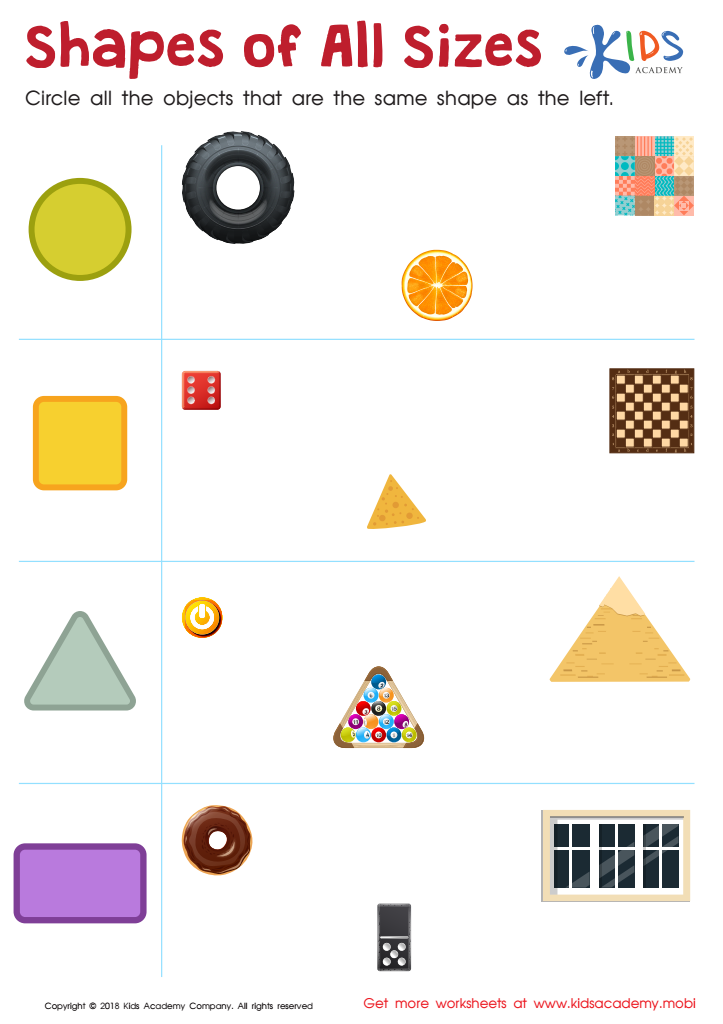
Shapes of All Sizes Worksheet
 Assign to My Students
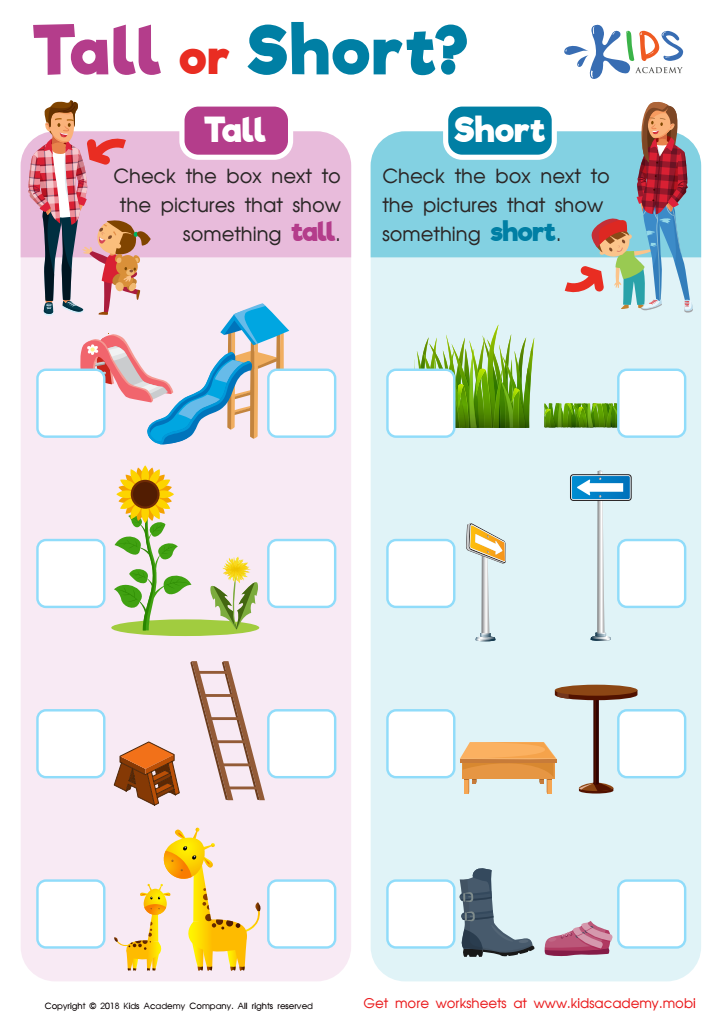
Tall or Short? Worksheet
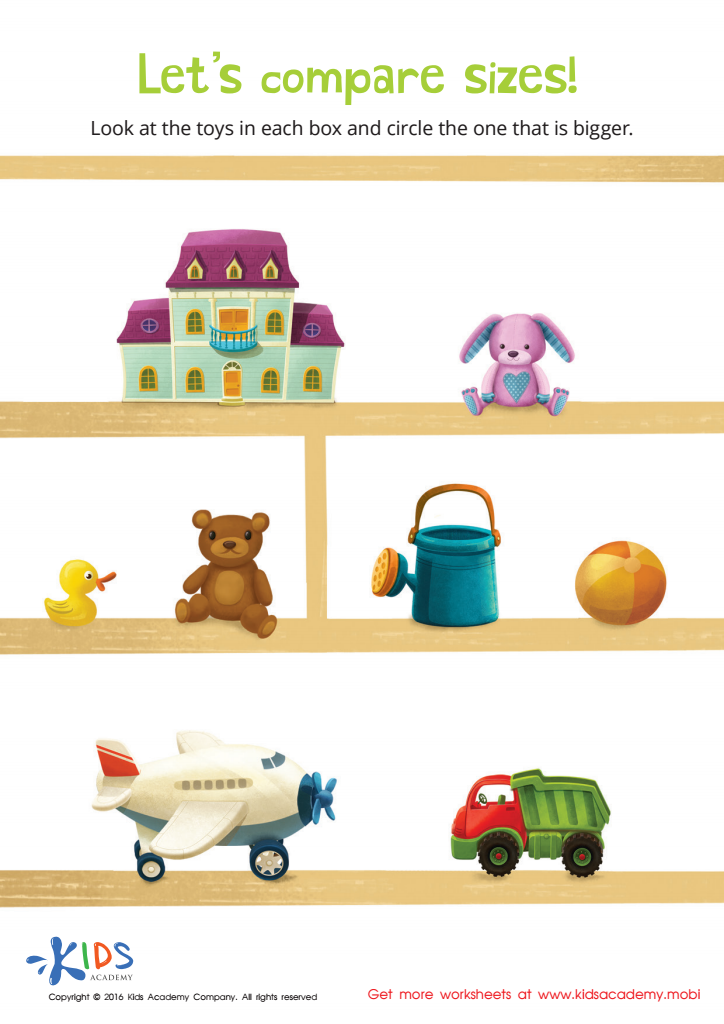
Classifying by Size Sorting Worksheet
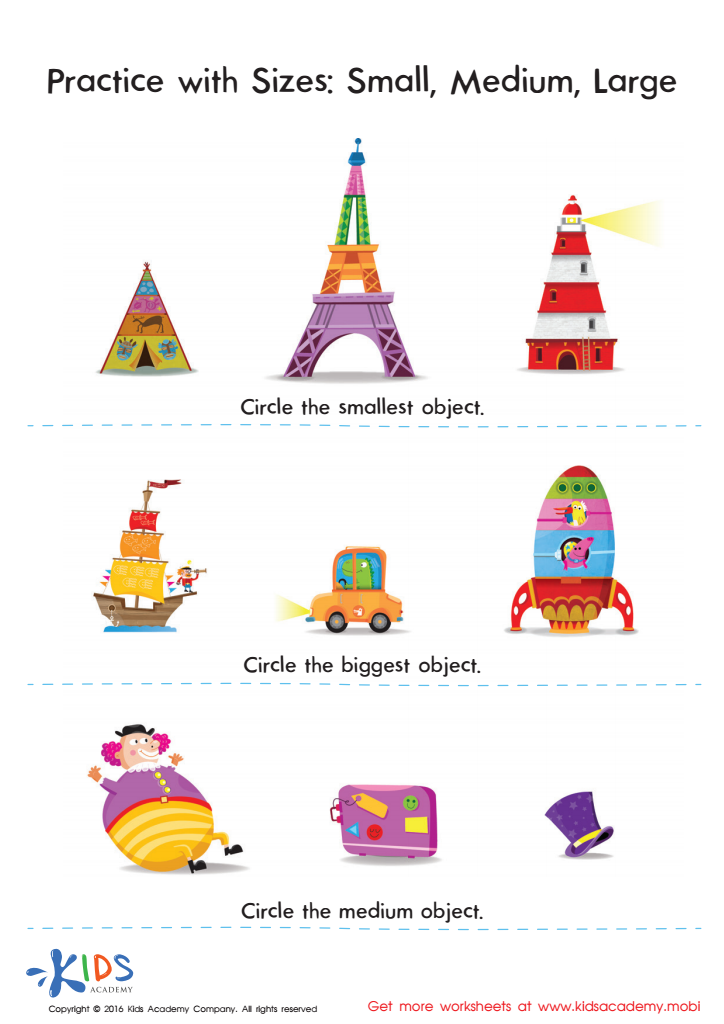







Understanding sizes is a fundamental concept in early mathematics education, especially for children aged 4-8. This developmental phase is crucial, as it forms the foundation for more complex mathematical concepts later in life. Parents and teachers should care about teaching sizes because it enhances children's critical thinking and cognitive skills. When children learn to compare, order, and categorize objects by size, they engage in problem-solving and logical reasoning.
Moreover, grasping the concept of sizes includes both physical dimensions and abstract understanding, which is essential in real-world applications. For example, recognizing that one object can be "larger" or "smaller" influences daily activities like cooking, tailoring, or even recognizing distances in play.
Additionally, understanding sizes encourages vocabulary development. Words like "bigger," "smaller," "taller," and "shorter" contribute to children's communication skills. Socially, this comprehension fosters collaboration with peers, as children often work in groups to seat toys or organize objects.
Finally, integrating size-related activities into playtime or education cultivates a child's ability to visualize spatial relationships, a skill vital in STEM fields. Thus, prioritizing size awareness in early education leads to a more confident, capable, and numerically intuitive generation.








