Practical math application Measurement Worksheets for Ages 4-8
7 filtered results
-
From - To
Discover our engaging Practical Math Application Measurement Worksheets designed for children ages 4-8! These fun and interactive worksheets provide young learners with essential skills in measurement, focusing on real-world applications to deepen their understanding. Students will explore concepts like length, weight, and volume through stimulating activities that foster critical thinking. Perfect for at-home practice or classroom use, our measurement worksheets promote hands-on learning, helping kids connect math to everyday experiences. Equip your child with foundational skills while making learning enjoyable! Explore our collection today and watch their confidence in math grow!
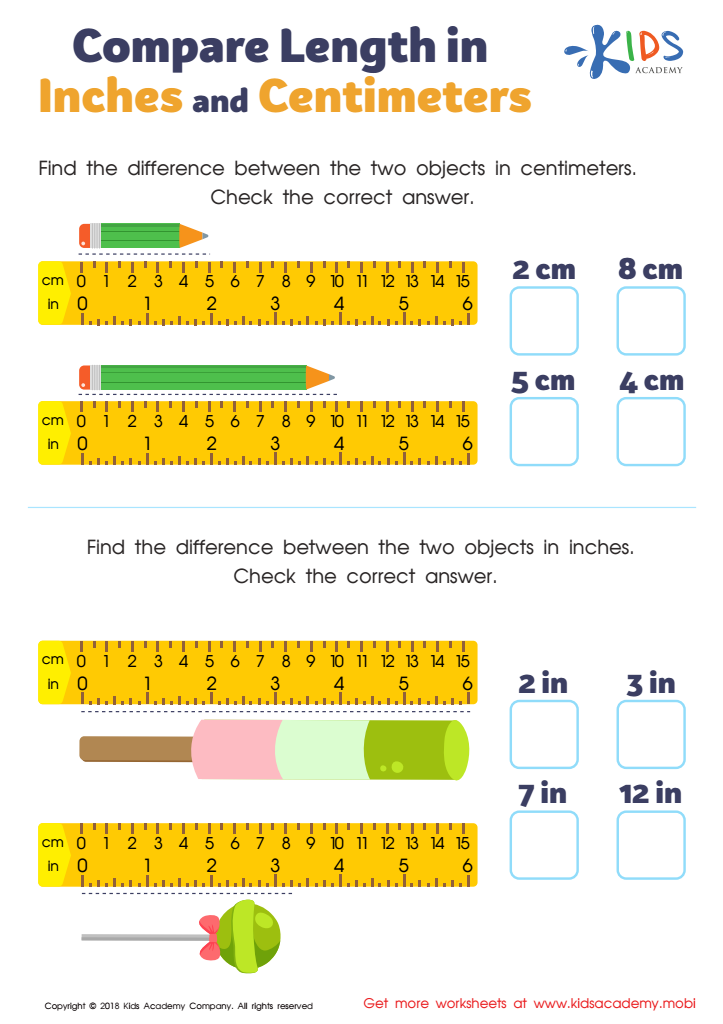
Compare Length in Inches and Centimeters Worksheet
 Assign to My Students
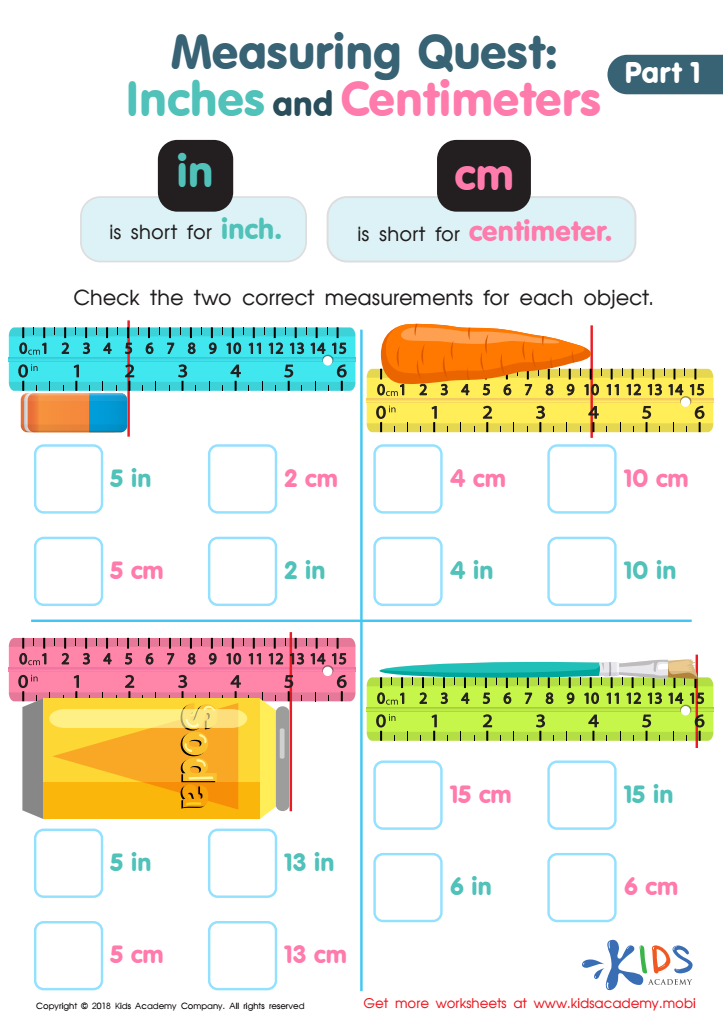
Measuring Quest: Inches and Centimeters Worksheet
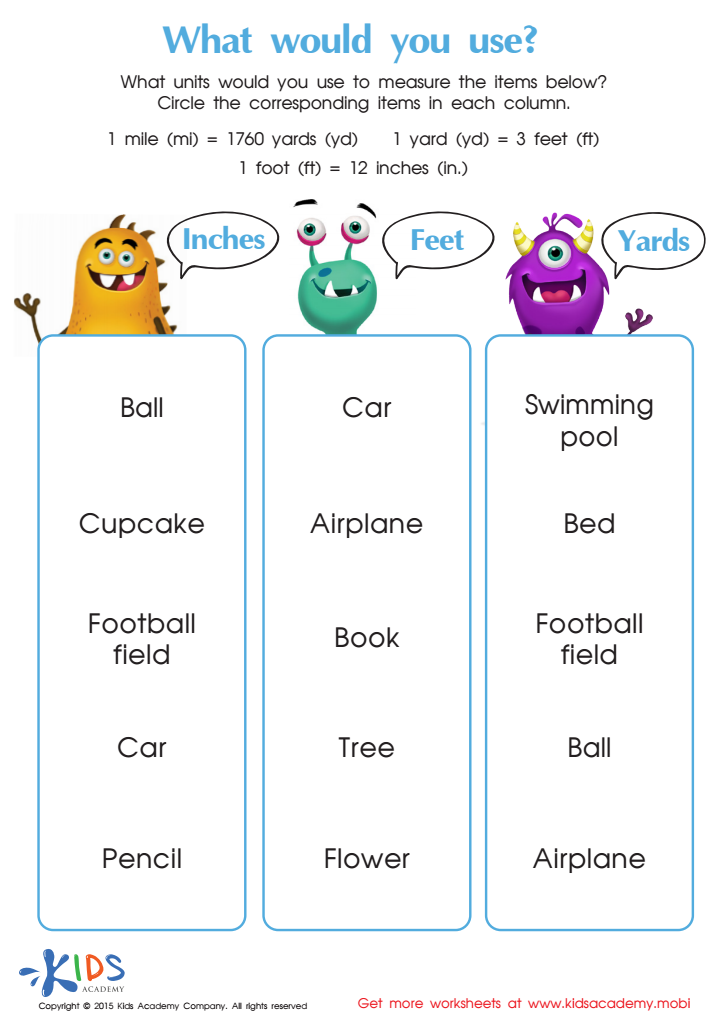
Learning about measuring objects in inches, feet and yards Worksheet
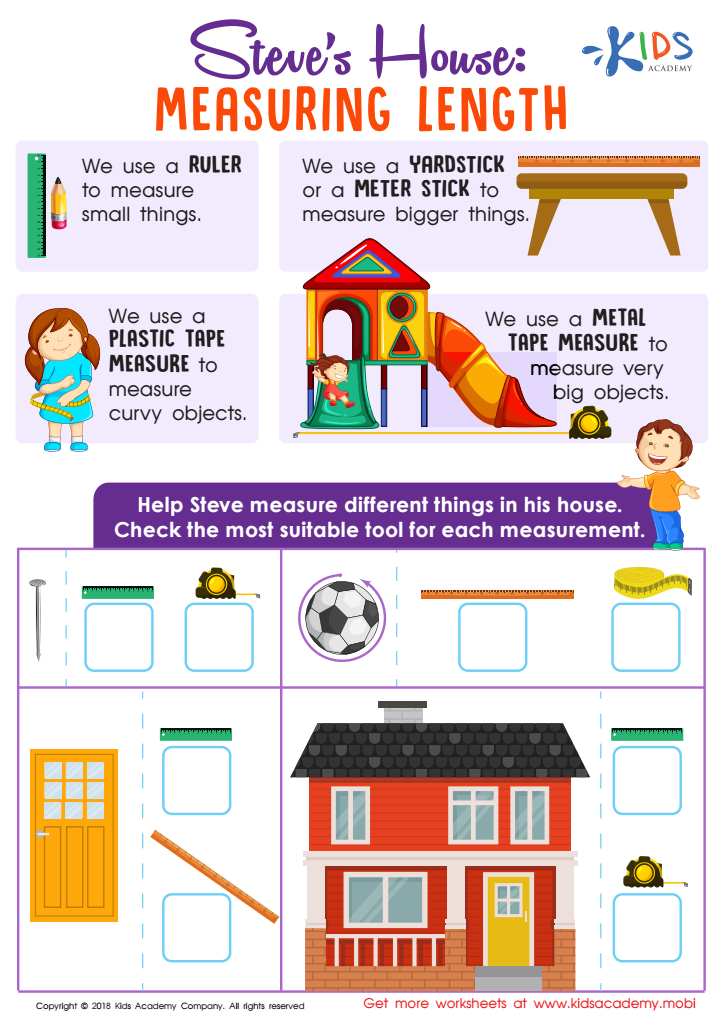
Steve's House: Measuring Length Worksheet
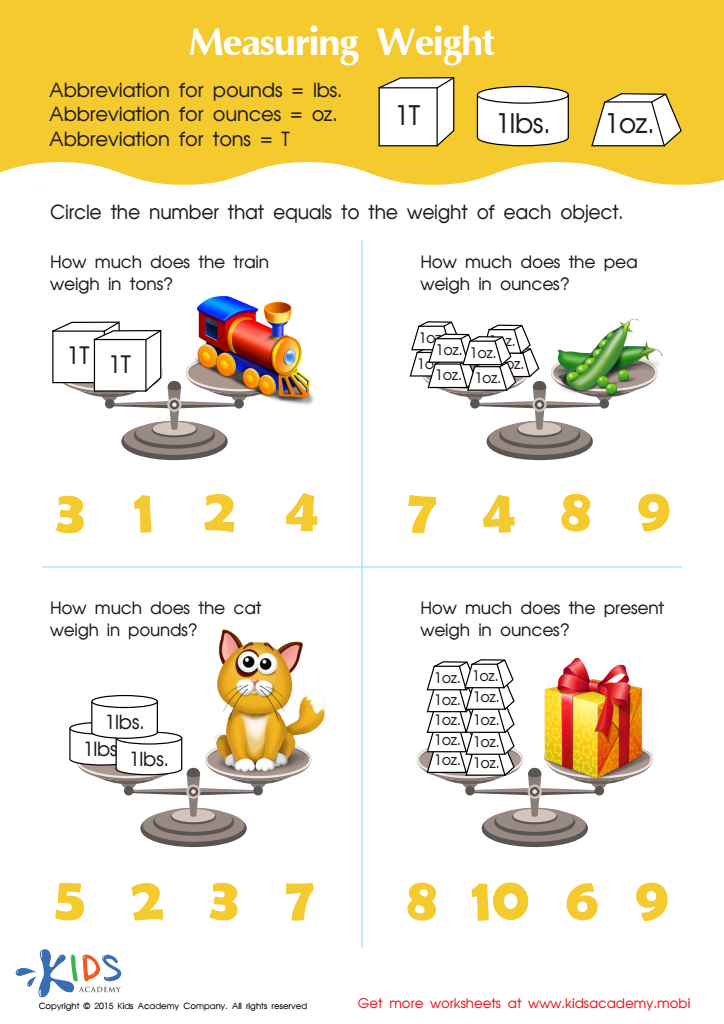
Measuring Weight in Ounces, Pounds and Tons Worksheet
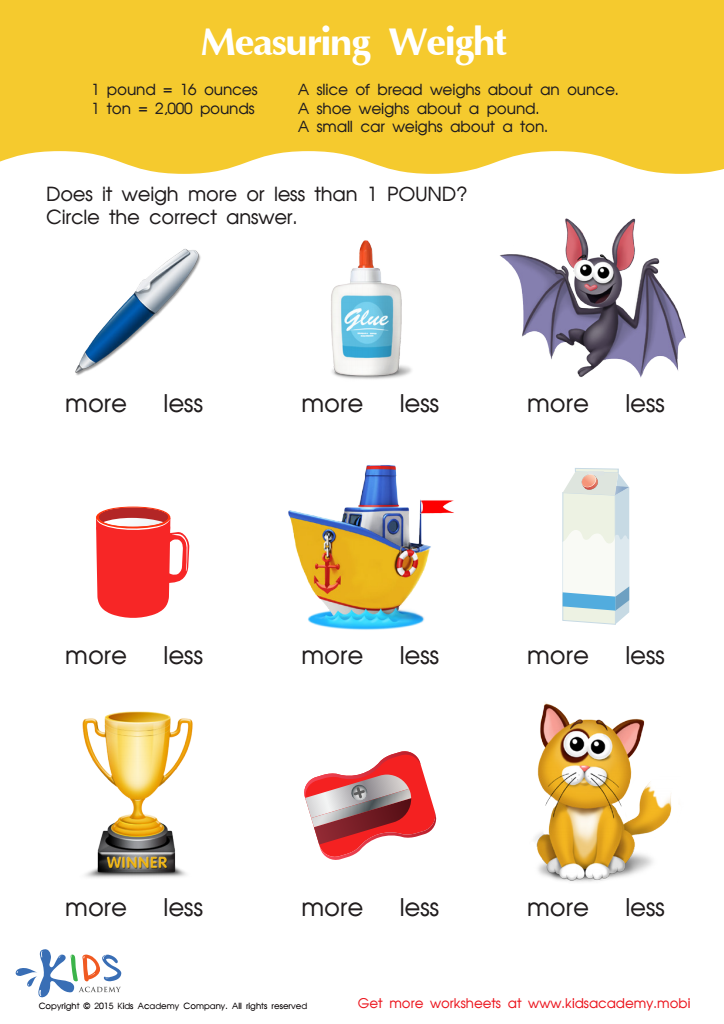
Measuring weight in pounds Worksheet
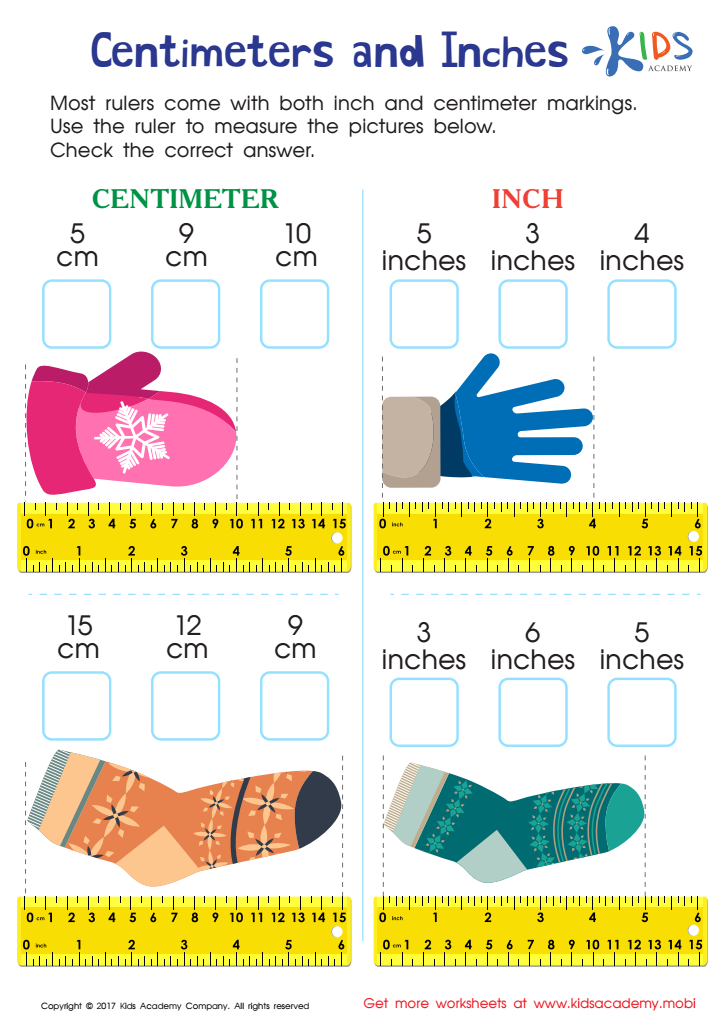
Centimeters and Inches Worksheet








Practical math application, particularly measurement, is vital for children aged 4-8 as it lays the groundwork for essential life skills and critical thinking. During these formative years, children explore and learn about the world around them, and measurement serves as a direct bridge between math concepts and real-life activities.
Engaging with measurement helps children develop logical thinking, problem-solving skills, and a sense of spatial awareness. For instance, when children measure ingredients while baking or compare the heights of plants, they learn to apply mathematical concepts in tangible ways. This not only enhances their understanding of units and scales but also encourages curiosity, creativity, and exploration.
Furthermore, incorporating measurement in daily activities simplifies complex ideas, making math relatable and enjoyable—key components in fostering a lifelong positive attitude toward learning. By encouraging practical measurement exercises, parents and teachers support children's cognitive development, boost their confidence, and equip them with skills necessary for more advanced mathematical concepts in the future.
In a world driven by data and numbers, instilling a strong foundation in measurement early on empowers children to navigate daily challenges, stimulating both academic and personal growth. Hence, both parents and teachers should prioritize practical math applications in their interactions with young learners.








