Multiplication Worksheets for Ages 4-8 - Page 5
104 filtered results
-
From - To
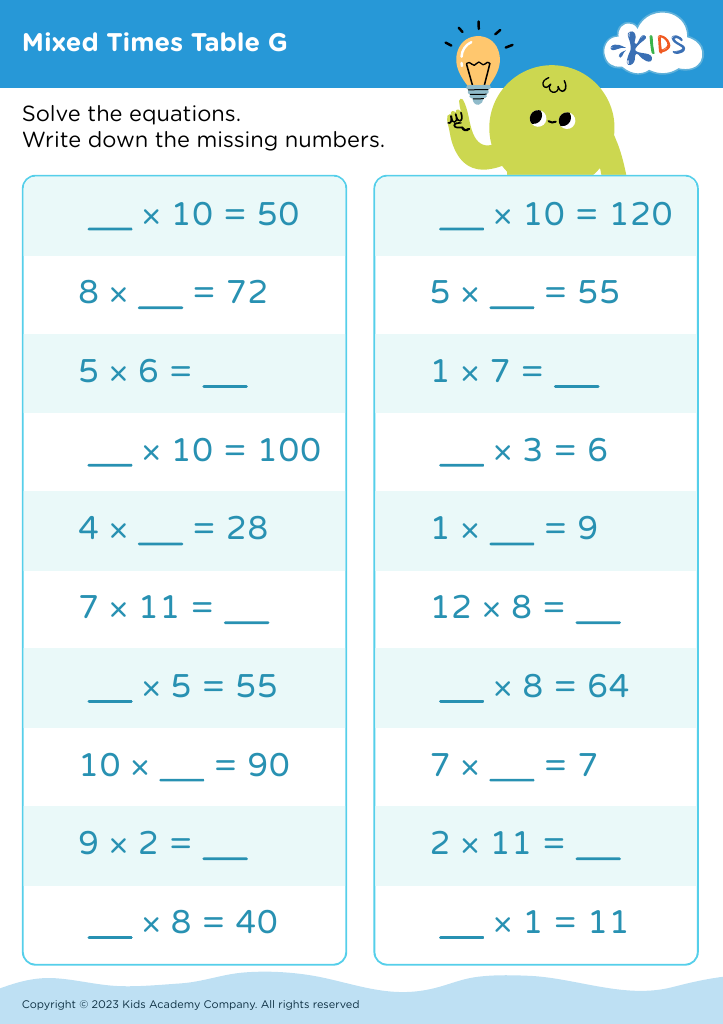
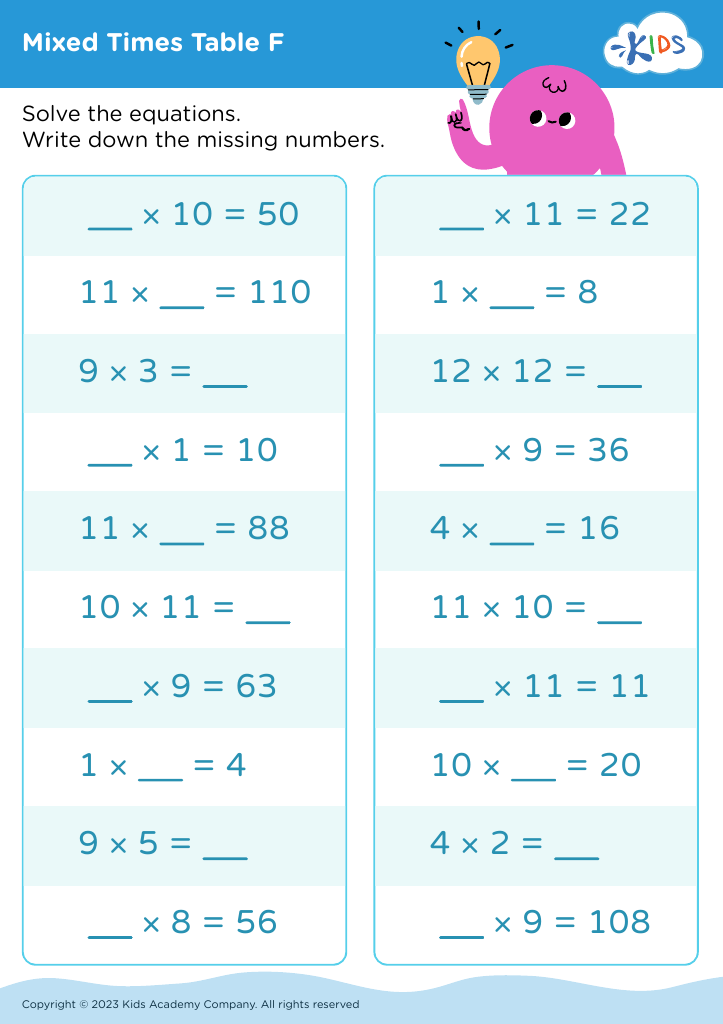
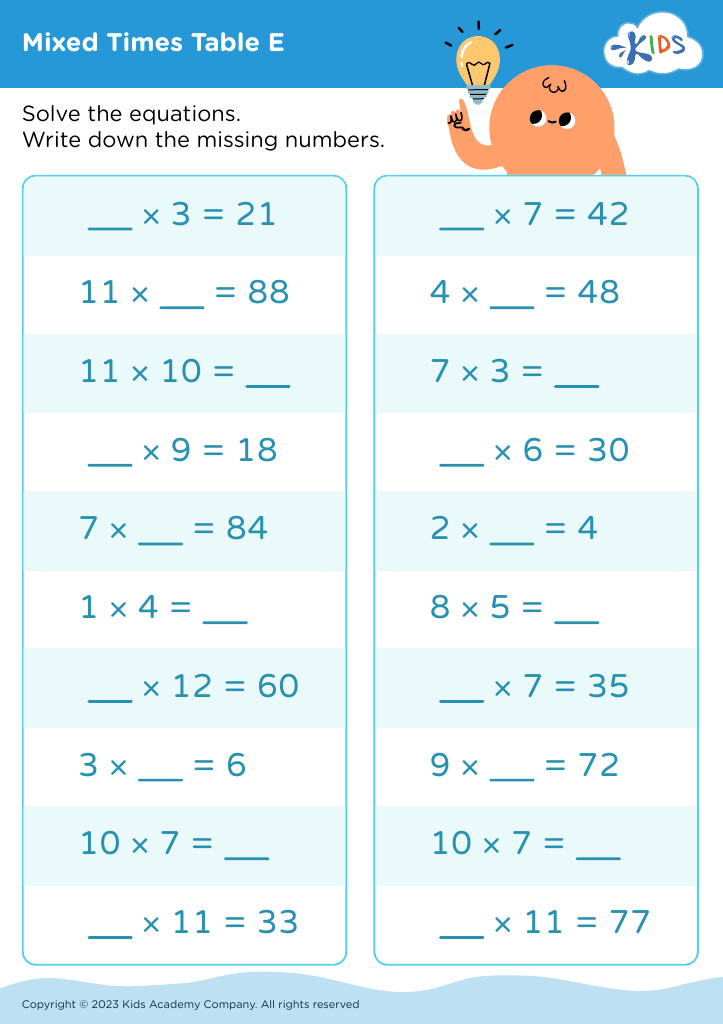
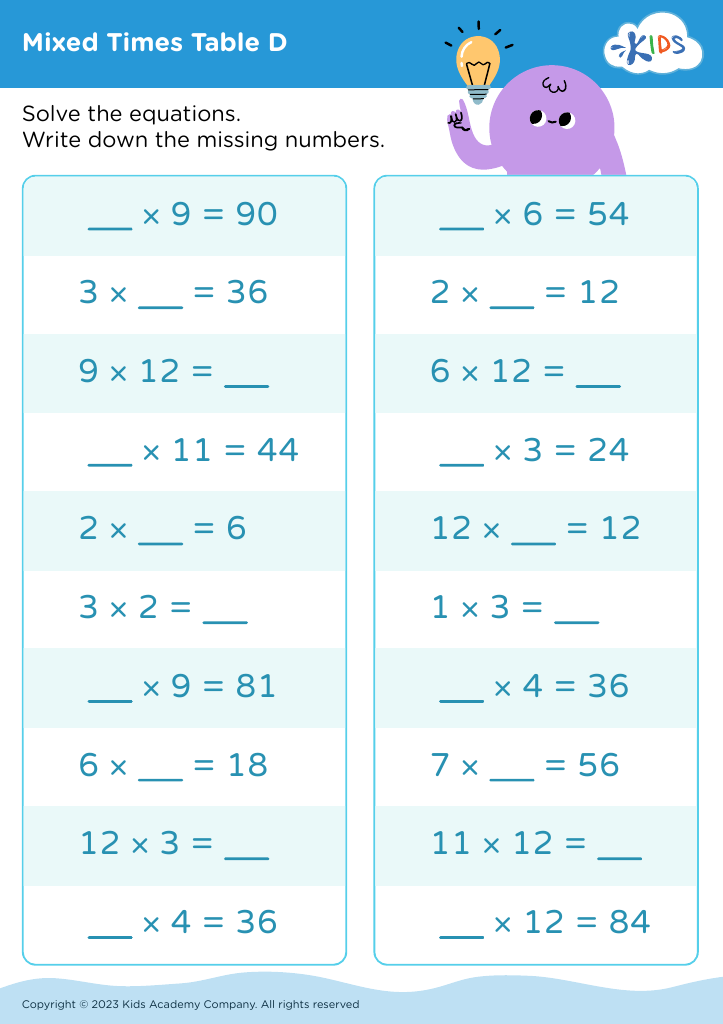
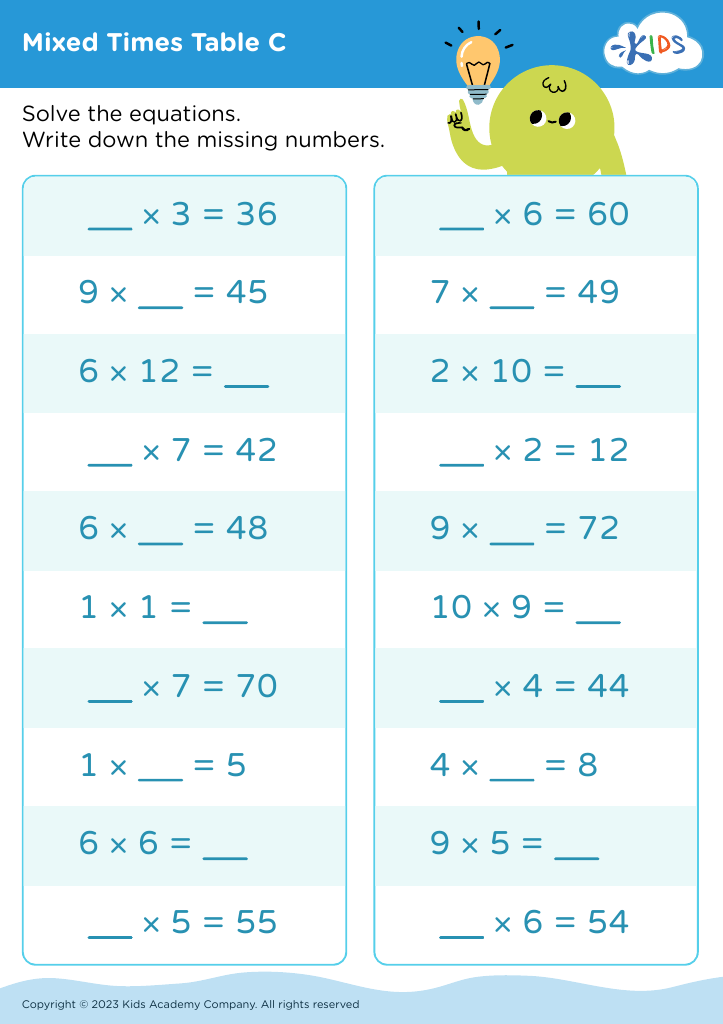
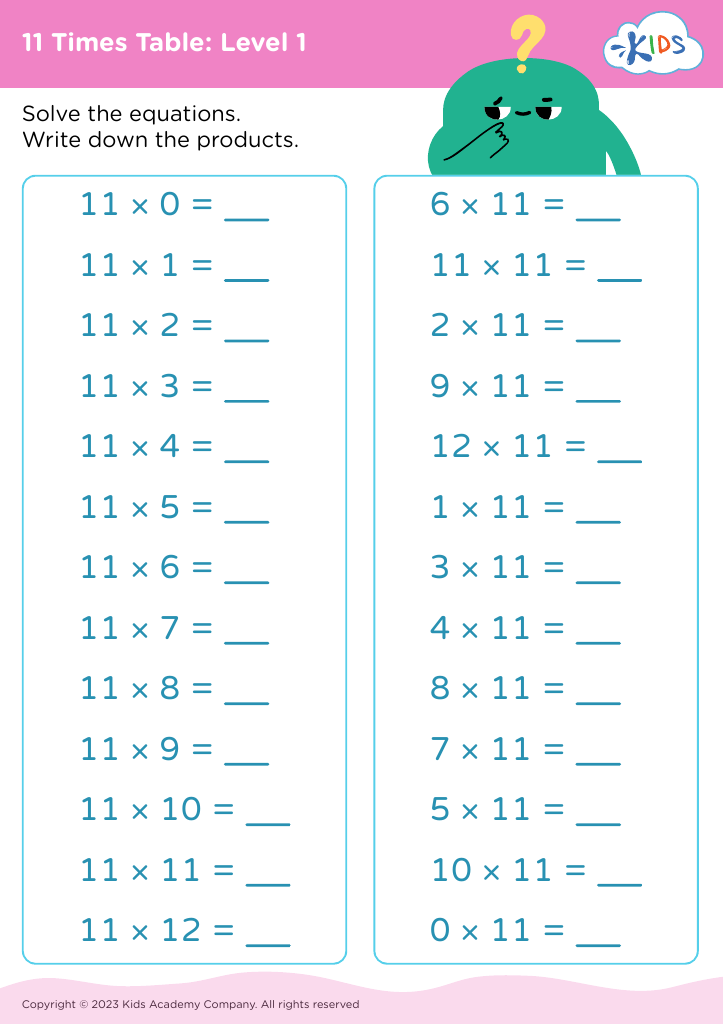
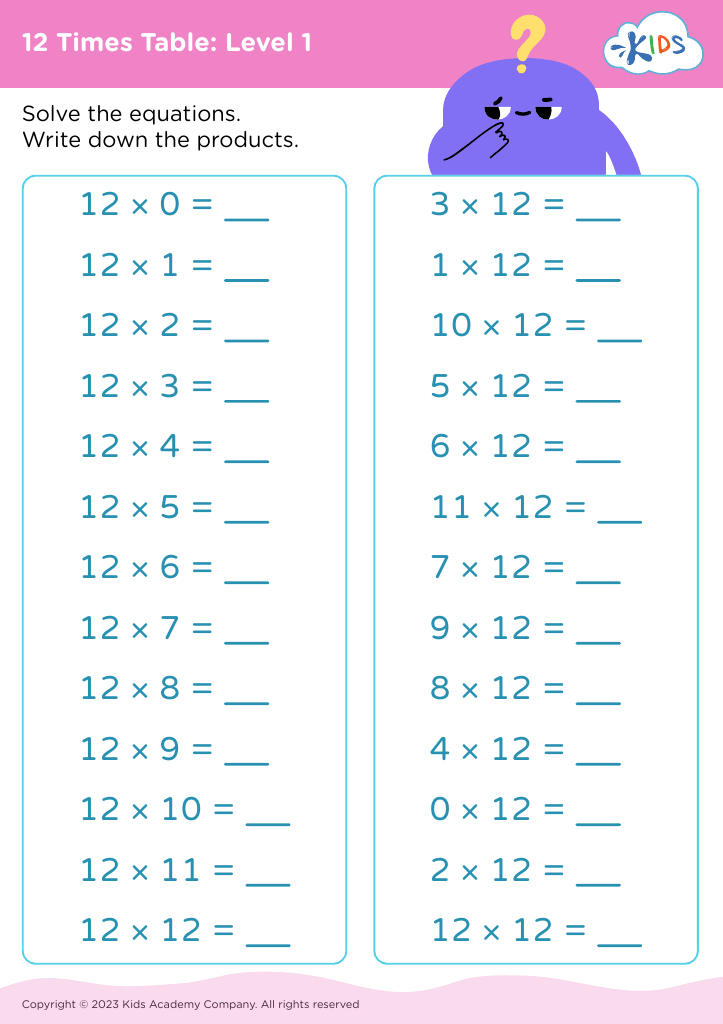
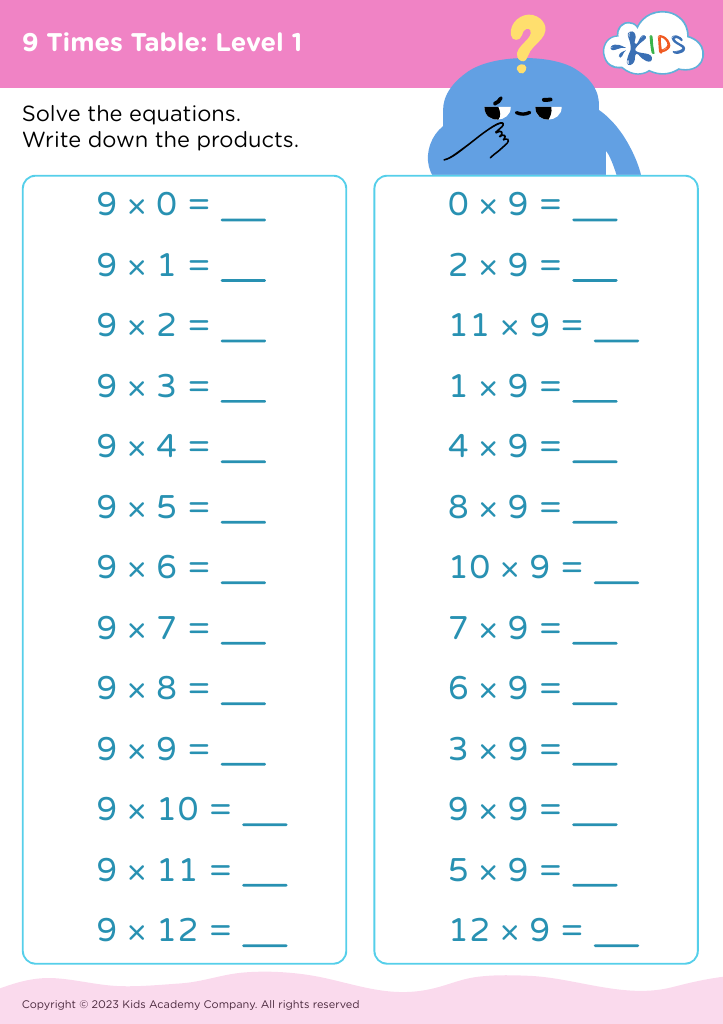



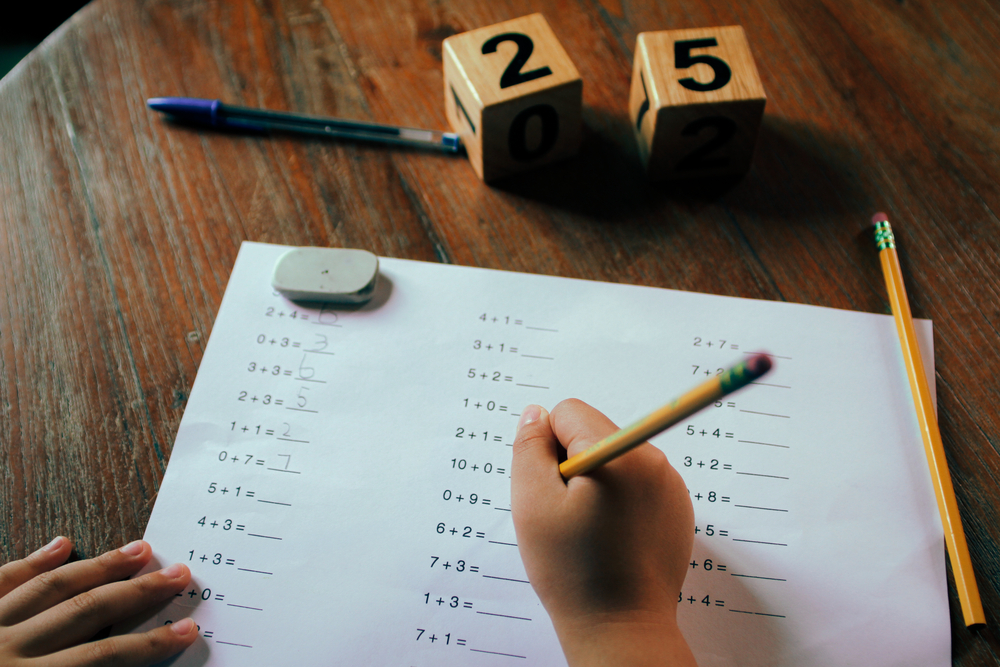




Multiplication is a fundamental mathematical concept that forms the basis for more complex problem-solving and analytical skills later in life. For children aged 4-8, introducing multiplication can enhance their cognitive development in several ways. First, learning multiplication fosters number sense, helping children understand relationships between numbers, which is crucial for future arithmetic operations.
Early mastery of multiplication lays a strong foundation for skills such as division, fractions, and data interpretation. By grasping these concepts early, children will be more adaptable to higher-level mathematics, reducing anxiety and increasing confidence as they progress through their education.
Additionally, multiplication encourages critical thinking and problem-solving. When children begin to learn multiplication, they connect it to real-world applications, such as grouping, sharing, and budgeting, making math both relatable and enjoyable.
Moreover, involving parents and teachers in this learning process fosters a collaborative atmosphere that can motivate students. They can use games, visual aids, and everyday situations to emphasize the importance of multiplication, reinforcing a positive and constructive learning environment.
Ultimately, parents and teachers should care about multiplication for ages 4-8 because it not only builds a vital mathematical foundation but also enhances children's overall cognitive and emotional development.








