Times Tables Worksheets for Ages 4-8 - Page 2
34 filtered results
-
From - To
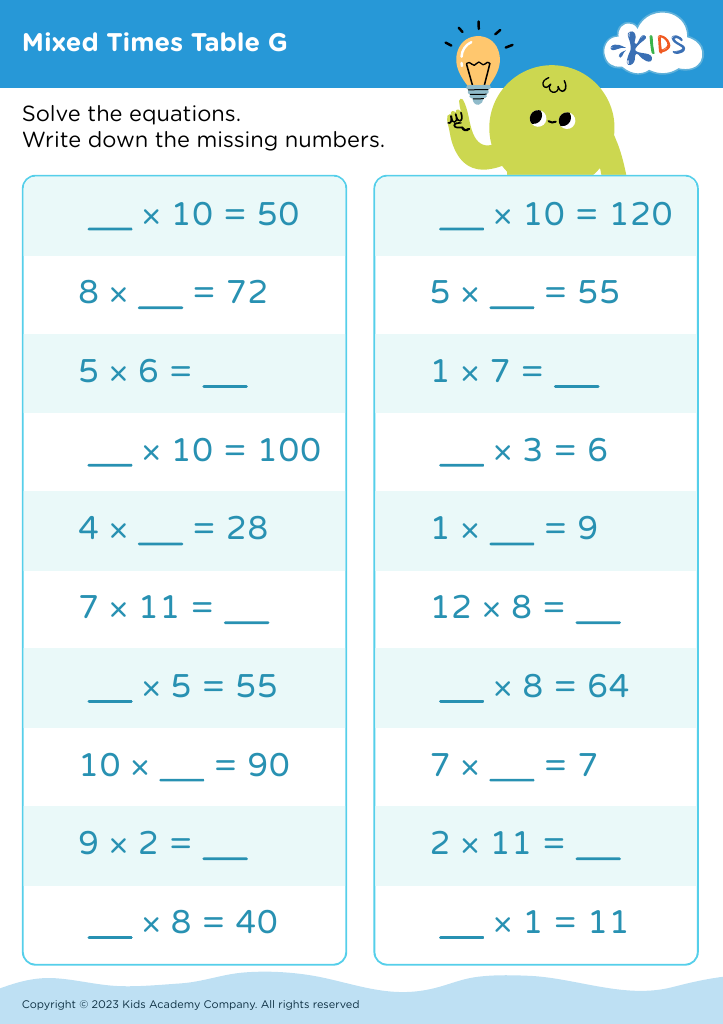
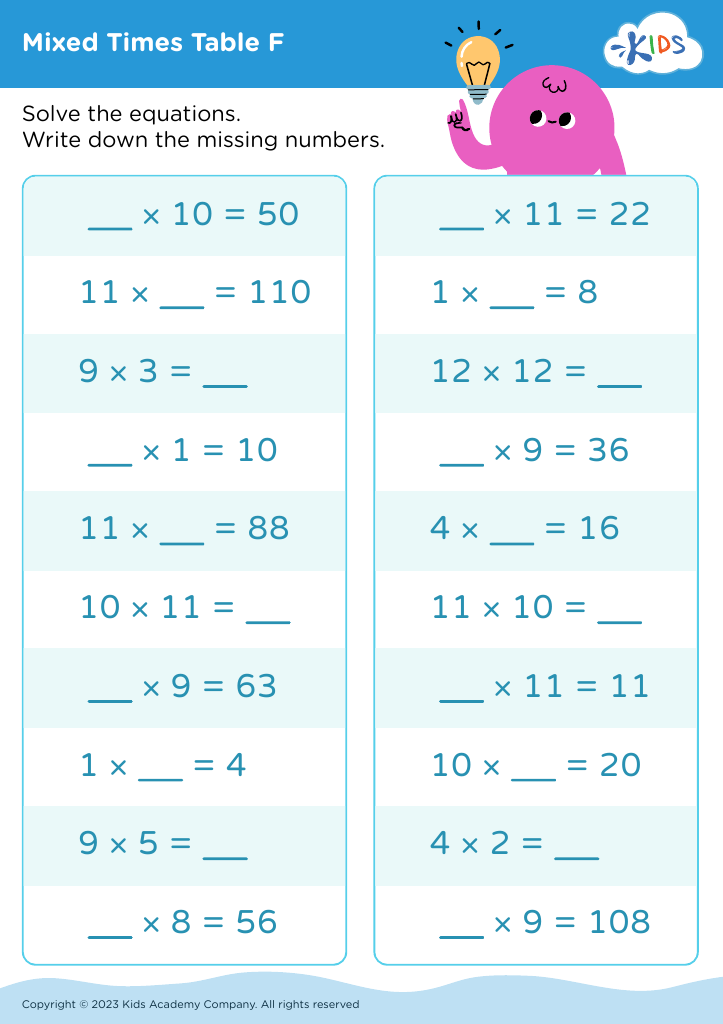
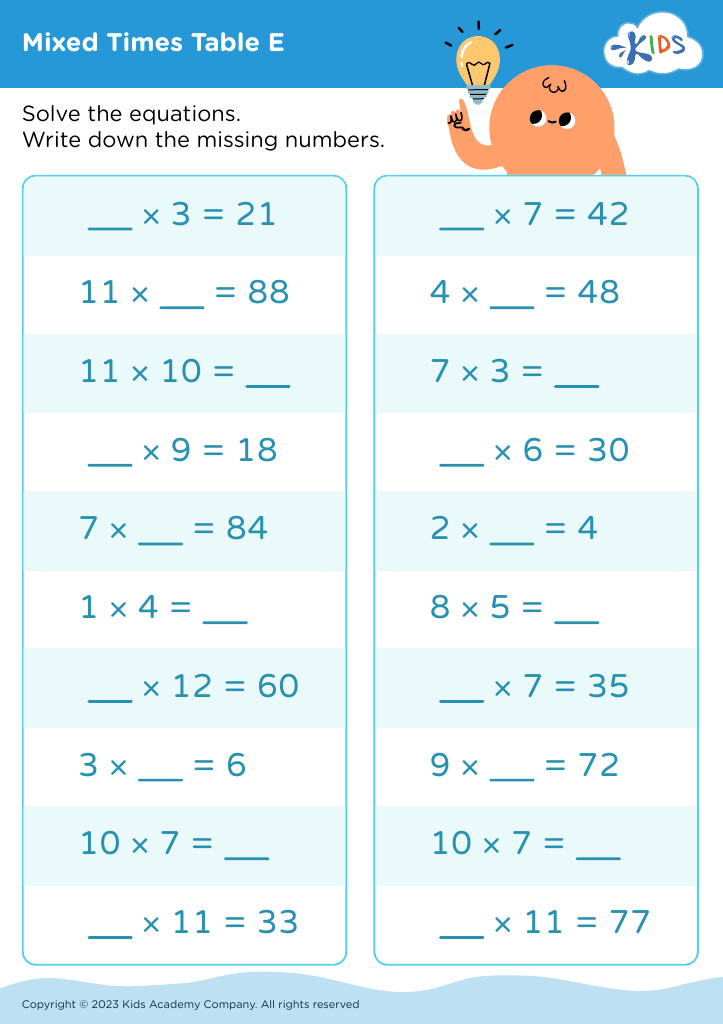
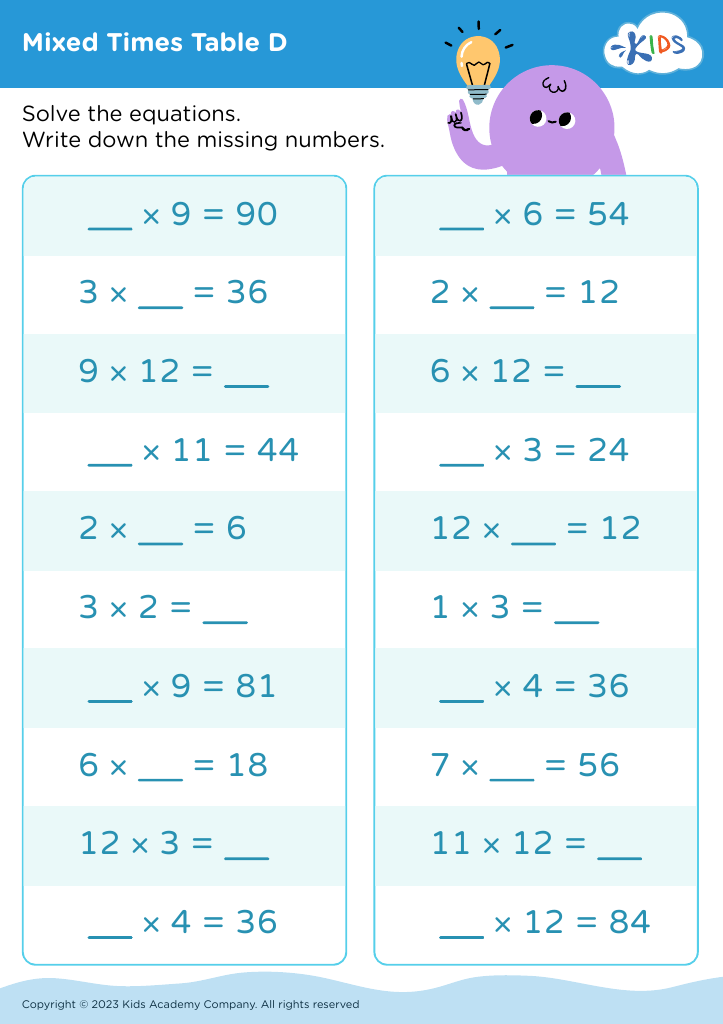
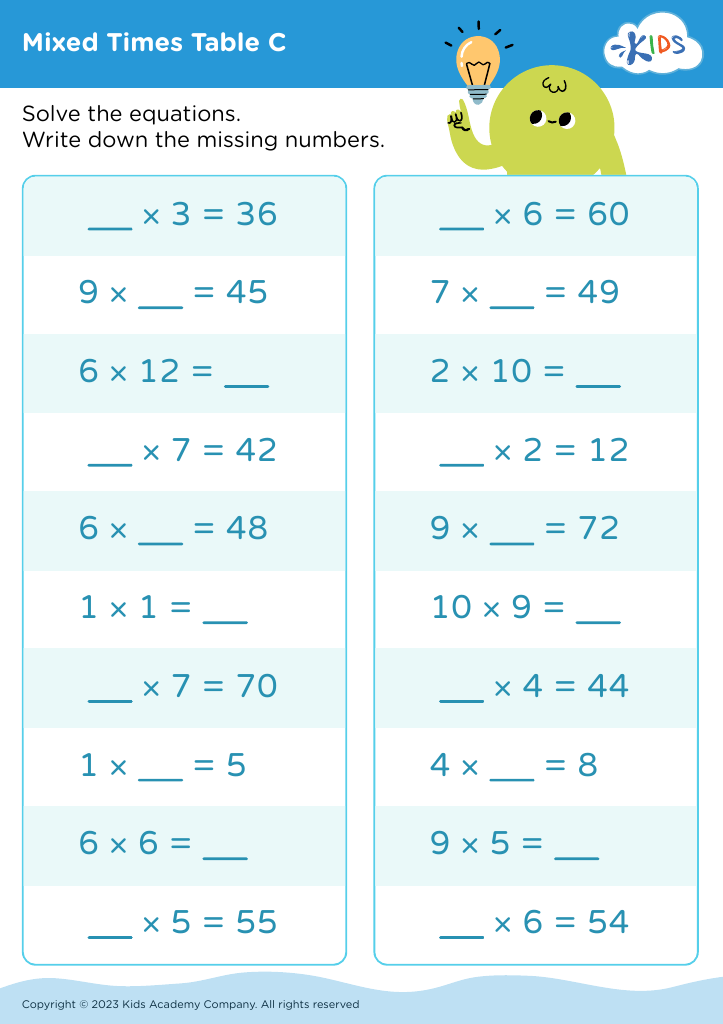
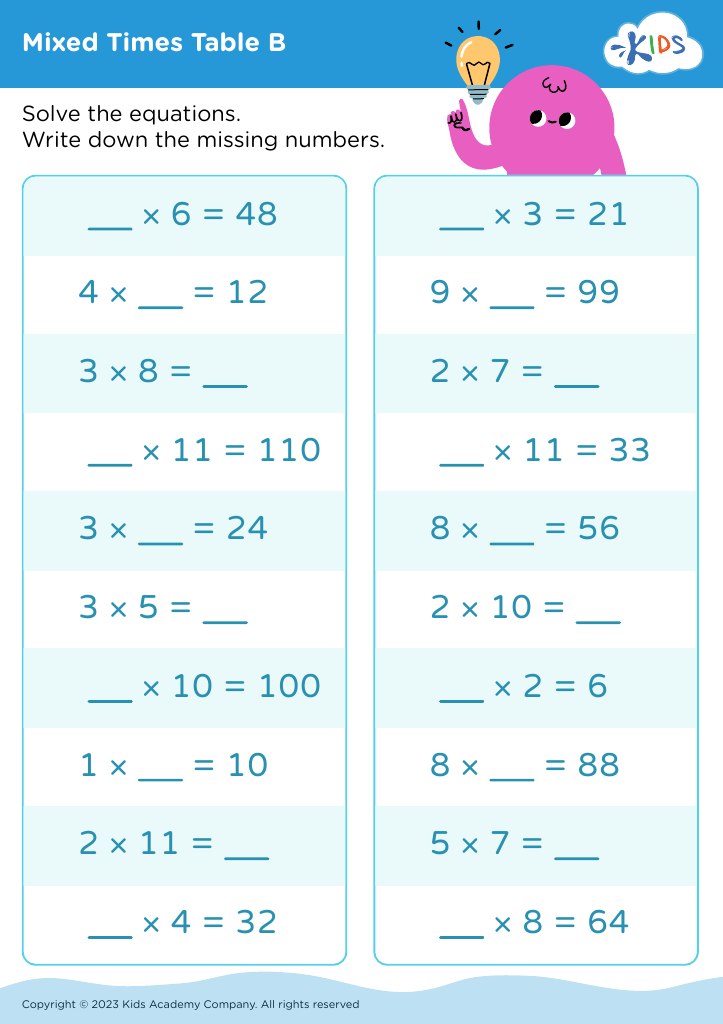
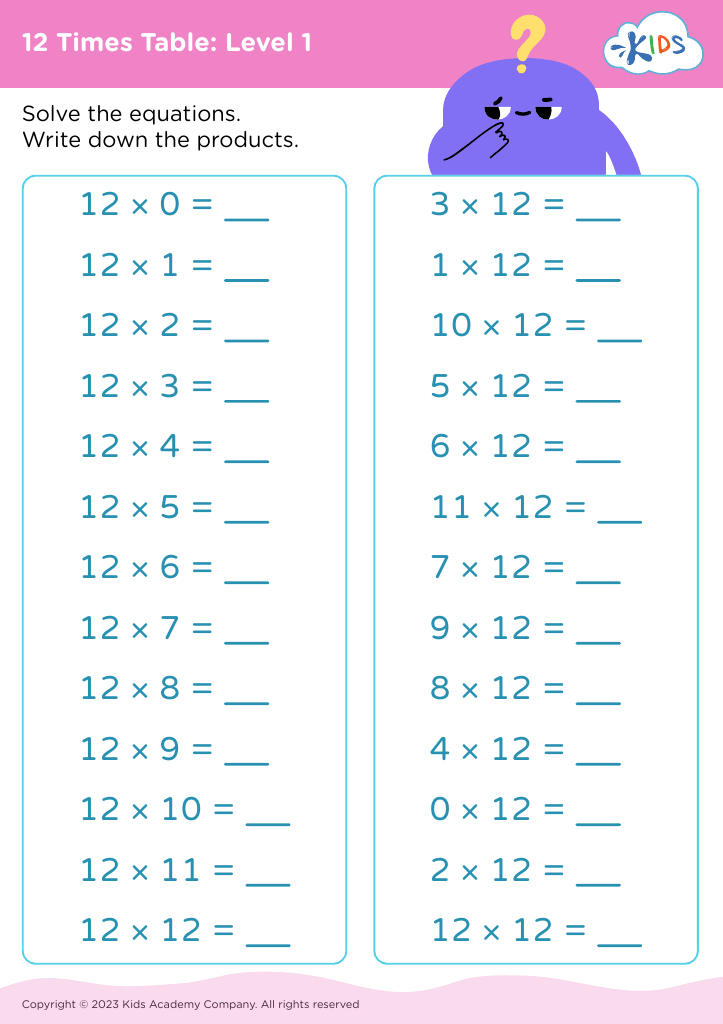
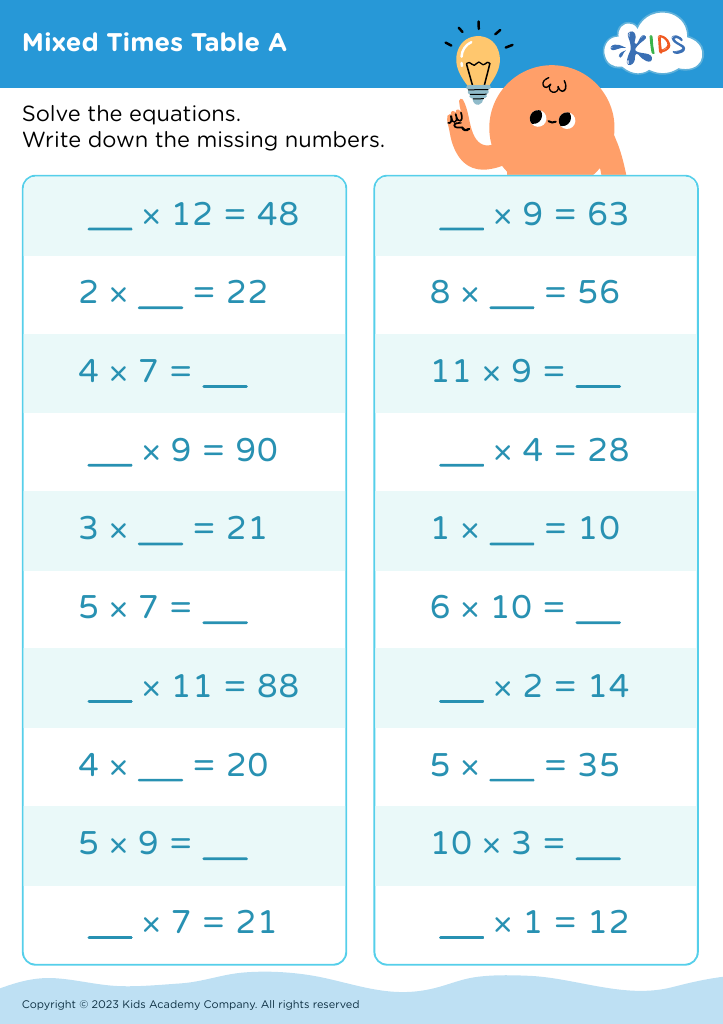
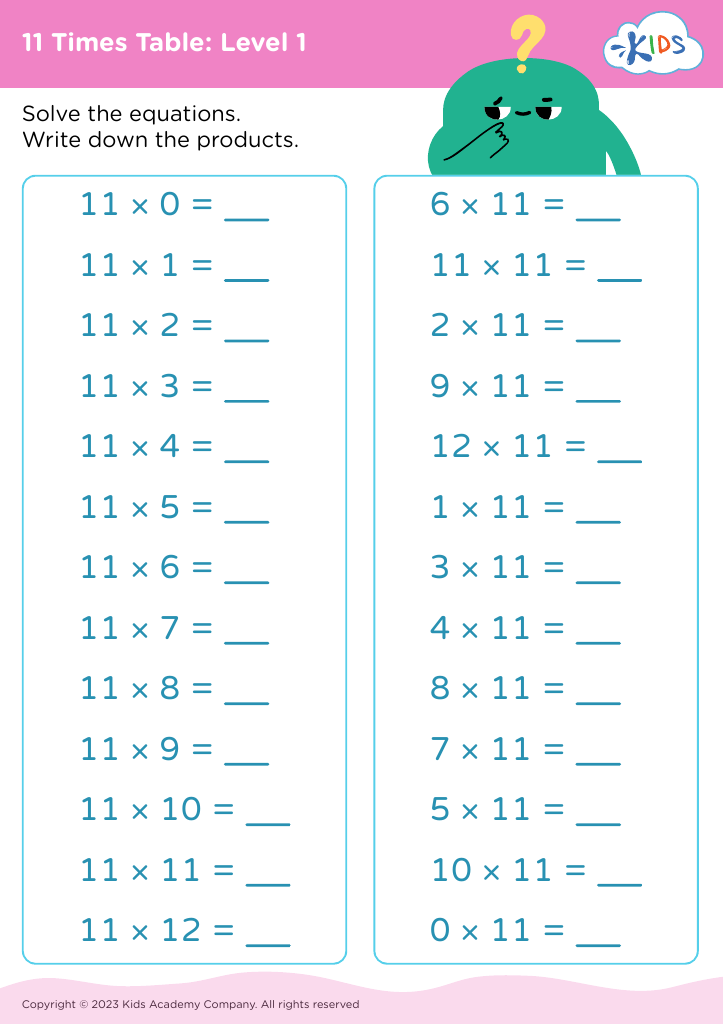
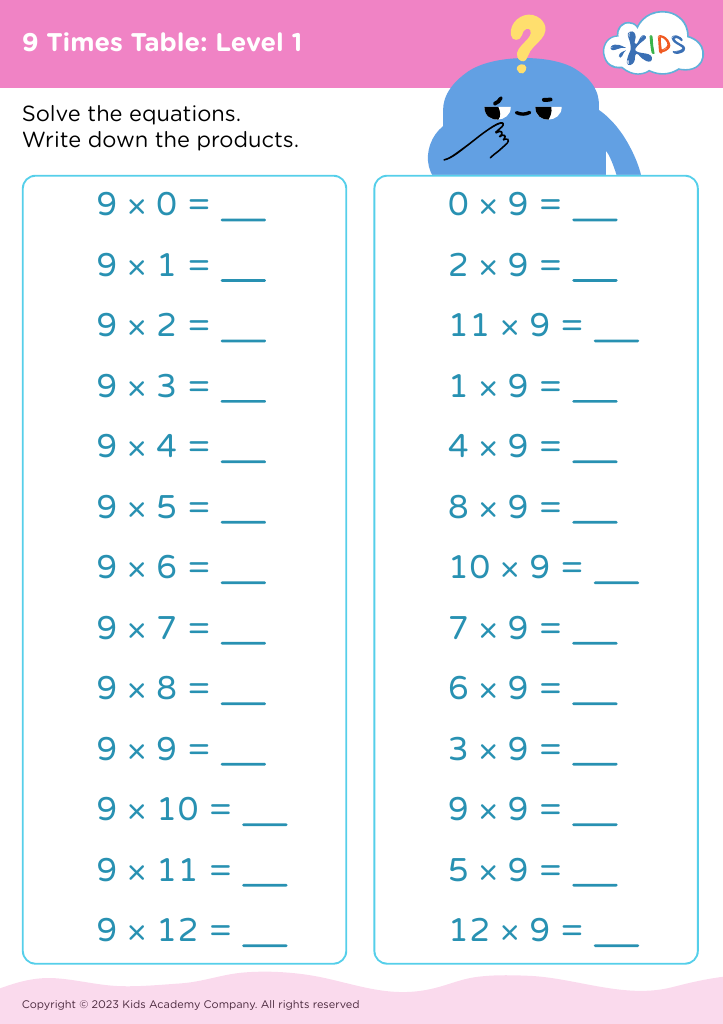





Empowering children through a strong foundation in times tables is essential during the formative years of ages 4-8. Parents and teachers should prioritize this for multiple reasons. Firstly, mastering times tables builds a crucial math skill that supports later learning, such as division, fractions, and even algebra. It forms the bedrock of mathematical understanding, enabling young learners to solve problems more quickly and with greater confidence.
Secondly, proficiency in times tables nurtures mental arithmetic skills, fostering quicker and more efficient calculations without relying on calculators. This fluency can reduce anxiety around math and cultivate a positive attitude towards the subject, leading to better overall academic performance.
Moreover, times tables play a pivotal role in daily life tasks seen in calculating shopping budgets, understanding time, or measuring ingredients for recipes. Starting early, around ages 4-8, ensures these concepts are absorbed more naturally when children's cognitive development is highly receptive to memorization and repetition.
Lastly, implementing fun and engaging methods, such as games or songs, enhances learning experiences, making math feel like a fun adventure rather than a chore. Ultimately, valuing times tables education cultivates lifelong numeracy skills essential for academic success and practical daily applications.








