Identification skills Reading Worksheets for Ages 4-8
3 filtered results
-
From - To
Enhance your child's reading journey with our Identification Skills Reading Worksheets designed for ages 4-8. These engaging and educational printables help young learners develop key reading skills, such as recognizing letters, sounds, and familiar words. Our worksheets are crafted to boost confidence and comprehension, making learning enjoyable and effective. With fun activities ranging from letter identification to matching words with pictures, these resources are perfect for both classroom use and at-home practice. Set your child on the path to reading success with Kids Academy's expertly designed worksheets, and watch their reading abilities flourish!
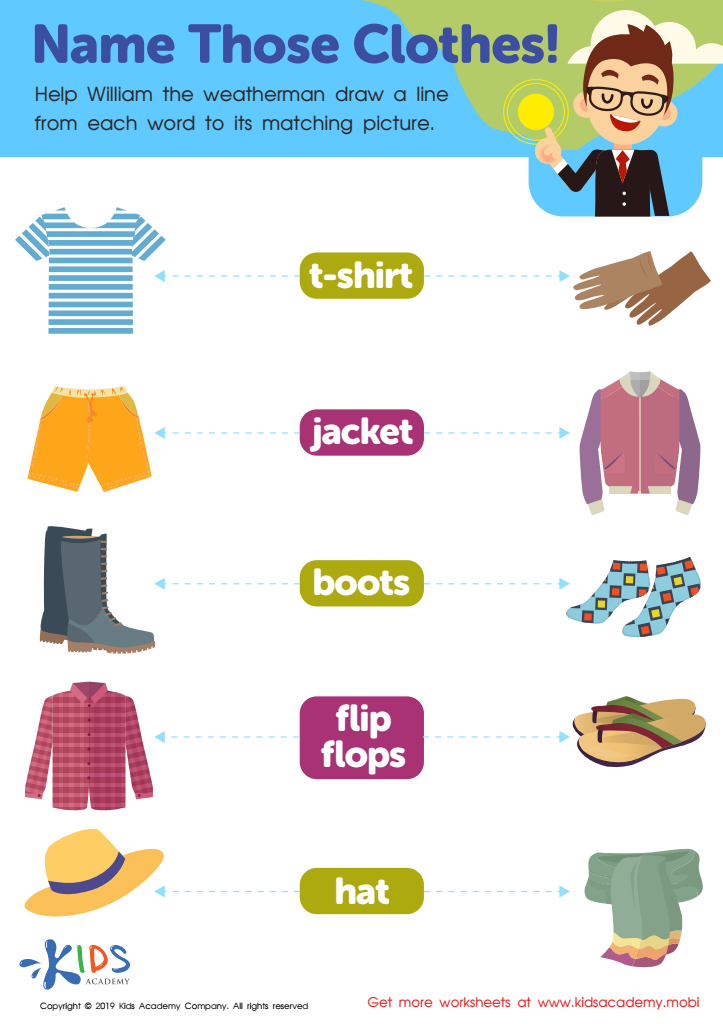
Name Those Clothes Worksheet
 Assign to My Students
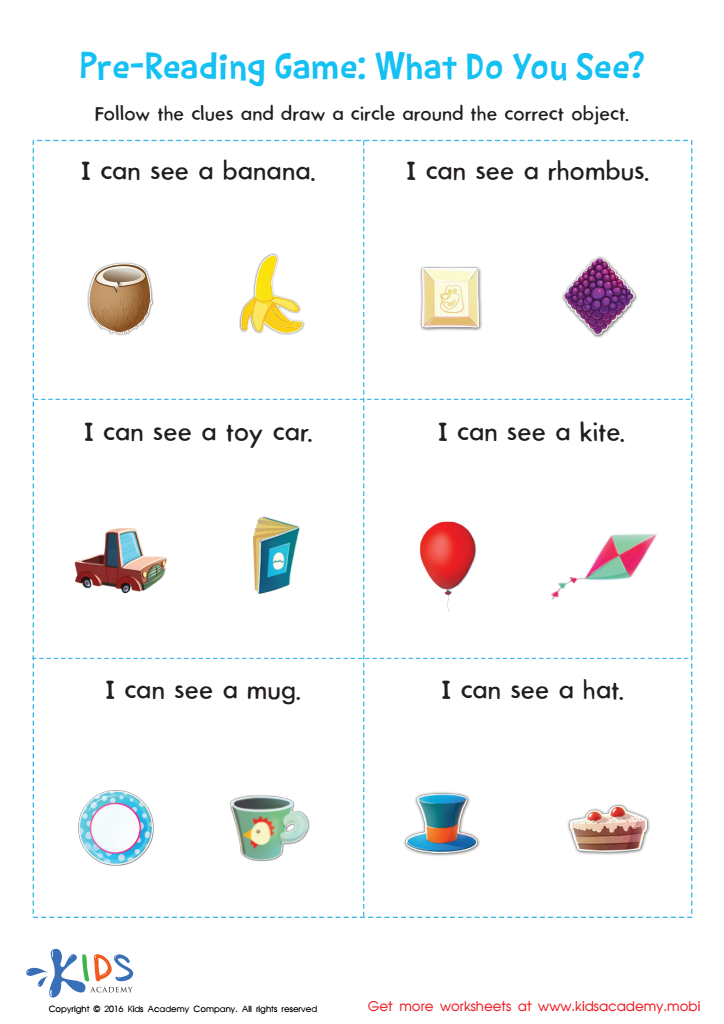
Pre–reading Worksheet: What Do You See?
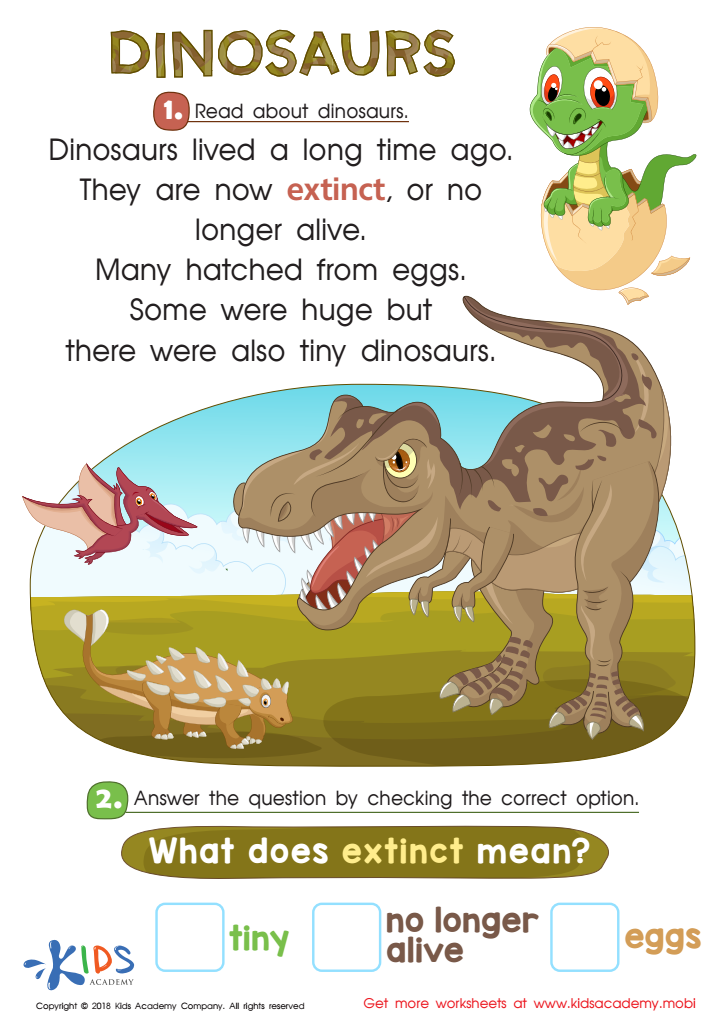
Dinosaurs Worksheet




.jpg)


Identification skills in reading are fundamentally important for children aged 4-8 because these early years are a crucial period for cognitive and social development. At this stage, children are learning to recognize letters, understand sounds, and make connections between written and spoken language, which forms the foundation for proficient reading skills.
Parents and teachers who prioritize the development of identification skills help set the stage for later academic success. Early reading proficiency is often linked to better performance in various school subjects, as literacy forms the basis of learning. For instance, being able to identify and understand the relationship between letters and their corresponding sounds aids in word recognition and vocabulary building, skills that are essential for comprehension and effective communication.
Moreover, fostering these skills can boost a child's confidence and curiosity, making them more eager to explore new topics through reading. This not only increases their knowledge base but also encourages a lifelong love of learning. Moreover, identifying reading difficulties early can prevent future academic issues, allowing for timely intervention and support.
In essence, by caring about identification skills in early reading, parents and teachers can nurture well-rounded, confident, and academically capable children, laying the groundwork for their future educational and personal success.








