Sound Association Reading Worksheets for Ages 4-8
4 filtered results
-
From - To
Unlock your child's potential with our engaging Sound Association Reading Worksheets, specially designed for ages 4-8. These worksheets introduce young learners to the fundamental concept of sound associations, helping them connect letters and sounds through fun, interactive activities. Your child will enhance their phonemic awareness, improve reading skills, and build a strong foundation for literacy. With appealing visuals and age-appropriate exercises, these worksheets cultivate a love for reading and make learning enjoyable. Perfect for both home and classroom use, our resources support early education and promote confident readers. Explore our collection today and watch your child's reading skills flourish!
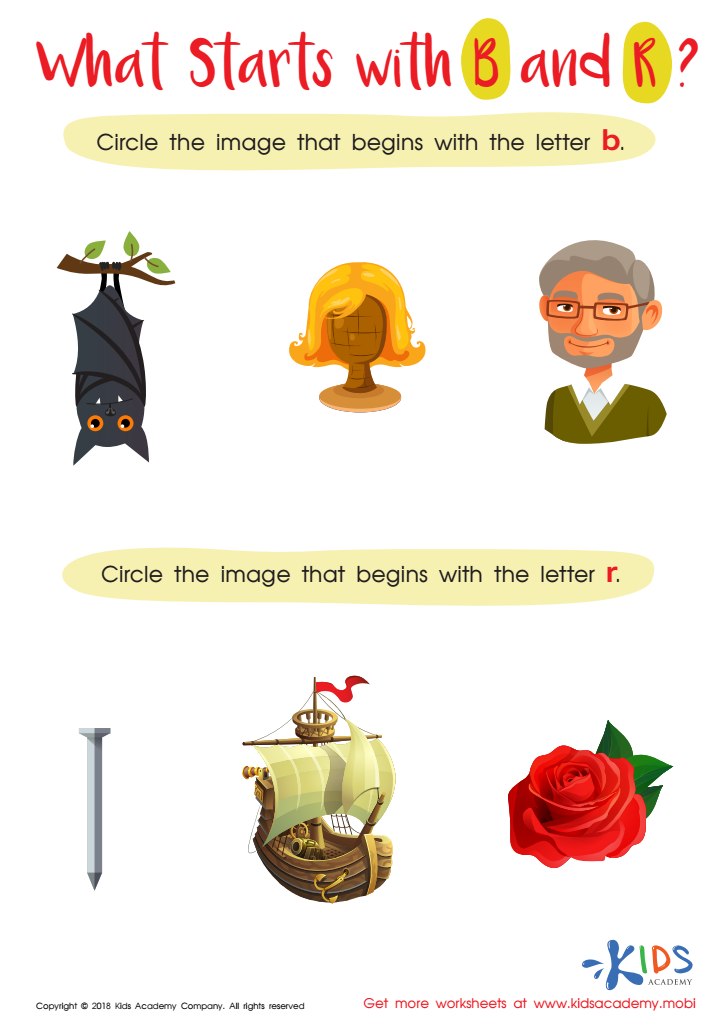
What Starts with B and R? Worksheet
 Assign to My Students
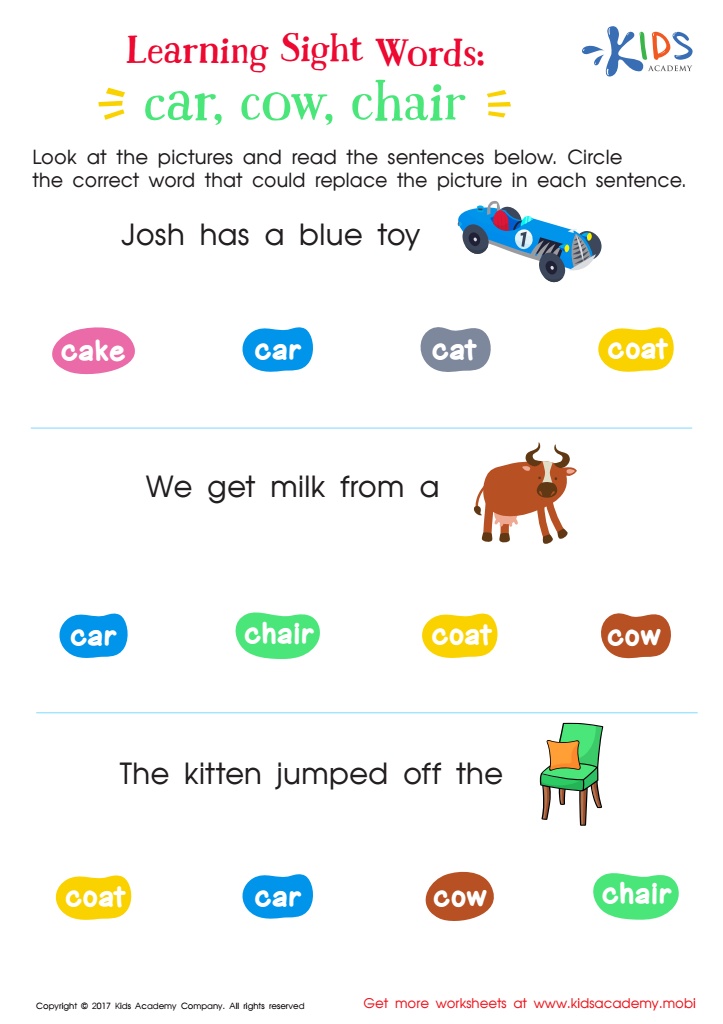
Car, Cow, Chair Worksheet Sight Words Worksheet
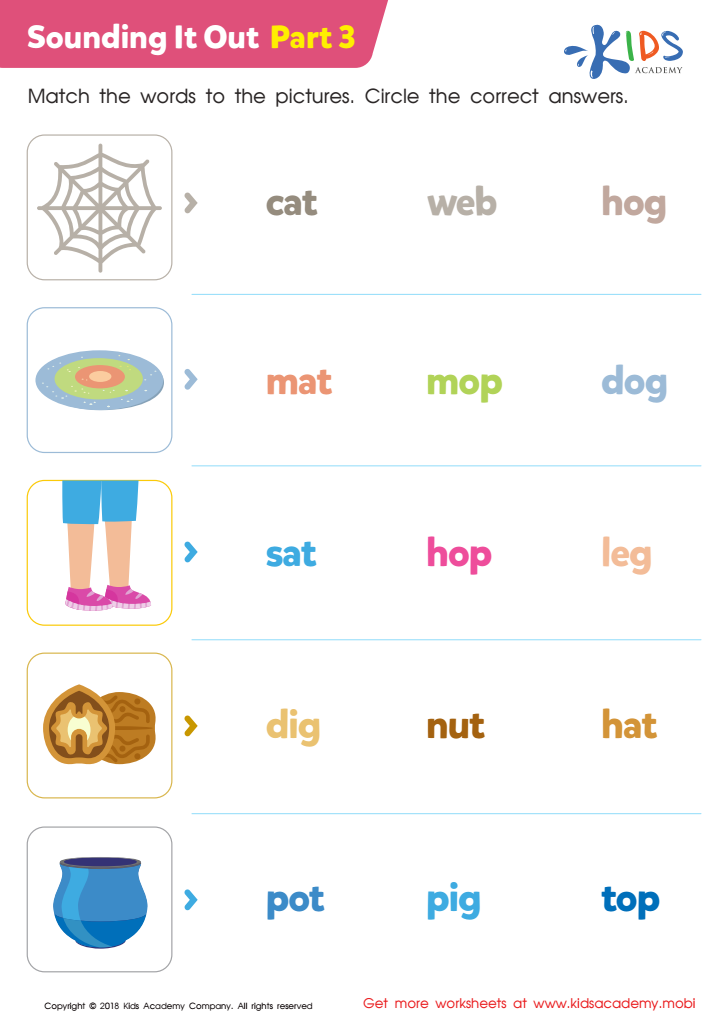
Sounding it Out: Part 3 Worksheet
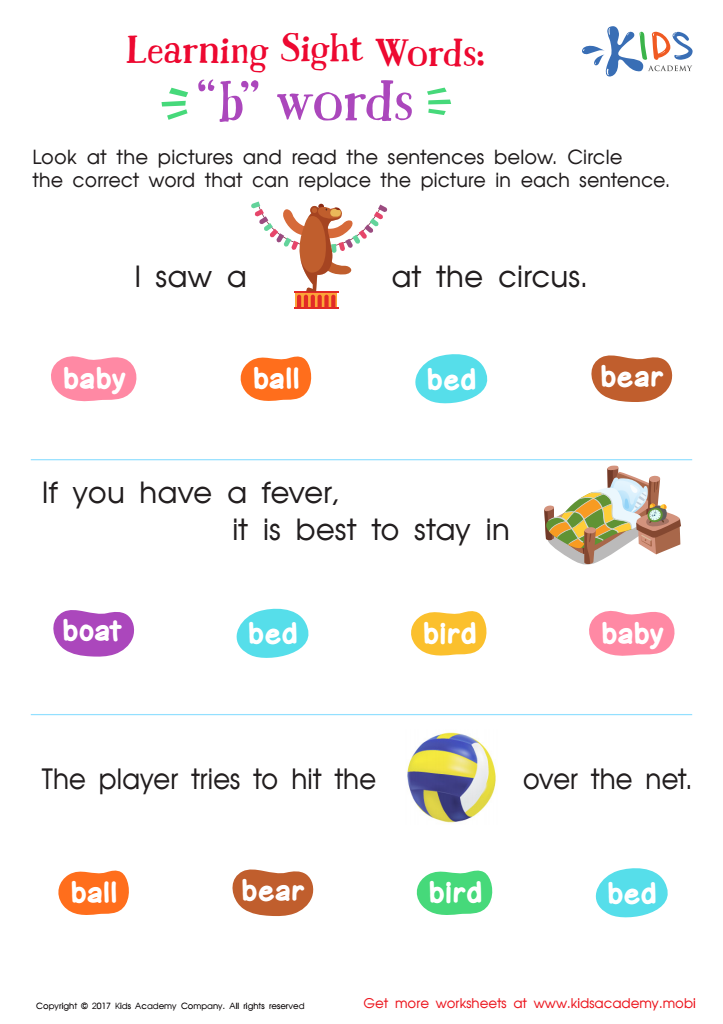
"B" Words Printable Sight Words Worksheet


.jpg)



Sound Association Reading is a critical skill for children aged 4-8, serving as a foundation for literacy and overall cognitive development. This stage is crucial as children begin to connect sounds (phonemes) with letters (graphemes), creating a pathway to reading proficiency. By prioritizing sound association, parents and teachers help children improve their phonemic awareness, which is essential for decoding words and understanding language structure.
Furthermore, promoting sound association reading facilitates early reading experiences, building vocabulary and comprehension skills. As children learn to recognize and produce sounds, they become more confident readers, fostering a lifelong love for books and learning. This process also enhances listening skills, spelling, and written expression, which are vital in their educational journey.
Additionally, understanding sound associations aids in identifying potential reading difficulties early on, allowing for timely interventions that can prevent future struggles with literacy. Parents and teachers play a vital role in creating engaging activities—like rhyming games, sound matching, or interactive storytelling—that can make learning fun and effective. Ultimately, prioritizing sound association reading is a proactive step toward ensuring children develop the skills needed for academic success and a positive attitude towards reading.








