Understanding suffixes Reading Worksheets for Ages 4-8
6 filtered results
-
From - To
Unlock the power of language for young learners with our "Understanding Suffixes Reading Worksheets" designed specifically for ages 4-8. These engaging worksheets introduce children to suffixes through fun activities and exercises, enhancing their reading and writing skills. By exploring how suffixes change word meaning and usage, kids will boost their vocabulary and comprehension. Our worksheets offer a variety of hands-on tasks that make learning enjoyable and effective. Perfect for both classroom and home use, they help set a strong foundation in language arts, encouraging early literacy success for every child. Start building confident readers today!
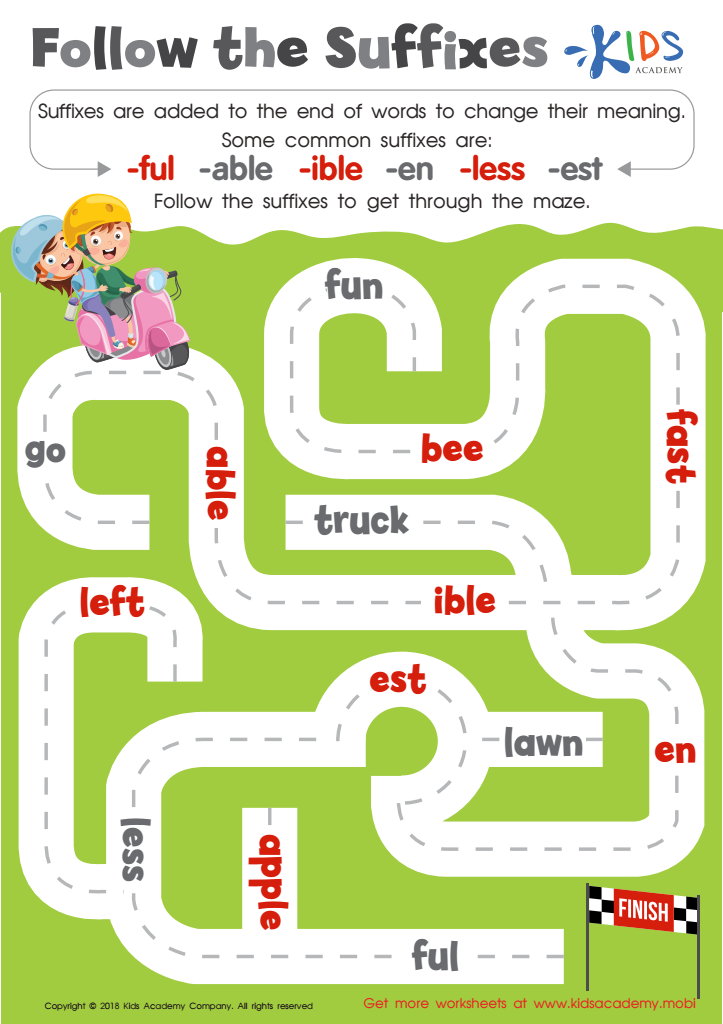
Reading: Follow the Suffixes Worksheet
 Assign to My Students
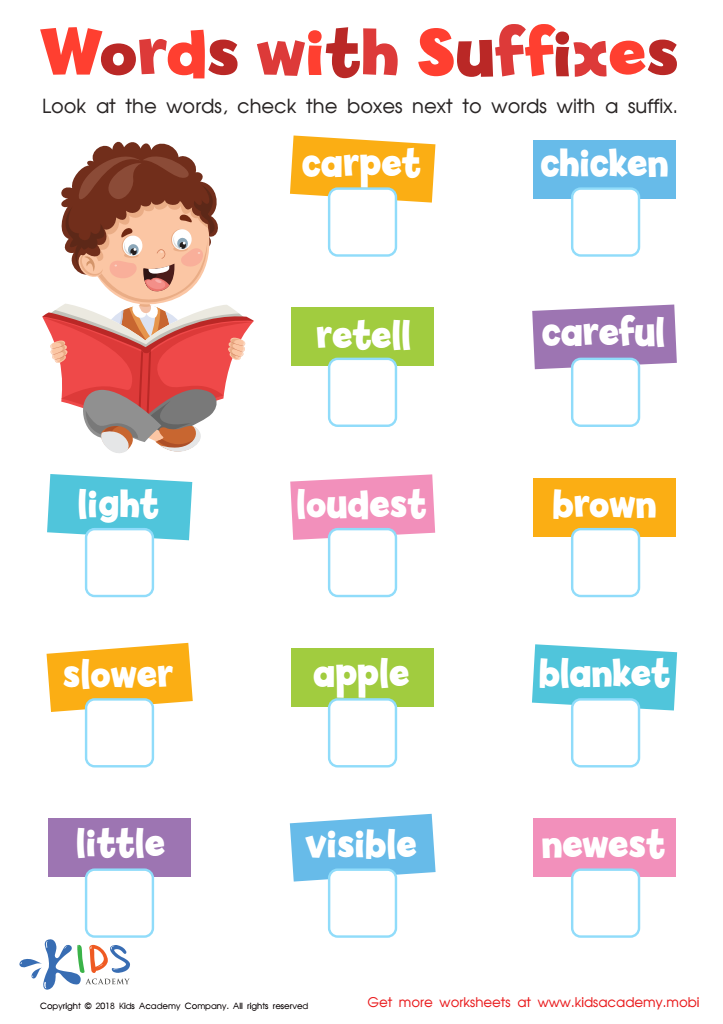
Reading: Words With Suffixes Worksheet
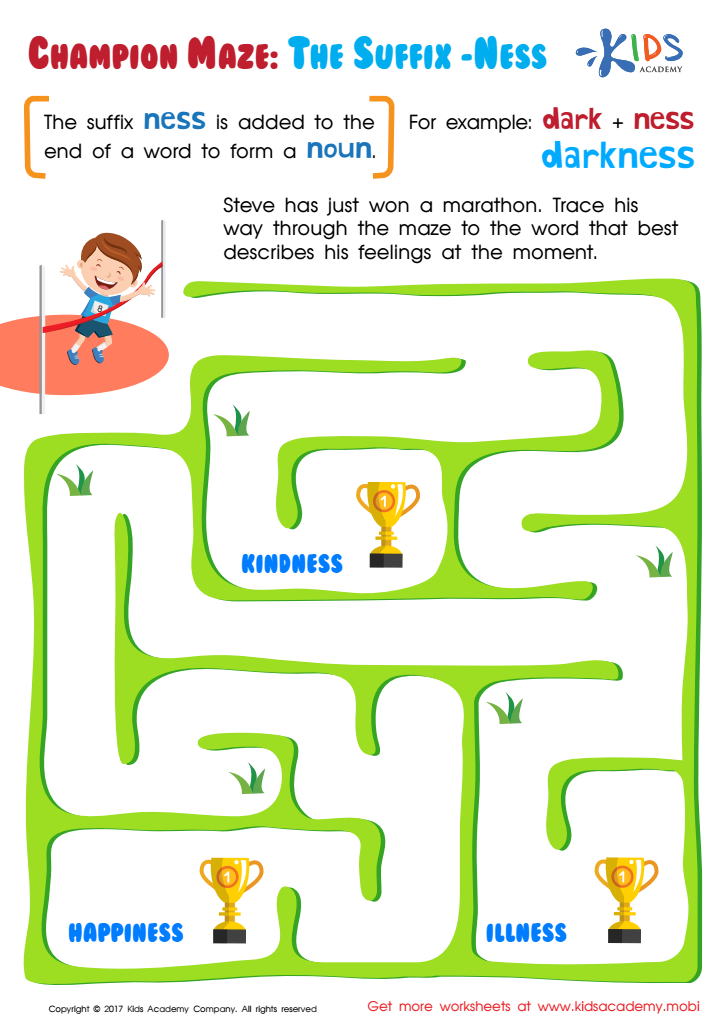
Suffix Ness Worksheet
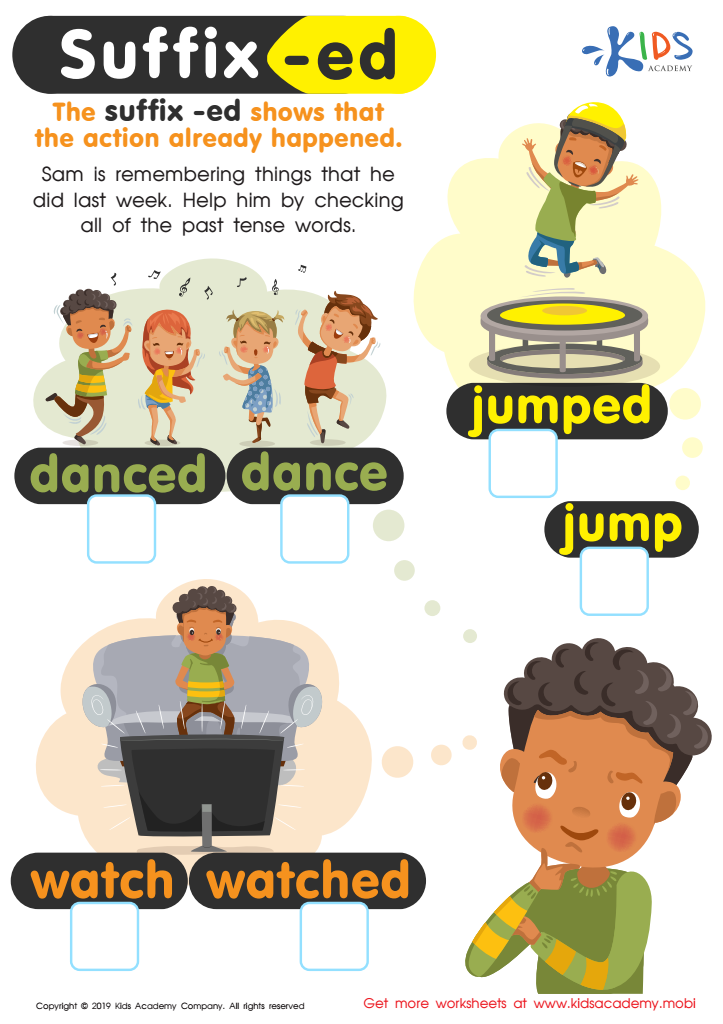
Suffix-ed Worksheet
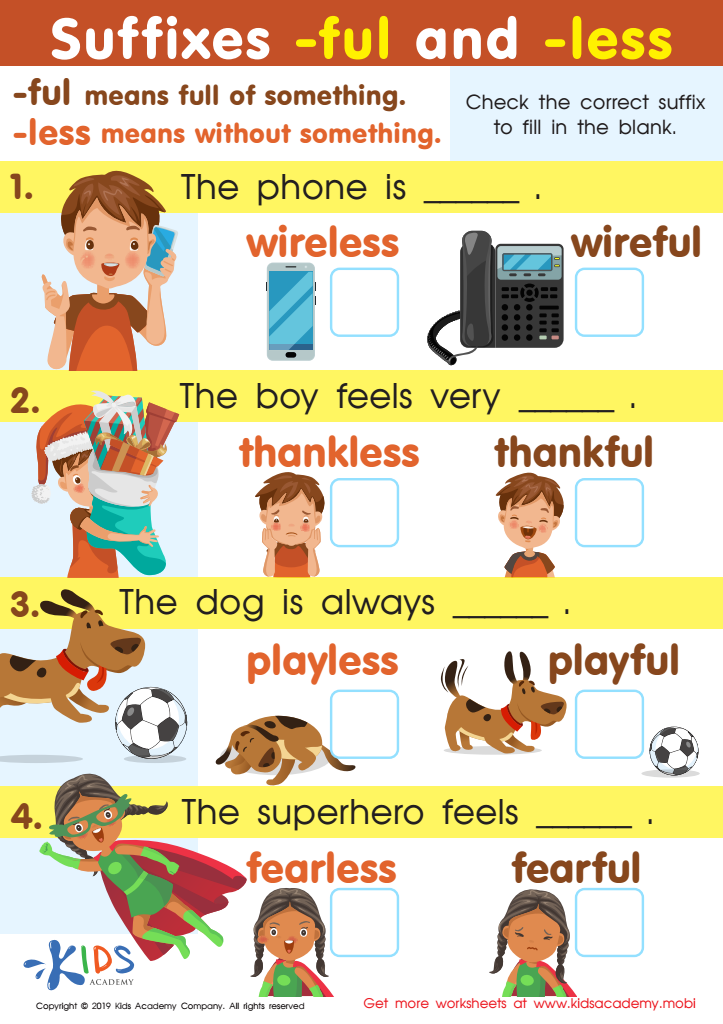
Suffixes –ful and –less Worksheet
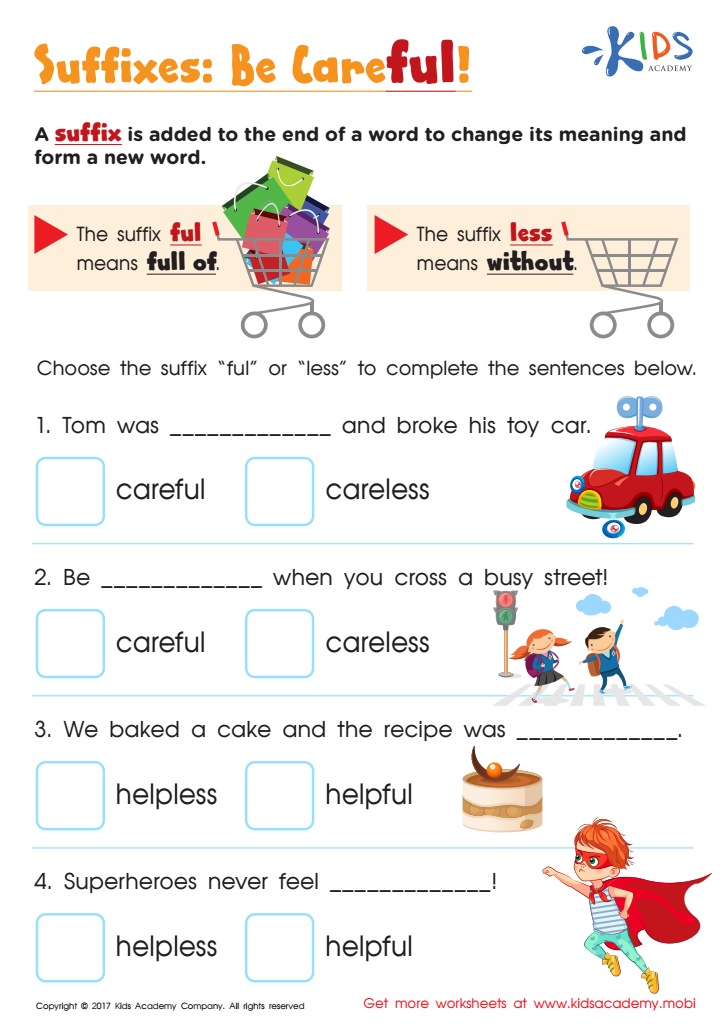
Suffixes Ful and Less Worksheet






.jpg)
Understanding suffixes is crucial for young children's reading development, and both parents and teachers play a vital role in supporting this learning. Suffixes are letter groups added to the end of words, altering their meanings or grammatical roles. For children aged 4-8, grasping suffixes can significantly enhance their vocabulary, comprehension, and spelling skills.
Initially, learning suffixes aids in decoding new words. When children understand that adding "er" to "run" makes "runner," they can infer the meaning of unfamiliar words by recognizing common suffixes. This promotes reading fluency and confidence since children are better equipped to tackle words independently.
Further, understanding suffixes nurtures critical thinking and linguistic awareness. Children start to see patterns in language, realizing that suffixes can indicate tense, plurality, or comparison, such as "talked," "dogs," or "bigger." Such insights make reading and writing more intuitive and enjoyable.
Parents and teachers must prioritize this aspect of literacy by introducing suffixes through playful activities and repetitive exposure. Engaging children with suffix-themed games, songs, or stories can make learning entertaining and memorable. By valuing the role of suffixes in early reading education, parents and teachers lay a strong foundation for lifelong literacy and communication skills, setting young learners up for success in academia and beyond.








