Understanding Sequences Reading Comprehension Worksheets for Ages 4-8
4 filtered results
-
From - To
Discover our "Understanding Sequences Reading Comprehension Worksheets" designed for children aged 4-8. These engaging materials help young learners enhance their reading skills by focusing on recognizing and creating sequences in stories. With colorful illustrations and age-appropriate questions, these worksheets facilitate comprehension and encourage critical thinking. Kids will enjoy practicing key concepts such as chronological order and cause-and-effect relationships, which are essential for their reading development. Ideal for classroom use or home learning, our worksheets empower children to build confidence in their reading abilities while having fun. Explore our resources today and help your child become a proficient reader!
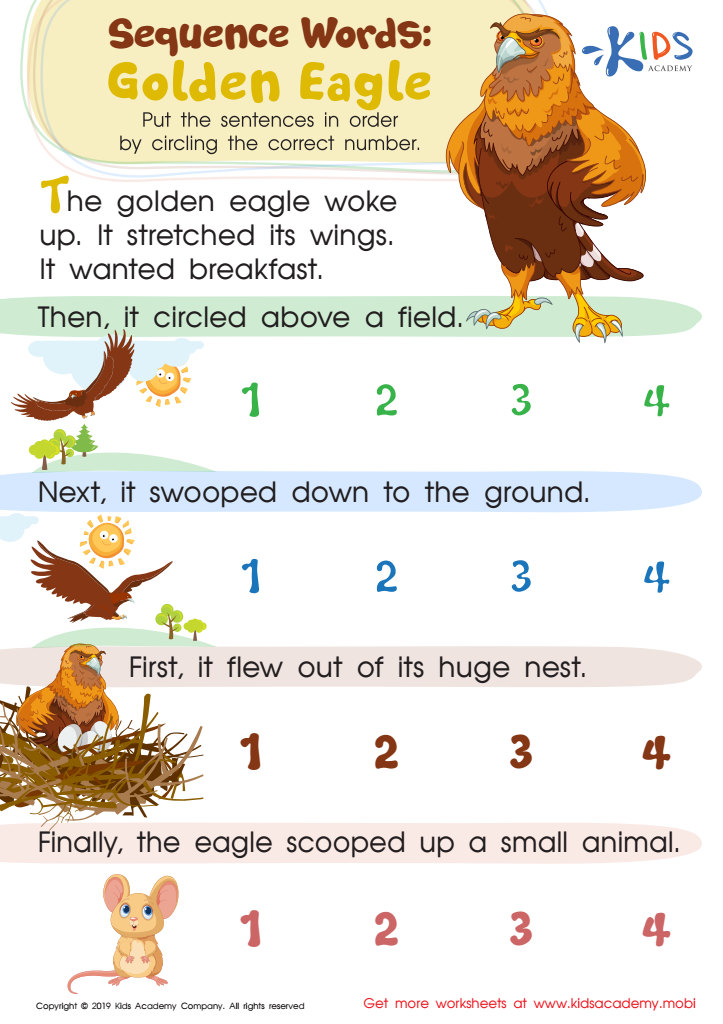
Sequence Word Eagle Worksheet
 Assign to My Students
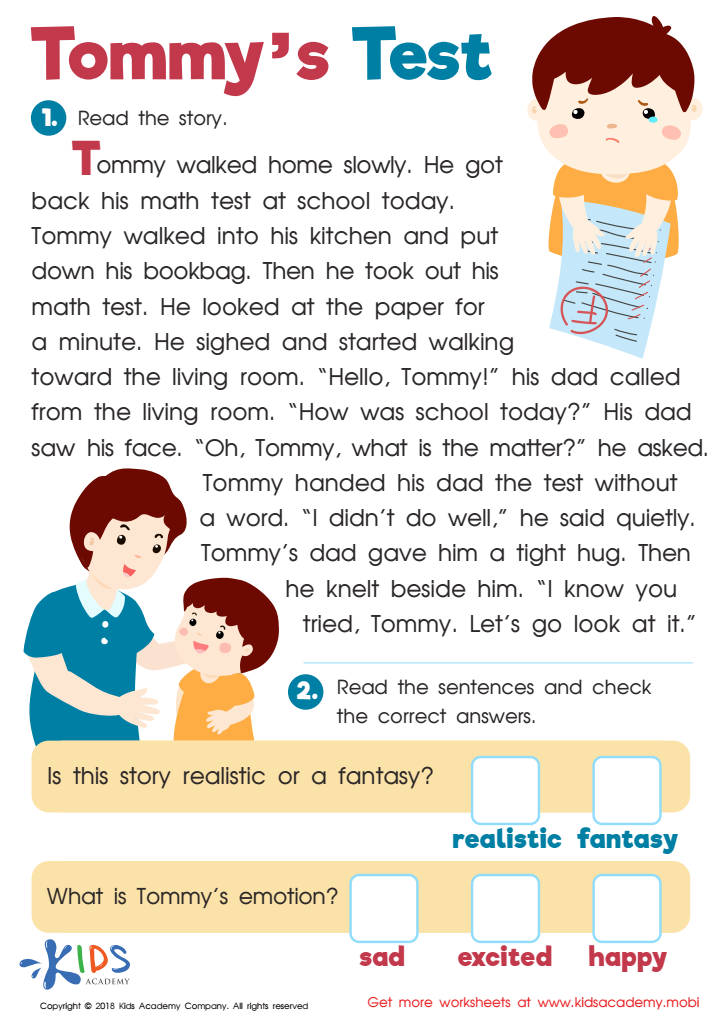
Tommys Test Worksheet
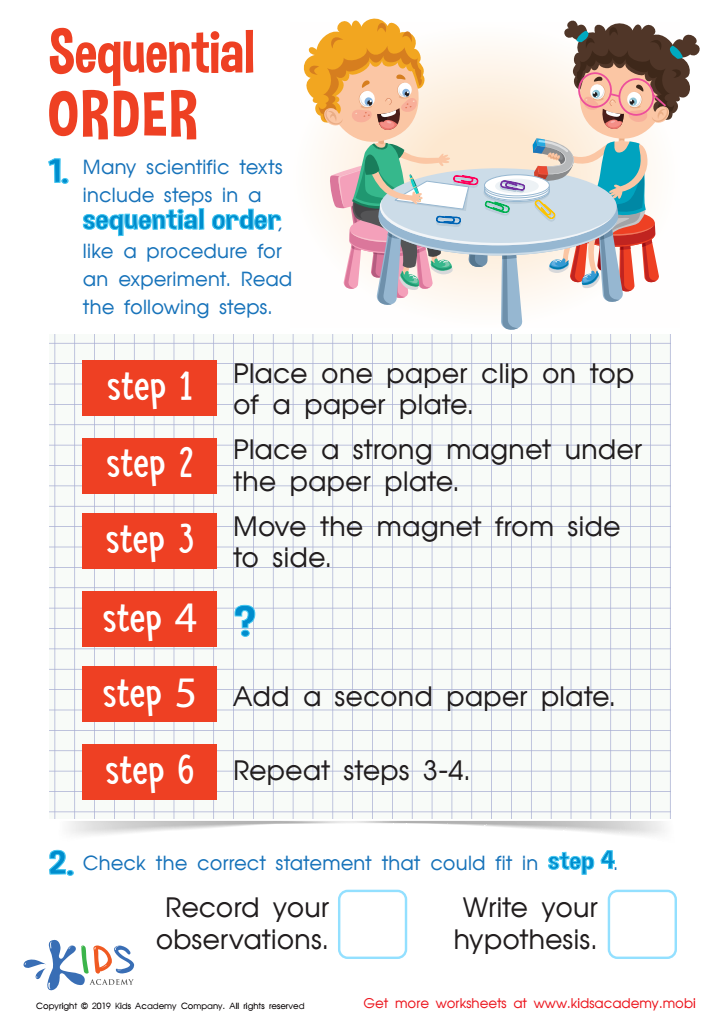
Sequencential Order Worksheet
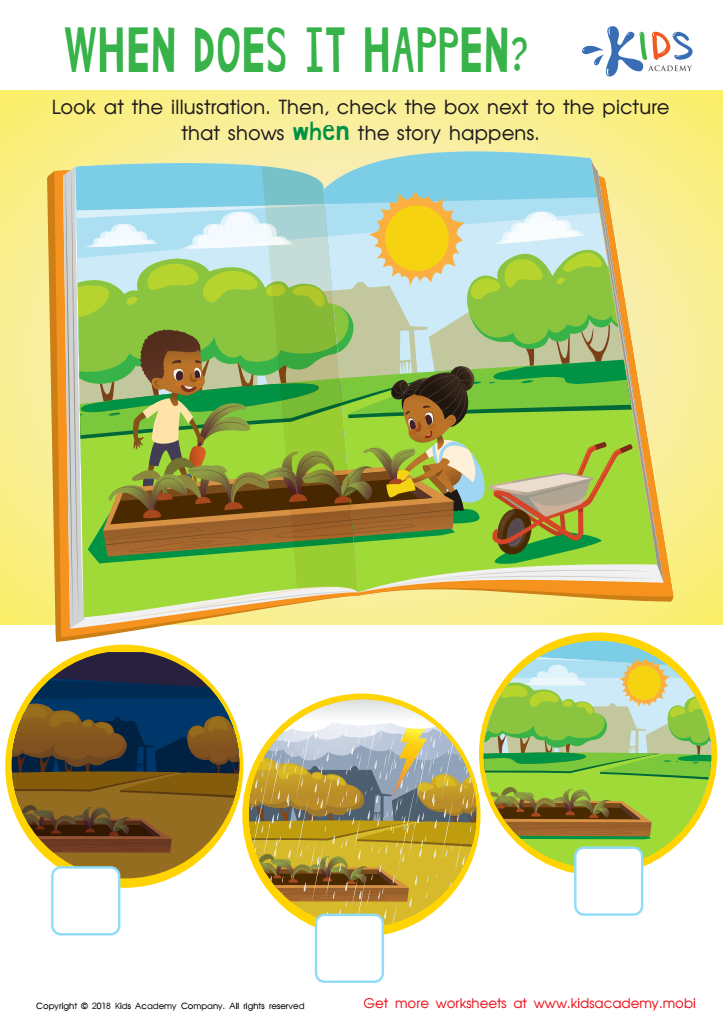
When Does It Happen? Worksheet







Understanding sequences in reading comprehension is pivotal for children aged 4-8, as it lays the foundation for their overall literacy development. For parents and teachers, recognizing the importance of this comprehension skill can significantly influence a child's learning journey. Sequencing involves identifying the order of events, which helps children not only grasp the storyline but also enhance their critical thinking skills.
When children learn to understand sequences, they become better at predicting outcomes and making connections between ideas. This ability fosters greater engagement with texts, allowing for a richer reading experience. Moreover, it aids in developing organizational skills, as children learn to structure their thoughts and understand narratives logically.
For educators and caregivers, encouraging sequence understanding can lead to improved vocabulary and language skills. This foundational skill also supports writing abilities, as children learn how to craft stories with a clear beginning, middle, and end. By caring about and promoting sequence comprehension, parents and teachers equip children with essential tools for academic success, enhancing their ability to comprehend and analyze not just books and stories, but information across various subjects. Ultimately, this focus on sequencing contributes to lifelong learning habits.








