Filters

172 filtered results

Clear all filters
Favorites
With answer key
Interactive

172 filtered results

Difficulty Level

Grade


Subject

    Check out this FREE Trial Lesson on Reading Fiction for age 4-8!

    Answer Questions About Key Details in a Story

    Favorites
    With answer key
    Interactive
    • 4-8
    • Reading Fiction
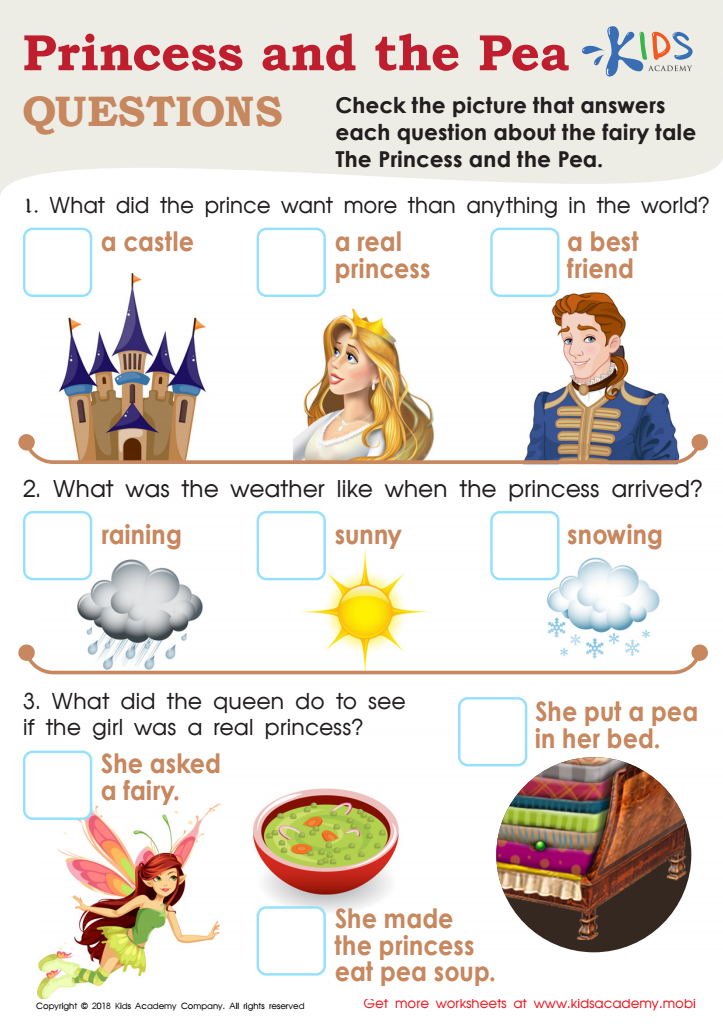
    Princess and the Pea Questions Worksheet
    Princess and the Pea Questions Worksheet

    Princess and the Pea Questions Worksheet

    Your kid knows The Princess and the Pea inside-out? Test their knowledge with this worksheet. Ask your little one to read the questions and match each one to the picture. It's a fun way to see just how much attention they've paid to their bedtime story.
    Princess and the Pea Questions Worksheet
    Worksheet
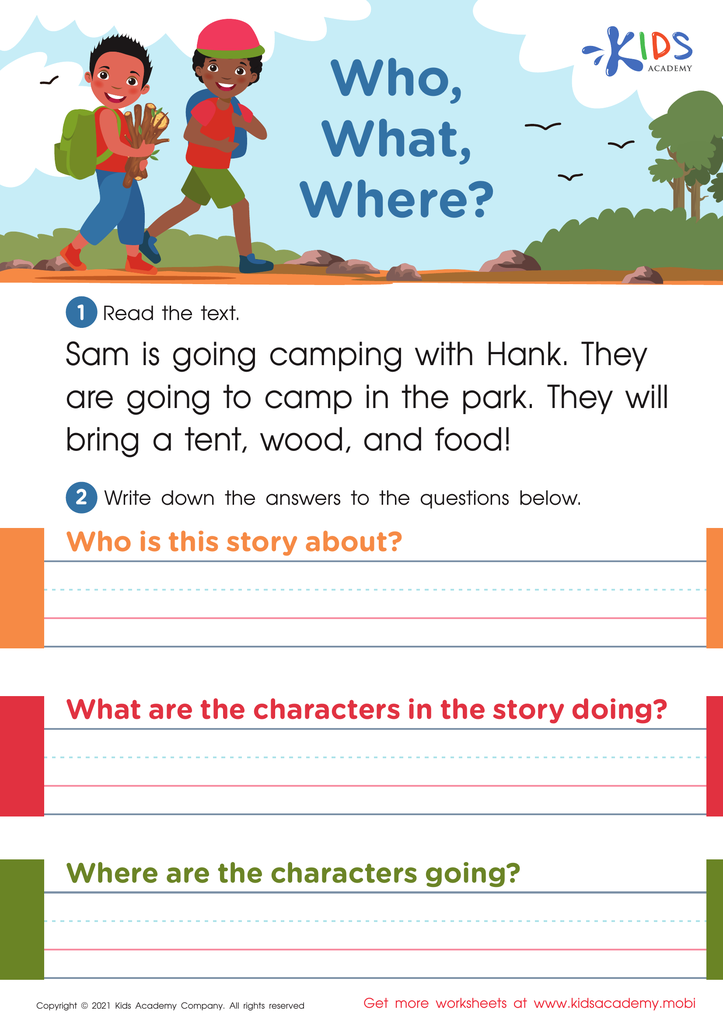
    Who, What, Where? Worksheet
    Who, What, Where? Worksheet

    Who, What, Where? Worksheet

    The availability of technology has changed the way students learn and interact with their environment in a very meaningful way. Technology has revolutionized learning and interaction for students. It offers an array of opportunities to engage with their surroundings, leading to a more meaningful educational experience.
    Who, What, Where? Worksheet
    Worksheet
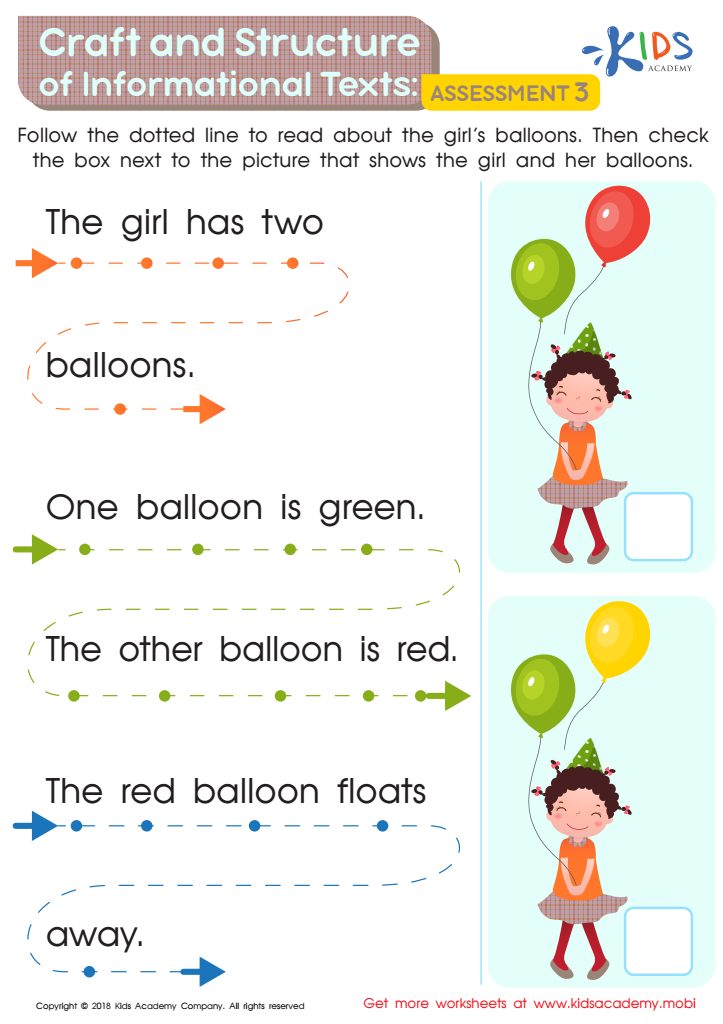
    Craft and Structure of Informational Texts: Assessment 3 Worksheet
    Craft and Structure of Informational Texts: Assessment 3 Worksheet

    Craft and Structure of Informational Texts: Assessment 3 Worksheet

    Test your beginning reader's understanding of left-to-right directionality and use of details from informational texts with this fun worksheet. Follow the traceable paths to find the right picture for each sentence. This will help your child gain confidence and be successful as a reader.
    Craft and Structure of Informational Texts: Assessment 3 Worksheet
    Worksheet
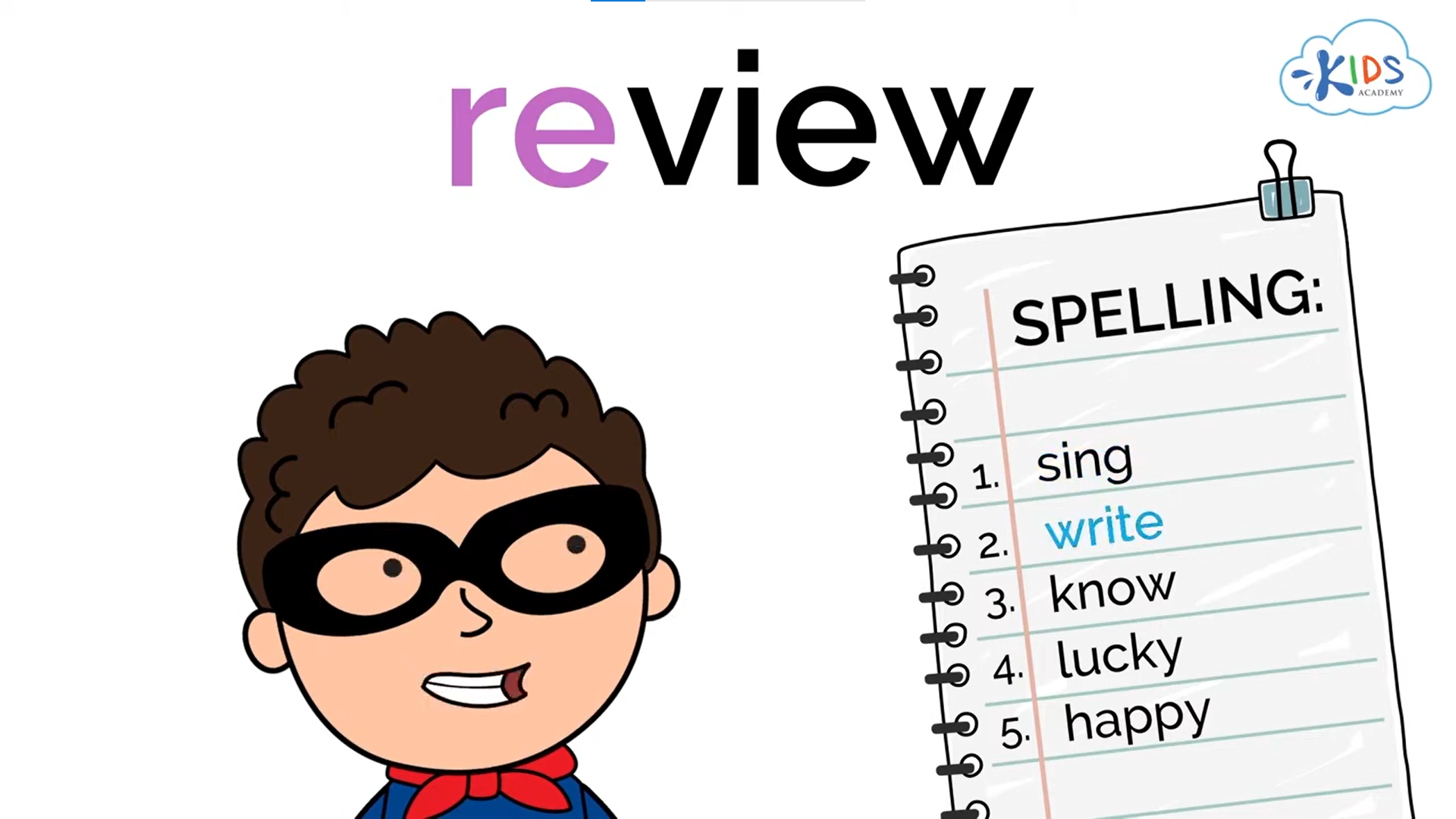
    What Does Not Match? Worksheet

    What Does Not Match? Worksheet

    What Does Not Match? Worksheet

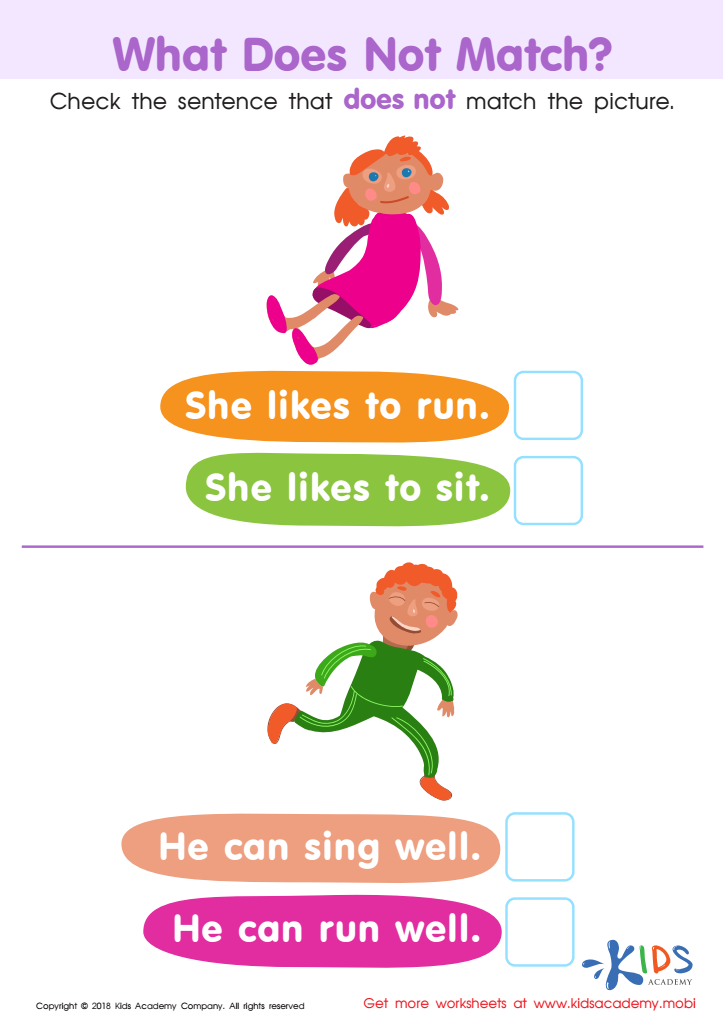
    Emerging readers need to practice using visual cues and repetitive text. This colorful PDF provides them with an opportunity to look at pictures, use discrimination and discern which phrase does not match. It also enables them to gain familiarity with high-frequency words to aid decoding longer sentences.
    What Does Not Match? Worksheet

    Worksheet


    ... 7 8

    Reading fiction to children aged 4-8 is vital for their cognitive, emotional, and social development. At this age, children's brains are exceptionally adaptable, and exposure to stories enhances their language skills, vocabulary, and comprehension abilities. Engaging with fiction promotes imagination and creativity, allowing children to explore diverse worlds and scenarios, which can stimulate inventiveness in their own thinking.

    Furthermore, fiction fosters emotional intelligence; children learn to empathize with characters and understand different perspectives. This skill is crucial in developing social awareness and nurturing compassion in real-life interactions. Through storytelling, children encounter characters facing challenges, which can teach valuable lessons about resilience, friendship, and moral values.

    Teachers and parents should also consider that reading fiction builds a strong foundation for critical thinking. As children discuss plots and characters, they practice analysis and inference, skills vital for their academic growth. Moreover, establishing a routine of reading fiction can create a cozy bonding time between caregivers and children, fostering a lifelong love of reading.

    In summary, encouraging reading fiction at this formative age lays the groundwork for improved literacy, emotional skills, creativity, and critical thinking, benefiting children well beyond their early years.