Rhyming Words Worksheets for Ages 4-8 - Page 2
28 filtered results
-
From - To
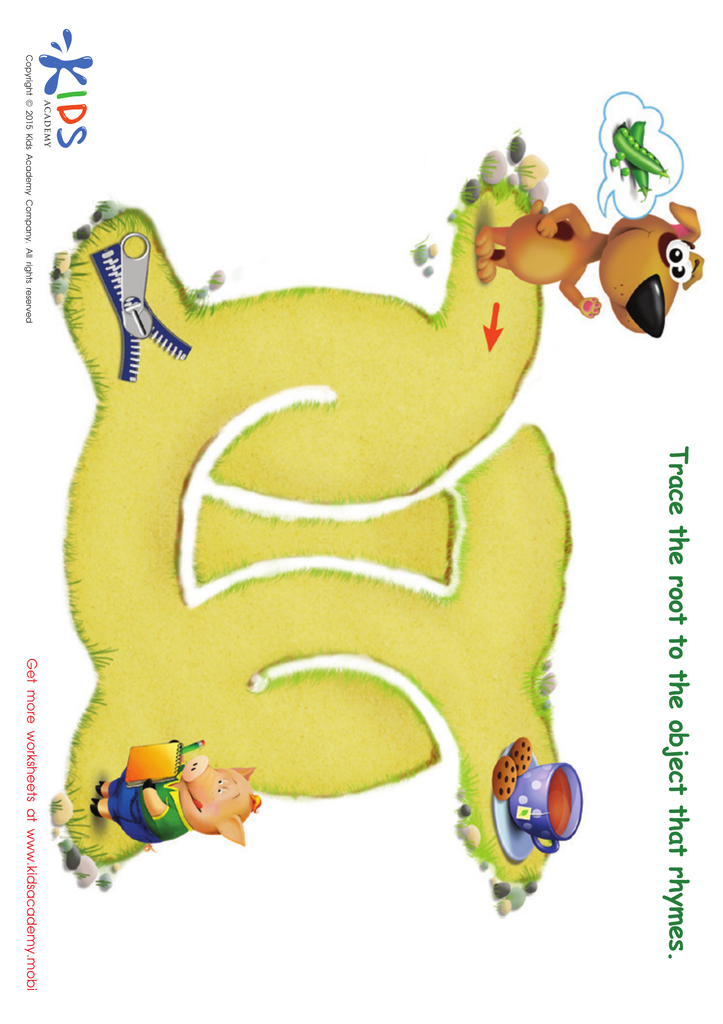
Pea Rhyming Words Worksheet
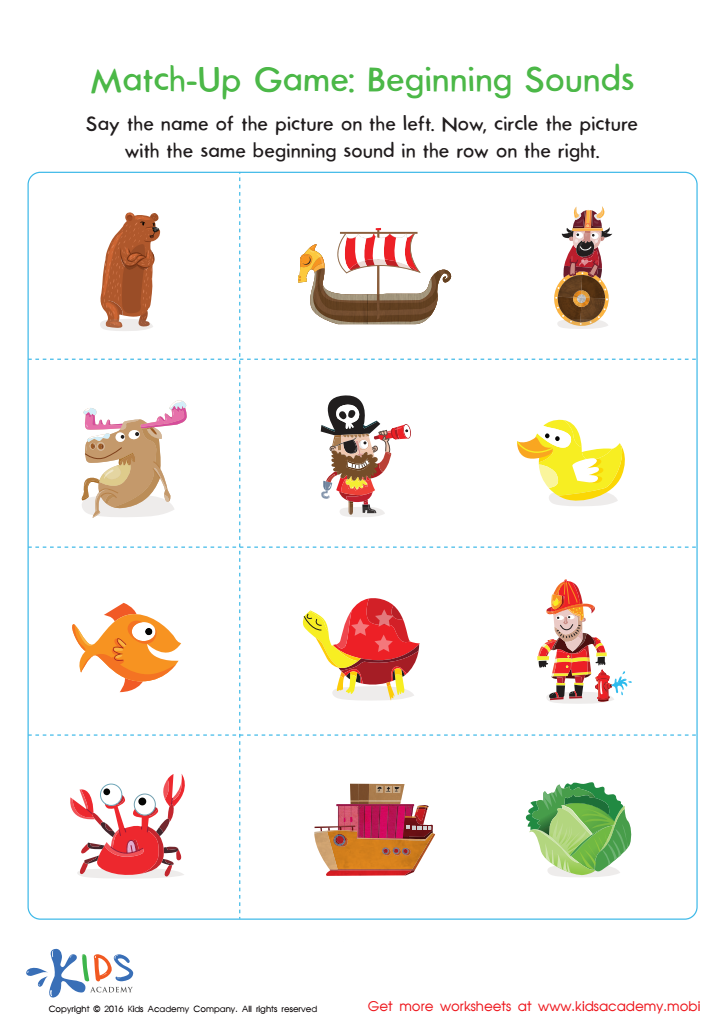
Match–Up Game: Beginning Sounds Worksheet
 Assign to My Students
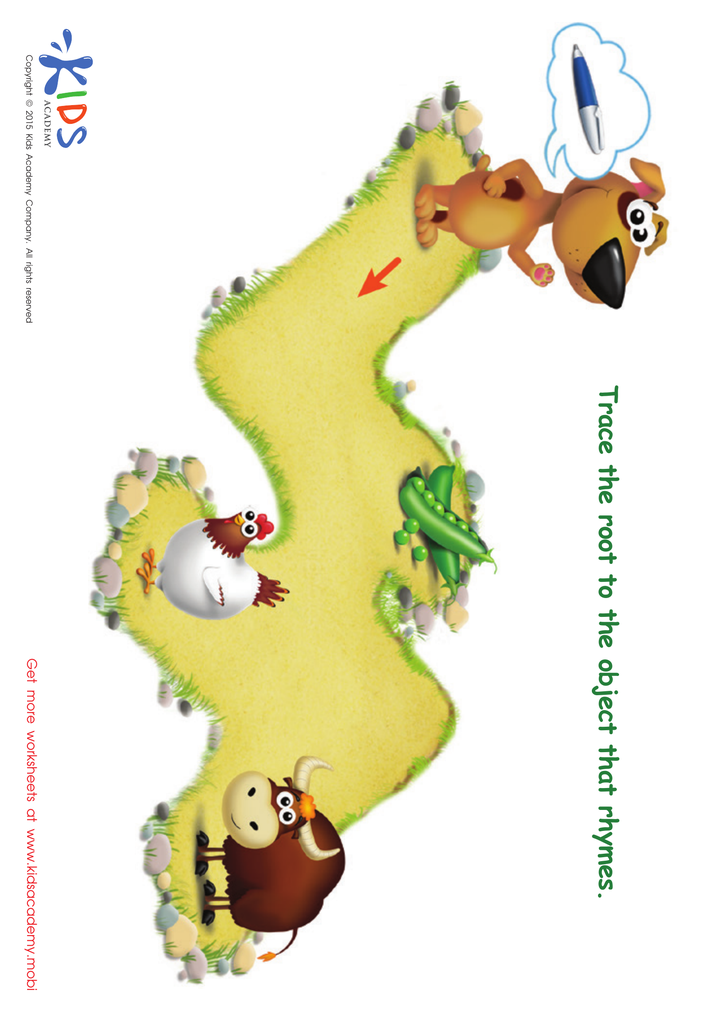
Pen Rhyming Words Worksheet
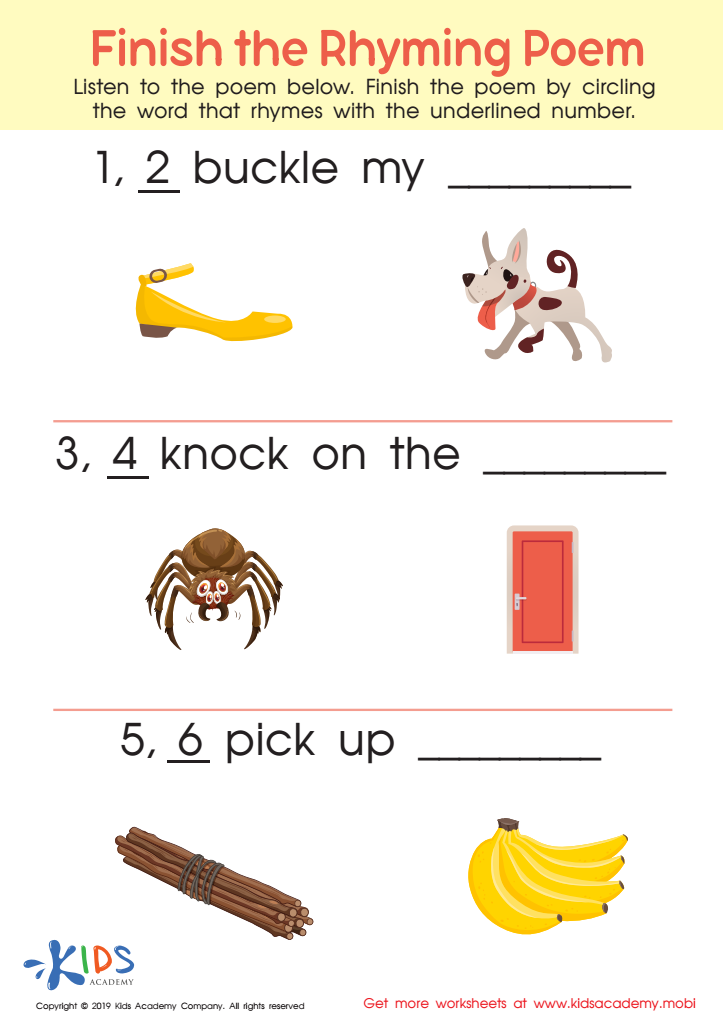
Finish Rhyming Poem Worksheet




.jpg)

Rhyming words play a crucial role in early literacy development for children aged 4-8. Parents and teachers should care about introducing rhymes because they are foundational in developing phonemic awareness, which is the ability to hear, identify, and manipulate the individual sounds in words. When children engage with rhymes, they start to recognize patterns in sounds, which enables them to decode new words more easily—a vital skill for reading fluency.
Furthermore, rhyming enhances vocabulary development. The playful nature of rhymes encourages children to explore word meanings and strengthens their language skills, making it easier for them to express themselves. Rhymes often appear in songs and stories, providing a fun and engaging way for children to learn and retain information.
Additionally, rhyming fosters memory retention. Repetition of rhyming words helps kids remember not just the sounds but also the context and structure of language. Importantly, engaging with rhymes nurtures a love for reading and storytelling, developing a lifelong affinity for language. Encouraging activities that involve rhyming—such as reading books, playing games, and singing songs—supports children’s cognitive development and lays the groundwork for academic success.








