
Reading practice Science Worksheets for Ages 4-8
5 filtered results
Difficulty Level
Grade
Age
-
From - To
Subject
Activity
Standards
Boost your child's reading skills with our engaging Science Worksheets specifically designed for ages 4-8! Our collection offers a variety of fun and interactive activities that link scientific concepts with reading practice. Each worksheet focuses on improving vocabulary, comprehension, and critical thinking while exploring exciting topics like animals, space, and the environment. Kids will love the colorful illustrations and relatable scenarios that make learning enjoyable. These worksheets not only make reading fun but also nurture a lifelong love for science. Perfect for home or classroom use, our resources empower young learners to thrive as confident readers and curious scientists. Start exploring today!
Favorites
With answer key
Interactive
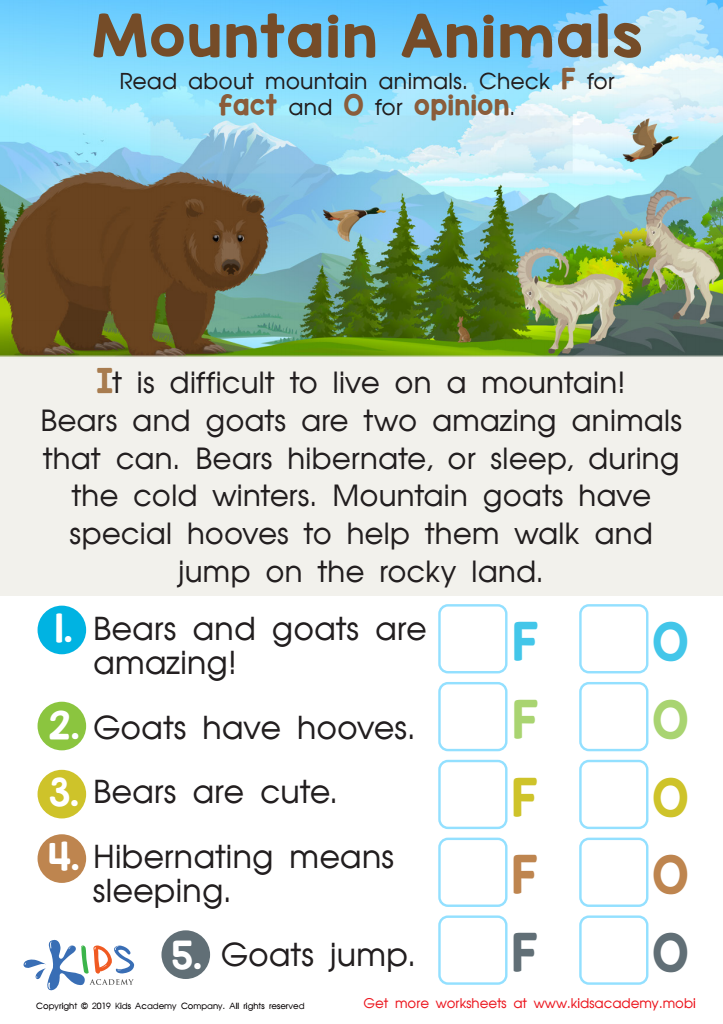
Mountain Animals Worksheet
Is mountain wildlife amazing? Fact or fiction? Help your child sharpen critical-thinking skills with this engaging worksheet. Featuring a fun nonfiction passage about animals like bears and goats, your child will read through the text and identify each statement as fact or fiction. Perfect for boosting reading comprehension and analytical abilities!
 Assign to My Students
Mountain Animals Worksheet
Worksheet
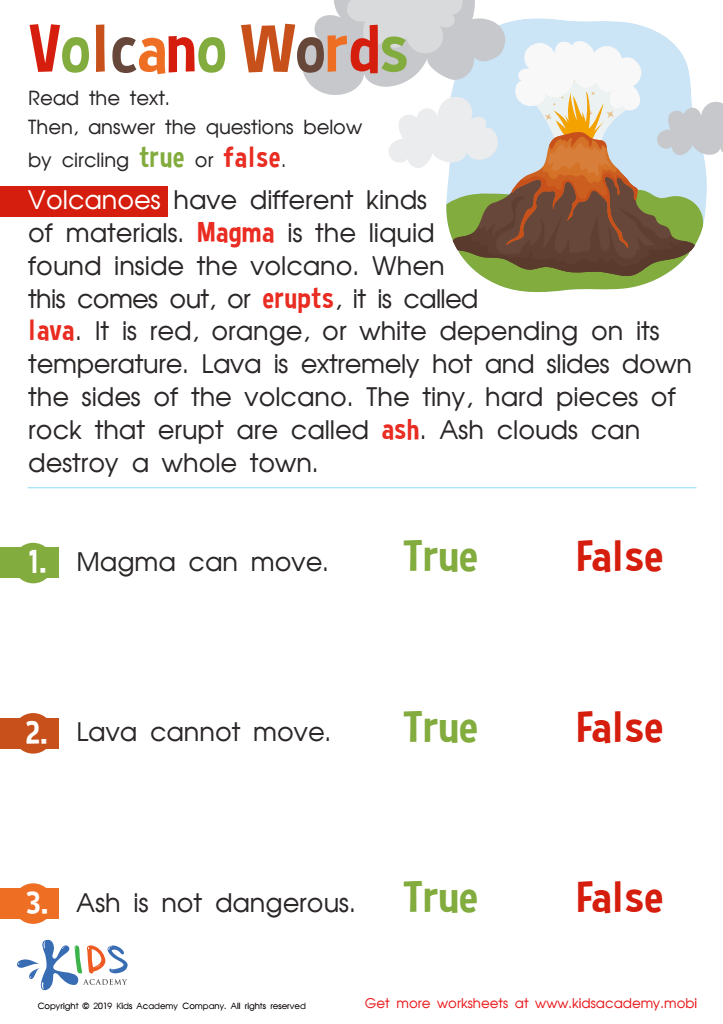
Volcano Words Worksheet
This worksheet helps kids focus and improve their reading comprehension skills. Start by reading a passage about volcanos and noting the bolded red words. Then answer true/false statements below, double-checking in the text if needed.
Volcano Words Worksheet
Worksheet
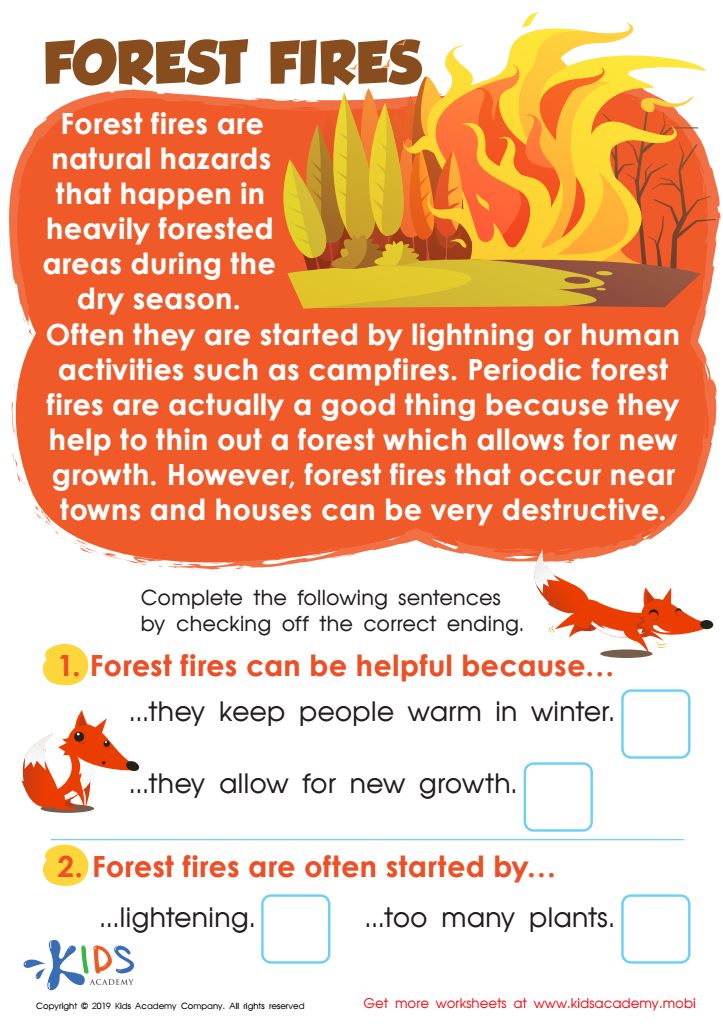
Forest Fires Worksheet
This free worksheet helps kids learn about forest fires. It encourages critical thinking by allowing them to answer multiple-choice questions. It is an important opportunity for children to develop reading skills, as understanding text is essential for further academic success. Download the PDF to give them the chance to practice comprehension and strengthen their knowledge.
Forest Fires Worksheet
Worksheet
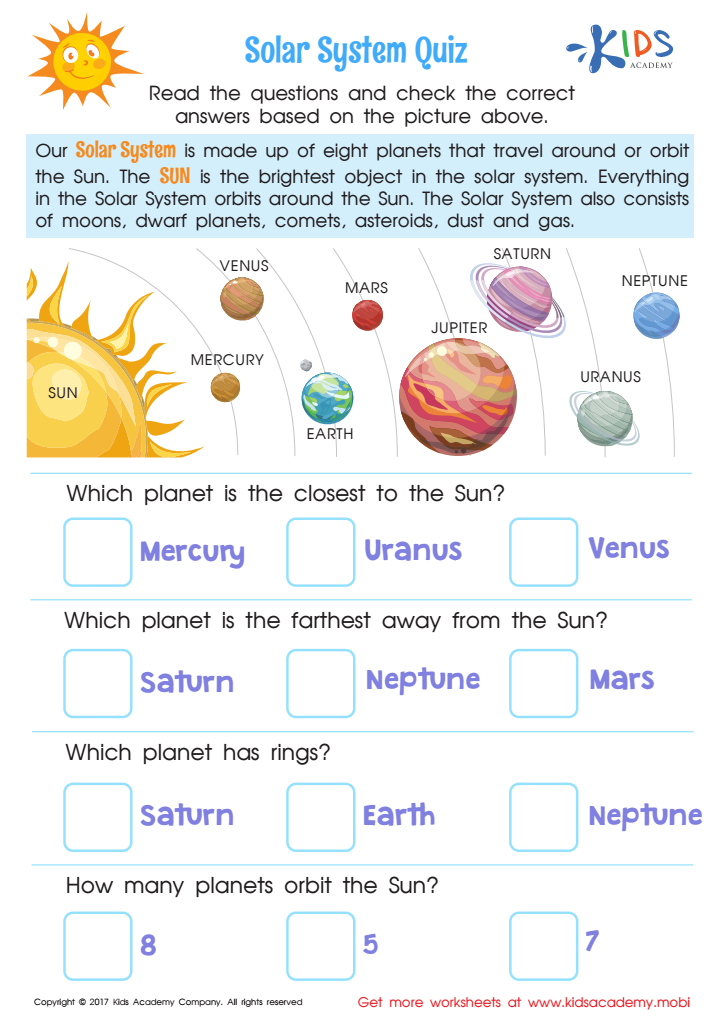
Solar System Quiz Printable
Blast off to space with our Solar System Quiz! Read the passage to learn about the sun and planets, then challenge your child to complete the quiz based on the vibrant diagram. Get an out-of-this-world learning experience!
Solar System Quiz Printable
Worksheet
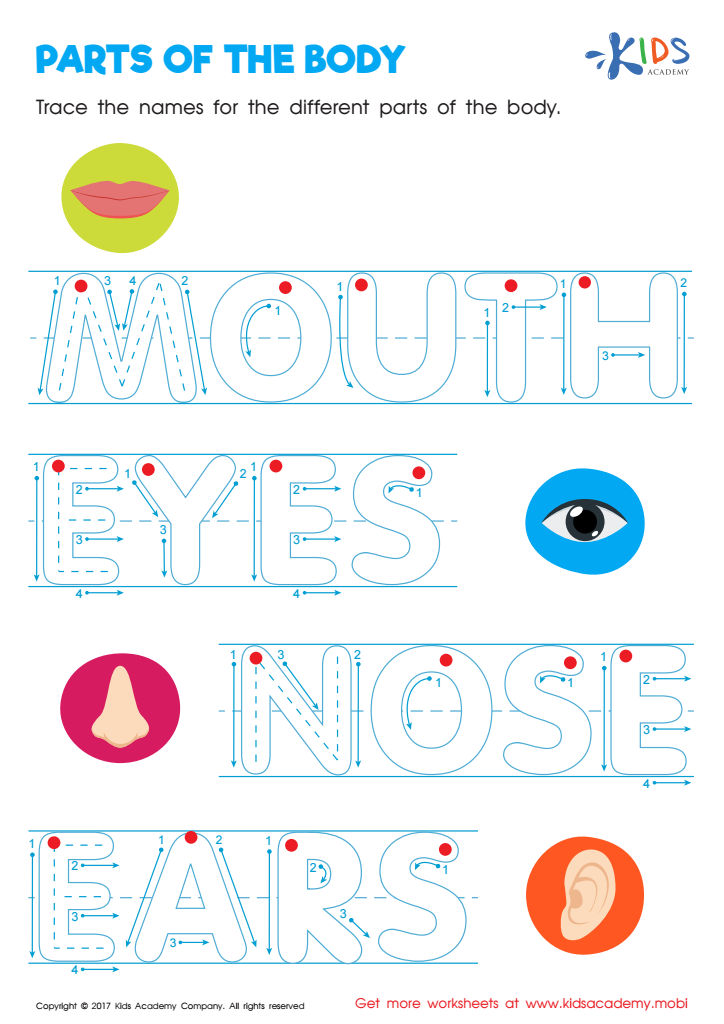
Parts of the Body Worksheet
Worksheet
Join Kids Academy for Free
Who is primarily going to use this learning content?







Reading practice in science for children aged 4-8 is crucial for several reasons. Firstly, early exposure to science fosters curiosity and encourages young learners to explore the world around them. Through reading, children encounter concepts related to nature, the environment, and basic scientific principles, laying a foundation for more complex understanding in later years.
Secondly, reading science helps build literacy skills. As children learn to decode words and comprehend text, they simultaneously absorb valuable vocabulary specific to scientific contexts. This enriches their language and lays groundwork for effective communication skills.
Additionally, engaging with science through reading supports critical thinking and problem-solving skills. Many science books for this age group incorporate questions and hands-on activities that promote inquiry, leading children to think like scientists.
Moreover, making science part of a child's routine can help inspire future interest in STEM (Science, Technology, Engineering, and Mathematics) fields. In a world increasingly driven by technology, early engagement can lead to a lifelong passion for learning and exploration. Overall, integrating reading in science during these formative years supports cognitive growth while nurturing inquisitive minds equipped to tackle future challenges. Parents and teachers play a vital role in driving this process and should prioritize reading practice in science.







