Recognizing Patterns Science Worksheets for Ages 4-8
3 filtered results
-
From - To
Discover our "Recognizing Patterns Science Worksheets for Ages 4-8," designed to enhance young learners' understanding of patterns in the world around them. These engaging worksheets encourage curiosity and observation as children explore natural patterns in sequences, shapes, and colors. Aligned with early science learning objectives, each activity fosters critical thinking and problem-solving skills. Perfect for classroom use or at-home learning, our user-friendly resources provide clear instructions and vibrant illustrations to keep kids motivated and excited. Help your child develop essential cognitive skills while having fun with patterns—an important foundation for their future learning journey! Start exploring today!
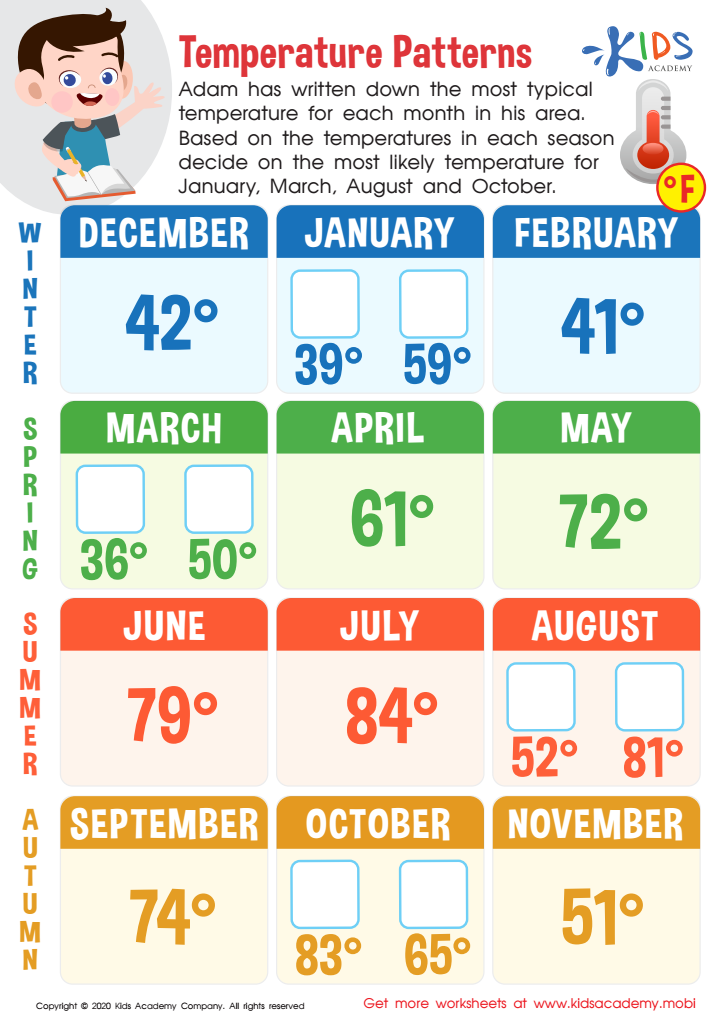
Temperature Patterns Worksheet
 Assign to My Students
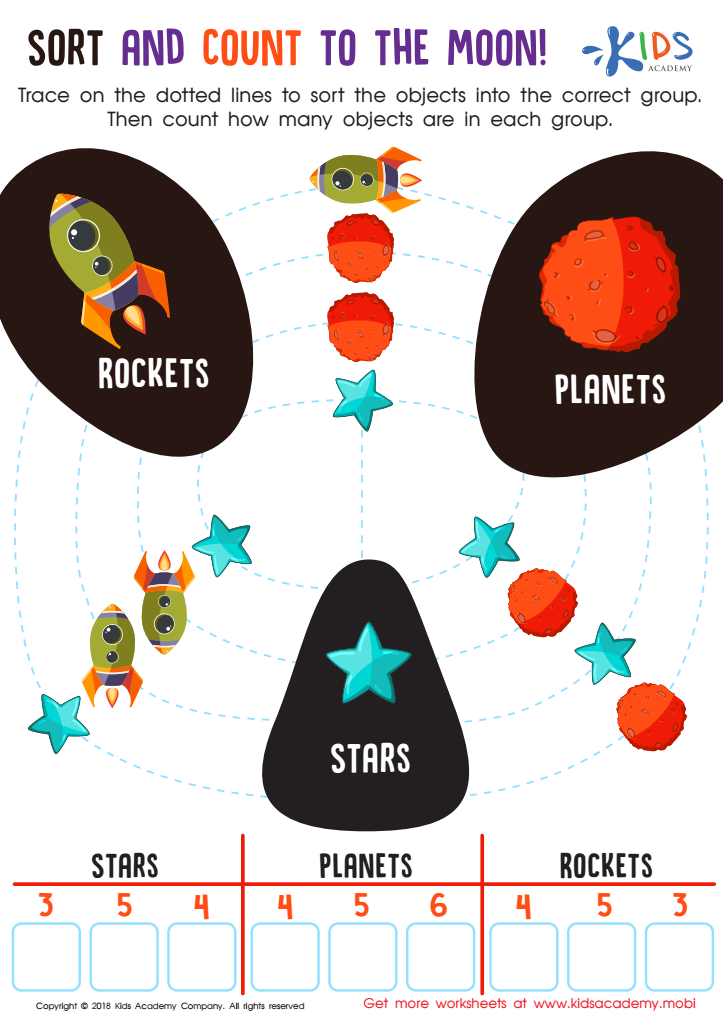
Sort and Count to the Moon Worksheet
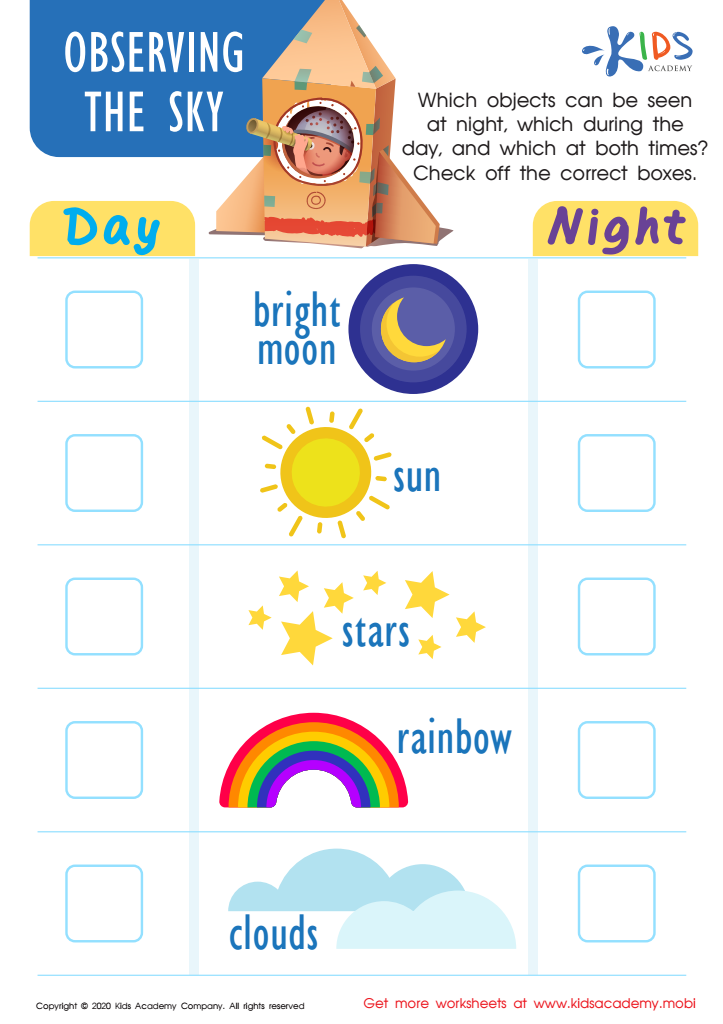
Observing the Sky Worksheet





.jpg)
Recognizing patterns is a fundamental skill in early childhood education, especially in science, and it plays a crucial role in cognitive development. For children aged 4-8, grasping the concept of patterns helps them make sense of the world around them. Parents and teachers should care about teaching this skill because it lays the groundwork for critical thinking and problem-solving.
When children identify patterns, they learn to predict outcomes and make connections between concepts, paving the way for more advanced scientific understanding. For instance, recognizing patterns in nature, such as the changing seasons or life cycles of plants and animals, fosters a sense of curiosity and encourages exploration.
Moreover, pattern recognition skills enhance mathematical concepts, as patterns are foundational to understanding numbers, shapes, and relationships. Engaging in pattern-related activities in a playful manner makes learning enjoyable, promoting deeper knowledge retention.
Additionally, these skills contribute to a child’s social-emotional development, as they collaboratively observe and discuss patterns with peers. Ultimately, fostering pattern recognition in young learners equips them with essential tools to navigate their environment, think critically, and pursue lifelong learning, making it paramount for both parents and teachers to prioritize this aspect of education.







