Science knowledge Science Worksheets for Ages 4-8
3 filtered results
-
From - To
Discover a vibrant collection of science knowledge worksheets tailored for children aged 4-8! Our engaging resources are designed to spark curiosity and foster a love for learning. Each worksheet covers essential science concepts in a fun and interactive way, promoting critical thinking and hands-on exploration. Ideal for home or classroom use, these worksheets help young learners grasp key ideas about the natural world, ecosystems, and physical sciences. With colorful illustrations and age-appropriate activities, children can reinforce their understanding while building skills they’ll use for a lifetime. Explore our science worksheets today and make learning an adventure!
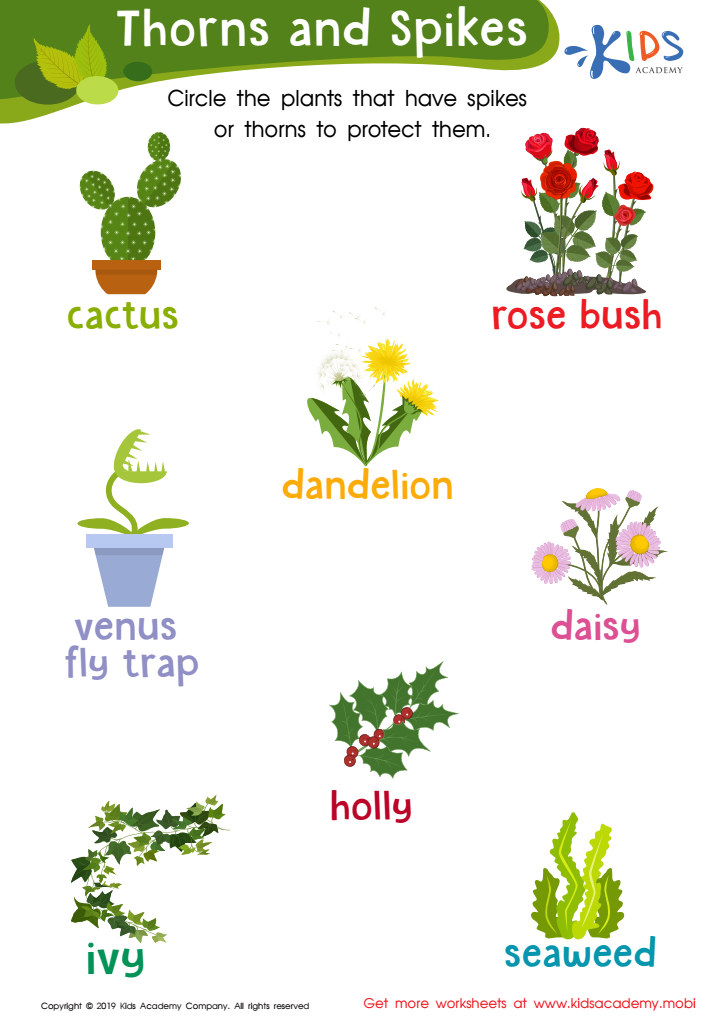
Thorns and Spikes Worksheet
 Assign to My Students
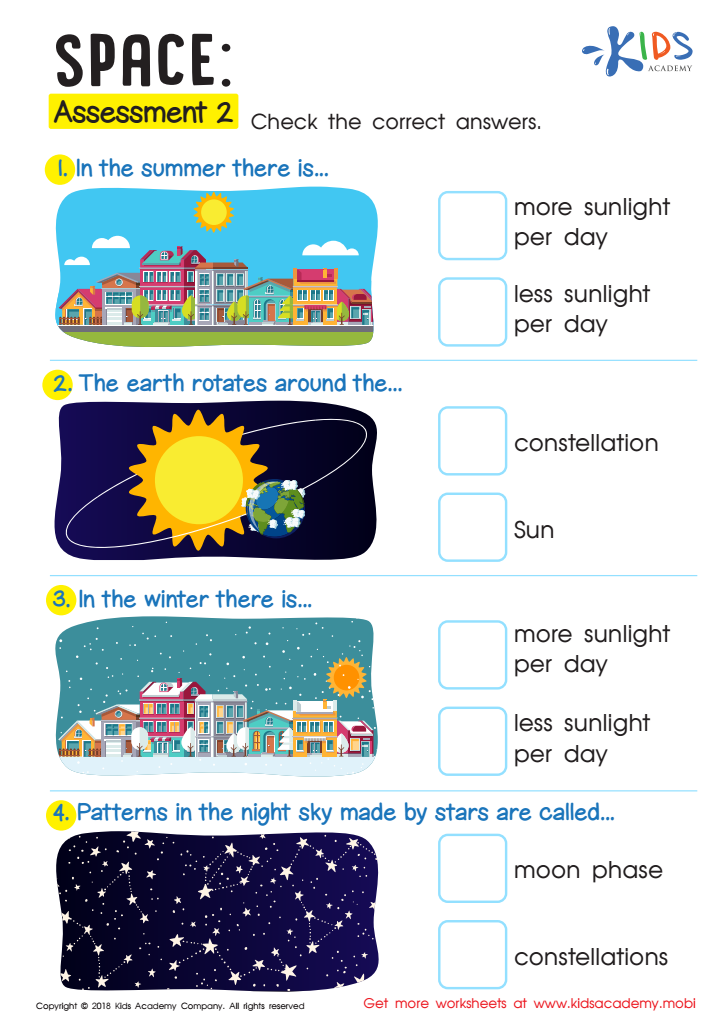
Space: Assessment 2 Worksheet





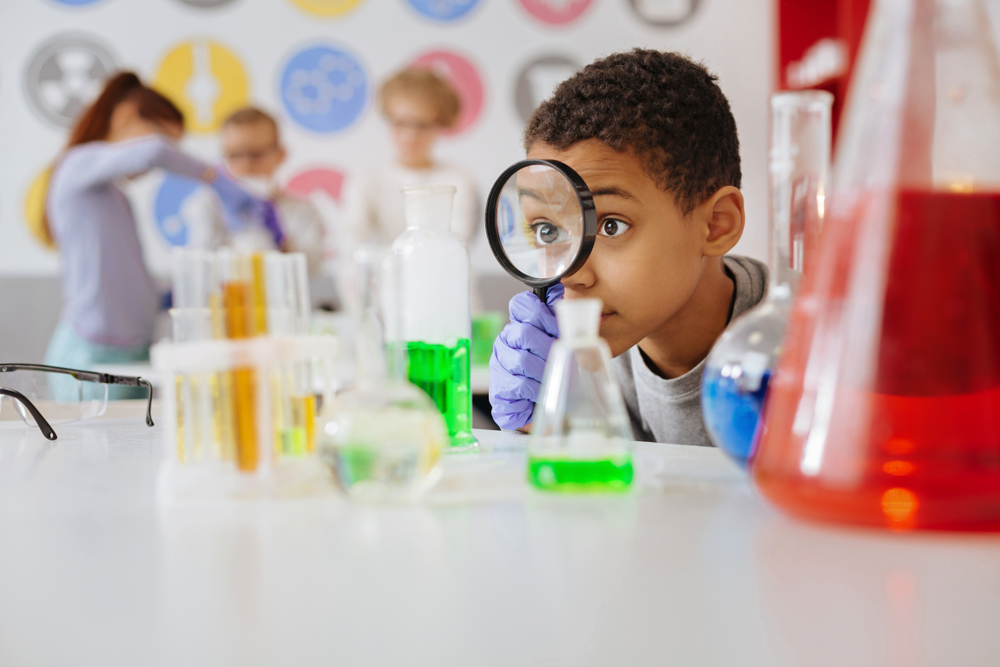

Parents and teachers should prioritize science knowledge for children aged 4-8 because it lays the foundation for critical thinking, curiosity, and problem-solving skills. At this age, children are naturally curious, eager to explore the world around them. Introducing scientific concepts helps channel this curiosity into a structured approach, enabling them to ask questions, investigate, and understand basic principles of how things work.
Engaging children in science fosters a mindset of inquiry and experimentation. Activities like simple experiments or nature explorations encourage hands-on learning, helping children retain knowledge more effectively. Additionally, understanding basic science fosters a sense of accomplishment and confidence as they learn to ask questions, hypothesize, and draw conclusions.
Science education also encourages creativity, as students learn to think beyond traditional answers and approach problems from various angles. This interdisciplinary learning connects to other subjects like math, literacy, and art, enriching overall educational development.
Moreover, in our rapidly advancing technological world, a strong foundation in science is crucial. By nurturing scientific understanding, parents and teachers equip children with the tools to become informed citizens who can navigate modern challenges in health, environment, and technology, ultimately fostering a lifelong love for learning and discovery.







