
Science knowledge application Science Worksheets for Ages 4-8
3 filtered results
Difficulty Level
Grade
Age
-
From - To
Subject
Activity
Standards
Enhance your child's understanding of science with our engaging Science Knowledge Application Worksheets designed for ages 4-8. These interactive resources help young learners apply their scientific concepts through fun activities and real-life scenarios. By exploring topics such as plants, animals, and the environment, kids strengthen their critical thinking and problem-solving skills. Our worksheets are tailored to fit seamlessly into various educational settings, making it easy for teachers and parents to introduce exciting science lessons. Foster a love for discovery and learning with these fun, educational tools that inspire curiosity and confidence in young scientists! Perfect for home and classroom use!
Favorites
With answer key
Interactive
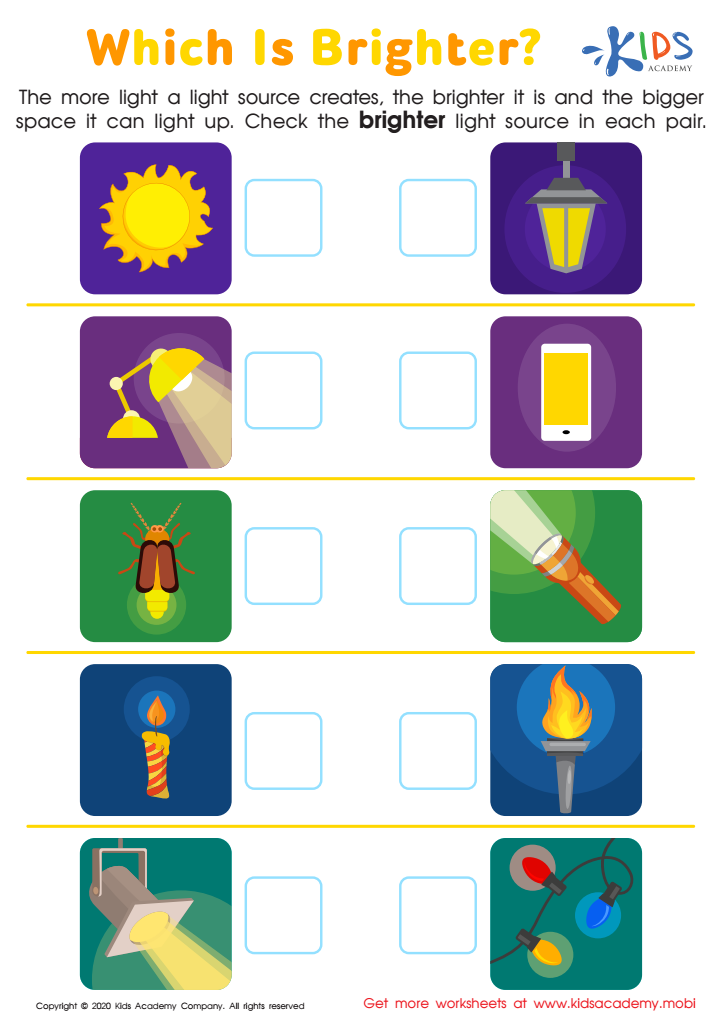
Which Is Brighter? Worksheet
Before the exercise, ask students to recall sources of light. Use this worksheet to explain that the brighter the light source, the more space it can light up. Identify the different light sources in the pictures, then check the brighter light source in each pair. The biggest natural source of light is the sun.
 Assign to My Students
Which Is Brighter? Worksheet
Worksheet
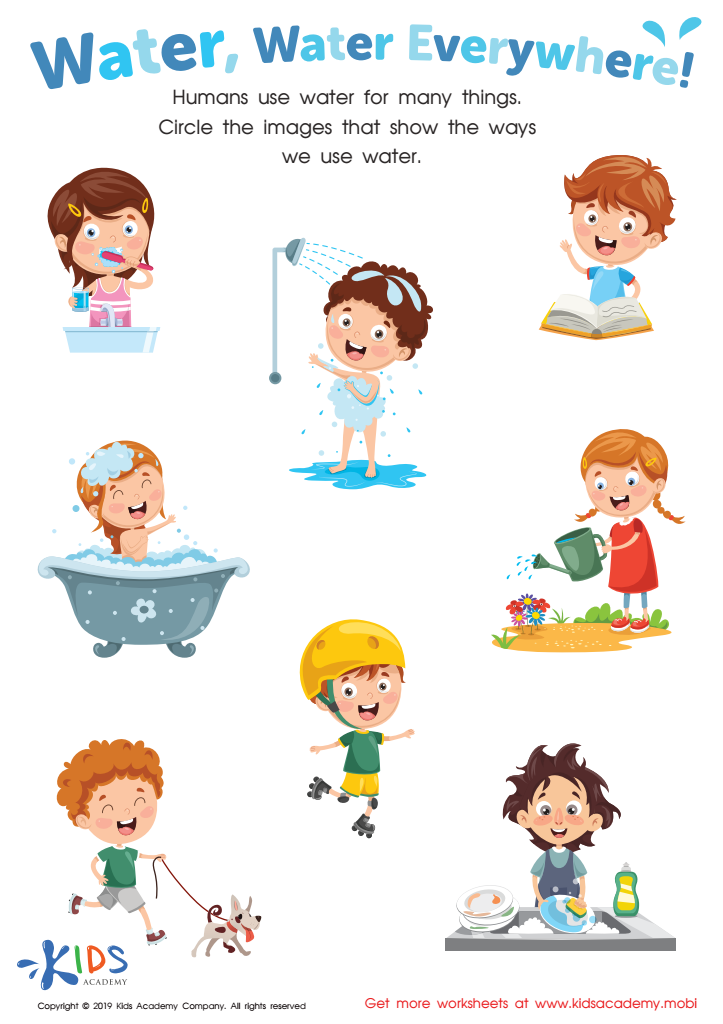
Water, Water Everywhere! Worksheet
Ask your kids how we use water daily. Point out how vital it is to the environment, as many living things couldn't exist without it. Show them this worksheet with kids doing different things that involve water. Ask them to identify what each one is doing, then help them circle the images which show the ways we use the water.
Water, Water Everywhere! Worksheet
Worksheet
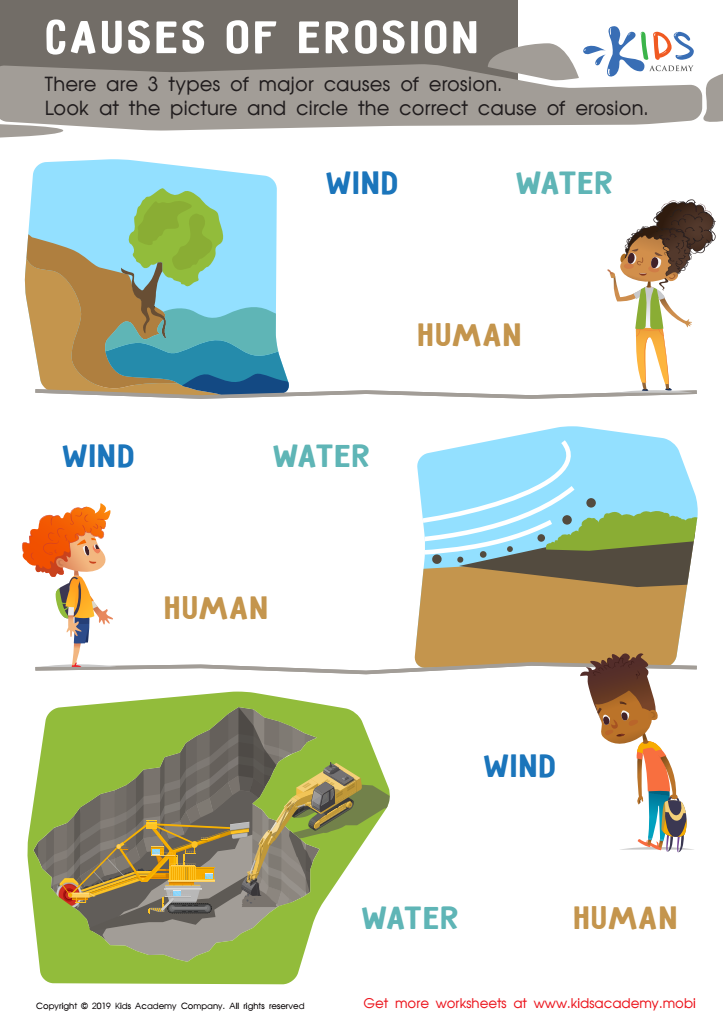
Causes of Erosion Worksheet
Earth is a habitable planet for humans and all life forms, providing us with what we need to survive. However, erosion caused by air, water or man can destroy or crumble parts of its surface. Teach kids the three causes of erosion and help them circle the correct one on a worksheet.
Causes of Erosion Worksheet
Worksheet
Join Kids Academy for Free
Who is primarily going to use this learning content?






%20(1).jpg)

Understanding and applying science concepts in early childhood, particularly for ages 4-8, is crucial for several reasons. First, young children are naturally curious about the world around them, and science fosters this innate curiosity. When parents and teachers actively engage children in science, it cultivates critical thinking, problem-solving skills, and encourages inquiry-based learning.
Science knowledge application at this age lays the foundation for lifelong learning. It helps children develop a basic understanding of essential concepts such as the scientific method, observation, and categorization, which are vital as they progress in their education. Early exposure to science not only promotes cognitive development but also builds a sense of confidence in children as they explore and experiment.
Furthermore, integrating science into daily activities strengthens the connection between learning and real-life situations. It encourages conversations about nature, health, and technology, fostering a comprehensive worldview. Parents and teachers who prioritize science education also show children the importance of curiosity and exploration, significantly impacting their academic interests and career choices later on.
Ultimately, nurturing an appreciation for science at a young age empowers children to become independent learners, responsible citizens, and innovative thinkers in an increasingly complex world.







