Understanding landforms Science Worksheets for Ages 4-8
3 filtered results
-
From - To
Discover engaging and educational "Understanding Landforms" worksheets designed for children ages 4-8! These science worksheets from Kids Academy help young learners explore and identify various landforms, such as mountains, valleys, plains, and hills. Through interactive activities and fun illustrations, children quickly grasp essential geographical concepts, boosting their early learning skills. Perfect for both classroom use and homeschooling, these printable worksheets foster curiosity and knowledge about the natural world while enhancing kids' observation and critical thinking abilities. Ignite your child's interest in geography with our comprehensive and captivating landform worksheets today!
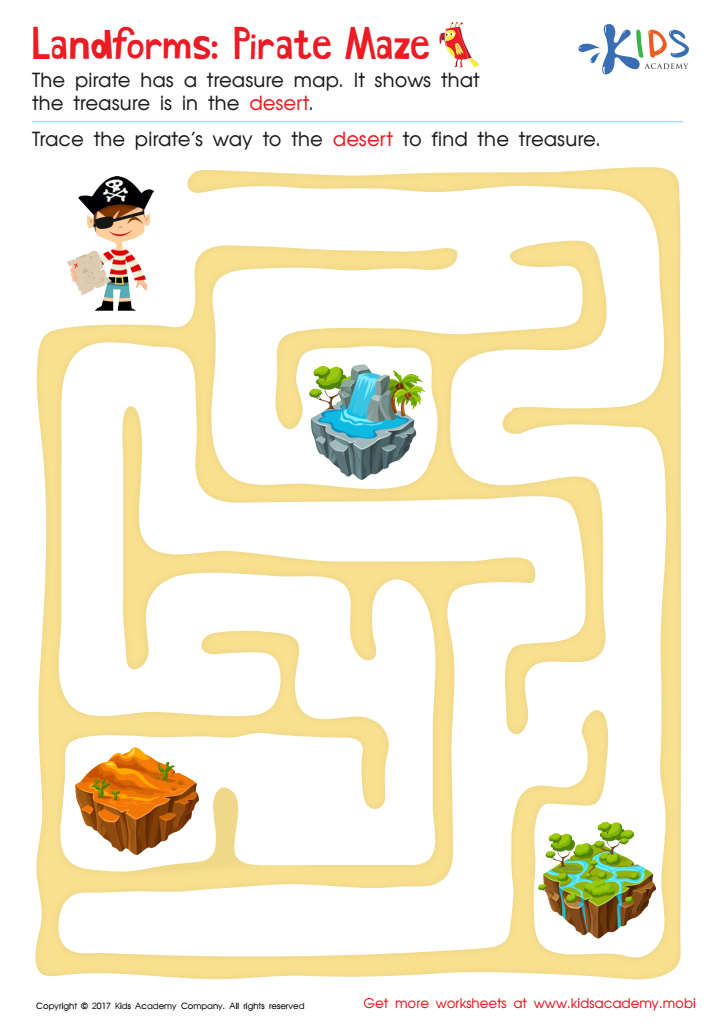
Landforms: Pirate Maze Printable
 Assign to My Students
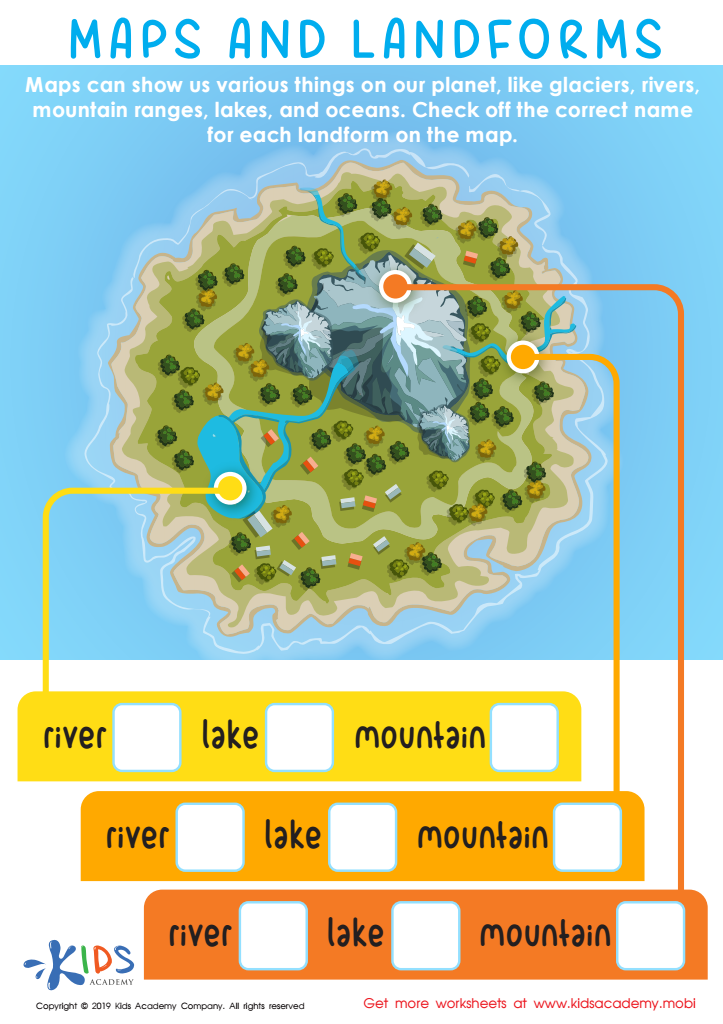
Maps and Landforms Worksheet
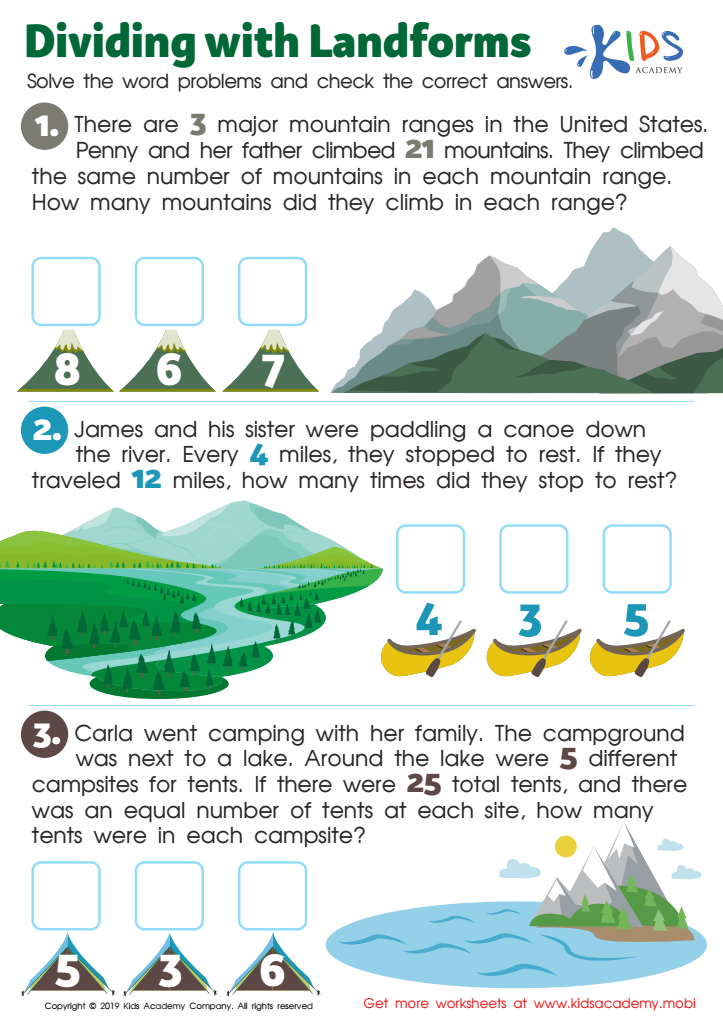
Dividing with Landforms






Understanding landforms is essential for young children's educational and personal development for several reasons. First, early exposure to geography and science fosters curiosity and critical thinking skills. It helps children understand the natural world, encouraging them to ask questions and seek answers, which are foundational skills for lifelong learning.
Second, teaching about landforms such as mountains, valleys, rivers, and plains introduces children to basic concepts of geology and environmental science. This foundational knowledge is crucial as it ties into broader subjects they will encounter later in school like earth science, environmental studies, and biology.
Third, learning about landforms nurtures a sense of wonder and connection to the planet. This can instill in children a sense of responsibility towards environmental conservation, promoting sustainable thinking from a young age. Recognizing that they are part of a larger ecosystem can positively impact their attitudes and behaviors toward nature.
Lastly, understanding geography helps improve spatial awareness and can be linked to meaningful social studies lessons about different cultures and communities living in varied landform regions. By integrating this knowledge in engaging ways, such as through hands-on activities and stories, parents and teachers can build a strong, interdisciplinary foundation that supports all aspects of a child's development.







