Understanding natural resources Science Worksheets for Ages 4-8
4 filtered results
-
From - To
Discover the wonders of nature with our "Understanding Natural Resources" science worksheets for ages 4-8. Designed to introduce young learners to the concept of natural resources, these engaging worksheets include fun activities that help children identify and categorize these essential materials. With vibrant illustrations and interactive exercises, kids will explore renewable and non-renewable resources, understand their importance, and gain appreciation for our planet. Ideal for both classroom use and homeschooling, our science worksheets support foundational learning while fostering an early interest in environmental stewardship. Ignite your child's curiosity about the world around them today!
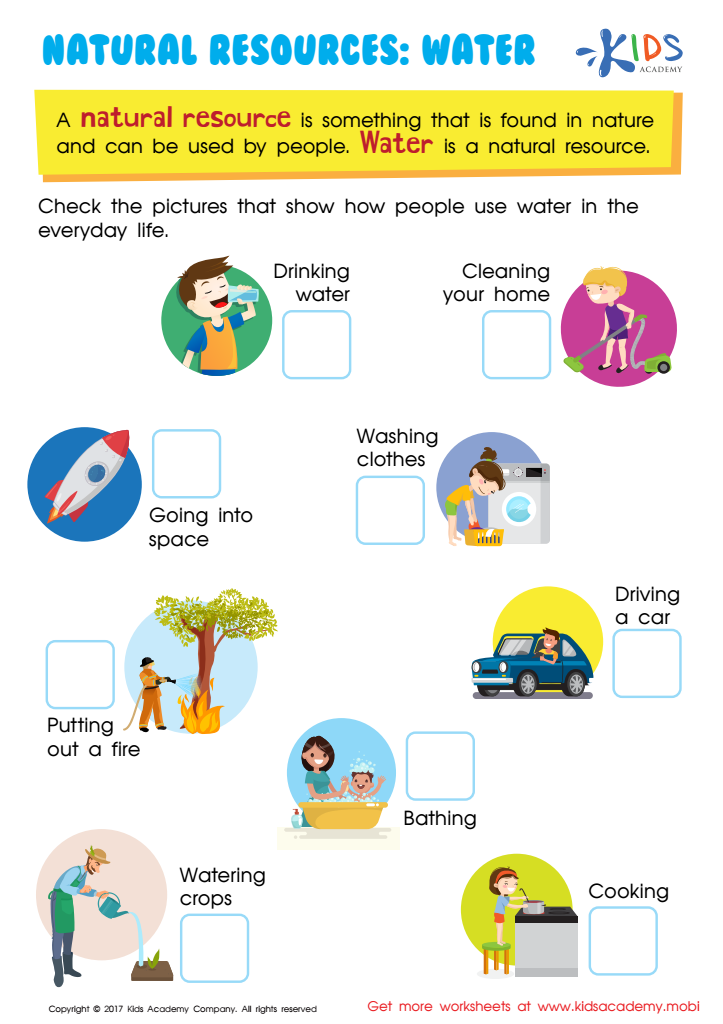
Natural Resources: Water Worksheet
 Assign to My Students
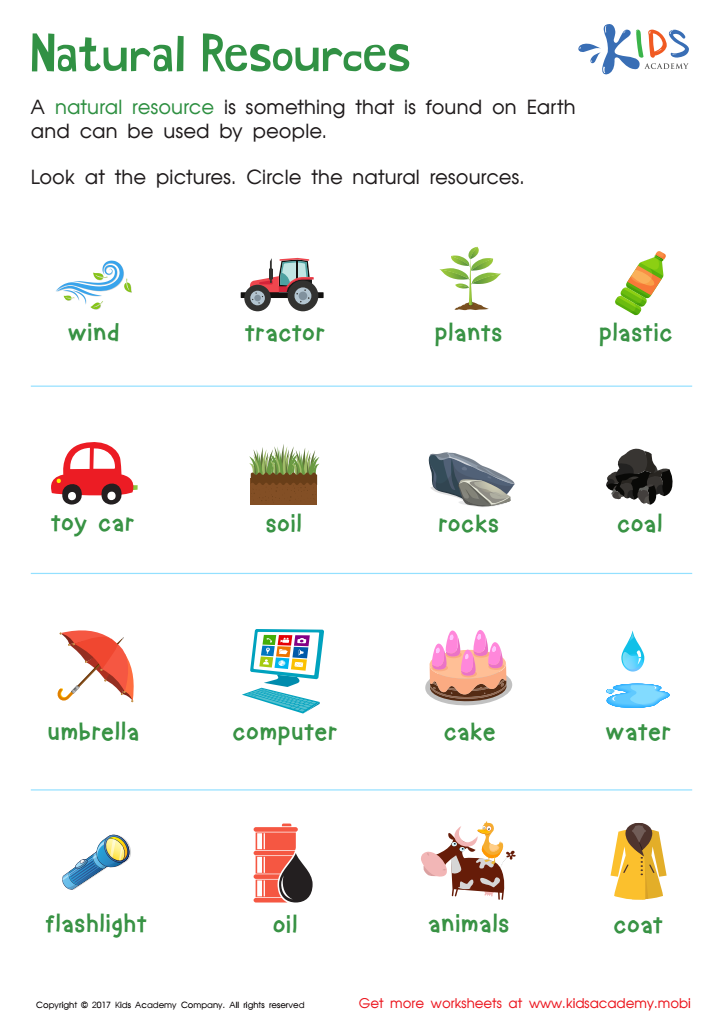
Natural Resources Worksheet
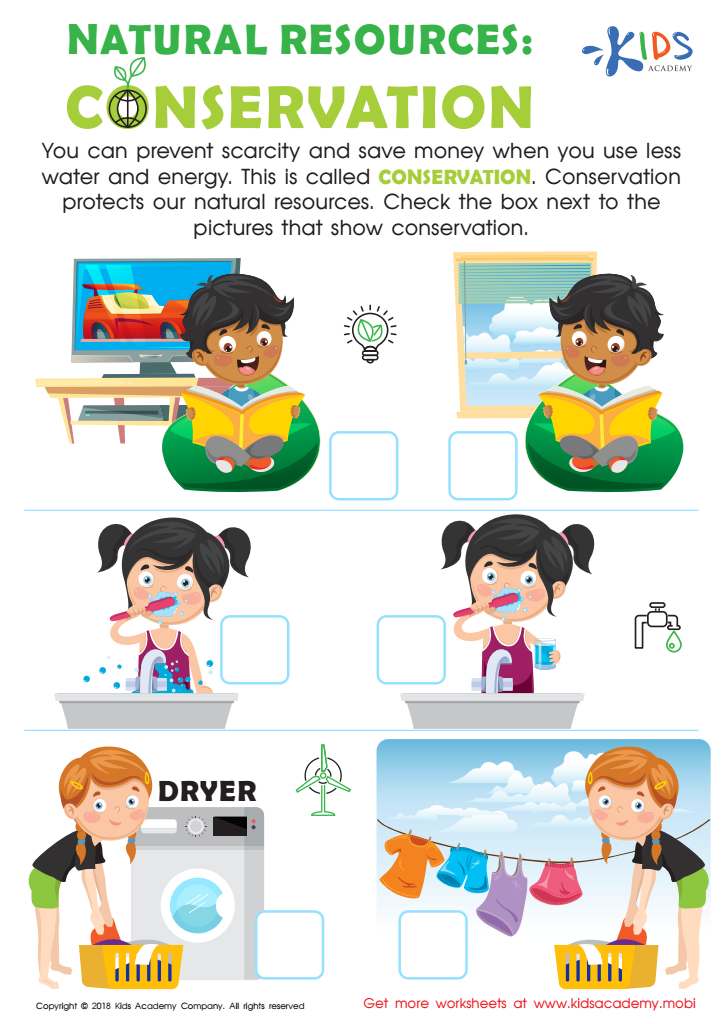
Natural Resources: Conservation Worksheet
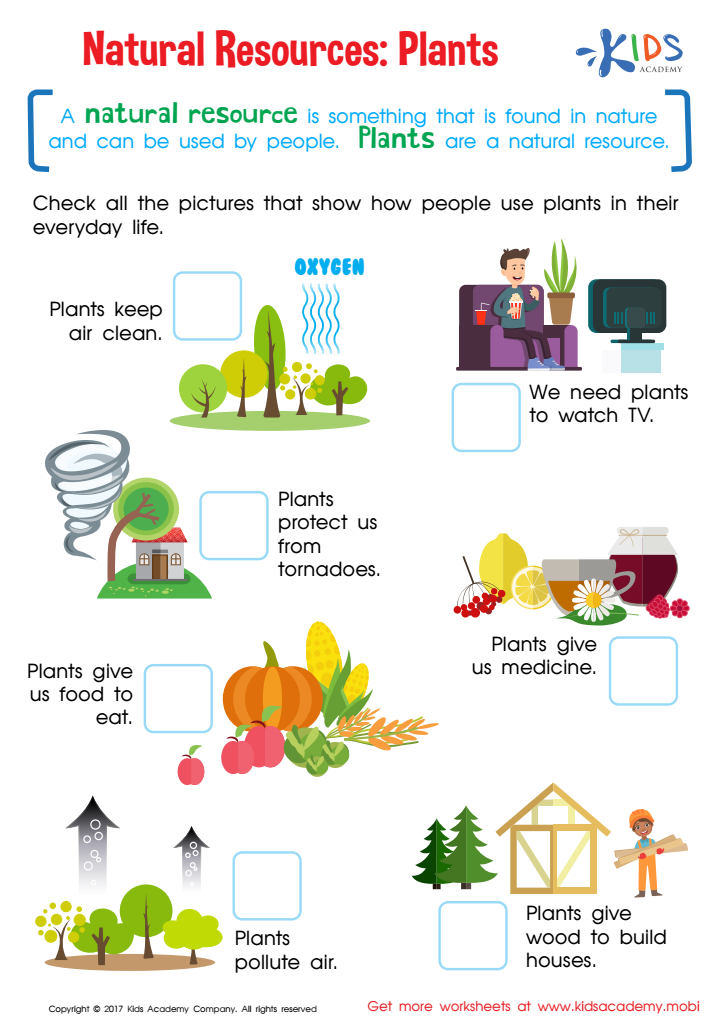
Natural Resources: Plants Worksheet







Understanding natural resources science for children aged 4-8 is crucial for multiple reasons. At this formative stage, young minds are highly receptive to new concepts and are in the process of forming habits and attitudes that often persist into adulthood. Introducing them to the significance of natural resources—such as water, air, soil, and energy—lays a foundation for responsible environmental stewardship.
When parents and teachers guide children in learning about these resources, they cultivate a sense of curiosity and respect for the world around them. Educating kids about how natural resources are used and conserved helps them to appreciate the interconnectedness of ecosystems, fostering an early awareness of sustainability.
This knowledge can also enhance critical thinking and problem-solving skills. For instance, understanding the source of their water can spark discussions about cleanliness and conservation. Exploring renewable energy, such as solar or wind, can introduce concepts of innovation and technology.
Furthermore, using hands-on activities like gardening or recycling projects can make the learning process engaging and effective. These activities not only reinforce scientific concepts but also teach practical life skills. Ultimately, building a strong knowledge base about natural resources encourages sustainable living practices, empowering children to become environmentally responsible citizens who contribute positively to their communities and the planet.







