Filters

29 filtered results

Clear all filters
Favorites
With answer key
Interactive

29 filtered results

Difficulty Level

Grade


Check out this FREE Trial Lesson on Science for age 4-8!

Inherited Traits

Favorites
With answer key
Interactive
  • 4-8
  • Vocabulary expansion
  • Science
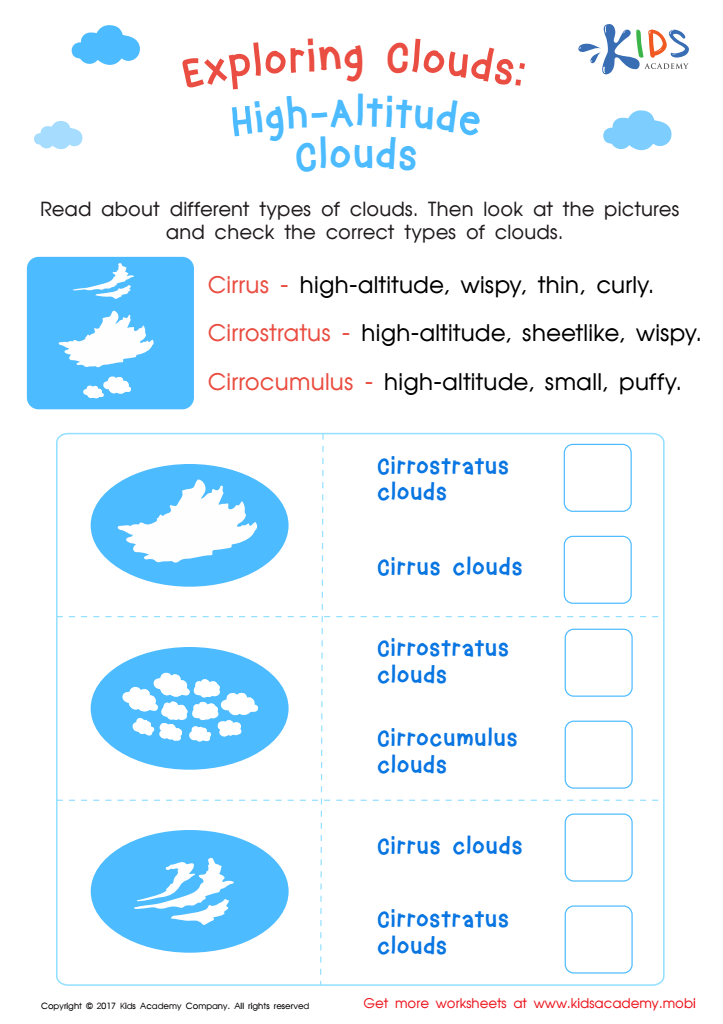
Worksheet: type of high altitude clouds

Exploring Clouds: High Altitude Clouds Worksheet

Explore the different types of high altitude clouds with this fun and informative worksheet. Then, head outside to see if your child can spot any of the clouds in the sky!
Exploring Clouds: High Altitude Clouds Worksheet
Worksheet
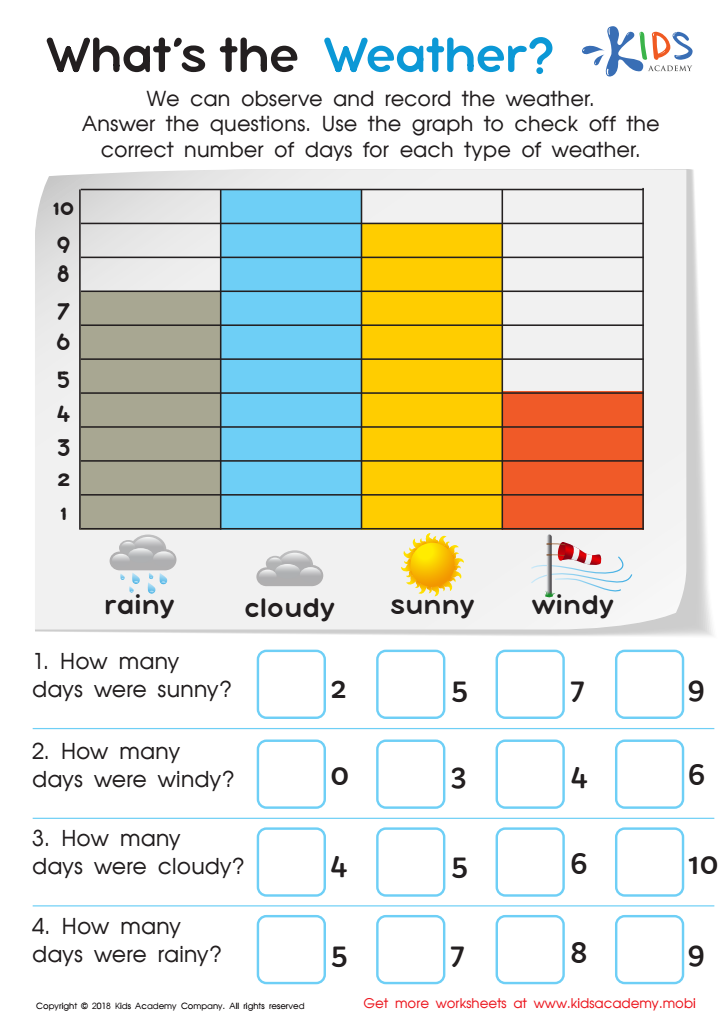
What's the Weather? Worksheet

What's the Weather? Worksheet

Check the weather outside. Help kids learn and practice science and math by tracking different types of days using this printable worksheet. Have them count bars next to weather types like cloudy, sunny, windy, and rainy. Answer the questions and take the lesson further by creating a bar graph to show the monthly weather.
What's the Weather? Worksheet
Worksheet
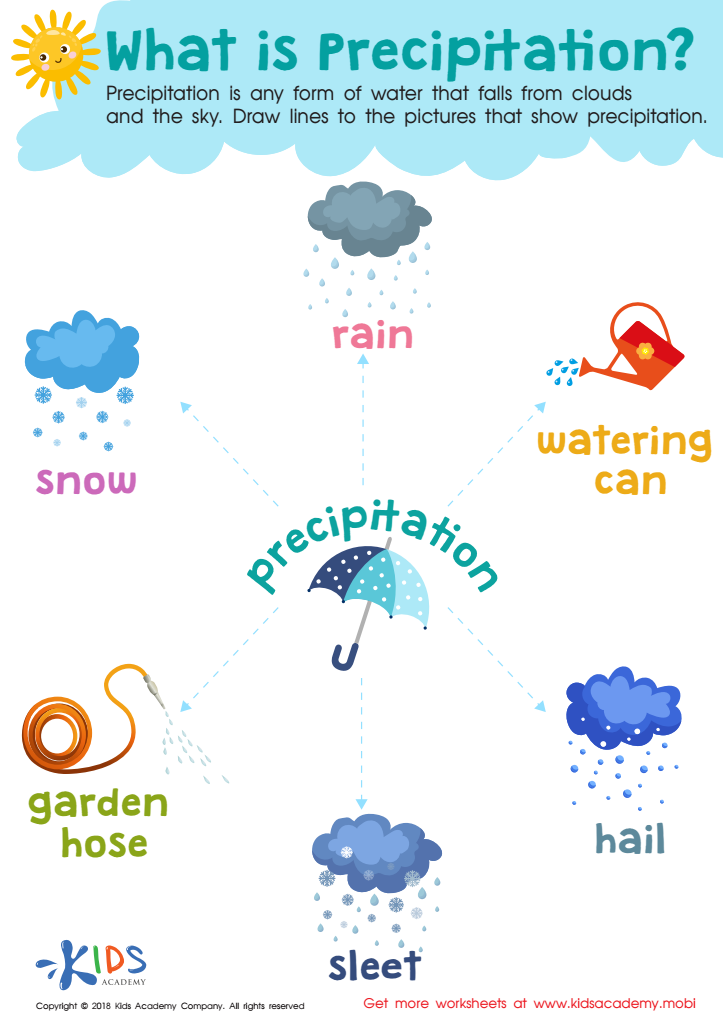
What Is Precipitation? Worksheet

What Is Precipitation? Worksheet

Explain to your child that precipitation is any form of water that falls from clouds and the sky. Ask them if it's a word they're familiar with? Show them this worksheet, with pictures of different weather conditions, and ask them to draw lines to the ones that show precipitation.
What Is Precipitation? Worksheet
Worksheet
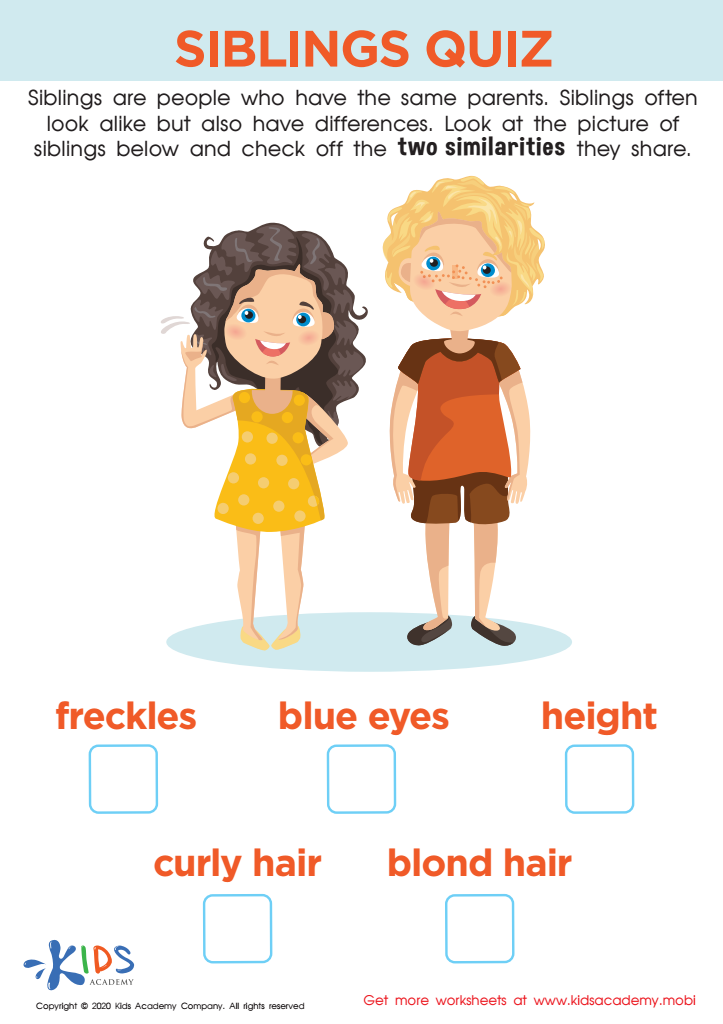
Siblings Quiz Worksheet

Siblings Quiz Worksheet

Your children may know a sibling is a sister or brother, but not realize what it means to be one. Siblings share the same parents, which means they share many genes. They are alike in many ways, but also have their own unique traits. Help your future scientist understand this early biology concept with this fun worksheet. They'll be tasked with finding similarities between two siblings on the page.
Siblings Quiz Worksheet
Worksheet
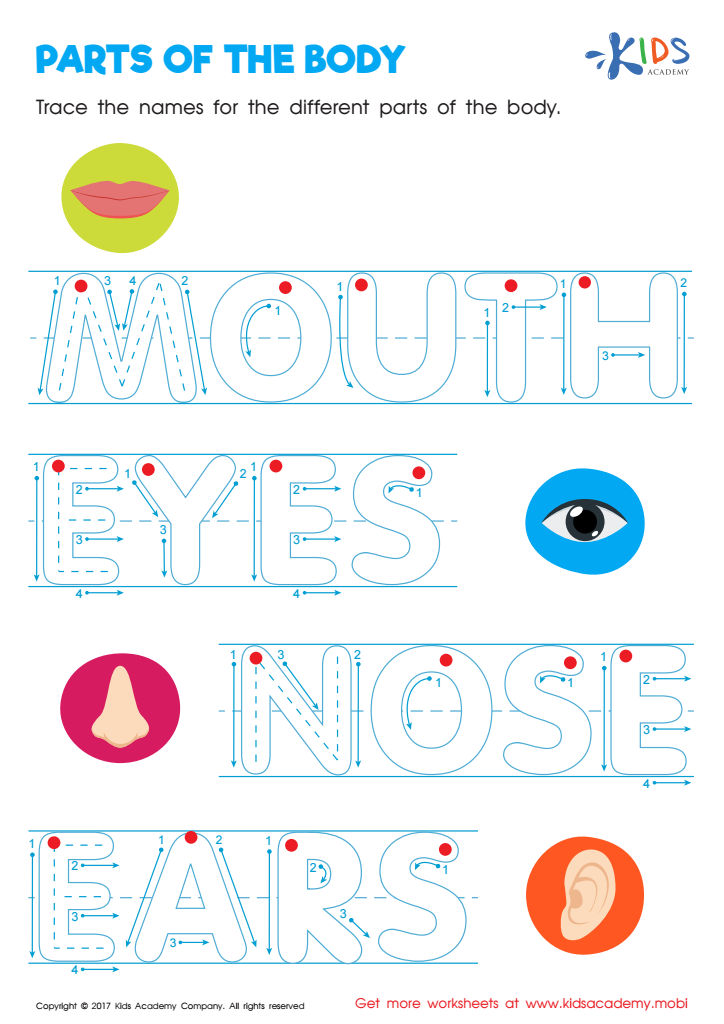
Parts of the Body Tracing Worksheet

Parts of the Body Worksheet

Get your child ready to trace, learn and write body parts.
Parts of the Body Worksheet
Worksheet


Parents and teachers should prioritize vocabulary expansion in young children, especially within the context of science, for several compelling reasons. First, a rich vocabulary enhances cognitive development, allowing children to articulate their thoughts and comprehend complex concepts. For ages 4-8, this means grasping the basics of scientific principles—like plants, animals, weather, and the environment—using appropriate terminology.

Second, science vocabulary serves as a foundation for critical thinking and problem-solving skills. When children learn specific terms, they begin to make connections between ideas, fostering curiosity and encouraging them to ask questions, a key element in the scientific method.

Third, strengthening vocabulary in science helps bridge the gap between words and their meanings, ensuring that children can express observations and findings accurately. This ability is vital not just for academic success but also for cultivating a lifelong love of learning and exploration.

Finally, an emphasis on vocabulary expansion lays the groundwork for future academic achievement. Early exposure to science language and concepts can inspire an interest in STEM fields, leading to greater opportunities and engagement as children progress through their education. In summary, focusing on vocabulary in science builds essential skills for comprehension, communication, and critical thinking.