Vocabulary expansion Our Planet and Environment Worksheets for Ages 4-8
6 filtered results
-
From - To
Explore our engaging "Vocabulary Expansion: Our Planet and Environment" worksheets, designed for children ages 4-8! These fun, educational worksheets help young learners build essential vocabulary related to our planet and environment. Each activity is crafted to develop language skills while teaching kids about nature, ecosystems, and environmental conservation. Our colorful, age-appropriate resources include matching games, word scrambles, and picture dictionaries, all aimed at making learning enjoyable and effective. Perfect for parents, teachers, and homeschoolers, these worksheets instill a love for the environment while enriching children's language abilities. Let's empower the next generation of environmental stewards!
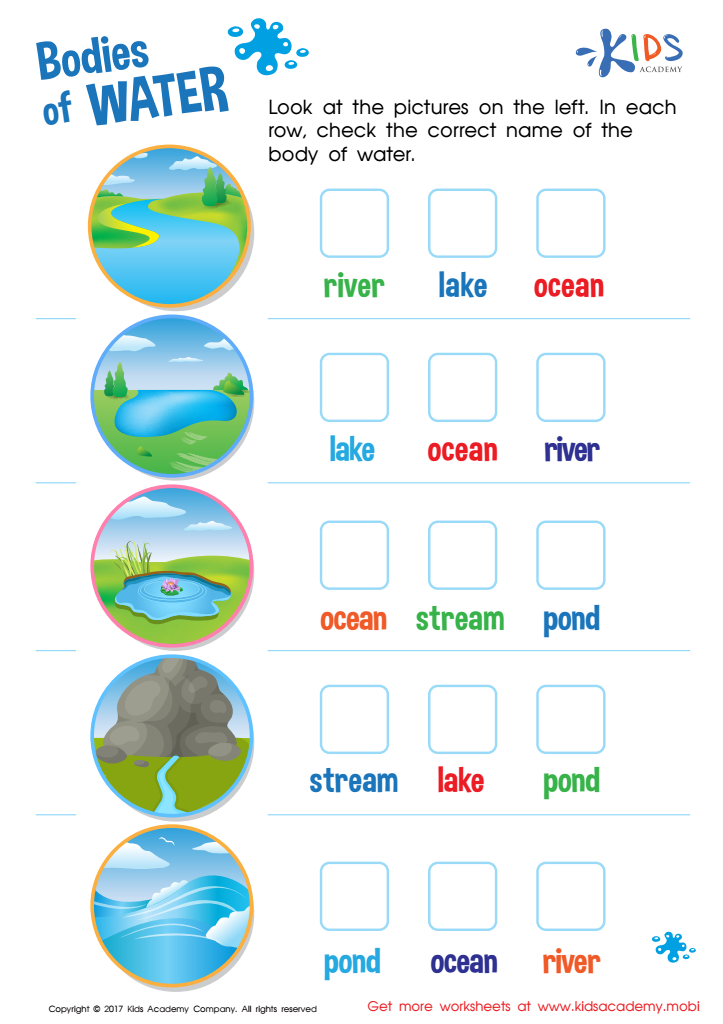
Bodies of Water Worksheet
 Assign to My Students
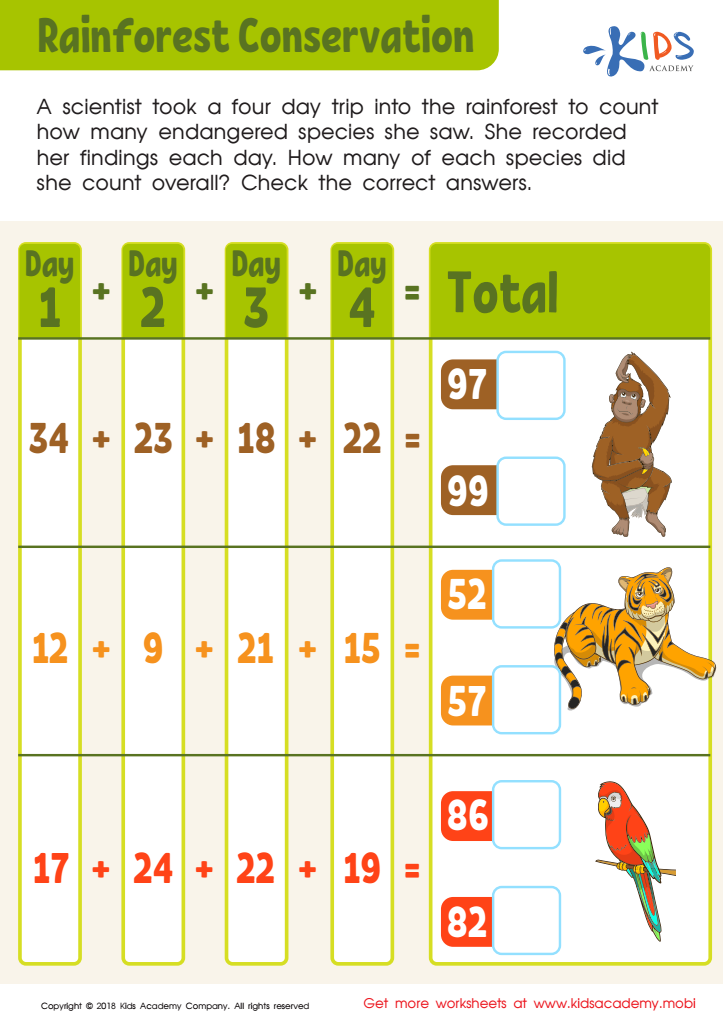
Rainforest Conservation Worksheet
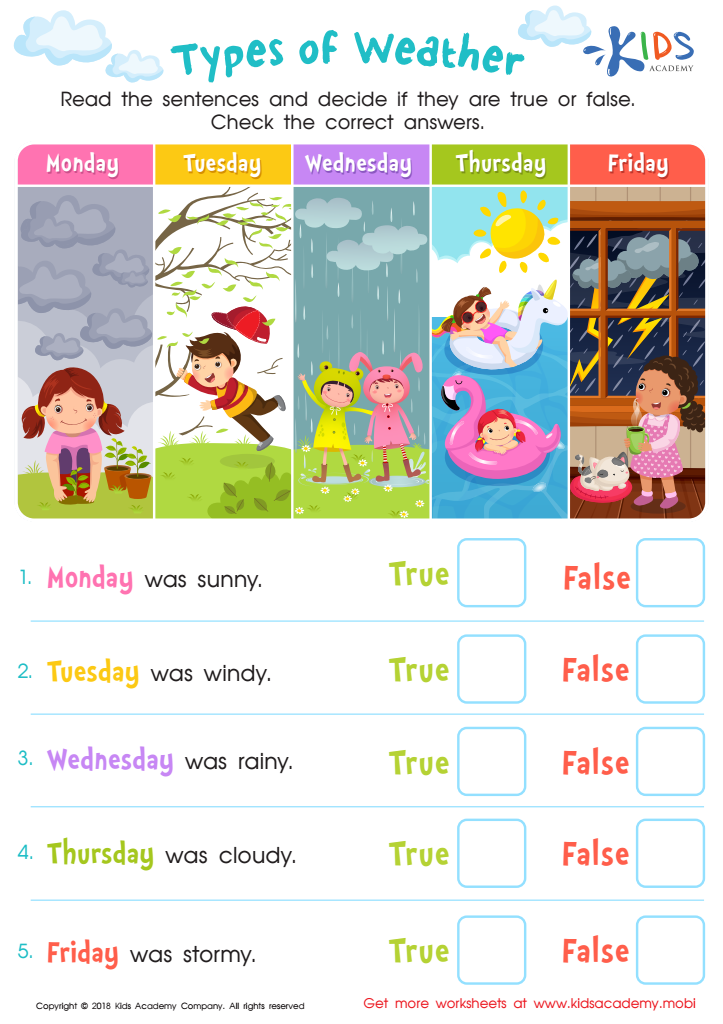
Types of Weather Worksheet
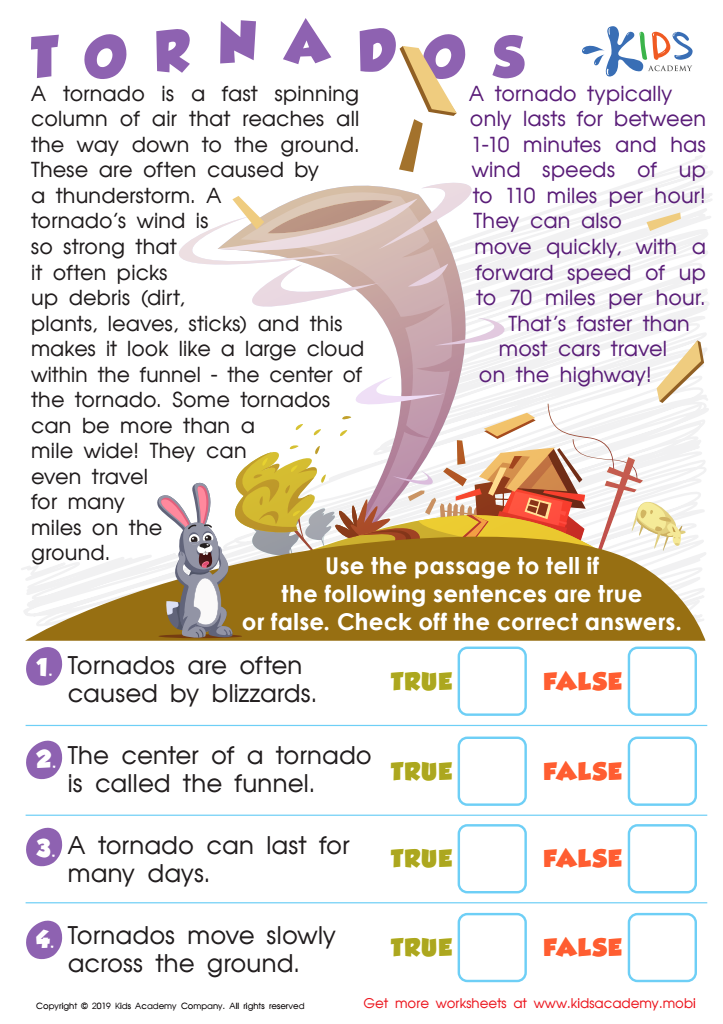
Tornados Worksheet
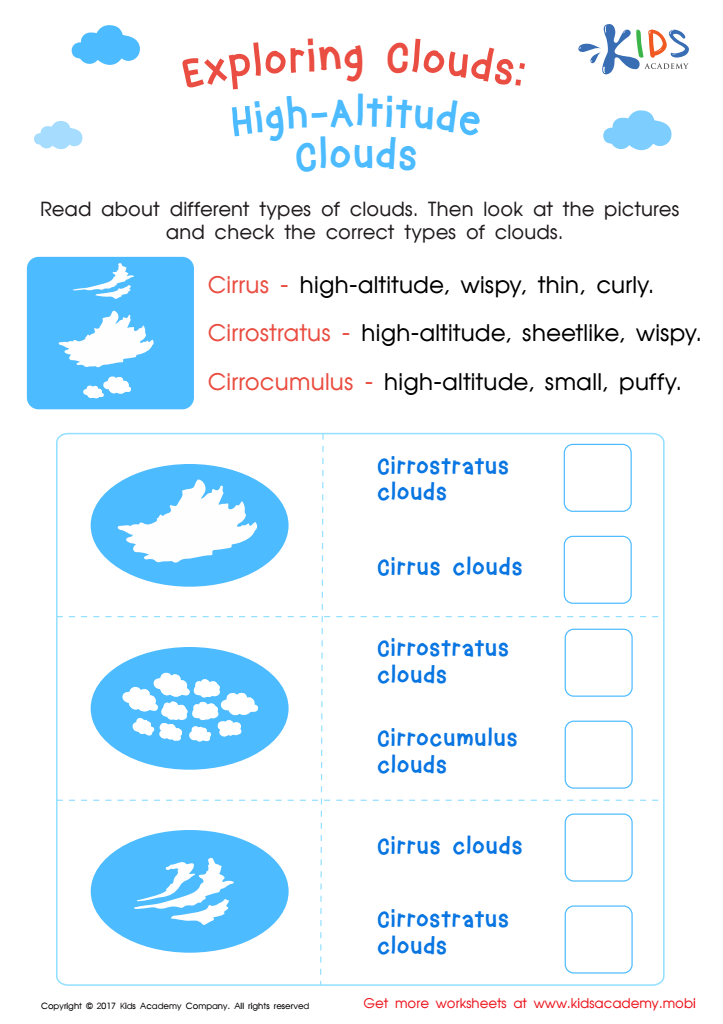
Exploring Clouds: High Altitude Clouds Worksheet
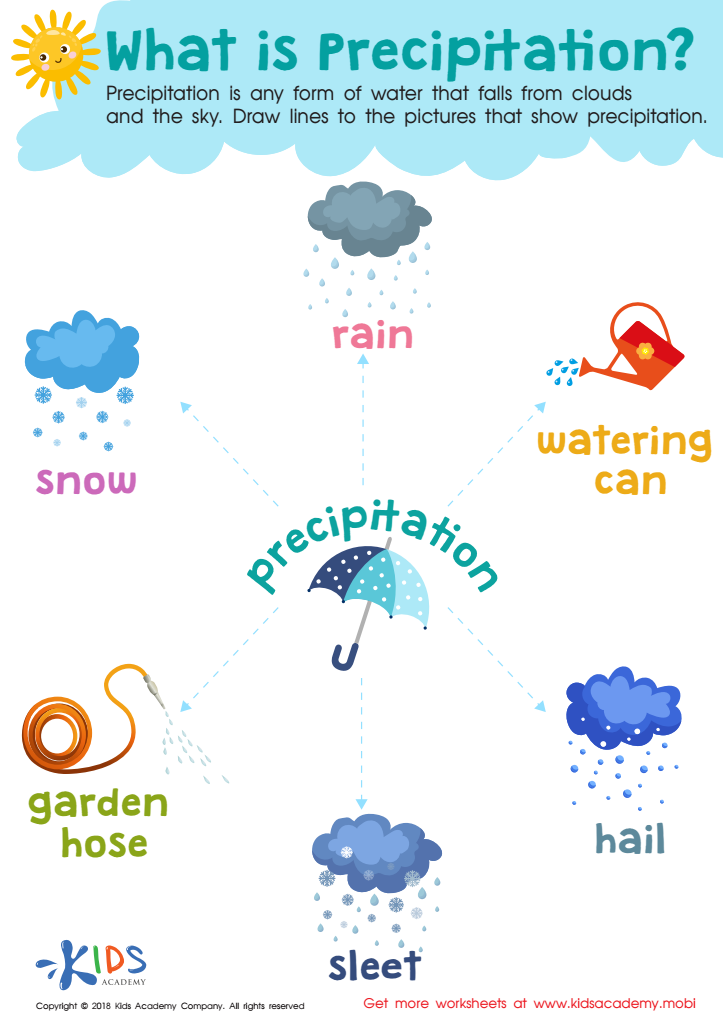
What Is Precipitation? Worksheet



Expanding vocabulary, especially about our planet and environment, is crucial for young children aged 4-8 as it fosters both linguistic development and environmental awareness. At this formative stage, children are highly receptive and curious, making it the perfect time to introduce terms like "recycling," "habitat," and "conservation." Understanding these words helps them grasp important concepts about their surroundings and the natural world.
Such an enriched vocabulary aids cognitive development by promoting critical thinking, comprehension, and the ability to make connections. When children learn words relating to environmental topics, they begin to understand the importance of nature, leading to a foundation of respect and responsibility toward it. It empowers them to articulate their thoughts, questions, and ideas, boosting their confidence and communication skills.
Moreover, as global citizens, an early appreciation and understanding of environmental issues can instill lifelong sustainable habits. Parents and teachers should therefore prioritize vocabulary expansion in this area to nurture knowledgeable, empathetic, and proactive young individuals. By doing so, we invest in their intellectual growth and equip them with the language and awareness to contribute positively to the planet’s future.







