Plants Worksheets for Ages 4-8 - Page 2
25 filtered results
-
From - To
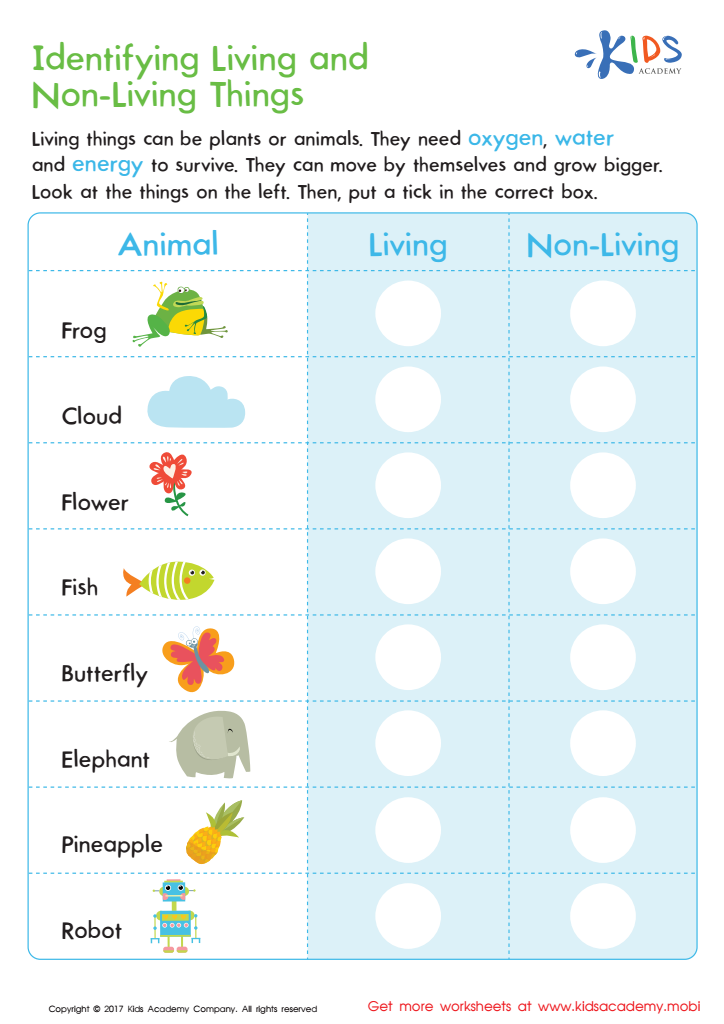
Identifying Living or Non–living Worksheet
 Assign to My Students






Plants play a crucial role in our ecosystem and daily lives, making their inclusion in early education essential. Parents and teachers should care about teaching young children, ages 4-8, about plants for several reasons:
Firstly, learning about plants nurtures curiosity and appreciation for nature, fostering environmental stewardship from an early age. Understanding how plants grow and their importance in producing oxygen and food helps children develop respect and empathy towards the environment.
Secondly, studying plants aligns with multiple educational standards and subject areas. Activities like planting seeds, observing growth, and learning parts of plants can enhance lessons in science, math, and literacy. For instance, measuring plant growth teaches basic math skills, while documenting observations enhances language abilities.
Thirdly, interacting with plants can be therapeutic and support emotional well-being. Activities like gardening or caring for classroom plants can reduce stress, enhance mood, and provide a sense of accomplishment, all of which are essential for young children’s emotional development.
Lastly, knowledge of plants promotes healthy eating habits. Understanding where food comes from and the nutritional benefits of fruits and vegetables can encourage children to make healthier food choices, laying the foundation for lifelong wellness.
Incorporating plant education in early childhood helps cultivate well-rounded, environmentally conscious, and healthy individuals.