Filters

9 filtered results

Clear all filters
Favorites
With answer key
Interactive

9 filtered results

Difficulty Level

Grade


Boost cognitive development in young learners with our engaging Plants and Animals worksheets tailored for ages 4-8! These worksheets are designed to stimulate curiosity and encourage critical thinking. Featuring vibrant illustrations and age-appropriate activities, kids will explore the fascinating world of plants and animals while developing essential cognitive skills. Each worksheet promotes observation, problem-solving, and reasoning, making learning about biodiversity fun and interactive. Perfect for early grade teachers and parents alike, these resources seamlessly integrate science concepts into daily activities. Download our delightful worksheets today to inspire your child’s love for nature and enhance their cognitive abilities! Happy learning!

Check out this FREE Trial Lesson on Plants and Animals for age 4-8!

Plant Life Cycle

Favorites
With answer key
Interactive
  • 4-8
  • Cognitive Development
  • Plants and Animals
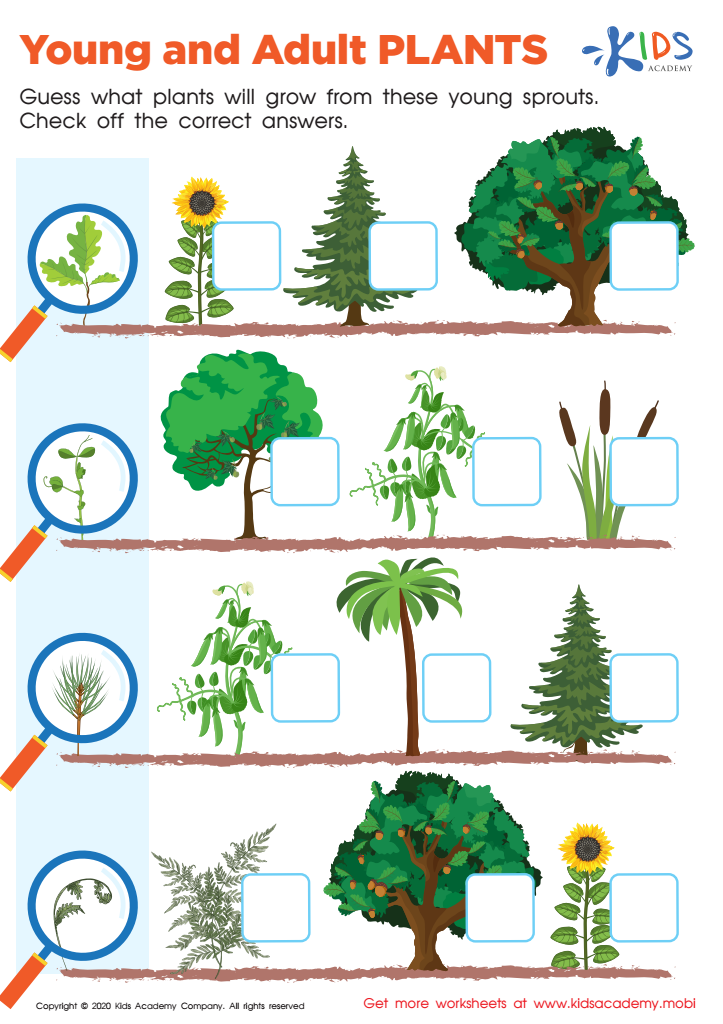
Young and Adult Plants Worksheet

Young and Adult Plants Worksheet

Examine the sprouts, then compare the leaves of the nearby trees. Check the box next to the tree that looks similar to the sprout to complete the worksheet. Problem-solving and analysis skills will be put to the test! 80 words.
Young and Adult Plants Worksheet
Worksheet
Sorting Animals Worksheet

Sorting Animals Worksheet

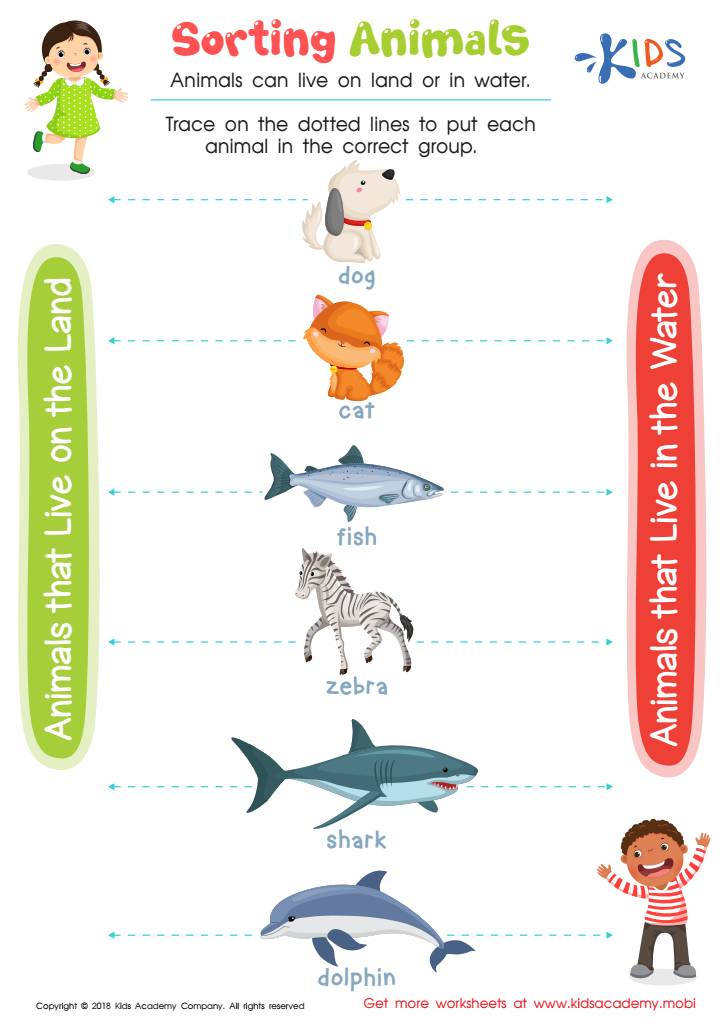
Your kids will love this free, interactive worksheet! With image clues, they can read and trace the animal names, and then sort them into groups of land or water animals. It's an enjoyable way to boost their critical thinking, fine motor and prior knowledge skills.
Sorting Animals Worksheet
Worksheet
Class Supplies and Natural Resources Worksheet

Class Supplies and Natural Resources Worksheet

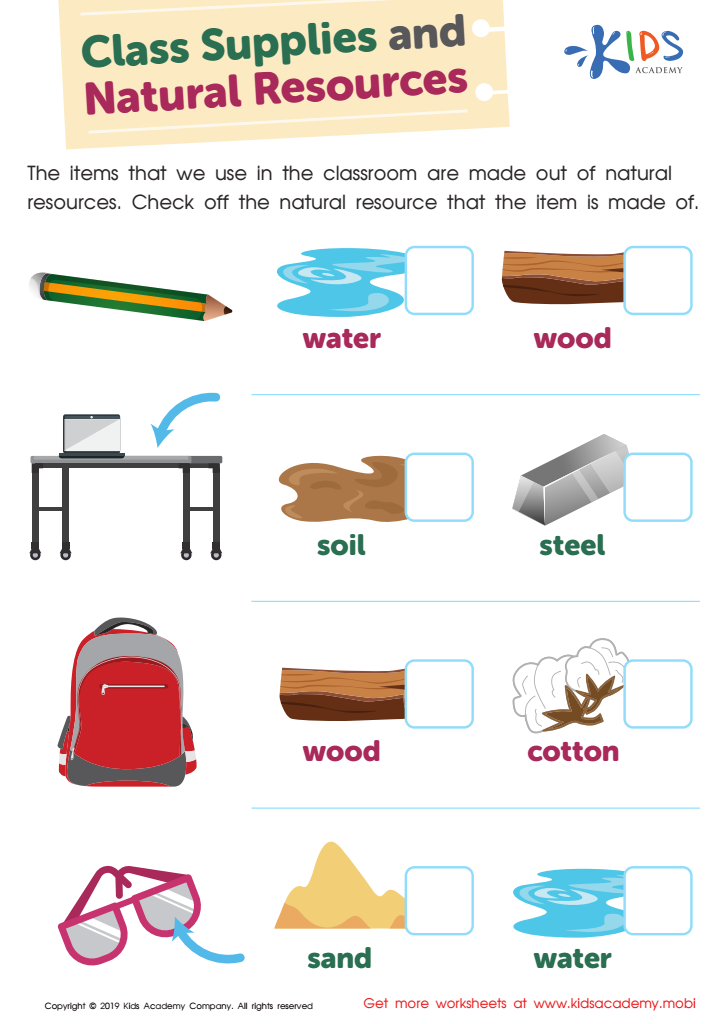
Look around the classroom with your students. Can they identify objects and name their natural resources? E.g. wood, cotton, steel. Ask your child to find an object made from wood. Then, look at this worksheet together. Ask your students to identify each object and check off the natural resource it's made from.
Class Supplies and Natural Resources Worksheet
Worksheet
Nature Word Search Worksheet

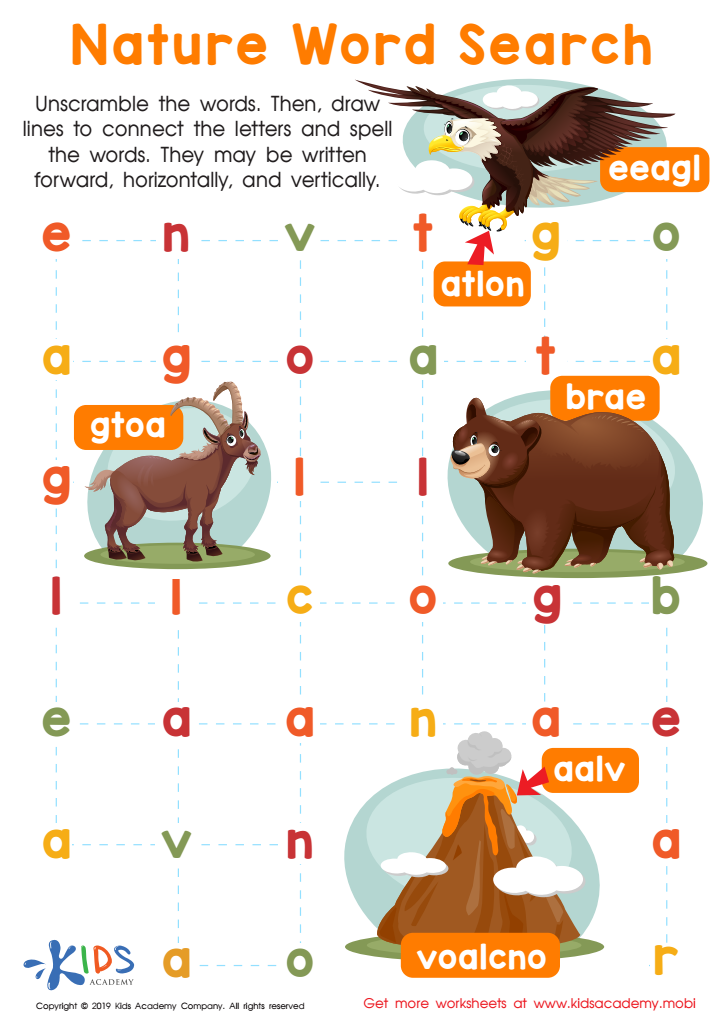
Nature Word Search Worksheet

Unscramble science vocabulary words and find them in this fun worksheet! Use the pictures as clues if you get stumped; you can also write down the words for reference. Solve the puzzle when you're done to finish!
Nature Word Search Worksheet
Worksheet
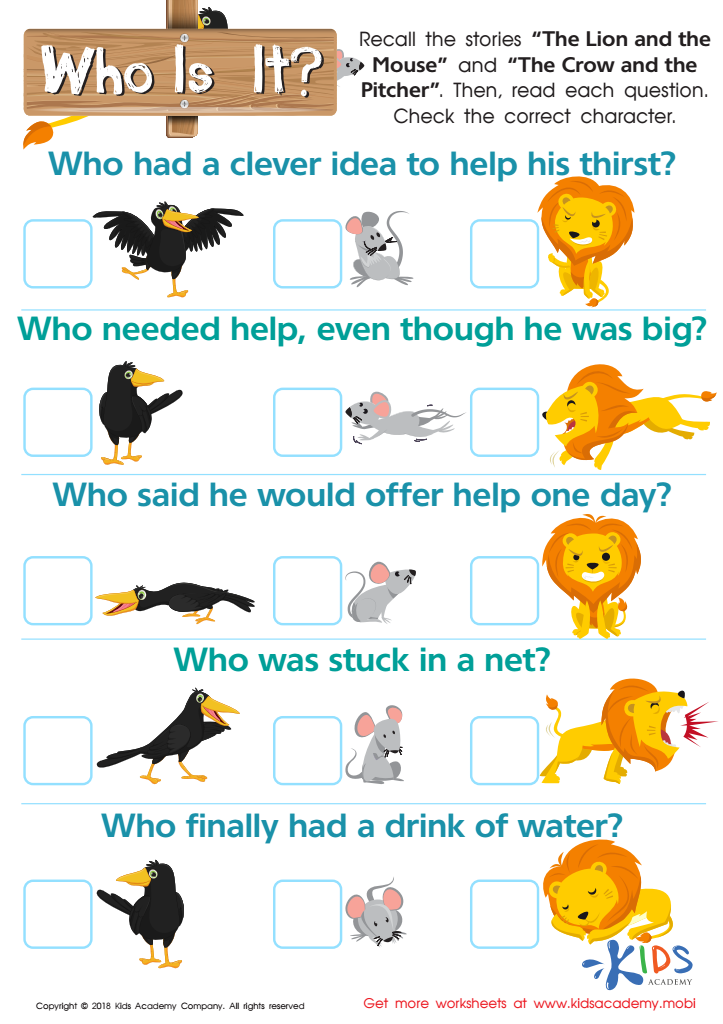
Who Is It? Worksheet

Who Is It? Worksheet

This worksheet helps students recall details from The Crow and the Pitcher and The Lion and the Mouse stories. Students will answer questions about the characters' actions. Use it to assess their understanding of both stories, as this is a key comprehension skill.
Who Is It? Worksheet
Worksheet
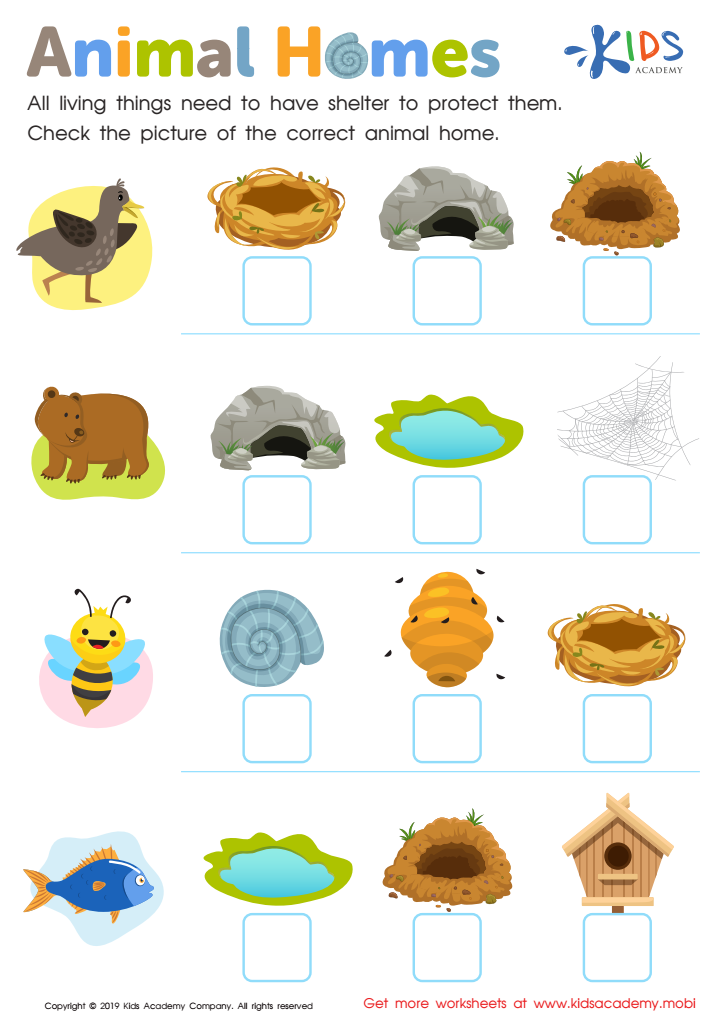
Animal Homes Worksheet

Animal Homes Worksheet

Students have homes where they can do things they love, sleep and stay safe from bad weather. Check the worksheet for animals and their shelters. Ask your kids to identify each and match the animal home to the picture. (80 words)
Animal Homes Worksheet
Worksheet
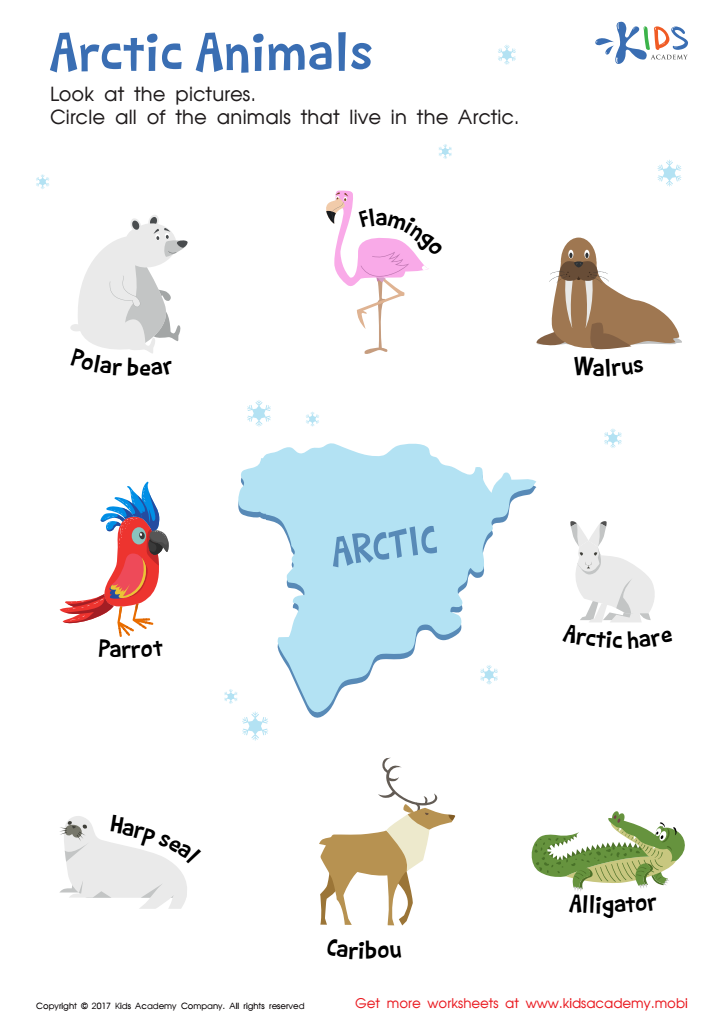
Arctic Animals Worksheet

Arctic Animals Worksheet

Kids love animals and this worksheet is a great way to teach them where they live. It reinforces classification skills and introduces new animals, like the Arctic hare. Use it to discuss the Arctic climate and how these animals live, then ask your child where other animals live to keep the conversation going.
Arctic Animals Worksheet
Worksheet
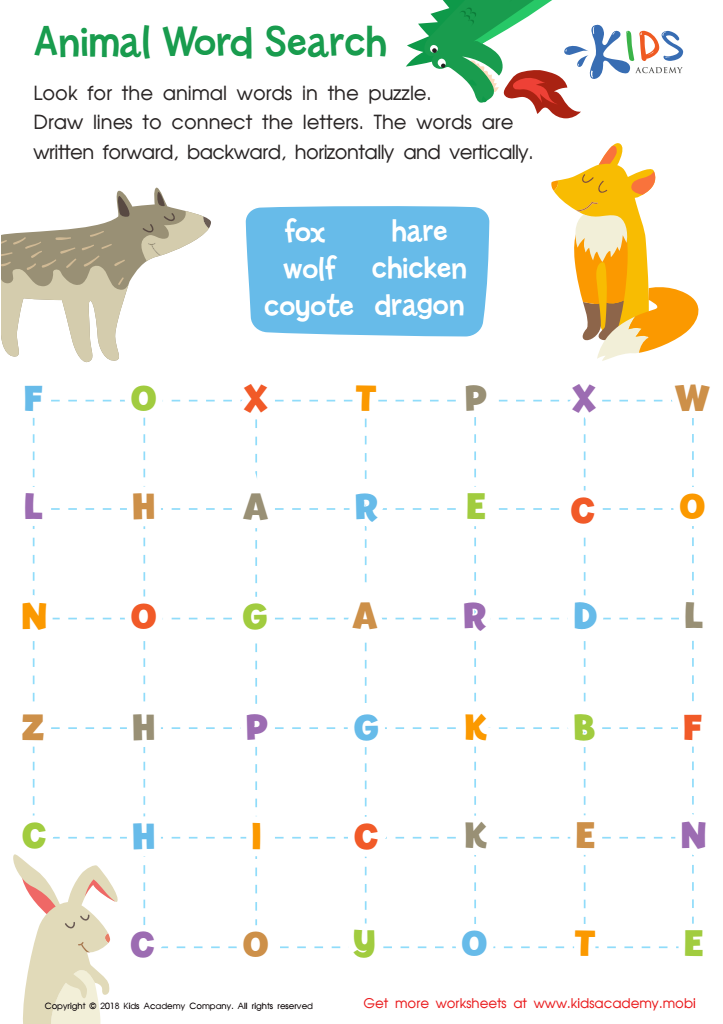
Animal Word Search Worksheet

Animal Word Search Worksheet

Students can have fun and strengthen spelling and vocabulary skills with this word search worksheet. Search for animal words and circle the letters in the puzzle. Words can be found forwards, backwards, horizontally or vertically, providing a great challenge to foster critical thinking skills. An enriching activity for all ages!
Animal Word Search Worksheet
Worksheet
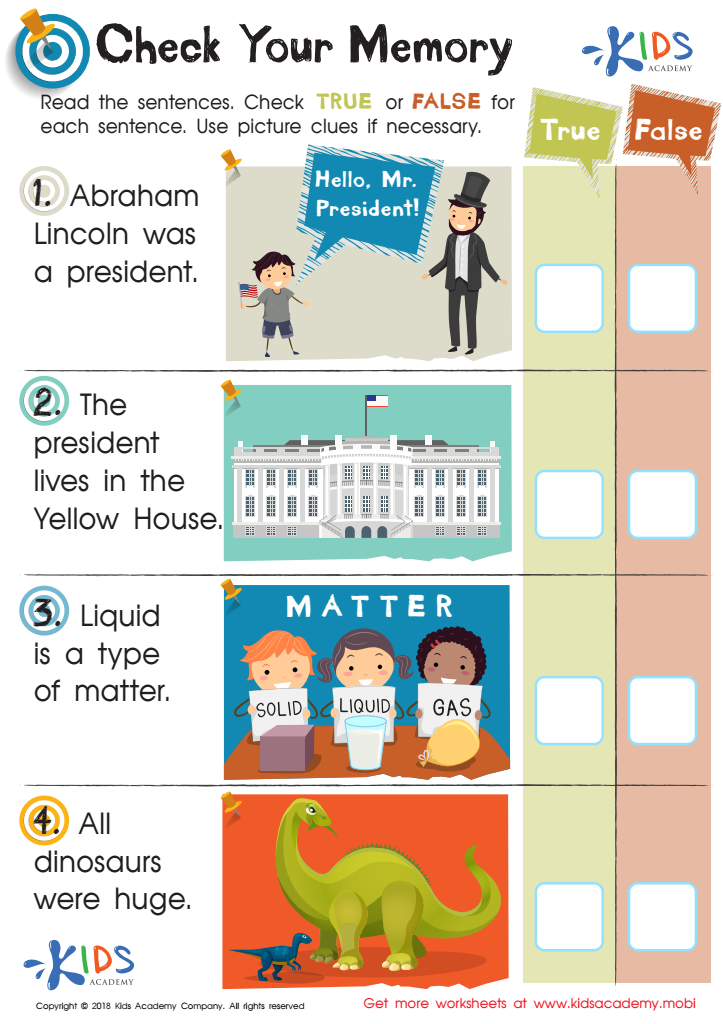
Check Memory Worksheet

Check Memory Worksheet

Assisting your kids with their homework and using worksheets is a great way for them to learn. The vibrant visuals in this printout can help stimulate the mind and motivate your child. Have them read the sentences and then point to the associated images. Afterwards, ask them to state True or False for each sentence. If they are still uncertain, offer them the picture clues to assist further.
Check Memory Worksheet
Worksheet


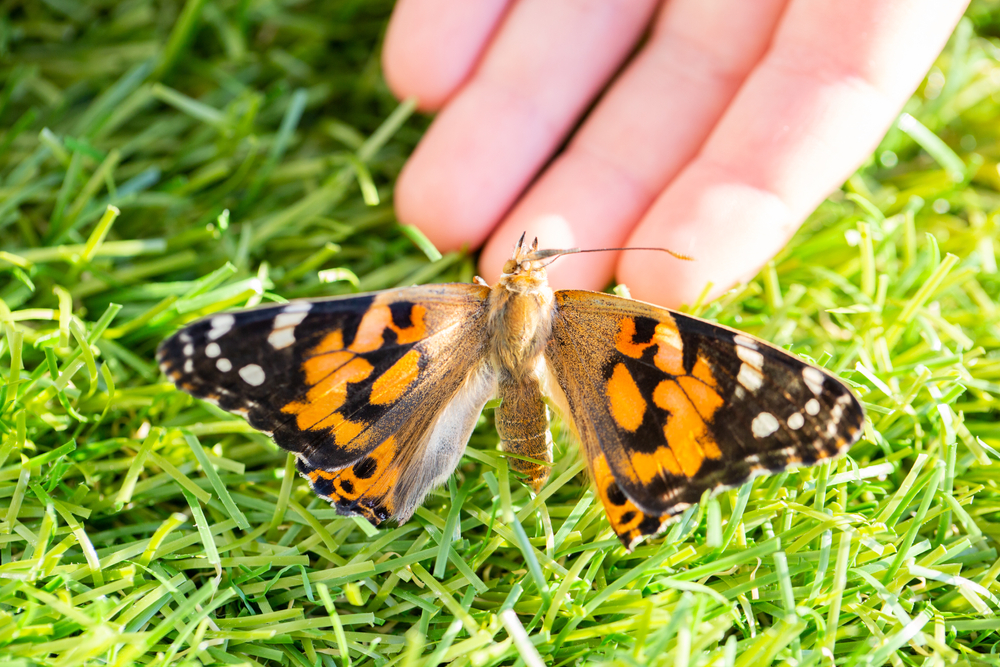
Cognitive development in young children, particularly regarding plants and animals, is essential for various reasons. Ages 4-8 are critical for neurodevelopment, where children begin to form foundational knowledge that supports their understanding of the world. Engaging children in learning about plants and animals fosters curiosity, enhances critical thinking, and boosts problem-solving skills.

Understanding ecosystems helps children grasp essential concepts of interdependence, biodiversity, and environmental stewardship. It promotes empathy and respect for living things, which can translate into more environmentally responsible attitudes in the future. Additionally, discussing growth cycles and habitats strengthens observational skills and encourages questioning, which are vital elements of scientific inquiry.

Moreover, integrating hands-on activities, like gardening or animal care, cultivates motor skills and enhances social interactions, further nourishing cognitive pathways. Educational experiences centered on nature can stimulate conversations that bolster language development, expand vocabulary, and encourage narrative thinking.

Incorporating plants and animals into the curriculum allows parents and teachers to create a rich, engaging learning environment that nurtures holistic growth—cognitively, emotionally, and socially—making it a worthwhile investment in children’s education and development. Ultimately, it lays a strong groundwork for future academic success and life-long learning.